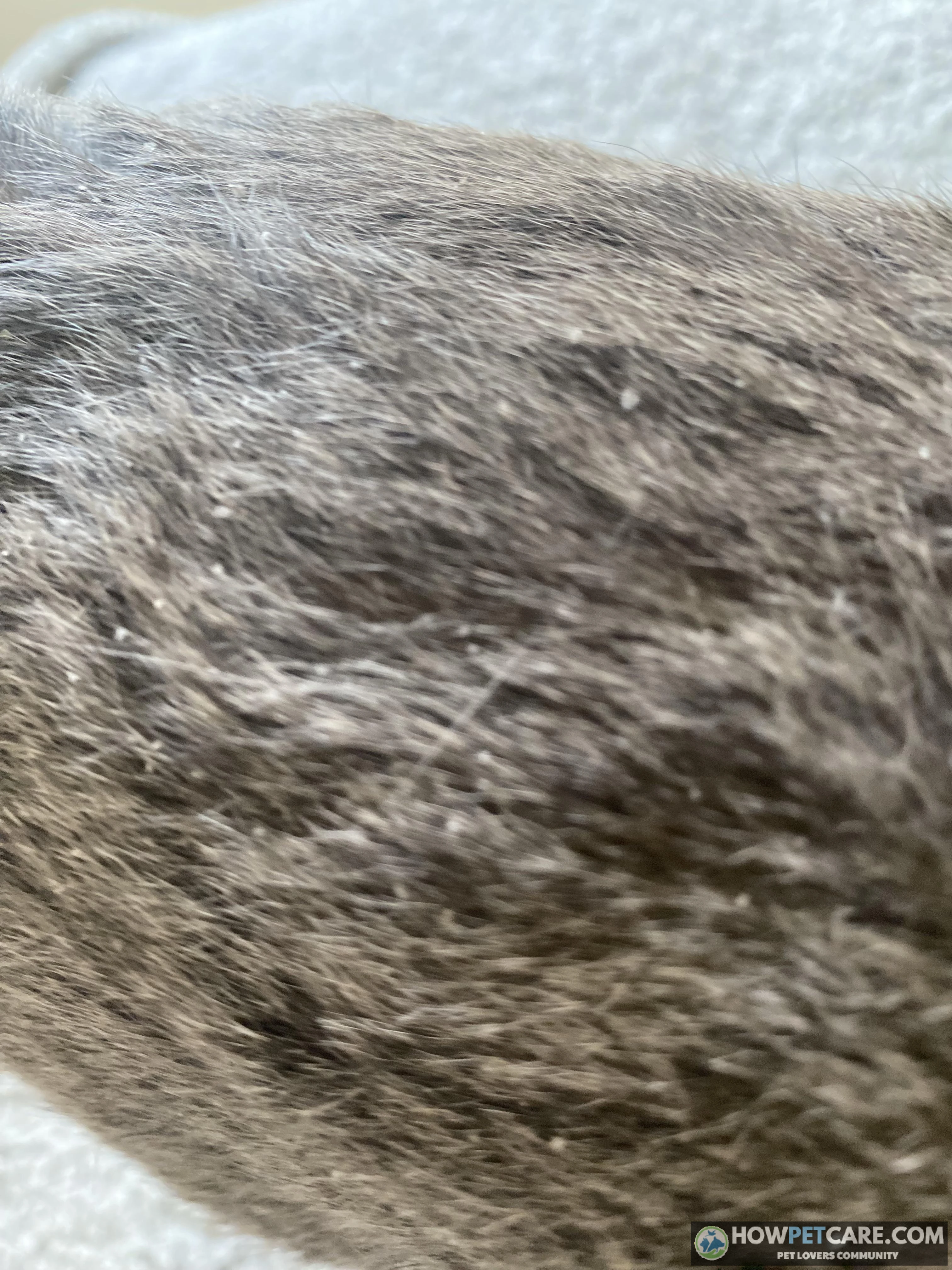

Cat dandruff is a visible buildup of shed dead skin cells in the coat. A few flakes are normal, especially in dry indoor air or in older and overweight cats that can’t groom fully. Flakes paired with itching, hair loss, scabs, a greasy coat, or movement signal parasites, ringworm, or illness — those need a vet.
A light dusting of white flakes in your cat’s fur is common and usually harmless — especially in dry winter air, in senior cats, and in overweight cats who can’t groom every spot. The key word is usually. Flaking becomes a problem when it’s accompanied by scratching, hair loss, redness, scabs, a greasy coat, or a sudden change in appearance. Before you reach for a shampoo, do a quick check: comb your cat over a white sheet of paper and see whether the specks are dry flakes, black flea dirt, tiny smooth eggs, or something that actually moves. That one test points most owners in the right direction.
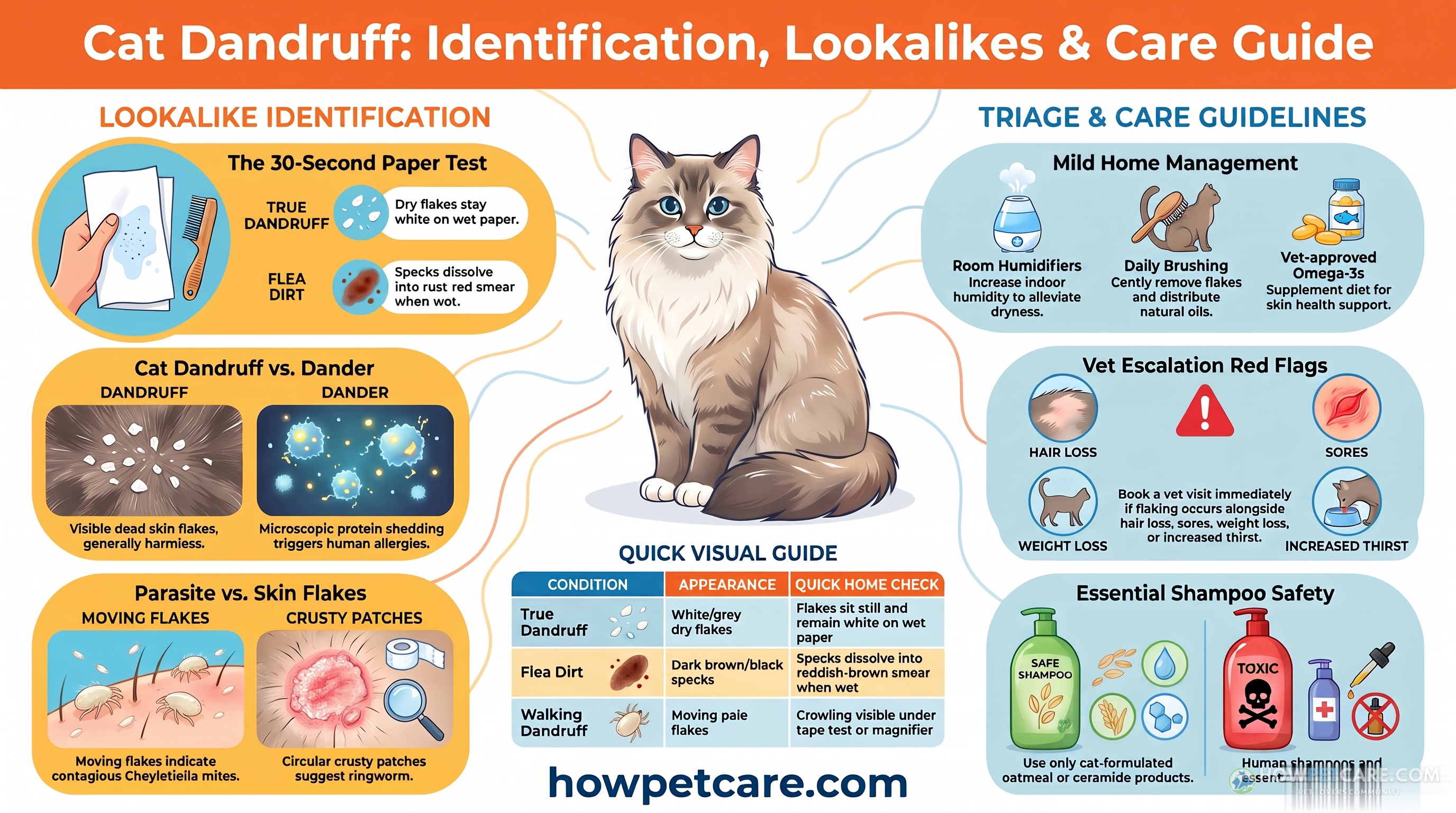
This guide hinges on a three-way split. If it’s plain dry-skin dandruff with no itch, you can usually manage it at home by adjusting humidity, brushing, and diet. If the flakes resemble a lookalike — flea eggs, flea dirt, Cheyletiella "walking dandruff," or ringworm scaling — you need to identify it, because some are contagious to humans. And if you spot any red flag — sores, weight loss, increased thirst — that warrants a vet visit, not a home remedy.
Cat dandruff is simply shed dead skin cells clumping into visible flakes; when it’s heavy and persistent, vets often call it feline seborrhea. It’s a symptom, not a diagnosis. The two tools below — a lookalike comparison table and a green-yellow-red triage checklist — let you assess your cat in a few minutes before deciding what to do.
Is a small amount of cat dandruff normal?
Yes. A few visible flakes, especially near the tail base or in heated indoor air during winter, are normal. Cats constantly shed skin cells, and a dry environment or a diet low in essential fatty acids makes those cells clump visibly. Flakes warrant investigation when paired with itching, patchy hair loss, a dull or greasy coat, or when they appear suddenly and keep spreading. Flakes alone on an otherwise happy cat are the mildest form of this issue.
The 30-second self-check
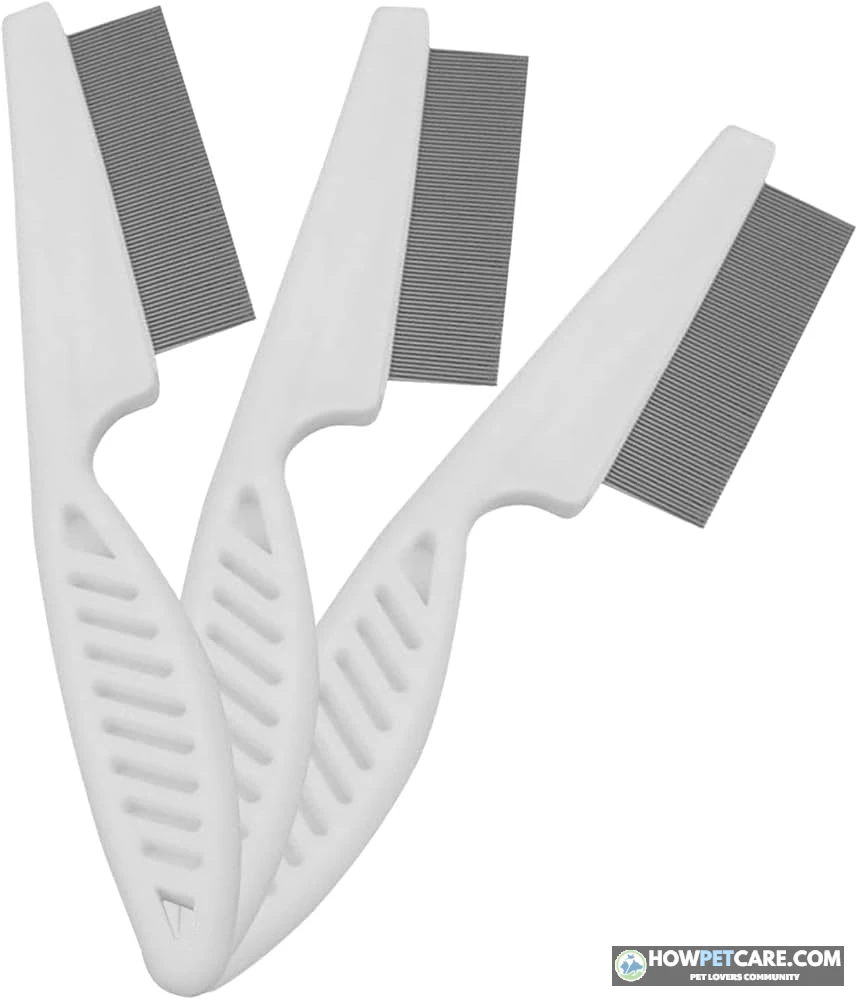
Do this now: lay a sheet of white paper under your cat, run a flea comb through the coat over the rump and tail base, and tap the debris onto the paper. Add a few drops of water. Dry white flakes stay dry. Flea dirt dissolves into a reddish-brown smear — it’s digested blood. Anything that crawls or drags itself across the paper suggests mites. Note what you see; you’ll compare it against the lookalike table below.
Why Does My Cat Have Dandruff? Causes From Benign to Serious
Cat dandruff spans a spectrum from a dry house in January to a systemic issue. Reading the causes in order of seriousness helps you pinpoint your cat’s situation quickly, since most owners are dealing with a cause near the top.
Harmless causes
Low indoor humidity and forced-air heating are the usual culprits. Infrequent grooming also leaves flakes behind, since regular brushing distributes skin oils and lifts dead cells before they clump. A diet slightly low in essential fatty acids — omega-3 and omega-6 — leaves skin dry and coat dull. Shaving a long-haired cat is another overlooked trigger: clipping the coat exposes skin directly to dry air and can actually increase visible flaking. These causes respond to environmental and grooming fixes, which is why home care often works.
Causes that need treatment
Moving up the ladder, a genuinely poor diet and dehydration dry the skin from the inside. Feline allergies — food, environmental, and flea allergy dermatitis — commonly cause flaky, itchy skin. Flea allergy is dramatic: a single bite or two can trigger intense itch and heavy flaking at the rump [NLM]; left alone, that self-trauma can become hot spot sores in cats. Parasites such as fleas, Cheyletiella mites, and other mites directly scale the skin. Ringworm, a fungal infection, can appear as flaking and scaling without an obvious round bald patch, especially in cats that carry it silently.
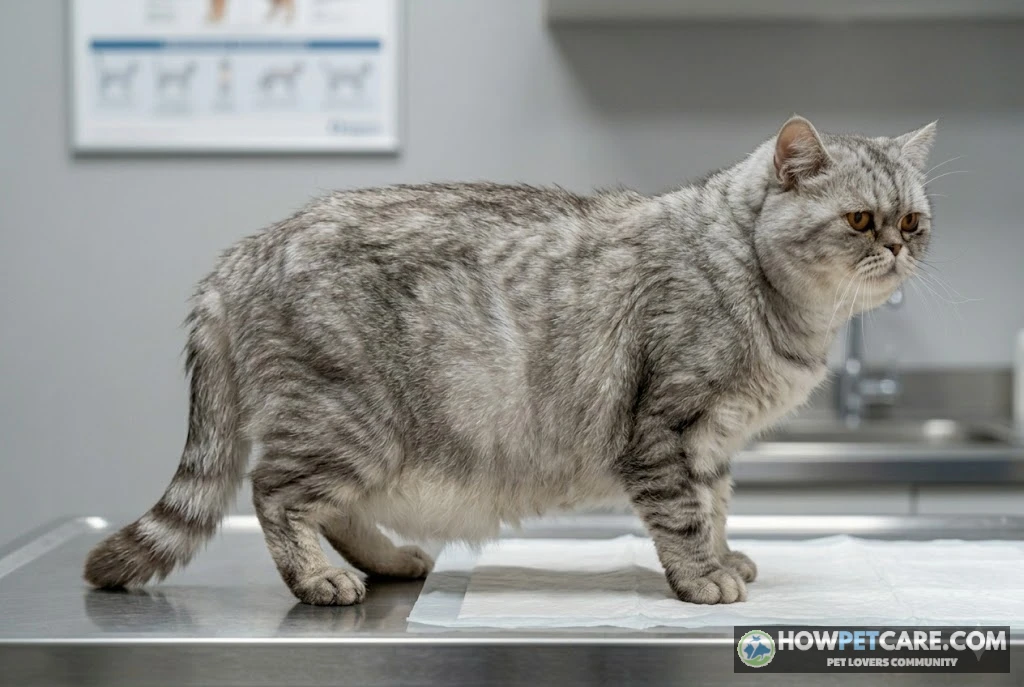
At the serious end, dandruff can signal internal disease: diabetes, kidney disease, hyperthyroidism, and rarely cutaneous lymphoma [NLM]. Obesity and arthritis are the most common mechanical causes — they prevent a cat from reaching and grooming its lower back and tail base, exactly where flakes accumulate. Seniors, overweight cats, long-haired breeds, and kittens are higher-risk groups: older and heavy cats can’t reach, long coats trap debris, and kittens harbor more parasites and have immature immune defenses. An adult cat should see a vet annually, which is your best chance to catch a systemic cause early.
Cat dandruff vs. cat dander
These two are constantly confused, but the difference matters for humans, not cats. Dandruff is visible dead skin; dander is microscopic protein shed from skin and saliva, present on every cat all the time, and invisible to the eye. Dander triggers human allergies, not dandruff itself. So a flaky cat isn’t automatically an allergy problem for you — you see the flakes precisely because they’re the large, non-allergenic fraction.
Is It Dandruff, Flea Eggs, Flea Dirt, Walking Dandruff, or Ringworm?
This section saves the most time, answering the question the rest of page one only hints at. Work down the table after your comb-and-paper test, then run the quick checks below. If two rows both match — flea dirt plus flakes is a common pairing — treat the more contagious possibility as your working assumption until a vet rules it out.
| Condition | Appearance | Typical location | Movement | Itch level | Contagious to pets or people? | Quick home check |
|---|---|---|---|---|---|---|
| True dandruff (seborrhea) | White or gray flakes, dry or greasy | Back, tail base, behind ears; can be anywhere | None — flakes sit on hair or skin and brush off | None to mild | No | Flakes don’t move and leave no smear on wet paper |
| Dander | Invisible — microscopic skin protein | Everywhere (it’s on all cats, all the time) | Not applicable | None for the cat | It’s an allergen, not a disease — only matters if a human is allergic | You can’t see it; relevant only if people sneeze around the cat |
| Flea eggs | Tiny smooth white ovals (~0.5 mm), like grains of salt | On the coat, but they fall off into bedding and carpets fast | None — they roll off easily, unlike scale which sticks | The cat may itch if adult fleas are present | Eggs don’t spread to people, but they mean fleas — which do bite | Roll one between your fingers: smooth, hard, falls off rather than clinging |
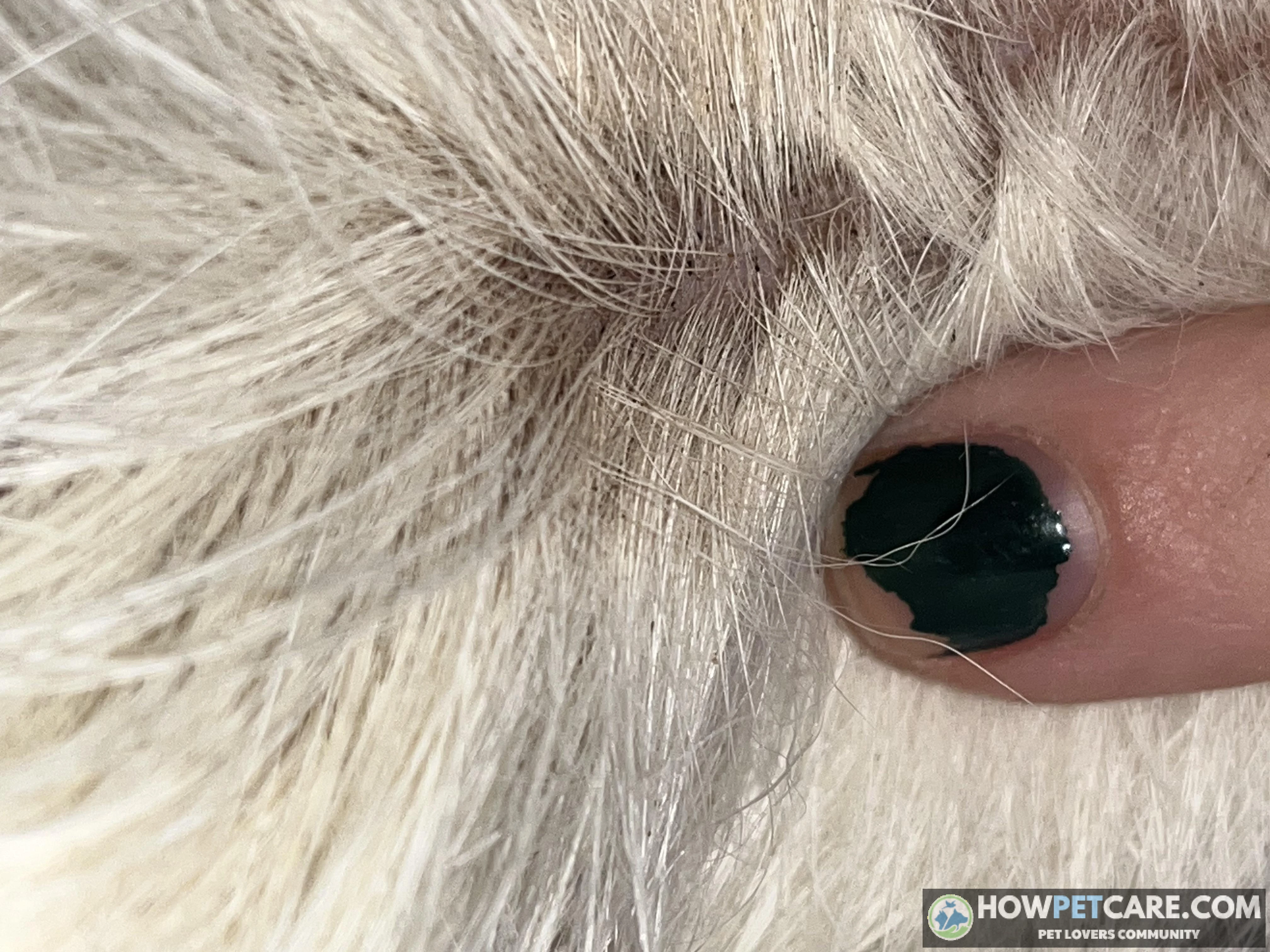
| Flea dirt (flea feces) | Black or dark-brown comma-shaped specks | Lower back, tail base, belly, chin | None | Often itchy — this is the classic flea-allergy zone | The dirt itself isn’t contagious, but it confirms fleas | Wet white-paper test: moisten specks — flea dirt dissolves into a reddish-brown smear (digested blood) |
| Cheyletiella ("walking dandruff") | Large pale flakes that appear to crawl — mites live under the scale | Usually along the back | Flakes visibly move, especially under a magnifying glass or phone zoom | Variable — mild in some cats, intense in others | Yes — spreads to other pets and causes itchy red bumps on people | Tape or dark-paper test: collect flakes and watch 5–10 minutes for movement; vet confirms with a skin scraping |
| Ringworm | Circular patches of broken hairs with scaling or crusting; can be subtle in cats | Face, ears, paws — but can appear anywhere | Flakes don’t move | Often mild in cats | Yes — highly contagious to pets and people (ring-shaped rash) | No reliable home test — Wood’s lamp misses many cases; fungal culture or PCR at the vet confirms |

Quick home tests you can do in five minutes
Three tests cover most cases. First, the wet-paper test: flea dirt turns into a rust-red smear when wet, while ordinary flakes just get soggy. Second, the tape test: press clear tape onto a cluster of flakes, stick it to dark paper, and watch for five to ten minutes under a magnifier or your phone’s zoom — moving flakes indicate Cheyletiella. Third, the flea comb: work it through the rump and drop the catch on white paper to spot eggs and dirt you’d otherwise miss. Flea eggs are smooth, oval, and roll off; scale clings to the hair shaft. Black dots clustered on the chin are more likely chin blackheads from cat acne than flea debris.
What walking dandruff and ringworm mean for your household
Two of these lookalikes shift the focus from "your cat" to "your home." Cheyletiella mites ride the flakes themselves, so what looks like slow-moving dandruff is a parasite that spreads to dogs, rabbits, and people as itchy red bumps. Ringworm is a fungus many cats carry without the textbook circular bald spot, showing only as scaling, and it’s highly contagious to pets and humans. Neither can be confirmed at home with confidence — a Wood’s lamp misses many ringworm cases, so a fungal culture or PCR at the vet is the real test. When you suspect either, treat it as contagious until proven otherwise and move to the home-cleaning checklist later in this guide.
Why Cat Dandruff Shows Up on the Back Near the Tail
If flakes are concentrated at the lower back and tail base, that location is a genuine clue. Those spots are the hardest for a cat to reach, so any decline in grooming ability shows up there first. Obesity and arthritis are the leading mechanical reasons a cat can’t self-groom, resulting in flaking — often greasy or matted — right at the rump. If you also notice your cat hesitating to jump, seeming stiff, or grooming less than usual, you’re likely looking at a mobility problem, not a skin disease.
Location also points to specific causes. Flea allergy dermatitis in cats favors the lower back and rump, and even one or two flea bites can trigger it. Cheyletiella also concentrates along the back. Another lookalike worth knowing is stud tail — a greasy, waxy buildup near the tail gland that can be mistaken for heavy dandruff. What to do: check the area with a flea comb, brush gently to lift loose flakes, and book a weight-and-pain assessment with your vet if you suspect your cat can’t reach back there anymore.
Monitor at Home or See a Vet? A Triage Guide With Severity Cues
Instead of a reflexive "see your vet," use three tiers. Your cat falls into the most serious tier where any box checks true.
GREEN — manage at home, reassess in 2 weeks
- ☐ Light flaking only — no scabs, redness, or broken skin
- ☐ No scratching, overgrooming, or visible discomfort
- ☐ Coat is normal elsewhere — no bald patches, greasiness, or matting
- ☐ Eating, drinking, playing, and using the litter box normally
- ☐ Flakes don’t move, and the wet-paper test shows no reddish smear
- ☐ Started recently during dry or heated indoor air
→ Start the home-care basics (humidifier, brushing, hydration, flea prevention) and set a recheck date.
YELLOW — book a routine vet appointment (days, not weeks)
- ☐ Flakes persist beyond 2–3 weeks despite home care
- ☐ Any hair loss, scabs, or a greasy, dull coat
- ☐ Moderate itching — regular scratching or chewing at the skin
- ☐ Flakes concentrated at the rump plus possible stiffness or reluctance to jump (mobility clue)
- ☐ Unexplained weight change in either direction
RED — same-day or urgent care
- ☐ Open sores, bleeding, or widespread redness
- ☐ Lethargy, hiding, or not eating
- ☐ Noticeably increased thirst or urination (flags diabetes or kidney disease)
- ☐ Rapid spread of lesions or circular patches
- ☐ Suspected ringworm or mites AND young children, elderly, or immunocompromised people in the home
Quick rule of thumb: skin changes plus weight loss or increased thirst in a cat almost always point to an internal problem, not just dry skin — don’t wait those out.
What a Vet Will Do and What It Typically Costs
Knowing the workup removes the guesswork — and the cost dread — from the "see a vet" step. A typical visit starts with an exam and a flea comb, then moves to a skin scraping or tape prep to check for mites, cytology to examine cells and yeast, and a fungal culture or PCR if ringworm is suspected. If a systemic cause is suspected, your vet adds bloodwork; if allergies are the leading suspect, expect to discuss a food trial.
Here are ballpark US ranges. Treat them as planning estimates only — they vary widely by region, clinic, and how much testing your cat needs.
| Test or service | What it checks for | Ballpark cost range (varies by region) | Turnaround time |
|---|---|---|---|
| Office exam | Overall skin and body assessment; sets the plan | $45–$70 | Same visit |
| Skin scraping / tape prep | Mites such as Cheyletiella and Demodex | $30–$90 (sometimes bundled into the exam) | Minutes to 1–2 days |
| Fungal culture or PCR | Ringworm confirmation | $30–$120 | Up to about 2–3 weeks for a culture |
| Bloodwork (CBC / chemistry) | Diabetes, kidney, thyroid, and other systemic causes | $80–$250 | Often within a day or two |
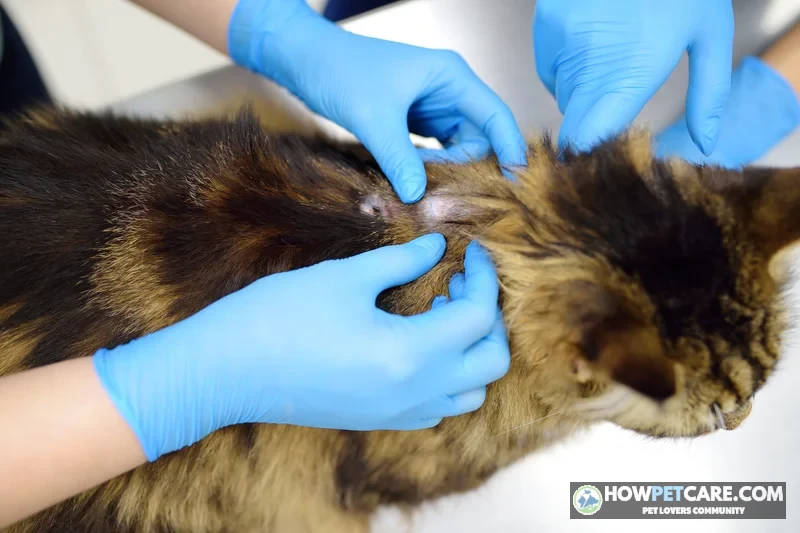
Common treatments follow the diagnosis: parasite preventives, medicated shampoos, oral antifungals for ringworm, diet changes, or allergy management. Ask for an itemized estimate and a prioritized plan so you can stage tests if budget is tight. For mild, non-contagious cases, a telehealth consult is a reasonable first step. Whatever the outcome, this guide focuses on category guidance rather than specific products — the right choice depends on your cat’s diagnosis.
How to Get Rid of Cat Dandruff at Home: Shampoo, Wipes, Diet, and Environment
For true dry-skin dandruff, home care resolves a lot. Here’s the honest verdict on each method.
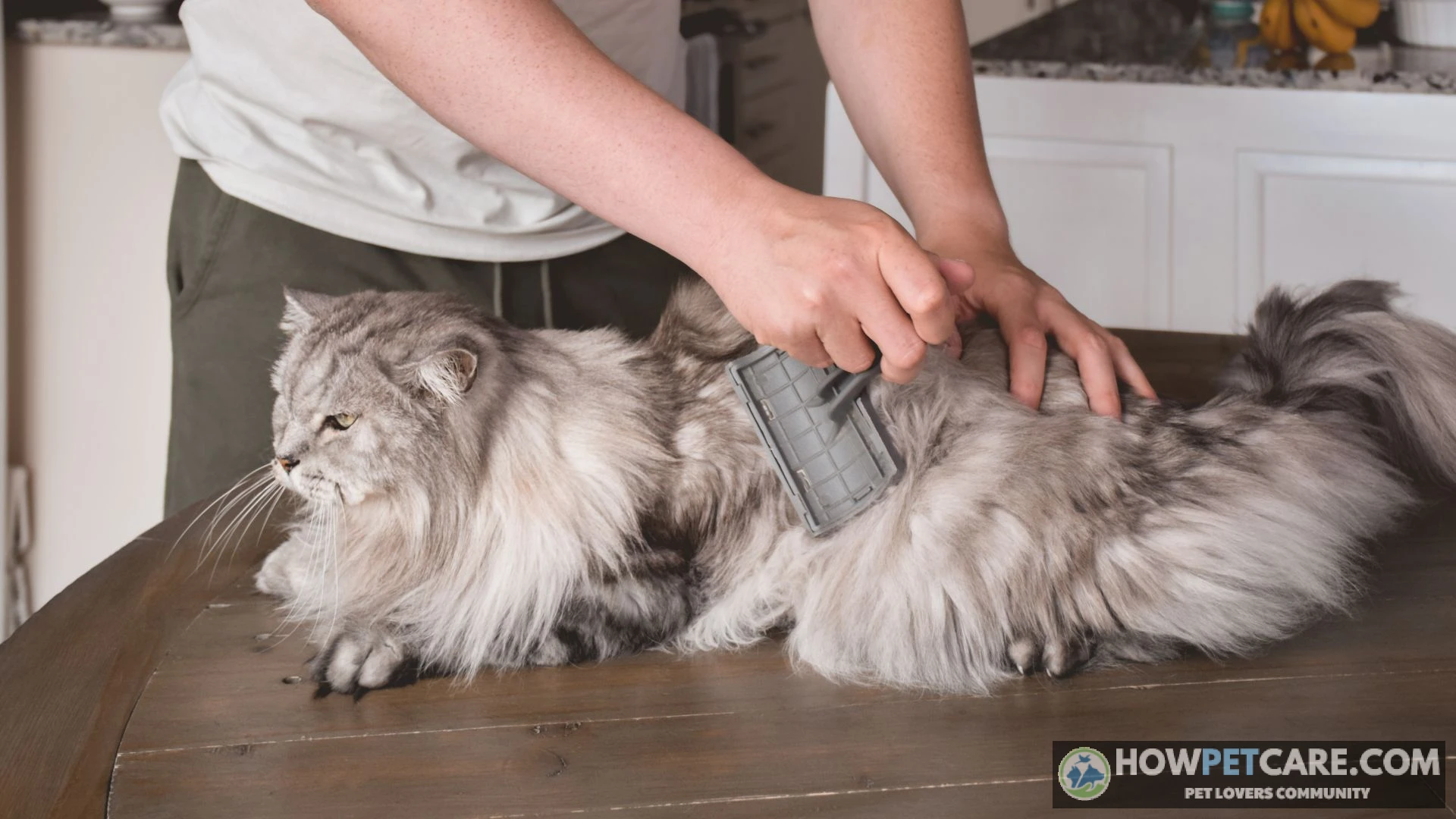
Bathing. An occasional bath with a cat-safe product can help oily or heavy flaking, but frequent bathing strips natural oils and worsens dryness — so don’t bathe on a schedule unless your vet advises it, and rinse thoroughly. Brushing is the safer daily habit: short-haired cats do well with a brush once a week, while long-haired or thick-coated cats benefit from once or twice a day, since brushing spreads oils and lifts loose flakes before they clump.
Shampoo ingredients: what to look for and what to avoid
Never use a human dandruff shampoo on a cat. Cats groom residue off their coats and absorb through the skin ingredients that are harmless to us but toxic to them.
| Ingredient | Safe for cats? | Why it matters | Use guidance |
|---|---|---|---|
| Colloidal oatmeal | Yes | Soothes mild dryness and itch | Good default for routine flaky skin |
| Ceramides, phytosphingosine, or Ophytrium | Yes | Rebuilds the skin’s lipid barrier — the actual defect in most flaky skin | Found in vet-formulated cat shampoos and mousses; look for these names on the label |
| Aloe (in cat-formulated products) | Yes, formulated | Moisturizing; safe only in pet products where the irritating latex fraction is removed | Fine in commercial cat products; don’t apply raw aloe plant gel |
| Chlorhexidine (2–4%) | Vet-guided | Antibacterial / antifungal — used when flakes come with infection | Use only if your vet recommends it; overuse dries skin |
| Miconazole / ketoconazole | Vet-prescribed only | Antifungal for ringworm or yeast | Never self-prescribe — medicated antifungals need a diagnosis first |
| Zinc pyrithione | Never | Common in human dandruff shampoo; toxic to cats if licked or absorbed | Check the label on any "medicated" human shampoo — this is the usual active ingredient |
| Coal tar | Never | Irritating and toxic to cats | Found in psoriasis and heavy-duty dandruff products |
| Tea tree oil and other essential oils | Never | Cats can’t metabolize concentrated essential oils — even small amounts can cause tremors or liver damage | Includes "natural" DIY shampoos; peppermint, eucalyptus, and citrus oils are also risky |
| Salicylic acid | Avoid | Aspirin-relative; cats are extremely sensitive to salicylates | Present in many exfoliating human shampoos |

Phytosphingosine and Ophytrium are worth seeking out specifically — they help restore the damaged skin barrier underlying most dandruff in cats [NLM].
Waterless foams, wipes, and grooming routines for cats that hate baths
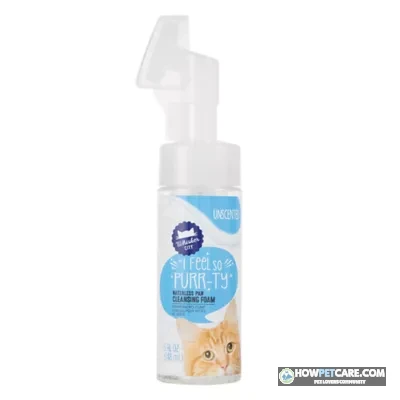
Most cats won’t tolerate a bath, so leave-on options matter. Waterless foams and mousses, cat-safe wipes, grooming gloves, and gentle brushing all lift flakes without water. The rule with any leave-on product is simple: whatever you put on the coat gets licked off, so use only cat-labeled products, never "natural" homemade mixes or essential-oil sprays. Wipe with the grain of the coat, work a grooming glove over the back and rump, and finish with a soft brush to distribute oils. This routine is exactly how you help an overweight or arthritic cat that can no longer reach its tail base.
Omega-3 dosing and how long skin takes to improve
Supplementing omega-3s is one of the most evidence-aligned moves for dry, flaky skin, but the dose is measured in EPA and DHA, not "fish oil."
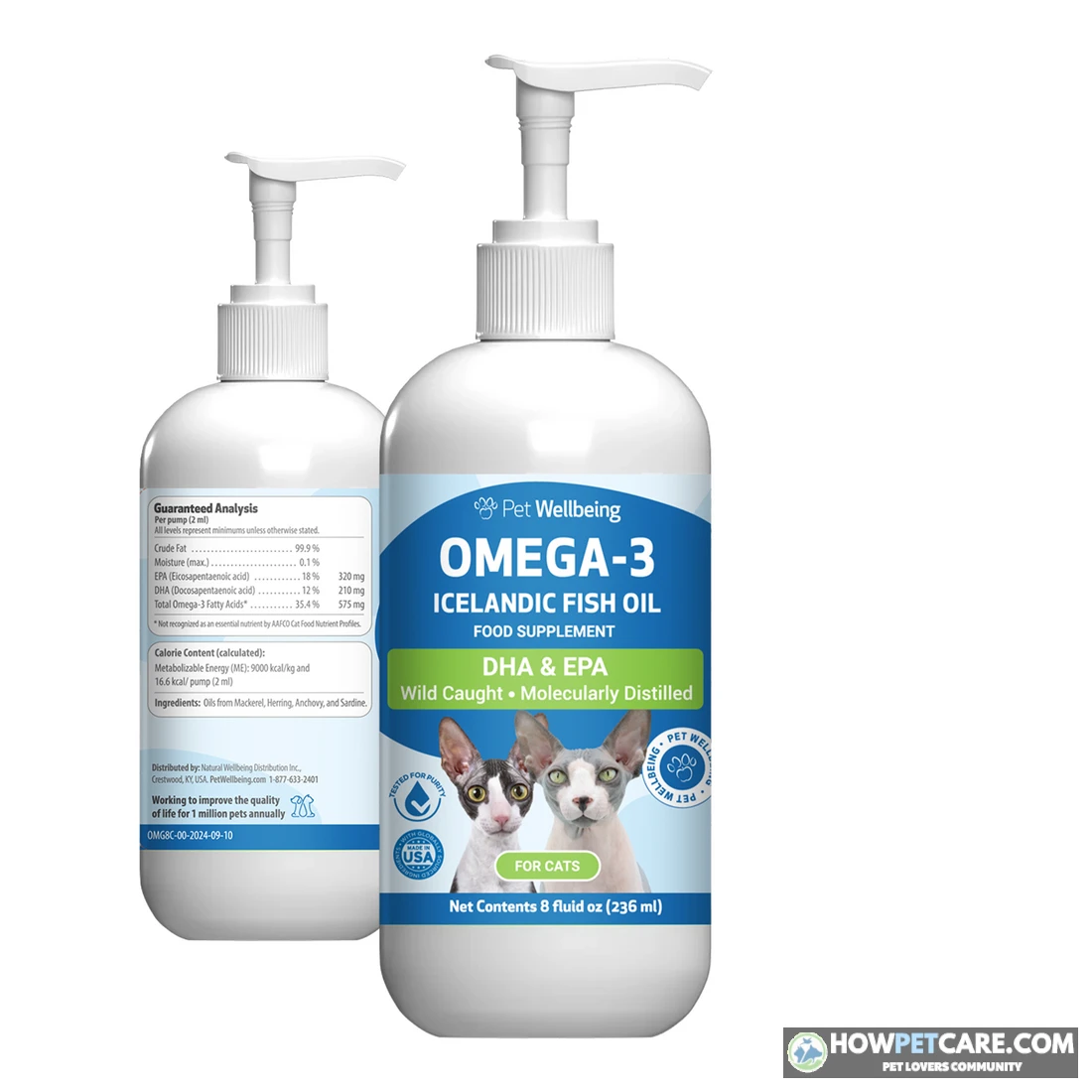
The commonly cited range is 20–50 mg of combined EPA + DHA per kilogram of body weight per day. For a typical 4.5 kg (10 lb) cat, that’s about 90–225 mg of combined EPA+DHA daily — not 90–225 mg of "fish oil." A 1,000 mg fish oil capsule often contains only about 300 mg of actual EPA+DHA, so check the label. Use pet-formulated fish oil, confirm the dose with your vet if your cat has any medical condition, takes medication, or has a history of pancreatitis, and expect 4–8 weeks before coat improvement appears — longer if the change comes via a diet switch, since skin cells turn over slowly. If flakes haven’t improved by week 8 of consistent dosing plus environmental fixes, the cause is likely something omega-3 can’t fix — that’s your cue to escalate.
Home remedies reviewed: coconut oil, olive oil, humidifiers, and wet food
Coconut and olive oil: little evidence of benefit, real downside. They leave a greasy coat that attracts dirt, and the cat licks them off — which can cause stomach upset or diarrhea. Skip them as a go-to. Humidifier: genuinely helpful in dry indoor air, especially in winter; aim for moderate indoor humidity rather than damp. Wet food and hydration: wet food supports hydration and weight control, both worthwhile, but it’s not a proven cure for flakes or unexplained cat hair fall. The fat quality and completeness of the diet matter more than moisture alone. Flea control: treat every pet in the home, because flea allergy is a top cause of rump flaking. Weight management: if mobility limits grooming, gradual weight loss restores reach more than any topical will.
Cleaning Your Home When Mites or Ringworm Are Involved
Cheyletiella and ringworm don’t stop at your cat. Cheyletiella spreads to other pets and causes itchy red bumps on people, and ringworm produces a ring-shaped rash in humans. If either is suspected, start cleaning immediately — don’t wait for culture results.
-
Wash soft surfaces hot
Hot-wash all bedding, blankets, cat beds, and washable soft toys on the hottest safe cycle, then dry on high heat.
-
Vacuum and empty outside
Vacuum carpets, sofas, cat trees, and the car interior; empty the canister or discard the bag outside the house. Repeat every 1–2 days for the first two weeks.
-
Clean cat equipment
Wash brushes, combs, and grooming gloves in hot soapy water — or replace them. Disinfect carriers, litter scoops, and hard surfaces with a vet-recommended disinfectant; diluted household bleach (about 1 part bleach to 10 parts water) works on bleach-safe surfaces — confirm compatibility first.
-
Contain and treat all pets
Limit the affected cat to one easy-to-clean room if your vet advises isolation, and treat every pet in the household if the vet recommends it — untreated animals re-seed the environment.
-
Protect the people
Wash hands after handling the cat, keep it off beds and laps until cleared, and watch household members for itchy red bumps (mites) or ring-shaped rashes (ringworm). See a doctor, not a vet, if a rash appears.
Ringworm spores can survive in the environment for weeks to months, so keep the routine going until your vet confirms the infection has cleared — stopping early is the most common reason it comes back.
1A cat owner combs their pet over a white sheet of paper and places a few drops of water on the collected debris. The specks dissolve into a reddish-brown smear. What does this test outcome indicate?
Flea dirt contains digested blood from the host, which rehydrates and dissolves into a distinct rust-red or reddish-brown smear when exposed to water.
2Why is it a misconception that a cat suffering from visible dandruff poses an increased allergic risk to humans?
Visible dandruff flakes represent large, non-allergenic shed skin cells, while human allergic reactions are caused by invisible, microscopic dander proteins.
3Which of the following ingredients are unsafe or toxic when included in products applied to cats?
Cats lack the liver enzymes needed to metabolize concentrated essential oils like tea tree oil, leading to severe toxicity, tremors, or organ damage.
4A cat owner observes large, pale flakes along the cat's back. When collected on clear tape and observed under a magnifying glass for several minutes, the flakes visibly move. Which underlying cause does this test confirm?
Cheyletiella mites live underneath skin scales, creating the distinctive illusion that pale dandruff flakes are crawling or walking.
5According to veterinary triage guidelines, which of the following clinical signs in a flaky cat mandate immediate, urgent vet care?
Open sores and active bleeding indicate severe skin trauma or secondary infections requiring immediate veterinary intervention.
6Why is regular gentle brushing preferred over frequent bathing for managing mild dry-skin dandruff in cats?
Over-bathing washes away natural lipid barriers and exacerbates dry skin, whereas gentle brushing lifts loose flakes while spreading protective oils across the coat.
Your Cat Dandruff Action Plan: A Step-by-Step Checklist
Turn everything above into five moves you can start today.
-
Run the paper-and-comb test
Comb your cat over a white sheet, add a drop of water, and check the tail base for flakes, flea dirt, eggs, or movement.
-
Match it to the table and triage
Compare what you found against the lookalike table, then place your cat in the green, yellow, or red tier.
-
Start home-care basics for mild cases
Add a humidifier, brush regularly, boost hydration, keep flea prevention current, and start a vet-approved omega-3 if the skin looks dry.
-
Set a reassessment date
Mark your calendar for 2 to 4 weeks out and take coat photos so you can track change objectively.
-
Escalate on schedule or on red flags
If there’s no improvement by your date, or any red-flag sign appears sooner, book the vet visit with the workup and cost ranges in mind.
Long term, the habits that prevent dandruff from returning are the unglamorous ones: keep your cat at a healthy weight so it can groom itself, build a brushing routine that suits its coat length, feed a complete diet with quality fats, and keep up with the yearly checkup that catches problems early. Dandruff is a message from your cat’s skin. Read it correctly, and you’ll know within days whether you’re solving a dry-air problem or catching something that needs a professional.
FAQ
Can humans catch cat dandruff?
Plain dandruff from dry skin is not contagious. However, Cheyletiella mites and ringworm, which can look like dandruff, can spread to people and cause itchy bumps or a ring-shaped rash.
Is cat dandruff a sign of allergies?
It can be. Food, environmental, and flea allergies can cause dry, flaky, itchy skin, usually with scratching, overgrooming, or hair loss. Flakes alone without itching more often point to dry air, diet, or reduced grooming.
Does brushing help cat dandruff?
Yes, regular gentle brushing removes loose flakes and spreads natural skin oils through the coat. It also helps you notice fleas, bald patches, or sore spots early.
Can stress cause cat dandruff?
Stress can lead to overgrooming or changes in grooming habits, which may affect the skin and coat. Persistent flaking should still be checked for physical causes such as parasites, allergies, or illness.
How long does it take for cat dandruff to go away?
Mild, environment-related dandruff often improves within 2 to 4 weeks. Diet-related changes can take 4 to 8 weeks or more, and flaking from parasites, infection, or illness will not resolve until the underlying cause is treated.