
| Option | Typical US cost (2026) |
|---|---|
| Single clinic session | $50–$125 |
| Initial evaluation (one-time) | $75–$150 |
| Typical rehab course | $500–$1,500 |
| Compact / entry unit purchase | $10,000–$25,000 |
| Clinic-grade unit purchase | $20,000–$50,000+ |
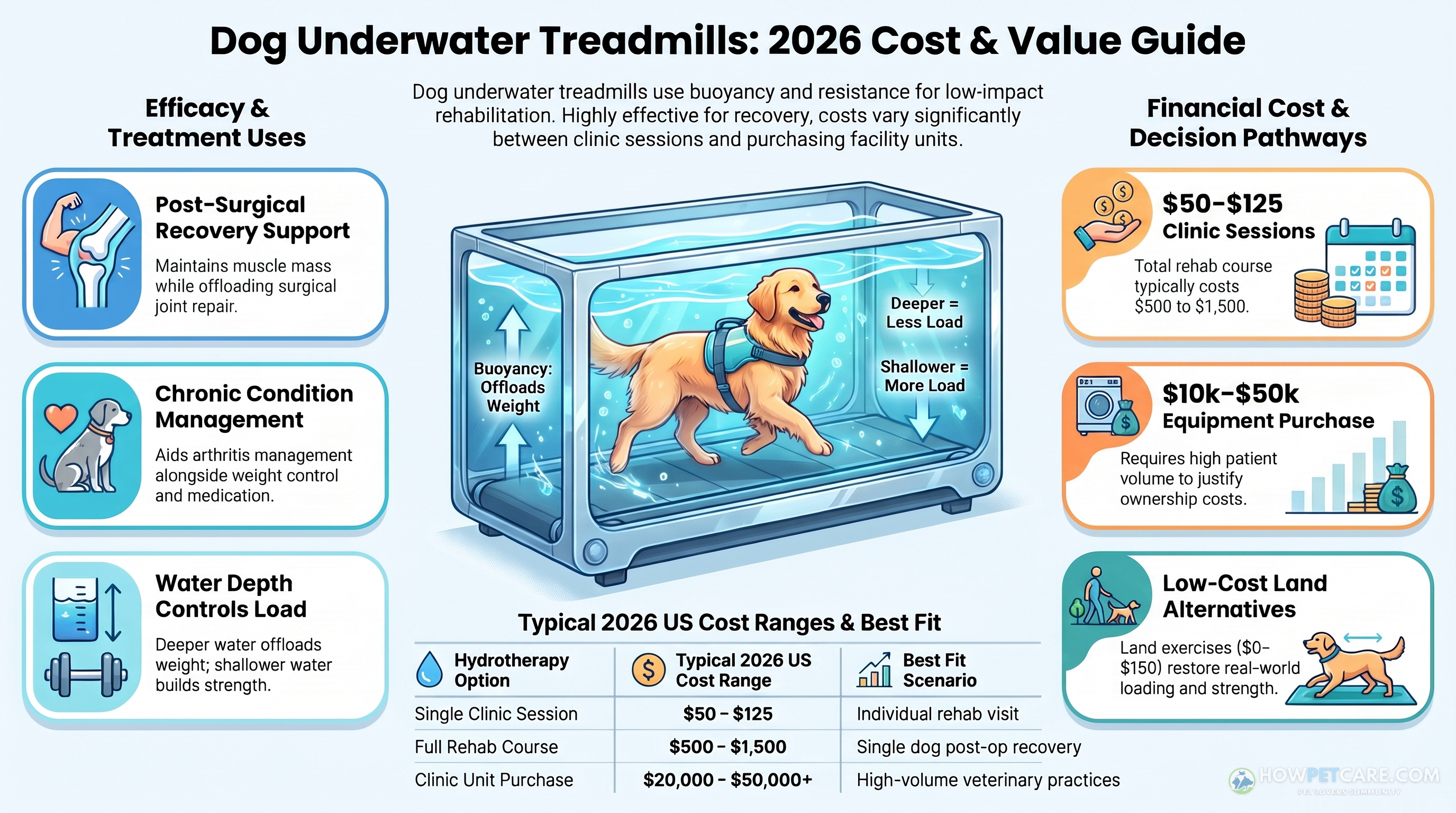
A dog water treadmill is a widely used canine rehabilitation tool, and one of the easiest to overpay for. In the United States in 2026, expect to pay roughly $50 to $125 for a single underwater treadmill session at a veterinary rehabilitation clinic, with a full course of care typically running $500 to $1,500 once an initial evaluation fee of about $75 to $150 is added. Buying a clinic-grade unit is a different world: most run from about $20,000 to $50,000 or more, while compact and entry-level models tend to land between roughly $10,000 and $25,000 before installation. Those figures are approximate ranges drawn from clinic price pages and dealer quotes, and they vary by region, provider, and negotiation — the manufacturers themselves almost never publish a price and instead route buyers to a request-a-quote form.
Here is the honest verdict on whether it works. The strongest case for a dog underwater treadmill is post-surgical rehabilitation — recovery from a torn cruciate ligament (ACL/CCL), orthopedic surgery, and some neurologic conditions — where controlled, low-impact exercise helps a healing limb rebuild strength without overloading the repair. It is a reasonable, supportive tool for arthritis management, hip dysplasia, and weight management, but in those cases it works as part of a broader plan rather than as a cure. Think of it as a way to deliver controlled, low-impact exercise, not a magic switch. The evidence quality is genuinely stronger for post-surgical use than for the wellness claims on sales pages, and I break that down condition by condition below.
The three-line decision shortcut: book clinic sessions if you have one dog recovering from surgery or managing a chronic condition — it is almost always the most cost-effective path. Buy a unit only if you run a facility or have a serious, long-term, multi-dog need that will replace hundreds of paid sessions. And consider alternatives — swimming, land-based rehab, or supervised home exercises — when your budget, your location, or your dog’s condition makes the treadmill a poor fit.
Below you will find the protocols clinics actually use, the contraindications nobody prints on a product page, worked cost math you can take to your own vet, and a checklist for vetting a clinic or a seller before you spend a dollar.
Every dollar figure in this guide is an approximate US range for 2026, not a guaranteed quote. Per-session fees, evaluation charges, and unit prices move with region, provider, and package size. Use these numbers to sanity-check what a clinic or dealer tells you, then confirm your actual cost in writing.
How an Underwater Treadmill Works and How Water Depth Controls Weight-Bearing
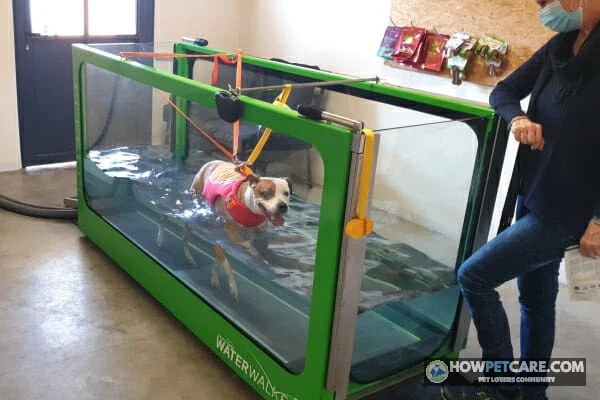
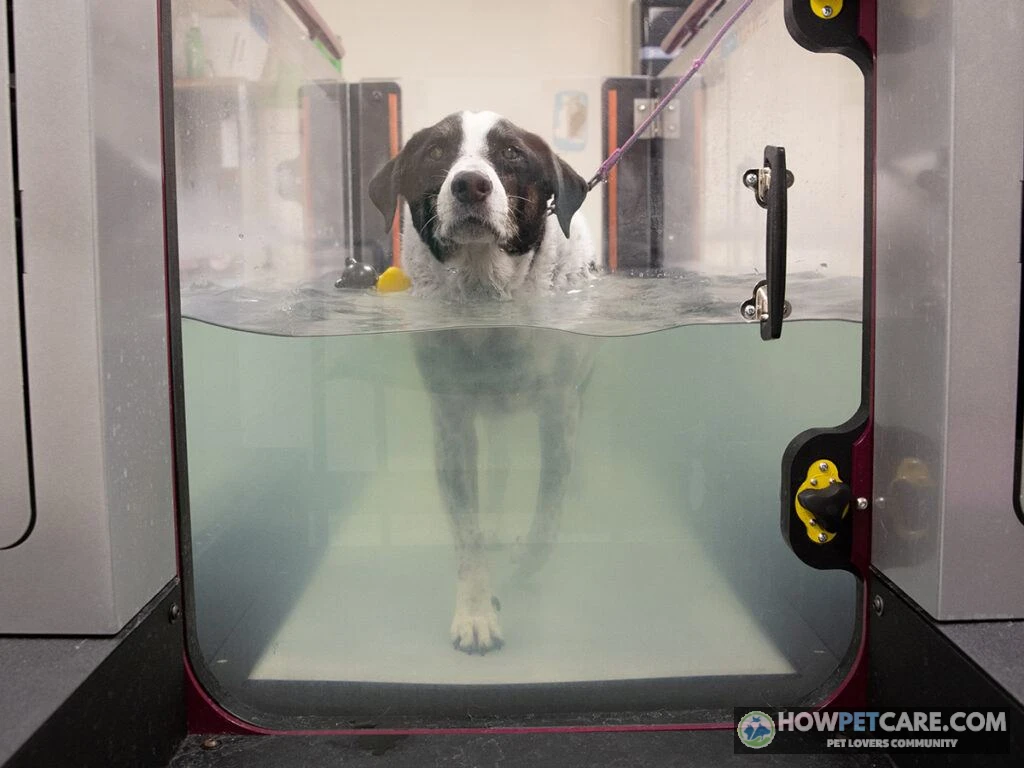
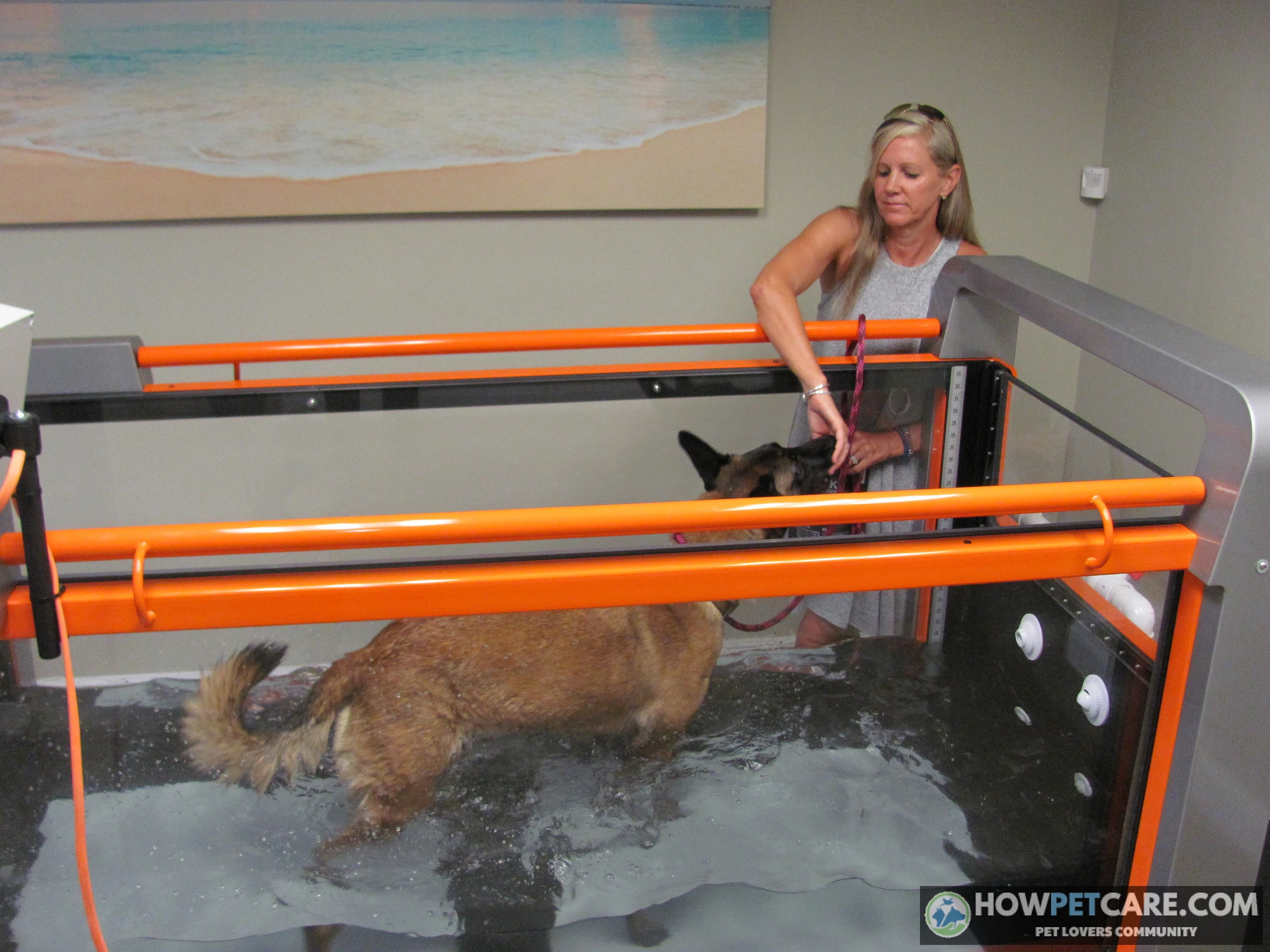
An underwater treadmill is a treadmill belt inside a water-filled chamber, with an adjustable water level, variable belt speed, and a trained therapist standing beside the dog throughout the session. The dog walks the belt while the water does two things at once: it supports the body, and it resists every limb movement.
Buoyancy is what makes this useful for rehab. Water reduces the effect of gravity on the body, which offloads weight from healing joints and tissue. Deeper water offloads more weight; shallower water offloads less. The commonly cited clinical rule of thumb is that water at roughly hip level removes a substantially larger share of body weight than water at the hock, though the exact percentage depends on the dog’s build and how high the water sits. I treat those percentages as directional guidance, not precise figures — therapists use depth to dial load up or down, not to hit a number.
Water also provides resistance. Because water is denser than air, moving a limb through it takes more effort than moving it through air, which increases muscle engagement compared with the same exercise on land. So water depth is the main dial for weight-bearing, while depth and belt speed together set how hard the muscles work. That is the mechanism a therapist manipulates when they raise or lower the water for your dog.
Therapists deliberately change water depth across a course of care. Early on, deeper water offloads a painful or freshly repaired limb. As the dog strengthens, the therapist shallows the water to add weight-bearing back — which is why "deeper is always better" is a myth, covered later.
What buoyancy and resistance do for a healing limb
For a recovering limb, buoyancy means the dog can practice a normal walking pattern without the full grind of body weight landing on a surgical repair or an arthritic joint. Resistance means those same movements still build muscle, which matters because muscle loss is one of the fastest consequences of injury and surgery. The combination — supported movement with real effort — is the reason the modality exists.
Why gait analysis by a trained therapist matters during a session
The treadmill is only half the tool; the therapist is the other half. A trained professional performs gait analysis in real time, spots when the animal is compensating by leaning on the good limbs, and adjusts speed, depth, and duration in response. A skilled practitioner who reads gait and adjusts is worth far more than the machine itself. A certified canine rehabilitation therapist is a genuine quality marker — the credential signals the person knows how to run the equipment and read the dog, not just switch the belt on.
What Underwater Treadmill Therapy Treats, and How Strong the Evidence Is for Each Condition
Manufacturers describe these units as customizable for musculoskeletal injury, post-surgical rehab, obesity management, and general fitness, and they list benefits ranging from arthritis pain relief to muscle strengthening, improved range of motion, and post-operative recovery including cruciate repairs. Much of that is a fair description of what the tool is for. The important part is separating the uses with a strong evidence base from the ones that are plausible but thinly studied — because you are the one paying.
Here is my condition-by-condition read on underwater treadmill therapy for dogs, with an honest evidence-strength rating for each:
| Condition | What the treadmill is meant to do | Evidence strength (and source type) | Typical session and frequency range | Typical course or timeline | Main caution |
|---|---|---|---|---|---|
| Post-surgical ACL/CCL repair (TPLO, lateral suture) | Maintain muscle mass and joint motion while the repair heals, with reduced load on the limb | Moderate — controlled studies support post-op rehab programs as a whole; isolating the treadmill’s specific contribution is harder | 10–30 min, 1–2x/week, starting after incision healing with surgeon clearance | Commonly 6–12 weeks, staged with land exercises | Starting too early or too deep can stress the repair — follow the surgeon’s timeline |
| Other orthopedic recovery (fracture repair, patellar luxation, FHO) | Controlled early motion and gait retraining | Moderate — same rehab literature, mostly case series and trials of multimodal programs | 10–25 min, 1–2x/week | 4–10 weeks, varies by surgery | Every protocol must match the specific repair |
| Osteoarthritis | Low-impact conditioning to support comfort and function | Low-to-moderate — strong rationale, mostly clinical experience and small studies; supportive, not curative | 15–30 min, weekly to every other week | Ongoing or maintenance | Works best alongside weight control and medication, not instead of them |
| Hip dysplasia | Build supporting muscle with reduced joint load | Low-to-moderate — same reasoning as arthritis; thin controlled data | 15–30 min, weekly or biweekly | Ongoing | Not a fix for joint structure — it manages function |
| Weight management | Allow exercise in dogs too heavy or sore for land work | Low — plausible mechanism; diet drives most weight loss | 10–20 min, 1–2x/week | Months-long, tied to a diet plan | Sessions without calorie control rarely move the scale |
| Neurologic recovery (IVDD post-op) | Gait retraining with supported stepping | Low-to-moderate — clinical use is widespread, controlled comparisons limited | 5–20 min, 1–2x/week | Highly variable by case | Severity dictates the plan; some dogs progress better with other modalities |
| Degenerative myelopathy, conditioning, sport fitness | Slow decline or build fitness | Weak — mostly anecdote and expert opinion | Varies | Ongoing | Treat claims here as unproven; ask what evidence the clinic relies on |
How to read "evidence strength": moderate means controlled studies or a consistent clinical-trial record support the broader rehab approach; low means the rationale is sound but published data are mostly case series and clinical experience; weak means you are largely paying for expert opinion. The session ranges above are typical figures cited by rehabilitation providers — your dog’s protocol is set by the therapist and surgeon, not by a table.
Post-surgery and ACL/CCL recovery
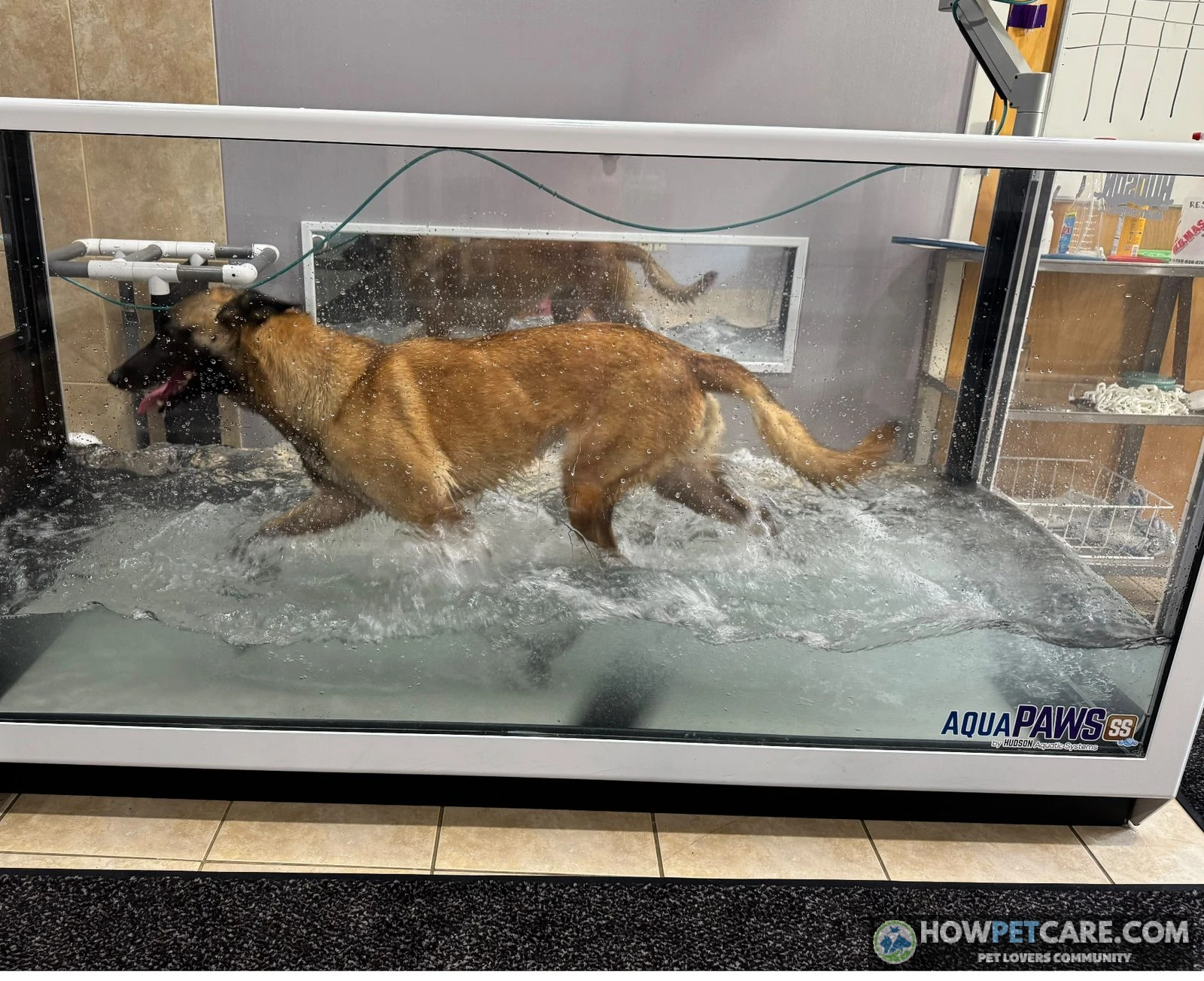
This is the flagship use case, and it holds up best. After a torn cruciate ligament is repaired — whether with a TPLO, an extracapsular (lateral) suture, or another technique — the early rehab priority is maintaining muscle mass and joint motion while the repair heals, without overloading it. Controlled underwater treadmill work supports exactly that goal. The honest caveat: most studies show that structured rehabilitation programs as a whole help dogs recover, and it is genuinely hard to isolate how much of the benefit comes from the treadmill specifically versus the surrounding land exercises and therapist work. The rationale is strong; the isolated proof is more modest than a sales brochure implies.
Arthritis and hip dysplasia
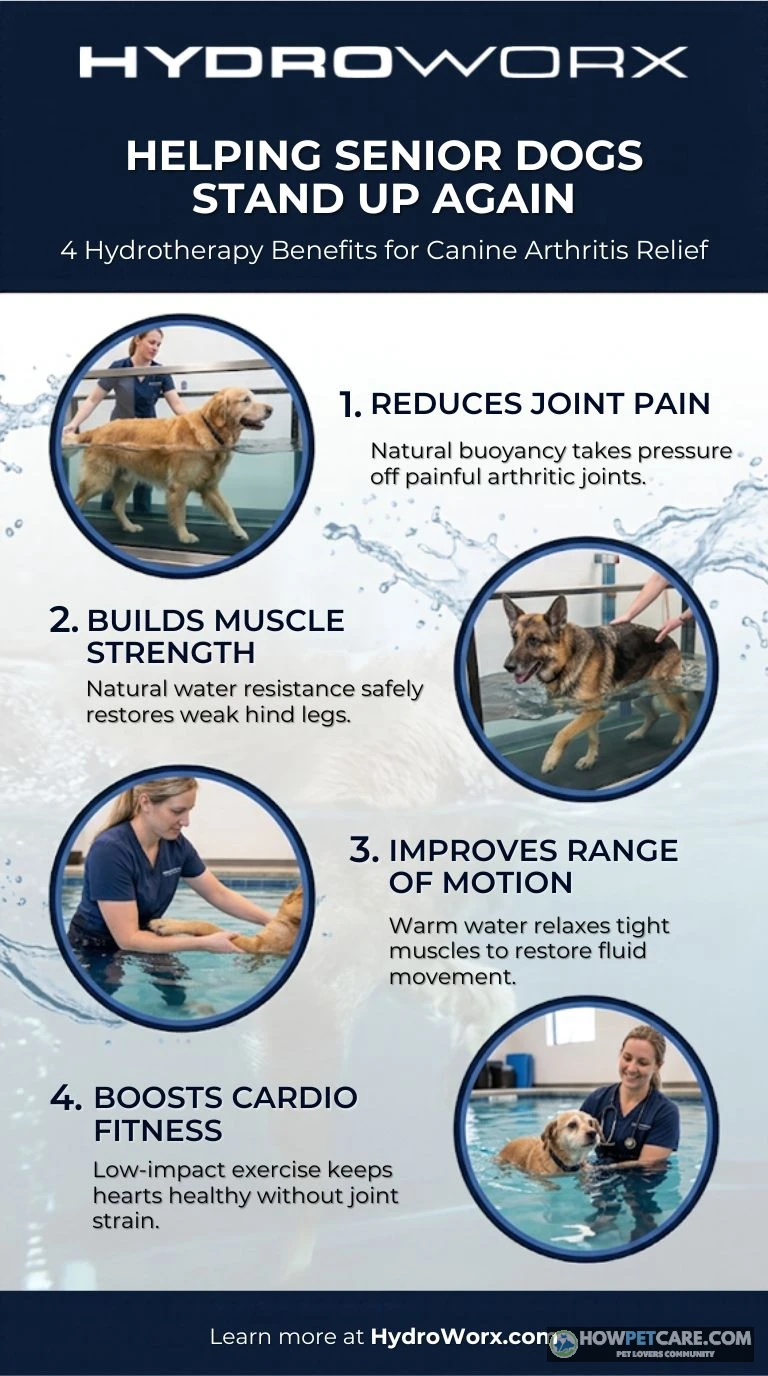
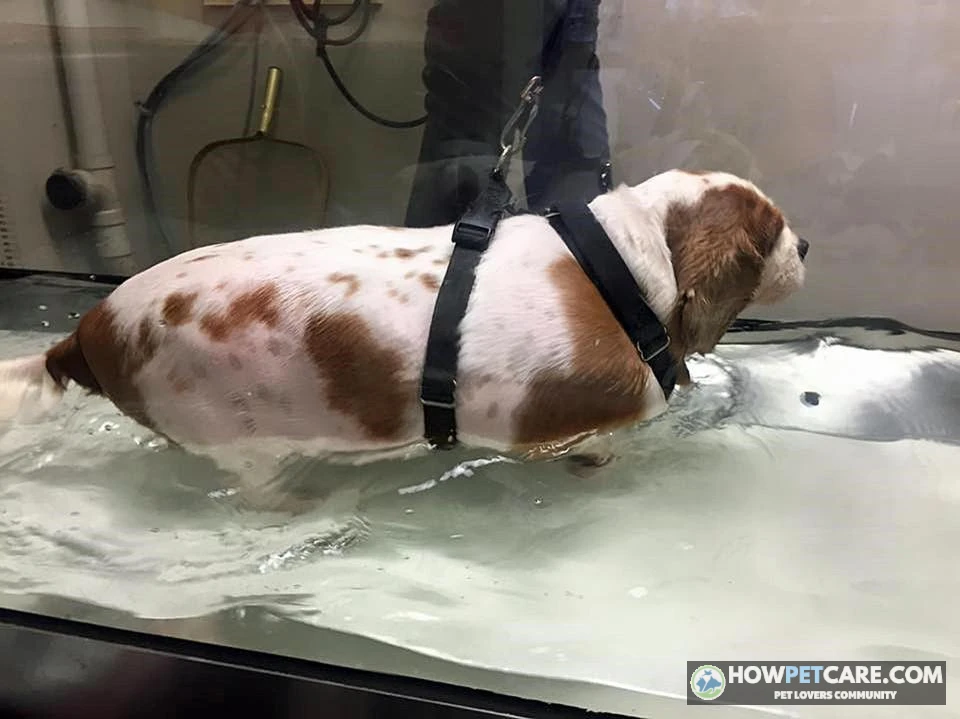
For osteoarthritis and hip dysplasia, the treadmill offers low-impact conditioning that supports comfort and function, and it lets an overweight or stiff dog move more comfortably than land walking allows. But be clear-eyed: this is supportive care, not a fix for the underlying joint structure. It works best alongside weight control, appropriate medication, and joint-health measures — not instead of them. The evidence here is mostly clinical experience and small studies rather than large controlled trials, so if you are wondering whether hydrotherapy is good for dogs with arthritis, the fair answer is that it is commonly used and reasonably supported, not clinically proven to reverse the disease.
Weight loss and overweight dogs
The treadmill can be genuinely valuable for a dog too heavy or too sore for comfortable land exercise, because it lets them move with less joint strain. But diet drives the large majority of weight loss in dogs, and no amount of water walking outruns an unchanged calorie intake. Sessions support a weight plan; they do not replace one. If a clinic sells you an underwater treadmill package as the centerpiece of a weight-loss program with no dietary component, that is a red flag.
Where the evidence is thin or mostly anecdotal
Neurologic recovery after IVDD (intervertebral disc disease) surgery has widespread clinical use but limited controlled comparison. Claims around degenerative myelopathy, general conditioning, and sport-dog fitness rest largely on anecdote and expert opinion. I am not saying these are useless — I am saying that when a clinic makes strong claims in these areas, it is fair to ask what evidence they are relying on and to weight your expectations accordingly. There is also a legitimate contrarian view in the veterinary community that the modality is over-used and that many dogs recover just as well, or better, with a well-designed land-based program. That skepticism is worth taking seriously, not dismissing.
1During canine hydrotherapy, how does altering the water depth inside an underwater treadmill affect a dog's weight-bearing and muscular workload?
Buoyancy offloads body weight in deeper water to protect healing joints, whereas shallow water requires the dog to bear more gravity-driven load.
2Which of the following best describes the evidence base and timing protocol for introducing underwater treadmill therapy after a canine ACL/CCL surgery?
Controlled studies validate structured, multi-component post-operative rehabilitation once surgical clearance and tissue healing are established.
3Which of the following conditions represent medical reasons to delay or avoid canine underwater treadmill therapy?
Submerging unhealed surgical sites creates significant infection risks and can compromise surgical site integrity.
4A dog owner considers an underwater treadmill package to help an obese dog lose weight. Why is relying exclusively on hydrotherapy for canine weight loss considered ineffective?
Systemic weight reduction depends primarily on creating a caloric deficit through controlled nutrition rather than exercise alone.
5An owner's dog requires a post-surgical rehab course costing approximately 800 total at a clinic. If a compact underwater treadmill unit costs 15,000 to purchase (before installation and maintenance), roughly how many clinic sessions would the machine need to replace to match its base purchase price?
Dividing a 15,000 purchase price by average per-session clinic costs (80) demonstrates that hundreds of sessions are needed to break even.
6Which of the following practices when evaluating a canine hydrotherapy facility should be viewed as potential red flags?
Rehabilitation requires individualized protocols tailored to the patient's specific surgical, orthopedic, or neurological condition.
7How does an underwater treadmill differ from free swimming in a lake or pool when used for structured canine rehabilitation?
Controlled treadmill environments allow therapists to enforce normal limb extension and cadence, preventing abnormal movement habits.
8How does the evidence supporting underwater treadmill therapy for post-surgical cruciate repair compare to its evidence for degenerative myelopathy or sport conditioning?
Systematic studies support post-operative structured rehabilitation, while wellness and progressive neurological claims lack extensive controlled trials.
What a Typical Underwater Treadmill Protocol Looks Like: Session Length, Frequency, and Timeline
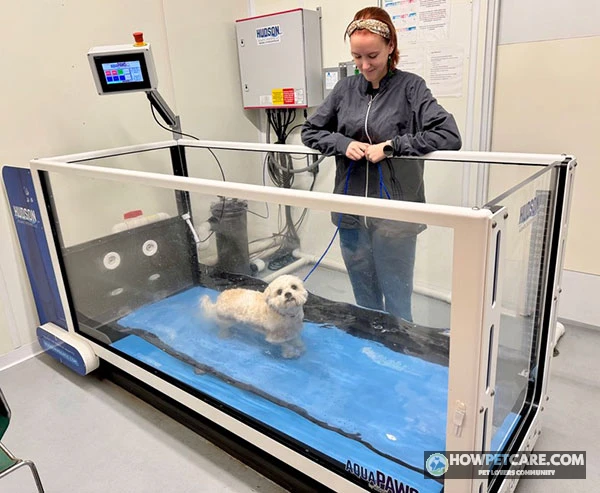
Protocols vary by condition, by surgeon, and by therapist, but there are realistic ranges you can expect. Sessions usually begin short — often just a few minutes — while the dog acclimates, then build toward roughly 10 to 30 minutes of actual walking as tolerance improves, frequently with rest breaks. Frequency is commonly one to a few times per week, tapering as the dog progresses. For reference on what the equipment itself can do, clinic-grade units typically offer belt speeds up to about 6 mph with fine increments and water fill adjustable across roughly the 0 to 600 mm range — more control than any single dog needs, which is exactly the point.
Post-surgical timeline example
For an ACL/CCL repair, hydrotherapy often starts after the incision has healed and the surgeon has cleared the dog for it — think of it as underwater treadmill therapy for dogs after surgery, timed to the healing timeline. A course commonly runs around 6 to 12 weeks, staged alongside land exercises, with sessions two times per week early on and tapering to once weekly. Return to normal activity is gradual and should follow your surgeon’s timeline above all else. The variation between individual dogs is wide, so treat any timeline you read — including this one — as a starting expectation to confirm with your own veterinary team.
Chronic conditions: arthritis and hip dysplasia schedules
For ongoing conditions like arthritis or hip dysplasia, sessions are often less frequent and more maintenance-oriented — perhaps weekly or every other week over the long term, rather than a finite post-surgical course. The goal shifts from rehab to preserving mobility and comfort, which means the schedule tends to be open-ended and adjusted to how the dog is doing month to month.
Signs the program is working, and signs it is not
Progress should be measured, not guessed. Look for concrete markers: improved gait observation, increased muscle mass or limb circumference on the treated side, better range of motion, and owner-reported improvements in daily function like stairs or rising. Signs the program is not working include no measurable change after several weeks, a dog that dreads sessions, or a clinic that cannot articulate what has to improve before you reduce or stop. Between sessions, most good programs include home exercises, because the treadmill is rarely the whole plan.
Which Dogs Should Not Use a Water Treadmill: Risks, Contraindications, and Acclimation
This is the section most product pages skip, and it matters. Water treadmills are not appropriate for every dog, and a responsible clinic will screen for that.
Medical reasons to wait or skip
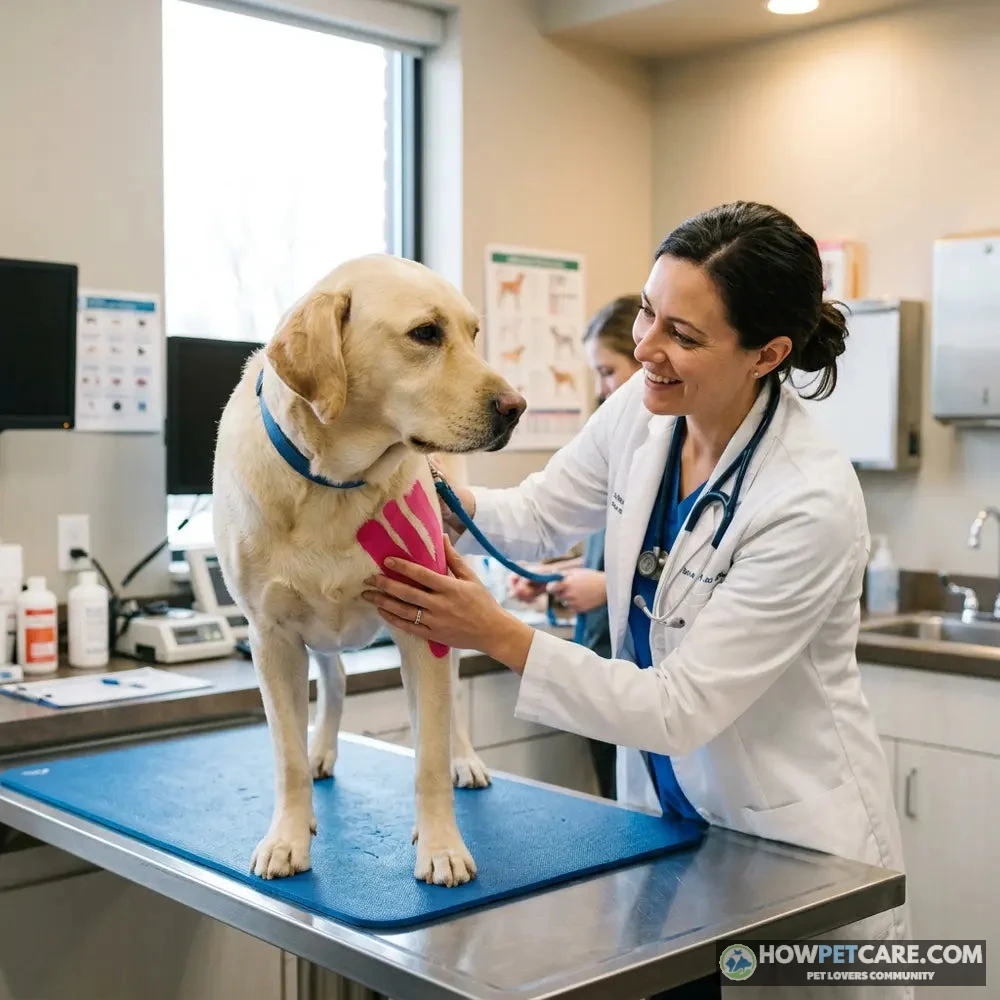
Common reasons to delay or avoid underwater treadmill therapy include open or unhealed surgical incisions and skin infections; some cardiac or respiratory conditions; uncontrolled seizures; fever or active infectious illness; and severe anxiety or outright panic around water. The vet or rehabilitation therapist must clear each dog before the first session — this is not a formality. Additional risks even for cleared dogs include stress and overexertion, overheating or chilling, fatigue-related strain, over-reliance on offloaded exercise at the expense of real-world strength, and hygiene or infection risk in a poorly maintained facility.
Do not book underwater treadmill sessions for a dog with an open incision, active infection, uncontrolled heart or seizure condition, or a fever. If a clinic will start your dog without veterinary clearance, walk away.
How acclimation works for nervous dogs
A good first session is short and shallow. Fearful dogs are introduced gradually — shallow water, treats, a handler within reach, and a clear plan for what happens if the dog panics. If a dog stays distressed after a few gentle attempts, that is useful information, not a challenge to overcome; land-based rehab is usually the kinder and more productive choice.
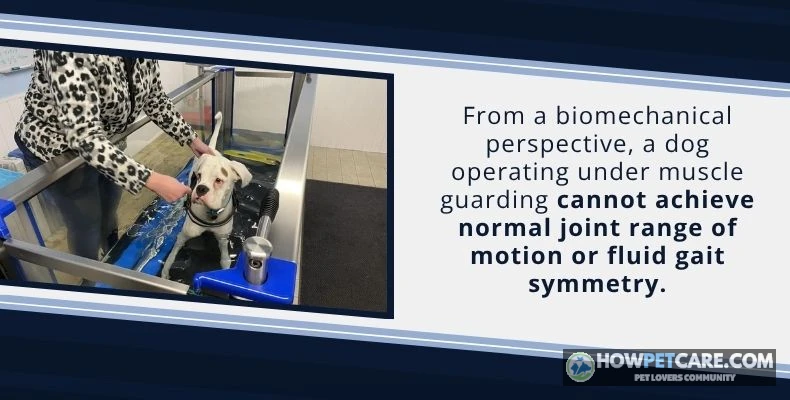
Myth: more water time is always better. You will hear that because the treadmill is low-impact, more sessions and deeper water can only help. That is wrong, and the reason is the same property that makes the tool valuable. A limb that never bears its full load does not get the progressive loading that rebuilds bone density and functional strength for real-world walking. A dog can look great walking in deep water and still lack the strength for dry land.
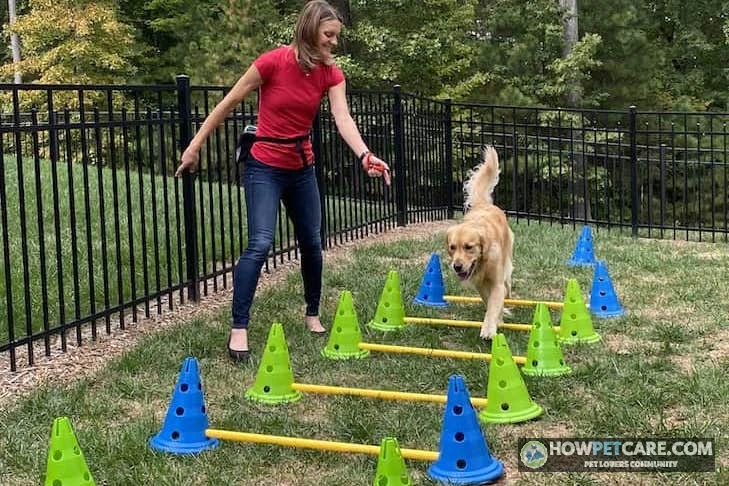
What this means in practice: deeper is not automatically better — therapists deliberately shallow the water as a dog improves precisely to add load back. A treadmill-only program is usually incomplete; well-designed plans pair water sessions with land exercises like sit-to-stands, cavaletti poles, and incline work to restore full loading. Over-prescription happens too: if a clinic books your dog for indefinite twice-weekly treadmill sessions with no land component, no progress measurements, and no tapering plan, ask what the exit criteria are.
The skeptical owner’s question — "What has to improve before we reduce sessions or add land work?" — is the one to ask. A clinic that cannot answer it is selling sessions, not outcomes.
Size and breed also matter. Very small dogs, giant breeds, brachycephalic (flat-faced) dogs, and puppies each need an individualized assessment, so confirm suitability with the therapist rather than assuming.
How Much Does Dog Hydrotherapy Cost Per Session? Pricing, Packages, Insurance, and Payment Plans
In the US, a single underwater treadmill session commonly runs about $50 to $125, with an initial rehabilitation evaluation fee of roughly $75 to $150 charged once, separately. Actual prices swing with region (urban clinics cost more than rural ones), session length, and whether an evaluation is bundled in. Treat these as approximate ranges gathered from clinic price pages, and confirm locally.
Worked examples: cost of a typical rehab course by condition
Numbers make this concrete. Consider a realistic scenario: a 55 lb dog, eight weeks post-TPLO surgery, cleared by the surgeon for hydrotherapy. Using approximate mid-range US pricing (verify against your own providers — these are illustrative, dated to 2026, and not universal):
- Initial rehab evaluation: about $100 to $150 (usually charged once, separately)
- Per-session fee: about $65 to $95
- Prescribed course: 10 sessions over 7 weeks (twice weekly for 3 weeks, then weekly)
- Package discount: 10 sessions for the price of 9
The arithmetic: an evaluation at $125, plus 9 paid sessions at $80 each ($720), gives a total course cost of roughly $845 — versus roughly $925 if you paid full price for all 10 with no package.
Now the alternatives for the same dog: swim-only sessions where offered often run about $40 to $60 each but lack the controlled depth, speed, and gait observation that drove the referral. A land-based exercise program designed by the therapist and done at home costs almost nothing in marginal terms but demands owner consistency. A home or compact unit runs about $15,000 to $30,000-plus before installation — at $80 per session, that machine would need to replace roughly 190 to 375 paid sessions just to match its sticker price, before a single dollar of operating cost. For this dog, the 10-session course wins by a wide margin.

Insurance coverage and vet referral requirements
Some pet insurance plans reimburse rehabilitation, but coverage varies widely and often hinges on riders, pre-authorization, and whether the plan was in force before the condition was diagnosed. Many rehabilitation clinics require a veterinary referral or prescription, especially for post-surgical cases, and insurers that cover rehab frequently require one too. Read your specific policy language and confirm both the clinic’s referral requirement and your plan’s rehab benefits before booking, so you are not surprised by an out-of-pocket bill.
Package pricing and financing options
Multi-session packages commonly discount 10 to 20 percent off the per-session rate, which is where most of the savings live. Some clinics offer in-house payment plans, and third-party veterinary financing can spread larger costs over time. The single most effective way to lower your total is often combining clinic sessions with a disciplined home exercise plan, which can reduce the number of paid sessions you need.
What a Dog Underwater Treadmill Costs to Buy, and What Ownership Adds
Buying is a serious decision, and the sticker price is the least of it.
Clinic-grade vs. compact vs. home-scale: price tiers
Broadly, there are three tiers. Compact and entry-level units often fall around $10,000 to $25,000. Clinic-grade units — the kind built for high daily volume — commonly run from about $20,000 to $50,000 or more, with premium models climbing higher. True home-scale units priced for individual owners are rare; most of what is marketed as "home" is still a compact commercial machine. Every one of these figures is a quote-based estimate rather than a published MSRP, because manufacturers route buyers to a quote. Date-check any number you are given and get it in writing.

Brand comparison without a single ‘best’ pick
Several names come up repeatedly when buyers shop this category: AquaPaws, Hydro Physio, Tudor Treadmills, HydroWorx, and LiteCure. I am deliberately not crowning a winner, because I am working from published specs and dealer quotes rather than hands-on testing, and because the right unit depends on your space, your dog sizes, and your budget. What you can compare across brands are the things that actually affect ownership: tank size and the dog-size range it fits, water-depth and speed control, entry design, build materials, and support and warranty terms.
| Brand and model | Published or quoted price range | Dog size range | Depth and speed control | Installation and service notes | Best suited for |
|---|---|---|---|---|---|
| AquaPaws (Hudson Aquatic) | Quote only — request a written quote | Confirm tank dimensions against your dog’s size | Confirm depth range and top belt speed for the model | Confirm install type (free-standing, in-ground, or pool-fed) and local service coverage | Established US-market option for owners and clinics |
| Hydro Physio | Quote only — request a written quote | Confirm tank dimensions against your dog’s size | Confirm depth range and top belt speed for the model | Confirm installation, electrical needs, and warranty | Clinics wanting full-visibility chamber designs |
| Tudor Treadmills | Quote only — request a written quote | Confirm tank dimensions against your dog’s size | Confirm whether powered incline is included | Confirm service contracts and parts availability | Buyers who want incline for conditioning |
| HydroWorx | Quote only — request a written quote | Confirm tank dimensions against your dog’s size | Confirm depth range and speed increments | Confirm drainage, plumbing, and electrical requirements | Larger facilities with aquatic infrastructure |
| LiteCure | Quote only — request a written quote | Confirm tank dimensions against your dog’s size | Confirm depth range and top belt speed | Confirm training, service, and warranty terms | Buyers already using the broader veterinary device line |
Treat the table as a comparison-shopping checklist to complete with each dealer’s written specs, not as verified per-brand data. Across the category, quality units share a common feature set drawn from published product materials — medical-grade stainless steel, clear panels for full patient visibility, adjustable water depth, powered incline, walk-through doors with safety latches, emergency dump-valve drainage, and belt speeds up to about 6 mph.
Hidden costs: installation, electrical, water treatment, service
The sticker price is not the total cost of ownership. Units typically come as free-standing, in-ground, or pool-fed installations, and each shapes your plumbing and drainage needs. Many require a dedicated high-voltage electrical circuit, which can mean an electrician’s visit. Add water filtration and treatment chemicals, routine cleaning, occasional repairs, and often a service contract, and the annual cost of ownership can reach into the thousands. Optional accessories — therapy stools, isolation plates, operator platforms, dosing controllers, and insulated tank covers — add further to the bill.
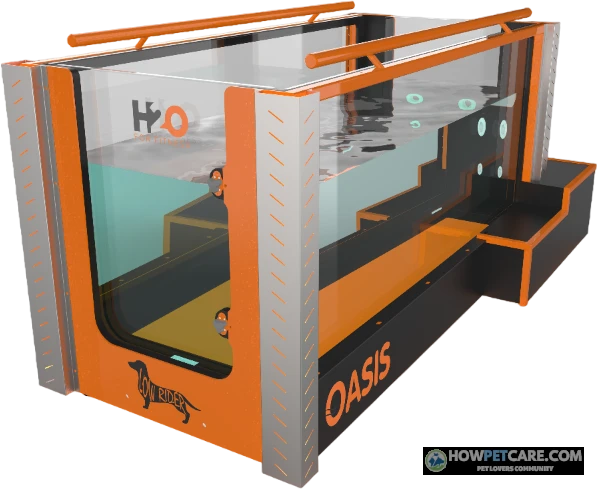
A $25,000 unit is not a $25,000 decision. Installation, a dedicated electrical circuit, water treatment, and service can add meaningfully to the first-year cost. Get the full installed and operating estimate before you commit.
Used and refurbished units
Used and refurbished units do exist and can sell for a meaningful discount off new — often cited in the range of 30 to 50 percent below new when available — but inventory is sporadic and the resale market is thin. If you go this route, ask hard questions about operating hours, maintenance history, remaining warranty, and whether the seller will stand behind service. A great price on a machine with an unknown service history and no support is not a bargain.
Clinic Sessions, Home Unit, or Alternatives: Which Makes Sense for Your Dog
The right choice depends on your dog’s condition and stage, how long therapy is needed, your local access, your budget, and your dog’s temperament — with your surgeon’s or therapist’s recommendation carrying real weight.
| Option | Upfront cost range | Ongoing cost | Best fit | Key limitations | Source and date of figures |
|---|---|---|---|---|---|
| Clinic sessions | $0 upfront (eval fee ~$75–$150) | ~$50–$125 per session; typical course $500–$1,500 | Post-surgical rehab, most single-dog households | Per-visit cost adds up for chronic conditions; requires local access | Approximate US ranges from clinic price pages, 2026 — verify locally |
| Package deals at a clinic | Prepay $400–$1,200 typical | Same, discounted ~10–20% | Committed multi-week courses | Money locked in if the dog does not tolerate the treadmill | Clinic published packages, 2026 |
| Compact / entry unit purchase | ~$10,000–$25,000 | Installation, dedicated electrical circuit, water treatment, filtration, cleaning, service contract | Serious multi-dog households, small facilities | Dealer-quoted pricing varies widely; thin resale market | Dealer quotes only — no public MSRP for most models, 2026 |
| Clinic-grade unit purchase | ~$20,000–$50,000+ | All of the above plus floor load, drainage, plumbing, training | Rehab practices, vet hospitals, boarding/training facilities | Total cost of ownership can add thousands per year; ROI depends on volume | Dealer quotes; manufacturers rarely publish prices |
| Used / refurbished unit | ~30–50% below new, when available | Same operating costs plus unknown wear and service history | Buyers comfortable inspecting equipment | Limited warranty; hard to verify hours and maintenance | Resale listings — inventory is sporadic, 2026 |
| Free swimming (lake, pool, clinic swim) | $0–$60 per session | Minimal | Dogs that swim safely and need conditioning, not precise rehab | Uncontrolled load and gait; may reinforce compensation; safety risks for weak or post-surgical dogs | Clinic swim-session pricing, 2026 |
| Land-based rehab exercises | $0–$150 for a therapist-designed home plan | Owner time | Cases needing progressive loading, balance, proprioception | Requires owner consistency; no offloading for severely painful dogs | Therapist home-program fees, 2026 |
The honest math: a home or compact unit starts to make financial sense only when it replaces several hundred paid sessions or serves multiple dogs for years. For a single post-surgical course, sessions win on cost almost every time. Buying is an equipment-business decision or a rare long-term multi-dog one, not a way for most owners to save on one dog’s rehab.
Underwater treadmill vs. swimming
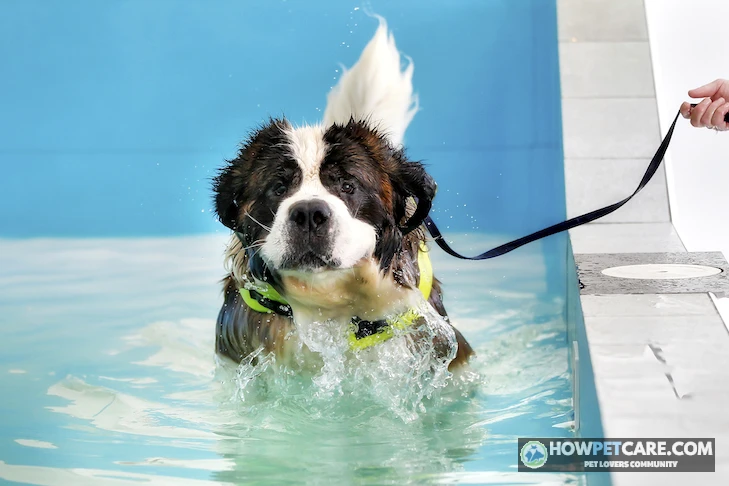
Swimming is often cheaper and widely available, and for some dogs it is a fine way to condition. But free swimming is uncontrolled — you cannot precisely set depth, speed, or duration, and a dog may reinforce compensating movement patterns rather than a clean gait. The controlled depth and speed of a treadmill, plus a therapist reading the dog’s gait, is the reason it is often chosen for structured rehab. Swimming works well for dogs that already swim safely and need conditioning more than precise rehabilitation; it is a poor primary tool for a weak or freshly post-surgical dog.
Underwater treadmill vs. land-based rehab
This is the comparison owners most often overlook. Land exercises — sit-to-stands, cavaletti poles, incline walking, and balance and proprioception work — deliver the progressive loading that water deliberately offloads. When a dog needs to rebuild functional strength for real-world movement, land rehab is not just an alternative; it is often necessary. Most well-designed programs combine both: water to offload and build early, land to restore full loading. If your dog’s main gap is strength on dry land, land work deserves as much of your budget as the treadmill.
Can you do this at home?
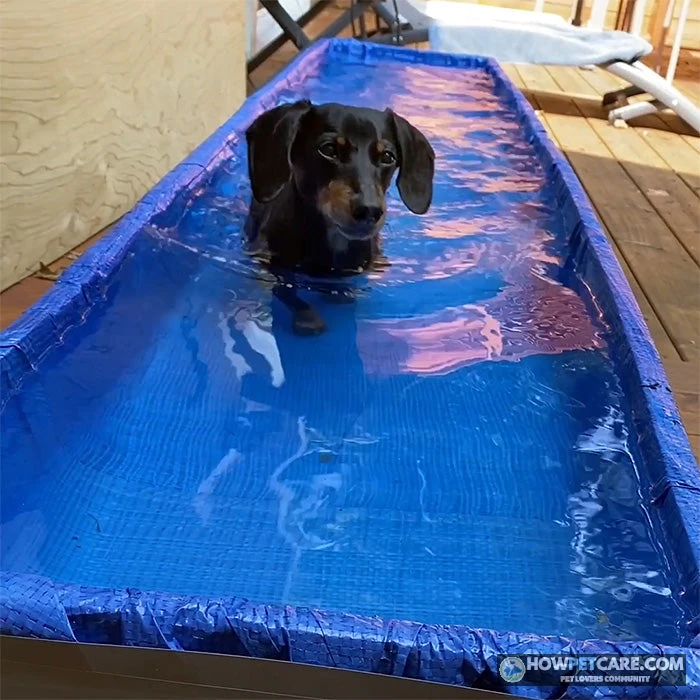
Some of it, safely. Supervised shallow-water walking in your own pool, a bathtub for a small dog, and owner-led land exercises from a therapist’s written plan are all reasonable. What is not safe: improvised treadmills placed in water, any unsupervised water session for a recovering dog, and anything involving electricity near water. Nothing you build at home replicates a monitored clinic treadmill, and no honest source will tell you otherwise.

When a treadmill is overhyped for your dog
Be skeptical when a treadmill is sold as a universal fix. If your dog needs progressive loading and balance work, a treadmill-only plan under-delivers. If sessions are prescribed indefinitely with no land component, no progress measurements, and no tapering plan, the tool has become the goal rather than the means. The skeptical question to carry into any clinic — "what has to improve before we change the plan?" — separates evidence-based care from session-selling.
Finding Dog Water Treadmill Therapy Near You: A Vetting Checklist and Your Next Steps
When you search for a dog water treadmill near me, start by asking your primary vet or your surgeon for a referral — the best rehabilitation often begins with a recommendation from the practice that did the surgery. Beyond that, look at veterinary specialty and rehabilitation hospitals, university teaching hospitals, and credential directories for certified canine rehabilitation practitioners and canine physical therapy providers. Two credentials you will see are the CCRP (Certified Canine Rehabilitation Practitioner) and the CCRT (Certified Canine Rehabilitation Therapist); a therapist holding either, ideally working under veterinary oversight, is a good sign.
Questions to ask before booking sessions
Bring this list to your first call or evaluation. A good clinic answers every item without defensiveness.
- ☐ Who supervises each session? You want a certified canine rehabilitation professional (CCRP, CCRT, or equivalent) or a vet/technician working under one — not an untrained attendant.
- ☐ Is a veterinarian involved in the plan? Post-surgical cases should run under vet or surgeon oversight, with clearance before the first session.
- ☐ Will you do an initial evaluation and give me a written plan? Expect a documented baseline: gait assessment, muscle measurements, and a session/frequency recommendation.
- ☐ Is the treadmill one part of a bigger program? "We put every dog on the treadmill" is a red flag — good programs mix water work with land exercises and other modalities.
- ☐ How do you measure progress? Look for concrete measures — gait observation, limb circumference, range of motion — not just "your dog seems better."
- ☐ How do you acclimate a nervous dog? The right answer involves short first sessions, shallow water, treats, and a handler in reach, plus a plan for if the dog panics.
- ☐ How is the water treated and tested? Ask about filtration, sanitation schedule, and how they handle a dog that soils the tank.
- ☐ What are your session fees, package terms, and cancellation policy? Get the total course cost in writing before prepaying anything.
- ☐ Will you coordinate with my surgeon or primary vet? Progress notes should flow back to the referring practice.
- ☐ What happens if this is not working? A credible clinic has criteria for stopping or switching approaches; guaranteed results are a red flag.
Red flags that a clinic puts every dog on the treadmill
Watch for these: every dog gets the same treadmill program regardless of condition; no initial evaluation or vet clearance; guaranteed results; heavy pressure to prepay a large package; and no gait or progress assessment. Any one of these should give you pause; several together are a reason to look elsewhere.
Questions to ask before buying a unit
If you are seriously considering a purchase, get a published price or a written quote, a clear installation scope, the warranty and service terms, the training the seller provides, and references from other buyers. For a used unit, add operating hours, maintenance history, and remaining warranty to the list.
Your decision path in five steps
-
Talk to your vet or surgeon
Confirm your dog is a candidate and get any required clearance or prescription before you go further.
-
Get a referral
Ask the practice that knows your dog’s case to point you to a qualified rehabilitation provider.
-
Request prices from two or three providers
Ask for session fees, evaluation fees, package terms, and cancellation policies in writing.
-
Compare cost per course
Use the total course cost, not the per-session number, so you are comparing like with like.
-
Decide with the framework above
Book sessions for most single-dog cases; reserve buying for a facility or long-term multi-dog need; choose alternatives when access, budget, or your dog’s condition makes the treadmill a poor fit.
Start with your vet this week, collect two or three written price lists, and you will walk into your first session knowing what it should cost, what it can realistically achieve for your dog, and exactly what to hold your provider accountable to.
FAQ
Do I need a vet referral for dog underwater treadmill therapy?
Many rehabilitation clinics require a veterinary referral or clearance, especially after surgery or for dogs with medical conditions. Insurers that cover rehabilitation often require one as well, so confirm requirements with the clinic and your policy before booking.
Will my dog be scared of the water treadmill?
Some dogs are nervous at first. Good clinics start with short, low-water sessions, use treats and a handler beside the dog, and stop if the dog panics. If a dog stays distressed after a few attempts, land-based rehab is usually a better choice.
Can puppies or small dogs use an underwater treadmill?
Many clinics treat small dogs and some treat young dogs with conditions such as developmental orthopedic problems. Suitability depends on the dog’s size, age, and diagnosis, so the vet and rehabilitation therapist need to approve it first.
How warm is the water in dog hydrotherapy?
Clinics generally keep the water comfortably warm rather than cold, since warmth can help relax muscles and make sessions more tolerable. Ask the clinic what temperature it uses and whether it adjusts for dogs with heart, breathing, or overheating concerns.
Can a dog go on an underwater treadmill every day?
Most programs use sessions a few times per week at most, with rest days and home exercises in between, though schedules vary by condition and stage of recovery. Daily sessions should only happen if the supervising vet or therapist prescribes them.