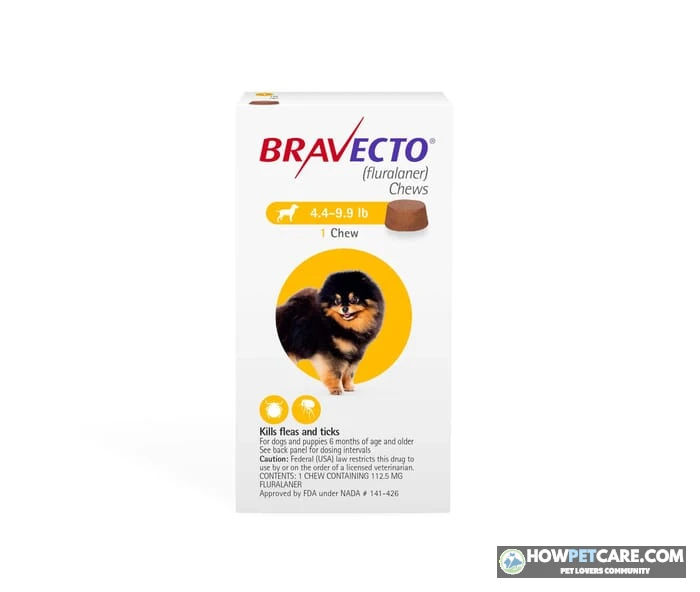

Bravecto for dogs is a prescription-only fluralaner flea and tick treatment. To buy it safely:
- Have your veterinarian confirm the formulation and strength from your dog’s current age and weight; regular chews start at 6 months and 4.4 lb.
- Give regular chews with food; they protect against fleas and most labeled ticks for about 12 weeks (8 weeks for lone star ticks).
- Order only from your vet or a licensed US pharmacy that verifies the prescription.
- Discuss any seizure history and the isoxazoline class warning before ordering.
Bravecto for dogs: how to make the purchase decision
Bravecto for dogs requires a veterinary prescription in the United States. Start with your dog’s current age and weight, then ask your veterinarian to confirm the product, strength, and schedule. For eligible dogs, the regular Bravecto chew is given with food and generally kills fleas and specified ticks for 12 weeks. Its labeled coverage against lone star ticks lasts eight weeks.
Before ordering, consider two key differences. Bravecto 1-MONTH is a separate chew for eligible younger puppies. Bravecto Topical Solution is applied to the skin rather than swallowed. Both contain fluralaner, an isoxazoline-class active ingredient. This class carries a warning about neurologic reactions, including seizures.
Use the regular-chew weight chart to identify the strength to discuss with your vet, then follow the prescription-buying checklist. If your dog has ever had a seizure, review the safety information and discuss that history before choosing a product.
Bravecto dosage by weight: select the right chew
The table below is for the regular Bravecto chewable tablet only—not Bravecto 1-MONTH, the topical solution, or the injectable product. Regular chews are for dogs and puppies at least six months old that weigh at least 4.4 pounds.
| Dog weight range | Fluralaner per chew | US box color | Selection notes |
|---|---|---|---|
| 4.4–9.9 lb | 112.5 mg | Yellow | Smallest regular-chew strength; dog must meet the age minimum. |
| Over 9.9–22 lb | 250 mg | Orange | For dogs above the first band and through 22 lb. |
| Over 22–44 lb | 500 mg | Green | For dogs above 22 lb and through 44 lb. |
| Over 44–88 lb | 1,000 mg | Blue | For example, a 45-lb dog falls in this band. |
| Over 88–123 lb | 1,400 mg | Pink | Largest single-chew band. |
| Over 123 lb | Combination of chews | Varies | Ask the vet to prescribe the appropriate combination. |

The supplied retailer evidence identifies five regular-chew weight bands and confirms the smallest and largest strengths. Before ordering, verify the intermediate strengths, color coding, and exact band boundaries against the current US package and your veterinarian’s prescription.
This chart is a product-selection aid, not a substitute for veterinary advice or a prescription. Don’t split a chew or improvise a dose. Confirm the labeled strength and schedule with your veterinarian.
How to read the weight-band chart
Use your dog’s current weight, not an old clinic record. At an exact boundary, confirm the right strength with your veterinarian and the product label. If your dog is near a cutoff, use a clinic or pet scale instead of estimating by holding your dog on a bathroom scale.
For a growing puppy, ask the vet how expected weight changes could affect the next prescription. Don’t automatically order the next size up or assume the current box will remain appropriate. Bravecto 1-MONTH has its own labeling and strengths, so check that product’s prescription separately.

Dogs above the largest weight band
Dogs over 123 pounds need a prescribed combination, not an estimated fraction of a chew. Have your veterinarian specify the combination and confirm it before checkout. Keep the individual packages so you can identify exactly what was given.
 You might be wonderingWarts from dogsWarts from Dogs: Can Humans Catch Them? ID & CareRead the answer
Where to buy Bravecto with a veterinary prescription
You can get Bravecto from your veterinarian or a properly licensed US pharmacy that fills veterinary prescriptions. Merck Animal Health lists its Bravecto products as prescription-only.
A clinic may dispense the medication directly or provide a prescription for another pharmacy. Chewy and Costco are examples of places to check for a prescription pet-pharmacy listing. Confirm availability for the exact formulation and weight band before comparing prices. If you search Amazon, distinguish a prescription-pharmacy offer, if available, from an ordinary third-party marketplace listing. A familiar marketplace name doesn’t confirm that a particular seller can legally dispense the medicine.
How prescription approval works
Give the pharmacy your veterinarian’s contact information, or ask the clinic for a written prescription and follow the pharmacy’s instructions for submitting it. The pharmacy must obtain valid authorization before dispensing. Contact the clinic first if your dog needs an examination or an updated weight; approval may take time.
Compare the exact prescribed product, number of doses, total delivered price, and expected approval and shipping time. Check whether a promotion requires AutoShip and what the renewal price will be. A clinic quote can help, too: it may include different medication, dispensing, or examination charges than an online listing.

How to check an online seller
Before entering payment information, check that:
- The seller requires a valid veterinary prescription and explains how it verifies one.
- You can identify the dispensing pharmacy and check its license through the relevant state board of pharmacy or an appropriate pharmacy-verification service.
- The listing matches the prescribed dog product, strength, dose count, and US labeling.
- A real customer-service contact and prescription-item return or refund policy are available.
- Shipping origin, fees, delivery timing, and any subscription terms are clear.
A seller offering prescription-only Bravecto without a prescription is a risk, not a shortcut. Unverified overseas stock or marketplace offers can make it difficult to establish whether the product is authentic, properly stored, or intended for the US market.
The FDA’s consumer guidance on buying pet medicines online offers another useful check. Scrutinize an unusually low price, especially if the seller can’t identify its pharmacy or explain its prescription process.
Bravecto cost per dose and per year
Compare cost per dose and treatment interval, not just the price of a single box. One supplied US retailer listing gives a range of $79.99–$84.99 for a single regular Bravecto chew across the five weight bands. It doesn’t provide a capture date, retailer-specific terms, or a price for each band, so it isn’t a verified November 2026 quote.
The table separates what that evidence supports from prices you’ll need to obtain. No comparable, dated NexGard or Simparica listing was supplied, so claiming that one costs less would be guesswork.
| Product and weight band | Dated price and source | Doses per pack | Cost per dose | Annualized dose count | Annualized cost | Discounts and exclusions |
|---|---|---|---|---|---|---|
| Regular Bravecto chew, five bands | $79.99–$84.99 range from a supplied US retailer listing; capture date not provided | 1 | $79.99–$84.99 | Approximately 4.33 at a 12-week interval | Approximately $346.62–$368.29, using the range as an illustration | Shipping, vet visit, taxes, rebates, and band-specific price not verified. |
| NexGard, appropriate prescribed band | Obtain a current quote | Check listing | Pack price divided by doses | 12 monthly doses | Cost per dose × 12 | Compare delivered cost and recurring discounts. |
| Simparica, appropriate prescribed band | Obtain a current quote | Check listing | Pack price divided by doses | 12 monthly doses | Cost per dose × 12 | Compare delivered cost and recurring discounts. |

Annual cost math and purchase quantities
With regular Bravecto given every 12 weeks, 52 ÷ 12 is approximately 4.33 doses per year. That’s an annualized rate, not a purchase instruction. You buy whole chews, and the number purchased or administered in a particular 12-month period depends on your start date, refill timing, and any supply already on hand.
For example, a 45-pound eligible dog falls in the 1,000 mg regular-chew band, subject to the vet’s confirmation. At a hypothetical $80 per chew, the annualized medication cost is approximately $346.67: $80 × 52 ÷ 12. Five chews at that hypothetical price would cost $400. This is an arithmetic example, not a verified current quote for the blue box.
If a comparable monthly chew such as NexGard or Simparica costs $25 per dose, 12 doses cost $300. That’s also hypothetical, not a verified NexGard or Simparica price. Use actual quotes for the appropriate weight bands to make a useful comparison.
The 12-week calculation does not mean 12 weeks of lone star tick coverage. The regular chew’s labeled duration for that tick is eight weeks. Ask your veterinarian what schedule or alternative suits your dog’s local exposure. Don’t change the interval or add another pesticide on your own; any different plan changes the cost calculation.
Coupons, shipping, and vet visit costs
Ask the clinic and pharmacy about current manufacturer rebates, eligible GoodRx offers, and AutoShip terms. Check whether a coupon applies to veterinary prescriptions and your chosen pharmacy. Add shipping, applicable taxes, and any required consultation or examination as separate costs. An introductory discount may not reflect the next refill price.
Bravecto side effects in dogs: seizure warning and response
Bravecto contains fluralaner, an isoxazoline flea and tick preventative from Merck Animal Health. Possible side effects include vomiting, diarrhea, reduced appetite, lethargy, and increased thirst. These signs can have other causes, but you don’t need to work out the cause before calling your veterinarian.

Common reactions and what study rates mean
The supplied evidence doesn’t include the regular chew’s field-study counts and denominators, so it can’t support a reliable numerical rate for each reaction. Ask your veterinarian or pharmacist for the current US product insert if you want to review study results before buying.
A field-study percentage describes events observed in a defined group over a defined period. It can’t predict what will happen to an individual dog. Similarly, an owner report after a dose doesn’t, by itself, prove the medication caused the event.
If you read Bravecto for dogs reviews, look for recent verified-purchase comments about the same formulation and strength. Note whether dogs accepted the chew and whether owners observed fleas or ticks. Ratings and individual accounts can flag practical issues to discuss, but they can’t establish a product’s safety rate or prove why a treatment appeared to fail. The supplied evidence includes no independent review dataset for a numerical review summary.
Neurologic risks and dogs with a seizure history
The FDA warns that isoxazoline products have been associated with neurologic adverse reactions, including tremors, loss of coordination or unsteadiness, and seizures. These reactions have been reported in dogs with and without a history of neurologic disorders.
A seizure history doesn’t automatically rule Bravecto in or out, but it makes a veterinary discussion especially important. Tell the vet about previous seizures, neurologic disease, other medical conditions, and every medication or supplement your dog takes. Ask about benefits, alternatives, and a monitoring or response plan for your dog. Switching to another isoxazoline doesn’t remove the class warning.

What to do if your dog reacts
Contact your veterinarian promptly if you suspect a reaction. Seek emergency veterinary care for a seizure, collapse, breathing difficulty, or other severe symptoms. Don’t wait for an online seller or manufacturer to respond before seeking care.
Keep the package and lot number, note the dose time, and record the signs. Your veterinarian can help report a suspected adverse event to the manufacturer or the FDA. Reporting is useful even when the cause is uncertain; you don’t have to prove the product caused the event.
Bravecto for puppies and practical dosing problems
Regular chews versus 1-MONTH for young puppies
Bravecto’s puppy options have different eligibility rules. The regular 12-week chew is for dogs at least six months old and weighing at least 4.4 pounds. Bravecto 1-MONTH is presented for puppies at least eight weeks old and weighing at least 4.4 pounds; eligible puppies can transition to the regular chew at six months.
A puppy must meet both the age and weight requirements for its prescribed product. Don’t give the regular chew to a puppy younger than six months just because it meets the weight minimum. Ask the vet to confirm the 1-MONTH strength and when the next product should be given. Don’t overlap products to create your own transition schedule.

Vomiting, missed doses, and feeding
Give the regular chew with food and make sure your dog eats the entire dose. For other formulations, follow their specific instructions. If your dog spits out a piece, you can’t reliably tell how much medicine was swallowed; call the vet instead of guessing at a replacement.
If your dog vomits after a chew, note the time and call the vet before giving another dose. A three-hour threshold is sometimes discussed, but the supplied evidence doesn’t verify a universal redosing rule for these US formulations. Check the exact product label with your veterinarian rather than assuming the timing of vomiting determines what to do.
If you miss a dose, ask the vet when to give it and how to reset the schedule. Don’t double up. Protection may lapse when a dose is late, so mention how long the gap is and any recent flea or tick exposure.
Bravecto vs NexGard and Simparica: duration, ticks, and cost
These oral products have different active ingredients but belong to the same isoxazoline class. All require a veterinary prescription and carry the class neurologic warning. This comparison covers the named standalone chew products, not combination products with similar brand names.
| Product | Active ingredient | Dosing interval | Minimum age and weight | Labeled US tick coverage and duration | Annualized cost |
|---|---|---|---|---|---|
| Regular Bravecto chew | Fluralaner | Generally every 12 weeks | 6 months; 4.4 lb | Black-legged, American dog, brown dog, and Asian longhorned ticks for 12 weeks; lone star ticks for 8 weeks | Approximately $346.62–$368.29 using the undated single-chew price range above; not a current band-specific quote. |
| NexGard | Afoxolaner | Monthly | 8 weeks; 4 lb | Check the current US label for species and duration. | 12 × your quoted per-dose price. |
| Simparica | Sarolaner | Monthly | 6 months; 2.8 lb | Check the current US label for species and duration. | 12 × your quoted per-dose price. |
The supplied evidence confirms the Bravecto tick durations shown, but doesn’t verify a complete, current species-by-species comparison for NexGard or Simparica. Ask your veterinarian to compare current labels with the ticks in your area. Apply the same caution to claims about preventing tick paralysis: don’t assume a US product label covers every paralysis-causing tick.

Which product fits your dog’s exposure and schedule?
A longer interval may suit owners who prefer fewer dosing dates. A monthly chew may be easier for another household to remember, or suit an eligible younger or smaller dog. Neither schedule is inherently cheaper. Calculate the prescribed doses using real quotes, including delivery or clinic charges.
Bravecto kills ticks rather than repelling them. A tick can attach before it’s killed, so keep checking your dog and remove attached ticks promptly. For repellent-based add-ons, ask your veterinarian about tick repellent options for dogs. Consistent flea control is especially important for dogs with flea allergy dermatitis. Your veterinarian can diagnose the problem and recommend a broader treatment plan.

Bravecto flea-and-tick products don’t replace heartworm prevention. Ask whether your dog also needs a separate heartworm preventative and how it fits with the prescribed flea-and-tick plan.
Topical and veterinarian-administered alternatives
Bravecto Topical Solution may be an option to discuss if giving a chew is difficult. It’s a different formulation with its own label and administration instructions; don’t assume the chew’s instructions apply. Merck also offers Bravecto Quantum, a veterinarian-administered injectable presented as lasting up to 12 months for eligible dogs at least six months old.

For Quantum, ask the clinic which parasites and durations appear on the current US label for your dog, what the injection and administration cost together, and whether an examination is charged separately. A once-yearly visit may be convenient, but without a verified local quote and a matched coverage comparison, it’s not possible to say whether Quantum is a better deal than chews.
If your veterinarian recommends a different approach, ask about the suitability and safe use of other options, such as tick repellents or a veterinarian-approved flea collar. Don’t combine products without veterinary advice.
Before you order: your Bravecto purchase checklist
- Confirm your dog’s current weight and age; identify the formulation and strength your veterinarian prescribes.
- Review local tick exposure and the product’s labeled coverage, especially the shorter lone star tick duration for the regular chew.
- Tell your vet about seizures, other health conditions, medications, supplements, and any previous suspected reactions.
- Obtain the prescription or arrange for the pharmacy to contact the clinic. Verify the pharmacy and compare the full delivered cost with the clinic’s quote.
- Check the product and dose count when they arrive. Give the medication according to its label and your vet’s instructions, keep the package and receipt, and set a reminder for the prescribed next dose.
Once you have the prescription, order the exact product from your veterinarian or a verified licensed pharmacy. Checkout is the purchase step, not a replacement for veterinary approval.
 You might be wonderingGrass treatment for fleasGrass Treatment for Fleas: Best Options and Application PlanRead the answer
FAQ
Does Bravecto protect dogs against heartworm?
Bravecto flea and tick products are not substitutes for heartworm prevention. Ask your veterinarian whether your dog also needs a separate heartworm preventative.
Can a dog still pick up a tick after taking Bravecto?
Yes. Bravecto is not a tick repellent, so ticks can attach before they are killed; continue checking your dog and remove attached ticks promptly.
What do Bravecto for dogs reviews say about palatability and effectiveness?
Owner experiences vary, and ratings alone cannot establish effectiveness or safety. Check recent verified-purchase reviews for the specific formulation and weight band, and weigh recurring reports against the product label and veterinary advice.
Does Bravecto prevent tick paralysis in dogs?
Do not assume every Bravecto formulation protects against every paralysis-causing tick or that a US label supports a tick-paralysis prevention claim. Ask a veterinarian about local tick risks and check the specific product’s approved label.