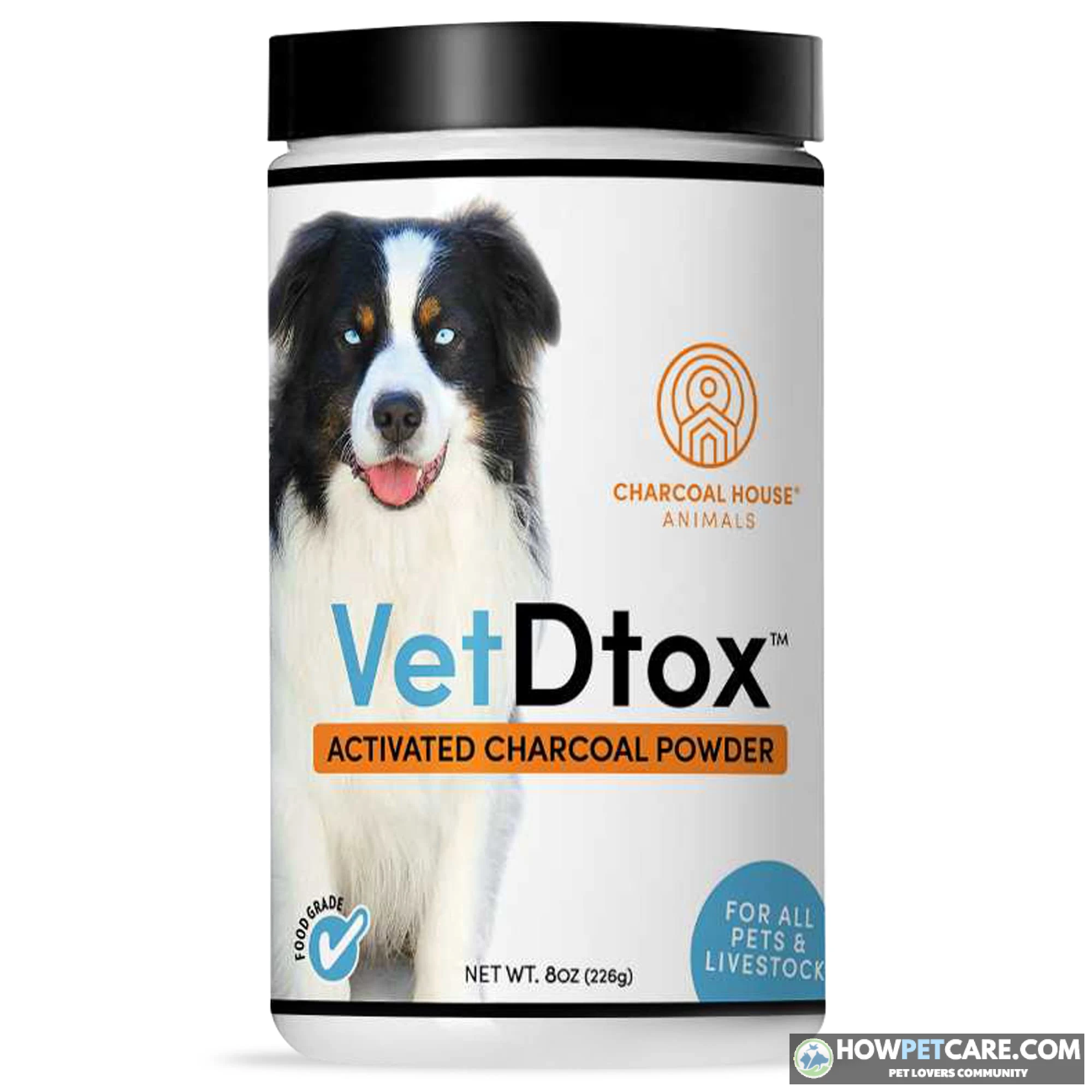

Activated charcoal can bind some toxins in a dog’s gut, but give it only when a veterinarian or poison-control professional directs the product, dose, and timing. Never give it to a dog that is drowsy, seizing, vomiting, or can’t swallow—call a vet or head to an emergency clinic instead.
Is Activated Charcoal Safe for Dogs? Triage Answer Before You Do Anything
Activated charcoal can help in certain types of poisoning, but give it to your dog at home only if a veterinarian or animal poison-control professional tells you to. The right call depends on what was swallowed, when it happened, and whether your dog can swallow safely. Charcoal doesn’t work for every poison, and incorrect administration can cause serious complications, including aspiration pneumonia and high blood sodium.
If you know or suspect your dog swallowed something poisonous, call your veterinarian, an emergency veterinary clinic, or an animal poison-control service now. Don’t give charcoal or induce vomiting at home unless you’re instructed to. And don’t delay a trip to the emergency clinic to prepare a home treatment.
- ASPCA Animal Poison Control Center: 888-426-4435.
- Pet Poison Helpline: 855-764-7661.
Consultation fees may apply. If your dog has severe symptoms or swallowed a high-risk substance, leave for the emergency clinic immediately. Call on the way if someone else can safely make the call.
Call first: the 60-second information to gather
Have your dog’s approximate weight, age, medical conditions, and current medications ready. Tell the professional what was eaten, how much may be missing, when it happened, and what symptoms you see. Keep the packaging or take a photo of the ingredient label, and bring it to the clinic. If you’re unsure of the amount or timing, say so rather than guessing.
Red-flag symptoms that mean go to the ER now
Go to an emergency veterinarian immediately if your dog is difficult to wake, disoriented, seizing, collapsing, vomiting repeatedly, struggling to breathe, or unable to swallow normally. Known ingestion of antifreeze, batteries, caustic cleaners, or petroleum products also warrants urgent veterinary direction and, often, immediate transport—even before symptoms appear.
Antifreeze is especially time-sensitive, so treat possible exposure as an emergency and learn the symptoms of antifreeze poisoning in dogs rather than waiting for obvious illness.
Do not put charcoal, food, water, or any other treatment into the mouth of a dog that is drowsy, seizing, struggling to breathe, or unable to swallow. Call the emergency clinic while arranging transport.
How Activated Charcoal Works: Adsorption, Toxin Binding, and Activated Carbon vs Charcoal
Activated charcoal is a porous material that can bind certain substances in the stomach and intestines, reducing how much reaches the bloodstream. The bound material then passes out in the stool. This surface-binding process is called adsorption, not absorption. It’s a form of gastrointestinal decontamination, not an antidote, and it can’t undo damage that has already occurred.

Charcoal is generally most useful before a substantial amount of a susceptible toxin has been absorbed. A veterinarian may also recommend other treatment, such as an antidote, blood tests, fluids, or monitoring; charcoal doesn’t replace those steps.
Activated charcoal vs activated carbon vs grill charcoal
Activated carbon and activated charcoal are names for essentially the same highly porous material. Grill charcoal, charcoal briquettes, and burnt toast are not substitutes for a veterinary product.
A label saying food grade doesn’t establish that activated charcoal powder for dogs is suitable for an emergency, and it doesn’t identify the right dose. Products can contain different concentrations and additional ingredients. Some veterinary preparations contain sorbitol or other ingredients such as kaolin. Ask the vet about the exact product: sorbitol-containing products call for particular caution because fluid loss and sodium imbalance are concerns.
Which Toxins Does Activated Charcoal Bind, and Which Need a Different Emergency Response?
The table helps explain the vet’s decision; it isn’t permission to treat at home. Even when charcoal may bind a substance, the amount, timing, formulation, and your dog’s condition determine what to do.
Toxin-Binding Matrix: What Activated Charcoal May Bind vs Does Not Bind
| Substance or toxin | Charcoal may bind? | Why it matters | Better or additional emergency response |
|---|---|---|---|
| Many human or animal medications | Often, depending on the drug | Some drugs can be bound before they are absorbed | Call immediately; bring the package, strength, and estimated pill count |
| Chocolate, caffeine, and theobromine | Often | The amount eaten and timing affect the risk and treatment | Call a vet; monitoring and additional treatment may be necessary |
| Some plant toxins and mycotoxins | Sometimes | The responsible compound and product matter | Identify the plant or product and follow toxicology advice |
| Xylitol | Not reliably; do not rely on charcoal | Xylitol exposure can cause serious illness rapidly | Call immediately; the dog may need blood sugar and liver monitoring |
| Alcohol, including ethanol | Poorly | Charcoal is not a reliable treatment | Seek urgent veterinary advice and supportive care |
| Antifreeze containing ethylene glycol | No reliable benefit | Antidote treatment is time-sensitive | Go to an emergency vet immediately; do not wait for charcoal |
| Heavy metals, including lead and zinc; iron | Poorly or not reliably | These exposures need a different assessment | Seek emergency care; imaging, bloodwork, or specific treatment may be needed |
| Batteries, acids, alkalis, and caustic cleaners | Avoid home charcoal | Burns or battery injury may require urgent examination; charcoal can obscure evaluation | Do not induce vomiting; contact an emergency vet immediately |
| Gasoline, kerosene, and other petroleum products | Avoid home charcoal | Aspiration into the lungs is a major concern | Do not induce vomiting; seek urgent veterinary advice |
| Salt, lithium, and fluoride | Poorly or not reliably | Electrolyte or other specific complications need assessment | Seek urgent veterinary care and follow the clinician’s plan |

Why a “maybe” in the table still requires a vet call
A medication that charcoal can bind may already have been absorbed, or the dog may be too sleepy to swallow safely. The vet also needs to know whether the substance is in an extended-release product or was swallowed with other ingredients. Never use the table to decide that your dog is safe to treat without advice.
How Soon Must Activated Charcoal Be Given? Why Timing Windows Range From Minutes to Hours
Call as soon as you discover a possible ingestion. Charcoal generally has the best chance of binding a susceptible toxin before it’s absorbed; veterinary guidance often discusses early administration within the first hour or two, although the useful window varies.
You may see timing claims ranging from minutes to several hours. They differ because substances leave the stomach and enter the bloodstream at different rates. A meal, an extended-release formulation, or a toxin that recirculates between the liver and intestine can also affect the veterinarian’s decision. Some cases call for repeated doses under veterinary direction; many don’t.
No universal deadline lets an owner safely rule treatment in or out. If you don’t know when the ingestion happened, tell the vet when you last saw your dog well and when you found the evidence. Don’t spend time mixing charcoal if the clinic wants you to come in.

Pre-Dose Contraindication Checklist: When Not to Give a Dog Activated Charcoal
The 60-second yes/no checklist
Run through this list while contacting a veterinarian or poison-control professional. Any yes or unsure means pause: do not give charcoal by mouth unless a veterinarian specifically directs a safe plan for your dog.
- Is your dog unusually sleepy, disoriented, collapsing, or seizing?
- Is your dog coughing, gagging, drooling with difficulty swallowing, or unable to swallow normally?
- Is your dog vomiting now, recently vomited repeatedly, or unable to keep water down?
- Could your dog be dehydrated, including from vomiting, diarrhea, heat, or poor drinking?
- Could there be an intestinal obstruction or slowed gut movement—for example, a swallowed toy, a swollen painful belly, unproductive retching, or severe constipation?
- Was the exposure a battery, caustic cleaner, petroleum product, or another substance for which charcoal or vomiting may be unsafe?
- Are the substance, amount, or time of ingestion unknown?
- Has your dog already received peroxide, another treatment, or oral medication?
- Is your dog a puppy, very small, elderly, pregnant, short-nosed, or living with neurological, breathing, or gastrointestinal disease?

Tell the professional about every concern, including possible dehydration or electrolyte problems. Charcoal and incorrect administration can contribute to high blood sodium, while aspiration can cause pneumonia. A dog with impaired consciousness or swallowing may need a protected airway in a veterinary setting rather than anything given by mouth at home.
Activated Charcoal for Dogs Dosage by Weight: Formula, Worked Examples, and Product Conversion
Veterinary references cited in the research describe an activated charcoal dose of approximately 1–4 grams per kilogram of body weight, with some circumstances requiring up to 5 g/kg. Treat this as background, not a prescription: use only the dose and product your veterinarian or poison-control specialist specifies. A clinician may recommend no charcoal at all.
The 3-step dose formula
- Convert weight: pounds ÷ 2.2 = approximate kilograms.
- Calculate charcoal: kilograms × the vet-directed dose in g/kg = grams of activated charcoal.
- Convert to liquid: grams needed ÷ product concentration in g/mL = milliliters of that product.
Check that the label lists grams of activated charcoal, not just the total weight of the mixture. If a bottle contains 20 g of activated charcoal in 100 mL, its concentration is 0.2 g/mL. If the label gives milligrams, divide by 1,000 to convert mg to g. Confirm the final volume with the professional before giving it.

Dosing chart by body weight
This is a math example only, using a hypothetical vet-directed dose of 2 g/kg and a hypothetical suspension containing 0.2 g/mL. Neither figure is a recommendation for your dog. The capsule counts show how impractical capsules are, not how to give the dose. Values are approximate; don’t independently round a real dose.
| Dog weight (lb) | Dog weight (kg), approximately | Total charcoal at example 2 g/kg | Liquid at example 0.2 g/mL | Equivalent 250 mg capsules, approximately |
|---|---|---|---|---|
| 5 | 2.27 | 4.5 g | 22.7 mL | 18 |
| 10 | 4.55 | 9.1 g | 45.5 mL | 36 |
| 20 | 9.09 | 18.2 g | 90.9 mL | 73 |
| 50 | 22.73 | 45.5 g | 227.3 mL | 182 |
| 80 | 36.36 | 72.7 g | 363.6 mL | 291 |
Worked examples with product volumes
For a 5 lb dog: 5 ÷ 2.2 = approximately 2.27 kg. At the illustrative 2 g/kg, that is 4.55 g. With the example 0.2 g/mL suspension, 4.55 ÷ 0.2 = approximately 22.7 mL.
For a 20 lb dog: 20 ÷ 2.2 = approximately 9.09 kg. At 2 g/kg, that is approximately 18.18 g. Dividing by 0.2 g/mL gives approximately 90.9 mL.
For a 50 lb dog: 50 ÷ 2.2 = approximately 22.73 kg. At 2 g/kg, that is approximately 45.45 g. Dividing by 0.2 g/mL gives approximately 227.3 mL.
For an 80 lb dog: 80 ÷ 2.2 = approximately 36.36 kg. At 2 g/kg, that is approximately 72.73 g. Dividing by 0.2 g/mL gives approximately 363.6 mL.
These volumes show why a professional must decide whether home administration is practical and safe. A different concentration changes the volume, so never substitute milliliters from this chart for the product-specific instructions you receive. For powder, ask how much water to add and what final volume to give. Don’t assume a repeat dose is needed.
Tell the vet the weight, grams of charcoal, product concentration, and calculated milliliters. Ask them to confirm all four before you administer anything.
Human Capsules vs Veterinary Suspensions: Are Over-the-Counter Charcoal Products Strong Enough?
The best activated charcoal for dogs isn’t automatically the strongest product or one sold for pets. It’s the specific preparation a veterinary professional approves for the particular exposure. Products sold at pharmacies, pet stores, farm-supply stores, or elsewhere can differ substantially.
Product Comparison: Veterinary Suspension vs Powder vs Tablets vs 250 mg Capsules
| Product form | Typical concentration | Practicality for emergency dosing | Key label checks | Notes |
|---|---|---|---|---|
| Veterinary suspension | Varies by product; read g/mL or g per bottle | Can provide a measured liquid dose, but volume may be substantial | Charcoal amount, sorbitol or other additives, expiration | Use only the product and volume approved by the vet |
| Powder | Varies; check grams of activated charcoal per serving | Requires measuring and mixing as directed | Active charcoal amount, mixing instructions, additives | Dry powder can become airborne and irritate the respiratory tract |
| Tablets or paste | Varies by product | Number of tablets or volume of paste may make dosing difficult | Active amount per tablet or mL, other ingredients | Do not assume a pet label means emergency suitability |
| Human capsules | A common example is 250 mg per capsule | Often impractical for a multi-gram emergency dose | Amount per capsule, sweeteners and other ingredients | Do not force large numbers of capsules into a dog |

Why 250 mg capsules fall short
A 250 mg capsule contains 0.25 g of charcoal. In the hypothetical 50 lb example, 45.45 g ÷ 0.25 g equals approximately 182 capsules. That’s a calculation, not an instruction to give capsules. A supplement may also contain ingredients the vet doesn’t want your dog to receive.
Ask whether the actual product in your hand is appropriate. Charcoal can also reduce the effectiveness of other oral medicines, including some antibiotics, seizure medications, and pain medicines, so report every medication your dog takes.
How to Give Activated Charcoal to a Dog at Home (Only When a Vet Directs You)
Home dosing is appropriate only when the professional has confirmed the toxin, product, dose, volume, timing, and your dog’s ability to swallow—and has specifically said home administration is safe. If the volume is too large or your dog resists, the safer plan may be treatment at a clinic.
Step-by-step syringe technique

-
Prepare the supplies
Gather the directed preparation, an oral dosing syringe without a needle, towels, gloves, a helper, and the clinic number. Choose a washable area with secure footing.
-
Position your dog
Keep your dog sitting or standing, calm and upright, with the head level or slightly forward. Never tip the head back or dose a dog lying flat or unable to swallow.
-
Prepare the dose
Measure the exact amount directed. If using powder, mix it only as instructed and avoid breathing airborne powder. If the mixture clogs the syringe, stop and ask the vet rather than forcing it.
-
Give small increments
Place the syringe tip in the cheek pouch between the cheek and teeth, not down the throat. Give a small amount, pause, and watch for a swallow before giving more.
-
Stop if swallowing is unsafe
Stop immediately if your dog coughs, gags, struggles, panics, or does not swallow. Do not clamp the nose shut or force the head upward; contact the vet and arrange transport.
A helper can gently steady the chest and shoulders but shouldn’t wrestle the dog into submission. Ask before mixing charcoal with food: the vet may want an empty stomach, and a dog that leaves food behind won’t receive the intended amount.
What to do if your dog refuses, spits it out, or vomits
Stop and call the vet or poison-control service. Explain roughly what happened and when, but do not estimate and give a replacement dose. The professional can decide whether your dog needs to come in and whether more charcoal is appropriate. If coughing or breathing difficulty develops, seek emergency care immediately.
Charcoal stains. Protect bedding and floors with old towels, wipe the mouth and fur gently, and clean household surfaces promptly according to the cleaner’s directions. Cleanup must not delay treatment or transport.

After the Dose: Black Stool, Side Effects, Feeding, and 24-Hour Monitoring
Charcoal can turn stool black as it passes through the digestive tract. Constipation, loose stool, and vomiting can also occur. More serious concerns include aspiration and changes in hydration or sodium levels. Follow the individual discharge plan even if your dog initially seems well, because the swallowed toxin may still cause delayed problems.
First 24 hours monitoring timeline
- Immediately: Watch for coughing, gagging, or breathing changes. Call the vet about any vomiting or incomplete dose; seek emergency care for breathing difficulty.
- During the first several hours: Follow the clinic’s instructions for observation and any scheduled recheck. Note water intake, urination, alertness, and further vomiting or diarrhea.
- Through the first 24 hours and beyond if instructed: Watch for weakness, unusual thirst, tremors, seizures, abdominal swelling, straining, or a failure to pass stool. Ask when monitoring can safely end; some toxins require longer observation.

Ask the vet when to resume food and whether to offer water right away. Once your dog is fully alert and swallowing normally, follow the vet’s hydration instructions and ask whether dogs can have Pedialyte before giving electrolyte drinks; don’t force water without checking first. Timing and type of food depend on the exposure, whether vomiting occurred, and any planned procedures.
Seek urgent veterinary help for repeated vomiting, collapse, seizures, pale gums, a swollen or painful abdomen, marked lethargy, or trouble breathing. Call promptly for straining or other concerning changes.
Black stool: what’s normal and what’s not
Black stool can occur after charcoal, often while it’s passing over the next day or two, but appearance alone can’t reliably distinguish charcoal from digested blood. Black, sticky or tarry stool—especially with weakness, vomiting, pale gums, or no known charcoal dose—deserves prompt veterinary advice and may overlap with signs of internal bleeding in dogs. If you’re unsure, take a photo or keep a sample and call.
Activated Charcoal for Dog Diarrhea and Gas: What Works, What’s Unproven, and Cost Expectations
Is charcoal useful for dog gas or mild diarrhea?
Activated charcoal for dog diarrhea or gas isn’t a routine first choice. Evidence that charcoal supplements reliably help ordinary gas or uncomplicated diarrhea is limited, and charcoal can interfere with oral medication or complicate assessment. It’s not a proven general detox or gut-health supplement.
For mild digestive upset, contact your vet about appropriate feeding, water, and whether an examination is needed. Puppies, small dogs, and dogs with existing illnesses may need advice sooner. Seek veterinary care for blood, black tarry stool, repeated vomiting, lethargy, suspected poisoning, or diarrhea lasting more than a day. Gastroenteritis has many possible causes, so charcoal can’t stand in for finding the cause.
What emergency charcoal treatment typically costs
There’s no dependable single price for emergency charcoal treatment. The bill may include an emergency examination, poison-control consultation, decontamination, bloodwork, monitoring, fluids, medications, or hospitalization. Charges vary with the clinic, location, exposure, and severity; a published estimate wouldn’t reliably predict your dog’s bill.
Call the clinic for an estimate and ask which services are included. If cost is a concern, tell the team early and ask them to explain the most urgent options. Don’t delay care for a potentially serious poisoning while comparing prices.

Pet First-Aid Kit and Action Plan: Should You Keep Activated Charcoal on Hand?
Keeping charcoal is reasonable only if your veterinarian approves a suitable product for your dog. A bottle is no substitute for a poison-control number, a known emergency-clinic location, and a transport plan.
Pet first-aid kit stocking list
- A vet-approved product, if recommended, with the amount of activated charcoal clearly listed per mL or serving.
- A check for sorbitol, sweeteners, flavorings, and other active ingredients; ask the vet which are acceptable.
- An intact seal and a readable expiration date. Check the kit every six months and follow the label’s storage and after-opening instructions.
- Oral dosing syringes without needles, gloves, old towels, and a waterproof card with your dog’s current weight and medications.
- Your veterinarian’s number, the nearest emergency clinic’s address and number, and both poison-control numbers. Note that consultation fees may apply.

Your emergency action plan in 6 steps
- Stop access: Move your dog away from the suspected substance without exposing yourself to it.
- Gather information: Record the product, possible amount, time, symptoms, and your dog’s weight; save the packaging.
- Call: Contact your vet, an emergency clinic, or poison control. Leave for emergency care immediately if severe signs or a high-risk ingestion are present.
- Flag contraindications: Tell the professional about swallowing problems, vomiting, dehydration, possible obstruction, and anything already given.
- Follow the plan: Give charcoal only if specifically directed. Read back the product, dose, volume, and timing; do not induce vomiting unless instructed.
- Transport and monitor: Bring the packaging and follow the clinic’s instructions for treatment, food, water, and observation.

| Substance or Toxin | Charcoal May Bind? | Why It Matters | Recommended Emergency Response |
|---|---|---|---|
| Chocolate, caffeine, and theobromine | Often | The amount eaten and timing affect the risk and treatment | Call a vet; monitoring and additional treatment may be necessary |
| Many human or animal medications | Often, depending on the drug | Some drugs can be bound before they are absorbed | Call immediately; bring the package, strength, and estimated pill count |
| Some plant toxins and mycotoxins | Sometimes | The responsible compound and product matter | Identify the plant or product and follow toxicology advice |
| Alcohol, including ethanol | Poorly | Charcoal is not a reliable treatment | Seek urgent veterinaryhttps://howpetcare.com/activated-charcoal-for-dogs/ advice and supportive care |
| Heavy metals, including lead and zinc; iron | Poorly or not reliably | These exposures need a different assessment | Seek emergency care; imaging, bloodwork, or specific treatment may be needed |
| Salt, lithium, and fluoride | Poorly or not reliably | Electrolyte or other specific complications need assessment | Seek urgent veterinary care and follow the clinician's plan |
| Xylitol | Not reliably; do not rely on charcoal | Xylitol exposure can cause serious illness rapidly | Call immediately; the dog may need blood sugar and liver monitoring |
| Antifreeze containing ethylene glycol | No reliable benefit | Antidote treatment is time-sensitive | Go to an emergency vet immediately; do not wait for charcoal |
| Batteries, acids, alkalis, and caustic cleaners | Avoid home charcoal | Burns or battery injury may require urgent examination; charcoal can obscure evaluation | Do not induce vomiting; contact an emergency vet immediately |
| Gasoline, kerosene, and other petroleum products | Avoid home charcoal | Aspiration into the lungs is a major concern | Do not induce vomiting; seek urgent veterinary advice |
FAQ
Can I give my dog activated charcoal from Walmart or PetSmart?
Only if a vet or poison-control specialist says it is appropriate for the toxin. Many over-the-counter capsules are low-dose supplements that are impractical for emergency dosing, so check the label’s grams per serving and ask the vet first.
Does activated charcoal help with dog diarrhea?
Evidence for routine diarrhea is limited, and charcoal can mask symptoms or interfere with medications. Call your vet before using it, especially if the diarrhea is bloody, lasts over 24 hours, or comes with vomiting or lethargy.
What are the side effects of activated charcoal in dogs?
Common effects include black stool, constipation, and mess. Serious risks include aspiration into the lungs, vomiting, and dehydration or sodium imbalance, particularly with sorbitol-containing products.
How long does black stool last after activated charcoal?
Stool typically stays black for a day or two as the charcoal passes. Call your vet if stool is tarry and foul-smelling, bloody, or the dog is lethargic, vomiting, or straining.
Can dogs have activated charcoal for gas?
There is no strong evidence that it reliably helps dog gas, and it may cause constipation or interact with medications. Persistent gas is better evaluated by a vet, who can look at diet and underlying causes.