
| Care factor | Dalmatian molly target |
|---|---|
| Minimum tank size | 20 gal (shortfin); 29–30+ gal for sailfin |
| Temperature | 68–82°F |
| pH | 7.5–8.5 (hard, alkaline water) |
| General hardness | 10–25 dGH |
| Adult size | 3–4 in standard; up to ~5 in sailfin |
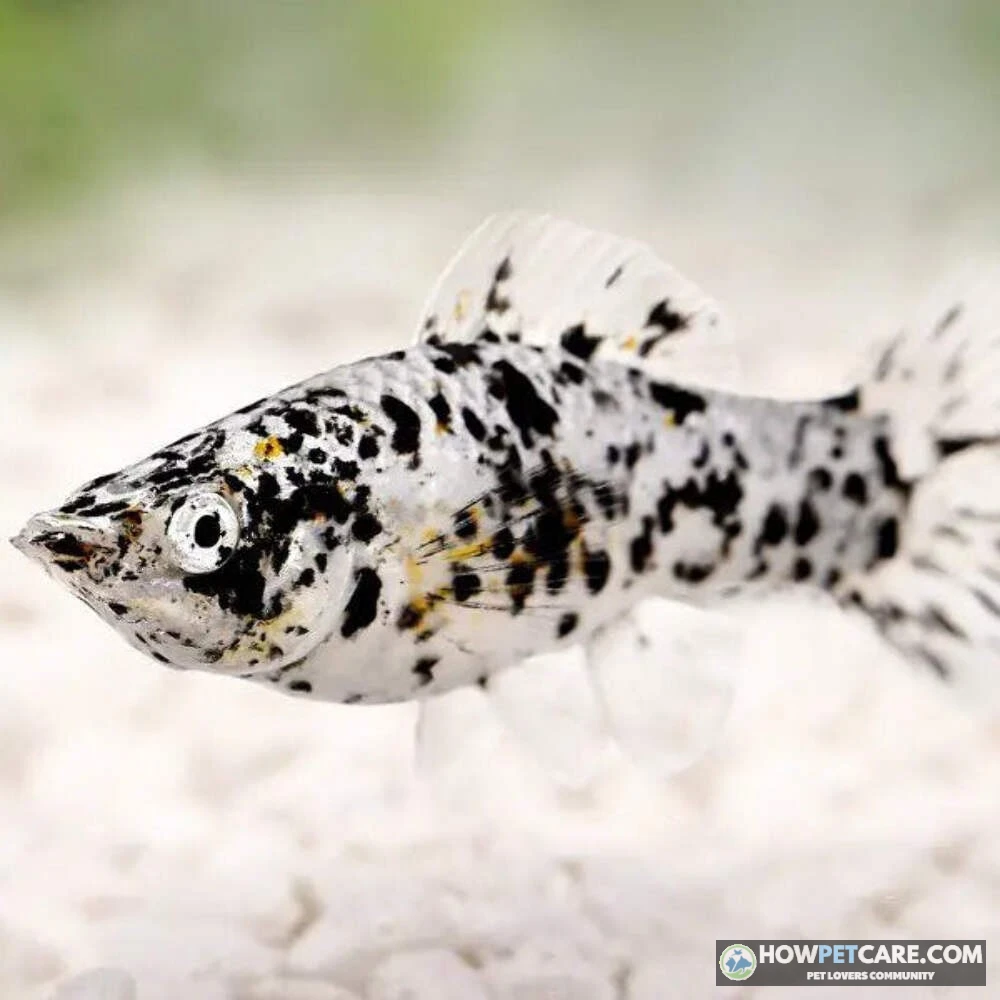
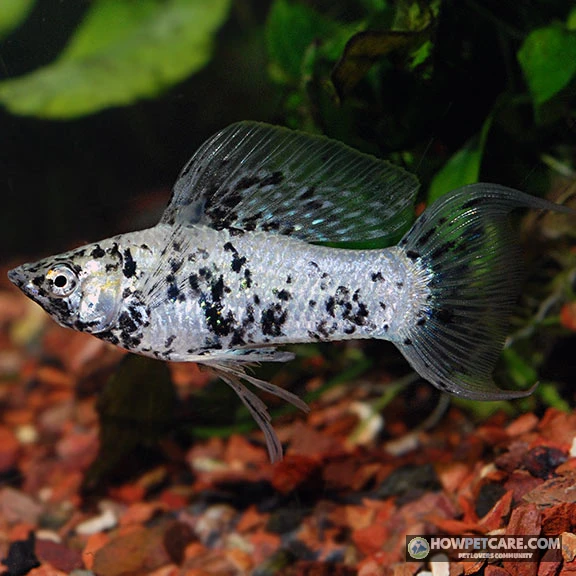
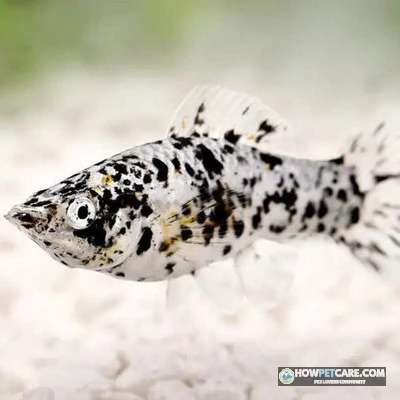
A dalmatian molly is a hard-water livebearer recognized by its silver-white body and scattered black spots. A cycled freshwater aquarium with stable, alkaline water suits most of them well. Salt isn’t strictly mandatory, but you need to know what kind of water the fish came from before bringing it home. For standard short-finned fish, plan on at least a 20-gallon tank, and step up to a larger aquarium for sailfin morphs, with extra room helping lyretails too. Your main tasks are matching the fish’s body shape and water history to your setup, then preparing for the very real chance of fry. And if the black patches on your fish seem to be spreading, that is usually normal genetics—though sudden new spots or smudges can point to Black Spot Disease or a water-quality problem, a differential covered in the diagnosis guide below.
Dalmatian Molly Care at a Glance: Tank Size, Water Parameters, Adult Size and Lifespan
Dalmatian mollies are livebearers, and their care needs track the underlying molly species rather than their spotted coloration. They thrive in warm, mineral-rich, alkaline water; soft, acidic conditions make keeping them healthy over the long term much tougher. Use the targets below as practical reference points rather than a reason to chase numbers and shock an established tank.
Minimum tank size by group size and morph
A 20-gallon aquarium is a sensible minimum for a small group of standard short-finned dalmatian mollies. A 10-gallon tank can work temporarily for quarantine or a juvenile, but it leaves little buffer for stable parameters, active swimming, or surprise broods. Choose 29–30 gallons or more for sailfin mollies, and aim for the upper end of the 20–29 gallons range for lyretails that need open, unobstructed swimming lanes.
| Setup | Tank guidance | Why it matters |
|---|---|---|
| Small group of standard shortfins | 20 gallons minimum | Provides room for swimming and more stable water than a small tank |
| Sailfin group | 29–30 gallons or more | Larger bodies and tall dorsal fins need swimming room |
| Lyretail group | 20–29 gallons; larger is easier | Open space and gentle flow help protect extended tail rays |
| 10-gallon aquarium | Temporary use only | Water quality and stocking become difficult to manage |
Temperature, pH and hardness targets
| Water parameter | Practical range |
|---|---|
| Temperature | 68–82°F |
| pH | 7.5–8.5 |
| General hardness (GH) | 10–25 dGH is a commonly used target range |
| Carbonate hardness (KH) | Keep sufficient buffering to prevent sudden pH swings; test your source water |
Sources cite slight variations for temperature and hardness, so focus on stability rather than obsessing over an exact figure. Test your source water and match the chemistry your fish currently lives in to avoid sudden osmotic shock. If your tap is soft or you run reverse-osmosis (RO) water, you will need to remineralize it as outlined below. A freshwater aquarium works well; brackish conditions are an option, not a universal requirement.
How big they get and how long they live
Standard dalmatian mollies typically grow to about 3–4 inches. Sailfin varieties reach roughly 4–5 inches, with males often developing the largest frames; lyretails usually measure around 3–4 inches. Balloon forms top out at about 3 inches, though their compressed spines introduce unique health liabilities. Juveniles put on size quickly, so buy a tank that accommodates their full adult dimensions rather than banking on a future upgrade.
Given stable water, a balanced diet, and minimal stress, expect a lifespan of several years. Subpar water quality, temperature swings, cramped quarters, and balloon body shapes will cut that short. Remember that a dalmatian molly is simply a color variety bred from wild stocks like Poecilia latipinna or Poecilia sphenops; it is not an independent wild species.
Dalmatian vs Balloon vs Lyretail vs Sailfin: Which Morph Fits Your Tank
“Dalmatian” describes a marbled black-and-white pattern, not a specific fin structure or body contour. Spot distribution varies across individuals, even among siblings from the same spawn. Pick your fish based on body shape and maintenance demands alongside aesthetics: standard shortfins are straightforward and hardy, whereas balloon types require meticulous attention to diet and water movement.
| Morph | Body and fin traits | Typical adult size | Minimum tank guidance | Main care difference | Price seen online (verify at purchase) |
|---|---|---|---|---|---|
| Standard shortfin dalmatian | Torpedo-shaped body, ordinary fins, white or silver base with black speckling | 3–4 in | 20 gallons for a small group | Best starting point for most new keepers | About $5.99 at a big-box retailer listing |
| Sailfin dalmatian | Males have a tall, sail-like dorsal fin; larger frame | 4–5 in | 29–30 gallons or more | Needs room and consistently clean water | About $6.99 at an online breeder listing |
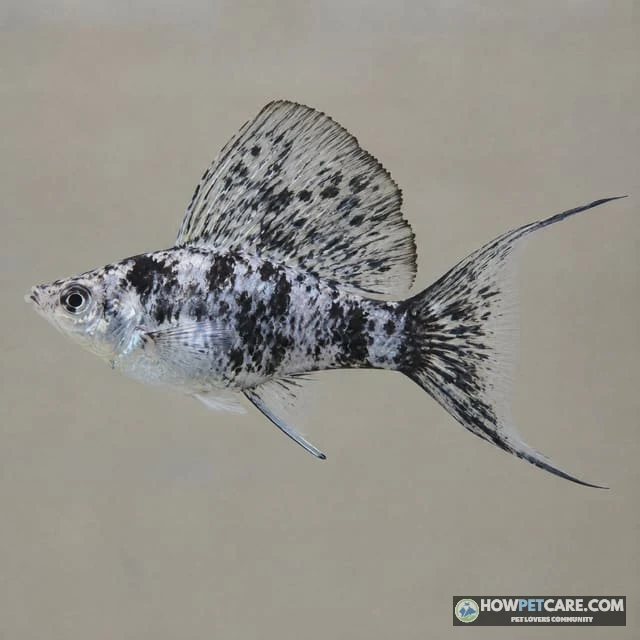
| Dalmatian lyretail | Extended tail rays form a forked, lyre-like shape | 3–4 in | 20–29 gallons; more room is helpful | Tail rays can be damaged by nippy tank mates or strong flow | About $47.99 on a specialty listing; confirm whether the price is per fish or group |
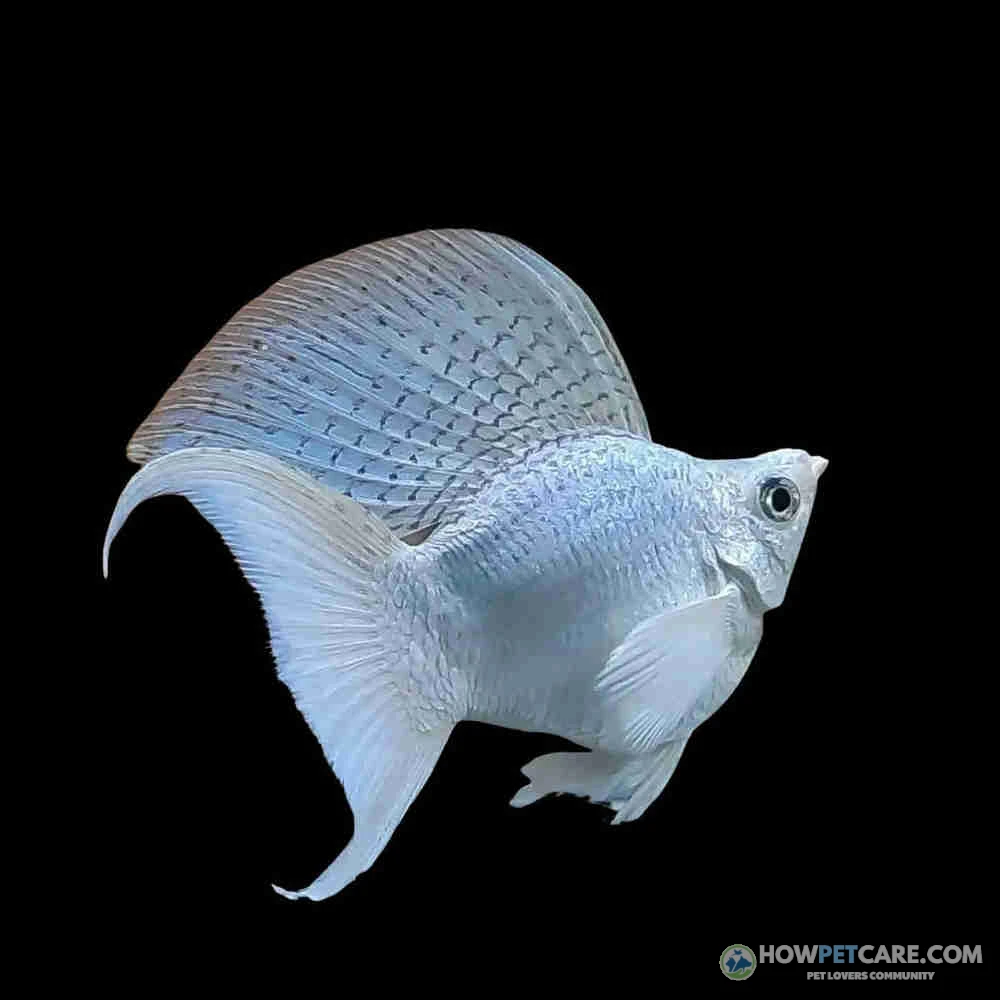
| Balloon dalmatian | Shortened, rounded, compressed body | About 3 in | 20 gallons, with gentle flow and easy surface access | Greater concern for constipation and buoyancy problems | Varies; check local and online listings |
These figures are observed retailer snapshots, not fixed industry guarantees. The $5.99 and $6.99 figures represent baseline retail anchors, while the lyretail listing was about $47.99, which may cover a breeding group rather than a single specimen. Online prices fluctuate constantly. Since spotting density is governed by genetics, evaluate the individual fish in front of you rather than relying on a tank label.
Standard (shortfin) dalmatian molly
The standard shortfin is the most reliable entry point for a first dalmatian molly. With natural proportions and regular fins, it bypasses the fin-nipping risks of lyretails and avoids the compressed body shape of balloon morphs. Coloration ranges from a light scattering of black flecks to deep, marble-heavy patterning.
Sailfin dalmatian molly
The dramatic dorsal fin—especially on mature males—is the hallmark of the sailfin. These fish demand a larger tank with open swimming room and pristine water. Letting water quality slip quickly leads to ragged edges and fin damage.
Dalmatian lyretail molly
Lyretails stand out for their elongated upper and lower caudal rays. Those trailing filaments, however, snag easily on rough decor and make easy targets for opportunistic fin-nippers. House them with docile companions and avoid turbulent currents that make swimming difficult.
Balloon dalmatian molly
Breeders create balloon mollies by selecting for a shortened, rounded body. That compressed anatomy crowds internal organs, making the fish prone to severe constipation and swim-bladder disorders. Read the dedicated balloon-care section below before choosing one; standard-bodied fish represent a far sounder welfare choice.
 You might be wonderingPetting fishPetting Fish: Safety-First Guide to Touching Aquarium FishRead the answer
Setting Up the Tank: Filtration, Decor, Feeding Schedule and Ich Prevention
Filtration and cycling
Install filtration rated for the aquarium and complete the nitrogen cycle before introducing livestock. Mollies produce substantial waste, so ammonia and nitrite must stay at zero in an established system. Opt for gentle to moderate water flow: sailfin and lyretail varieties struggle against forceful currents. Routine partial water changes and consistent testing keep fish far healthier than dosing salt as a quick fix.
Plants, hiding spots and lid
Balance open swimming zones with patches of live plants or other cover. Dense cover offers sanctuary for females and newborn fry, while a tight-fitting lid prevents startled fish from jumping out. Run a heater and a reliable thermometer to prevent temperature dips. Avoid sharp decor that could tear delicate fins.
What and how often to feed
Mollies need a plant-forward baseline diet. Base their menu on quality flakes or pellets rich in vegetable matter such as spirulina, supplemented with blanched vegetables like zucchini or peas. Small offerings of brine shrimp or bloodworms provide welcome variety, but treat them as occasional snacks rather than staples. Feed small amounts once or twice a day and remove uneaten food. While a dalmatian molly will readily graze on soft algae and biofilm, grazing alone won’t provide complete nutrition.
Quarantine and early ich detection
Quarantine new purchases in a separate tank when possible, observing them before adding them to a community display. Ich presents as distinct, salt-like white grains across the skin and fins; infected fish often rub against hardscape or clamp their fins. Acclimation stress, poor water, and temperature swings quickly trigger an outbreak. If spots show up, test the water first to confirm baseline parameters before initiating medication. Never medicate a community tank based only on vague behavioral shifts.
Best Tank Mates for Dalmatian Mollies, With a Verdict for Each Species
Dalmatian mollies are generally peaceful community fish, but temperament alone doesn’t guarantee harmony. Energetic males relentlessly pursue females, and cramped setups magnify social stress. Maintain a ratio of one male to two or three females, and provide ample space and plant cover. Remember too that flowing fins invite unwanted attention from nippy tank mates.
| Tank mate | Verdict | Reason | Conditions or tips |
|---|---|---|---|
| Other mollies, platies or swordtails | Good | Similar livebearer behavior and broadly compatible hard-water needs | Keep more females than males; plan for fry and possible hybridization among related livebearers |
| Corydoras catfish | Good | Peaceful bottom-dwellers that usually leave mollies alone | Keep a group and choose a species suited to the tank temperature |
| Bristlenose pleco | Good | Generally peaceful and can tolerate a range of water conditions | Provide appropriate food and shelter; account for its adult size and waste |
| Larger peaceful tetras | Conditional | Some are compatible in temperament, but flowing fins may be nipped | Avoid nippy species with sailfin or lyretail mollies; keep schooling fish in groups |
| Harlequin rasboras, cardinal tetras or neon tetras | Conditional | Many prefer softer, more acidic water than mollies | Consider only where the actual water conditions suit both; do not force a mismatch |
| Guppies | Conditional | Similar water preferences, but harassment and crossbreeding are possible | Observe closely and keep a female-heavy group |
| Betta | Conditional | Individual temperament varies; long fins can invite nipping or be attacked | Avoid with long-finned mollies; have a backup plan and plenty of space |
| Tiger barbs and other fin-nipping barbs | Avoid | Nipping can injure sailfin and lyretail fins | Choose a calmer community fish instead |
| Goldfish | Avoid | Cooler-water needs and high waste production are poor matches | Do not use a shared tank as a compromise |
| Most territorial cichlids | Avoid | Aggression and territorial behavior create a high injury risk | Hard-water overlap does not make the temperament compatible |
| Dwarf shrimp | Conditional | Adults may coexist, but mollies can eat shrimplets | Provide dense cover and expect limited baby-shrimp survival |
Water chemistry often poses a bigger hurdle than social friction. A docile soft-water species will slowly decline in the hard, alkaline water that mollies require. Watch your tank closely: if mollies hide constantly, stop eating, or show ragged fin margins, rethink the stocking mix immediately.
Do Dalmatian Mollies Need Salt? Brackish Acclimation and Soft-Water Remineralization, Step by Step
Is salt actually necessary?
No single rule fits every dalmatian molly. Many do well in freshwater provided it is hard, alkaline, and stable. However, commercial breeders often raise stock in hard or brackish conditions, which makes sudden relocation into very soft water jarring. Before purchasing, ask the seller about holding conditions and test your own GH, KH, pH, and total dissolved solids (TDS). Salt cannot clean up dirty water or substitute for cycling.
Step-by-step drip acclimation schedule
This 60–90-minute procedure tempers both water temperature and baseline chemistry. It does not make a sudden large salinity change safe; if the seller kept the fish in brackish water, follow the staged salinity approach below or ask for their exact specific gravity and transition advice.
- Float the sealed bag for 15–20 minutes to bring its temperature closer to the aquarium. Keep the bag closed during this step.
- Transfer the fish and bag water to a clean container used only for aquarium purposes. Note the starting water volume.
- Use airline tubing as a siphon from the aquarium, with a loose knot or drip valve to set a slow rate of about 2–4 drops per second.
- When the container volume has doubled, usually after about 30–45 minutes, remove and discard roughly half the water.
- Continue the drip until the volume doubles again. This usually brings the total drip time to 60–90 minutes.
- Net the fish into the aquarium and discard the container water. Do not pour store or shipping water into the tank.
- Keep the lights dim for a few hours and skip feeding that evening.
If the seller’s water differs substantially in hardness or salinity, lengthen the transition accordingly. Brackish-raised fish require a deliberate, multi-day adjustment; a standard drip alone cannot bridge a massive salinity gulf.
Remineralizing soft or RO water
RO water contains virtually no dissolved minerals. Placing a molly directly into unbuffered RO water—or shocking a soft-water tank with sudden doses of mineral powder—causes acute osmotic stress. Reconstitute your water using a reputable GH/KH remineralizer according to its label, or stabilize it naturally with buffering media like crushed coral in the filter. Test parameters before adding fish, and raise hardness gradually. Product concentration and source water differ, so follow label instructions and test after each adjustment. Clamped fins, lethargy, or rapid breathing during a transition point to osmotic shock and warrant immediate review.
If you want to go low-brackish
A low-brackish setup is entirely optional. If you choose this route, measure specific gravity with a hydrometer or refractometer and change it gradually. A commonly cited low-brackish range is around SG 1.003–1.005; treat it as guidance rather than a mandatory target. Keep the shift to about 0.002 specific gravity per day or less. Shifting from SG 1.000 to 1.005 should span roughly three to five days rather than a single afternoon. Always use marine salt rather than regular table salt, and remember that typical freshwater plants and tank mates cannot handle brackish conditions.
Why Is My Dalmatian Molly Turning Black? A Diagnosis Guide
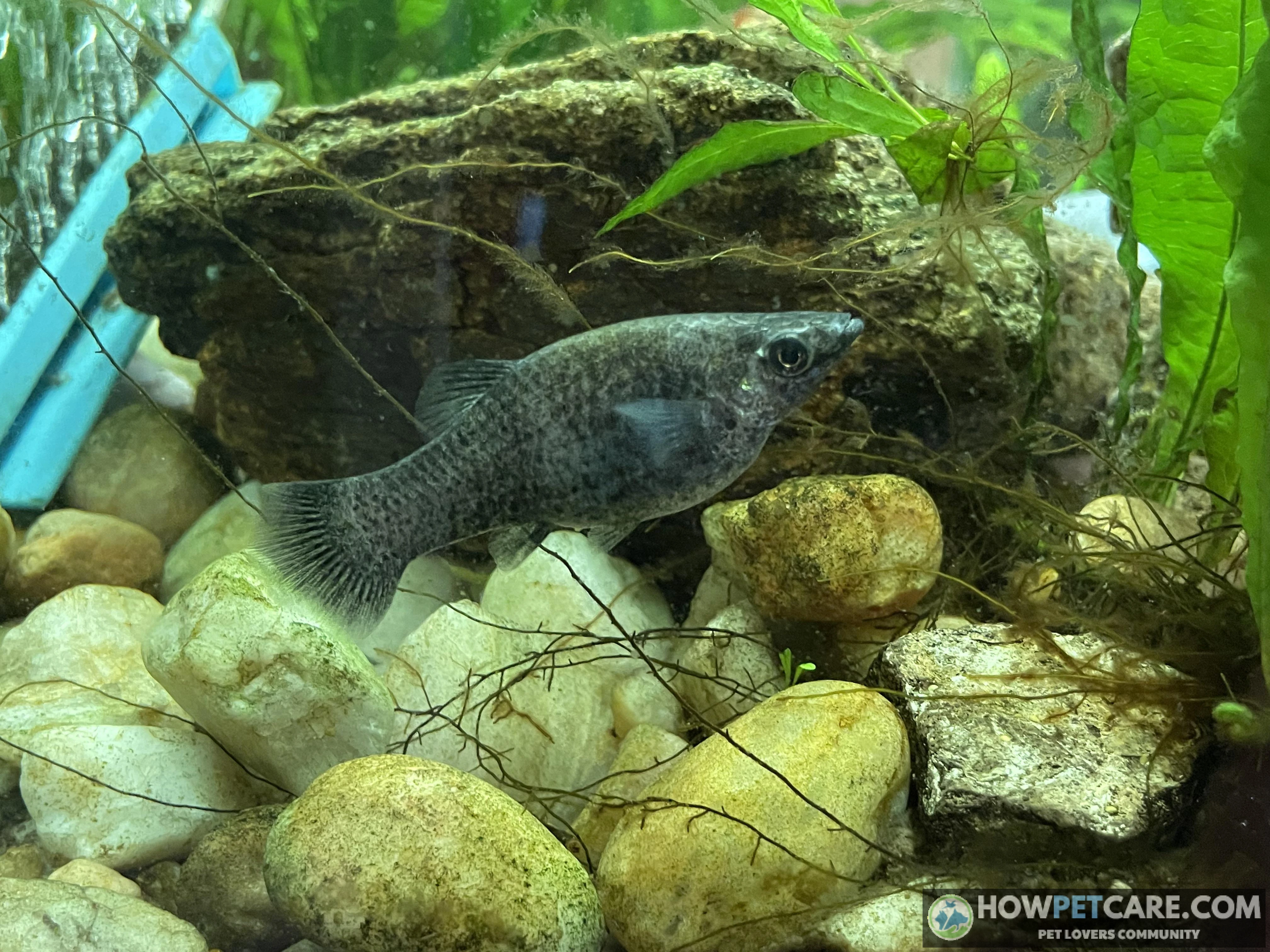
Most gradual blackening in a dalmatian molly stems from changes in its inherited pattern as it matures. Sudden dark patches paired with erratic swimming or clamped fins, however, call for immediate investigation. Three possibilities help separate normal color change from a health issue: genetic darkening, rare Black Spot Disease, and water-quality stress.
Normal genetic and age-related darkening
If the spots gradually expand or the fish becomes darker over weeks or months while eating and swimming normally, the shift is genetic. It is not contagious and requires no treatment. A dalmatian pattern fills in naturally with maturity, and individual coverage varies considerably.
Black Spot Disease: what it really looks like
Black Spot Disease refers to tiny, discrete, pinhead-sized black dots caused by encysted fluke larvae. It is uncommon in indoor aquariums; infections almost exclusively stem from outdoor ponds, wild-caught stock, or snail hosts. The cysts look like distinct raised specks rather than flat pigment bleeding through the scales. Never diagnose this condition on color alone. If you observe raised dots or other symptoms, isolate the fish and consult an aquatic veterinarian or qualified fish-health professional before treatment.
Ammonia burn and stress darkening
Sudden dark smudges or general darkening often point to chemical burns or acute stress. When accompanied by labored breathing, lethargy, clamped fins, or hiding, check your parameters immediately. Test ammonia and nitrite first, especially after adding new fish, overfeeding, a missed maintenance routine, or a filter problem. If either compound is detectable, perform an immediate conditioned water change to dilute the toxins. Neither aquarium salt nor medications will fix poor water management. By contrast, white specks suggest ich rather than water burns.
Blackening differential table
| Possible cause | What it looks like | How fast it appears | Other signs | What to do |
|---|---|---|---|---|
| Normal genetic or age-related darkening | Existing black spots gradually expand or the pattern becomes darker, often fairly evenly | Weeks to months | Normal appetite and behavior | Observe and photograph the pattern; no treatment is needed |
| Black Spot Disease | Small, discrete, possibly raised black dots rather than broad, flat pattern changes | May become noticeable over days | Exposure history may include ponds, wild fish or snails | Confirm before treatment; consult an aquatic vet or fish-health professional |
| Ammonia or water-quality stress | Sudden dark patches or smudges; appearance may vary | Hours to days | Gasping, clamped fins, lethargy or poor appetite | Test ammonia and nitrite immediately; correct water quality and the underlying cause |
| Stress associated with illness | General darkening or loss of contrast | Days | Hiding, refusing food, clamped fins or other symptoms | Test water, observe carefully and diagnose before medicating |
A hiding or still fish is not automatically sick, but its behavior should prompt a review of social dynamics, water chemistry, and physical symptoms. Check ammonia and nitrite immediately; if tests read zero and your molly acts normally, gradual darkening is simply a natural pattern shift.
Balloon Dalmatian Molly Care: Bloat, Swim-Bladder Risk and Ethical Considerations
Why the balloon body shape causes problems
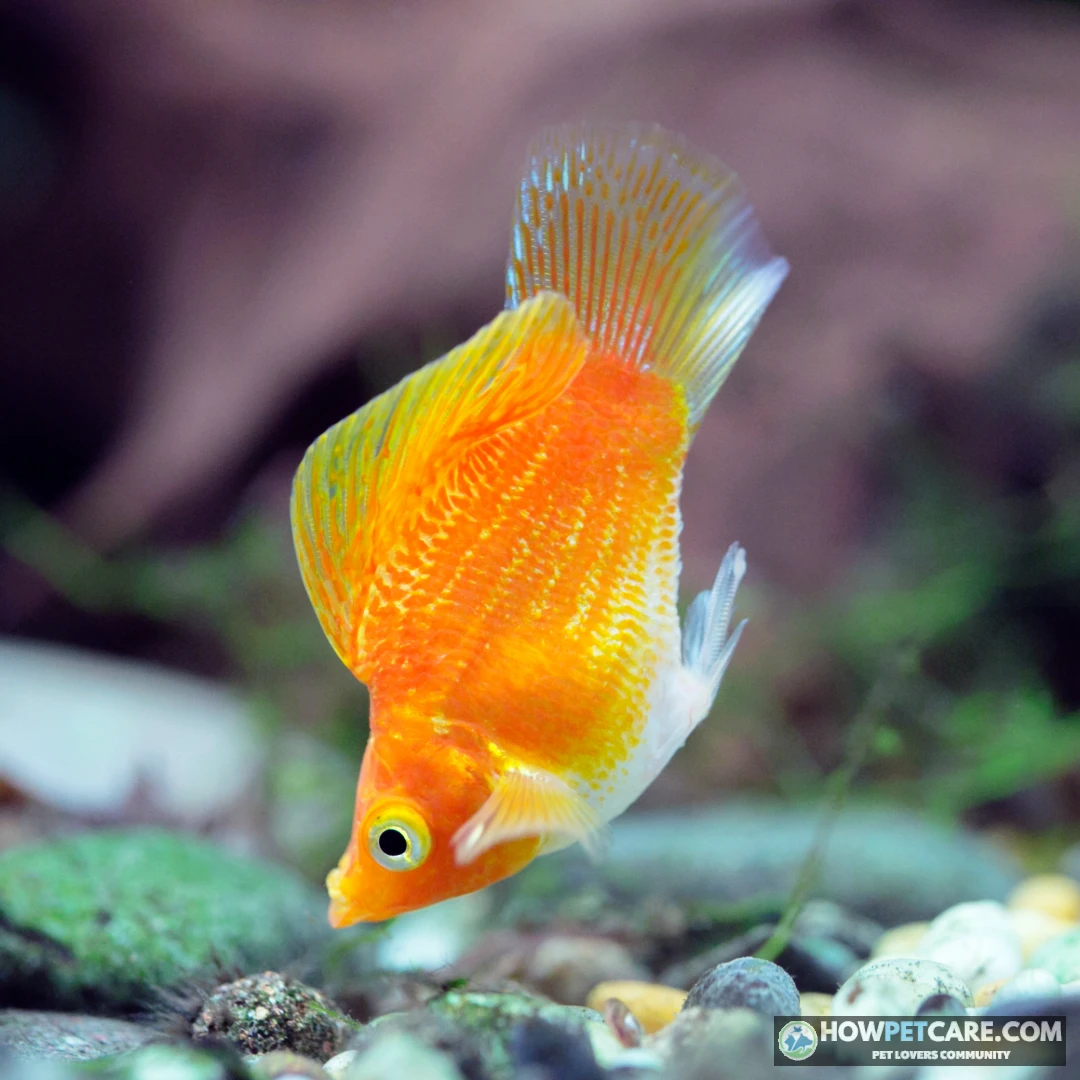
Breeders select balloon mollies for a shortened, rounded body. That compressed anatomy crowds internal organs into a tight cavity, significantly raising the risk of constipation, buoyancy disorders, and early mortality compared to standard-bodied fish. While not every balloon molly suffers these complications, their anatomy leaves little margin for error.
Feeding to prevent constipation
Offer small portions and avoid letting dry food dominate the diet. A varied menu rich in plant matter and blanched vegetables like peas or zucchini helps keep digestion moving. Some keepers soak dry foods before feeding to eliminate trapped air. Avoid overfeeding, siphon out uneaten food promptly, and do not treat peas or fasting as a cure for a persistent swollen belly. A brief fast may reset mild digestive bloat in an otherwise perky fish, but ongoing swelling demands proper investigation.
Spotting swim-bladder trouble early
Watch for fish struggling to stay upright, floating at the surface, sinking heavily to the substrate, listing to one side, or showing a swollen abdomen. Test your parameters immediately. Ensure affected fish can reach food and the surface easily without fighting excessive flow, and prevent aggressive tank mates from outcompeting them. If buoyancy loss persists or your fish stops eating, contact an aquatic veterinarian rather than relying on home remedies. Keep the tank accessible, with gentle currents and clear swimming paths to the surface.
The ethics of buying a balloon morph
The rounded body is a selectively bred trait, not an evolutionary advantage. Some keepers avoid balloon fish because the body shape can compromise welfare; others choose to care for one already in their possession. If buying, weigh the distinctive appearance against the increased health risk and choose a seller who can explain the fish’s condition and feeding history. A standard-bodied dalmatian is the lower-risk choice.
Male vs Female, Pregnancy, Sperm Storage and Fry Care for Dalmatian Mollies
How to tell males from females
Sexing mollies comes down to inspecting the anal fin, located on the belly just ahead of the tail. In males, this fin modifies into a narrow, rod-like mating organ called a gonopodium. Females retain a broader, fan-shaped anal fin and typically carry a rounder body. Immature juveniles share a female fin structure until their sexual organs develop; do not rely on body shape alone when sexing young fish.
Is my molly pregnant? Signs and timeline
A pregnant female develops a fuller belly and a darkened gravid spot near her vent. In late pregnancy, her abdomen can take on a noticeably boxy, squared-off silhouette. Gestation commonly runs about four to six weeks, or roughly 28–45 days, depending on temperature and health. Brood size varies with the female’s size and age, commonly yielding about 10–60 fry, with larger mature females producing more.
Sperm storage and “no male, still fry”
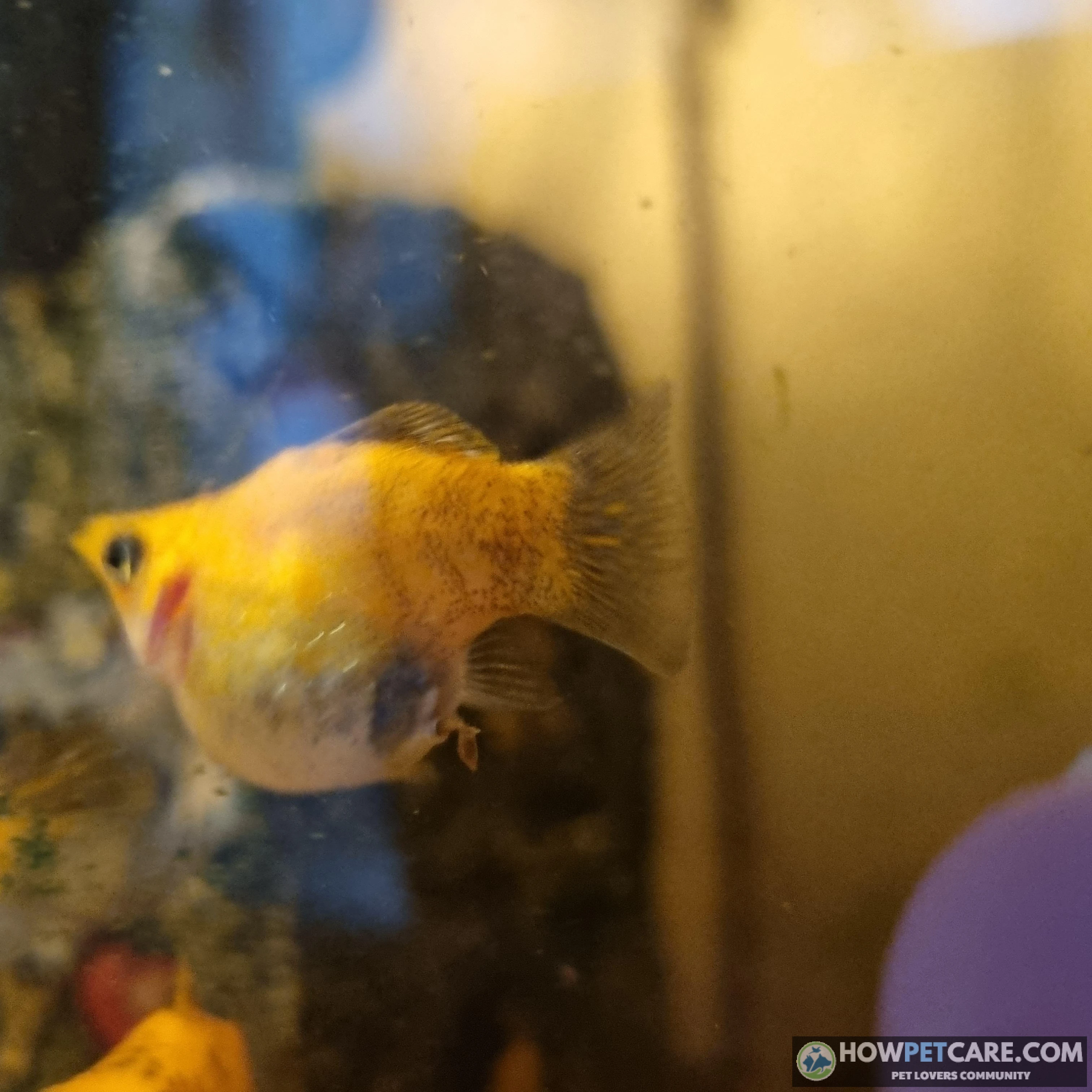
A female can store sperm for several months—commonly reported up to about six months—allowing her to produce several consecutive broods, meaning multiple separate batches of fry, after a single mating. The exact number of batches varies, so there is no fixed count. Consequently, a female bought from a mixed store tank may give birth repeatedly after moving to a tank with no males. That is stored sperm, not evidence that a male is still present. Ask whether females were housed with males, but plan for fry even if the seller cannot confirm it.
| Breeding milestone | Commonly reported range or sign |
|---|---|
| Gestation | About 4–6 weeks, roughly 28–45 days |
| Late pregnancy | Belly may become squarer; gravid spot may darken |
| Sperm storage | Several months, commonly reported up to about 6 months |
| Fry per brood | Often about 10–60; varies with female size and age |
| Male gonopodium becomes easier to identify | Often around 2–3 months of age |
These figures represent observed averages rather than rigid guarantees. Mollies are livebearers, and a female can produce more than one brood after mating because she may retain sperm.
Raising fry and keeping the spotted pattern
Adult mollies will eat newborn fry. Protect the brood by packing the tank with dense plants, using a separate rearing tank, or using a breeder enclosure with good water flow; a small breeder box should never become a permanent crowded home. Offer finely crushed flakes or suitable fry food, such as baby brine shrimp, in small portions several times a day. Remove uneaten food and maintain water quality with careful, appropriately sized water changes. Decide in advance whether you can house or rehome juveniles; frequent breeding can quickly exceed tank capacity.
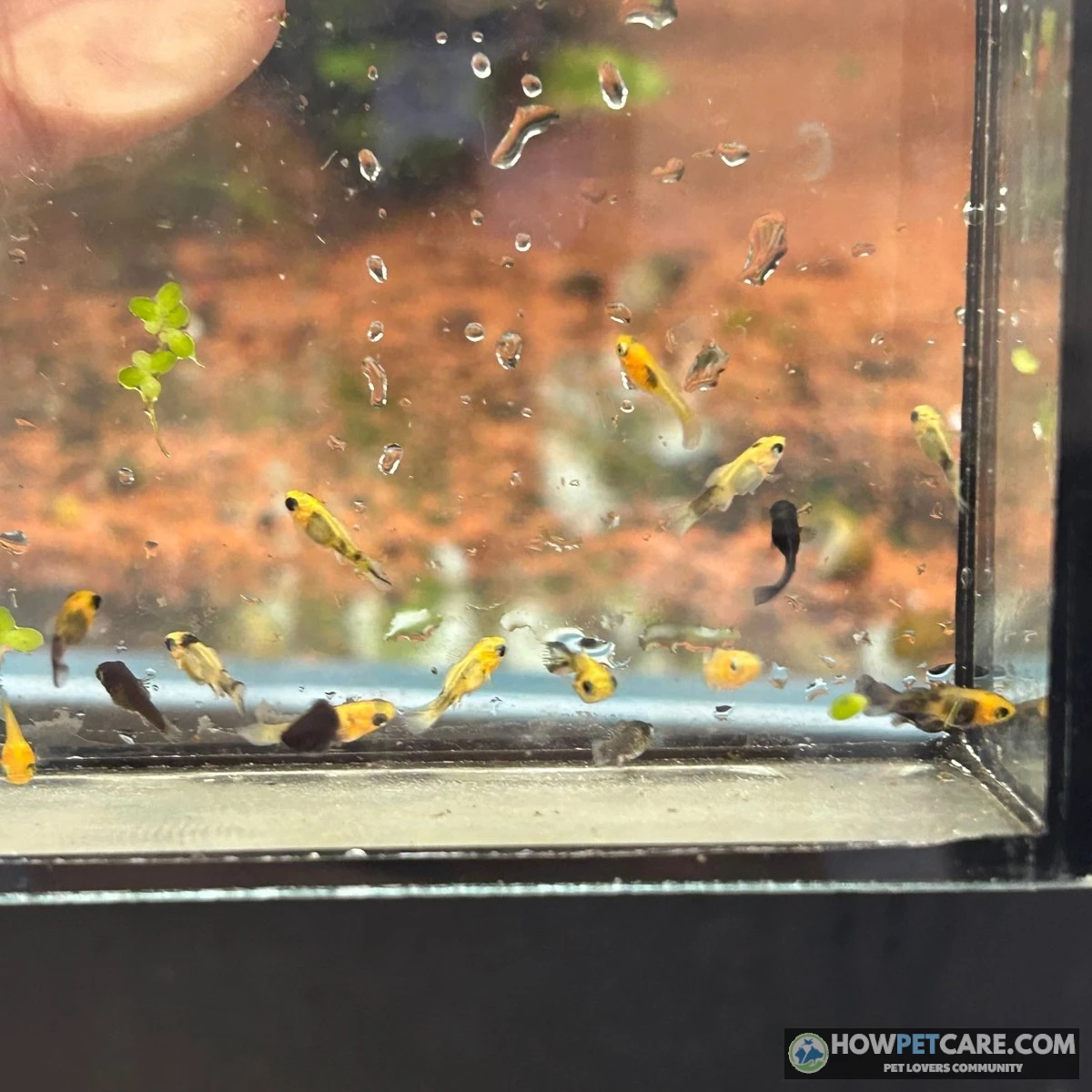
Dalmatian parents do not reliably produce only spotted offspring. Fry may turn out heavily spotted, nearly spotless, or solid black. To improve the odds of a spotted line, select well-marked parents, raise the young until their pattern is visible, and breed selected spotted fish together. Separate or rehome off-pattern juveniles if your goal is a more consistent pattern. This is selective breeding, not a guarantee: inheritance varies, and maintaining a line takes space and multiple generations.
Buying a Dalmatian Molly: Prices by Morph, Where to Buy and a Pre-Purchase Checklist
What each morph costs and where the price differences come from
Observed listing anchors include about $5.99 for a PetSmart dalmatian molly, about $6.99 for a dalmatian molly listing from Imperial Tropicals, and about $47.99 for a LiveAquaria lyretail listing. These are approximate listing prices, not guaranteed 2026 prices; verify the current amount, shipping cost, and whether a specialty listing is per fish, pair, or group. One seller’s listing was reported as out of stock, which is another reason to confirm availability before planning a purchase.
Price differences typically reflect the morph, breeder, availability, and shipping logistics rather than simple differences in care quality. A higher price tag never proves that a fish is healthier. Compare the actual fish, seller’s water conditions, live-arrival policy, and total delivered cost.
Big-box vs local store vs online breeder
A big-box retailer offers convenience and low prices, but fish may share centralized water systems where disease spreads quickly. A local fish store lets you inspect the fish in person and ask how it has been held, while avoiding shipping trauma. An online breeder or specialist may offer a wider choice of patterns and morphs, but shipping adds cost and transit stress. Whichever route you choose, ask about water hardness and salinity, recent losses, feeding, and whether females have been kept with males.
Pre-purchase and first-week checklist
Before buying, look for clear eyes, intact fins, active swimming, and a body that is neither unusually thin nor bloated, with no obvious white spots. Watch the fish for a few minutes rather than picking one that is gasping, clamped, or persistently hiding. Check that the seller’s water history is compatible with your plan, especially if your aquarium uses very soft or RO water.
- Cycle the aquarium and confirm that ammonia and nitrite are zero.
- Check tank size and water parameters, including GH and KH; remineralize soft or RO water gradually.
- Choose a morph that fits your space and experience. Standard shortfin is the least complicated choice; read the balloon section before selecting that form.
- Prepare a quarantine or observation setup and ask the seller whether the fish was kept in freshwater or brackish water.
- Acclimate gradually, discard store water, and keep lighting low after introduction.
- If keeping a group, plan for more females than males and consider the possibility that a female has stored sperm.
- Set up plants or a fry plan before purchase if you cannot risk losing newborns—or if you cannot take on more fish.
Choose the fish only when the tank, water, and long-term care plan are fully ready. Setting up your environment ahead of time ensures a smooth transition and keeps your livebearers healthy from day one.
 You might be wonderingDropsy fishDropsy in Fish: Emergency Diagnosis and TreatmentRead the answer
FAQ
Is a dalmatian molly the same as a regular molly?
A dalmatian molly is a color pattern bred into the molly, not a separate wild species. Its care is the same as for other mollies of the same body type, such as short-finned or sailfin.
Do dalmatian mollies eat algae?
They graze on soft algae and biofilm, which supplements their diet. They still need a regular plant-based flake or pellet diet, because algae alone will not meet their nutritional needs.
Why is my dalmatian molly hiding or staying still?
Common causes are stress from a new tank, bullying, poor water quality or early illness such as ich. Test ammonia and nitrite first, look for white spots or clamped fins, and then check temperature and tank mates.
Can I keep a single dalmatian molly?
A single molly can survive, but mollies are social fish and generally do better in a small group. Keep more females than males to reduce harassment, and expect fry if any female was previously housed with a male.