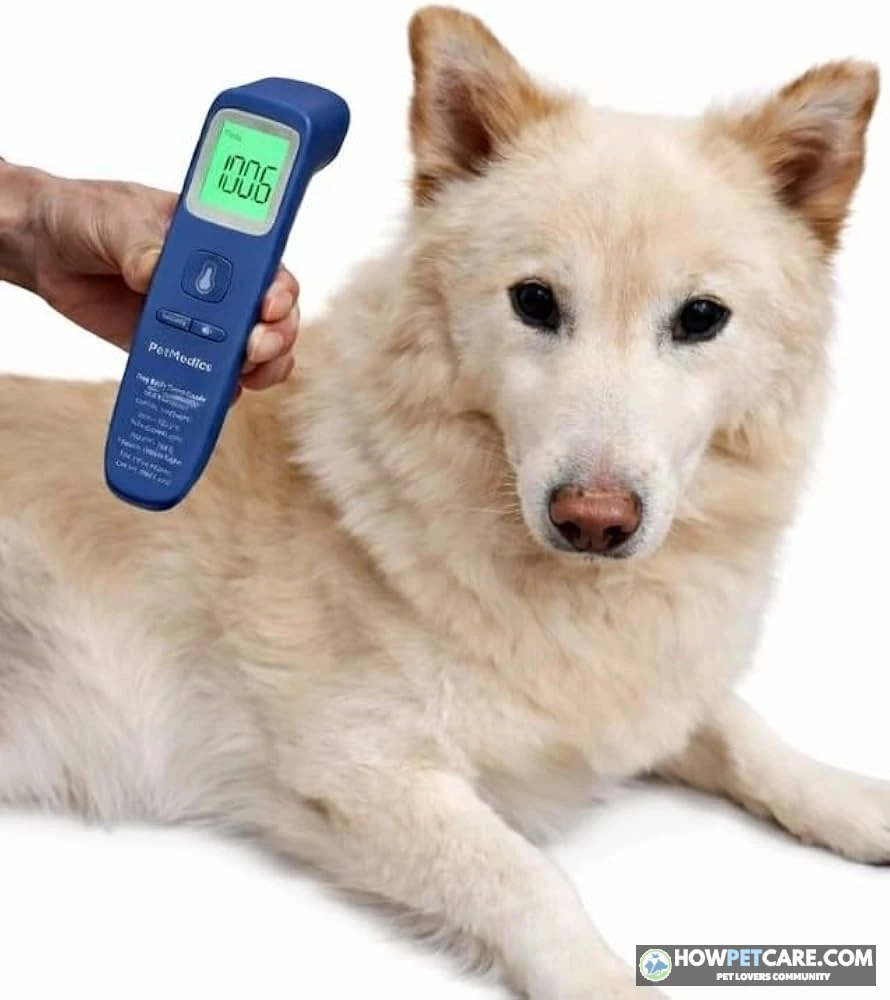

A normal dog temperature is 99.5–102.5°F. A reading around 103°F suggests a fever—call your vet. At 104°F or higher, or below 99°F, seek emergency care. For home checks, a flexible-tip digital rectal thermometer is the most dependable choice when used correctly.
A normal dog temperature is generally 99.5–102.5°F. A reading around 103°F suggests a fever; call your veterinarian for advice. At 104°F or higher, or below 99°F, seek emergency veterinary care. For many home checks, a flexible-tip digital rectal thermometer is the most dependable practical choice when used correctly.
If your dog has collapsed, is struggling to breathe, having a seizure, or may have heatstroke, go to an emergency veterinary clinic now. Don’t wait to take a reading. This guide supports safe home temperature checks; it doesn’t replace veterinary care.
Dog temperature at a glance: normal range, fever, and urgent readings
Normal dog temperature and fever thresholds
A resting adult dog’s normal body temperature is generally 99.5–102.5°F. Age, environment, activity, stress, and measurement technique can all affect a result. A temperature around 103°F suggests a fever, but an elevated reading alone can’t tell you why your dog is hot.
The chart assumes a properly taken rectal reading in a resting adult dog. Ear and surface readings aren’t interchangeable with rectal readings. If your dog is a puppy, senior, pregnant, recovering from surgery, or otherwise vulnerable, call the veterinary team sooner if you’re concerned.

Monitor, call the vet, or seek emergency care
| Reading | Suggested action | When to contact a veterinarian | Urgent warning signs |
|---|---|---|---|
| Below 99°F | Move the dog somewhere warm and dry, wrap in a towel, and seek emergency care. | Contact an emergency clinic now. Don’t delay transport to repeat the reading. | Weakness, collapse, cold exposure, or any rapidly worsening condition. |
| 99–99.4°F | A low reading may reflect technique or illness. Let the dog settle and carefully recheck if it’s safe. | Call promptly if the reading remains low or your dog seems unwell; call sooner for a vulnerable dog. | Weakness, severe lethargy, or breathing difficulty needs urgent assessment. |
| 99.5–102.5°F | This is generally the normal range. Record the result; there’s no need to take another reading unless symptoms change or your vet requests one. | Call if your dog seems unwell, even with a normal result. | Collapse, seizure, breathing difficulty, or suspected heatstroke is an emergency regardless of the number. |
| 102.6–102.9°F | Stop activity, move to a quiet room, offer water, and recheck after 20–30 minutes of rest if it’s safe. | Call the same day if the temperature remains elevated or your dog seems unwell. | Don’t wait for a recheck if emergency signs develop. |
| 103–103.9°F | A fever is possible. Contact a veterinarian; don’t give human fever medication unless a vet specifically directs you to. | Call today, or sooner if your dog is worsening or has a higher-risk medical history. | Severe lethargy, collapse, seizure, or breathing difficulty warrants emergency care. |
| 104°F or higher | Seek emergency care now. If heatstroke is suspected, stop exertion, move to shade, apply cool—not icy—water, and use a fan while arranging transport. | Contact an emergency clinic immediately. Don’t delay travel for repeat readings. | Suspected heatstroke is an emergency even without a temperature reading. |
A reading is one piece of information, not a diagnosis. If the display or your technique makes the result uncertain, tell the clinic and mention signs such as pale gums in a sick dog, rather than assuming an extreme reading is an error.

Best dog thermometers: compare picks, specs, and prices
For home use, the best dog thermometer is usually a digital rectal model with a suitable tip and clear cleaning instructions. An ear device may be easier to use with a cooperative dog, but placement matters. Don’t rely on no-touch devices to rule out a fever.
Quick picks by use case
This shortlist is a starting point, not a hands-on product ranking. The available evidence identifies two named digital options, but doesn’t support a specific dog ear model or non-contact model well enough for a ranked recommendation. The missing specifications and prices below weren’t independently verified for 2026; check the exact model and current US retailer listing before buying. Prices may vary.
| Model | Type | Best for | Read time | Stated accuracy | Waterproofing | Battery type or life | Approximate price | Evidence or source |
|---|---|---|---|---|---|---|---|---|
| 1. iProven Waterproof Dog and Cat Thermometer | Digital rectal | First option to check for routine home readings | About 20 seconds, as reported by a product roundup | Not verified | Described as waterproof by the roundup; confirm cleaning limits for the exact model | Not verified | Not verified | Product roundup; manufacturer specifications not independently checked |
| 2. Well & Good Digital Pet Thermometer | Digital rectal | Shopper who wants to investigate a shorter stated read time | About 10 seconds, as reported by a product roundup | Not verified | Not verified | Not verified | Not verified | Product roundup; manufacturer specifications not independently checked |

For a lower-cost option, compare a basic flexible-tip digital thermometer with a pet-labeled model, and check that the exact device is suitable for rectal use. A second thermometer can be useful as a backup, but don’t let it delay a call if a reading or symptoms are concerning.
If your dog can’t safely tolerate a rectal reading, ask your clinic whether a veterinary ear thermometer or an in-clinic measurement is appropriate. Before buying an ear device, check that it’s intended for dogs, replacement covers are available, and you can follow the positioning instructions. A forehead scanner isn’t a substitute just because it’s no-contact.
How the recommendations were evaluated
The two named picks come from a published product roundup that describes their read times; it also describes the iProven model as waterproof and flexible-tipped. Neither device was hands-on tested for this guide. The supplied information includes no independent clinical validation, current price, battery life, or manufacturer accuracy specification for either model. The order reflects the available descriptions, not a measured difference in performance.
Affiliate disclosure: No affiliate relationship or compensation information was provided for this draft; the publisher should disclose any applicable relationship near these picks before publication.
Rectal, ear, or infrared: which thermometer is accurate for dogs?
A device’s advertised accuracy margin and how well it agrees with a rectal reading are different things. A sensor may perform within a stated laboratory tolerance, while placement, movement, or the measurement site produces a different result in a dog.
| Method | What it measures | Accuracy evidence | Main advantages | Limitations |
|---|---|---|---|---|
| Digital rectal thermometer | Temperature at the rectal site, used as a practical reference for home checks | Rectal thermometry is recommended as the most accurate of the common methods in the supplied sources. A numeric ±°F margin depends on the specific device and wasn’t verified here. | Useful for checking suspected fever and recording comparable readings | Requires gentle handling; poor technique and movement can affect the result. |
| Dog ear thermometer | Infrared measurement in the ear canal | A commonly quoted estimate places a well-positioned ear reading within about 1°F of a rectal reading, but the supplied evidence doesn’t establish a supported universal ±°F difference. | May be easier for some dogs when positioned correctly. | Placement, ear anatomy, debris, and discomfort can affect a reading. |
| Non-contact infrared thermometer | Surface temperature, not a direct core-temperature reading | Surface readings can differ more from core temperature than ear or rectal readings; the supplied evidence doesn’t establish a supported universal ±°F difference. | Avoids physical contact. | Coat, distance, environment, and target surface can affect the result; it can’t reliably rule out fever. |

Rectal thermometer versus ear thermometer
A rectal thermometer gives a useful reference when you place the probe gently, hold it for the complete cycle, and use it consistently. A dog ear thermometer may be a practical alternative when rectal handling is difficult, but a poorly positioned probe can give a misleading result. If you plan to use one regularly, ask your clinic to demonstrate how.
A commonly quoted estimate puts a well-positioned ear reading within about 1°F of a rectal reading, while non-contact surface readings can differ by more—but the evidence supplied for this guide doesn’t establish those figures or support a single conversion such as “ear equals rectal minus 1°F.” Nor should a manufacturer’s stated ±°F sensor specification be presented as the real-world difference between measurement sites. If a reading doesn’t fit your dog’s condition, contact the clinic rather than averaging it with a reading from another site.
What non-contact infrared readings can and cannot tell you
A non-contact infrared thermometer measures a surface, which fur and the surrounding environment may affect. A forehead or coat reading isn’t a reliable replacement for a properly obtained rectal temperature. Use a device only as intended, record the measurement site, and seek veterinary advice about a concerning result or a sick dog—even if a surface reading looks normal.
A warm ear or dry nose can’t confirm a fever. If you can’t safely use a thermometer and your dog seems ill, call a veterinary clinic rather than relying on touch.
How to take a dog’s temperature at home, including solo restraint
Gather a digital thermometer suitable for rectal use, water-based lubricant or a small amount of Vaseline, a towel, treats, cleaning supplies, and any probe cover approved for that model. Set the display to Fahrenheit if that’s the unit you plan to report. A helper is often useful, though one person may be able to take a reading if the dog is calm and cooperative.

Step-by-step rectal temperature technique
-
Prepare the dog and thermometer
Let the dog settle on a non-slip surface. Turn on the thermometer and follow its instructions for any compatible probe cover.
-
Lubricate and position
Apply a small amount of lubricant to the probe tip. Stand beside the dog, gently lift the tail, and keep the dog comfortable in a standing or lying position.
-
Insert gently
Guide only the probe tip gently into the rectum, following the device instructions and your veterinarian’s advice for your dog’s size. Never push against resistance.
-
Wait for the completed reading
Keep hold of the thermometer and allow the full measurement cycle to finish. Stop if the dog struggles or the probe can’t be held safely.
-
Record and clean
Remove the probe, record the number, unit, time, and site, then clean the thermometer as directed. Reward the dog.
Don’t leave the thermometer unattended in your dog. If you see blood, your dog appears painful, or the area is heavily soiled, stop and call the clinic for guidance instead of trying repeatedly.
One-person positioning for a squirming dog
Choose the least restrictive setup your dog accepts. Set everything within reach before you start, and keep an unobstructed exit for yourself.
- Side-by-side barrier: For a medium or large dog, stand alongside it with its side near a wall. Your body can gently discourage sideways movement without pinning the dog or blocking its breathing.
- Towel support: For a small dog, use a non-slip mat on the floor and loosely wrap a towel around the chest and front legs, leaving the rear accessible. Don’t wrap tightly or place the dog on an elevated surface where it could fall.
- Food distraction: If your dog can safely eat, offer a lick mat with a small amount of wet food or xylitol-free peanut butter while you work from the side. Stop if the dog moves away or becomes distressed.
- Comfortable lying position: If your dog settles naturally on its side, keep the surface non-slip and lift the tail gently. Don’t hold the dog down to maintain the position.

Stop after two unsuccessful attempts, or immediately if your dog shows pain, snaps, becomes severely distressed, or resists forcefully. A muzzle isn’t permission to force the procedure. If one is needed, ask the clinic about a properly fitted basket muzzle and safe handling, especially if breathing is affected. The clinic can take the reading or assess your dog without a home reading.
Using an ear thermometer safely
Use a model intended for dogs and follow its instructions for the probe, cover, and angle. Don’t force the probe into the ear, and stop if the ear is painful or your dog resists. Record the result as an ear reading. If it’s concerning, or your dog seems ill despite a normal-looking number, contact your veterinarian.

Human thermometers, probe covers, units, and common error codes
A human digital thermometer may be suitable for a dog if its instructions permit rectal use and its size and condition are appropriate. Set it aside for your dog, label it clearly, and never return it to human use. Don’t use a glass or mercury thermometer.
Use only probe covers approved for the exact device. A cover that doesn’t fit or isn’t compatible may interfere with contact or the reading; the available evidence doesn’t establish that every approved cover changes accuracy or read time. Follow the manual’s instructions for lubrication and cleaning, whether or not you use a cover.
LO, HI, and ERR troubleshooting
Display codes vary by model, so check the manual before interpreting them:
- LO: Often indicates a temperature below the device’s measurement range; on some models, it appears when the probe is cool at startup. It doesn’t establish the dog’s temperature on its own.
- HI: Often indicates a measurement above the device’s range. The temperature may genuinely be high; if your dog seems unwell or heatstroke is suspected, seek urgent help rather than measuring repeatedly.
- ERR: Commonly indicates a measurement or device error. Check the manual for the model’s specific meaning.

First check the unit, battery, probe condition, approved cover, placement, and whether the full cycle finished. Clean the device as instructed. If an extreme reading or code comes with signs of illness or exposure to heat or cold, call the clinic immediately instead of troubleshooting at length.
Switching °C and °F and checking inconsistent readings
The unit setting may be changed through a button or menu, but there’s no universal sequence. Check the instructions for your exact model. As a useful check, 37°C is about 98.6°F; a display in the high 30s is likely showing Celsius, not an impossible Fahrenheit reading.
If readings are inconsistent, check your technique and compare with a second suitable digital thermometer at the same site if your dog tolerates it. A comparison may reveal a problem, but it can’t establish which device is correct. Ask the manufacturer about service or replacement, or ask your veterinarian to check the reading. Don’t treat a warm-water test or an at-home adjustment as formal calibration; follow the manufacturer’s procedure and waterproofing limits.
How often to recheck temperature and whether wearables can replace a thermometer
Temperature log for fever or recovery
Follow your veterinarian’s schedule first. If your dog is stable and you weren’t given a schedule, one example is to recheck every 4–6 hours while awake when monitoring an elevated temperature, provided handling is safe. This is a practical schedule, not a substitute for calling about a fever or worsening symptoms. Don’t wake or repeatedly restrain your dog just to follow it without veterinary direction.
For a dog recovering from surgery, follow the discharge instructions: the clinic may recommend a different schedule or no routine temperature checks. After medication or fluids, check at the time the clinic recommends. If heatstroke is suspected, focus on cooling and transport rather than home monitoring.
| Situation | Practical monitoring plan | Change the plan when |
|---|---|---|
| Stable dog with a borderline reading | Let the dog rest and recheck after 20–30 minutes if safe. | Call the same day if the elevation persists or the dog seems unwell. |
| Fever being monitored at home | Call the vet; if home monitoring is advised, follow its schedule. Without one, 4–6 hours while awake is an example. | Contact the clinic sooner for worsening signs or a threshold-crossing reading. |
| Recovery after surgery | Follow the discharge sheet or call the surgical team for instructions. | Call about concerning readings or worsening recovery rather than simply checking more often. |
| Suspected heatstroke | Begin cooling and arrange emergency transport. | Don’t wait for a monitoring interval or a repeat reading. |
Record the date, time, reading, unit, site, symptoms, medications and their timing, and action taken. For example, a log might say: “6:40 p.m., 103.2°F, rectal digital, quieter than usual, no medication, called vet.” Share the thermometer model and any probe-cover details with the clinic so its team can interpret the trend.

Smart collars and continuous temperature monitoring
Smart collars and connected wearables are emerging options for tracking trends, but the measurement location and validation matter. A skin or surface trend isn’t automatically equivalent to a rectal reading. Check what a particular device measures and discuss concerning alerts with your veterinarian. Don’t use a wearable to rule out fever or replace an indicated spot-check or examination.

Before you buy or take a reading: a practical next-step checklist
- Choose a digital rectal thermometer if a dependable home reference is your priority. Consider a dog-specific ear device when rectal measurement isn’t practical, and discuss its limitations with your clinic.
- Before buying, check the exact model’s stated accuracy, read time, battery, cleaning and waterproofing instructions, compatible covers, and return policy. Compare current prices; the figures for the named models here weren’t verified.
- If you’re taking a reading tonight and there are no emergency signs, let your dog rest, prepare the lubricant and device, and take one careful measurement only if your dog accepts it.
- Write down the result and measurement site, then use the action chart. Call about a fever around 103°F; seek emergency care at 104°F or higher or below 99°F, or immediately for emergency symptoms.
- Keep the thermometer, lubricant, cleaning supplies, and your veterinarian’s and emergency clinic’s phone numbers together in your pet first-aid kit.
| Temperature Reading Range | Suggested Action | When to Contact Veterinarian | Urgent Warning Signs |
|---|---|---|---|
| Below 99°F | Move the dog somewhere warm and dry, wrap in a towel, and seek emergency care. | Contact an emergency clinic now. Don't delay transport to repeat the reading. | Weakness, collapse, cold exposure, or any rapidly worsening condition. |
| 99–99.4°F | A low reading may reflect technique or illness. Let the dog settle and carefully recheck if it's safe. | Call promptly if the reading remains low or your dog seems unwell; call sooner for a vulnerable dog. | Weakness, severe lethargy, or breathing difficulty needs urgent assessment. |
| 99.5–102.5°F | This is generally the normal range. Record the result; there's no need to take another reading unless symptoms change or your vet requests one. | Call if your dog seems unwell, even with a normal result. | Collapse, seizure, breathing difficulty, or suspected heatstroke is an emergency regardless of the number. |
| 102.6–102.9°F | Stop activity, move to a quiet room, offer water, and recheck after 20–30 minutes of rest if it's safe. | Call the same day if the temperature remains elevated or your dog seems unwell. | Don't wait for a recheck if emergency signs develop. |
| 103–103.9°F | A fever is possible. Contact a veterinarian; don't give human fever medication unless a vet specifically directs you to. | Call today, or sooner if your dog is worsening or has a higher-risk medical history. | Severe lethargy, collapse, seizure, or breathing difficulty warrants emergency care. |
| 104°F or higher | Seek emergency care now. If heatstroke is suspected, stop exertion, move to shade, apply cool—not icy—water, and use a fan while arranging transport. | Contact an emergency clinic immediately. Don't delay travel for repeat readings. | Suspected heatstroke is an emergency even without a temperature reading. |
FAQ
Can I check my dog’s temperature without a thermometer?
No reliable home method can confirm a dog’s temperature without a thermometer. Warm ears or a dry nose are not dependable fever tests; judge overall symptoms and contact a veterinarian if your dog seems unwell.
Can a dog’s temperature be taken under the arm?
An armpit reading is generally less dependable than a correctly taken rectal reading and may not reflect core temperature. Do not use it to rule out fever or delay veterinary care.
Can I use an infrared thermometer on my dog’s forehead?
A forehead or coat reading measures surface temperature and can differ substantially from core body temperature. Use it only as the device manufacturer directs, and confirm concerning results with an appropriate veterinary thermometer or clinic.
Do probe covers make a digital thermometer less accurate?
They may affect a reading if they are not designed for that thermometer or are fitted incorrectly. Use only covers approved by the manufacturer and follow the device’s instructions.
What should I do if my dog’s temperature is 103°F?
A reading around 103°F suggests a fever, so contact your veterinarian the same day for advice. Do not give human fever medication unless a vet specifically directs you to, and seek emergency care if severe signs like collapse or breathing difficulty appear.