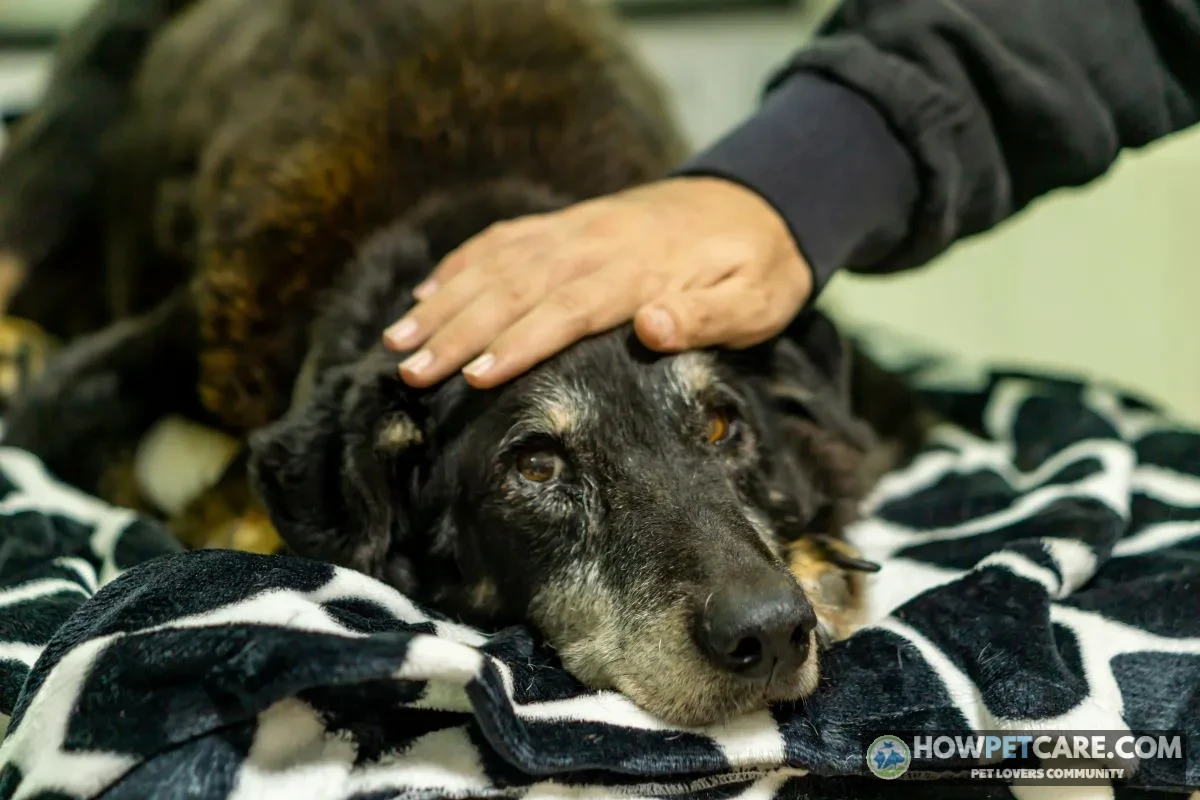

To arrange euthanasia for a dog, call your regular veterinarian, an emergency clinic, or an in-home provider that serves your address. The appointment usually includes sedation, followed by an injection of pentobarbital that causes a peaceful death within moments. Costs vary by provider, location, dog size, and aftercare choice.
If your dog is struggling to breathe, has collapsed, cannot urinate, or appears to be in uncontrolled pain, call a veterinarian or emergency veterinary hospital right away. You don’t have to resolve the entire end-of-life decision before seeking help. If your dog is comfortable but you sense the good days are slipping away, a quality-of-life conversation with your veterinarian can clarify the next steps.
To arrange dog euthanasia, call your regular veterinary clinic or an in-home provider that covers your address. You can also visit a provider’s website and use its online booking form. In greater Philadelphia, for example, Lap of Love offers in-home care and telehospice, while CodaPet lists online booking for Philadelphia and nearby communities such as Glenside, Ardmore, Conshohocken, and Cherry Hill; verify that your exact address is within their service area before booking. Same-day visits may be attempted but are not guaranteed; evening and weekend availability also varies.
When to euthanize your dog: assess comfort and quality of life
There is no single sign that tells every family when to euthanize a dog. A veterinarian can help you weigh your dog’s comfort, underlying illness, treatment options, and ability to enjoy familiar activities. Palliative care or pet hospice may ease symptoms for some dogs; for others, euthanasia may be the most compassionate way to prevent further suffering.
Euthanasia for dogs is a veterinary procedure intended to bring about a humane death, usually with an anesthetic medication. It differs from simply giving a dog medication to make them sleep temporarily.
A dog-specific quality-of-life checklist
Use this scorecard to prepare for a conversation, not to diagnose your dog or produce an automatic decision. For each item, assign a score from 0 (very poor) to 10 (doing well). Repeat it daily for several days if your dog is stable enough, and note what you observe.
- ☐ Pain: Can your dog rest and move comfortably on their current medication, without persistent whimpering, panting, or guarding a painful area?
- ☐ Breathing: Is breathing easy and quiet at rest, rather than visibly effortful?
- ☐ Mobility: Can your dog stand, change position, and reach water or go outside with a manageable level of help?
- ☐ Appetite: Is your dog willing to eat their usual food or favorite treats?
- ☐ Hydration: Is your dog drinking, and are they able to urinate normally?
- ☐ Hygiene: Can your dog stay clean and dry, with your help if necessary, without distress from lying in urine or stool?
- ☐ Happiness: Does your dog still respond to family members or enjoy a familiar activity, even in a smaller way?
- ☐ Fear and anxiety: Can your dog settle, or are they frequently trembling, hiding, panting, or distressed?
- ☐ Sleep: Can your dog sleep comfortably, or do pain and breathing problems interrupt rest?
- ☐ Good days and bad days: Looking back over the week, have comfortable, engaged days outnumbered difficult ones?

Add the scores if a total helps you see a trend, but don’t treat any particular number as a medical threshold. A worsening score, repeated low scores, or bad days beginning to outnumber good ones are reasons to contact your veterinarian and discuss comfort, treatment, and end-of-life care. One severe problem can outweigh a favorable total.
The HHHHHMM scale—Hurt, Hunger, Hydration, Hygiene, Happiness, Mobility, and More good days than bad—is another discussion aid. Bring your notes to an appointment or ask whether a telehospice consultation suits your dog. Lap of Love offers remote quality-of-life discussions.
When to call a veterinarian urgently
Contact an emergency veterinary clinic immediately if your dog is struggling to breathe, collapses, seems to have uncontrolled pain, or strains without being able to urinate. Pale or blue gums with breathing difficulty also require emergency attention. Call ahead if possible so the team can help you plan a safe arrival; don’t wait for a routine quality-of-life appointment or an online booking response.
A dog living with a terminal illness may have time for a planned hospice conversation. A sudden crisis is different: an emergency veterinarian can assess suffering and explain immediate options, including stabilization or euthanasia when appropriate.

Choose in-home, clinic, or low-cost dog euthanasia near you
The right setting depends on your dog’s condition, how safely they can be moved, your family’s wishes, and what you can afford. Start with urgency: if your dog is in severe distress, contact an emergency hospital rather than waiting for a house call.
| Option | Typical setting | Best suited to | Travel and handling | Availability and eligibility | Euthanasia-only cost range | Aftercare options |
|---|---|---|---|---|---|---|
| In-home | Your dog’s familiar resting place | Dogs distressed by car travel or difficult to move, when their condition allows a scheduled visit | Vet travels to you; discuss stairs, parking, and body transport | Confirm service area and appointment time; urgent slots are not guaranteed | One Philadelphia provider lists appointments starting at $370. | Ask about transport, private or communal cremation, and fees |
| Veterinary clinic | Exam or comfort room | Dogs who can travel safely, or who need prompt veterinary assessment | Family arranges transport; ask for help unloading a large dog | Call your regular clinic or an emergency hospital; hours and appointments vary | Request a local quote; the available evidence does not establish a nationwide range | Ask about cremation, body release, and keepsakes |
| Shelter or low-cost service | Participating shelter or clinic | Families prioritizing affordability and able to meet service requirements | Family usually arranges transport; ask about handling help | Eligibility, scheduling, surrender, and owner-presence policies vary | Animal Humane Society lists reduced euthanasia-only fees of $49–$110, depending on size or location. | Options vary; confirm whether ashes can be returned |
In-home euthanasia versus a veterinary clinic
A home visit may spare a car-averse or mobility-impaired dog a difficult trip and let them stay on a familiar bed. Ask the mobile veterinarian whether they can work where your dog is resting, and explain apartment stairs, narrow hallways, parking, and any lifting needs before booking.

A clinic may be more practical when your dog needs an urgent assessment or when a home appointment isn’t available soon enough. Ask whether the clinic has a quiet room, a separate entrance, or staff who can help move your dog from the car. Don’t assume either setting will be calmer for every dog.
To narrow the choice, ask yourself: Can my dog travel without significant distress? Can I safely help them move? Do we need a particular appointment time or privacy for family members? Then ask each provider who performs the procedure, whether you may stay, what sedation is planned, and whether your preferred aftercare is available.
Low-cost services and eligibility
Local shelters, humane organizations, and lower-cost clinics can be worth calling when price is the main concern. Ask whether the service requires you to surrender your dog, what surrender means for your ability to be present or make aftercare decisions, and whether there are residency or income requirements.
Policies differ. For example, Animal Humane Society describes a reduced-cost post-surrender service where owners may attend in a comfort room. Confirm the policy at the specific location you contact; don’t assume a different shelter offers the same arrangements.
Dog euthanasia cost: compare the appointment and aftercare fees
The total cost of dog euthanasia depends on the provider, location, dog’s weight, appointment time, and aftercare. A quote for the procedure alone may not include travel, sedation, cremation, or an urn. The following are the specific figures supported by the available provider information, not national price promises.
| Cost component | Typical estimated range | Usually included? | What can change the price |
|---|---|---|---|
| In-home appointment and euthanasia | One Philadelphia provider starts at $370. | Ask for an itemized quote | Address, provider, dog’s needs, and timing |
| Clinic euthanasia | No reliable nationwide range established here | Ask the clinic | Exam, sedation, and emergency or after-hours charges |
| Shelter or low-cost euthanasia | Animal Humane Society lists $49–$110 for euthanasia only. | Varies | Location, dog size, eligibility, and service conditions |
| House-call travel | Quote required | Varies | Distance and service-area boundaries |
| Sedation | Quote required | Varies | Medication and whether it is part of the appointment fee |
| Urgent, evening, or weekend service | Quote required | Varies | Provider and appointment availability |
| Large-dog handling or transport | Quote required | Varies | Weight, access, equipment, and staffing |
| Cremation | One Philadelphia provider lists optional cremation at $50–$450. | Often an additional choice; confirm | Dog’s weight and private versus communal cremation. |
| Urn | Animal Humane Society lists $50–$150. | Ask whether a basic container is included | Material and upgrade choice |
| Paw print or fur clipping | Quote required | Varies | Keepsake type and provider |
What changes the total price
Ask for a total based on your dog’s weight, your address, your preferred time, and whether you want ashes returned. Private cremation generally costs more than communal cremation, but the exact difference is provider-specific. Also ask whether an outside crematory collects your dog and whether transport or return delivery costs extra.
For a concrete comparison, Animal Humane Society lists euthanasia-only prices of $49–$110 and prices up to $209–$270 with private cremation, depending on size or location. A separate Philadelphia in-home provider starts at $370 for the appointment and lists optional cremation from $50–$450, depending on weight and cremation type. These are different providers and services, not interchangeable quotes: confirm the actual line items and policies before comparing totals.

Questions to ask before booking
Ask the provider: “What is the complete price for my dog, including sedation, travel, transport, and my aftercare choice?” Then check whether payment is due before the appointment, whether a deposit is required, and whether cancellation or schedule changes carry a fee. If the total is out of reach, ask about a lower-cost option or local financial assistance.
What happens during a dog euthanasia appointment
Knowing how euthanasia works for a dog can make the appointment less frightening. The exact approach and length depend on your dog’s condition and the veterinarian’s plan. Ask the team to explain each step before it happens and to tell you how much time is available for goodbyes.
Sedation, catheter placement, and the final injection
- Arrival and consent. At home, the veterinarian discusses where your dog is comfortable. At a clinic, staff show you where to settle. You review consent, payment if needed, and your aftercare choices.
- Settling and sedation. The veterinarian may give a sedative to reduce anxiety and help your dog relax or sleep. The medication, route, and time to take effect vary; sedation usually needs a little while to work fully. Tell the veterinarian if your dog appears uncomfortable or if you want to understand the sedation plan.
- Catheter placement, if used. A small intravenous catheter may be placed in a leg vein to provide access for the final medication. The veterinarian may use a different approach depending on your dog’s condition.
- Final injection. The veterinarian usually administers a euthanasia solution containing pentobarbital, an anesthetic drug, into a vein. It causes loss of consciousness followed by death, typically within moments of the injection. Ask whether your dog will be deeply sedated before this step; practices vary.
- Confirmation and goodbye. The veterinarian checks for signs of death, including the absence of a heartbeat, and tells you when your dog has died. Ask beforehand how long you may remain with your dog afterward and when transport will take place.
After death, a dog’s eyes may remain open, and reflexive breaths or gasps, muscle twitches, or the release of urine or stool can occur. These reactions are involuntary; they do not mean your dog is aware after death. Your veterinarian can prepare you for what you may see.
Is dog euthanasia painful?
The aim is to minimize pain and distress. A dog may feel a brief needle prick or sting with an injection, and some dogs react to handling or medication. Sedation is intended to help keep your dog calm, but its effect varies, so tell the veterinarian about pain, anxiety, or previous reactions. Ask what they will do if your dog does not appear comfortable.
Prepare your dog and family for a calm, supported visit
Most importantly, tell the provider what makes your dog feel safe and what makes handling difficult. Ask whether you and other family members can stay throughout; many providers allow this, but policies, space, and surrender arrangements differ.
Anxious, large, or mobility-impaired dogs
- ☐ Choose a resting place. Ask whether your dog can remain on their bed or a familiar blanket. Put down towels or a waterproof pad if helpful.
- ☐ Discuss fear or reactivity. Tell the team about a bite history, sensitivity to strangers, or painful areas. Ask about a low-stress approach and whether pre-visit medication is appropriate; give medication only as directed by a veterinarian.
- ☐ Ask about treats. If your dog wants food, check whether a favorite treat or meal is appropriate before offering it.
- ☐ Plan movement. Add rugs for traction and discuss a stretcher, extra help, car transfers, stairs, and narrow doorways. Do not attempt to lift a large or painful dog without a safe plan.
- ☐ Make entry easy. Share parking instructions, gate codes, apartment access, and whether other animals need to be kept in another room.
- ☐ Confirm attendance. Tell the provider how many people want to be present and ask about space, timing, and any restrictions.

Supporting children and family members
It’s common to feel grief before a dog dies, as well as sadness, relief, guilt, or several emotions at once afterward. Family members don’t have to participate in the same way: one person may want to hold the dog, while another may prefer a private goodbye beforehand.
For children, use clear, age-appropriate language: “The veterinarian will give our dog medicine so their body stops working, and they will die.” Avoid relying on “put to sleep” alone, which can be confusing. Explain what the child may see, offer a choice about being present if the provider permits it, and arrange for a trusted adult to support them.
Ask your veterinarian or a veterinary school about pet-loss support groups, counseling, or a pet-loss hotline. In the first hours, you may want someone to handle practical calls, sit with you, or help arrange a keepsake. There is no required timetable for grieving.

Aftercare for your dog’s body: cremation, burial, and keepsakes
You can discuss aftercare before the appointment, even if you’re not yet ready to choose. Ask who will move your dog’s body, whether the provider arranges collection from your home or the clinic, and how much time you can spend with your dog first. Confirm any deadline for changing your selection.
Private or communal cremation
With private cremation, your dog is cremated separately and their ashes are returned. Ask the provider how it identifies your dog throughout the process, what container is included, and whether ashes are delivered or collected.
With communal cremation, dogs are cremated together and individual ashes are not returned. Confirm exactly what the provider means by each term, since service descriptions and handling practices can vary.
Return times differ. Animal Humane Society states that private cremation remains are returned in seven to ten business days; ask your own provider for its expected window.

Home burial and memorial keepsakes
Home burial is possible only where local law and property rules permit it. Before making plans, check city or county requirements, rental or homeowners’ rules, burial-depth requirements, water-table and water-source concerns, and wildlife risks. Your veterinarian can also explain handling considerations related to the medication used.
If you want a paw print, fur clipping, collar, urn, or another form of memorialization, request it before your dog’s body is transported and confirm the price. Animal Humane Society says it mails families a sympathy card with a paw or nose print. If you are interested in donation or another special arrangement, ask your veterinarian about eligibility and timing before the appointment.

Find and book a trusted local provider today
Start by calling your regular veterinarian, an emergency hospital, or a local in-home euthanasia service. Search the provider’s official website for its phone number and online booking page, then confirm that it serves your street address—not just your city. In greater Philadelphia, Lap of Love offers in-home euthanasia and telehospice, and CodaPet lists online booking for Philadelphia and surrounding communities; check the precise boundary and appointment availability directly.
If you need help today, say so on the phone. Some providers try to accommodate same-day appointments, but a slot is not guaranteed. Ask specifically about evening and weekend availability, and don’t rely on a booking form for an emergency.
What to have ready when you call
Share your dog’s location, approximate weight, diagnosis if known, current symptoms, and whether they can walk or be moved safely. Explain any fear, pain, bite history, stairs, or car-transfer concerns. State your preferred setting, who wants to attend, your budget, and whether you want ashes returned.
Before confirming, ask who will perform the procedure and check the veterinarian’s credentials with your state veterinary licensing board. Look for consistent patterns in recent reviews rather than relying on a single rating. A trustworthy provider should explain its service area, sedation approach, presence policy, itemized costs, body transport, and emergency arrangements clearly and respectfully.

If your dog needs help before the appointment
If your dog worsens, call the scheduled provider or your regular veterinarian immediately. For severe breathing difficulty, collapse, uncontrolled pain, or inability to urinate, contact an emergency veterinary hospital rather than waiting for the appointment.
If you think your dog has died before the visit, call the veterinarian or provider for guidance on body handling and transport. If you are unsure whether your dog has died, contact an emergency veterinary clinic immediately.

| Option | Typical Setting | Best Suited To | Travel and Handling | Availability and Eligibility | Euthanasia-Only Cost Range | Aftercare Options |
|---|---|---|---|---|---|---|
| In-home | Your dog's familiar resting place | Dogshttps://howpetcare.com/euthanasia-for-dogs/ distressed by car travel or difficult to move, when their condition allows a scheduled visit | Vethttps://howpetcare.com/euthanasia-for-dogs/ travels to you; discuss stairs, parking, and body transport | Confirm service area and appointment time; urgent slots are not guaranteed | One Philadelphia provider lists appointments starting at $370. | Ask about transport, private or communal cremation, and fees |
| Veterinary clinic | Exam or comfort room | Dogs who can travel safely, or who need prompt veterinaryhttps://howpetcare.com/euthanasia-for-dogs/ assessment | Family arranges transport; ask for help unloading a large dog | Call your regular clinic or an emergency hospital; hours and appointments vary | Request a local quote; the available evidence does not establish a nationwide range | Ask about cremation, body release, and keepsakes |
| Shelter or low-cost service | Participating shelter or clinic | Families prioritizing affordability and able to meet service requirements | Family usually arranges transport; ask about handling help | Eligibility, scheduling, surrender, and owner-presence policies vary | Animal Humane Society lists reduced euthanasia-only fees of 49–110, depending on size or location. | Options vary; confirm whether ashes can be returned |
FAQ
Can I stay with my dog during euthanasia?
Most providers allow owners to stay, but policies and room arrangements vary. Ask when booking whether family members can be present and whether you can hold or comfort your dog.
How long does a dog euthanasia appointment take?
The time varies by provider and by how much time you want before and after the procedure. Ask whether the appointment includes time to settle your dog, say goodbye, and discuss aftercare.
Can a dog be euthanized at home if I cannot afford a house call?
Home visits usually cost more than clinic appointments, but some communities offer assistance or lower-cost services. Ask local veterinary clinics, shelters, or humane organizations about eligibility, total fees, and available aftercare.
What should I do if my dog dies before the appointment?
Call your veterinarian or the provider for guidance on body handling and transport. If you are unsure whether your dog has died, contact an emergency veterinary clinic immediately.