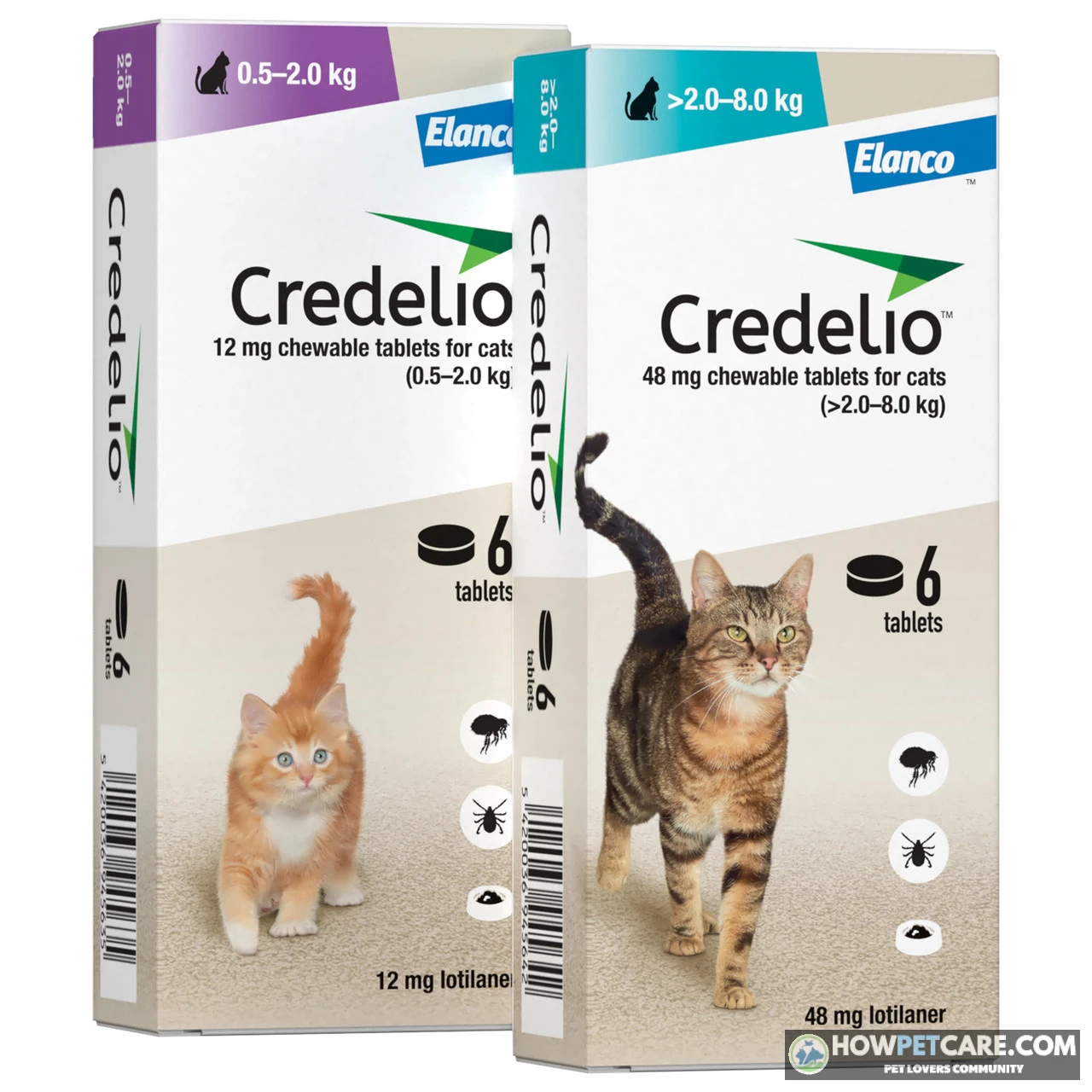

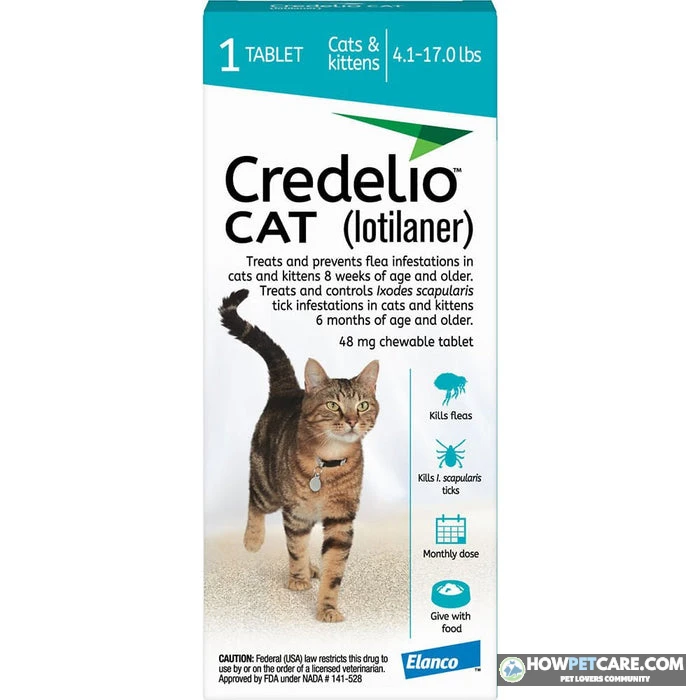
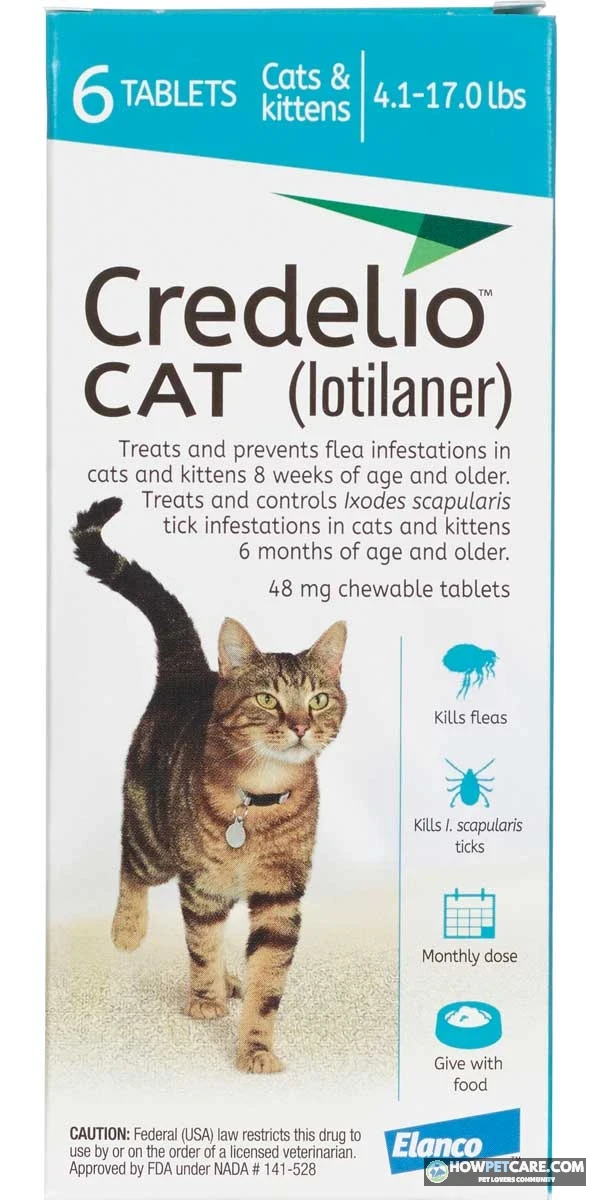
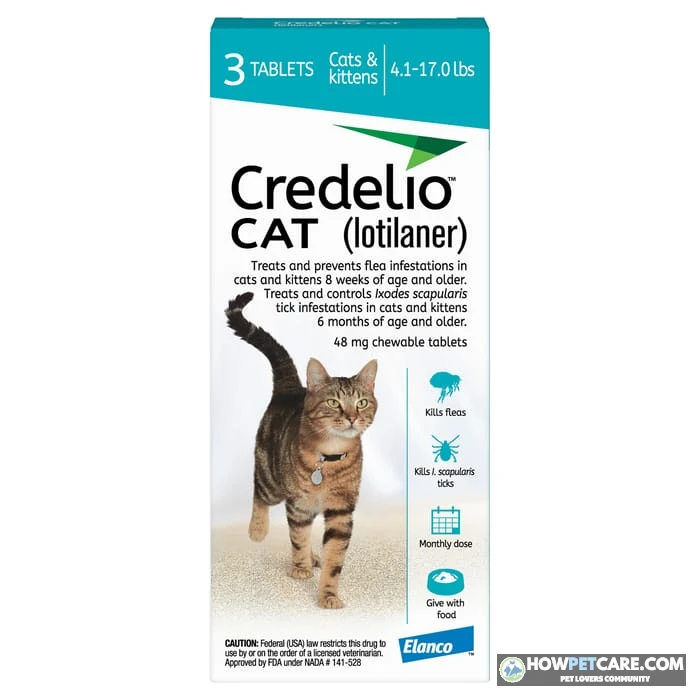
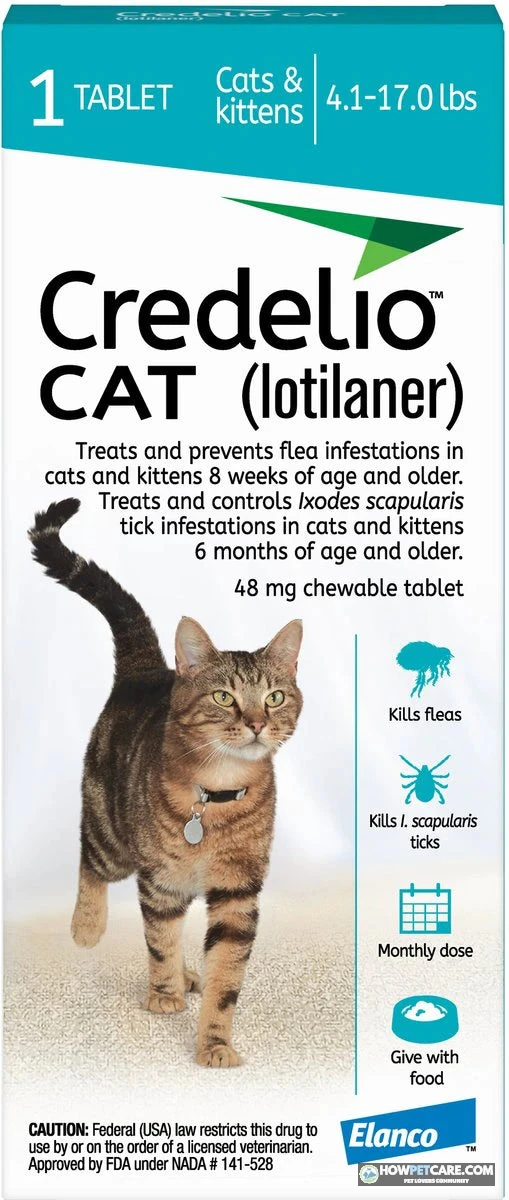
Credelio CAT (lotilaner) is a prescription monthly chew that kills adult fleas and black-legged ticks for one month, given with food. It suits cats that resist topicals, but it lacks heartworm and broad tick coverage—consider alternatives if your cat has a neurologic history or needs wider parasite protection.
Credelio for cats (sold as Credelio CAT) may suit a cat that needs monthly flea control and is easier to medicate by mouth than with a product applied to the skin. It’s a less obvious fit if your cat needs one product to cover several parasites, has a history of neurologic problems, or won’t reliably swallow a chew. Credelio requires a veterinary prescription and must be given with food.
Check the tick label before deciding: the U.S. feline indication names the black-legged tick, Ixodes scapularis, not every tick species a cat might encounter. If your cat is exposed to other ticks, you may need a different prevention plan. Credelio also doesn’t replace heartworm or intestinal-parasite prevention.
Credelio for Cats at a Glance: Who It Fits and Who Should Skip It
Quick verdict by cat profile
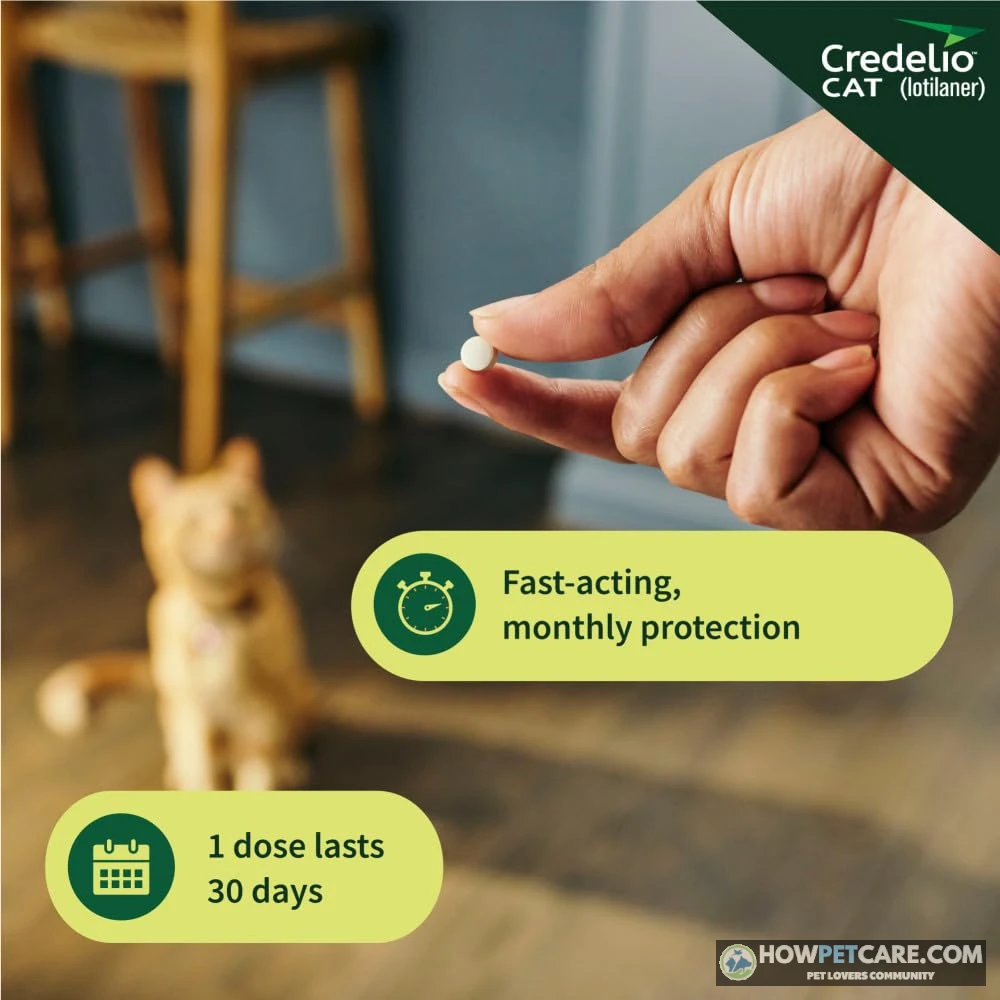
Credelio CAT contains lotilaner, an isoxazoline ectoparasiticide—a medicine used against external parasites. Given once a month as an oral chewable tablet, it kills adult fleas and prevents flea infestations for one month. The label says flea killing begins approximately six hours after administration.
It may work well for a cat that resists topical products, lives with other pets that groom one another, or needs flea control as part of a veterinarian’s plan for flea allergy dermatitis. An oral dose avoids leaving medication on the coat, but your cat still needs to swallow the full dose.
Take extra care with the decision if your cat has had seizures, tremors, or unexplained coordination problems; is pregnant or nursing; has a complex medical history; or needs protection from ticks not named on the feline label. Another product may be easier to give or better suited to the parasites in your area.
What Credelio does and does not treat
Credelio’s flea target includes Ctenocephalides felis, the cat flea. Its U.S. feline tick indication is limited to Ixodes scapularis. Don’t assume it covers Lone Star ticks, American dog ticks, or western black-legged ticks just because a dog product or laboratory study mentions them.
Credelio isn’t a heartworm preventive and has no feline label claims for ear mites or intestinal worms. If your veterinarian recommends protection against any of these, compare the cost and practicality of adding a compatible product with those of a broader topical alternative.
Credelio CAT is not interchangeable with dog-labeled Credelio products or Credelio Quattro. Do not give a dog product to a cat or calculate a feline dose from a dog package.
Credelio Dosage by Weight: Tablet Sizes, Cats Over 17 lbs, and Kittens
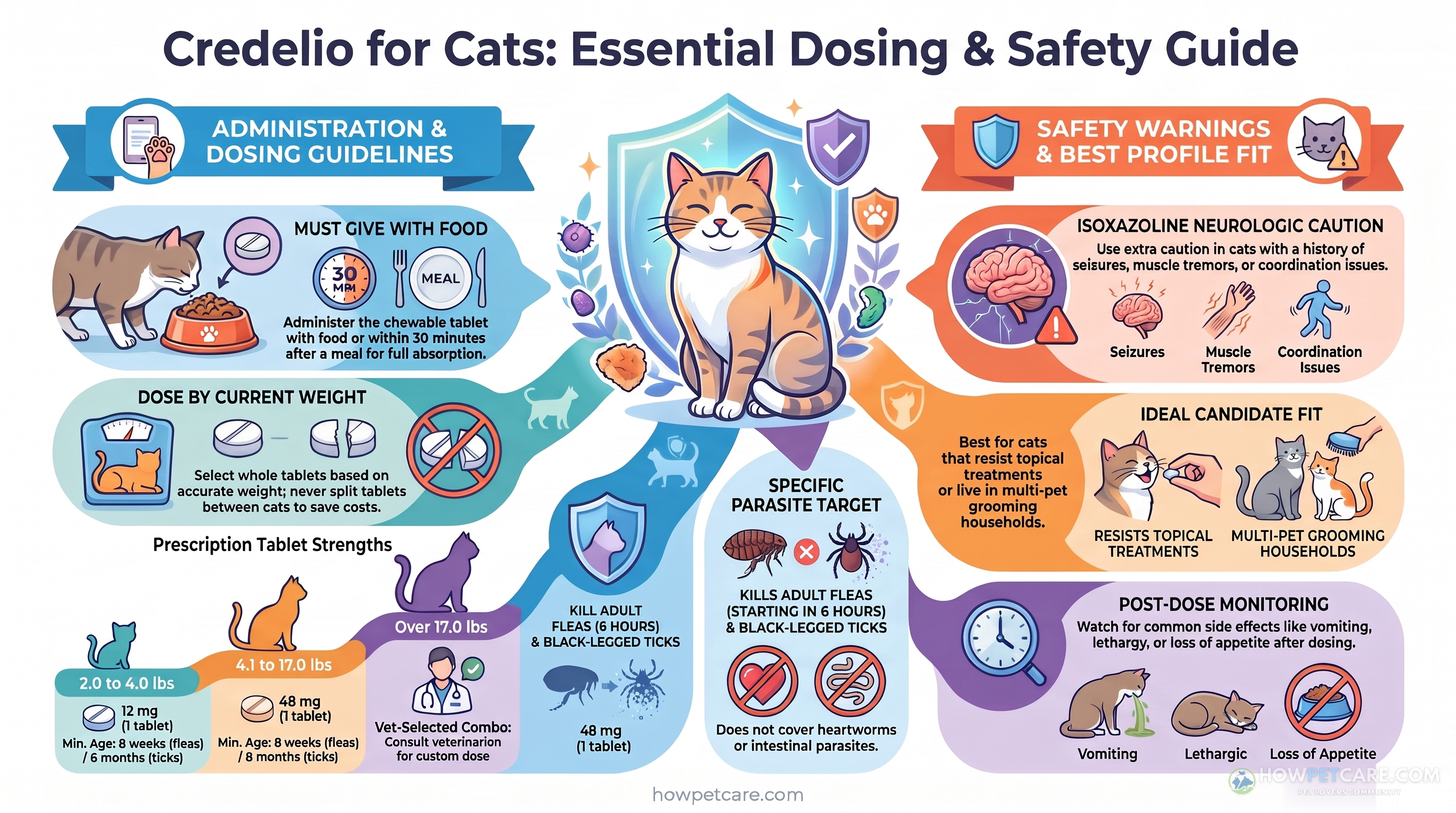
Weight-band dosing table
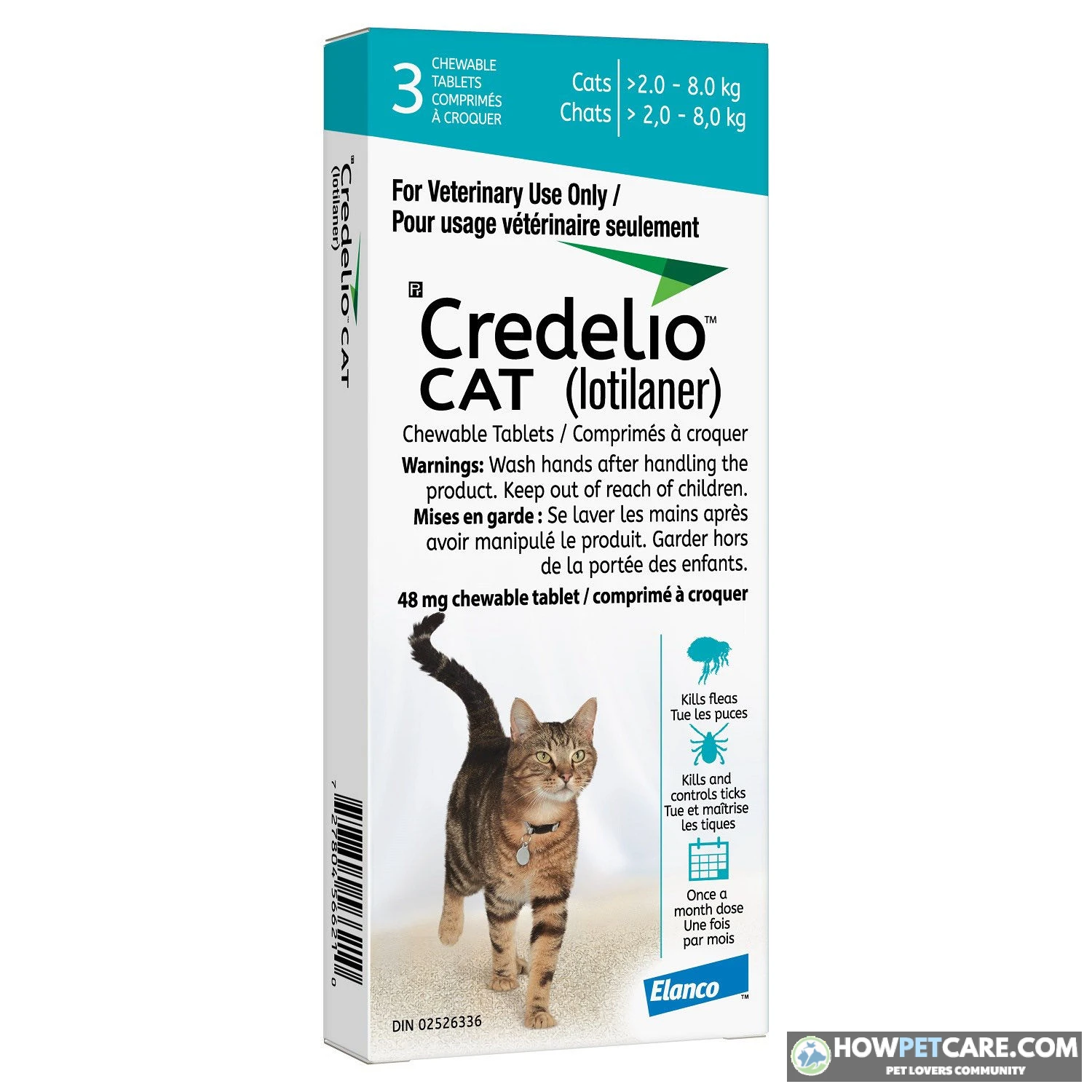
Use your cat’s current weight, the U.S. package, and your veterinarian’s instructions to choose a tablet. Don’t use weight bands from a foreign-market package; product labels can differ by country.
| Cat weight | Tablet strength | Tablets per dose | Notes |
|---|---|---|---|
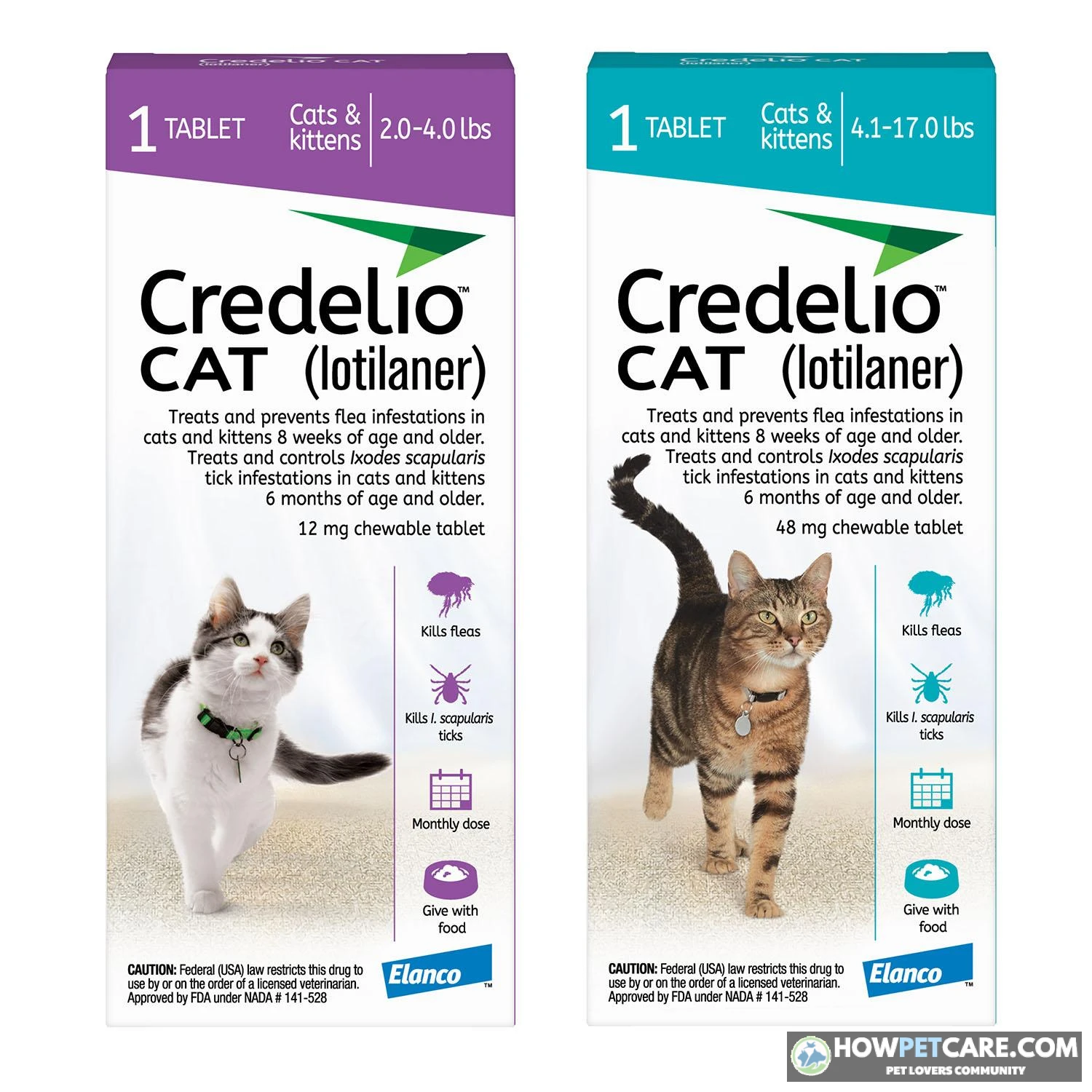
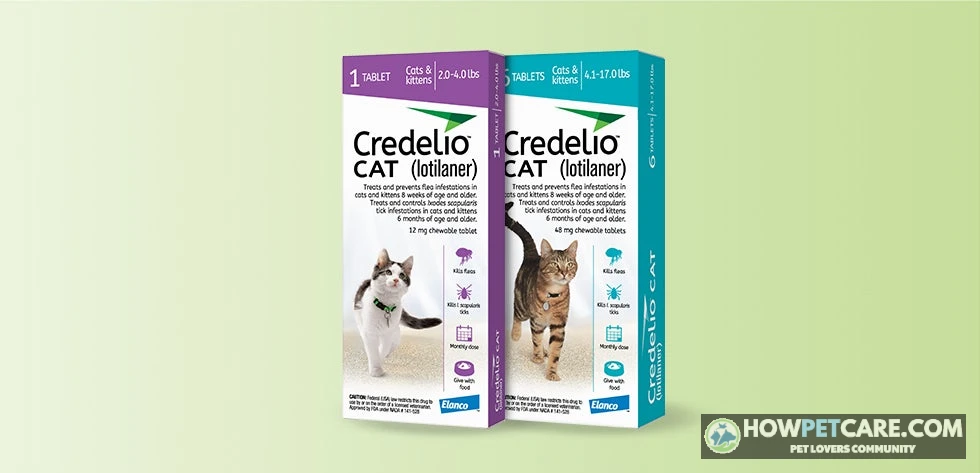
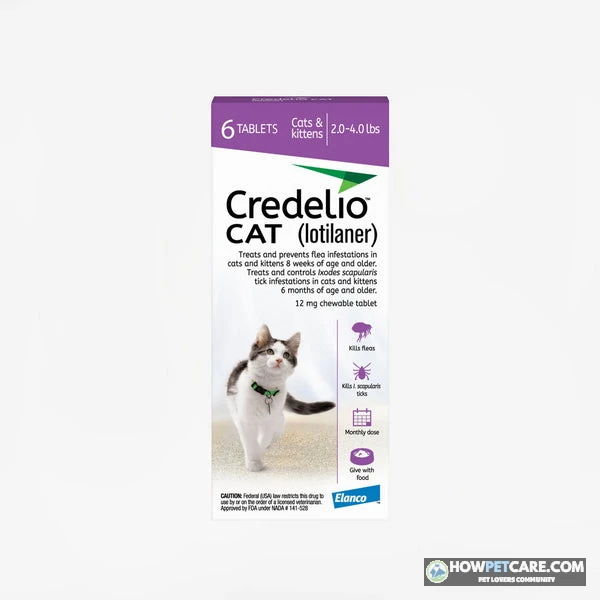
| 2.0–4.0 lb | 12 mg | One | Cat must also meet the applicable age requirement. |
| 4.1–17.0 lb | 48 mg | One | Confirm the band if your cat is close to a cutoff. |
| Over 17.0 lb | Veterinarian-selected combination | Ask your veterinarian | Do not improvise a combination or split tablets. |
Give the prescribed dose once a month. A calendar reminder can help. If your kitten is growing or your cat’s weight is changing, weigh them again rather than assuming the previous package is still right.
Cats over 17 lbs
A large cat isn’t automatically ruled out, but the two single-tablet bands don’t determine the dose for a cat above 17 lb. Ask your veterinarian to calculate the appropriate combination using current U.S. labeling and write it on the prescription. Don’t add tablets by guesswork or use a dog-strength product.
Kittens: age and weight requirements
For flea treatment, the U.S. minimum is eight weeks of age and 2.0 lb. For the black-legged tick indication, a cat must be at least six months old and weigh at least 2.0 lb. A kitten may therefore qualify for the flea indication before qualifying for the tick indication.
If a kitten is close to either weight threshold, get an accurate weight and ask the clinic which product and strength to use. If the kitten is too young or too small, ask for an age-appropriate plan instead of estimating a fraction of a tablet.
Why splitting tablets between cats backfires
Don’t split a 48 mg tablet between two smaller cats to save money. The U.S. dosing bands specify whole tablets, and splitting one makes each cat’s dose uncertain. An incomplete dose may leave a cat inadequately treated; an improvised larger fraction could exceed the intended dose. Only a veterinarian can decide whether any departure from the label is appropriate—not household arithmetic.
How to Give Credelio to a Cat: With Food Rules and Picky-Cat Fallbacks
Give Credelio CAT with food or within 30 minutes after a meal. Following the food directions helps the cat reach the blood levels needed for full effectiveness; a tablet given on an empty stomach isn’t equivalent.
Step-by-step: the first dose
-
Prepare the dose
Confirm the prescribed strength, check the expiration date, and have a small meal ready.
-
Feed and offer
Give the tablet with food or within 30 minutes after the meal. Offer it directly or in a small portion of food your cat normally finishes.
-
Confirm the dose
Check the bowl and surrounding floor, and make sure the tablet was swallowed rather than hidden or dropped.
-
Record and observe
Record the time and keep your cat nearby for the next hour or two so you can notice vomiting or an obvious reaction.
Fallback ladder for picky or hard-to-pill cats
If your cat refuses the tablet on its own, try hiding the whole tablet in a small amount of favorite wet food or a cat-safe pill treat. Keep to the meal timing rule. A small serving makes it easier to tell whether your cat ate the entire dose; offer the rest of the meal separately.
If that doesn’t work, ask your veterinary team to demonstrate safe hand-pilling or use of a pill-giving device. Don’t keep wrestling with a distressed cat or risk a bite; if clinic visits or handling trigger intense stress, ask your veterinarian whether gabapentin for pre-visit calming would help. If every monthly dose becomes a struggle, a topical alternative may be a better fit.
Crushing isn’t a proven workaround. The supplied evidence doesn’t establish that a crushed tablet retains the same effectiveness or that every cat will eat the full amount. Ask your veterinarian before crushing it or mixing it into food. If any medicated food remains, you can’t know how much your cat swallowed; don’t simply add another tablet.
Owner-reported Credelio cat reviews may offer ideas for serving the chew, but another cat’s acceptance or reaction can’t predict your cat’s experience. In a U.S. field study, owners successfully administered the tablet to 99.5% of cats. That’s encouraging, but it doesn’t guarantee a picky eater will take it.

Credelio vs Revolution Plus vs Bravecto Plus vs Advantage II
Spectrum and tick coverage
The choice isn’t simply oral versus topical. Consider which parasites your cat needs protection against, how often you can maintain the schedule, and which route your cat tolerates. Before switching, check the current U.S. label and age and weight requirements for the alternative.
| Product | Route | Dosing interval | Fleas | Ticks on label | Heartworm or other parasites | Prescription | Monthly cost method |
|---|---|---|---|---|---|---|---|
| Credelio CAT, lotilaner | Oral chewable | Monthly | Adult fleas | Black-legged tick, I. scapularis | No heartworm, ear-mite, or intestinal-worm claims | Yes | Pack price ÷ doses; add any separate preventive |
| Revolution Plus, selamectin + sarolaner | Topical | Monthly | Fleas | Black-legged, American dog, and Gulf Coast ticks; check the current label | Heartworm prevention, ear mites, roundworms, and hookworms | Yes | Pack price ÷ doses |
| Bravecto Plus, fluralaner + moxidectin | Topical | Every two months | Fleas | Black-legged tick; check the current label | Heartworm prevention and certain intestinal parasites; check the label for species | Yes | Pack price ÷ doses ÷ two months |
| Advantage II, imidacloprid + pyriproxyfen | Topical | Monthly | Fleas, including eggs and larvae | No tick claim | No heartworm or intestinal-worm claim | No | Pack price ÷ doses; add any separate preventive |
The supplied product evidence supports Credelio’s flea indication and monthly duration. Check the other products’ current U.S. labels before purchase; the supplied evidence doesn’t include those labels or establish a head-to-head trial.
Duration and dosing convenience
Credelio avoids topical residue, which can matter when cats groom one another or owners find spot-on application difficult. You also don’t need to keep an application site undisturbed. The trade-off: you must give the dose with food and make sure your cat swallows it every month.
Revolution Plus offers broader parasite coverage in a monthly topical. Bravecto Plus has a longer dosing interval, so there are fewer administration days, but it still requires topical application. Advantage II is an over-the-counter flea option; it doesn’t replace tick or heartworm protection when those are needed.
Revolution Plus and Bravecto Plus also contain isoxazolines. Choosing a topical route doesn’t remove the class-related neurologic warning. Ask your veterinarian to compare the full product labels with your cat’s history, especially if you’re considering a non-isoxazoline option.
Monthly cost and the true parasite-control stack
A flea-only price doesn’t compare directly with the cost of a product that also prevents heartworm and treats certain other parasites. First agree with your vet on the coverage your cat needs. Then price each complete plan, including additional medication and required clinic costs.
Credelio Cost Per Dose: Pack Size, Autoship, and What a Full Parasite-Control Stack Costs
Cost-per-dose formula and worked example
Divide the final pack price by the number of doses to calculate cost per dose. For a product given at longer intervals, divide the cost per dose by the number of months each dose covers. Include shipping, dispensing charges, and any additional preventive; subtract a rebate only if you qualify.
For an illustration—not a retailer quote—a six-dose pack priced at $120 works out to $20 per dose. If an eligible recurring-order discount reduces the pack price by 5%, the calculation is $114 ÷ 6, or $19 per dose before shipping and other charges. A discount for the first order only may not apply to later packs.
The supplied evidence doesn’t include verifiable 2026 prices from Chewy, another online pharmacy, or a veterinary clinic. A dated comparison across retailers would therefore be misleading. Request the same cat-weight band and pack size from each seller, record the date and final checkout price, and ask whether any autoship discount applies only to the first order. Clinic dispensing may include services or fees that an online listing doesn’t show.
Annual stack cost: Credelio plus heartworm prevention vs all-in-one
Use this worksheet with actual quotes:
- Credelio plan: 12 monthly Credelio doses + the annual cost of each separately recommended preventive + applicable fees.
- Monthly combination plan: 12 doses of the combination product + any separately needed treatment + applicable fees.
- Two-month combination plan: six doses + any separately needed treatment + applicable fees.
- Multiple cats: calculate each cat’s correctly sized plan separately, then add the totals. Do not split tablets to make the arithmetic work.
For example, using the illustrative $19 Credelio dose above, 12 doses cost $228 before fees or additional prevention. If a vet-recommended second product were quoted at $10 per month, the combined medication cost would be $348 per year before fees. These are hypothetical figures, not observed retail prices or a claim that a suitable second product costs $10.
Prescription logistics and overseas pharmacy red flags
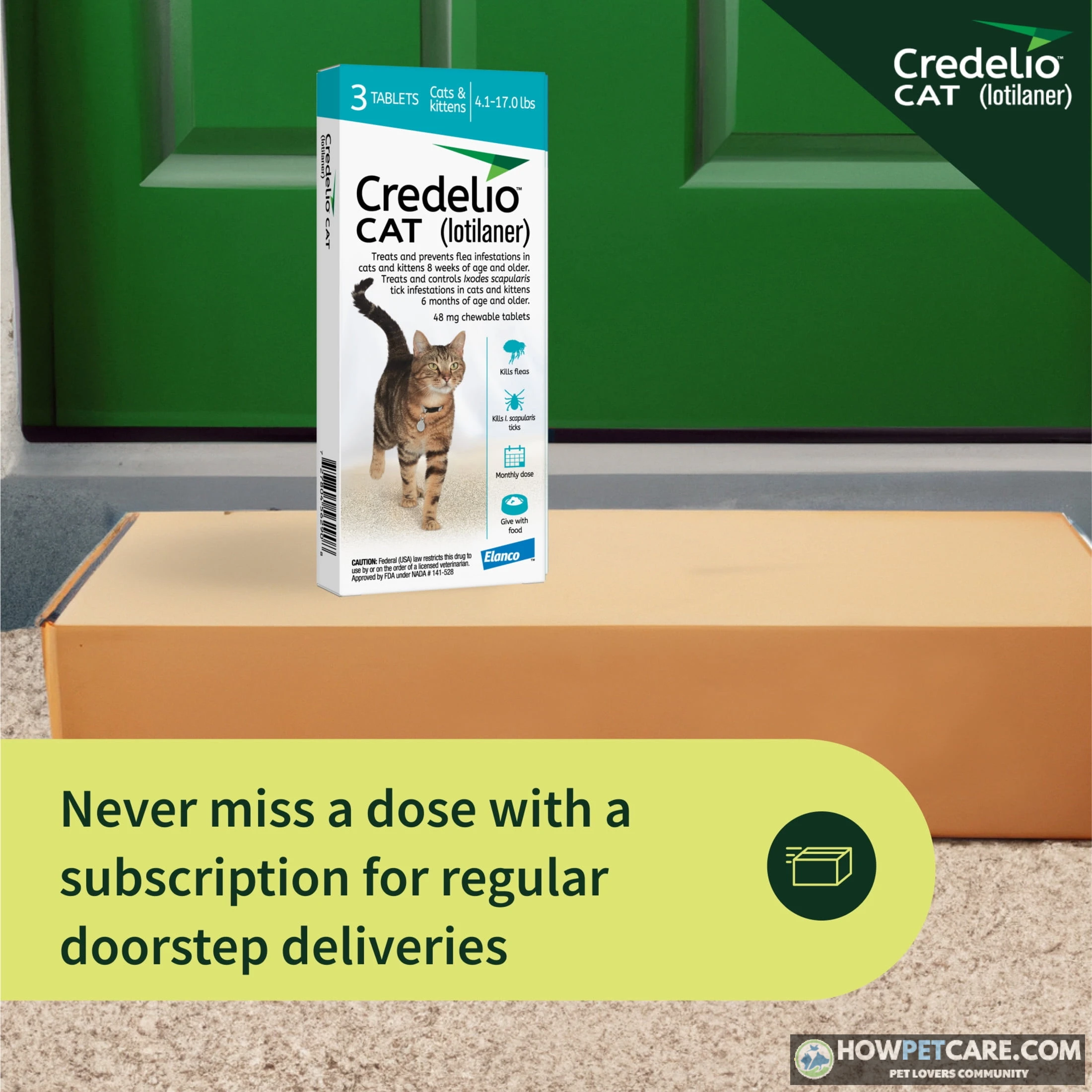
A legitimate U.S. purchase requires a veterinary prescription. Your clinic may dispense the product, provide a written prescription, or authorize an online pharmacy. Ask about refill limits and expiration, and leave time for authorization. Telehealth prescribing rules and the required veterinarian-client-patient relationship depend on state law and the circumstances; an online consultation doesn’t automatically make a prescription available.
Be cautious with overseas sites offering prescription Credelio without a U.S. prescription. Product authenticity, storage, labeling, and legal importation may be hard to verify. Check the pharmacy’s state licensure and independent accreditation, such as NABP’s accredited digital pharmacy program, rather than treating prescription-free checkout as a benefit. For a fuller legitimacy checklist and a real price-check method, see our guide to buying pet medications online safely.
Is Credelio Safe for Cats? Side Effects and the Isoxazoline Neurologic Warning
Common side effects
Reported adverse events include vomiting, decreased appetite, lethargy, and diarrhea. A symptom that appears after a dose isn’t proof the medication caused it, but timing can help your veterinarian assess what happened. Don’t dismiss a persistent change just because it appears on a side-effect list.
The supplied evidence doesn’t provide reliable incidence figures for these events. A precise percentage would require checking the current U.S. label and safety data, not inferring a rate from reviews.
Neurologic warning in plain language
Lotilaner belongs to the isoxazoline class. Products in this class carry a warning about possible neurologic adverse reactions, including muscle tremors, incoordination or ataxia, and seizures. These signs have been reported in animals with and without a prior neurologic history. If your cat has had seizures or similar episodes, weigh the risks and benefits especially carefully before treatment.
The warning doesn’t mean every cat will have a neurologic reaction. But a new wobble, tremor, or seizure after a dose needs prompt attention. Record what you see and report it to your veterinarian.
Home symptom-monitoring checklist
Use the first dose to establish a baseline, then repeat the check after later doses. Reactions aren’t limited to a guaranteed observation window.
- At dosing and for the next two hours: Confirm the tablet was swallowed, note the time, and watch for vomiting or unusual behavior.
- At the next meal: Check appetite and energy. Call the clinic for persistent refusal to eat, marked lethargy, or repeated vomiting; call sooner if your cat is a kitten or already ill.
- Over the next one to three days: Watch for stumbling, a new unsteady gait, twitching, or tremors. Contact a veterinarian immediately if these appear.
- Emergency signs: A seizure, collapse, loss of consciousness, or labored breathing warrants emergency veterinary care now. Do not give another dose while seeking advice.
- Before the next monthly dose: Record anything unusual, including timing and duration. Check weight when it may have changed enough to affect the dose band.
Contact your veterinarian if a reaction is suspected. You or your veterinarian can also report it to Elanco and to the FDA’s veterinary adverse-event reporting program. Keep the package and lot number, dosing time, and a description or video of the signs if doing so does not delay care.
Credelio Safety for Special Cats: Kittens, Pregnant Queens, Seniors, and CKD Patients
Pregnant, lactating, and breeding cats
If a label says safety hasn’t been established in breeding, pregnant, or lactating cats, the evidence is insufficient to establish safety for those uses. It doesn’t prove harm will occur. Tell your veterinarian about pregnancy, nursing, or breeding plans before getting a prescription. Ask whether an alternative with relevant established safety data would better suit the queen and kittens, and whether the household needs a coordinated flea plan.
Senior cats and CKD on other medications
Age alone doesn’t determine whether Credelio is appropriate. For a senior cat or one with chronic kidney disease—including cats already receiving monthly treatments such as Solensia for feline arthritis—share the latest weight, appetite and hydration history, recent kidney results, and any vomiting or weight loss with your veterinarian. The vet can weigh parasite exposure against your cat’s overall health and ability to eat the required meal.
The supplied evidence doesn’t establish long-term Credelio outcomes for cats with CKD or support a specific kidney-related dose adjustment. Don’t stop prescribed kidney medication or change the Credelio dose yourself. Have a sick, dehydrated, or debilitated cat assessed before starting any new treatment.
Drug interaction disclosure list
Bring the names, doses, and schedules of anticonvulsants, steroids, NSAIDs such as Onsior, thyroid medication, kidney medication, supplements, and any flea or tick products already in use. Include over-the-counter and so-called natural products. The supplied evidence doesn’t establish a comprehensive interaction list for cats on chronic medication; the absence of a named interaction here doesn’t prove a combination is appropriate.
For kittens, check age and weight again at each transition: the flea and tick indications have different minimum ages.
Tick Coverage by Region: Is Credelio Enough Beyond Black-Legged Ticks?
Which ticks are on the label
The U.S. feline label names Ixodes scapularis, the black-legged tick. That’s not the same as protection against all ticks. Lone Star, American dog, brown dog, and western black-legged ticks aren’t part of that named feline claim; don’t infer coverage from a different species or a dog label.
Ticks can transmit disease, but the likelihood and relevant pathogens depend on the tick and location. Indoor-only cats generally have less direct tick exposure than outdoor cats. Still, another pet or a person can bring parasites into the home.
What to do if your region’s ticks aren’t covered
Regional labels such as South or West are only a starting point; tick ranges overlap and change. Tell your veterinarian where your cat travels, whether it hunts or enters vegetation, and which ticks you’ve found. Ask which species matter locally and whether a product with a different feline tick label is warranted.
Check an exposed cat for ticks during routine grooming, and ask your vet how to remove and identify one safely. Environmental checks can supplement prevention, but they don’t make an unlisted tick species a Credelio label claim.
Missed Dose, Vomited Tablet, or Refused Chew: Troubleshooting Credelio
Vomited the tablet
Record when you gave the dose, when vomiting occurred, whether your cat ate, and whether you can see an intact tablet. Call the prescribing clinic before giving a replacement. An intact-looking tablet or vomiting soon after dosing doesn’t tell you exactly how much medicine was absorbed; the supplied evidence gives no reliable time cutoff for automatic redosing.
If vomiting continues, your cat is unusually weak, or neurologic signs appear, seek prompt veterinary care rather than focusing only on replacing flea protection. If your regular practice is closed, contact an emergency clinic. Don’t give a second dose unless a veterinarian directs you to.
Refused or only ate part of it
If your cat left the whole tablet untouched and it’s clean and intact, ask the clinic how to try again while following the food timing rule. If your cat chewed part of it, ate only some medicated food, or you don’t know how much was swallowed, don’t top up with another tablet or a guessed fraction. Tell the vet what happened and ask whether to redose or switch products.
Recurring refusal is a treatment-design problem, not a failure of willpower. Ask for a demonstration, a different food vehicle, or a topical plan you can administer consistently.
Missed or late dose: when fleas return
Each dose is intended to protect for one month. Once the next dose is overdue, don’t assume protection continues for a particular extra number of days; exposure and reinfestation vary. Give the missed dose as soon as practical with food unless your veterinarian advises otherwise, then ask the clinic to confirm the new monthly schedule. Never double up to catch up.
If you see fleas or the gap has been long, check all household pets and ask about coordinated treatment. Vacuum living areas, wash pet bedding, and discuss environmental control with your vet. Fleas emerging from the home environment may continue to appear after an animal is treated. Persistent fleas are a reason to check administration, weight, other pets, and the home—not to automatically give an extra dose.
Should You Ask Your Vet for Credelio? A Decision Framework and Vet Visit Checklist
Match your cat to the right choice
| Cat profile | Fit level | Why | What to ask your vet |
|---|---|---|---|
| Indoor-only | Possible | Flea exposure can still occur; tick exposure may be lower. | Which parasites warrant prevention in this household? |
| Indoor/outdoor | Depends on local risk | Oral flea control is convenient, but the tick claim is narrow. | Which tick species and other parasites matter here? |
| Multi-cat household | Possible | No topical residue, but each cat needs its own complete dose. | What is the cost and plan for every pet? |
| Picky eater | Uncertain | Monthly protection depends on swallowing the full tablet with food. | Can you demonstrate administration, or is a topical better? |
| Over 17 lb | Requires dose review | A single standard weight-band tablet may not be sufficient. | What exact combination should be prescribed? |
| Senior or CKD | Individual assessment | Health, appetite, hydration, and other medicines affect the decision. | What should we monitor, and are alternatives preferable? |
| Seizure or neurologic history | Caution | Isoxazolines carry a neurologic warning. | Would a non-isoxazoline plan be safer for this cat? |
| Pregnant, nursing, or breeding | Requires assessment | Safety has not been established for these uses. | Is there an alternative with relevant safety data? |
| Non-I. scapularis tick exposure | Often a weaker fit | Other tick species are not included in the named feline claim. | Which labeled product matches local exposure? |
Questions and disclosures to bring to your vet
Bring your cat’s current weight, the names and doses of all medications and supplements, and the packaging for any parasite products already in use. Mention previous seizures, tremors, wobbling, unexplained vomiting, pregnancy or nursing, kidney disease, recent weight loss, and any difficulty giving oral or topical medicine.
Ask:
- Which Credelio CAT strength or combination fits my cat’s current weight, and does my kitten meet the age requirement for the protection we need?
- Does my cat’s neurologic or medical history change the risk-benefit decision? What signs should prompt an immediate call?
- Which tick species are common where my cat goes, and does Credelio’s feline label cover them?
- Does my cat need heartworm, ear-mite, or intestinal-parasite protection too? Which compatible plan covers those risks, and what is its total annual cost?
- For this cat, would you choose Credelio, Revolution Plus, Bravecto Plus, Advantage II, or another product—and why?
- If my cat vomits, eats only part of the dose, or refuses the chew, what should I do before contacting you?
- Will you dispense the prescription or authorize my chosen licensed pharmacy, and how many refills are available?
If you and your vet choose Credelio, agree on the first-dose plan, record when you give it, and know whom to call after hours. If the coverage or administration method doesn’t suit your cat, ask about an alternative before buying a multi-dose pack.
FAQ
Does Credelio for cats require a prescription?
Yes. Credelio is a veterinary prescription product in the US, so you need a valid prescription from a veterinarian who has examined your cat, even when ordering through an online pharmacy.
How quickly does Credelio start working on fleas?
The label states that Credelio begins killing adult fleas within about 6 hours of dosing. Each dose continues to protect for one month.
Is Credelio the same as Credelio CAT and Credelio Quattro?
No. Credelio CAT is the feline lotilaner chew, Credelio for dogs is a separate product, and Credelio Quattro is a dog-only combination product. Never give dog products to cats.
Can indoor-only cats skip flea and tick prevention?
Not necessarily. Fleas can enter on people, dogs, and other pets, so many vets still recommend year-round flea prevention for indoor cats, while tick risk is typically lower.
Is Credelio safe for cats with a history of seizures?
Isoxazoline products carry a label warning for neurologic adverse reactions, and caution is advised in cats with seizure history. Ask your vet whether a non-isoxazoline option is a better fit.