
| Kitten age | FVRCP | Rabies | FeLV |
|---|---|---|---|
| 6–8 weeks | First dose; series begins | Usually not yet | Discuss starting around 8 weeks |
| 10–12 weeks | Next dose, 3–4 weeks later | May be due if label and local law allow | Second dose if series began earlier |
| 14–16 weeks | Ensure a dose at or after 16 weeks | Commonly given in this window | Complete two-dose series if recommended |
| Around 1 year | Booster after kitten series | Booster per product and local law | Continue only if exposure risk supports it |
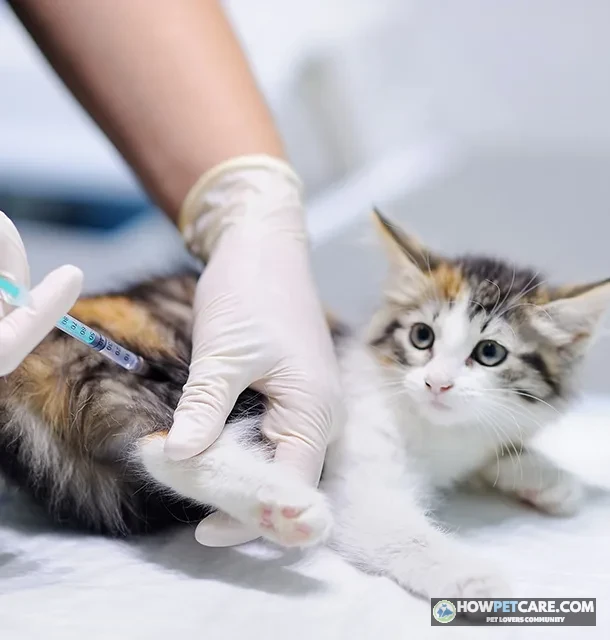
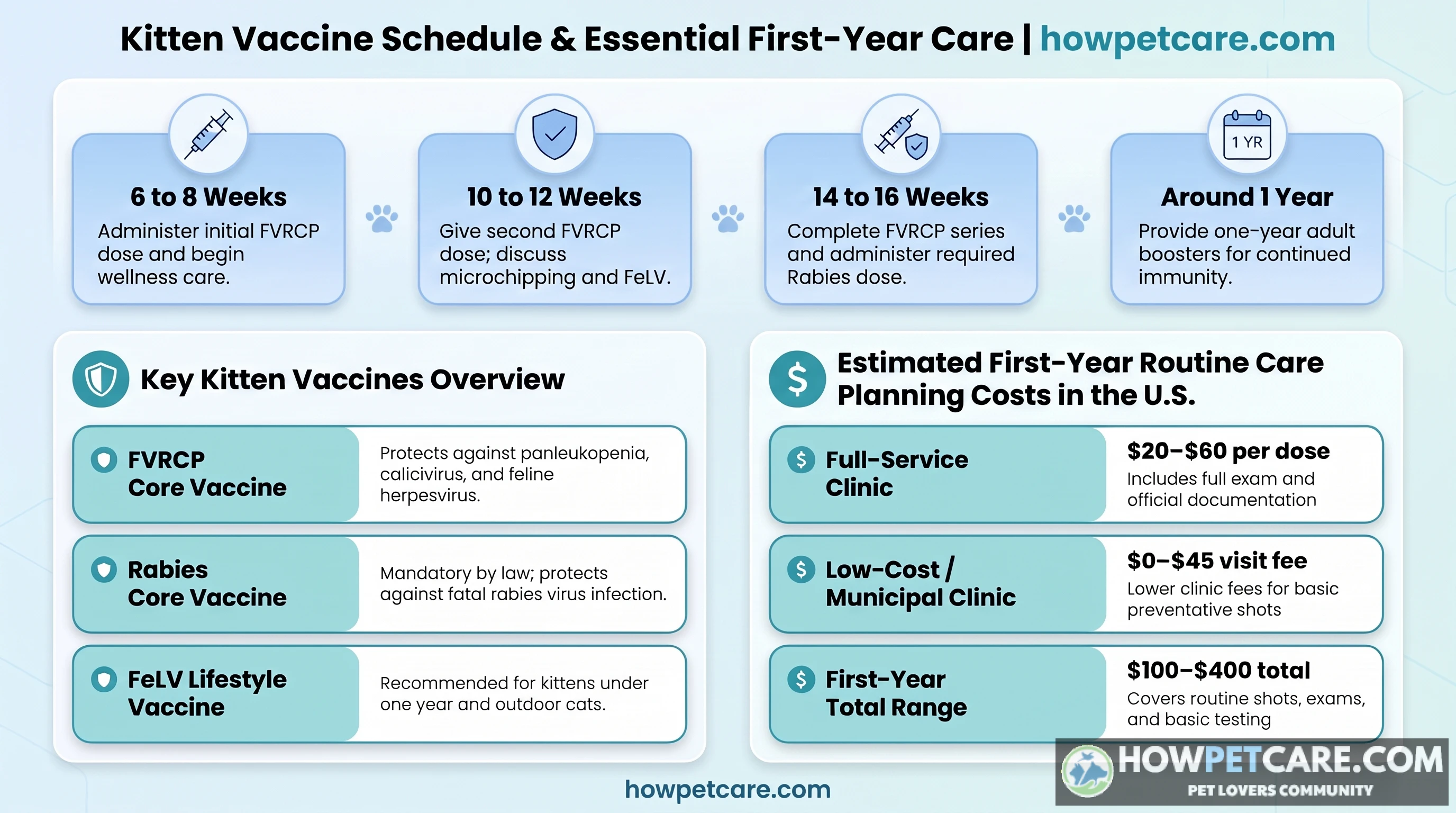
Most kittens start vaccines at 6–8 weeks, then receive FVRCP boosters every 3–4 weeks until they get a dose at or after 16 weeks. Rabies is commonly given at 12–16 weeks, depending on the vaccine label and local law. Many current guidelines recommend FeLV vaccination for kittens, with the later schedule based on exposure risk. Use the chart to track likely timing, then confirm the plan with your veterinarian.
Kitten Vaccine Schedule: Shots at 6–8, 10–12, and 14–16 Weeks
Printable kitten vaccine schedule chart
Use this kitten vaccine schedule to plan and track appointments, not as a substitute for your clinic’s records. Timing can shift with your kitten’s health, previous doses, vaccine product, exposure, and local rabies rules. Print or save the chart, and add the appointment date or initials after each visit.
| Kitten age | FVRCP | Rabies | FeLV | Other first-year care | Notes / completed date |
|---|---|---|---|---|---|
| 6–8 weeks | First dose; begin the series | Usually not yet | Discuss starting around 8 weeks | Wellness exam, weight, deworming or fecal plan; testing if indicated | ☐ __ |
| 10–12 weeks | Next dose, 3–4 weeks after the previous dose | May be due if the product label and local law allow | Second dose if the series began 3–4 weeks earlier | Continue parasite plan; discuss microchipping | ☐ __ |
| 14–16 weeks | Continue every 3–4 weeks; ensure a dose is given at or after 16 weeks | Commonly given in this window, subject to label and local law | Complete the two-dose kitten series if recommended | Plan spay or neuter; microchip if not already done | ☐ __ |
| Around 1 year | Booster after the kitten series | Booster according to product and local law | Continue only if exposure risk supports it | Wellness exam and adult booster plan | ☐ __ |
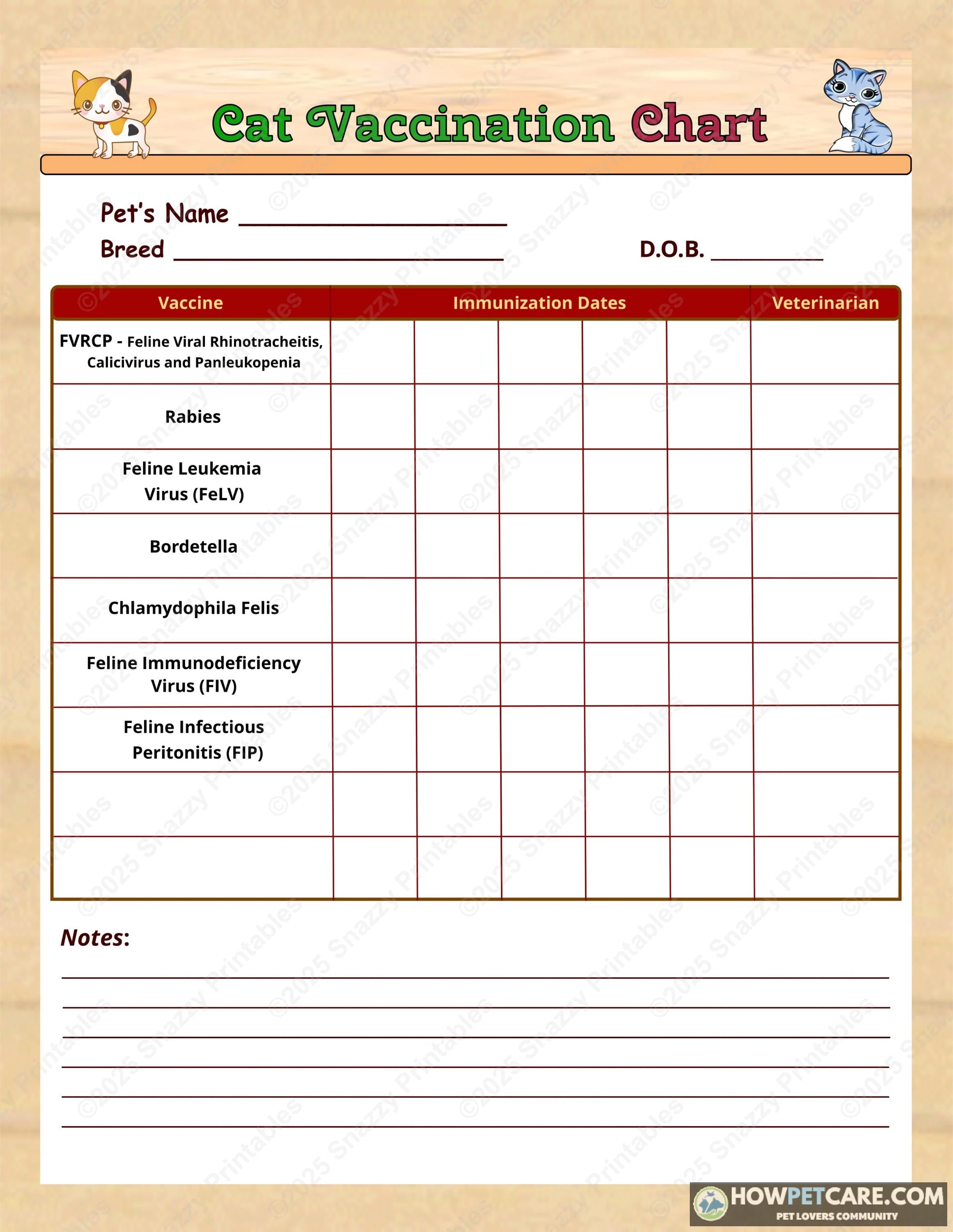
FVRCP commonly starts at 6–8 weeks and is repeated every 3–4 weeks through at least 16 weeks. Rabies may be given as early as 12 weeks in some places, but age requirements and legal rules vary by state and locality; confirm both with your veterinarian. When FeLV vaccination is indicated, it is generally given as a two-dose series, with doses 3–4 weeks apart.
The 2020 AAHA/AAFP feline vaccination guidelines treat FeLV as a core vaccine for cats under 1 year, while other recommendations distinguish it as risk-based. Discuss the kitten series and ongoing boosters with your veterinarian, who can apply the guidelines and product information to your kitten’s circumstances.
If a dose is missed, don’t assume the entire series has to restart. Call the clinic with the date of the last documented dose; many catch-up plans simply continue the series rather than starting over.
How many shots does a kitten need?
Many kittens receive three FVRCP doses during the initial series, one rabies dose, and two FeLV doses if FeLV vaccination is included. Those doses don’t necessarily mean separate appointments: a veterinarian may give more than one vaccine during a visit when appropriate. The total depends on when your kitten starts, the available records, and the clinic’s plan.
What FVRCP, Rabies, and FeLV Protect Against—and Which Are Core
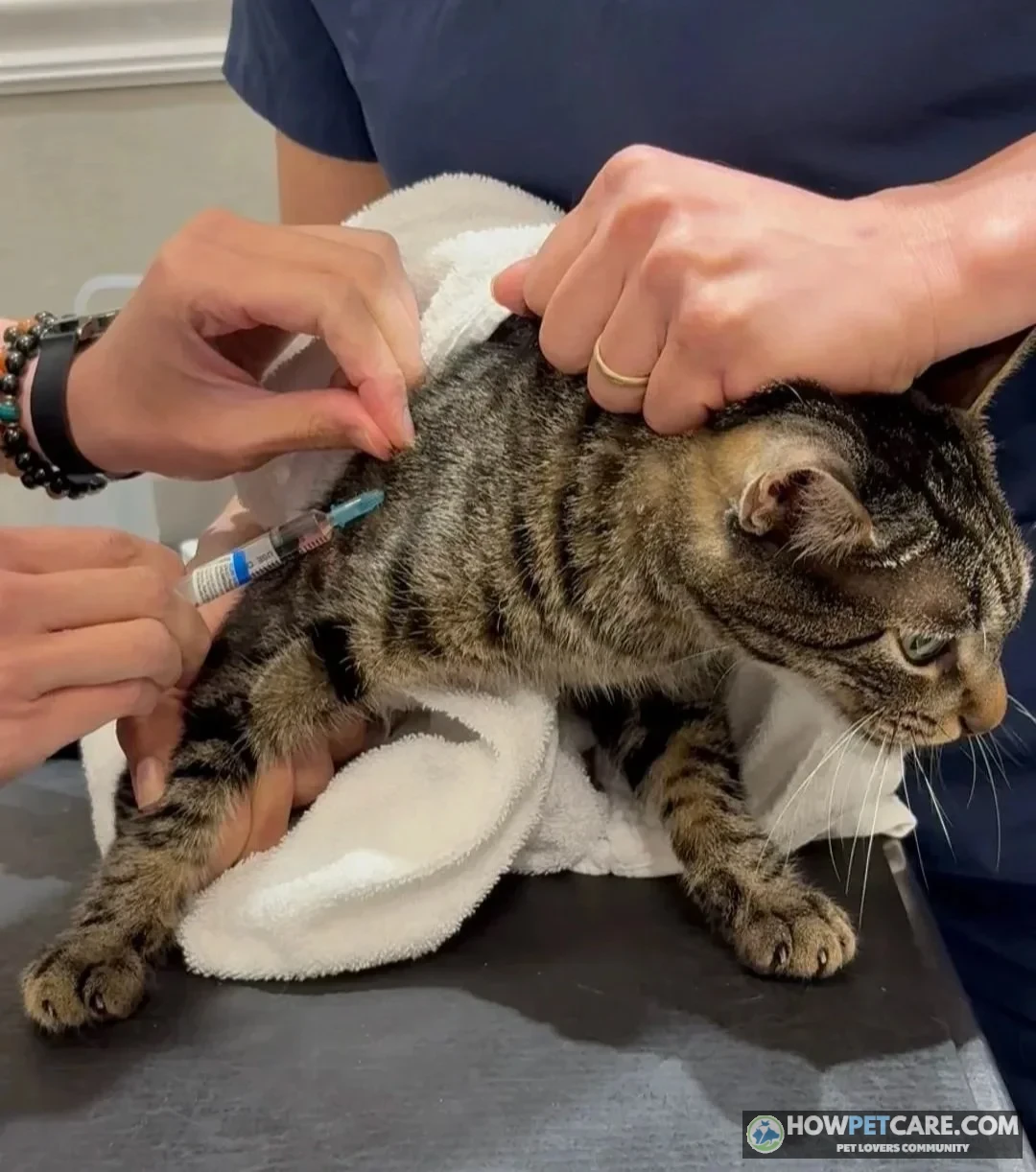
Core vaccines protect against diseases considered important for broad cat populations. Non-core vaccines are chosen based on an individual cat’s exposure and risk. The 2020 AAHA/AAFP guidelines are a key reference for feline vaccine recommendations.
Core vaccines
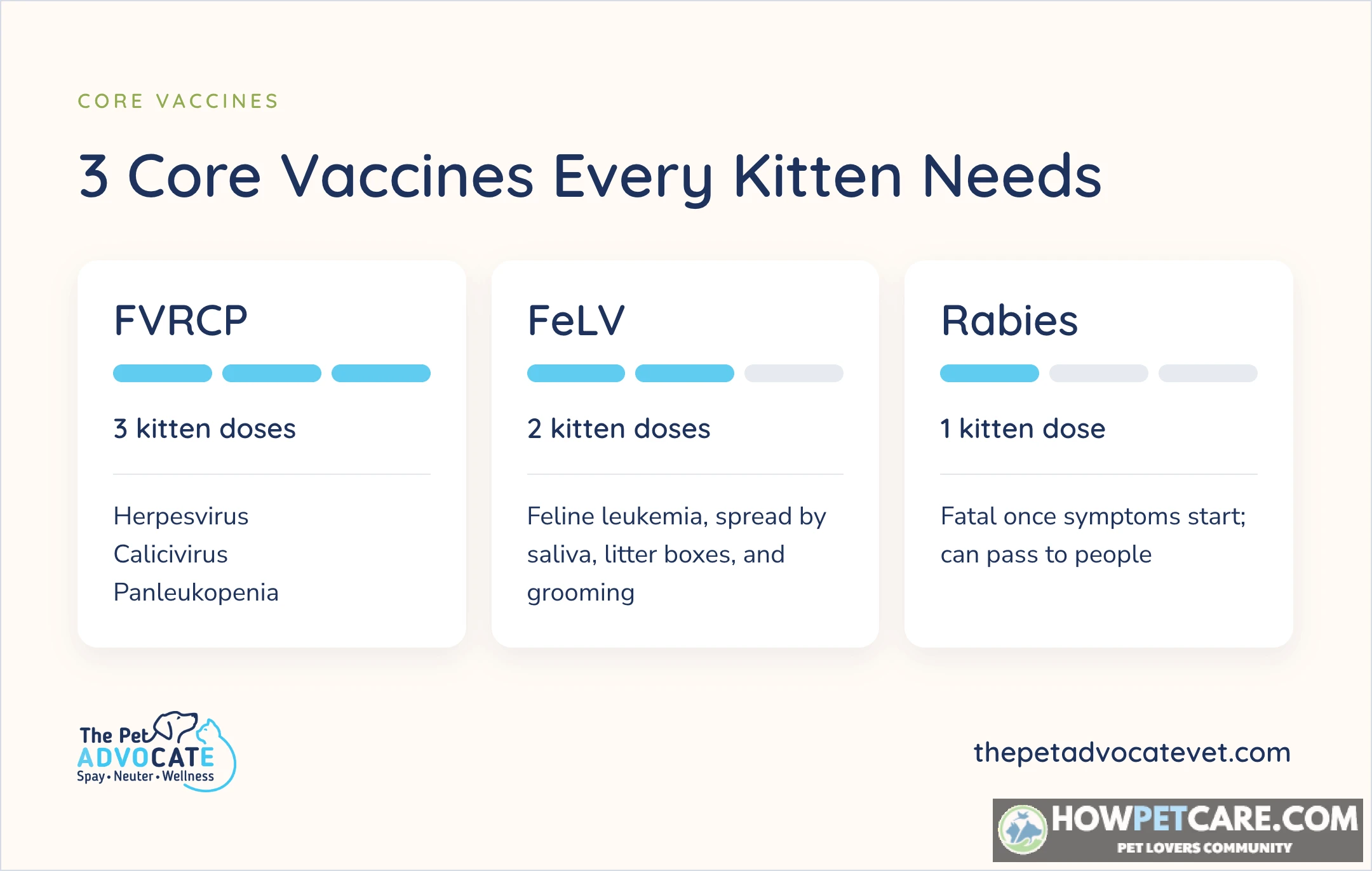
FVRCP protects against feline panleukopenia, feline calicivirus, and feline herpesvirus type 1, also called feline viral rhinotracheitis. These infections can cause serious illness, and FVRCP is a core vaccine for kittens.
Rabies vaccination protects against rabies and may be required by state or local law, including for indoor cats. Requirements and minimum vaccination ages vary, so check the rules where you live and keep the clinic’s rabies certificate.
Non-core vaccines
FeLV, or feline leukemia virus, vaccination can be considered for kittens and cats according to the guidelines and their exposure risk. The virus spreads through close contact with infected cats, so outdoor access, contact with cats of unknown status, and household changes can affect the decision. Living indoors doesn’t automatically settle the question: kittens may escape, and new cats may enter the home.
Bordetella and Chlamydophila felis vaccines are generally used for specific exposure settings or documented risks, rather than routinely given to every pet cat. FIV vaccination isn’t routinely recommended in many settings; discuss local advice and the possibility that vaccination can complicate interpretation of a later antibody test.
| Vaccine | Core or non-core | What it protects against | When it is commonly considered | Lifestyle or exposure factors |
|---|---|---|---|---|
| FVRCP | Core | Panleukopenia, calicivirus, and feline herpesvirus | Kitten series, then boosters | Recommended broadly for kittens and cats |
| Rabies | Core and often legally required | Rabies | Commonly at 12–16 weeks, then as required by product and law | Local rules apply, including for indoor cats |
| FeLV | Guideline classification varies; core for kittens under 1 year in AAHA guidance | Feline leukemia virus | Kitten series; ongoing doses based on risk | Outdoor access, unknown-status cats, or possible household exposure |
| Bordetella | Non-core | Bordetella infection | Specific group-housing or other documented exposure | Boarding, shelter, or other close-contact settings |
| Chlamydophila felis | Non-core | Chlamydophila infection | Specific exposure or veterinarian-documented risk | Contact with affected cats or group settings |
| FIV | Non-core; not routinely recommended in many settings | Feline immunodeficiency virus | Only after a case-specific discussion | Exposure risk and possible effect on antibody testing |
Why Kittens Need Booster Shots: Maternal Antibodies and the Vaccine Series
Kittens receive antibodies from their mother, especially through early milk. These maternal antibodies help protect them at first, but can also block a vaccine from producing a strong response. They fade at different times in different kittens, so one early dose can’t reliably protect every kitten.
Repeating FVRCP every 3–4 weeks gives a kitten more chances to respond as maternal antibodies decline. The series should include a dose at or after 16 weeks. A veterinarian may recommend different timing for a kitten with particular health or exposure circumstances.
Choose Non-Core Vaccines by Lifestyle, Exposure, and Household Risk
Use this scorecard to prepare for a vaccine discussion. A checked item doesn’t automatically mean a vaccine is needed, but it gives your veterinarian useful context.
- ☐ Outdoor access, a realistic escape risk, hunting, or contact with neighborhood cats
- ☐ Boarding, grooming, shows, daycare, or frequent travel with unfamiliar animals
- ☐ A multi-cat home, foster cats, recent shelter exposure, or a new cat planned
- ☐ A known FeLV- or FIV-positive cat in the home, or cats with unknown status
- ☐ A local outbreak, group-housing recommendation, or risk identified by your veterinarian
Indoor-only kitten decision checklist
For an indoor-only kitten with no contact with unfamiliar cats, the usual starting point is the core FVRCP and rabies plan, plus a discussion of the kitten FeLV series. Under the 2020 AAHA/AAFP guidance, FeLV is core for cats younger than 1 year; the recommendation for later doses depends on continued exposure risk. Other guidelines may classify FeLV differently, so ask the clinic to explain its recommendation.
Indoor living reduces some exposure, but it doesn’t eliminate risk. Door-dashing, a new cat in the home, or shared housing can change the calculation. Rabies rules can apply to indoor cats, too.
When a non-core vaccine may be considered
Bordetella vaccination may be worth discussing if your kitten will spend time in close-contact group settings, such as a shelter or certain boarding environments. Chlamydophila vaccination is usually reserved for specific documented risks rather than ordinary indoor homes. FIV vaccination isn’t routine in many settings; discuss whether it’s appropriate locally and how it may affect future test results.
Missed Boosters, Late Starts, and Kittens With Unknown Vaccine Records
A missed appointment doesn’t automatically mean you have to restart every vaccine series. What comes next depends on the vaccine, your kitten’s age, the time since the last dose, product instructions, and records. Have a veterinarian confirm the catch-up plan rather than trying to reconstruct it from a general schedule.
If a booster is overdue
- Gather any records from the shelter, breeder, previous owner, or clinic. Look for dates and product details, not just a note that the kitten was “vaccinated.”
- Call your veterinary clinic with your kitten’s age and the date of the last documented dose. Ask what to book next and whether the clinic needs to review the record first.
- Follow the clinic’s plan for the next age-appropriate dose. A short delay may mean continuing the series, while a longer gap or a different age can change the recommendation.
- Confirm rabies documentation separately. Legal recognition can depend on who administered the vaccine and whether it was properly recorded; ask the clinic how to handle an overdue or undocumented dose.
If vaccine history is unknown
Don’t assume undocumented shots count, and don’t give extra doses at home to compensate. Book an exam and bring every record you can find. The veterinarian can use your kitten’s age, health, local rabies rules, and available documentation to decide which vaccines to start or continue.
For example, a five-month-old kitten with no records needs a clinic-designed catch-up plan. The veterinarian may recommend age-appropriate FVRCP doses, rabies vaccination under local rules, and FeLV based on the kitten’s age and risk. That isn’t a universal recipe: the exact plan depends on the product, history, health, and jurisdiction.
Kitten Vaccination Costs, Lower-Cost Options, and DIY Shot Risks
What kitten shots cost in the U.S.
Prices vary by region, clinic, exam fees, vaccine products, and whether several services are bundled. Ask for an itemized estimate before the visit. The ranges below are planning figures, not guaranteed 2026 quotes.
| Option | Typical cost considerations | What may be included | Limitations or questions to check |
|---|---|---|---|
| Full-service veterinary clinic | FVRCP often about $20–$60 per dose; rabies about $15–$40; FeLV about $25–$60 per dose | Exam, vaccine records, testing, and follow-up advice may be billed together or separately | Ask whether exam and administration fees are separate |
| Low-cost, nonprofit, or municipal clinic | Visits may be lower cost; some clinics charge about $0–$45 for an exam or clinic visit | Common vaccines and sometimes basic services | Confirm which vaccines, exam services, and records are included |
| Wellness plan | Monthly or annual fee; value depends on included visits and services | May bundle preventive exams and vaccines | Compare the full plan price with services you will actually use |
| Pet insurance | Routine vaccines are usually excluded from accident-and-illness coverage | A preventive-care add-on may reimburse some routine costs | Check the policy’s vaccine list, caps, waiting periods, and reimbursement rules |
A rough first-year vaccine-focused total may be about $100–$400, and full-service care can cost more. Exams, testing, deworming, and additional visits can raise the bill.
Compare clinic, wellness-plan, and insurance costs
To compare options, request written quotes for the same services: exams, FVRCP doses, rabies, FeLV if recommended, and any testing or deworming. A low-cost clinic may charge less per vaccine but offer fewer services at the visit. A wellness plan can spread payments, but it saves money only if the included care matches what your kitten needs. Pet insurance generally focuses on illness and injury; routine vaccines often require a separate preventive add-on. Read the exclusions and reimbursement limits before enrolling.
Use this worksheet when calling clinics:
| Line item | Planning amount | Question for clinic | Your quote |
|---|---|---|---|
| Three to four kitten visits | $0–$45 each at some low-cost clinics; full-service fees vary | Is the exam included? | $_____ |
| FVRCP, usually three doses | About $20–$60 per dose | Is this price per dose and does it include administration? | $_____ |
| Rabies | About $15–$40 | Is the certificate included? | $_____ |
| FeLV, two doses if used | About $25–$60 per dose | Is FeLV recommended for this kitten? | $_____ |
| Tests, fecal exam, or deworming | Costs vary by clinic and services | Which items are recommended and what is each price? | $_____ |
DIY feed-store shots are not the same as a documented clinic visit. Storage and handling can affect a vaccine, and a home injection doesn’t include a pre-vaccine health assessment or professional support if a reaction occurs. Documentation may also be inadequate for legal, travel, or boarding purposes. Rabies is particularly important: local laws may require administration and certification by a veterinarian. If cost is a concern, compare low-cost clinics and ask whether the clinic can coordinate services efficiently. Don’t treat this article as instructions for self-administering vaccines.
Normal Post-Vaccine Effects, Emergency Symptoms, and First-Year Care
Mild sleepiness, soreness at the injection site, or a temporarily reduced appetite can occur after vaccination. Monitor your kitten and call the clinic if signs worsen or don’t improve. Difficulty breathing, facial swelling, collapse, or repeated vomiting after a vaccine requires emergency veterinary care. Don’t wait for an online answer if these symptoms occur.
First-year wellness timeline
Vaccines are one part of kitten care. At early wellness visits, ask about deworming and fecal testing, parasite prevention, and whether FeLV/FIV testing is appropriate based on age and history. Testing and deworming schedules vary with your kitten’s circumstances, so get dates from the clinic rather than assuming they match vaccine appointments.
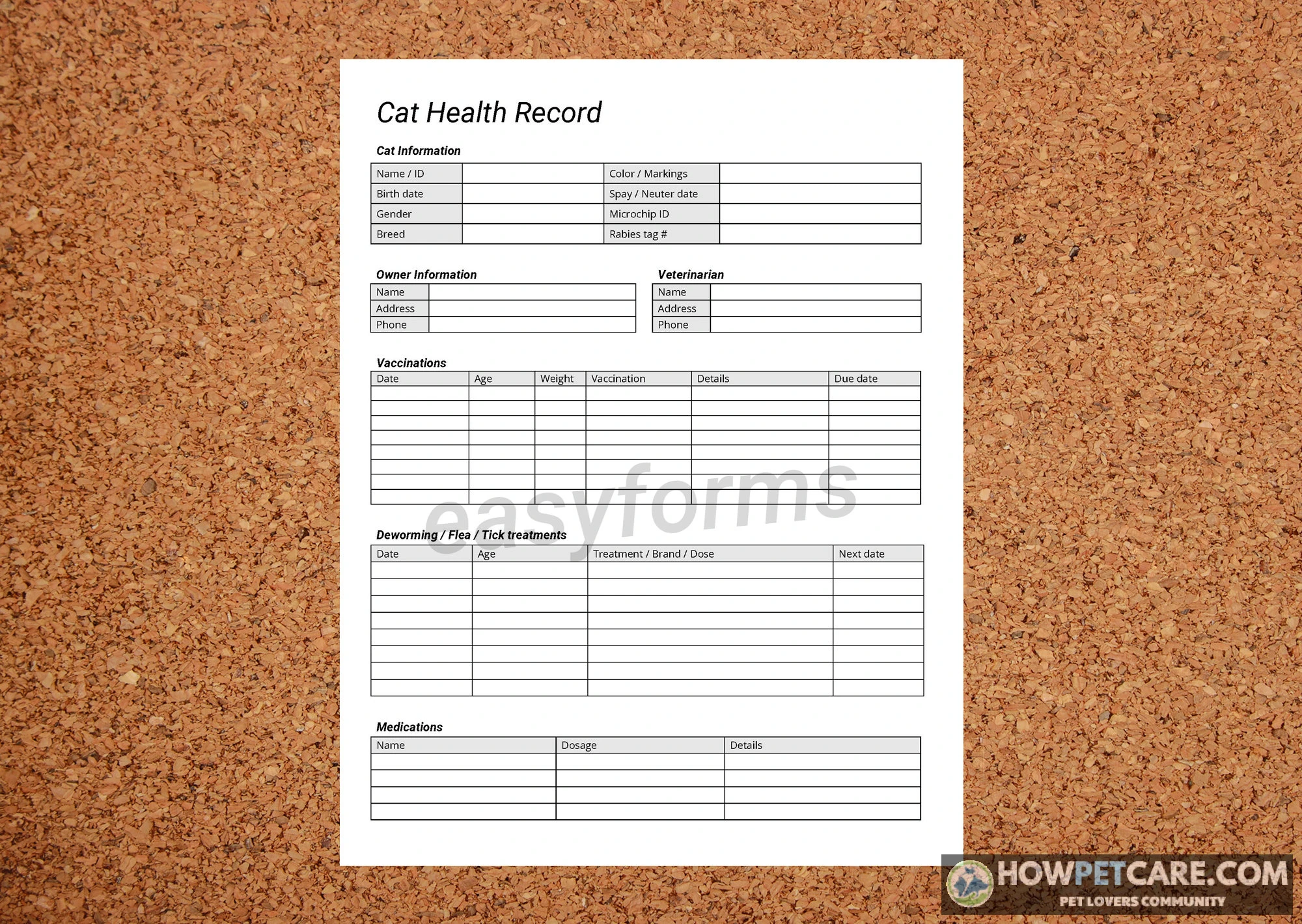
Discuss microchipping while your kitten is already attending visits; it may be done during a clinic appointment, depending on the kitten and clinic. Plan spay or neuter with your veterinarian, who can coordinate timing with your kitten’s growth, health, and vaccine visits. Keep a single record of vaccines, tests, deworming, and procedures.
After the kitten series: adult boosters and titers
The one-year visit is an important follow-up after the kitten series. FVRCP and rabies boosters may be due then, but later intervals vary by vaccine, product label, local law, and the cat’s risk. Some vaccines can be given at three-year intervals after the appropriate earlier doses; rabies timing must follow applicable rules and the specific vaccine. Don’t assume every vaccine is annual or every three years. Ask the clinic to write down the next due date.
Antibody titer tests can sometimes help assess immunity for certain diseases, but they aren’t a universal replacement for vaccination. A titer may not satisfy rabies law, and the veterinarian must interpret whether testing is useful for the vaccine and cat in question.
Turn the Schedule Into Your Kitten’s Next Appointment Plan
Before booking, note your kitten’s age, any known vaccine dates, current health concerns, and likely contact with other cats. Bring shelter or breeder paperwork, even if it seems incomplete.
At the appointment, ask the clinic to confirm the next FVRCP date, whether FeLV vaccination fits your kitten’s age and exposure, the local rabies deadline, and what the visit will cost. Have the clinic record each vaccine and the next due date. If your kitten has no established veterinary care or has missed doses, arrange a wellness exam and request a catch-up plan rather than starting over on your own.
| Vaccine | Core or Non-Core | What It Protects Against | When Commonly Considered | Lifestyle or Exposure Factors |
|---|---|---|---|---|
| FVRCP | Core | Feline panleukopenia, feline calicivirus, and feline herpesvirus | Kitten series, then regular boosters | Recommended broadly for all kittens and cats |
| Rabies | Core (often legally required) | Rabies virus | Commonly starting at 12–16 weeks of age, then boosters as required by product label and law | Recommended broadly; local legal mandates apply, including for indoor cats |
| FeLV | Core for kittens under 1 year (guideline classification varies for adults) | Feline leukemia virus | Kitten series; ongoing adult boosters based on risk assessment | Outdoor access, living with unknown-status cats, or possible household exposure |
| Bordetella | Non-core | Bordetella bronchiseptica infection | Based on specific group-housing or documented exposure risks | Boarding, shelter, multi-cat, or other close-contact settings |
| Chlamydophila felis | Non-core | Chlamydophila felis infection | Based on specific exposure or veterinarian-documented risk | Direct contact with affected cats or high-density group settings |
| FIV | Non-core (not routinely recommended in many settings) | Feline immunodeficiency virus | Only after a case-specific risk discussion | High-risk exposure scenarios; consideration of potential interference with antibody testing |
FAQ
When can a kitten go outside after its first shots?
A first dose does not complete a kitten’s vaccine protection. Ask your veterinarian when it is appropriate based on the kitten’s age, completed series, local disease risks, and exposure; avoid contact with unknown or unvaccinated cats in the meantime.
Can my kitten get several vaccines at the same appointment?
Veterinarians commonly give more than one vaccine at a visit when appropriate, but the plan depends on the kitten’s age, health, vaccine products, and history. Your clinic can explain which doses are due and what reactions to watch for.
Do kittens need a veterinary exam before vaccination?
A wellness assessment helps the veterinarian check that the kitten is well enough for vaccination and tailor the schedule to its age, health, and history. Clinic policies and requirements can vary.
Should a sick kitten still get its scheduled shots?
Tell the veterinarian about any illness or symptoms before the appointment. The veterinarian can assess whether to vaccinate that day or postpone a dose until the kitten is well enough.