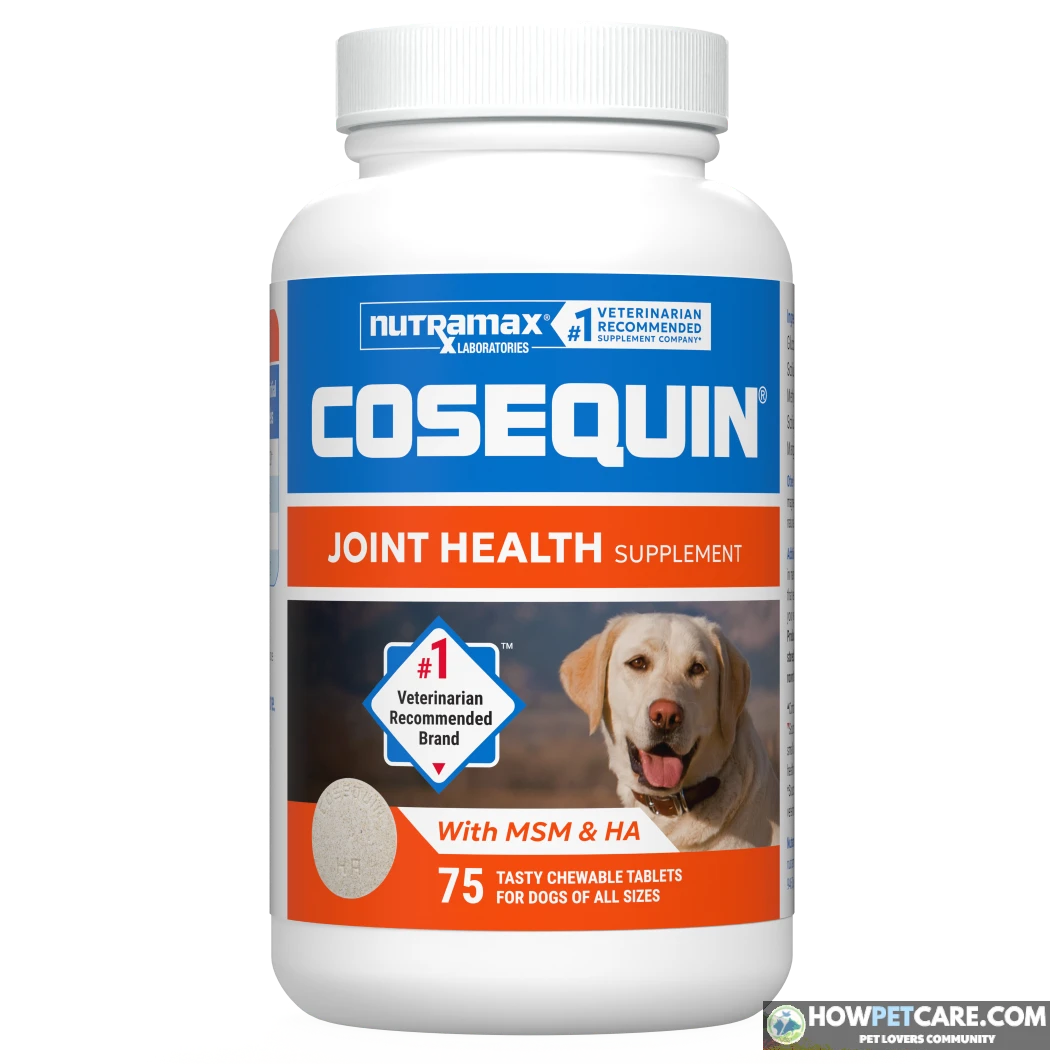

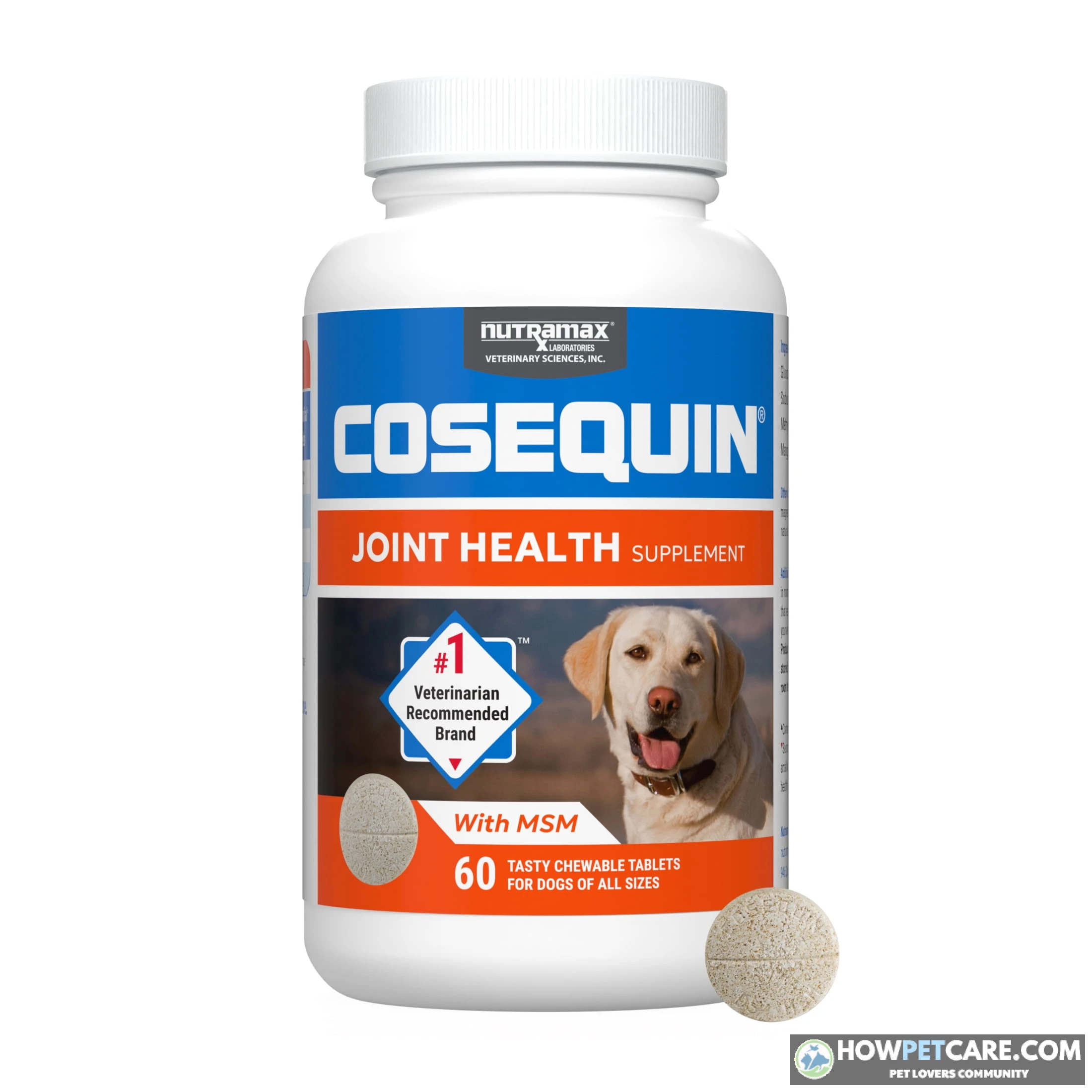
Cosequin is an over-the-counter Nutramax joint supplement for dogs. What to know before buying:
- It supports joint health; it is not a pain medication and does not cure arthritis.
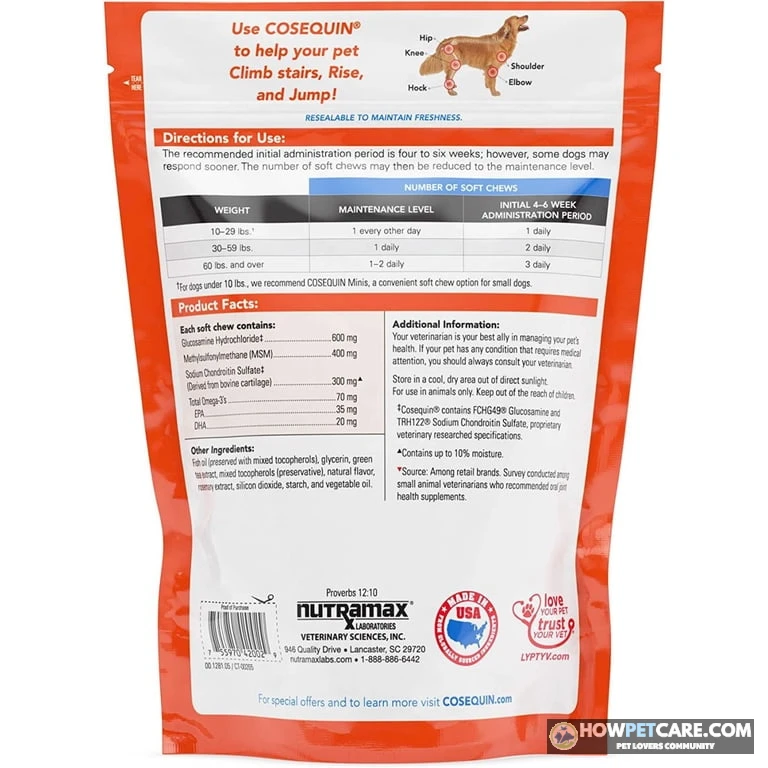
- Dose depends on your dog’s weight and exact formula — follow the package your vet approves.
- Most products use a 4–6 week loading phase, then a lower maintenance dose.
- Formulas include DS, Plus MSM, Senior, and Multifunctional — more ingredients isn’t automatically better.
- Allow a 6–8 week trial before judging results, then reassess with your vet.
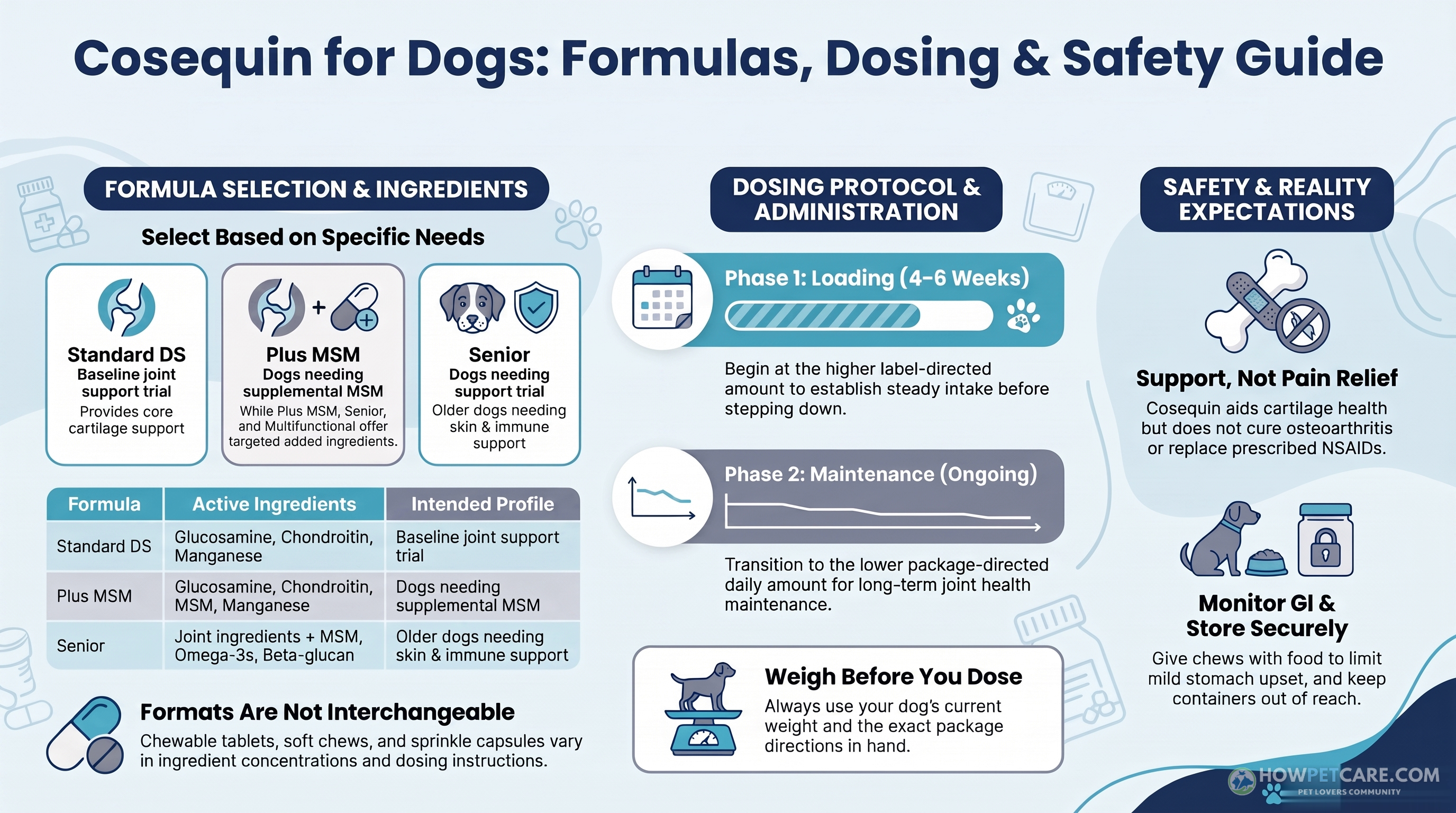
Cosequin is an over-the-counter Nutramax joint supplement, not a pain medication. If your vet has recommended joint support, the standard DS formula is a reasonable place to start. Plus MSM, Senior, and Multifunctional add other ingredients, but those extras may or may not match your dog’s needs.
The right dose depends on your dog’s weight and the exact product, so follow the directions on the package your vet approves rather than copying a dose from another formula.
Many Cosequin products use a higher daily amount for about four to six weeks, then drop to a lower maintenance amount. Give it several weeks before judging whether your dog’s mobility improves, and schedule a reassessment if nothing changes. Cosequin may support joint health, but it won’t cure osteoarthritis or replace prescribed pain relief.
Contact your veterinarian or an animal poison-control service promptly if your dog gets into the container. Have the package, your dog’s weight, and an estimate of the amount eaten ready. Do not induce vomiting unless a professional tells you to.
What’s in Cosequin and What Each Ingredient Does
Active ingredients explained
Cosequin formulas usually combine glucosamine hydrochloride and chondroitin sulfate, two substances associated with cartilage. Nutramax calls its branded versions FCHG49 glucosamine hydrochloride and TRH122 sodium chondroitin sulfate. Supporting healthy cartilage is not the same as rebuilding damaged cartilage in an arthritic dog, and the manufacturer’s description doesn’t prove the latter.
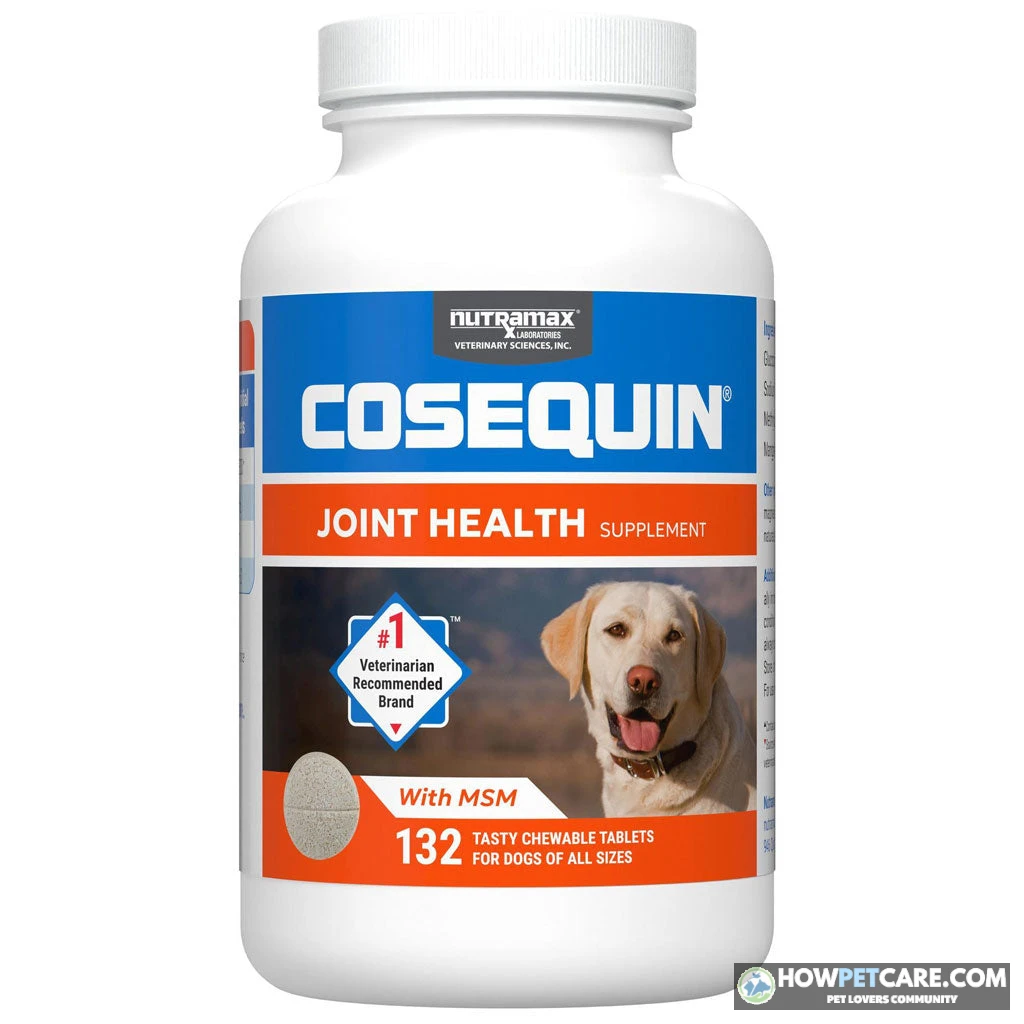
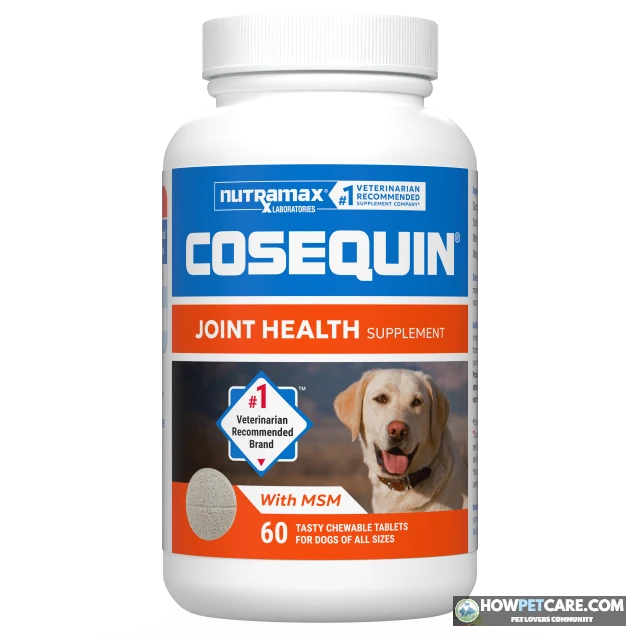
Ingredient amounts vary by product, so you can’t swap one for another. Cosequin DS Chewable Tablets contain 500 mg of glucosamine hydrochloride and 400 mg of sodium chondroitin sulfate per tablet. Chewable Tablets Plus MSM contain 600 mg and 300 mg, respectively, plus 250 mg of MSM. Both tablet formulas also contain 3 mg of manganese per tablet.
MSM, short for methylsulfonylmethane, is a sulfur-containing compound found in some joint supplements. Manganese plays a role in forming cartilage’s structural framework. Neither addition proves that one formula works better for your dog than another.
Not every Cosequin product contains omega-3 fatty acids. Senior Soft Chews include omega-3s for skin and coat support and beta-glucan for immune support, while Multifunctional products use a different mix of added ingredients. If you’re thinking about fish oil for joint support, talk to your vet about the product and dose rather than assuming a Senior chew delivers the right amount.
Chewable, tablet, and sprinkle capsule formats
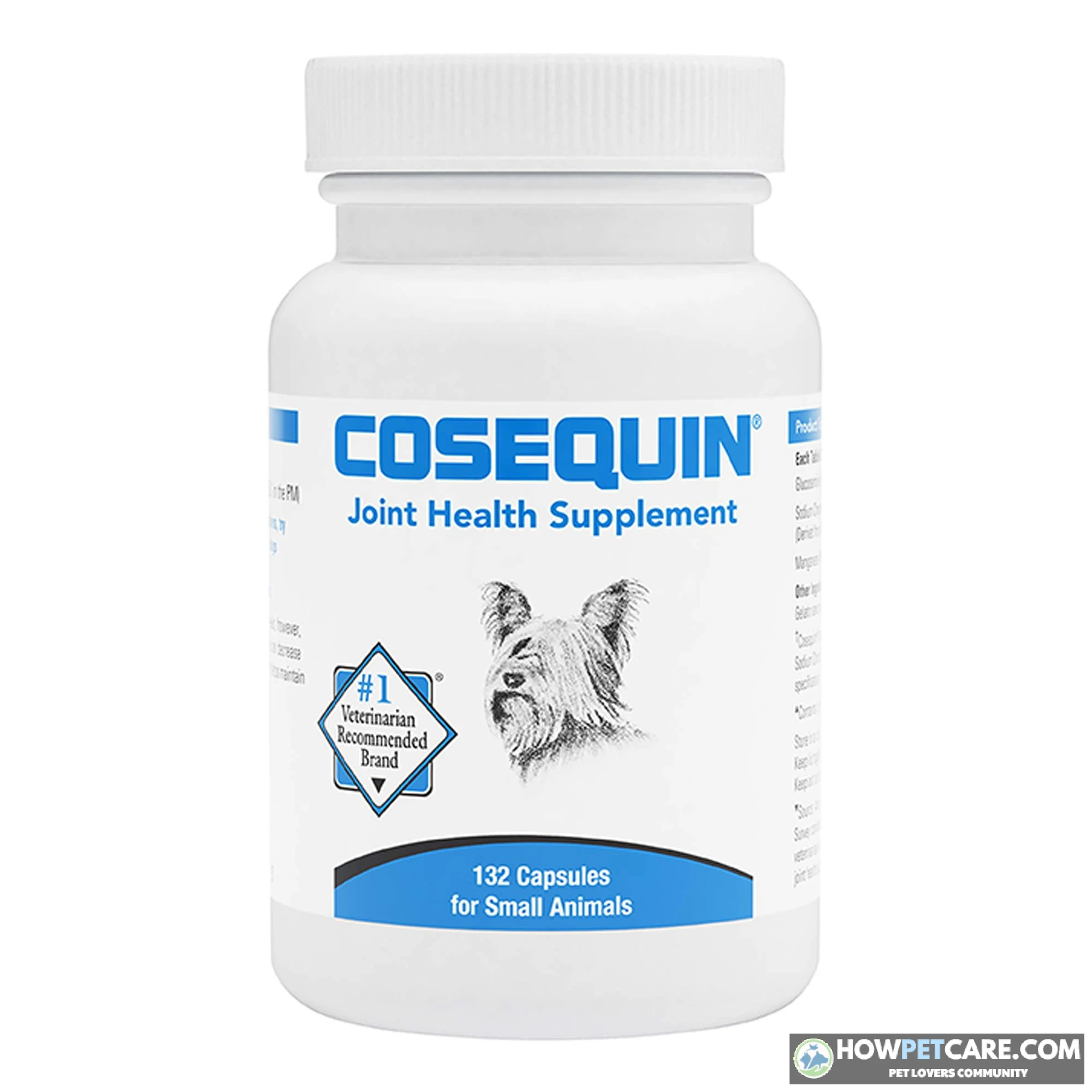
You’ll find chewable tablets, soft chews, and capsules across the Cosequin line. Format matters for both taste and dosing: a soft chew isn’t automatically equal to a tablet just because both say Cosequin. Check the species, ingredient panel, serving size, and directions on the specific package in your hand. And don’t swap in a cat product for a dog formula without your vet’s guidance.
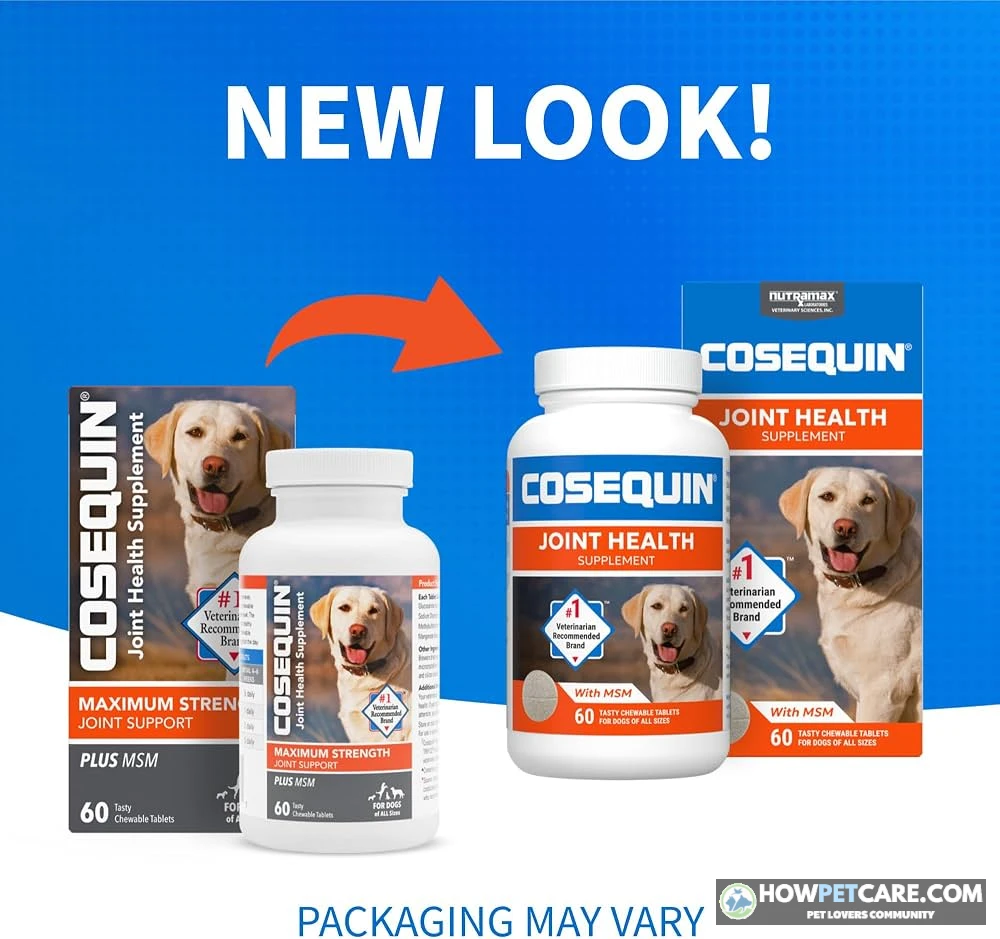
Cosequin Dosage for Dogs by Weight: Loading vs. Maintenance Phase
Your veterinarian’s instructions take priority over the package. Otherwise, use the exact weight chart printed on the dog product in your hand. The available evidence lists ingredient amounts for several formulas, but it doesn’t establish their complete current weight-band directions, so a numerical chart here could give your dog the wrong dose.
| Dog weight | Formula/format | Loading dose (first weeks) | Maintenance dose | Notes |
|---|---|---|---|---|
| Your dog’s current weight | DS Chewable Tablets | Use that package’s initial daily amount | Use that package’s maintenance amount | Do not substitute a soft-chew chart |
| Your dog’s current weight | Chewable Tablets Plus MSM | Use that package’s initial daily amount | Use that package’s maintenance amount | Ingredient amounts differ from DS tablets |
| Your dog’s current weight | Senior Soft Chews | Follow the specific package | Follow the specific package | Confirm whether the product has separate phases |
| Your dog’s current weight | Multifunctional Soft Chews | Follow the specific package | Follow the specific package | Check age and weight directions with your vet |
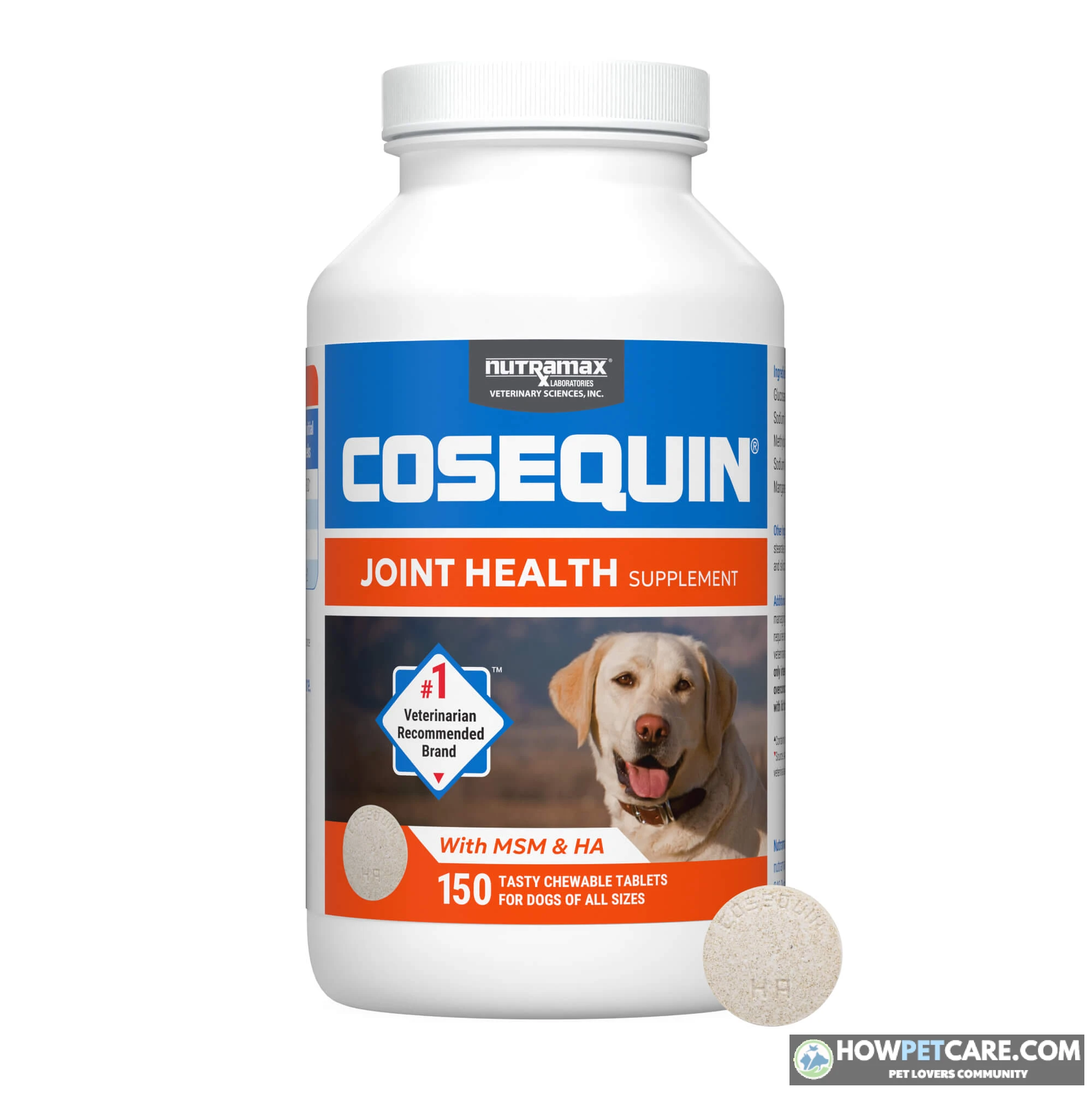
Weigh your dog rather than relying on an old record. If your dog falls on a boundary, or the package is missing or unclear, ask your veterinarian or Nutramax before giving a dose.
Loading dose phase
A loading phase means starting at the higher label-directed amount, commonly for about four to six weeks on products that use this schedule. The goal is to establish a steady intake before stepping down — not to give more than the label says. Some dogs show changes sooner; others show no clear benefit.
Maintenance dose phase
If your product lists a maintenance amount, switch to it at the time stated on the label or by your vet. Dogs that seem to benefit often stay on an ongoing schedule with periodic review. You don’t need to commit to lifelong use before you know whether the supplement helps your dog.
If you miss a dose, give it when you remember — unless it’s nearly time for the next one. Then resume the normal schedule. Don’t double up unless your vet says to.
Picky eaters and storage
Offer a chew as a treat or with a small amount of food. A meal may also help a dog with a sensitive stomach. Ask your vet or check the package before crushing or splitting anything — not every format divides evenly. If the daily serving includes multiple pieces, ask whether splitting them between meals makes sense.
Keep the container closed, follow the storage instructions, and check the expiration date. Store it where your dog can’t reach it. Palatable chews can be tempting enough for a dog to eat the whole container.
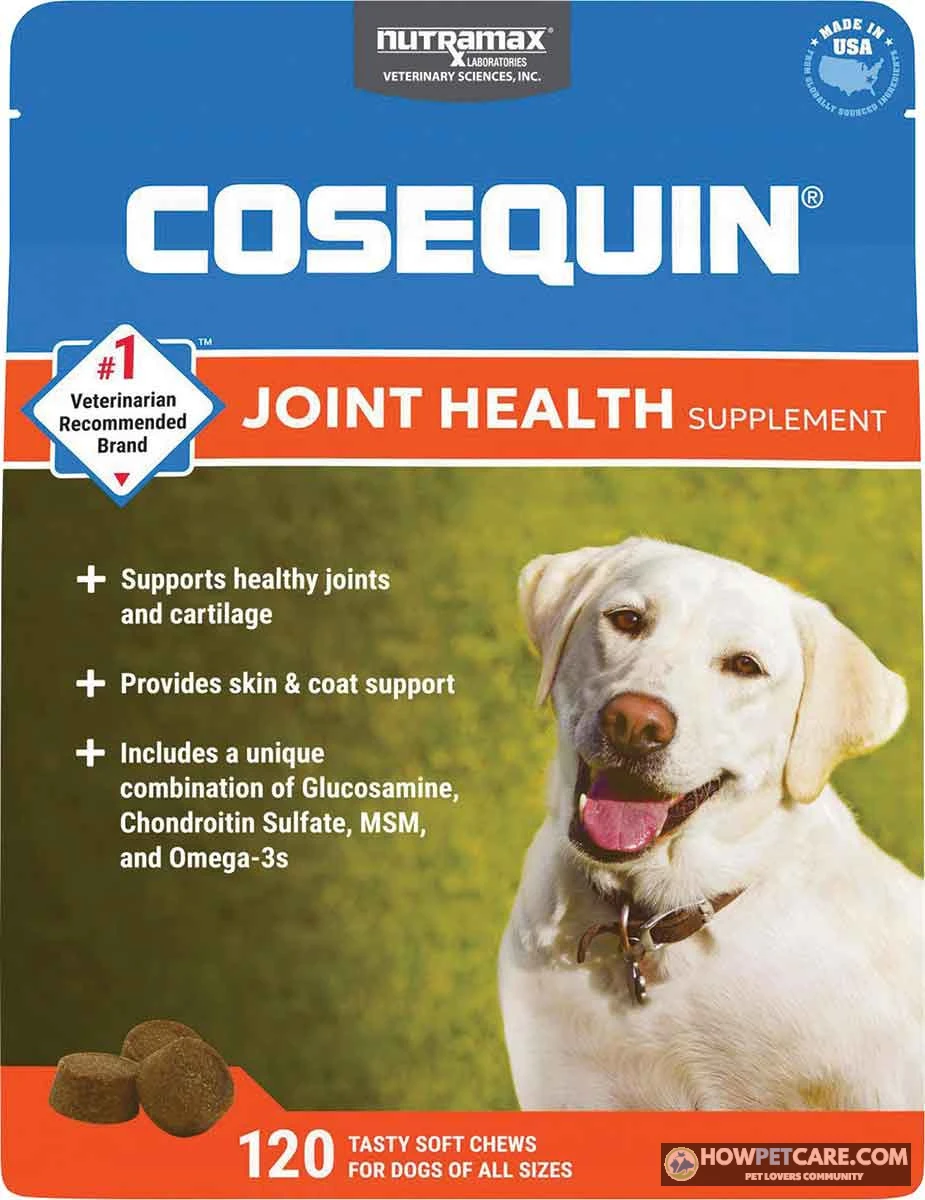
Which Cosequin Formula Should You Choose? DS vs. Plus MSM vs. Senior vs. Multifunctional
Start with the specific support your vet recommends, then ask whether added ingredients solve another need. More ingredients don’t automatically mean better joint results. Exact compositions, package sizes, and prices vary by SKU.
| Formula | Key ingredients | Best fit | Format | Premium over DS | Consider if |
|---|---|---|---|---|---|
| DS | Glucosamine, chondroitin, and manganese in the DS tablet described above | A dog starting targeted joint support | Chewable tablet | Baseline for comparison | You want a simpler ingredient panel |
| Plus MSM | Glucosamine, chondroitin, MSM, and manganese in the tablet formula | A dog whose vet wants to include MSM | Chewable tablet; check other SKU labels | Compare current prices | You want MSM in the same product rather than another supplement |
| Senior | Joint-support ingredients plus MSM, omega-3s, and beta-glucan | An older dog with relevant additional needs | Soft chew | Compare current prices | Your vet agrees the added ingredients fit the dog’s existing diet and supplements |
| Multifunctional | Joint-support ingredients, MSM, and a postbiotic and yeast-extract blend | A dog whose owner wants broader support in one product | Soft chew | Compare current prices | You have checked the full panel for overlap with other products |
Quick decision path by dog profile
For early stiffness, ask your vet whether a straightforward DS product makes sense as a trial. If your dog has diagnosed osteoarthritis or hip dysplasia, choose the formulation as part of the vet’s plan — not instead of that plan — and compare hip and joint supplements for dogs by ingredients, dose, and cost with your vet. A large dog may need more units per day, so the label dose and cost matter especially.
Senior isn’t automatically the best choice just because a dog is older. Compare its added ingredients and amounts with what your dog already receives. If your dog takes fish oil, review the total with your vet before paying extra for an omega-3 chew. Likewise, choose Plus MSM because you and your vet want MSM, not because an extra ingredient guarantees a better result.
For a puppy, check the exact product’s age directions and talk to your vet first. Some Multifunctional products are marketed for use from puppyhood, but a growing dog’s joint concerns still deserve an individual assessment.
When to start a joint supplement
Stiffness after rest, reluctance to use stairs, shorter walks, or trouble rising are worth sharing with your vet. They aren’t proof of arthritis. New or worsening trouble moving deserves an exam, so pain, injury, and other causes don’t get overlooked.
Does Cosequin Actually Work? An Honest Look at the Evidence and the “#1 Vet Recommended” Claim
Research on glucosamine and chondroitin for dogs with osteoarthritis has produced mixed results. Some studies suggest a benefit; others find little clear advantage over a placebo. Differences in formulations, study design, and how improvement is measured make it hard to predict what your dog will experience.
Cosequin is a supplement meant to support joint health — not an FDA-approved drug proven to cure arthritis. A plausible benefit is less visible stiffness for some dogs. Don’t expect it to reverse established joint damage or provide fast pain relief.
What the vet-recommendation claim really means
Nutramax markets Cosequin as the number-one veterinarian-recommended retail joint-health supplement brand. That claim comes from a survey of small-animal veterinarians who recommend retail brands — not a head-to-head clinical trial showing Cosequin works better than every competitor. The supplied evidence doesn’t establish the survey’s date, sample size, or full methodology, so check the manufacturer’s current claim details before relying on it.
Nutramax reports more than 80 quality checks per batch. Those checks can support confidence in consistency, but they don’t establish how much a particular dog’s mobility will improve.
How long Cosequin takes to work
Plan on an agreed trial of about six to eight weeks unless your vet recommends otherwise. Before you start, record how easily your dog rises, uses stairs, walks, and settles after activity. Compare those same activities each week, and bring your notes to the recheck. A short video from the same angle can help you spot changes.
Online reviews of Cosequin for dogs can help with practical questions, such as whether a dog accepts a chew, but individual reports can’t prove the supplement caused an improvement. Without a verified set of current reviews, claiming how many owners see results — or inventing a consensus — would be misleading. If your dog isn’t better after a consistent trial, discuss stopping or changing the plan with your vet.

Cosequin Side Effects, Overdose Response, and Safety for Medically Complex Dogs
Common side effects
Some dogs develop digestive upset, including soft stool, vomiting, or gas. Giving the product with food may help, but call your vet if symptoms persist, worsen, or worry you. Stop the supplement and seek prompt advice for signs of a serious reaction, such as facial swelling, breathing trouble, or collapse.
Tell your vet about a known shellfish allergy or sensitivity. Glucosamine can be derived from shellfish, but the source varies by product. Ask the manufacturer about the exact SKU if the label doesn’t make the source clear.
If your dog eats too many
Remove access to the product and call your veterinarian, an emergency veterinary clinic, or an animal poison-control service right away. In the United States, you can reach ASPCA Animal Poison Control at 888-426-4435 or Pet Poison Helpline at 855-764-7661; consultation fees may apply. Have the container, ingredient list, your dog’s weight, the estimated amount, and the time of ingestion ready.
Don’t wait for symptoms or try to make your dog vomit unless a professional tells you to. Watch for vomiting, diarrhea, unusual lethargy, or other changes, and follow the professional’s instructions. Risk depends on the amount and the full ingredient list — not just the glucosamine.
Diabetes, kidney, liver, pregnant, and nursing dogs
For a dog with diabetes, ask the vet whether closer glucose monitoring makes sense when you introduce a supplement. For kidney or liver disease, review the complete formula along with your dog’s medications and recent health history before starting; don’t assume an over-the-counter product suits every medical condition.
Safety data for pregnant or nursing dogs are limited. Ask your veterinarian before use, including when breeding is planned. The same individual review matters for a dog with a history of digestive sensitivity or a planned surgery or dental procedure.
Giving Cosequin With Rimadyl, Galliprant, or Steroids
Veterinarians sometimes pair a joint supplement with prescription medications such as Rimadyl (carprofen) or Galliprant (grapiprant). Confirm the combination and the exact Cosequin formula with your veterinarian first. A supplement isn’t a substitute for the prescribed medication, and you shouldn’t reduce or stop that medication on your own.
Also check before combining Cosequin with a steroid such as prednisone. Your vet needs to assess the entire treatment plan, especially for a dog with diabetes or other conditions. Never combine an NSAID and a steroid, or switch between them, without explicit veterinary instructions.

Before starting, give your vet:
- Your dog’s current weight and diagnoses, including diabetes and liver or kidney disease.
- Every prescription and nonprescription medication, including pain relievers and steroids.
- Every supplement and relevant food addition, including fish oil and other joint products.
- Any known allergies, digestive reactions, pregnancy or nursing status, and upcoming procedures.
- The exact Cosequin package or a photo of its ingredient and dosing panels.
Ask whether weight management, appropriate exercise, or omega-3 fatty acids should also be part of the plan. At the recheck, you can ask whether the prescribed pain-medication dose needs review; any change belongs with the vet.
Loss of appetite, vomiting, black or tarry stool, and unusual lethargy warrant a prompt call to your vet, especially when your dog takes a pain medication. Severe symptoms or collapse require emergency care.
Cosequin vs. Dasuquin and Other Joint Supplements: When to Switch
Cosequin and Dasuquin are both Nutramax joint-supplement lines. Both include products with glucosamine and chondroitin; Dasuquin formulations also include avocado/soybean unsaponifiables, commonly shortened to ASU. Individual products vary, so compare their actual labels rather than treating either brand name as one fixed recipe.
Discuss a switch if your dog has completed a consistent trial without meaningful improvement, can’t tolerate the product, or shows worsening mobility. A change in symptoms may call for a veterinary reassessment rather than simply a different chew. Dasuquin isn’t automatically the next step or a guaranteed upgrade, and comparing the two doesn’t replace reviewing pain control.
For generic glucosamine for dogs or another dog joint health supplement, compare the amount of each ingredient per daily serving, the directions for your dog’s weight, the manufacturer’s quality information, and the total cost. A quality seal may help you evaluate manufacturing practices, but it doesn’t prove a product will work. The best joint supplement for dogs is the one that fits the individual dog, the vet’s plan, and a budget you can sustain — if a supplement is appropriate at all. For needs beyond joints, compare the best supplements for dogs by need rather than treating one chew as a cure-all.
Cosequin Cost per Month and Where to Buy It for Less
The cheapest bottle isn’t necessarily the cheapest daily dose. A large dog may go through a package much faster than a small dog, and a loading phase can cost more per month than maintenance. Prices, availability, subscriptions, and membership terms change, so compare the same formula, strength, format, and count before buying.
How to calculate your real monthly cost
Divide the package price by the number of tablets or chews. Multiply that result by the label-directed units per day, then by 30. Repeat for loading and maintenance if your product uses both phases. Add shipping or membership costs where they affect your actual purchase.
For illustration only — not a verified retailer price — suppose a 132-count container costs $45. That works out to about $0.34 per unit. If the label or your vet directs two units daily during loading and one daily for maintenance, the estimated cost is about $20.45 for a 30-day loading month and $10.23 for a 30-day maintenance month. Those doses are arithmetic examples, not recommendations for any particular dog.
Retailer comparison
No verified 2026 retailer prices are available in the evidence for this guide, so it is not possible to identify the cheapest seller responsibly. Use the table below with live prices for your chosen product; the same retailer may be cheapest for one package and not another.
| Retailer | Package count | Price (check current) | Cost per chew/tablet | Monthly cost (loading) | Monthly cost (maintenance) | Subscription/membership notes |
|---|---|---|---|---|---|---|
| Amazon | Check listing | Check current | Price ÷ count | Unit cost × daily loading units × 30 | Unit cost × daily maintenance units × 30 | Compare subscription price and seller identity |
| Chewy | Check listing | Check current | Price ÷ count | Unit cost × daily loading units × 30 | Unit cost × daily maintenance units × 30 | Check Autoship terms |
| Costco | Check listing | Check current | Price ÷ count | Unit cost × daily loading units × 30 | Unit cost × daily maintenance units × 30 | Check membership and availability |
| Sam’s Club | Check listing | Check current | Price ÷ count | Unit cost × daily loading units × 30 | Unit cost × daily maintenance units × 30 | Check membership and availability |
| Walmart | Check listing | Check current | Price ÷ count | Unit cost × daily loading units × 30 | Unit cost × daily maintenance units × 30 | Check whether a third-party seller fulfills the listing |
| Veterinary clinic | Ask clinic | Ask clinic | Price ÷ count | Unit cost × daily loading units × 30 | Unit cost × daily maintenance units × 30 | Ask about availability and return policy |
A 180-count package can offer a lower unit price, but only if the total cost and expiration date make sense for your dog’s dose. Check the seller, return policy, lot number, and expiration date on arrival. Prefer a reputable seller, and check Nutramax’s guidance on authorized retailers when in doubt — an unusually low marketplace price isn’t worth an unclear source.
Your Pre-Purchase Checklist: Choose, Dose, Monitor, Reassess
- Confirm the plan with your vet. Share your dog’s current weight, symptoms, diagnoses, medications, supplements, allergies, and any pregnancy or nursing status.
- Choose the exact product. Start with the support your vet recommends, then decide whether the added ingredients in Plus MSM, Senior, or Multifunctional serve a specific purpose.
- Read that package’s weight chart. Record the initial and maintenance directions, if applicable, and confirm any uncertainty before the first dose.
- Calculate both monthly costs. Compare the same formula across sellers using the daily amounts your dog will actually receive, including shipping and relevant membership costs.
- Track and reassess. Record mobility before starting, review progress over six to eight weeks, and ask your vet whether to continue, adjust the overall plan, or discuss an alternative such as Dasuquin.
FAQ
Is Cosequin good for dogs with arthritis?
Cosequin is commonly used to support joint health in dogs with osteoarthritis, but it manages rather than cures the condition. Results vary, so most dogs need several weeks of use and a vet’s guidance.
Can dogs take Cosequin long term?
Cosequin is generally given as an ongoing maintenance supplement once the loading phase is complete. Ask your vet to review your dog’s dose and response periodically.
Can I give Cosequin to a puppy?
Check the label and ask your vet before giving it to a growing puppy. Some dogs at risk of joint disease may be given joint support early, but this should be a vet decision.
Does Cosequin need to be given with food?
Giving it with a meal can help limit stomach upset, and many chews are accepted as treats. Follow the label and your vet’s advice.
Can Cosequin and fish oil be given together?
Many vets combine joint supplements with Omega-3 fatty acids for dogs with arthritis. Ask your vet about the right fish oil dose, especially if your dog takes other medications.