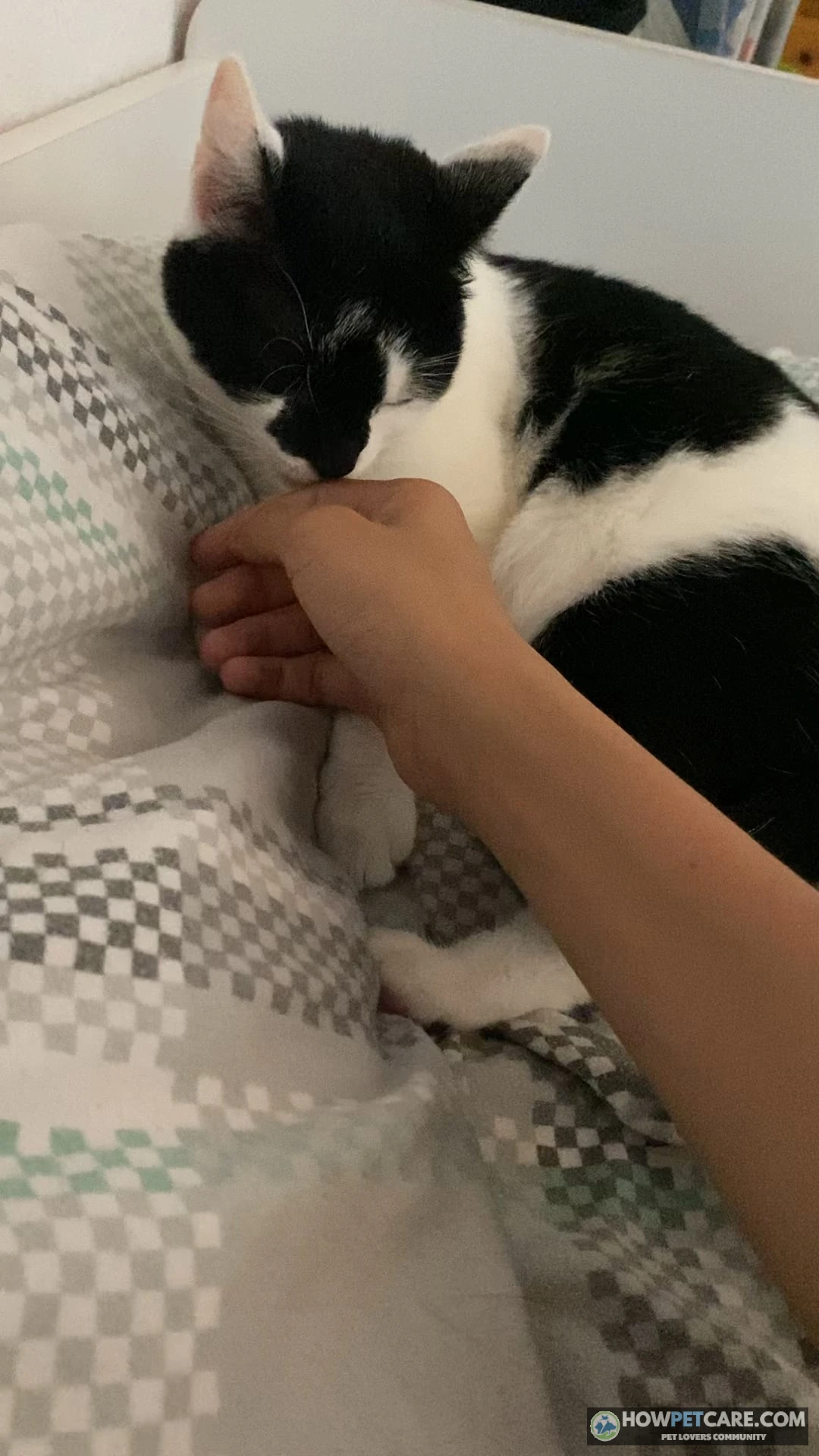

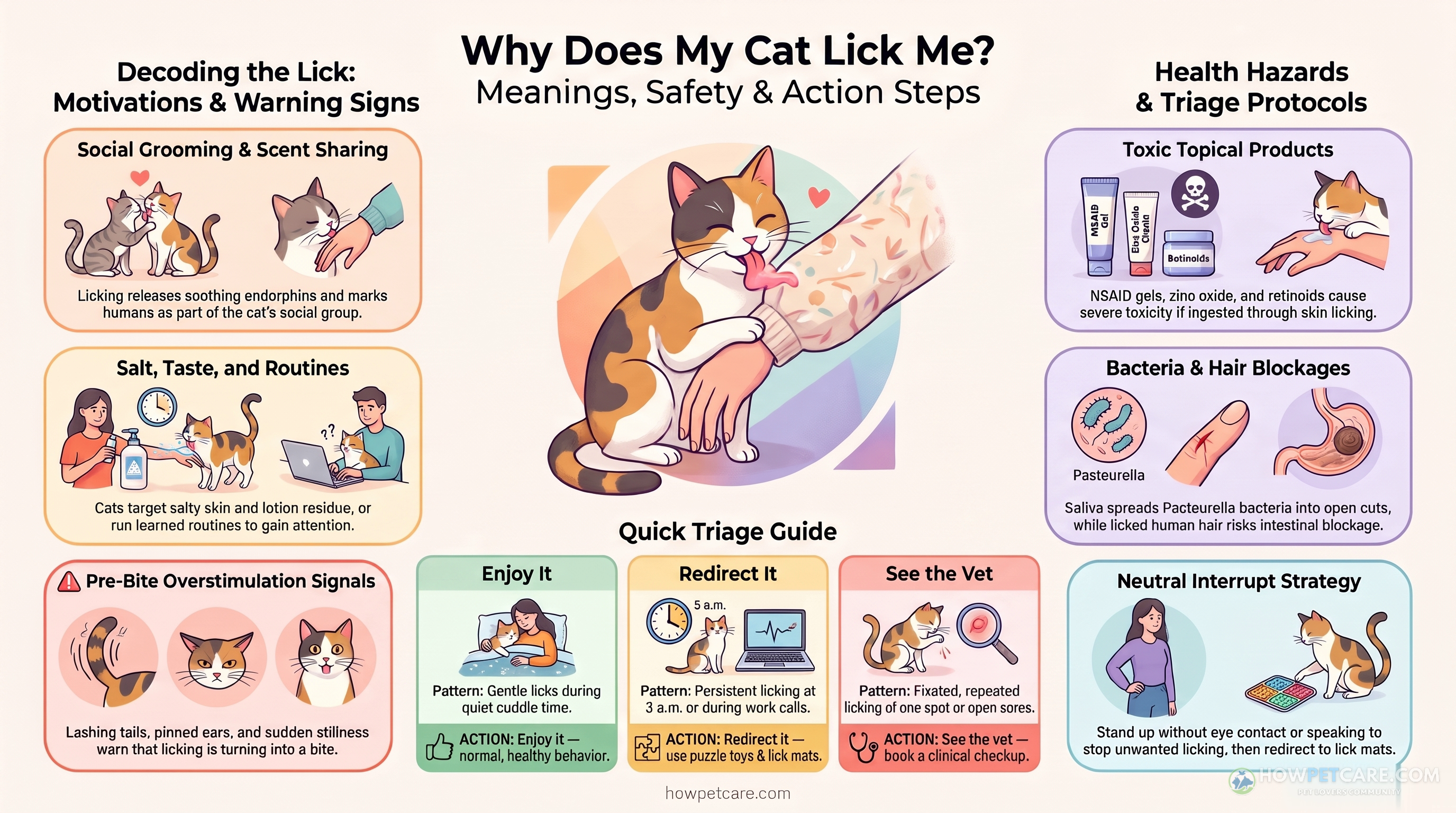
Cats lick people mainly as social grooming — a bonding and scent-marking habit carried over from cat-to-cat grooming. The same motion can also signal attention-seeking, interest in salt or lotion on your skin, or stress relief. Context and body language tell them apart; sudden, constant, or uninterruptible licking warrants a vet check.
Most of the time, when a cat licks you, she’s decided you belong to her social group. Licking is social grooming — allogrooming — the behavior cats normally aim at other cats, and plenty of them extend it to the humans they live with. Nothing’s broken, and nothing needs fixing.
The honest caveat: the same motion carries several meanings. Bonding licks look nearly identical to attention-seeking licks, taste-driven licks, and stress licks. What separates them is context — what happened in the ten seconds before the lick, what your cat’s body is doing while she licks, and whether she stops when you move away.
Below is the full set of reasons, the body-language cues that tell them apart, and a triage framework for deciding whether to enjoy the licking, redirect it, or book a vet visit.
Affection and allogrooming
Grooming starts in the nest. A mother cat grooms her kittens, the kittens groom each other, and the habit carries into adulthood as feline social bonding. It is the strongest everyday evidence behind whether cats love their owners, or at least behind what owners experience as love. It also feels good — licking prompts the brain to release endorphins and settles the cat into a calm, contented state. That’s why a cat mid-groom usually looks half asleep.
Allogrooming is the social grooming cats perform on members of their own group — and plenty of cats count their humans as group members.
This is the version you see during quiet contact — she’s settled against your leg, eyes soft, maybe kneading. Brief and gentle, it needs no management.
Scent marking and pheromones
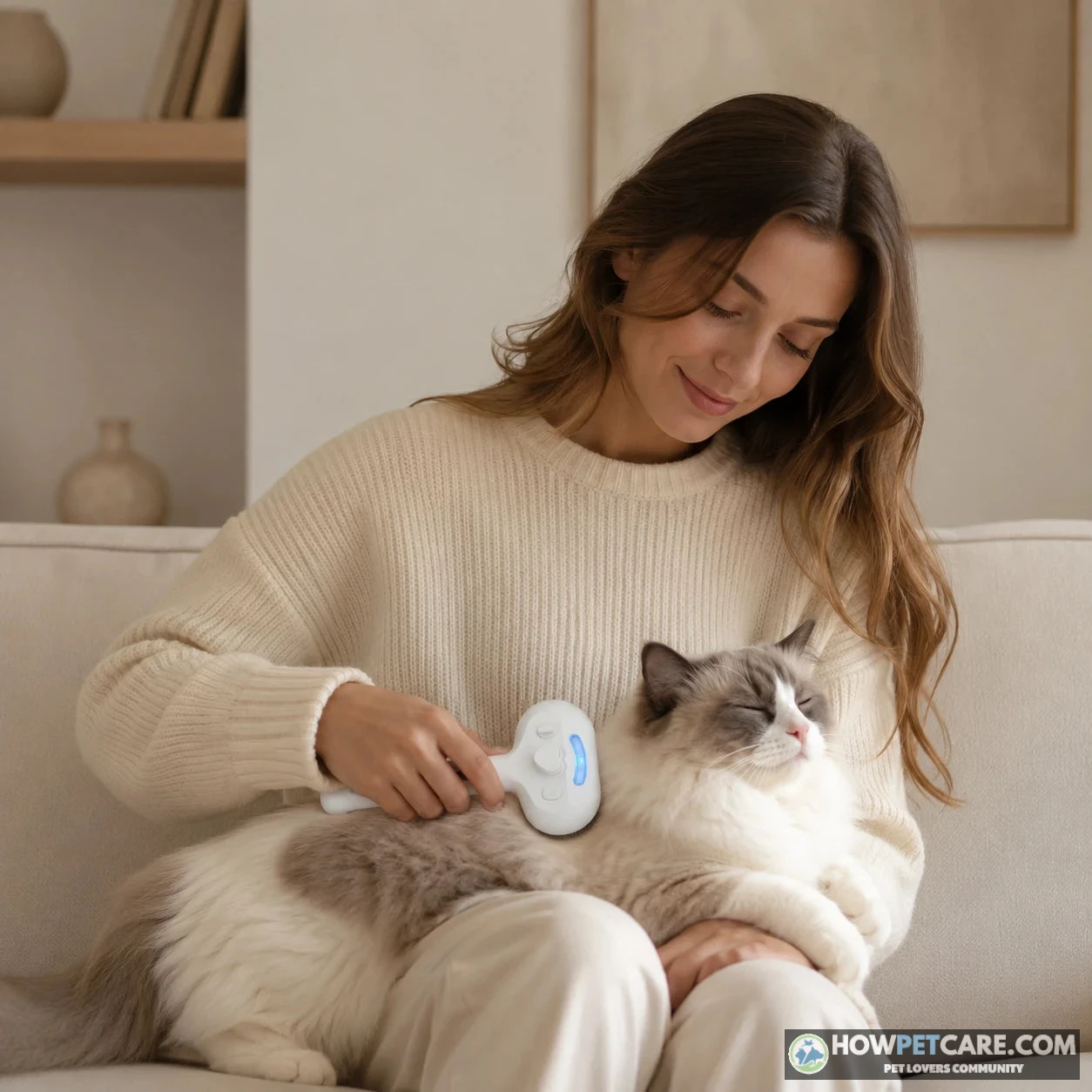
Cat saliva carries scent, and grooming lays it down. Behaviorists read a great deal of licking as scent sharing — the cat spreads a familiar smell and marks you as part of her territory. Treat "you are mine" as a likely explanation, not a proven one; no cat has confirmed it out loud. The pattern fits, though. Cats often target the parts of you that smell most like you — hands, neck, hair — and re-lick after you’ve washed.
Attention and routine
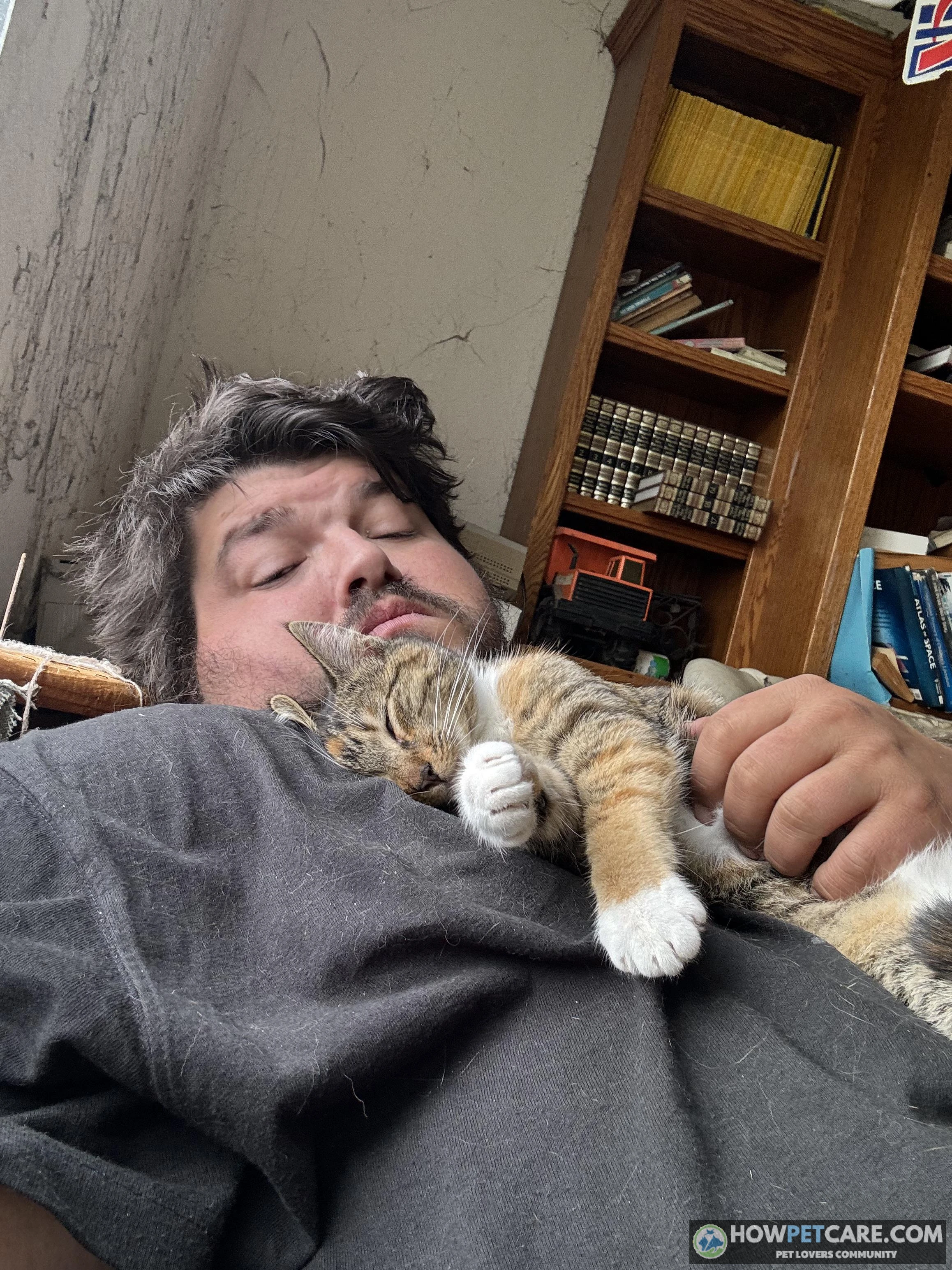
Cats learn fast. If licking has ever earned food, play, petting, or even a yelp and a push, it worked. A cat who licks you at the same time every evening is usually running a routine, not expressing a feeling. The tell: the licking stops the moment the payoff arrives.
Taste, salt, and lotion residue
Human skin is salty. Cats are drawn to the salt and sugars in sweat, and to the scent of food or moisturizer left on skin. "She only licks my hands after I cook" and post-shower licking both usually land here.
Comfort and self-soothing
Licking can be a displacement behavior — something a cat does to discharge tension when she’s anxious or unsure — or a deliberate attempt to self-soothe. Cats weaned too early or abruptly tend to lick more, often with suckling on soft fabric, clothing, or earlobes. The kneading-plus-purring combination is a kittenhood nursing reflex that resurfaces when a cat feels safe.
Why Cat Tongues Feel Like Sandpaper
A cat’s tongue is covered in papillae — tiny, backward-facing spines of keratin, the same protein as fingernails — built for combing fur and rasping meat off bone. That’s the sandpaper. Adult cats may spend as much as half their time grooming, and when the target is your forearm, the technique lands on skin that was never built for it.
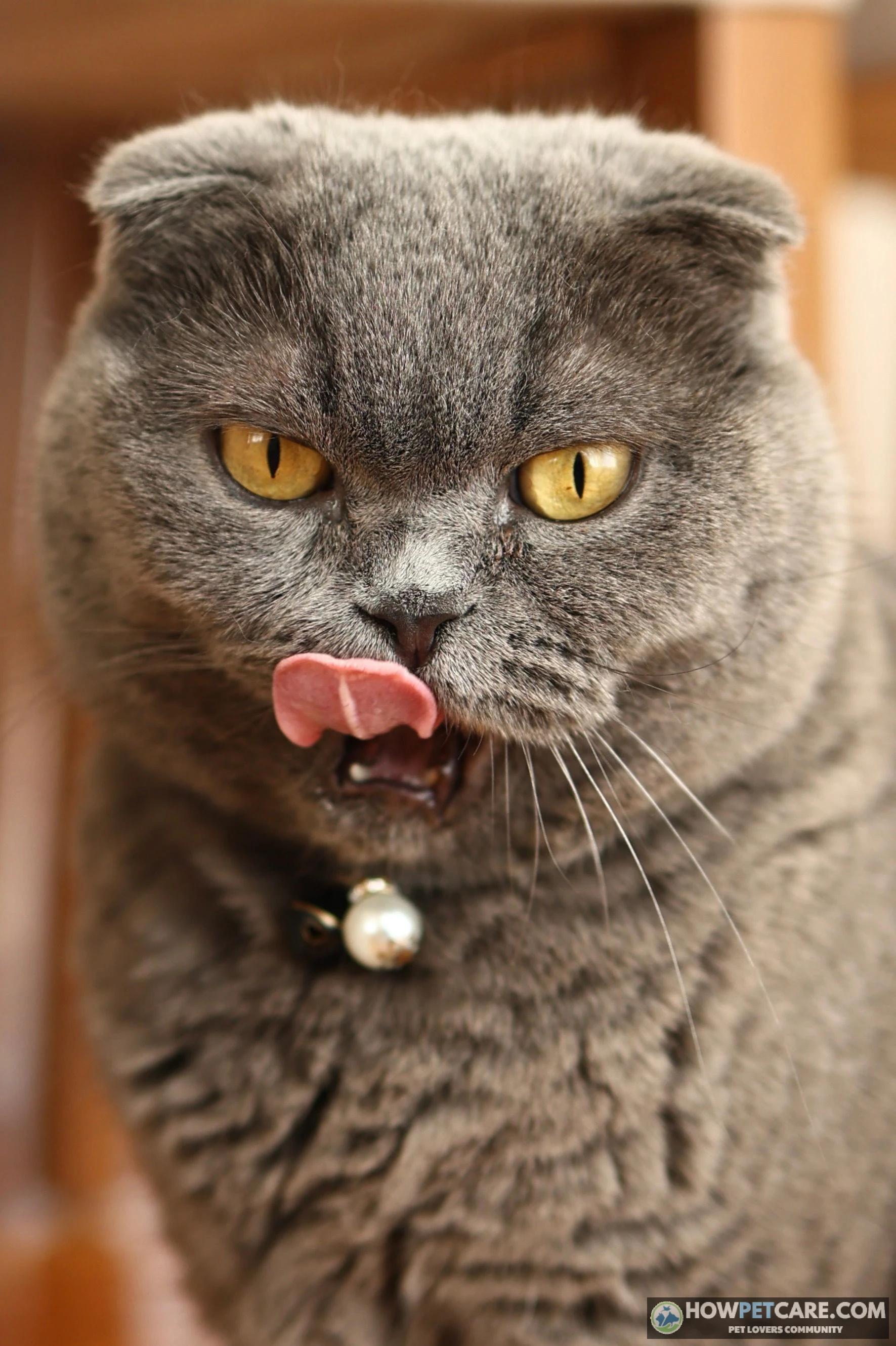
Short licks are harmless. A cat who rasps one patch for minutes can leave it red, tender, or raw — a practical reason to set limits even when the intent is affectionate.
Reading the Pattern: Which Kind of Licking Is This?
Owners search for the situation, not the species: why she licks at night, when I pet her, after a shower, but never my husband. The situation is usually the answer. Face and hand licking is classic bonding and scent sharing. Nighttime licking, or first thing in the morning, often tracks a cat’s dawn-and-dusk activity peak plus a hunger routine. Licking the instant you sit down for a work call is attention-seeking with a schedule attached. And "why is my cat licking me so much" is really a question about change — frequency, intensity, and whether you can interrupt it at all.
Why she licks you when you pet her
This is often reciprocal grooming — she’s returning the favor, cat-style — and it usually comes with kneading, head bunting, and purring. It’s a good sign, and also the moment to watch for the acceleration described in the next section.
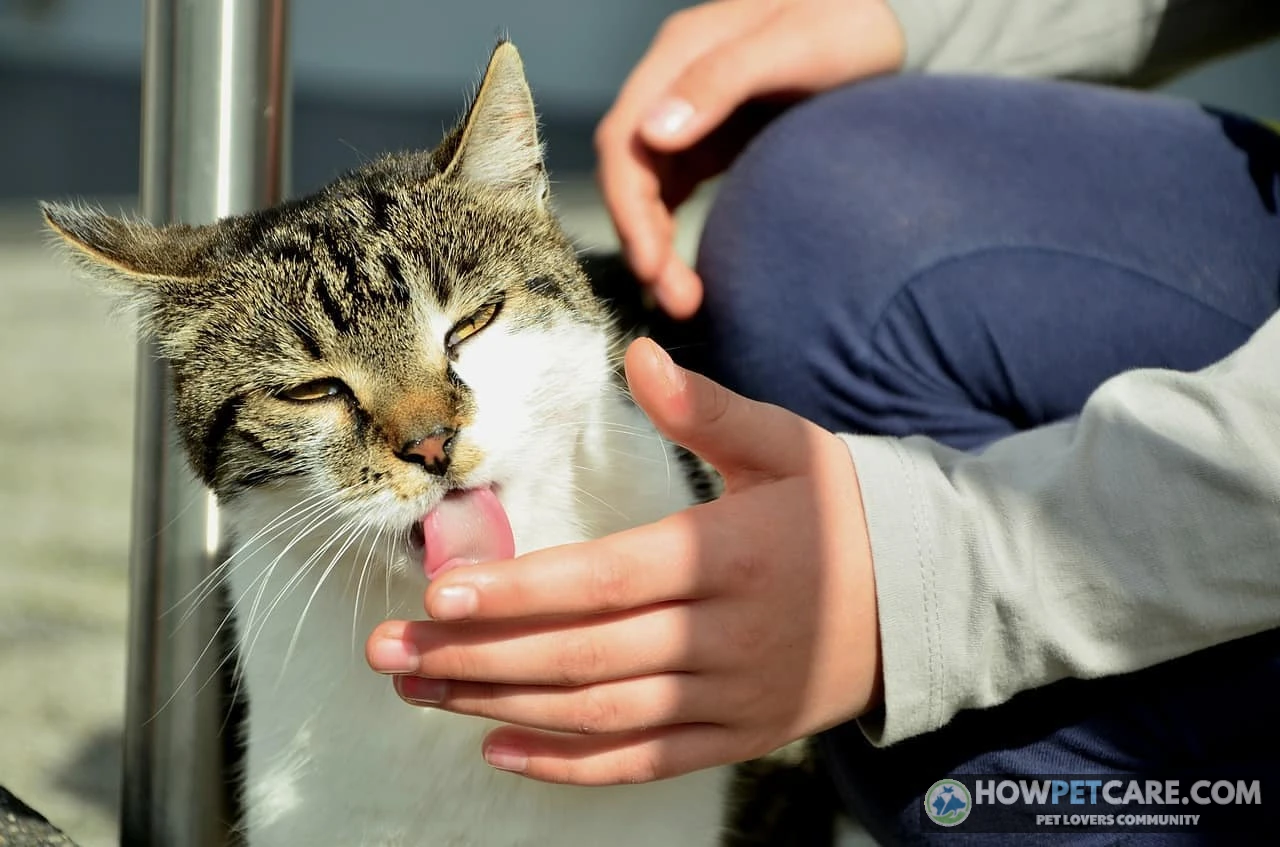
Why your cat licks you after a shower
Three things changed at once: your skin is salty, your soap or lotion left residue, and you no longer smell like you. Re-licking restores the familiar scent. It’s the most literal case of cat licking human skin meaning "let me fix that."
Why she licks you but not your partner
Usually nothing personal. Cats form preferences around who’s calm, who smells familiar, who rewards the licking with attention, and who sits still long enough. A partner who uses a different lotion, or one who reacts strongly by pushing away or laughing, can shape the habit either way. One-person-only licking in an otherwise relaxed cat is a preference, not a problem. If she also shadows you from room to room, that is closer to why cats follow their people everywhere than to a licking problem. Face and hair licking, though, deserves its own safety note — human hair carries a real ingestion risk, covered below.
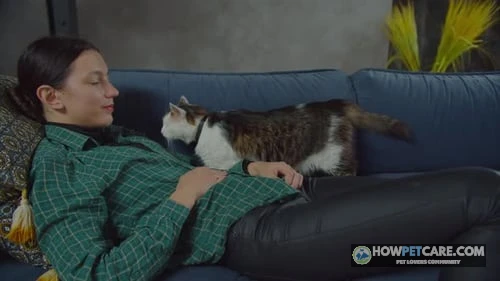
Lick Then Bite: Spotting Overstimulation Before It Happens
Why does my cat lick me then bite me? Usually because the licking was the warm-up. A gentle nip after licking can be play, a grooming nibble, or a signal that she’s had enough contact; context separates them. A bite during play is loose and bouncy. A bite during petting follows tension — and the warning signs show up before the teeth do.
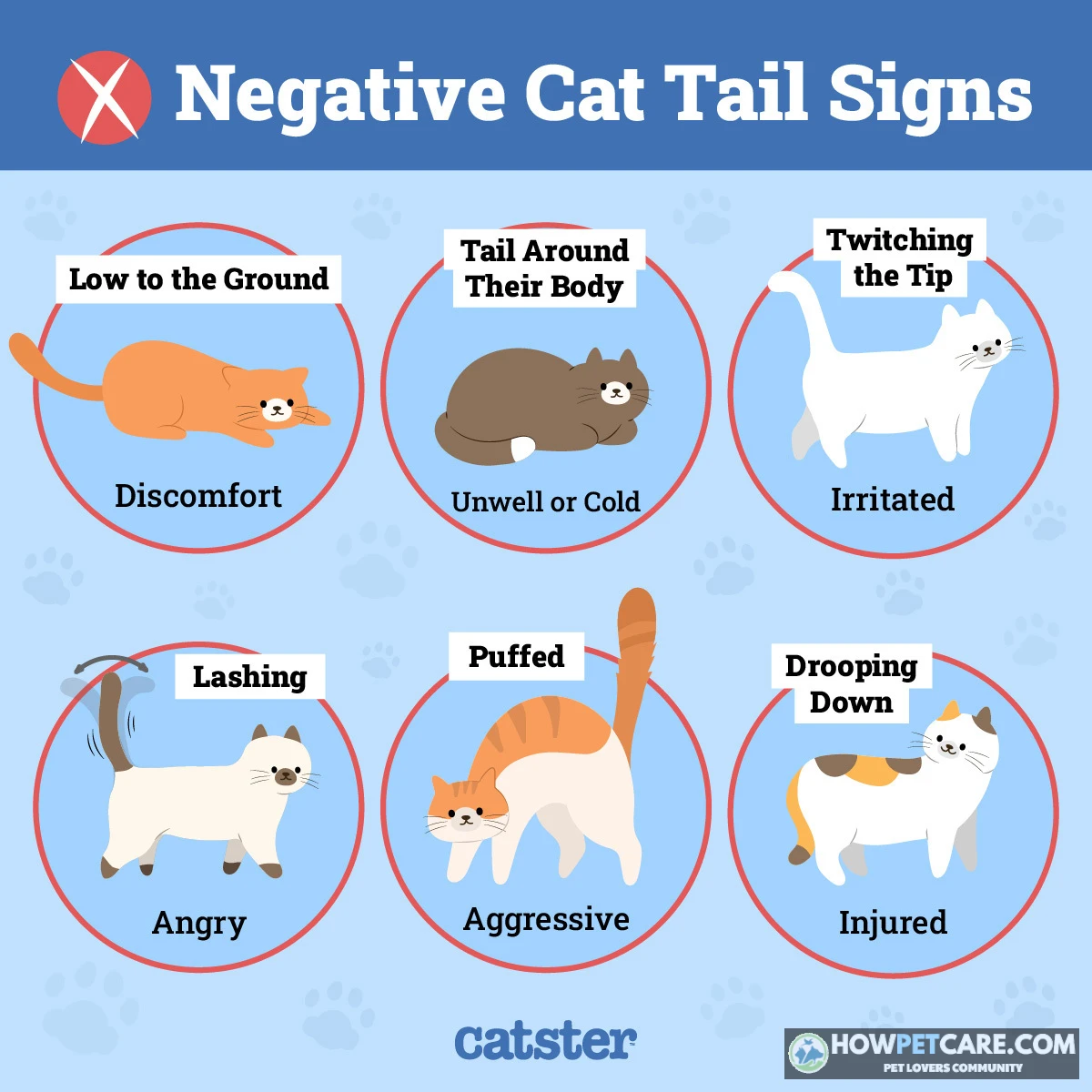
Calm vs. pre-bite body language
| Body part | Relaxed and affectionate | Overstimulated, about to bite | Your response |
|---|---|---|---|
| Tail | Loose, still, or swaying gently | Flicking, thumping, or lashing | Stop petting immediately |
| Ears | Forward or neutral | Rotating backward or pinning flat | Hands off — she’s done |
| Eyes | Soft gaze, slow blinks | Dilated pupils, hard stare | End the session now |
| Skin and body | Loose posture, kneading or leaning in | Skin rippling or twitching along the back, body tensing | Let her move away on her own |
| Mouth | Slow, gentle licks | Licking speeds up, head whips toward your hand, sudden stillness | Withdraw your hand slowly — don’t yank it |
The 30-second rule of thumb: many overstimulated cats give two or three cues over roughly half a minute before they bite. Spot one in the middle column and freeze your hand; let her decide whether to stay or leave. Never yell or swat — punishing a warning teaches a cat to bite without warning next time.
Enjoy It, Redirect It, or Call the Vet: A Triage Guide
The more useful question is what to do about it, not just what the licking means. Sort your cat’s pattern into the table below.
| Licking pattern | Most likely meaning | Body language and other signs | What to do (enjoy / redirect / vet) |
|---|---|---|---|
| Brief, gentle licks during petting, greeting, or settling next to you | Social bonding and allogrooming | Relaxed body, soft eyes, slow blinks, loose tail, stops when you move | Enjoy it — the normal case |
| Persistent licking during work calls, dinner, or at 3 a.m. | Attention-seeking or a learned routine | Purring, insistent, comes straight back when pushed away, otherwise healthy | Redirect it — use the 7-day protocol below |
| Licking right after your shower or after you apply lotion | Taste: salt, soap, or product residue; re-marking your changed scent | Focused only on freshly washed or treated skin | Redirect it — wash or cover the skin; check the ingredients table first |
| Licks the same single spot on you (or on herself) repeatedly | Possible itch, pain, or developing compulsion | Fixated, hard to interrupt, returns to the exact spot | See the vet |
| Sudden increase in an adult cat that never did it before | Medical or stress trigger | New behavior plus hiding, appetite or litter box changes | See the vet — book within a few days |
| Licking alongside bald patches, sores, or overgrooming on the cat | Compulsive disorder, allergy, or pain | Hair loss, broken skin, licking that interrupts eating or sleep | See the vet promptly |
When a pattern sits between two rows, default to the vet column — a checkup is the safe answer whenever you’re unsure.
Red-flag checklist
Check any that apply:
- ☐ Bald patches, thinning fur, or sores from her own licking
- ☐ Licking that interrupts eating, sleeping, or play
- ☐ Licking you can’t interrupt by moving, talking, or offering a toy
- ☐ Sudden onset in an adult cat with no history of licking
- ☐ Licking one fixed spot on you or on herself, repeatedly
- ☐ Licking paired with appetite, litter box, vomiting, hiding, or vocalizing changes
- ☐ Licking that spiked after a change at home — move, new pet, new baby, schedule shift
What the vet will rule out first: skin disease and parasites (flea allergy dermatitis is the most common driver of overgrooming, even in indoor cats), pain, allergies, and gastrointestinal upset. Cats lick what hurts, and nausea often shows up as licking of lips, surfaces, and people. Bring a short log of when it happens, how long it lasts, and what she’s doing — it shortens the diagnostic path considerably.
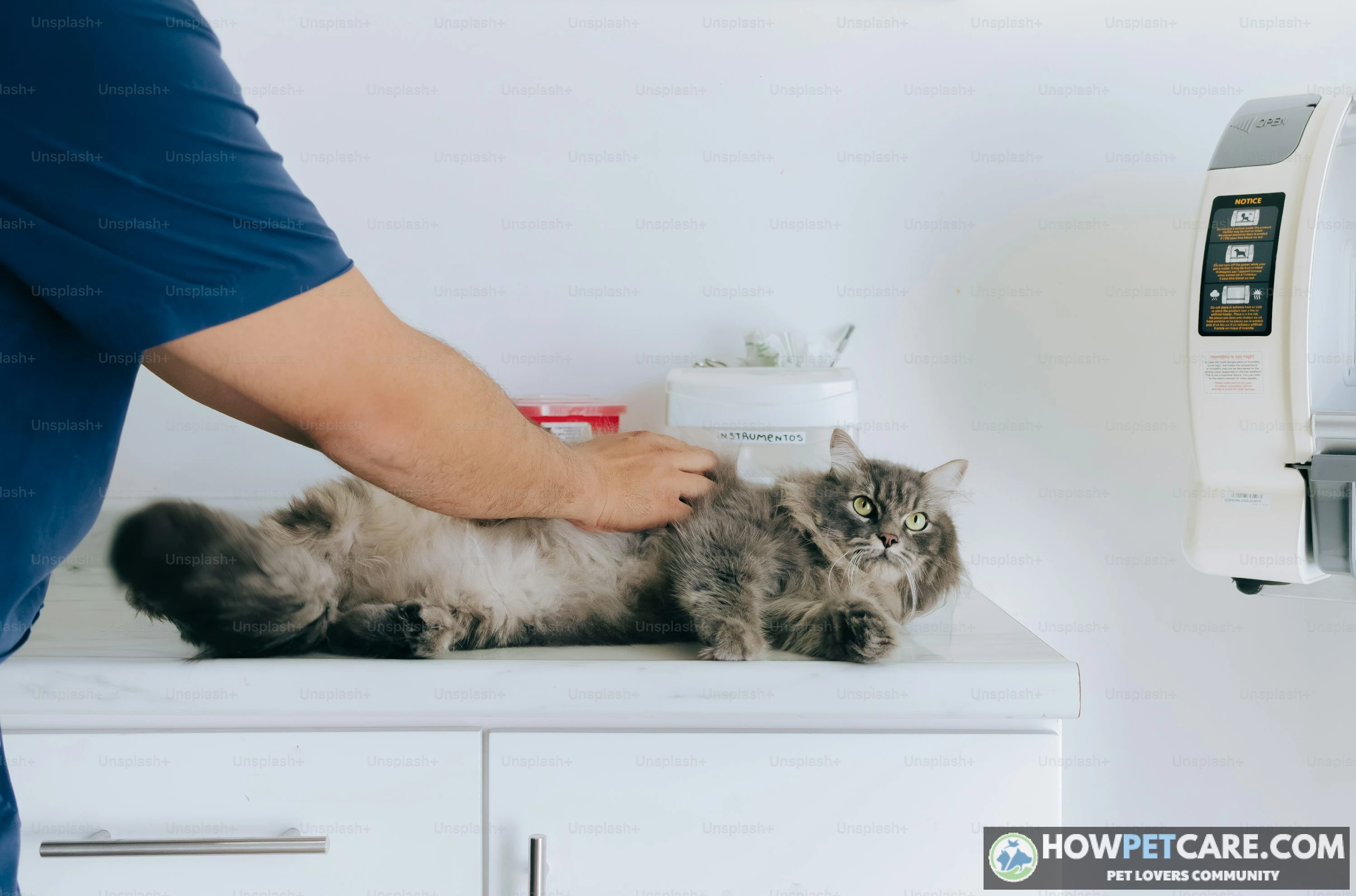
Sudden, uninterruptible, or self-directed licking is a medical question before it’s a training question. One red flag is enough to justify a call — you don’t need a cluster of symptoms to be taken seriously.
Is Cat Licking Safe? Bacteria, Wounds, Faces, and Hair
Casual licks on intact skin are low risk for most healthy adults. The calculation changes when skin is broken, when the licking targets your face or mouth, and when the human has a weaker immune system.
Licking wounds and broken skin
A cat’s mouth is not sterile. Pasteurella multocida is common in cat mouths and a well-known cause of skin infection when saliva reaches broken skin — the same organism behind most infected cat bites. Bartonella henselae, the bacterium behind cat scratch disease, is usually transmitted by a scratch or bite, but a cat licking an open wound is another possible route, and fleas are part of how cats carry it.
Wash licked skin with soap and water, keep cuts covered, don’t let the cat lick your mouth or eyes, and keep flea control and vet care current. See a doctor if a wound turns red, swollen, warm, or starts draining pus.
People who are immunocompromised — including those on chemotherapy or immunosuppressants, people without a spleen, pregnant people, infants, and older adults — should keep cats away from wounds entirely and avoid face licking. That’s a conversation to have with a doctor, not a decision to make from an article.
A lick on intact skin is everyday life. A lick on a scratch, surgical incision, or open wound is a genuine infection risk — cover it before the cat gets close, and don’t rely on washing afterward.
Licking hair and the swallowing risk
Cats that lick and chew human hair swallow strands, and enough long hair can form a linear foreign body — a strand that tethers or bunches in the intestines. The signs are vomiting, appetite loss, and lethargy, and this is an urgent-care situation, not a wait-and-see one. Tie hair up or keep it out of reach during cuddle sessions, and redirect the chewing with play or an approved chew.
Skincare and Topical Products That Are Dangerous If Your Cat Licks Them
Cats are small, they groom with their tongues, and their livers process several compounds poorly. That combination makes some human skincare genuinely risky when a cat licks it off your skin.
| Ingredient or product type | Common examples | Risk to cat | What to do |
|---|---|---|---|
| Retinoids (retinol, tretinoin) | Anti-aging serums, prescription acne creams | Stomach upset; prescription-strength products are riskier in any real quantity | Wait until fully absorbed, cover the area, keep the cat off freshly treated skin |
| Zinc oxide | Diaper-rash cream, mineral sunscreens | Vomiting and diarrhea; large ingestions can damage red blood cells | Prevent licking; call your vet if more than a lick’s worth is swallowed |
| NSAID gels (diclofenac and similar) | Topical pain-relief gels | Kidney and GI injury even in small amounts — cats are highly sensitive | Never let the cat contact treated skin; call a vet or poison line immediately if she does |
| Salicylates and acne actives (salicylic acid, benzoyl peroxide) | Spot treatments, medicated washes | Cats clear salicylates poorly; repeated licking adds up | Keep treated skin out of tongue range; wash hands after applying |
| Topical steroids and medicated creams | Hydrocortisone, prescription eczema or psoriasis creams | Hormone and drug exposure through grooming | Cover applied areas or apply when the cat isn’t near |
| Essential-oil products, especially tea tree | "Natural" balms, lotions, hand creams | Cats are unusually sensitive; tea tree oil is toxic even in small amounts | Don’t use on skin or surfaces the cat can reach |
If ingestion happens, the ingredient list matters more than the brand name. Have the label in hand and call your vet, the Pet Poison Helpline (855-764-7661), or ASPCA Animal Poison Control (888-426-4435) right away — a consultation fee may apply.
How to Stop Excessive Licking Without Punishment
Punishment backfires here. Pushing, yelling, or spraying raises anxiety — the exact fuel for stress licking — and teaches the cat to lick when you aren’t looking rather than to stop. Interrupting calmly and offering an alternative is what actually changes the behavior.
-
Days 1–2: log, don't change
Note every episode — time, duration, what happened right before (petting, you sat down, you were ignored), and her body language. Most owners find one or two triggers within 48 hours.
-
Day 3: start the neutral interrupt
The instant licking begins, stand up or move away. No talking, no pushing, no eye contact — any attention, even negative, rewards the behavior. Wait 10–15 seconds.
-
Days 3–4: redirect within seconds
Offer the alternative right after the interrupt: a lick mat on the floor, a wand toy in motion, a puzzle feeder. You’re teaching "do this instead," not just "stop that."
-
Days 5–6: reward the absence of licking
When she sits beside you calmly without licking, that’s the moment for attention or a treat. Add two or three short play sessions a day — a tired, enriched cat licks for attention far less.
-
Day 7: review the log
Fewer episodes per day? Keep going; most cats need two to three weeks of consistency before the habit fades. Same frequency or worse? Book the vet visit.
Redirection tools that work
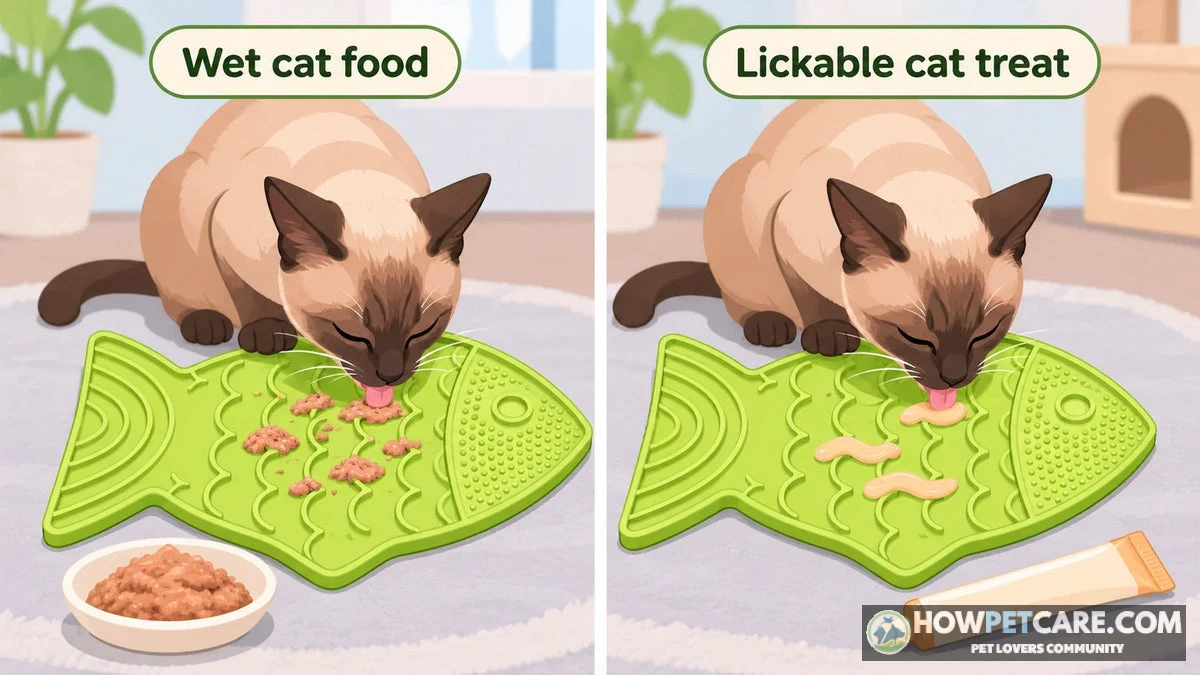
Concrete options rather than vague "redirect to a toy" advice: lick mats smeared with wet food, snuffle mats, rolling treat-ball feeders and sliding-cup puzzle feeders, wand toys for scheduled play, a window perch, and a toy rotation that swaps a few items every week. For deterrents, physical barriers beat anything you put on your skin — long sleeves, a throw blanket over your lap, or simply standing up. Skip hot sauce, citrus, and anti-lick sprays; they irritate skin and some are toxic if groomed off later.
When a veterinary behaviorist enters the picture
If the licking can’t be interrupted, causes hair loss or skin damage, and continues after a vet has ruled out medical causes and you’ve run several weeks of enrichment, the clinical concern is a compulsive disorder — the endpoint is often psychogenic alopecia, where a cat grooms herself bald. Ask your vet for a referral to a veterinary behaviorist, who can build a structured behavior plan and, in some cases, add medication. Pheromone diffusers such as Feliway and calming supplements such as Solliquin are sometimes part of that plan; ask the vet rather than buying blind. Progress takes weeks, not days.
If there’s no measurable improvement after one week of consistent, punishment-free redirection, stop troubleshooting at home and call your vet. Unresponsive licking is how compulsive and medical cases announce themselves.
1A cat settled quietly on its owner's lap begins giving brief, gentle licks to the owner's forearm while purring and kneading. What is the primary behavioral driver behind this quiet licking pattern?
Cats perform allogrooming on members of their social group to establish scent and promote a calm, contented state through endorphin release.
2An owner is petting their cat on the lap when the cat begins licking the owner's hand. Which of the following subtle physical cues indicate that the cat is becoming overstimulated and may bite if petting continues?
Backward or pinned ears signal growing irritation and tension prior to an defensive or overstimulated nip.
3If a cat licks human skin shortly after a prescription pain-relief gel containing diclofenac has been applied, what critical health risk does the cat face?
Cats are exceptionally sensitive to topical NSAIDs like diclofenac, which can induce acute renal failure and GI ulceration even in trace amounts.
4Why is allowing a cat to lick an open paper cut on an immunocompromised person considered a significant medical risk?
Pasteurella multocida is a common inhabitant of the feline oral cavity and can cause aggressive soft tissue infections when introduced into open wounds.
5Why do behaviorists recommend against using verbal scolding or physical pushes to discourage a cat from excessive attention-seeking licking?
Any reaction—even pushing or scolding—rewards attention-seeking habits, and negative interactions elevate stress that fuels compulsion.
6Which of the following topical human skincare products present significant toxicity risks if groomed off skin by a cat?
Retinoids cause gastrointestinal distress in cats, with prescription strengths posing heightened toxicity risks.
Your Next Steps: A Quick Checklist for Your Cat’s Licking
- Log it. Note when the licking happens, how long it lasts, and what her body is doing.
- Sort it. Match the pattern to enjoy, redirect, or vet using the triage table above.
- Close the safety gaps. Time your skincare around her, cover wounds, tie hair up, and keep flea control current.
- Start redirection and enrichment. Lick mats, puzzle feeders, and two or three play sessions a day — then track change over two to three weeks.
- Escalate if needed. Book the vet for any red flag or a week with no improvement, and ask about a veterinary behaviorist if the licking looks compulsive.
Most cat licking is a compliment wrapped in sandpaper. Enjoy the calm versions, redirect the demanding ones, and let the red flags send you to the vet rather than to the internet.
FAQ
Is it normal for cats to lick their owners?
Yes. Licking is common social behavior that comes from mother-kitten and cat-to-cat grooming. It becomes a concern only when it is constant, can’t be interrupted, or comes with other changes in behavior or health.
Does cat licking always mean affection?
No. It often reflects bonding, but it can also be scent marking, attention-seeking, tasting something on your skin, or a response to stress. Look at the context and body language to tell which one it is.
Can I let my cat lick my face?
For healthy adults the risk is low, but cat mouths carry bacteria such as Pasteurella. Avoid licks near your mouth, eyes, and any broken skin, and be stricter if you are immunocompromised or pregnant.
Why does my cat lick me and then start grooming herself?
She may be sharing scent, finishing a grooming session, or settling herself after the contact. It is usually normal, but if she seems tense or agitated, give her space.
Can my cat get sick from licking my lotion?
Yes, depending on the product. Retinoids, zinc oxide creams, and medicated gels can be harmful if swallowed, so keep her away until the product is fully absorbed and call a vet if she has licked one.