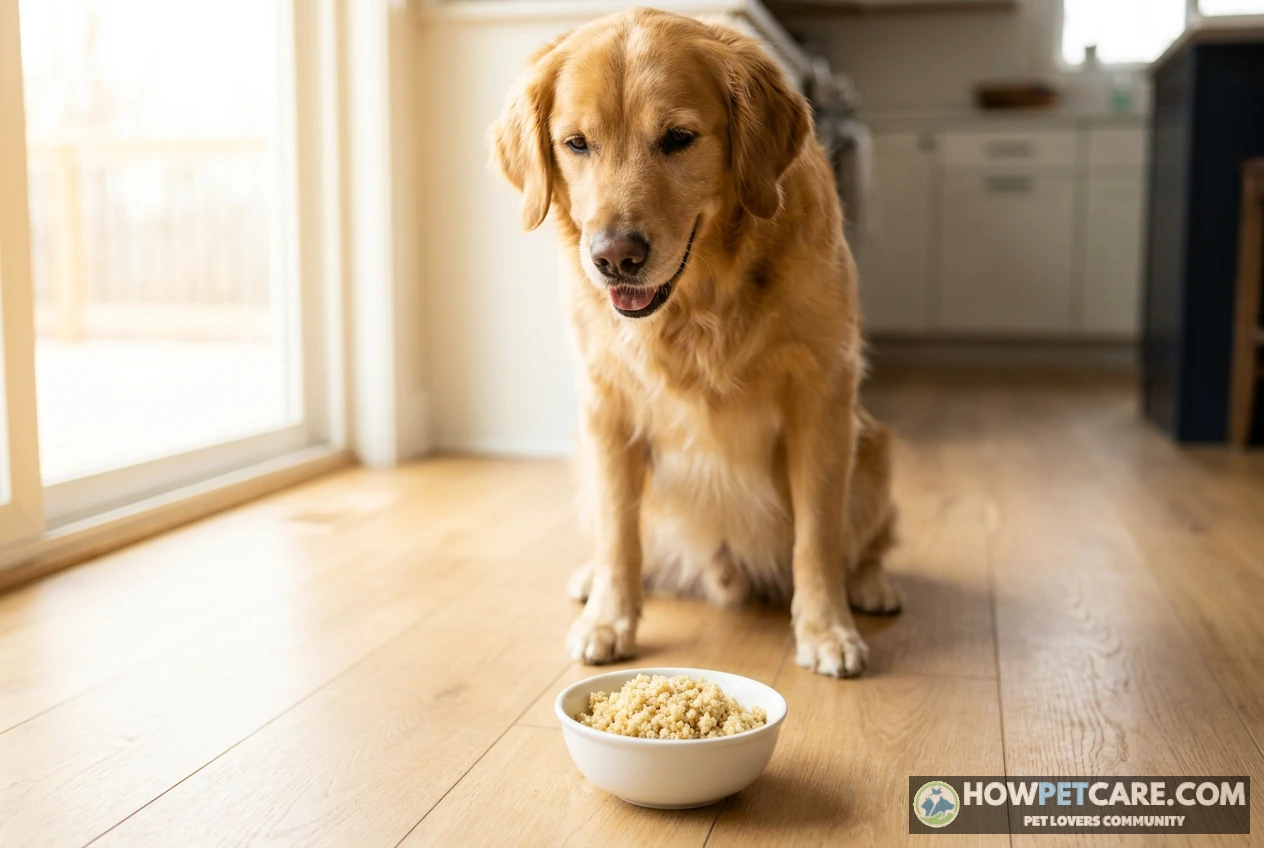

Yes. Most healthy adult dogs can eat plain, fully cooked quinoa in small amounts as a supplemental treat or topper. Keep it under 10% of daily calories, rinse and cook it in plain water, cool it completely, and avoid raw, seasoned, or human quinoa products. Get veterinary guidance first for puppies, seniors, kidney or pancreatitis issues, and allergies.
Yes, most healthy adult dogs can eat quinoa when it is plain, fully cooked, and served in small amounts. Quinoa is not a replacement for complete dog food; it works as a supplemental treat or topper, and it should stay under 10% of your dog’s daily calories. Raw quinoa, seasoned quinoa, and quinoa products made for people are not safe, and dogs with certain health conditions should avoid it or get veterinary approval first.
Quinoa is a gluten-free seed that people often group with grains when talking about pet nutrition. It contains protein, fiber, magnesium, and B vitamins, but it is not nutritionally complete for dogs on its own. Think of it as an occasional addition to a balanced canine diet, not a staple meal. For a broader overview, see our vet-approved list of safe human foods for dogs.
What quinoa is and where it fits in a canine diet
Quinoa is a small, round seed that cooks like a grain. It is gluten-free and provides a complete amino acid profile, meaning it contains all nine essential amino acids. For dogs, that means supplemental protein and fiber, though it cannot supply everything a dog needs for long-term health. A complete commercial dog food remains the foundation of canine nutrition, and quinoa fits best as a carbohydrate source for dogs that already tolerate their regular diet well.
When quinoa is not appropriate for a dog
Do not feed quinoa to dogs with a history of calcium oxalate stones, active kidney disease, pancreatitis, or a known quinoa or grain allergy unless a veterinarian approves it. Puppies, seniors, overweight dogs, and dogs on prescription diets should also get veterinary guidance before quinoa becomes a regular addition. If your dog is currently vomiting, has diarrhea, or shows signs of a grain sensitivity, wait until the issue resolves before introducing anything new.
Is Quinoa Safe for Dogs? Saponin, Oxalates, and Allergy Symptoms
Saponin is a natural, bitter coating on quinoa seeds that helps protect the plant from insects. It can irritate a dog’s stomach if left on. Rinsing quinoa thoroughly before cooking removes most of it, and cooking further improves digestibility. Oxalates are naturally occurring compounds in quinoa that may matter for dogs with kidney stone history or arthritis.
How to rinse saponin from quinoa
Place dry quinoa in a fine-mesh strainer and run cool water over it for one to two minutes, agitating the seeds with your hand. Rinse until the water runs mostly clear and no longer feels slippery. This step is non-negotiable for dog-safe preparation.

Quinoa allergy in dogs: symptoms to watch for
Signs of quinoa allergy or intolerance include itching, vomiting, diarrhea, and ear inflammation. Introduce quinoa slowly and watch for adverse reactions over 24 to 48 hours before increasing the portion. If any of these signs appear, stop feeding quinoa and contact your veterinarian.

Oxalate concerns and condition-specific risks
Oxalate concerns matter most for dogs with a history of calcium oxalate bladder stones or kidney disease. Because quinoa contains oxalates, these dogs should generally avoid it unless a veterinarian decides the risk is acceptable for the individual dog.
How to Cook Quinoa for Dogs Safely
Always cook quinoa in plain water. Never add salt, garlic, onion, spices, butter, or oil. Rinse thoroughly, use a 2:1 water-to-quinoa ratio, and simmer until fully absorbed and soft. Cool completely before mixing a small portion into your dog’s regular food. Avoid quinoa flour, flakes, pasta, chips, and human quinoa salads or seasoned mixes.
Step-by-step plain cooked quinoa recipe for dogs
- Measure the dry quinoa according to the portion table below.
- Rinse it under cool running water in a fine-mesh strainer.
- Combine one part quinoa with two parts plain water in a saucepan.
- Bring to a boil, then reduce heat and simmer covered until the water is absorbed and the seeds are soft.
- Remove from heat and let it cool to room temperature.
- Mix a small amount into your dog’s regular food and observe for 24 to 48 hours.

Quinoa forms: which are safe and which to avoid
Plain cooked quinoa is the only form recommended for dogs. Quinoa flour, flakes, pasta, chips, crackers, and human quinoa salads should be avoided because they often contain salt, garlic, onion, oil, or other ingredients toxic or unhealthy for dogs. Pre-rinsed products may still need rinsing before cooking for dogs, and flavored products are never assumed safe.
Red, white, and black quinoa: any difference for dogs?
Red, white, and black quinoa are nutritionally similar for dogs when all are plain, rinsed, and fully cooked. Color does not change the safety rules: rinse, cook in plain water, cool, and serve in small portions.

Do not serve raw quinoa; cook it fully until soft and water is absorbed.
Do not add salt, garlic, onion, chives, spices, butter, oil, broth, or sauces.
Do not use quinoa flour, flakes, pasta, chips, crackers, or human quinoa salads.
Do not assume pre-rinsed or flavored products are safe for dogs.
Do not serve quinoa hot; cool it completely before mixing into food.
Do not replace complete dog food with quinoa, even if the dog seems to enjoy it.
Do not introduce quinoa during an active stomach upset or alongside several new foods.
Do not ignore small amounts of seasoned quinoa; garlic and onion exposure warrants veterinary guidance.
How Much Quinoa Can Dogs Eat? Weight-Based Portion Guide
Treats and toppers, including quinoa, should stay under 10% of a dog’s daily calories. Portions scale by weight: small dogs need only a spoonful, while large dogs can have a few tablespoons as a ceiling. Cooked quinoa adds roughly 110 to 120 calories per half cup, along with protein and fiber. Adjust portions based on activity level, age, and whether your dog needs weight management.
Quinoa serving size table by dog weight and calorie needs
| Dog Weight | Max Quinoa Portion (cooked) | Approx. Calories Added | Protein Added | Fiber Added |
|---|---|---|---|---|
| Under 10 lb | 1 teaspoon | ~7 kcal | ~0.3 g | ~0.2 g |
| 10–25 lb | 1 tablespoon | ~14 kcal | ~0.6 g | ~0.4 g |
| 26–50 lb | 2 tablespoons | ~28 kcal | ~1.2 g | ~0.8 g |
| 51–75 lb | 3 tablespoons | ~42 kcal | ~1.8 g | ~1.2 g |
| 76+ lb | 1/4 cup | ~55 kcal | ~2.4 g | ~1.6 g |
Use these as a starting ceiling, not a target. If your dog is overweight, inactive, or already gets other treats, cut the portion in half and count it toward the under-10%-of-daily-calories treat budget.

Calorie, protein, and fiber added by portion size
The table above ties portions to added calories, protein, and fiber. A 30-pound dog receiving two tablespoons of cooked quinoa adds roughly 28 calories, about 1.2 grams of protein, and roughly 0.8 grams of fiber to its daily intake. These are small additions, which is why quinoa works as a topper rather than a meal component.
Can dogs eat cooked quinoa every day?
Healthy dogs can eat small portions of plain cooked quinoa occasionally, but daily feeding is not necessary and can displace balanced nutrition. Keep quinoa under 10% of daily calories and consult your veterinarian before making it a regular part of your dog’s diet.
Quinoa vs Rice, Sweet Potato, Corn, and Oats for Dogs
Quinoa offers complete protein and more fiber than white rice, but brown rice and oats are also safe options for many dogs. Sweet potato provides beta-carotene but has a different glycemic impact than quinoa. Corn is digestible for most dogs but lower in protein quality than quinoa. Grain-free dog food trends do not automatically make quinoa superior.
Nutrition comparison table: quinoa vs common dog carbohydrates
| Carbohydrate Source | Protein | Fiber | Glycemic Impact | Best Use Case for Dogs |
|---|---|---|---|---|
| Cooked quinoa | Higher than most grains; complete amino acid profile | Moderate-high | Moderate | Small topper for dogs needing protein variety, if tolerated |
| Cooked brown rice | Moderate | Moderate | Moderate | Bland-diet rotation; many dogs tolerate it well |
| Cooked sweet potato | Low | High | Moderate-high | Fiber-rich topper; useful for stool consistency, but watch portions |
| Cooked corn | Low-moderate | Moderate | Moderate-high | Occasional topper; less protein value than quinoa |
| Cooked oats | Moderate | High | Lower-moderate | Softer grain option for dogs that do well with soluble fiber |
Choose based on tolerance, calorie needs, and your veterinarian’s advice rather than treating quinoa as automatically superior.
Quinoa vs rice for dogs: which is better for upset stomachs
Brown rice is often gentler for upset stomachs because it is bland and familiar in bland-diet protocols, and our guide to safe rice portions for dogs can help you compare. Quinoa can be tolerated by many dogs, but it is not the default first choice during active gastrointestinal upset. If your dog has diarrhea or vomiting, stick to your veterinarian’s bland-diet recommendation before adding quinoa.

Glycemic index and diabetic dog considerations
Quinoa has a moderate glycemic impact compared with some other carbohydrate sources. If your dog is diabetic, blood-sugar response matters more than general nutrition labels. Speak with your veterinarian before feeding quinoa to a diabetic dog, and never adjust insulin or feeding routines without professional guidance.
Quinoa for Dogs with Health Conditions: Arthritis, Kidney, Pancreatitis, and Allergies
Dogs with kidney disease or calcium oxalate stone history may need to limit quinoa due to oxalates. Dogs with pancreatitis require low-fat diets; plain quinoa is low-fat but should be introduced with vet approval. Arthritis and inflammation claims around quinoa lack strong veterinary evidence. Allergic dogs should trial quinoa cautiously under veterinary supervision.
Can puppies eat quinoa? Age-specific guidance
Puppies can have tiny amounts of plain cooked quinoa as an occasional treat, but their primary nutrition should come from complete puppy food. Introduce it slowly and ask your veterinarian before adding it regularly, because growing dogs have precise nutrient requirements that quinoa cannot satisfy on its own.
Is quinoa good for dogs with sensitive stomachs?
Plain cooked quinoa may be tolerated by some dogs with sensitive stomachs when introduced gradually, but it is not a proven remedy. Brown rice is more commonly recommended for upset stomachs. If your dog has recurring digestive issues, consult your veterinarian before adding quinoa.
Condition decision checklist: feed, limit, or avoid
- Feed cautiously: healthy adult dog, no kidney stone history, no pancreatitis history, no known grain sensitivity, and no current vomiting or diarrhea.
- Limit and confirm with your vet first: senior dog, puppy, overweight dog, dog on a prescription diet, or dog with arthritis or chronic inflammation.
- Avoid unless your veterinarian approves: history of calcium oxalate stones, kidney disease, pancreatitis, known quinoa or grain allergy, or any dog currently showing itching, ear inflammation, vomiting, or loose stool after grains.
- Trial rule: introduce one new food at a time, use a tiny portion, and monitor for 24 to 48 hours before increasing.
- Stop rule: discontinue quinoa and contact your veterinarian if vomiting, diarrhea, lethargy, itching, or ear inflammation appears.
Quinoa Benefits and Risks: What the Evidence Actually Says
Cooked quinoa provides protein, fiber, magnesium, and B vitamins as a supplemental food. Benefits of quinoa for dogs include digestive support from fiber when introduced gradually. Claims about coat health or dramatic health improvements are not backed by cited veterinary research. Quinoa is not nutritionally complete and cannot replace a balanced canine diet.
Protein for dogs and fiber for dogs: what quinoa contributes
Quinoa contributes supplemental protein and fiber, but the amounts are small at treat-level portions. For example, two tablespoons of cooked quinoa for a medium dog adds roughly 1.2 grams of protein and 0.8 grams of fiber. These are additions to an already complete diet, not primary nutrient sources. For another protein-rich topper, learn how to safely feed dogs eggs.
Carbohydrates for dogs: role in canine nutrition
Carbohydrates provide energy and can support digestive health when they include fiber. Quinoa is one option among several, including brown rice, oats, and sweet potato. It is not required in a canine diet, and dogs do not need grain-free dog food specifically to thrive.
Homemade dog food and quinoa: balance requirements
If you use quinoa in homemade dog food, it must be part of a recipe formulated to meet canine nutritional standards. Quinoa alone lacks the balance of vitamins, minerals, and fatty acids a dog needs. Work with a veterinarian or veterinary nutritionist before feeding a homemade diet long term.

- Cook plain quinoa in water only, rinse first, and let it cool completely.
- Mix 1 teaspoon to 1 tablespoon of cooled quinoa with a small amount of your dog’s regular wet food or plain unsweetened yogurt if already approved by your veterinarian.
- Spread a thin layer in a silicone lick mat or stuff a small amount into a freezer-safe toy.
- For frozen portions, spoon small dollops onto parchment paper, freeze until solid, then store in an airtight container.
- Start with one small frozen portion or a short lick-mat session, then watch stool quality and energy over the next 24 to 48 hours.
- Reduce or stop if your dog gets diarrhea, gas, itching, or refuses meals; do not increase the amount until tolerance is clear.
Next Steps: Decide, Prepare, and Monitor Your Dog
Confirm your dog has no kidney stone history, pancreatitis, or known grain sensitivity before introducing quinoa. Start with a tiny portion of plain cooked quinoa mixed into regular food. Use the weight-based table to calculate the maximum safe serving for your dog. Stop feeding and contact a veterinarian if vomiting, diarrhea, itching, or lethargy occurs. Save emergency steps for seasoned quinoa ingestion with garlic or onion.
Quinoa safety checklist before first serving
- Plain cooked quinoa only, rinsed and cooled.
- No salt, garlic, onion, spices, butter, or oil.
- Portion stays under 10% of daily calories.
- One new food at a time.
- Monitor for 24 to 48 hours.
- Veterinarian approval for puppies, seniors, or dogs with medical conditions.
What to do if your dog ate seasoned quinoa with garlic or onion
Garlic and onion are toxic to dogs. Contact your veterinarian or an animal poison control hotline immediately, even if your dog seems fine, because symptoms can be delayed.
When to seek veterinarian advice
Contact your veterinarian if your dog shows vomiting, diarrhea, lethargy, itching, ear inflammation, or any reaction after eating quinoa. Seek guidance before feeding quinoa to dogs with kidney disease, pancreatitis, arthritis, diabetes, allergies, or prescription diets. Garlic or onion exposure requires immediate veterinary contact.

| Dog Weight | Max Quinoa Portion (cooked) | Approx. Calories Added | Protein Added | Fiber Added |
|---|---|---|---|---|
| Under 10 lb | 1 teaspoon | ~7 kcal | ~0.3 g | ~0.2 g |
| 10–25 lb | 1 tablespoon | ~14 kcal | ~0.6 g | ~0.4 g |
| 26–50 lb | 2 tablespoons | ~28 kcal | ~1.2 g | ~0.8 g |
| 51–75 lb | 3 tablespoons | ~42 kcal | ~1.8 g | ~1.2 g |
| 76+ lb | 1/4 cup | ~55 kcal | ~2.4 g | ~1.6 g |
FAQ
Can dogs eat quinoa every day?
Healthy dogs can eat small portions of plain cooked quinoa occasionally, but daily feeding is not necessary and can displace balanced nutrition. Keep quinoa under 10% of daily calories and consult your vet before making it a regular part of your dog’s diet.
Is raw quinoa safe for dogs?
No. Raw quinoa is difficult to digest and still contains saponin, which can irritate a dog’s stomach. Always rinse and cook quinoa thoroughly in plain water before feeding.
What should I do if my dog ate seasoned quinoa with garlic or onion?
Garlic and onion are toxic to dogs. Contact your veterinarian or an animal poison control hotline immediately, even if your dog seems fine, because symptoms can be delayed.
Is quinoa better than brown rice for dogs?
Quinoa offers more protein and fiber than brown rice, but neither is universally better; brown rice is often gentler for upset stomachs. Use either as an occasional supplement, not a meal replacement, based on your dog’s tolerance and your vet’s advice.
Can puppies eat quinoa?
Puppies can have tiny amounts of plain cooked quinoa as an occasional treat, but their primary nutrition should come from complete puppy food. Introduce it slowly and ask your veterinarian before adding it regularly.