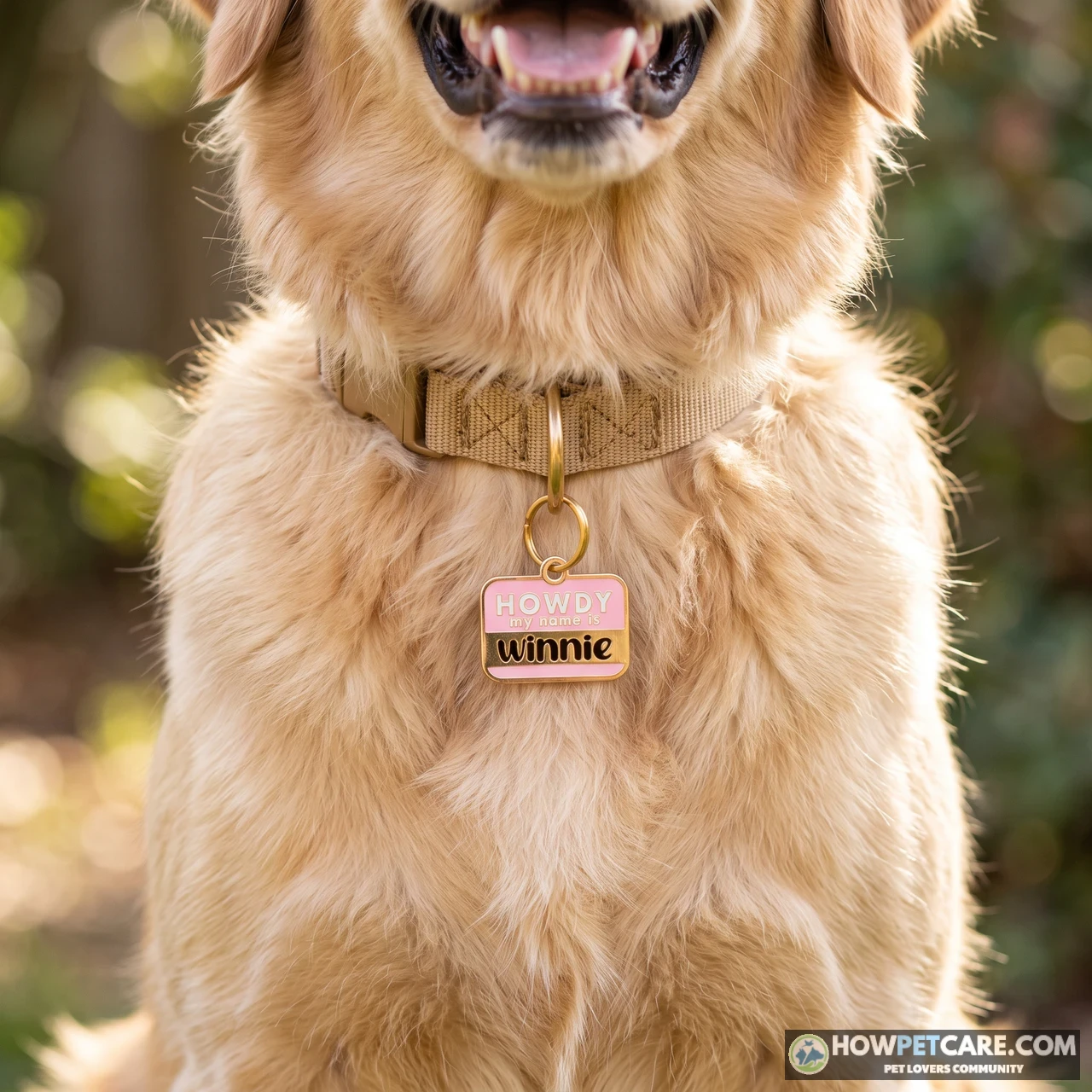

Strong two-syllable dog names to shortlist:
- Male-leaning: Rocky, Cooper, Tucker, Milo, Dexter
- Female-leaning: Luna, Daisy, Stella, Ruby, Willow
- Unique or themed: Mango, Pepper, Echo, Loki, Zephyr
- Quick check: favor a clear stressed first syllable and an opening sound that does not resemble your commands or household names.
Rocky, Cooper, Luna, Daisy and Mango are easy-to-say two syllable dog names with distinct rhythms. Start with the shortlist below, then check your favorites against the commands, people and pets in your household before teaching one as your dog’s everyday call name.
Two-Syllable Dog Names to Shortlist: Male, Female and Unique Picks
These names are selected for their clear, repeatable sounds and varied styles. No list can rule out a collision with a name or cue used in your home, so the flags are prompts for your own check, not guarantees.
Capital letters show the stressed syllable. Gender labels describe familiar naming conventions, not rules: any dog can wear any of these names.
Male dog names with two syllables
| Name | Gender fit | Meaning or origin | Style | Phonetic note | Collision flag |
|---|---|---|---|---|---|
| Rocky | Male-leaning | Associated with rock | Sturdy and playful | ROCK-ee; R start, -ee ending | Check household names |
| Cooper | Male-leaning | Occupational surname for a barrel maker | Friendly classic | COO-per; crisp K start, -er ending | Human name |
| Tucker | Male-leaning | Occupational surname associated with cloth working | Playful | TUCK-er; crisp T start, -er ending | Human name |
| Milo | Male-leaning | Given name with debated roots | Gentle modern | MY-lo; M start, -o ending | Human name |
| Murphy | Male-leaning | Irish surname associated with a sea warrior | Spirited | MUR-fee; M start, -ee ending | Surname or household name |
| Dexter | Male-leaning | Latin for right-handed; also an occupational surname | Clever | DEX-ter; crisp D start, -er ending | Human name |
| Archie | Male-leaning | Short form of Archibald, associated with bravery | Cheerful | AR-chee; vowel start, -ee ending | Human name |
| Bruno | Male-leaning | Germanic name associated with brown | Solid classic | BROO-no; crisp B start, -o ending | Human name |
Female dog names with two syllables
| Name | Gender fit | Meaning or origin | Style | Phonetic note | Collision flag |
|---|---|---|---|---|---|
| Luna | Female-leaning | Latin for moon | Sleek | LOO-na; L start, -a ending | Human name |
| Daisy | Female-leaning | Flower name from “day’s eye” | Sunny | DAY-zee; crisp D start, -ee ending | Human name |
| Stella | Female-leaning | Latin for star | Bold classic | STEL-a; ST start, -a ending | Human name |
| Nala | Female-leaning | Associated with a character in The Lion King | Warm, pop-culture | NAH-la; N start, -a ending | Check similar household names |
| Willow | Female-leaning | Willow tree | Gentle nature | WIL-oh; W start, -o ending | Human name |
| Ruby | Female-leaning | Red gemstone | Vintage | ROO-bee; R start, -ee ending | Human name |
| Hazel | Female-leaning | Hazel tree | Earthy | HAY-zul; H start, -el ending | Human name |
| Olive | Female-leaning | Olive tree or fruit | Quirky classic | AH-liv; vowel start, clipped ending | Human name |
Unique and themed two-syllable names, with meanings
| Name | Gender fit | Meaning or origin | Style | Phonetic note | Collision flag |
|---|---|---|---|---|---|
| Mango | Neutral | Tropical fruit | Food-inspired | MAN-go; M start, -o ending | Check household names |
| Pepper | Neutral | Spice | Lively food name | PEP-er; crisp P start, -er ending | Check household names |
| Maple | Neutral | Maple tree | Nature-inspired | MAY-pul; M start, -el ending | Check household names |
| Echo | Neutral | Reflected sound; also a figure in Greek mythology | Mythic | EK-oh; vowel start, -o ending | Check any cue meaning “repeat” |
| Freya | Female-leaning | Norse goddess | Mythic | FRAY-a; F start, -a ending | Human name |
| Loki | Male-leaning | Figure in Norse mythology | Mischievous | LOH-kee; L start, -ee ending | Sounds like “low-key” |
| Zephyr | Neutral | Word for a west wind, from Greek | Airy and unusual | ZEF-er; Z start, -er ending | Check household names |
| Bowie | Neutral | Associated with musician David Bowie | Music-inspired | BOH-ee; B start, -ee ending | Pronunciation varies |
| Mocha | Neutral | Coffee-and-chocolate flavor | Food-inspired | MOH-ka; M start, -a ending | First syllable may echo “no” |
| Denver | Neutral | U.S. city and place name | Outdoorsy | DEN-ver; crisp D start, -er ending | Human or place name |
Bowie may also be pronounced BOW-ee, with “bow” like the front of a ship. Agree on one pronunciation if you choose it. Other names can vary by speaker too; count the beats in the version your family will actually say.
Names ending in -y or -ie, such as Rocky, Daisy and Archie, finish with an “ee” sound. Luna, Stella and Nala end in an unstressed “a” sound. Both groups are comfortable to call for many people; choose a rhythm you can repeat rather than assuming one ending is scientifically superior.
What’s Actually Popular in 2026 and Where the Data Comes From
A name can appear in an annual pet-name report without being a good fit for your household. Reports from pet insurers, pet-sitting platforms and registries draw on different populations, so their lists are not interchangeable national censuses. A list of all dog names also does not automatically rank two-syllable names as a separate group.
The evidence available for this article refers to older 2024 lists featuring Luna, Charlie, Milo, Daisy and Cooper, but does not establish a named source, sample or verified 2026 ranking for two-syllable names. Treat those as ideas, not as a current popularity leaderboard.
If you want a less frequently shared name at your local dog park, ask around before choosing. For a trend check each year, look for a dated report that identifies its source population, then check which names on its list actually have two syllables in your pronunciation.
Why Two-Syllable Names Are Easier for Dogs to Learn and Recall
Two syllables offer a practical compromise: a name such as Milo is brief to say and has a recognizable rhythm. That makes it convenient for a person to repeat consistently during training—the practical sense in which these names are “easier.” It does not establish that dogs learn every two-syllable name faster than every shorter or longer one.
A dog’s name is an attention cue: it means “notice me,” while a separate cue such as “come” can ask the dog to move toward you. Clear delivery, a distinct sound and rewarding the response matter more than hitting a particular syllable count.
One vs. two vs. three syllables: a side-by-side comparison
| Syllable count | Example | Attention and recall clarity | Command-confusion risk | Tendency to be nicknamed | Best suited for |
|---|---|---|---|---|---|
| One | Kit | Quick to say; a short sound may resemble another short word | Kit can sound like “sit” | Low, though a longer nickname may develop | A home where the name sounds distinct from cues |
| Two | Milo | Short, with a repeatable two-beat pattern | Depends on the household’s words and names | Some owners may shorten it | Owners who want a brief everyday call name |
| Three | Barnaby | Distinctive when spoken in full | Depends on the full name and any nickname | May become Barney | Owners happy to use and teach one consistent version |

What the research supports and what is trainer consensus
Dogs can learn that a spoken sound predicts attention or a reward, but the evidence supplied here does not establish a head-to-head advantage for two-syllable names. Claims that a particular syllable count produces faster recall, or that certain endings work best for every breed, go beyond what this article can verify.
Use syllable count as a convenience filter. A distinct one-syllable name or a consistently taught three-syllable name can work well. Reliable recall also requires separate practice in progressively more distracting settings; a name alone does not create it.
Sound Features That Make a Name Easy for a Dog to Pick Out
Stress pattern and rhythm
In MIL-o and DAI-sy, the first syllable receives more emphasis. Say a candidate as you would across a room, then have another family member repeat it. If everyone naturally uses a similar rhythm, the name may be easier for the household to deliver consistently.
First-syllable stress is a useful naming convention, not a proven requirement. A different rhythm can also work, especially if it helps distinguish one dog’s name from another’s.
Hard consonants and clear onsets
A crisp initial sound, such as the K in Cooper, T in Tucker or D in Daisy, gives a name a clearly articulated beginning. B and P are other crisp starts. Softer starts, such as the W in Willow or F in Freya, are perfectly usable; they are simply worth comparing with the other sounds your dog hears frequently.
Avoid assuming that a hard consonant will cut through every noisy environment. Distance, competing noise, the speaker and the individual dog’s hearing all affect what the dog can hear.

“ee,” “y” and “a” endings
The final sounds in Rocky and Daisy can be drawn out easily, while Luna and Nala have an open final vowel. People may find one style more natural or cheerful to call, but an “ee” spelling does not guarantee a higher-pitched voice or a better response. Likewise, an “a” or “o” ending is not proven to carry farther in every setting.
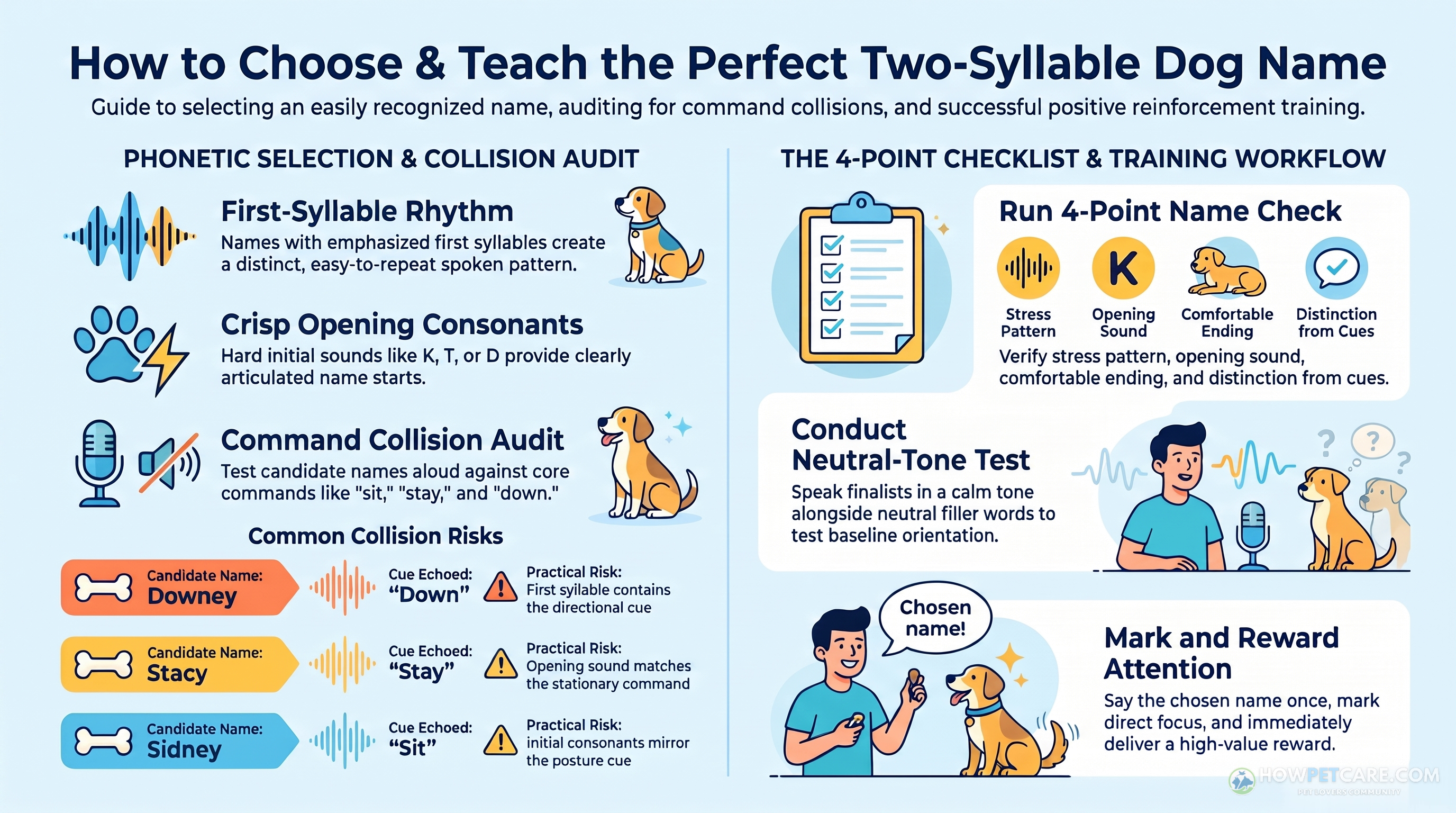
For any name, run this four-point check:
- Stress: Can everyone repeat the same rhythm?
- Onset: Is the first sound clear when spoken normally?
- Ending: Can you say the whole name comfortably without swallowing the last syllable?
- Distinctness: Does it differ from your cues and household names?
An older dog, or any dog who does not respond to ordinary sounds, may need a veterinary hearing check. For a dog with hearing loss, ask your veterinarian or a qualified trainer about visual or other suitable cues rather than relying on a louder name.
An AKC registered name can be longer than the everyday call name. The name used for attention and training does not have to match the formal name word for word.
Collision Audit: Names That Sound Like Commands, Family Members or Other Pets
A collision is a possible point of confusion, not proof that a dog cannot learn the difference. Before deciding, say each finalist and your actual dog training commands aloud in the same tone. Include “sit,” “stay,” “come,” “down,” “wait,” “no,” “heel” and “off” if your household uses them.
Names that echo common commands
| Candidate | Compare with | Practical concern | Possible action |
|---|---|---|---|
| Downey | “Down” | The first syllable contains the cue | Choose a more distinct name |
| Stacy | “Stay” | The first syllable sounds like the cue | Try another name or a distinct nickname |
| Sidney | “Sit” | The opening sounds are similar in some voices | Test aloud; choose another if unclear |
| Noel, pronounced NO-el | “No” | The first syllable matches the word | Consider a different name if you use “no” |
| Comet | “Come” | The opening sounds may be similar in some accents | Compare them in your normal speaking voice |
| Mocha | “No” | MOH and “no” rhyme | Test the full name; avoid shortening it to Mo |
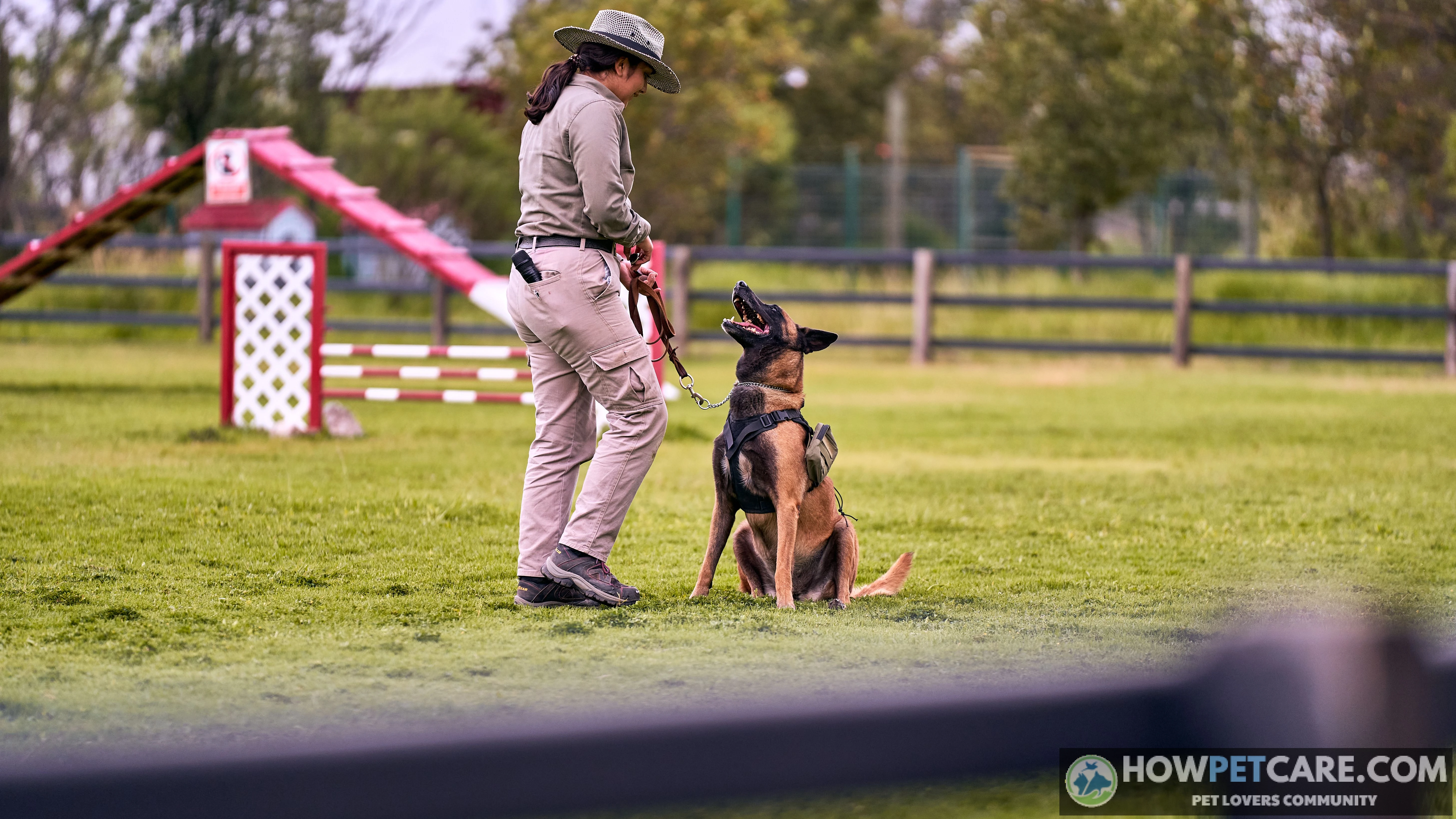
For a practical listening check, ask someone who cannot see your mouth whether you said the name or the cue. Then say them in a sentence: “Downey, down” or “Stacy, stay.” If you stumble or the listener struggles, a different name is the simpler choice.
When a name matches a family member’s name
If a child, partner, roommate or frequent visitor has the same name as your favorite, expect that both the person and the dog may hear it often. A clearly different dog nickname can solve the problem if everyone uses it consistently. Changing stress alone may not create enough separation; test the actual sound rather than relying on spelling.
Avoiding rhymes with another pet
For two pets, compare the whole sound pattern, not just the final letter. Milo and Lilo share much of their rhythm and ending; Milo and Pepper differ more in their opening and stressed vowel. Two names ending in “y” are not automatically a problem if the rest of each name is distinct.
Use a simple decision rule: keep a name that sounds clear in your home; tweak a nickname that creates the overlap; or drop a finalist that repeatedly sounds like an important cue or another household name. Audit the shortened versions too—those may become the words you actually use.

Choosing by Dog: Puppy or Adult, Small or Large, Calm or High-Energy, Single or Multi-Dog Home
| Dog context | What the name should do | Sound traits to favor | Sound traits to avoid | Examples from the shortlist |
|---|---|---|---|---|
| Puppy | Give the household one repeatable attention cue | A rhythm everyone says consistently | Multiple competing nicknames at the start | Daisy, Tucker |
| Adult or rescue | Fit a calm transition and the dog’s history | A clear name that passes the household audit | A known troubling association, if reported | Milo, Maple |
| Small or large dog | Suit the owner’s style preference | Any sound that is clear and comfortable to call | Assuming size determines a required sound | Bruno, Ruby |
| High-energy or calm dog | Be easy to deliver without escalating excitement | A natural rhythm and comfortable volume | A sharp delivery that worries the individual dog | Rocky, Willow |
| Multi-dog home | Stand apart from the other call names | Different openings and stressed vowels | Near-matches such as Milo and Lilo | Milo and Pepper |
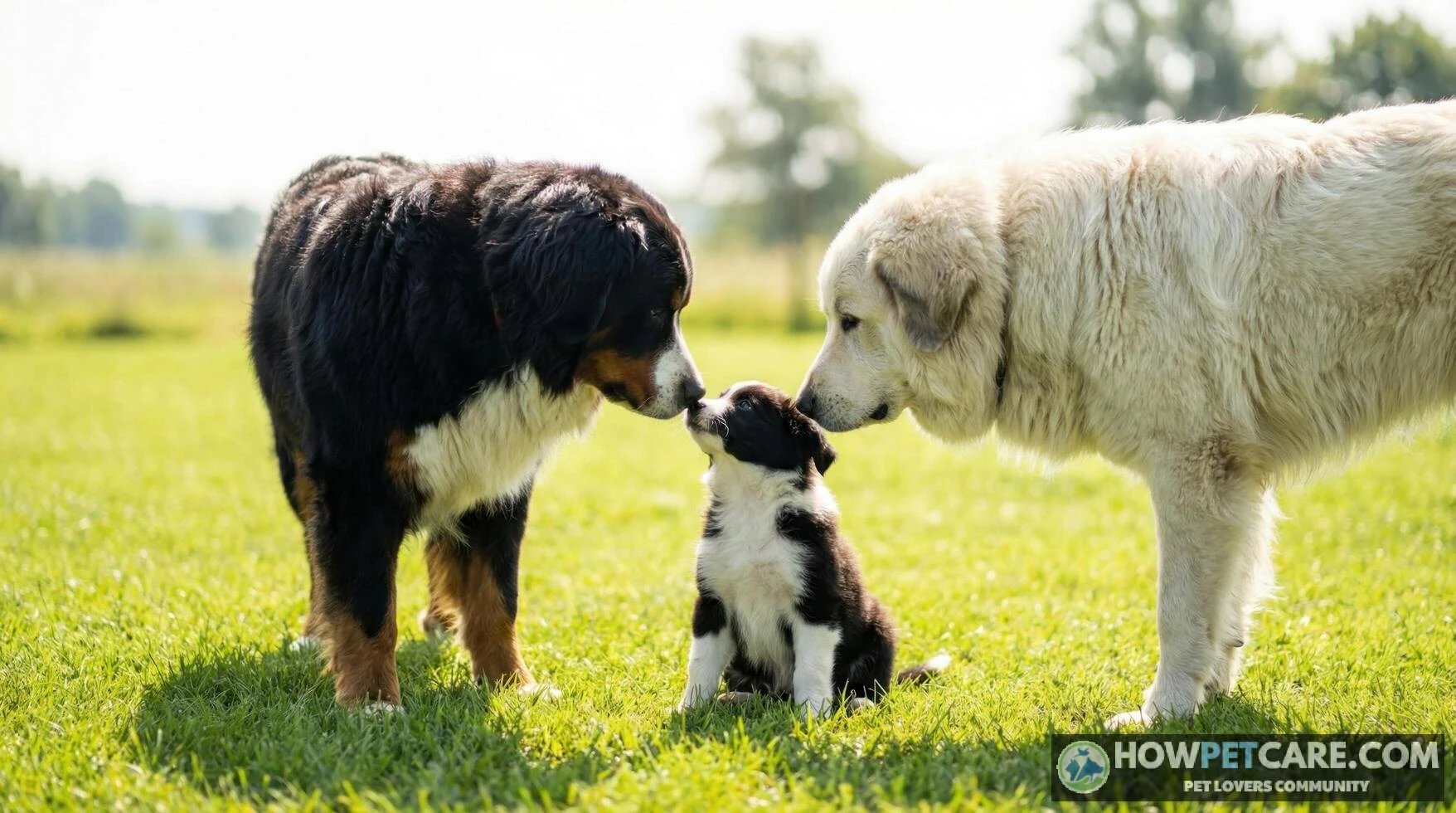
Puppy vs. adult dog
Both puppies and adults learn through consistent associations and rewards. An adult may already know a name, so consider whether changing it is necessary and use the transition plan below if you decide to do so. Progress varies for puppies as well; look for reliable responses rather than a deadline.
Small vs. large and calm vs. high-energy dogs
You might like a sturdy-sounding name such as Bruno for a large dog or a lighthearted name such as Ruby for a small one—but reversing those choices is equally valid. Breed-specific names can reflect heritage or appearance without implying that a breed needs a particular sound.
For a sound-sensitive dog, try a gentle delivery at a comfortable volume. Choosing a softer-sounding name is a style preference, not a proven treatment for fear.
Naming a second or third dog
Say the names in the same room and listen for overlap, as in the collision audit. Teach each dog’s name separately first, then practice with both present so you can reward the dog whose name you said.
How to Test Your Finalists and Call the Name for Fast Recall
An unfamiliar name is not expected to mean anything to a dog yet. An initial ear flick or head turn may reflect novelty, your voice or movement—not a preference or proof of recognition. Use the first test to check delivery; assess recognition after teaching the chosen name.
A neutral-tone name test, step by step
- Prepare three to five finalists. Choose a quiet room, stand a few feet away and keep treats out of sight. Avoid gestures or leaning toward the dog.
- Say one candidate once. Use a neutral, consistent tone while the dog is relaxed and not already watching you. Note a head turn, ear movement, approach or no visible response.
- Include controls. On other trials, use a few neutral filler words in the same tone. Vary the order instead of always saying a name first. Pause between trials and stop if the dog loses interest.
- Repeat later. Try a different speaker or position without making a game of startling the dog. If practical, speak from just out of sight so your posture is not the cue.
- Interpret modestly. A similar response to names and filler words suggests the dog may simply be noticing speech. No response to a new word is normal. Choose a finalist primarily for clarity and household consistency, then teach it.
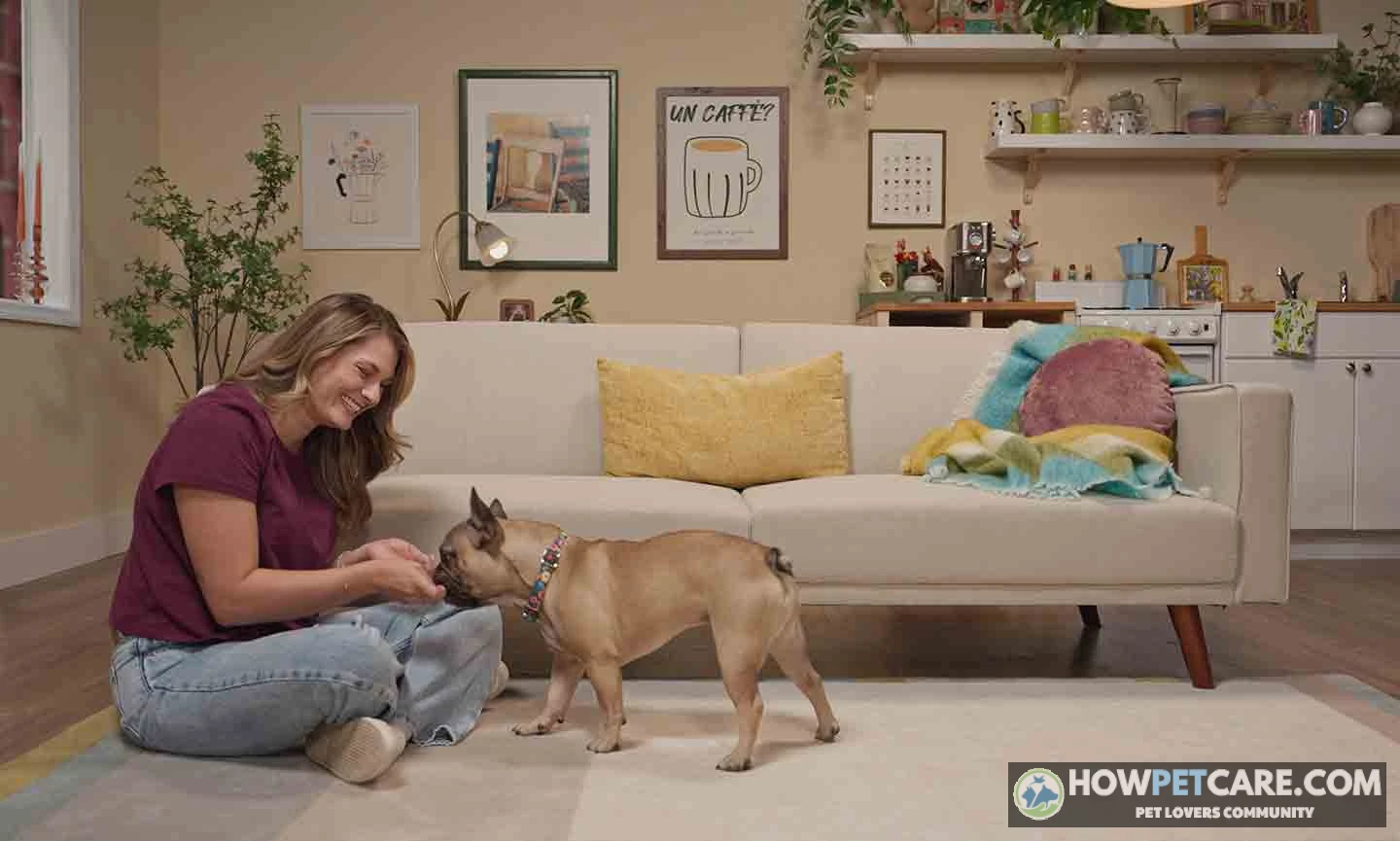
After several short teaching sessions, repeat the comparison with the chosen name and neutral words. A pattern of orienting to the taught name more often, with treats hidden until after the response, is more informative than a single head turn. Practice in another room and with another household member before assuming the response is established everywhere.
Teaching the name with positive reinforcement
In a quiet place, say the name once. When your dog looks or turns toward you, mark the moment with “yes” or a click, then give a small treat. Repeat a few times and finish while your dog is still interested. If the dog does not respond, reduce distractions or move closer; reward an achievable glance or ear movement rather than repeating the name over and over.
Use the name before pleasant interactions as well. Avoid using it as a scolding word. If your dog needs help with a difficult situation, guide them calmly instead of turning their name into a warning.

Delivery for recall: pitch, rhythm and repetition
Use a clear, friendly voice and the same natural rhythm each time. A comfortable, upbeat tone is a training practice, not a guaranteed acoustic shortcut. Say the name once to get attention, then give your separately taught recall cue, such as “come.” Reward the response.
If your dog does not respond, avoid calling repeatedly from an unsafe distance. Move closer or reduce the distraction, and practice in a secure area or on a suitable long line. Do not rely on a newly learned name to keep a dog safe off leash.
Renaming a Rescue or Adult Dog to a New Two-Syllable Name
Most adult dogs can learn a new association with a name. The decision to rename is personal: a familiar name that works and suits your household can be worth keeping, while a rescue’s assigned name may be unfamiliar or unsuitable. Ask the shelter what it knows about previous names and the dog’s response to them; a dog’s history may be incomplete.
Should you rename at all?
Check the old name against your household’s commands and names. If you change it, choose a distinct new call name your family can say consistently. A shared sound with the old name may feel like a convenient bridge, but it is not necessary and should not override the collision audit.
For a fearful dog, use a soft voice and let the dog choose whether to approach. Do not use the name to lure the dog into being cornered or handled.
A staged transition plan
Use the following as a flexible first-week structure, not a deadline. Keep sessions short, use rewards the dog enjoys and repeat a stage whenever the dog needs more practice.
- Start with the new name. In a quiet room, say it once. Mark and reward a glance or other small orientation toward you. Keep treats out of sight until the response.
- Build the association. Repeat brief sessions over the next day or two. Add a little distance only when the dog is comfortable and responding.
- Use the old name selectively. If the dog reliably knows the old name, you can occasionally say the new name, then the old name as a prompt, and reward the dog’s orientation. Gradually pause before the old name and omit it as the dog responds to the new one. If the old name seems to worry the dog, skip the bridge and build the new association directly.
- Change one thing at a time. Practice with another household member or in another quiet room. Keep the pronunciation and reward pattern consistent.
- Add mild distractions. Try a secure yard or hallway when the quiet-room response is becoming reliable. Use a leash or long line where appropriate; this is not an off-leash recall test.
- Connect the name with good things. Use it before meals, play or walks, and reward attention. Ask everyone to use the agreed call name rather than several variations.
- Check progress. On a later day, compare responses to the new name with neutral filler words, without gestures or visible treats. If responses are inconsistent, return to an easier setting and continue practicing rather than treating the result as failure.
Some dogs need more than a week, and progress may vary across rooms, people and distractions. The aim is a positive, repeatable response—not a fixed score by a fixed day.
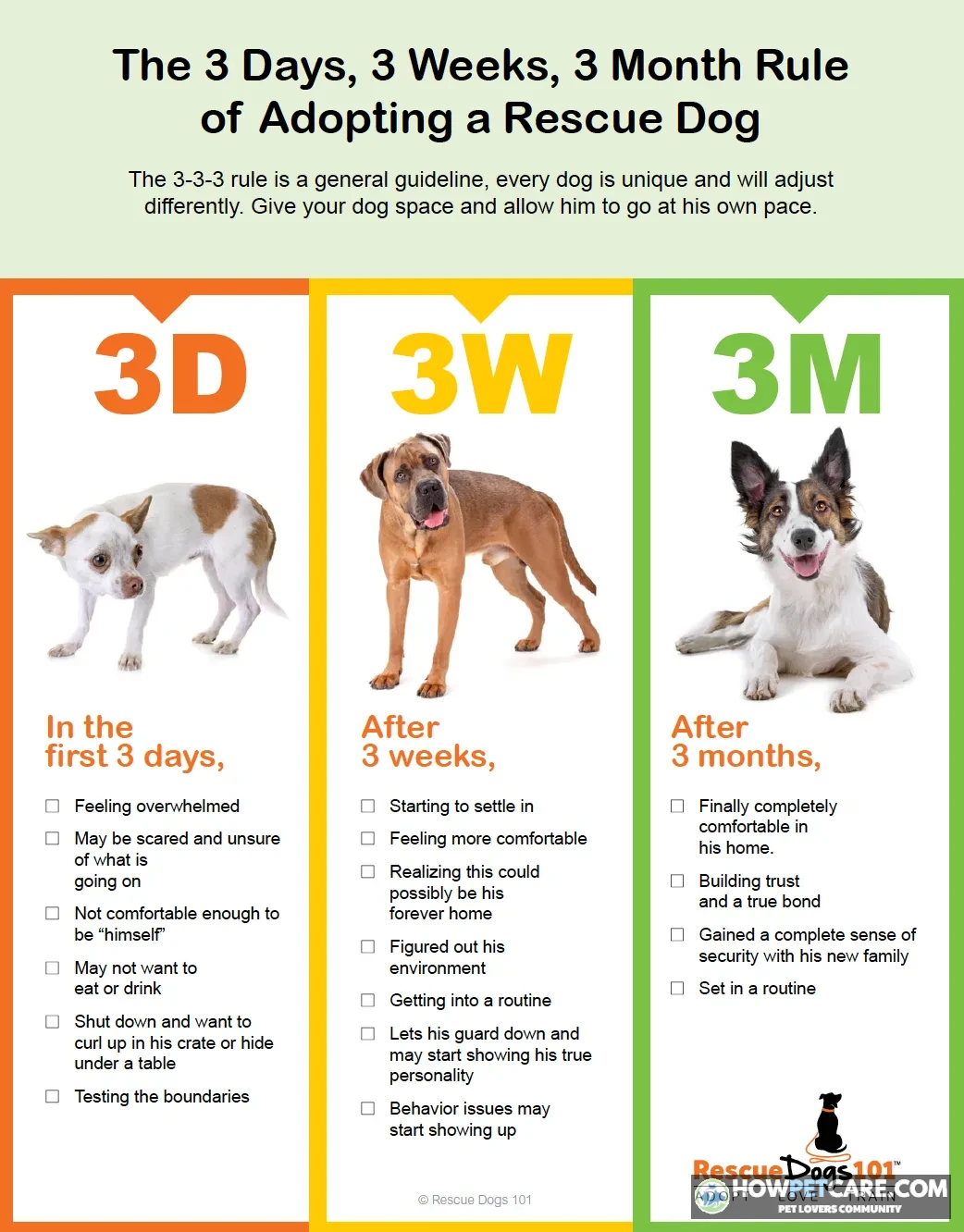
When the transition stalls
If your dog ignores the name, check whether the environment is too busy, the reward is appealing and family members are using the same word. Make the exercise easier and reward small responses. If the household keeps shortening the name, decide whether the shortened version is distinct enough to become the official call name and teach that version consistently.
For fear, aggression, severe non-response or concerns about hearing, consult your veterinarian. A qualified reward-based trainer or veterinary behavior professional can help adapt the plan to the individual dog.
From Shortlist to Final Name: A Decision Checklist
Copy this checklist for each finalist. It is a decision aid, not a scientific test or a required score.
- ☐ I can say the name naturally in two syllables, and everyone agrees on its pronunciation.
- ☐ Its rhythm and opening sound are clear in my normal voice.
- ☐ It does not sound confusingly like the cues my household uses.
- ☐ It is distinct from the names of people and other pets who are regularly nearby.
- ☐ Its likely nickname also passes the collision check.
- ☐ The household is comfortable using one consistent call name.
- ☐ The name suits the dog and feels pleasant to say; its style does not depend on an assumed training benefit.
Choose three to five names from the tables, narrow them with the collision audit, and try the neutral-tone exercise. If two remain tied, pick the one the whole household can pronounce most consistently and distinguish most easily from everyday cues.
During the first week, agree on the call name and nickname, begin short reward-based name sessions, and practice in easy settings before adding distractions. If your dog has a registered name, record the everyday call name separately. For an adult or rescue dog, use the staged transition and adjust its pace to the dog.
FAQ
What two syllable dog names end in ‘y’ or ‘a’?
Names ending in -y or -ie include Bailey, Daisy, Teddy, Penny, and Charlie. Names ending in -a include Luna, Nala, Stella, and Mocha. Check any of them against your household names and common commands before choosing.
Can I use a nickname or shortened version of my dog’s name?
Yes, but choose one consistent call name for training and recall. Switching between a full name and several nicknames makes it harder for the dog to know which sound is its cue.
How long does it take a puppy to learn its name?
Many puppies start responding within days of consistent short sessions with rewards, and others take a few weeks. The time varies by dog, so judge progress by reliable responses in different rooms and with different people.
Should my dog’s registered AKC name match its everyday name?
No. A registered name can be long and formal, and the call name used at home can be a short two-syllable word. Just pick the call name first, then build the registered name around it if you like.
Is a two-syllable name required for training to work?
No. One- and three-syllable names can work well when they sound distinct from commands and from other names in the home. Two syllables are a practical default because they tend to avoid the main problems of the other lengths.