
Bloodhound lifespan at a glance:
- Typical lifespan: 10–12 years (breed-club expectation)
- Shorter survey figure: some references cite 7–10 years
- Senior stage: usually begins around age 6 or 7
- Top life-limiting conditions: bloat (GDV), cancer, and severe joint disease
The bloodhound lifespan typically runs 10 to 12 years, though some surveys report a shorter median.
If you’re researching how long bloodhounds live, most breed guides give an answer of 10–12 years. That figure is useful, but it doesn’t tell the whole story. Bloodhounds are giant dogs—males often weigh 90 to 110 pounds and females 80 to 100 pounds—and they age faster than small breeds. For a dog this size, 10 years is already a substantial milestone.
Many of these risks can be screened for or partly managed. The sections below explain why lifespan estimates differ, which conditions can end a life early, and what you can do at each life stage to support your bloodhound’s health.
A 10-year-old bloodhound is roughly comparable to a person in their mid-60s to 70s. The old “multiply by seven” rule is only a rough guide, and giant breeds tend to age faster later in life. A veterinarian can assess an individual dog’s biological age better than any conversion chart. There is no widely verified public record identifying the oldest bloodhound, so claims of extreme longevity should be treated as anecdotes, not breed norms. For planning, expect roughly 8–10 years and hope for 10–12.
Why Sources Disagree: 10–12 Years vs 7–10 Years
Where the 10–12 year figure comes from
Most breed guides and AKC breed standard-adjacent profiles give a lifespan of 10–12 years. The figure reflects what a healthy, well-cared-for bloodhound can reasonably expect. It isn’t based on a published mortality study, and sources rarely attribute it to one. Put another way, it answers “How long can a healthy bloodhound live?” rather than “How long did the bloodhounds in this data set actually live?”
What breed-specific survey data actually shows
Other references give a shorter span, often around 7–10 years. These figures usually come from owner-reported health surveys or veterinary breed profiles that count real deaths, including dogs lost to bloat or cancer in middle age. Bloodhounds are a relatively rare breed, so survey samples are small. A single dog that dies of GDV at age five can pull the median down more than it would in a populous breed. Healthy 12-year-olds may not appear in the same data set at all.
Recall bias matters, too. Owners may round down or misremember a dog’s age at death by a year or two. The two figures, then, answer different questions.
It also helps to distinguish an average from a median. An average (mean) can be skewed by one exceptionally long-lived dog. A median marks the midpoint: half the dogs died younger, and half lived longer. Breed guides rarely say which figure they’re reporting, which helps explain the apparent contradiction.
The 10–12 year figure answers “How long can a healthy bloodhound live?” This is the breed-club expectation used by the AKC and most general guides. It describes a well-cared-for dog and is not drawn from a mortality study.
The 7–10 year figure answers “How long did the bloodhounds in this survey actually live?” Sources that count real deaths—including dogs lost to bloat or cancer in middle age—produce the shorter number.
The practical reading: plan for roughly 8–10 years, hope for 10–12. The gap between the two numbers is roughly the portion of your bloodhound’s lifespan that screening, weight control, and bloat prevention can influence.
Bloodhound Life Expectancy Compared With Other Large Breeds and Scent Hounds
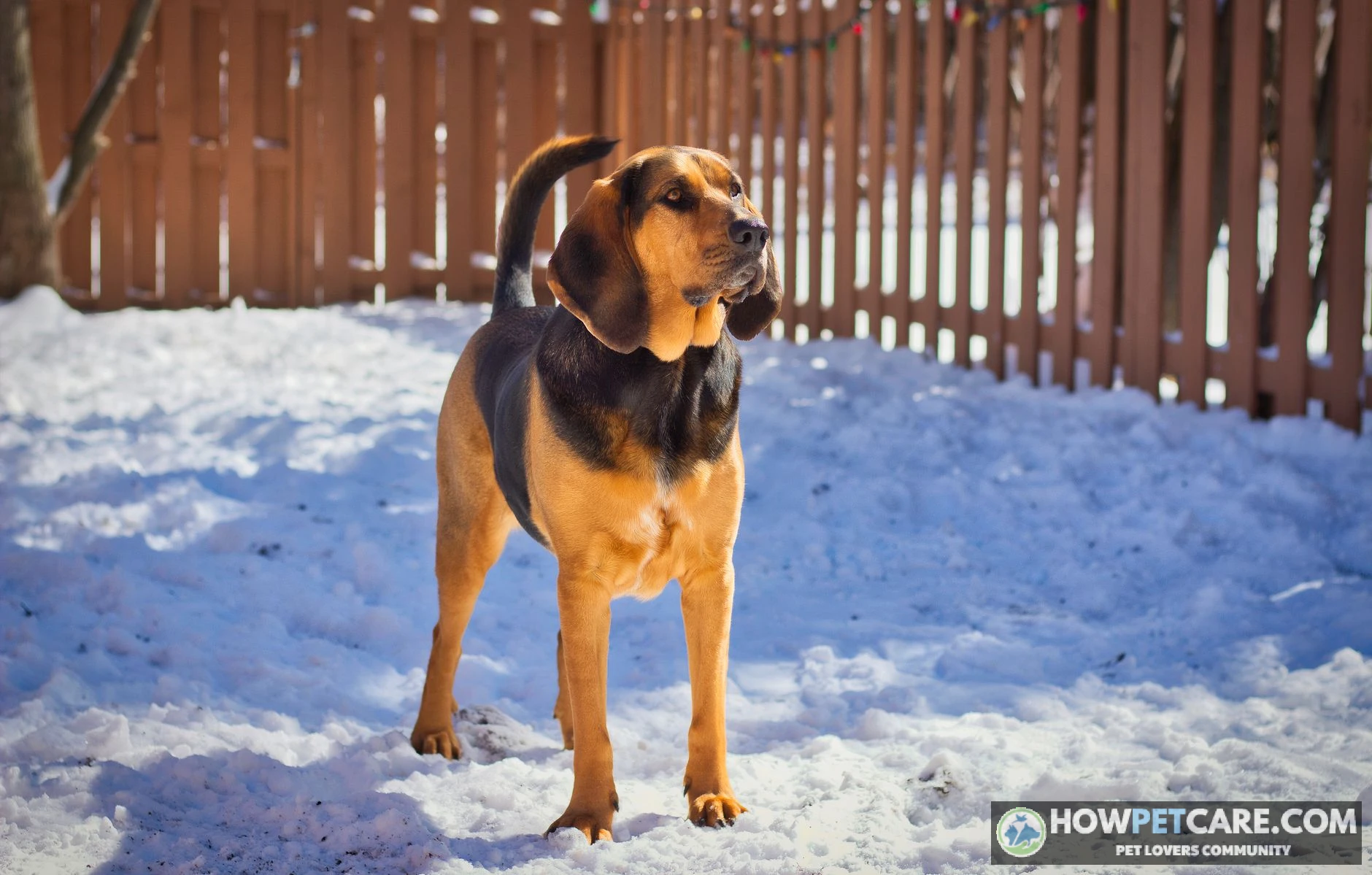
Bloodhounds combine a giant frame with a scent hound’s background, and their lifespan sits between the two groups. Giant breeds cluster at roughly 6–10 years, while smaller scent hounds often reach 12–15. At 10 years, a bloodhound is in line with—or slightly longer-lived than—other giants, even if that seems short beside a beagle.
| Breed | Group / size | Typical lifespan range | Source |
|---|---|---|---|
| Bloodhound | Scent hound, giant (80–110 lb) | 10–12 years (breed guides); 7–10 years (some surveys) | AKC breed profile |
| Basset Hound | Scent hound, medium-large | 12–13 years | AKC breed profile |
| Beagle | Scent hound, small-medium | 10–15 years | AKC breed profile |
| Black and Tan Coonhound | Scent hound, large | 10–12 years | AKC breed profile |
| American Foxhound | Scent hound, large | 11–13 years | AKC breed profile |
| Labrador Retriever | Sporting, large | 11–13 years | AKC breed profile |
| German Shepherd | Herding, large | 7–10 years | AKC breed profile |
| Great Dane | Working, giant | 7–10 years | AKC breed profile |
| Saint Bernard | Working, giant | 8–10 years | AKC breed profile |
| Mastiff | Working, giant | 6–10 years | AKC breed profile |
Note: AKC figures are breed-club guide ranges for healthy dogs, not study medians. Where sources disagree on the bloodhound, both figures are shown.
Veterinary literature consistently finds that bigger dogs tend to have shorter lives. A bloodhound’s giant-breed frame helps explain why its expectancy is closer to a Great Dane’s or Saint Bernard’s than to a beagle’s, even though all three are hounds. Compared with other large breeds, bloodhounds fare about as well as other giants and better than some, but don’t live as long as smaller scent hounds.
 You might be wonderingShiba inu lifespanShiba Inu Lifespan: 13–16 Years and How to Extend ItRead the answer
What Actually Shortens a Bloodhound’s Life: Lethal vs. Chronic Conditions
Not every common bloodhound health problem shortens life. Some conditions can kill a dog; others mainly cause discomfort, veterinary bills, or a lower quality of life.
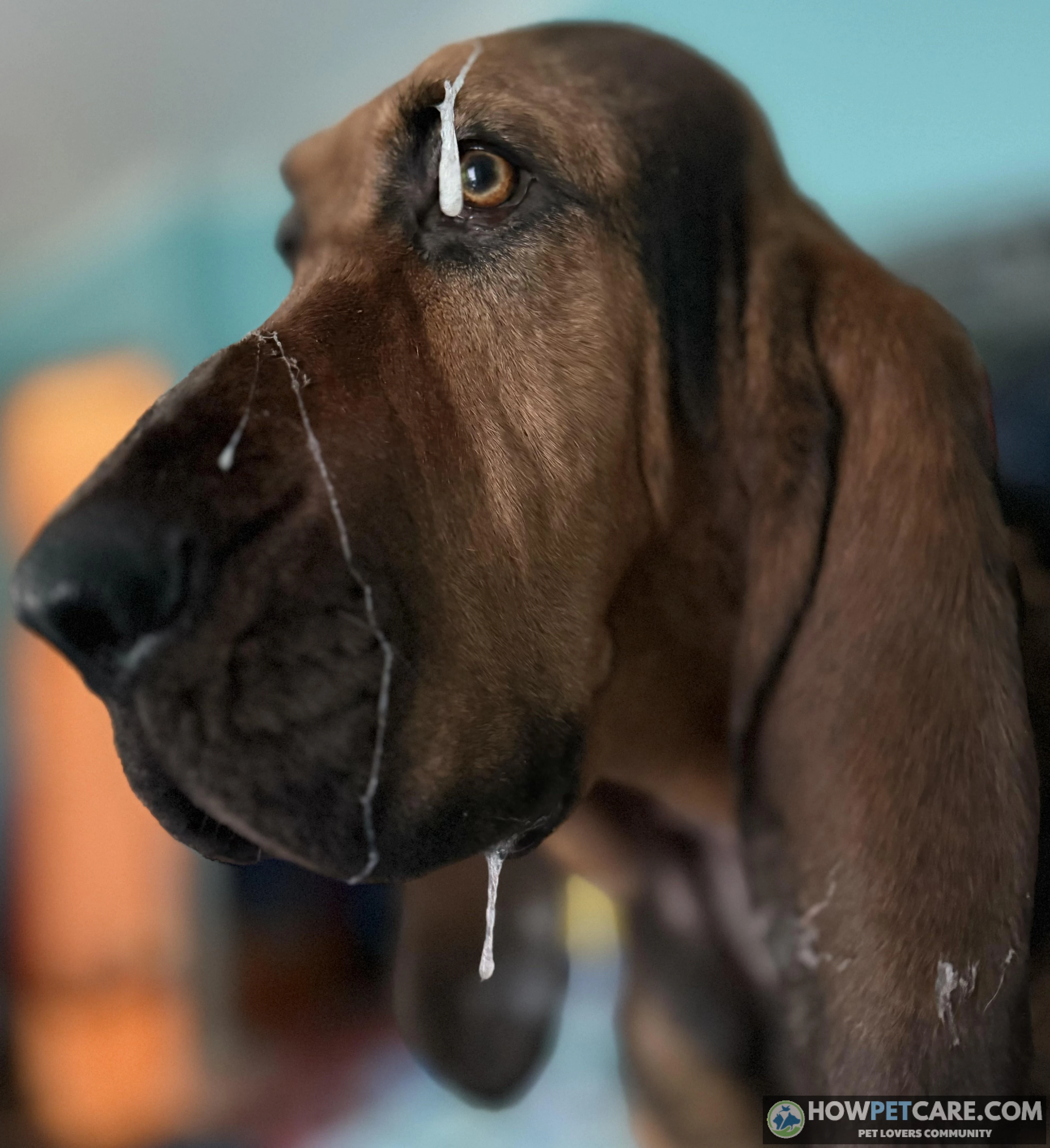
Bloat (GDV) is identified as the leading cause of death in bloodhounds. Published bloodhound mortality data is limited, so no exact percentage can be cited, but breed health references consistently rank GDV first among reported causes of death. The stomach fills with gas and may twist, cutting off blood flow. Without treatment, GDV can become fatal within hours. Cancer and serious heart disease are also life-ending concerns in middle-aged and older giant breeds. Hip and elbow dysplasia rarely kill directly, but severe mobility loss can lead to euthanasia decisions. Ear infections, skin-fold irritation, and eyelid problems such as entropion and ectropion are common and uncomfortable, but rarely fatal.
| Condition | Threat to life | Typical onset | Screenable or preventable? | What owners can do |
|---|---|---|---|---|
| Bloat (GDV) | High — fatal within hours if untreated | Any adult age; risk rises with age | Partly — gastropexy stops the twist; feeding habits may lower gas risk | Learn the signs, save a 24-hour vet number, ask about prophylactic gastropexy |
| Cancer | High — among the top reported causes of death in large/giant breeds | Middle and older age | Partly — early detection improves options | Monthly lump checks; vet-check every new lump; six-month senior exams |
| Heart disease | Moderate–high — can be fatal if unmanaged | Middle age onward | Screenable — auscultation catches murmurs early | Heart listen at every exam; report coughing or lost stamina |
| Hip & elbow dysplasia | Low direct threat — mobility loss can force end-of-life decisions | Signs can appear young; worsens with age | Screenable — OFA evaluation certifies at 24 months | Keep the dog lean; ask breeders for OFA scores; treat pain early |
| Hypothyroidism | Low — chronic and treatable | Adult years | Screenable — blood test | Test if the dog gains weight, loses coat quality, or slows down |
| Ear infections & skin-fold dermatitis | Low — comfort and vet-bill issue, rarely fatal | Any age | Largely preventable | Weekly ear and skin-fold checks and cleaning |
| Eyelid problems (ectropion, entropion) | Low — discomfort and eye damage if ignored | Often appears young | Treatable — sometimes surgical | Vet exam if eyes run, squint, or stay red |
This ranking reflects threat to life, not frequency. The most common bloodhound problems—ears and skin folds—are among the least deadly. Bloat, which owners may not expect, can end a life in a single evening.
In giant breeds generally, cancers such as osteosarcoma, lymphoma, and hemangiosarcoma appear in middle and older age. Bloodhound-specific cancer rates aren’t well published. If an older dog develops a lump or sudden lameness, arrange a prompt veterinary visit rather than assuming a particular diagnosis.
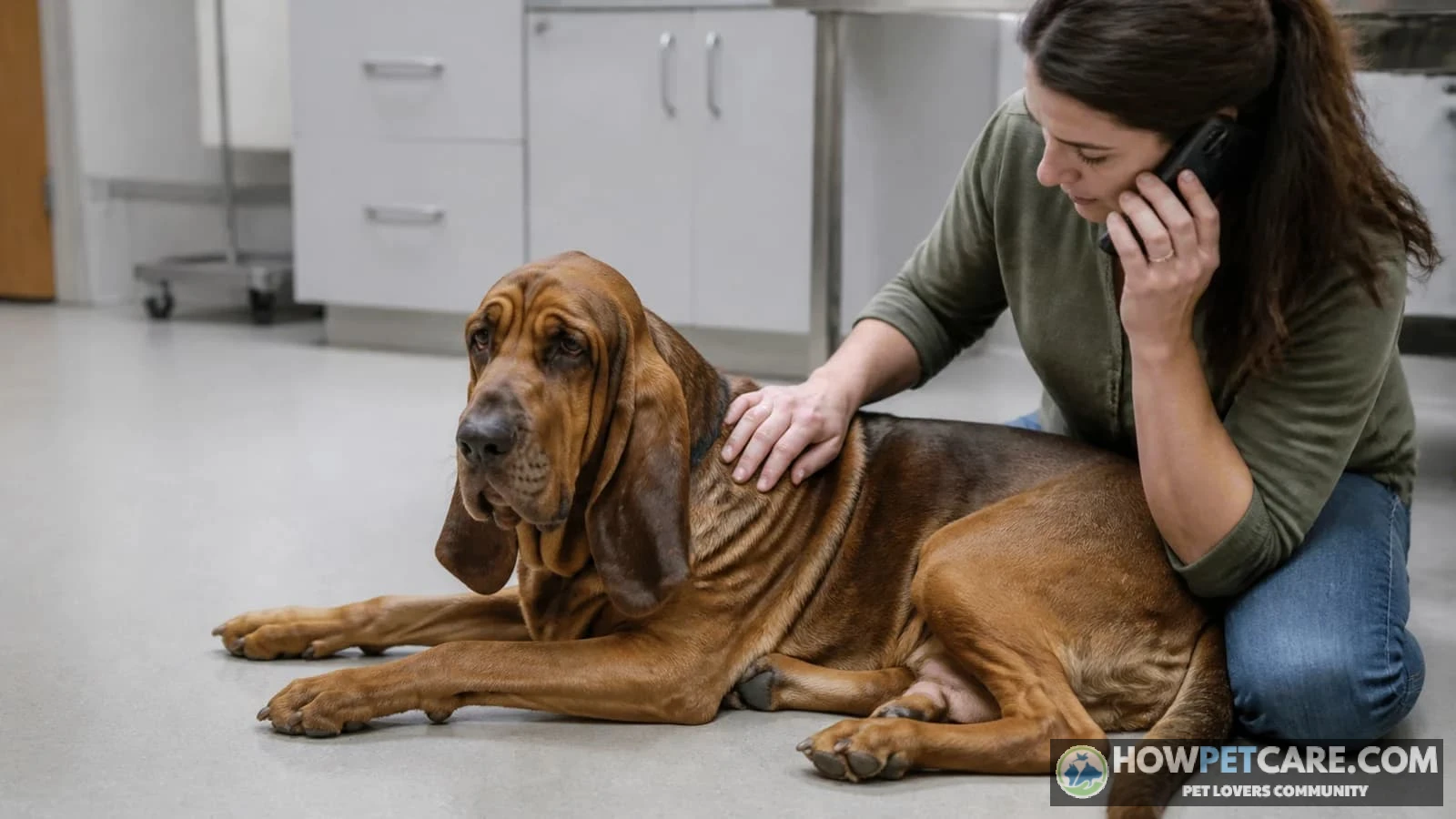
If your bloodhound shows unproductive retching, a tight or swollen abdomen, restlessness, heavy drooling, or pale gums, treat it as bloat and go to a veterinarian immediately. GDV can kill within hours. Do not wait to see if it passes.
Bloat (GDV) in Bloodhounds: Warning Signs, Prevention, and Gastropexy
Signs of bloat to recognize immediately
These signs often appear in roughly this order:
- Unproductive retching—the dog tries to vomit, but nothing comes up.
- A swollen or tightly drum-like abdomen.
- Restlessness and pacing; the dog can’t get comfortable.
- Heavy drooling and panting.
- Pale or white gums, rapid breathing, and eventually collapse.
Treat any two of these signs together as possible GDV. Call the nearest 24-hour veterinary clinic and say, “Possible GDV in a bloodhound—we are on our way.” Calling ahead gives the team time to prepare for emergency surgery.
Feeding and exercise habits that lower the risk
Bloodhounds are deep-chested, and a few habits may reduce gas buildup and torsion risk:
- Feed two or three smaller meals daily instead of one large meal.
- Avoid vigorous exercise, rolling, or rough play for about an hour before and after eating.
- Keep the eating area calm; stress and gulping air can contribute to bloat.
- Use a floor-level bowl unless your veterinarian specifically recommends a raised one—the evidence on raised bowls is mixed.
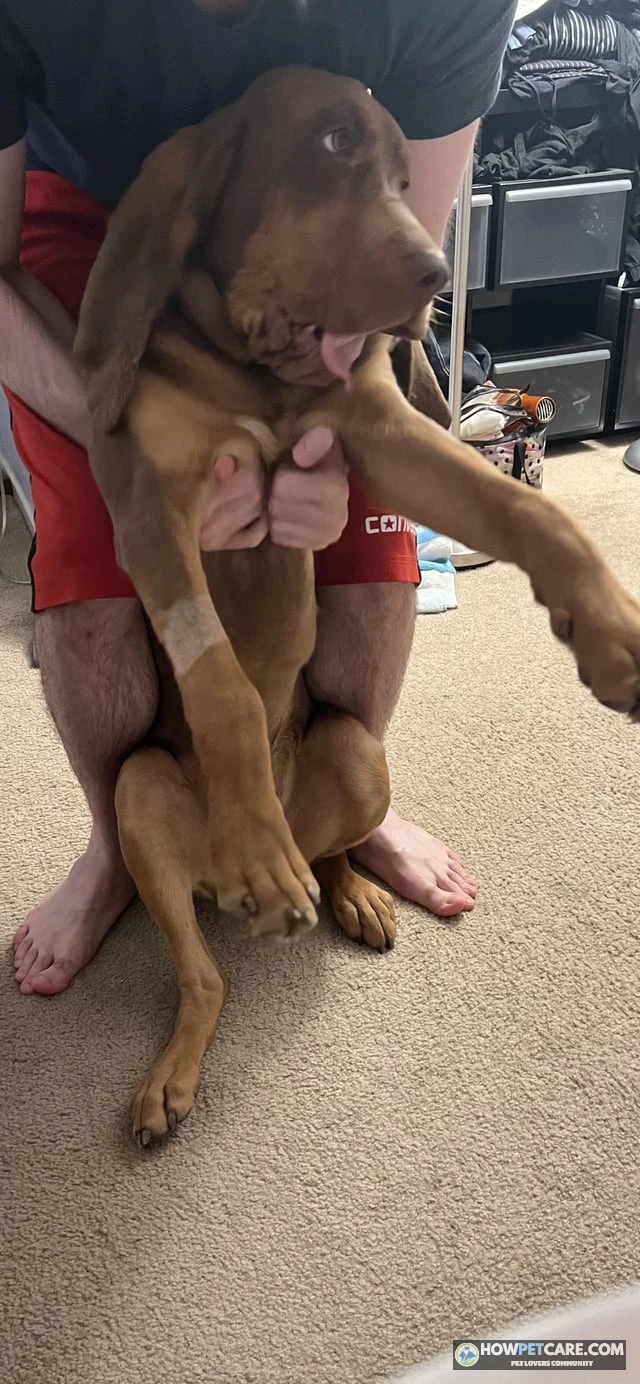
No feeding routine guarantees prevention, but these steps can lower the odds.
Is prophylactic gastropexy worth it for a bloodhound?
Prophylactic gastropexy tacks the stomach to the abdominal wall to prevent it from twisting. The procedure is often performed at the same time as a spay or neuter. It prevents the life-threatening twist but doesn’t necessarily stop gas distension, so feeding habits still matter. Ask your veterinarian if your dog is a candidate, what the procedure costs, and whether it can be combined with a planned spay or neuter.
-
Minute 0–2: Confirm the pattern
Unproductive retching, a tight or swelling abdomen, restless pacing, heavy drooling. Any two together = treat it as bloat.
-
Minute 2–4: Call ahead
Phone the nearest 24-hour vet and say: “Possible GDV in a bloodhound—we are on our way.” Do not drive to a clinic that might be closed.
-
While you wait: Do less, not more
No food, no water, no medications, no home remedies. Keep the dog calm and still; activity worsens a twisting stomach.
-
Transport carefully
Walk the dog calmly to the car. No jumping in, no stairs. If it will lie down, settle it on its side on a flat surface.
-
At the clinic: Say four things
When signs started, when the dog last ate, whether it has had a gastropexy, and any known heart history.
Before an emergency happens, save the nearest 24-hour emergency vet’s number and address in your phone. Do it tonight, not later.
Male vs. Female, Neutering, Bloodhound Mixes, and Breeder Health Testing
Do male or female bloodhounds live longer?
Bloodhound-specific data doesn’t clearly show that one sex outlives the other. Individual health, body weight, and access to preventive care matter more than sex. If you’re choosing between a male and female, base the decision on temperament and fit, not an assumed lifespan advantage.
Do bloodhound mixes outlive purebreds?
The “hybrid vigor” idea suggests mixed-breed dogs may avoid some concentrated genetic risks, but it isn’t a guarantee. A bloodhound mix—such as a lab-bloodhound cross—can inherit health risks from both parents, and adult size matters more than the label “mix.” A large, deep-chested mix can still face bloat and joint risks. No reliable bloodhound-specific data proves that mixes live longer than purebreds.
What breeder health testing can and cannot tell you
Responsible breeders should show OFA heart, hip, elbow, and degenerative myelopathy (DM) test results for both sire and dam. You can verify them through OFA. Ask to see the results before committing to a puppy. It’s also worth asking about the ages and causes of death in the parents’ and grandparents’ lines. Long-lived relatives are a useful signal, not a guarantee. Health testing screens for known conditions; it can’t predict every future illness or promise a 12-year life.

When talking to breeders, ask: “How old did the parents and grandparents live to be, and what did they die of?” The answers can reveal more about longevity than any single health test.
A Life-Stage Plan to Help Your Bloodhound Live Longer
Bloodhounds move through distinct life stages, and care priorities change along the way. As a giant breed, they reach adulthood and senior status earlier than small breeds.
| Life stage | Weight and feeding focus | Vet visits and screening | Exercise guidance | Main risk to watch |
|---|---|---|---|---|
| Puppy (0–18 months) | Large-breed puppy formula; slow, steady growth | Vaccination and parasite schedule; breeder OFA paperwork | No forced running, stair drills, or jumping while growth plates are open | Rapid weight gain and joint injury |
| Adult (about 2–6 years) | Measured meals, 2–3 daily; ribs easy to feel, waist visible | Annual exam with heart auscultation; baseline bloodwork | Regular walks; avoid strenuous activity around meals | Bloat (GDV); excess weight |
| Pre-senior/Senior (about 6–7 onward) | Senior or adjusted diet on vet advice; monitor weight changes | Exams every six months; bloodwork; lump checks | Shorter, more frequent walks; ramps and non-slip floors | Cancer; heart disease; mobility loss |
Puppy to 18 months: grow slowly
Choose a large-breed puppy formula designed for controlled growth. Rapid weight gain puts stress on developing joints and can contribute to hip and elbow dysplasia later. Avoid forced running, long stair sessions, and jumping until the growth plates close, usually around 18 months. Start weekly ear and skin-fold cleaning early; bloodhounds’ long ears and wrinkled skin need regular attention.
If you plan to spay or neuter, ask your veterinarian about combining the procedure with a prophylactic gastropexy.
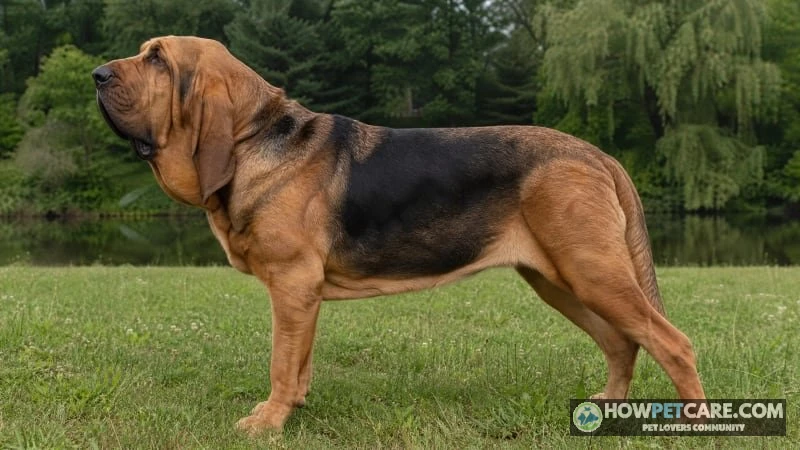
Adult years: keep the dog lean and screen on schedule
Body condition is one of the best-supported factors owners can influence. Keep your bloodhound lean enough that you can feel the ribs easily and see a waist from above. Feed two or three measured meals daily, and avoid vigorous exercise for roughly an hour before and after eating.
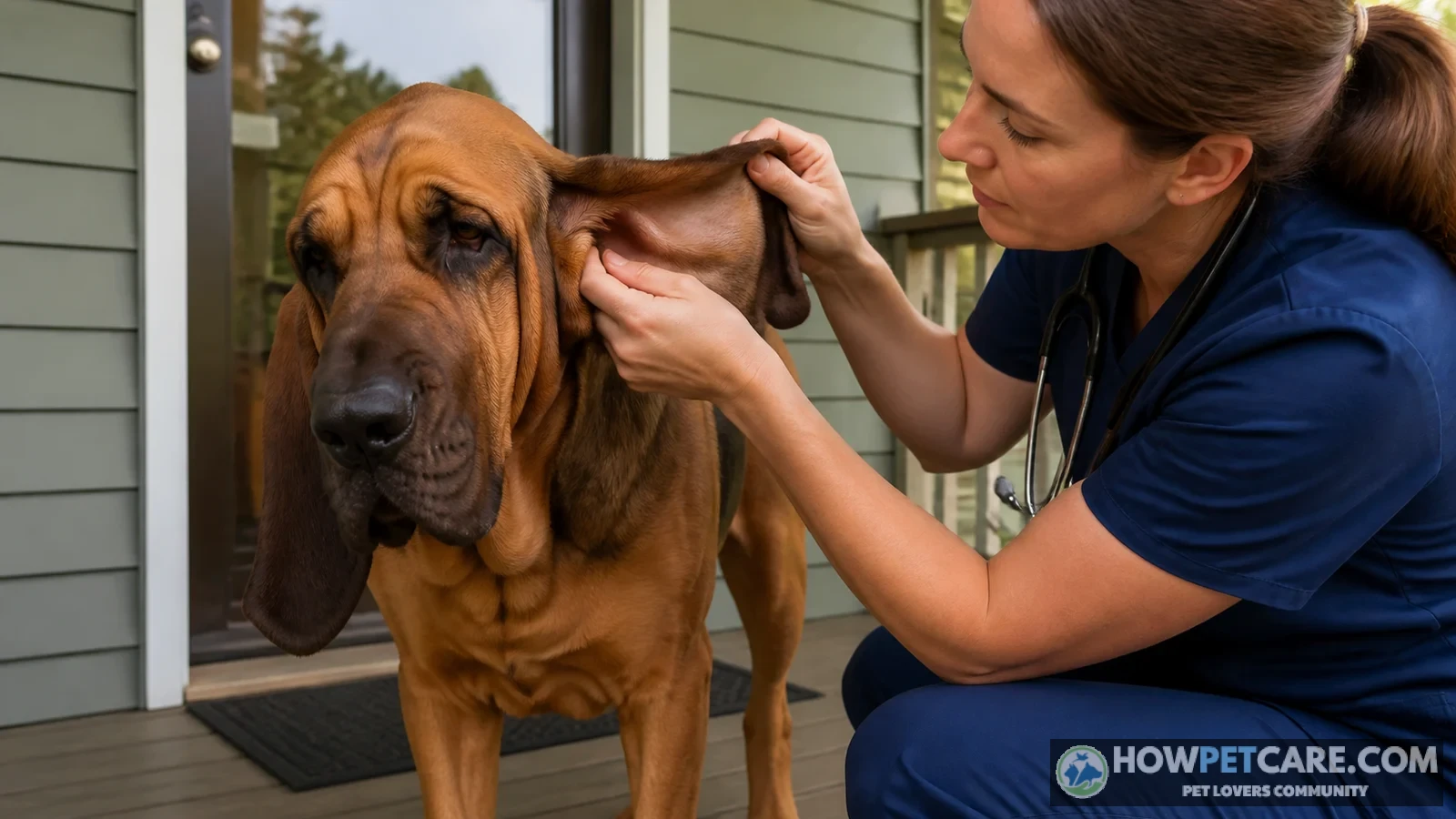
Schedule an annual veterinary exam that includes heart auscultation. Ask about baseline bloodwork so future results have a point of comparison. At 24 months, pursue OFA hip and elbow certification; hips and elbows can’t be certified earlier. Check your dog from head to tail for lumps once a month, and continue weekly ear and skin-fold checks.
Senior years: shift to six-month checkups
When a bloodhound reaches about age 6 or 7—earlier than small dogs because giant breeds age faster—switch to veterinary exams every six months. Include bloodwork and a thyroid panel if your vet recommends one. Ask for a heart check at every visit, and report coughing, fainting, or lost stamina promptly. Have a veterinarian examine every new lump on a senior giant breed; don’t watch it for months.
Discuss joint supplements and pain-management options with your veterinarian. Orthopedic bedding, ramps, and non-slip flooring can make home life safer and more comfortable.
Supplements and insurance: what is worth considering
Glucosamine and chondroitin are common joint supplements for giant breeds, but evidence varies. Ask your veterinarian before starting a supplement. Pet insurance is worth serious consideration for a bloodhound: emergency bloat surgery and cancer treatment can cost thousands of dollars. Insurers usually exclude pre-existing conditions, so enrolling while your dog is young and healthy gives you the best chance of coverage.
Enroll in pet insurance while your bloodhound is young and healthy. Once a condition is diagnosed, it is typically treated as pre-existing and excluded from future coverage.
Senior Bloodhound Care: Aging Signs and End-of-Life Decisions
Signs your bloodhound is entering the senior years
Look for early signs of aging:
- Slower rising after rest, especially on slippery floors
- Reluctance to climb stairs or jump into cars
- Lower stamina on scent-driven walks
- Weight gain or loss without diet changes
- Cloudy eyes or new lumps
- More indoor accidents or changes in sleep patterns
Adjusting the home and routine
A few home adjustments can help an older bloodhound stay mobile and confident. Use an orthopedic bed, place ramps near cars and furniture, and add non-slip mats on tile or hardwood. Shorten walks and take them more often. Clean ears and skin folds weekly, and check for new lumps during grooming.

Judging quality of life and knowing when it is time
A quality-of-life scale—or a calendar tracking good days and bad days—can make end-of-life decisions less overwhelming. Ask your veterinarian about pain scores, appetite, mobility, and interest in favorite activities. Palliative care and hospice veterinarians can help manage comfort in the final stage. If a dog can’t stand, remains in pain, or struggles to breathe, euthanasia may be the kindest option. Your veterinarian can explain what to expect.
Mark each day on a calendar as good, okay, or bad. If bad days begin to outnumber good ones, schedule a quality-of-life conversation with your vet.
Your Bloodhound Longevity Checklist: What to Do This Month
Use this checklist to put the advice into practice.
For current owners
- ☐ Weigh your bloodhound and score body condition; ribs should be easy to feel with a visible waist.
- ☐ Review the feeding schedule against bloat guidance: two or three measured meals, no vigorous exercise around meals.
- ☐ Ask your veterinarian whether prophylactic gastropexy is appropriate for your dog.
- ☐ Book the right exam interval for your dog’s age—annual for adults, every six months for seniors.
- ☐ Check ears and skin folds weekly; start a monthly head-to-tail lump check.
For prospective owners
- ☐ Ask breeders for OFA hip, elbow, heart, and DM results on both parents.
- ☐ Ask about the ages and causes of death in the puppy’s lines.
- ☐ Research pet insurance options before bringing the puppy home.
For owners of older dogs
- ☐ Set up a lump-check routine and mark good/bad days on a calendar.
- ☐ Add ramps, non-slip flooring, and orthopedic bedding.
- ☐ Save the nearest 24-hour emergency vet’s number in your phone.
Plan for the shorter end of the range and work toward the longer end. Screening, weight control, and emergency preparedness are practical ways to support the healthy years you share with your bloodhound.
Medically reviewed by a licensed veterinarian (DVM) for accuracy.
 You might be wonderingPlott hound lifespanPlott Hound Lifespan: 12–14 Years and How to Reach the High EndRead the answer
FAQ
How long do bloodhounds live in human years?
The old rule of multiplying by seven is only a rough guide. A bloodhound of 10 years is generally comparable to a person in their mid-60s to 70s, and giant breeds tend to age faster in later life. A vet can judge a particular dog’s biological age better than any conversion chart.
Is a bloodhound still a good family dog given its lifespan?
Yes. A bloodhound’s lifespan is similar to that of other giant breeds, and many reach 10 years or more with good care. Families should plan for the likely years, the cost of veterinary care, and the senior stage, and can reduce risks with screening and weight control.
Does pet insurance make sense for a bloodhound?
It often does, because emergency bloat surgery and cancer treatment can cost thousands of dollars. Insurers usually exclude pre-existing conditions, so enrolling while the dog is young and healthy gives the best coverage.
How often should a senior bloodhound see the vet?
Most vets recommend an exam every six months once a bloodhound reaches its senior years, with bloodwork and a full lump check. More frequent checks catch cancer, heart changes, and joint disease sooner.
Can ear infections and skin fold problems shorten a bloodhound’s life?
They rarely do directly, but they cause pain and can become serious if untreated. Weekly cleaning and prompt vet visits keep them manageable.