

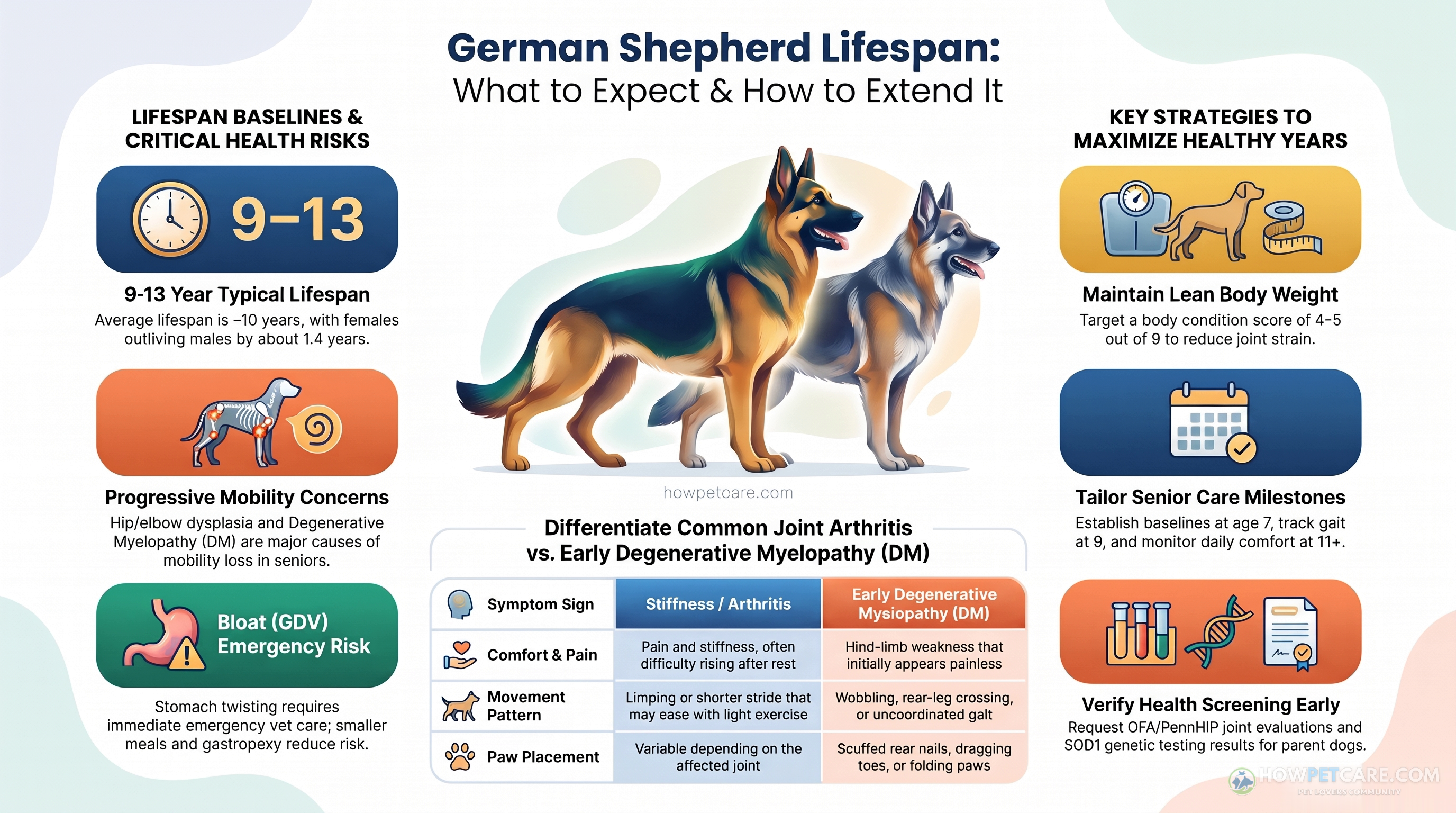
German Shepherds typically live 9–13 years, with an average around 10 years. Females tend to outlive males by about 1.4 years. Genetics, body weight, diet, exercise, and access to veterinary care all influence how long an individual dog lives.
German Shepherds typically live 9–13 years, and their average lifespan is often cited as about 10 years. How long an individual dog lives depends on factors such as inherited disease, body condition, accidents and access to veterinary care. Reaching 11 falls within the typical range, so it isn’t considered a short life for the breed.
How Long German Shepherds Live: The Average and the Full Realistic Range
The 9–13-year range is a guide, not a deadline or a promise. Some German Shepherds die younger because of illness or injury; others live beyond that range. A population average can’t predict an individual dog’s lifespan.
You may also encounter estimates of 9–11 years or 12–15 years. They may describe different things: one source might give a typical range, while another discusses an estimated maximum. Research figures also vary with the dogs included, the records available and the method used to summarize age at death.
A median is the middle age in a group: half the recorded dogs died younger, and half died older. A mean is different; it adds the ages together and divides by the number of dogs. Neither measure tells us a maximum lifespan.
Older Swedish insurance research has been cited as finding that around half of insured German Shepherds died by age 10. That result describes an older insured population, not a forecast for every American dog today. Without recent figures from a directly comparable population, it can’t show whether survival has improved.
Is 11 a good age for a German Shepherd?
Yes. Eleven is within the commonly cited 9–13-year range, so a German Shepherd who dies at 11 hasn’t necessarily died prematurely. Circumstances matter, too. A long life with well-managed disease and a shorter life affected by serious illness aren’t judgments on an owner’s care.
Maximum lifespan and the oldest recorded German Shepherd
Some German Shepherds live past 13, and pet-care guidance sometimes gives an estimated maximum range of 12–15 years. Reaching 15 would be unusually old for the breed, not a benchmark every owner should expect.
Claims about the oldest-ever German Shepherd are hard to verify without reliable birth and death records. Treat unsupported record-holder stories cautiously; they shouldn’t set expectations for your dog.
German Shepherd Age in Human Years, and When Your Dog Becomes a Senior
German Shepherds are commonly considered seniors at around 7–8 years, though health and physical condition matter more than age alone. Around 7, establish a senior-care baseline. By 9, pay closer attention to mobility. At 11 and beyond, talk with your veterinarian regularly about comfort and quality of life.
There’s no precise way to convert a dog’s age into human years. Dogs mature quickly early in life, and a simple seven-to-one calculation misses differences between breeds and life stages. This chart is an illustrative large-dog approximation, not a medical measure or a prediction of remaining life.
| Dog age | Approximate human-equivalent age | Life stage | Care focus |
|---|---|---|---|
| 1 | About 15 | Adolescent | Support controlled growth |
| 2 | About 24 | Young adult | Establish a lean body condition |
| 3 | About 28 | Adult | Maintain preventive care |
| 4 | About 32 | Adult | Monitor weight and teeth |
| 5 | About 36 | Adult | Watch for changes in activity |
| 6 | About 40 | Mature adult | Discuss a senior-care baseline |
| 7 | About 45 | Early senior | Review joints, teeth and diet |
| 8 | About 50 | Senior | Track mobility and weight |
| 9 | About 55 | Senior | Assess pain and home footing |
| 10 | About 60 | Senior | Report new lumps or weakness |
| 11 | About 66 | Older senior | Review daily comfort |
| 12 | About 71 | Older senior | Adapt care to health needs |
| 13 | About 76 | Older senior | Reassess comfort and mobility |
What Shortens a German Shepherd’s Life: Leading Conditions and Causes of Death
Some conditions shorten life directly, as a life-threatening emergency can. Others make movement and daily activities increasingly difficult. German Shepherds are associated with orthopedic disease, degenerative myelopathy and bloat; some cancers can also be serious causes of death.
Veterinary-record studies have identified musculoskeletal problems and inability to stand among important reasons for death or euthanasia in the breed. These categories may describe the final problem recorded rather than a single confirmed underlying disease. The evidence supplied here doesn’t include a reliable percentage breakdown, so ranking causes with invented figures would be misleading.
Hip and elbow dysplasia
Hip and elbow dysplasia are developmental joint conditions that can lead to pain, arthritis and reduced mobility. For a large dog, difficulty getting up or walking can eventually have a major effect on quality of life. Keeping a German Shepherd at a healthy weight can reduce stress on the hips.
Watch for reluctance to climb stairs, difficulty rising, limping or a change in activity. Ask a veterinarian to assess these signs rather than assuming your dog is simply getting old.
Degenerative myelopathy
Degenerative myelopathy, or DM, is a progressive spinal cord disease that can cause hind-leg weakness and eventually paralysis. It often appears in older dogs, including around age 8. Early signs can resemble other problems. Contact your vet if your dog drags its rear paws, scuffs its nails, wobbles or struggles to stand. The comparison later in this guide can help you describe what you’re seeing, but it can’t diagnose the cause.
Bloat (GDV)
Gastric dilatation-volvulus, or GDV, occurs when the stomach fills and twists. It’s a life-threatening emergency associated with deep-chested dogs, including German Shepherds.
Warning signs include repeated attempts to vomit with little or nothing coming up, a swollen or tight abdomen, restlessness, excessive drooling, weakness or collapse. A dog may not show every sign.
If you suspect GDV, go to an emergency veterinarian immediately. Call ahead while someone else drives if possible; do not wait for a routine appointment or try to treat it at home.
Talk with your vet about ways to reduce your dog’s individual risk. Options may include splitting food into smaller meals and, for some high-risk dogs, a preventive procedure called gastropexy. A slow feeder may help a dog eat more slowly, but no feeding device guarantees prevention. Gastropexy reduces the risk of stomach twisting; it doesn’t prevent every episode of bloating.
Cancer and osteosarcoma
Cancer becomes a more important concern as dogs age. Osteosarcoma is an aggressive bone cancer that may cause persistent lameness or swelling. Hemangiosarcoma can affect the spleen and may lead to sudden weakness or collapse if internal bleeding occurs. These signs can have other causes, but they warrant prompt veterinary attention. Collapse is an emergency.
Tell your vet about a new lump, unexplained weight loss, persistent limp or change in appetite. Your veterinarian can advise whether an examination, imaging or other testing is appropriate.
Exocrine pancreatic insufficiency
Exocrine pancreatic insufficiency, or EPI, means the pancreas doesn’t supply enough digestive enzymes. Affected dogs may lose weight despite a good appetite and produce large or abnormal stools. EPI is a recognized condition in German Shepherds. A veterinarian can test for it; treatment typically involves digestive enzyme replacement and nutritional management. Persistent weight loss shouldn’t be managed with supplements alone.
Do Female German Shepherds Live Longer Than Males?
Royal Veterinary College VetCompass research found that female German Shepherds lived about 1.4 years longer than males on average in the population studied. That’s a group difference, not a prediction that a particular female will outlive a male.
The finding doesn’t explain why the gap appeared. Size, disease patterns, neuter status and other characteristics could affect a comparison, but the reported sex difference doesn’t prove that any one factor caused it. Neutered and intact dogs may also differ in ways beyond surgery itself.
For a prospective owner weighing German Shepherd traits and household fit, sex is one consideration, not a substitute for reviewing family health and test results. Current owners can focus on decisions still within reach: monitor weight, investigate changes early and agree on preventive care with a vet. The evidence here isn’t enough to compare the effect of those steps with the observed sex difference.

Working Line vs Show Line, Purebred vs Mix: Does Breeding Change Lifespan?
Working vs show line health tradeoffs
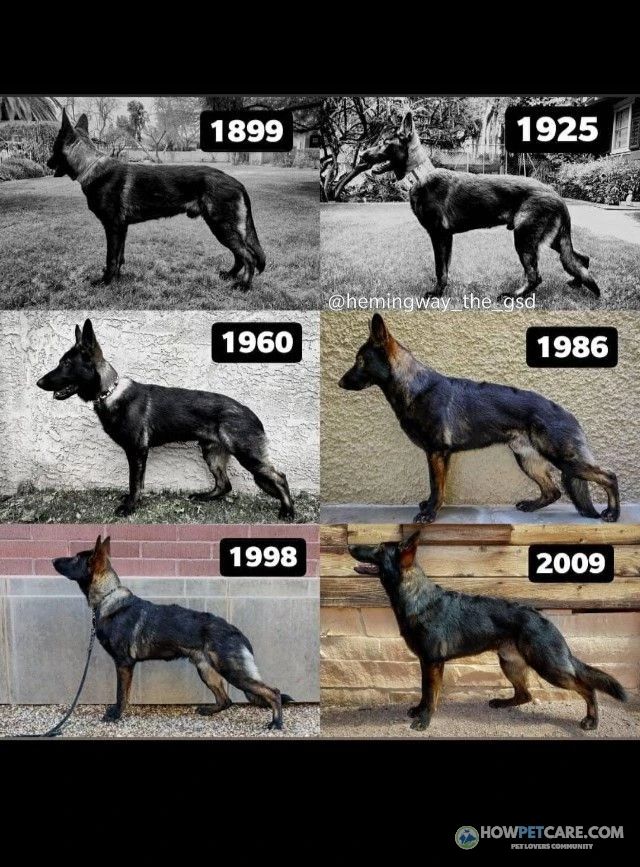
Working lines, West German show lines and American show lines refer to different breeding traditions, not reliable expiration dates. Comparable lifespan data for these groups is limited, so there’s no sound basis for saying one line lives a specific number of years longer.
Structure and movement still deserve attention. Concerns about exaggerated conformation, including a pronounced slope through the back and rear, are worth discussing with a vet. Appearance alone, however, can’t diagnose hip dysplasia or predict a dog’s lifespan. Dogs within any line can differ considerably.
Ask for documented health results for both parents, including hip and elbow evaluations. Depending on the dog and testing scheme, hip screening may include OFA evaluation or PennHIP assessment. Ask how close relatives moved as they aged, which conditions they developed and how long they lived. Family history offers useful context, not a guarantee.
A DM genetic test can identify a dog’s SOD1 risk status. It’s one screening tool, not a promise that a dog will or won’t develop neurological disease. A veterinarian or qualified genetics adviser can help interpret the results.
German Shepherd mixes and hybrid vigor
A German Shepherd mix may inherit traits and health risks from either side of its family. Mixing breeds doesn’t automatically remove inherited disease, especially when both parent populations can carry the same risk. Adult size, individual genetics, environment and medical care all matter.
There’s no single defensible lifespan range for every German Shepherd mix. A Shepherd crossed with another large breed isn’t directly comparable to every smaller mix. Ask about the individual dog’s health and, when available, the parents’ screening results rather than assuming that “mix” means a longer life.

German Shepherd Lifespan Compared With Labradors, Golden Retrievers, and Rottweilers
Breed comparisons are most useful when they come from the same study and use the same measure. This table highlights health concerns to discuss with a vet, but doesn’t provide precise breed-by-breed medians: the evidence supplied for this draft doesn’t support a consistent set of comparison figures.
| Breed | Typical lifespan range | Median or average with source | Health concerns to discuss with a vet |
|---|---|---|---|
| German Shepherd | 9–13 years | About 10 years in the cited pet-care estimate | Joint disease, DM and GDV |
| Labrador Retriever | Not established by the supplied evidence | Comparable figure not verified | Weight management and joint health |
| Golden Retriever | Not established by the supplied evidence | Comparable figure not verified | Cancer and joint health |
| Rottweiler | Not established by the supplied evidence | Comparable figure not verified | Cancer and joint health |

Large breeds often face different aging and mobility challenges from smaller dogs, but this table can’t show exactly where the German Shepherd lifespan ranks among other large breeds. Published ranges are useful starting points, not interchangeable study results.
How to Help a German Shepherd Live Longer: Weight, Diet, Exercise, Supplements, and Spay/Neuter Timing
No approach can guarantee a particular number of extra years. Focus on reducing avoidable risks, catching disease earlier and keeping your dog comfortable and mobile.
Weight and body condition
Aim for a body condition score of roughly 4–5 out of 9, unless your veterinarian recommends otherwise. At a healthy condition, you should generally feel the ribs beneath a light covering of fat, see a waist from above and notice an abdominal tuck from the side. A thick coat can disguise your dog’s shape, so use your hands as well as your eyes.
Maintaining a healthy weight is especially helpful for a breed vulnerable to hip problems: excess weight puts additional load on the joints. Weigh your dog regularly, measure meals and count treats as part of the day’s food allowance. If the waist disappears or the ribs become hard to feel, ask your vet to help adjust the plan.
For puppies, choose a complete food formulated for large-breed growth and follow your veterinarian’s guidance on portions. Don’t try to speed a puppy’s growth with extra food or unprescribed calcium. In adult dogs, calorie needs depend on body weight, activity, neuter status and health. Use the food label as a starting point, then adjust portions to your dog’s body condition.
As an illustration, a veterinarian may start with resting energy requirements, calculated as 70 × body weight in kilograms raised to the 0.75 power, then make an individual adjustment. For a 30 kg dog, that’s roughly 900 calories per day at rest—not a complete feeding prescription. Maintenance needs may be higher or lower, so confirm a daily target with your vet and track weight over time.
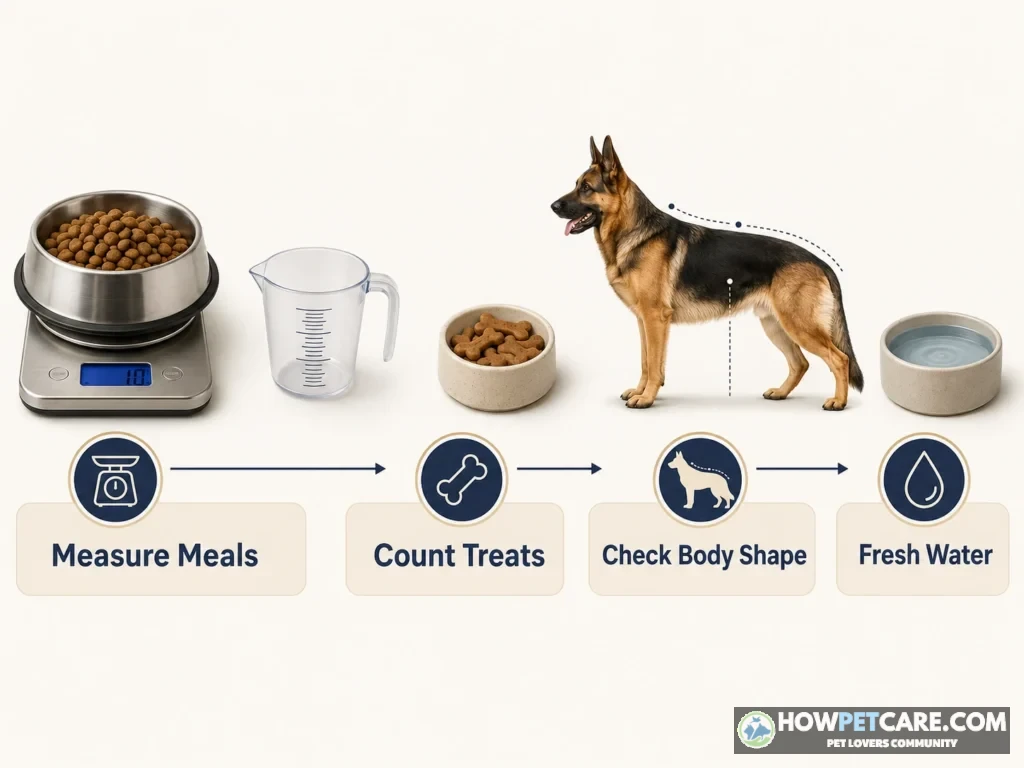
Exercise that protects mobility
Regular exercise helps maintain fitness and muscle, but the right amount depends on age, conditioning and disease. Choose activities your dog can recover from comfortably, such as walks, controlled play and, when appropriate, swimming or rehabilitation exercises.
Don’t push a growing puppy through repeated high-impact or forced exercise; excessive exertion may contribute to injury. For an older dog, several manageable outings may be easier than one exhausting session. If your dog starts limping, falls behind or feels stiff after activity, adjust the plan and contact your vet.
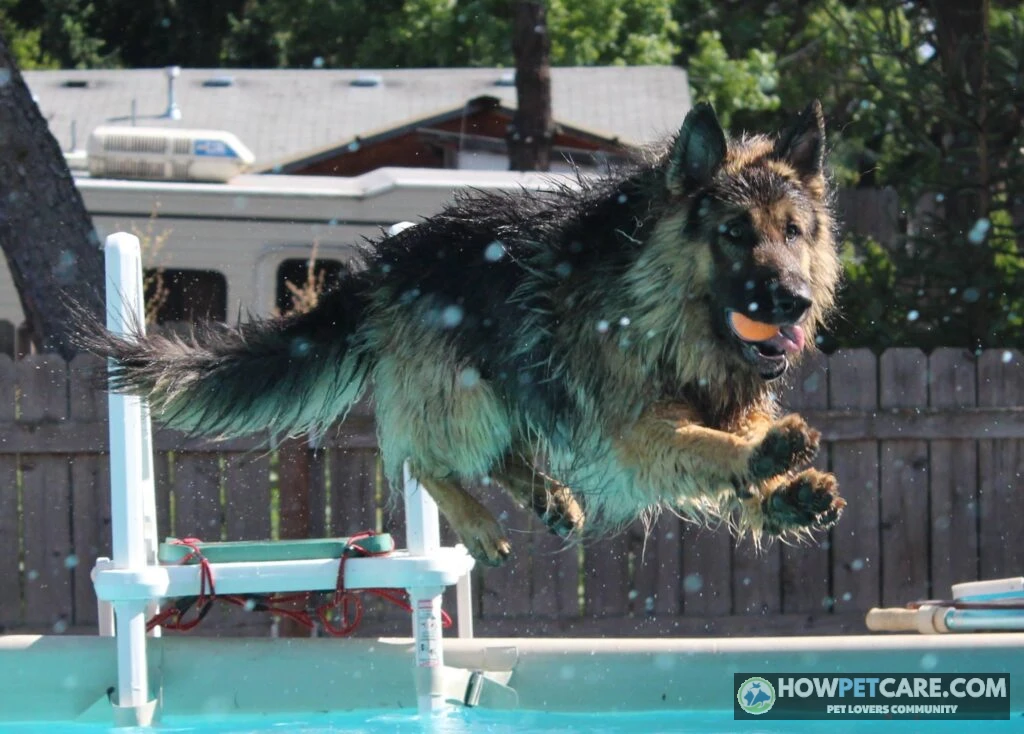
Weight-based supplement dosing
Joint supplements don’t replace weight management, diagnosis or prescribed pain treatment. Glucosamine and chondroitin are widely used, but their benefits vary and the evidence is mixed. Omega-3 fatty acids may suit some joint-care plans; the right dose depends on the product and the dog’s health.
The table shows an illustrative discussion range for combined EPA and DHA, not a prescription. The evidence supplied doesn’t establish a dependable weight-based glucosamine or chondroitin dose. Ask your veterinarian whether a product is appropriate and how much to give.
| Dog weight | Glucosamine/chondroitin | Illustrative combined EPA + DHA per day | Notes |
|---|---|---|---|
| 50–60 lb | Vet-directed; no standard dose established here | About 1,000–1,400 mg | Confirm the product and dose with your vet |
| 60–75 lb | Vet-directed; no standard dose established here | About 1,400–1,800 mg | Count EPA and DHA, not total fish oil |
| 75–90 lb | Vet-directed; no standard dose established here | About 1,800–2,200 mg | Review other foods, supplements and medicines |
Check the label carefully: a capsule marked “1,000 mg fish oil” doesn’t necessarily contain 1,000 mg of EPA plus DHA. Fish oil adds calories and can cause adverse effects or interact with treatment. Check with your vet before starting it, especially if your dog has a medical condition or takes medication.
Spay/neuter timing and cancer and joint risk
Breed-specific research has raised concerns about links between early neutering and joint disorders in German Shepherds. An association doesn’t establish that surgery caused every problem, nor does it prove that delaying surgery will extend an individual dog’s life. Cancer findings also vary by sex, disease and study.
The choices involve real tradeoffs. Spaying prevents pyometra, a potentially life-threatening uterine infection, and timing can affect mammary tumor risk. Keeping a female intact means managing heat cycles and preventing unwanted pregnancy. For males, factors include reproduction, behavior, testicular disease and the practical ability to prevent mating.
Before choosing a time, discuss your dog’s sex, growth, health, household and risk of accidental breeding with your veterinarian. No single age is right for every German Shepherd.
Veterinary checkups and screening
Schedule at least an annual wellness visit for a healthy adult, or follow the schedule your vet recommends. Review weight, teeth, mobility, parasite prevention and vaccination needs. Screening bloodwork and other tests should reflect your dog’s age, symptoms and medical history; a genetic test doesn’t replace a physical exam.
Senior German Shepherd Care at 7, 9, and 11+ Years
Use these milestones as prompts, not strict rules. A dog with a chronic condition may need closer monitoring earlier. For a healthy senior, testing should be tailored to the individual.
- Around age 7: Ask whether twice-yearly examinations make sense. Establish a baseline for weight, gait, joint comfort and dental health, and discuss baseline blood and urine testing. Check whether your dog’s current diet still suits its body condition and activity.
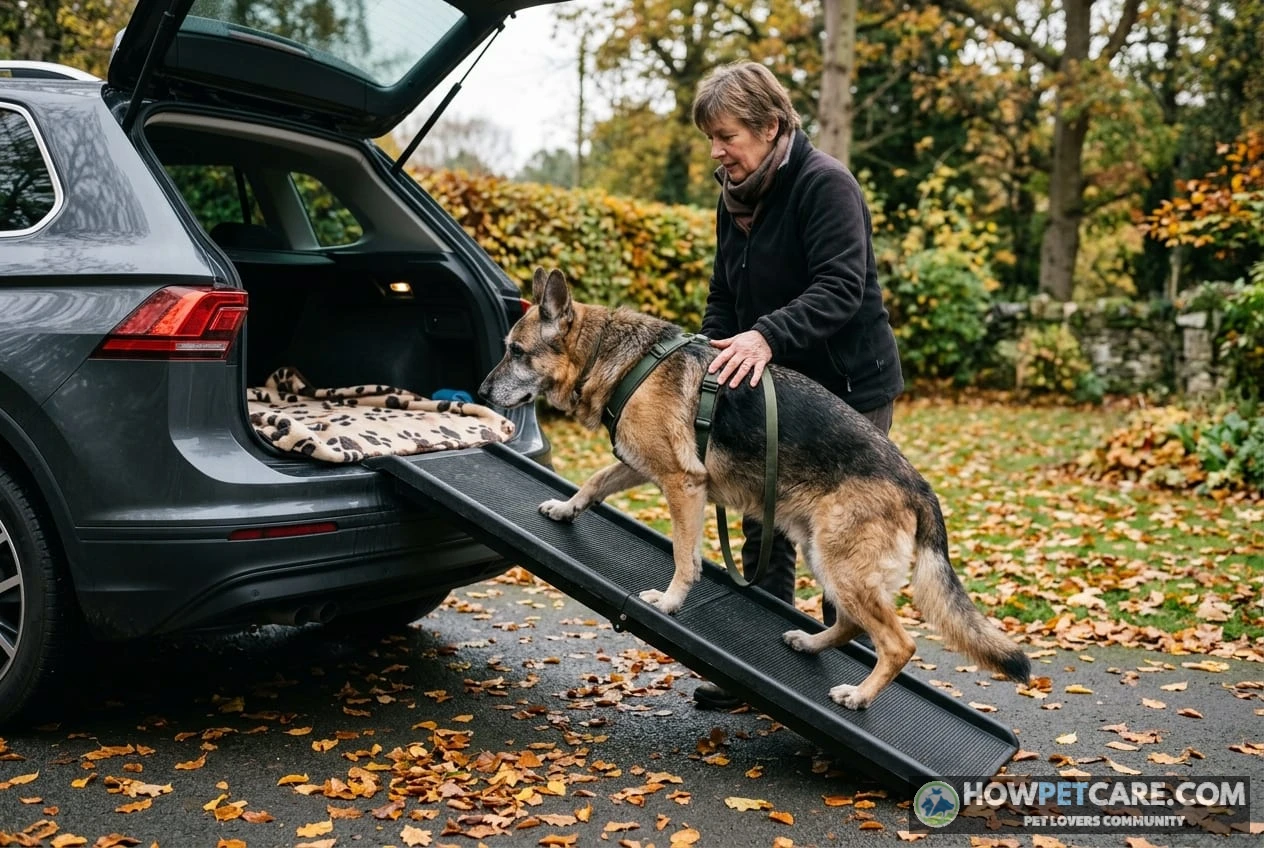
- Around age 9: Watch more closely for changes in getting up, using stairs, placing paws and recovering after walks. Ask about pain management or rehabilitation if needed. Nonslip runners, supportive bedding or a ramp can make daily movement easier.
- At age 11 and beyond: Talk with your vet about comfort, appetite, sleep, mobility and enjoyment. Tailor treatment to your dog’s goals and tolerance, and plan for urgent changes as well as future quality-of-life decisions.
Normal stiffness vs early degenerative myelopathy
Talk with a veterinarian if your dog is slowing down; don’t dismiss pain or significant weakness as normal aging. The patterns below can help you describe what you see, though arthritis, spinal disease and DM can overlap.
| Sign | Stiffness or arthritis may look like | Early DM may look like |
|---|---|---|
| Comfort | Pain, reluctance to move or difficulty after rest | Hind-limb weakness that may initially seem painless |
| Movement | Limping or a shorter stride; stiffness may ease with gentle movement | Wobbling, crossing the rear legs or reduced coordination |
| Paws | Variable, depending on the affected joint | Scuffed rear nails, dragging toes or a paw folding under |
| Pattern | Can affect one or several joints | Often begins in the hind limbs and progresses |
Seek veterinary care for either pattern, especially for new weakness, dragging or difficulty standing. Sudden inability to stand, severe pain or symptoms that worsen quickly warrant urgent advice. Your vet may examine the joints and nervous system, then recommend imaging or referral to rule out other conditions.
A SOD1 genetic test can inform risk, but it cannot by itself confirm DM in a living dog. Diagnosis relies on the clinical picture and ruling out other causes; definitive confirmation requires examination of spinal cord tissue after death.
Quality-of-life checks for dogs 11 and older
Notice whether your dog can rest comfortably, eat and drink, stay clean, reach a favorite place and take part in familiar activities with family. Keep notes on good and difficult days, including what changed. Bring them to your vet, particularly if pain medication stops helping or your dog often needs assistance to stand.
A comfort-focused plan may include treatment, rehabilitation, changes at home or palliative care. Discussing these options early gives you time to make decisions before a crisis.
Your Age-Staged Checklist for Maximizing a German Shepherd’s Healthy Years
- Before choosing a puppy: Request documented hip and elbow screening for both parents, ask about PennHIP or OFA results where available, and discuss DM testing and relatives’ health histories. A working or show label doesn’t guarantee longevity.
- Puppy to 2 years: Feed for controlled large-breed growth, keep exercise age-appropriate and arrange routine veterinary care. Discuss a practical bloat-risk plan and the tradeoffs of spay/neuter timing.
- Ages 3–6: Check body condition regularly, measure food, maintain activity and schedule annual examinations. Ask about dental care, and investigate recurring stiffness instead of starting a supplement automatically.
- Ages 7–8: Review the senior-care schedule with your vet. Establish mobility, weight and laboratory baselines when appropriate, and adjust feeding based on body condition.
- Ages 9–10: Track gait and recovery after walks. Address pain, slippery floors and difficult stairs; have unexplained lumps, weight changes or persistent limping examined.
- Age 11 and older: Keep a simple record of comfort and good days, update the care plan as needs change and discuss quality-of-life decisions before an emergency.
- At any age: Treat unproductive retching with suspected bloat, collapse or sudden severe weakness as an emergency. Seek veterinary advice promptly for new paw dragging, persistent lameness, unexplained weight loss or a marked change in appetite.
FAQ
What is the maximum lifespan of a German Shepherd?
Most German Shepherds that reach old age die between 12 and 14 years, and living past 14 is unusual. Claims of dogs living much longer are rarely documented, so treat them with caution.
How long do German Shepherds live in human years?
A 10-year-old German Shepherd is roughly equivalent to a person in their mid-60s to 70s, though the exact figure varies by method. Large breeds age faster than the old 7-to-1 rule suggests.
Do German Shepherd mixes live longer than purebreds?
Mixes often show a modest lifespan advantage because they are less likely to inherit breed-specific conditions, but the gap is small and depends on the other breed involved and the dog’s size.
Can a German Shepherd live to 15?
It is possible but uncommon. Reaching 15 generally requires good genetics, a lean body weight, and avoiding major conditions such as bloat, cancer, and severe mobility loss.
What is the most common cause of death in German Shepherds?
Musculoskeletal and neurological disease leading to loss of mobility, along with cancer, are among the most commonly reported causes of death. Bloat is a leading acute emergency.