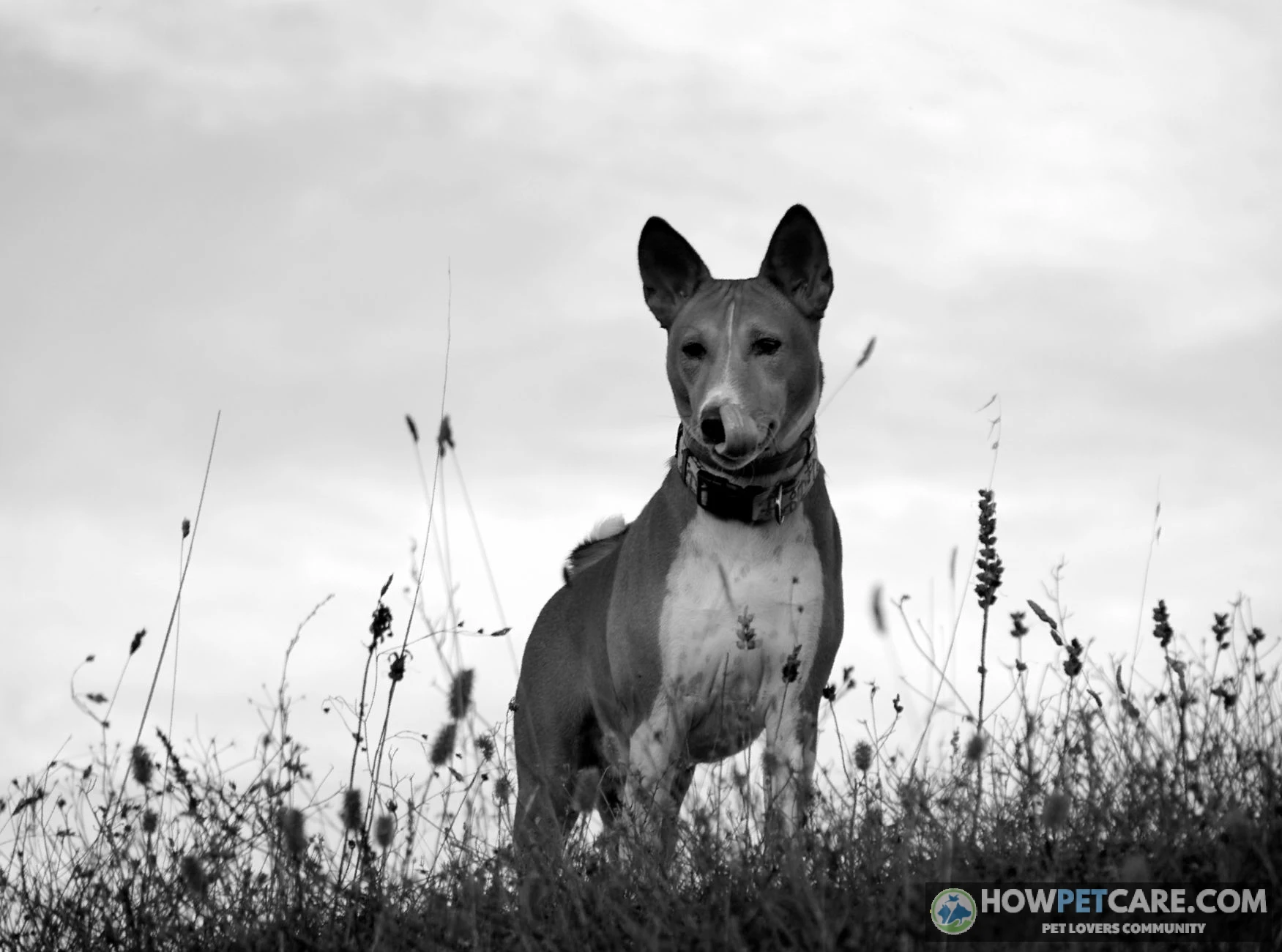

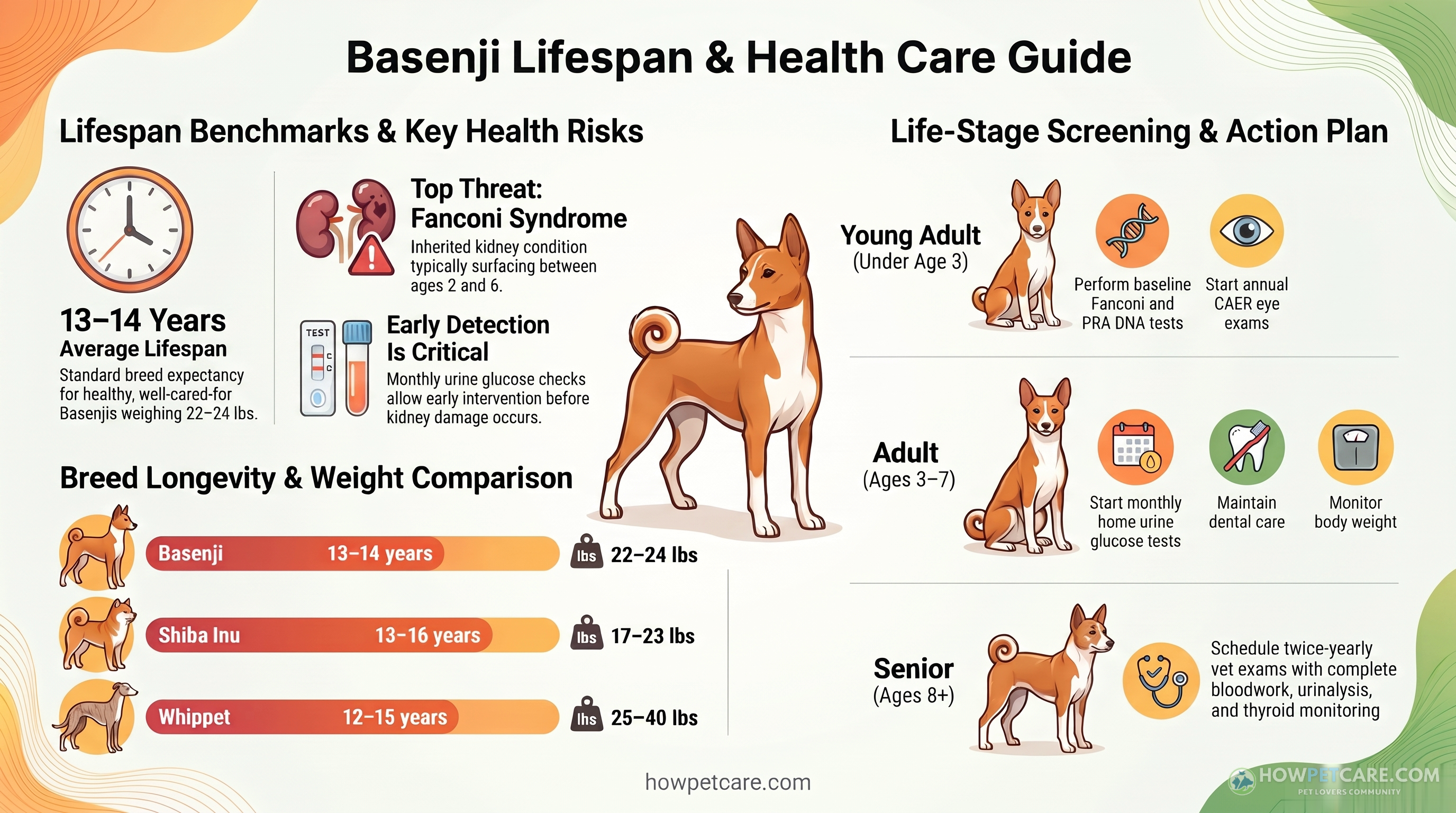
Most major breed references put Basenji life expectancy at about 13 to 14 years. Some veterinary pages quote a lower 10- to 12-year range, and unverified owner reports mention 15 to 18. Treat 13–14 as a population average, not a prediction for one dog.
Most major breed references put the typical Basenji lifespan at about 13 to 14 years. Some veterinary summary pages give a lower 10- to 12-year range, and owner forums sometimes mention dogs reaching 15 to 18 years. For one dog, though, the population average matters less than inherited risks and the care decisions that move that dog above or below the mean.
This article answers how long Basenjis live, why the published ranges conflict, which health conditions actually change survival, and what screening and care look like at each life stage. Every figure below is tied to a named source or explicitly labeled as an estimate.
How Long Do Basenjis Live? The Short Answer and the Evidence Behind It
The number to remember is 13 to 14 years. That is the typical range quoted by major breed references, including the American Kennel Club, and it matches owner-reported breed health surveys broadly. Some veterinary pages give 10 to 12 years, and I explain the gap in the next section.
Before accepting any number, it helps to distinguish three ideas that are often blended together:
- Lifespan: the age an individual dog reaches at death.
- Life expectancy: the average number of years a dog is expected to live at a given age, which changes as the dog gets older.
- Median versus mean longevity: the median is the age at which half the dogs in a group have died; the mean can be pulled upward by unusually long-lived dogs or downward by early deaths.
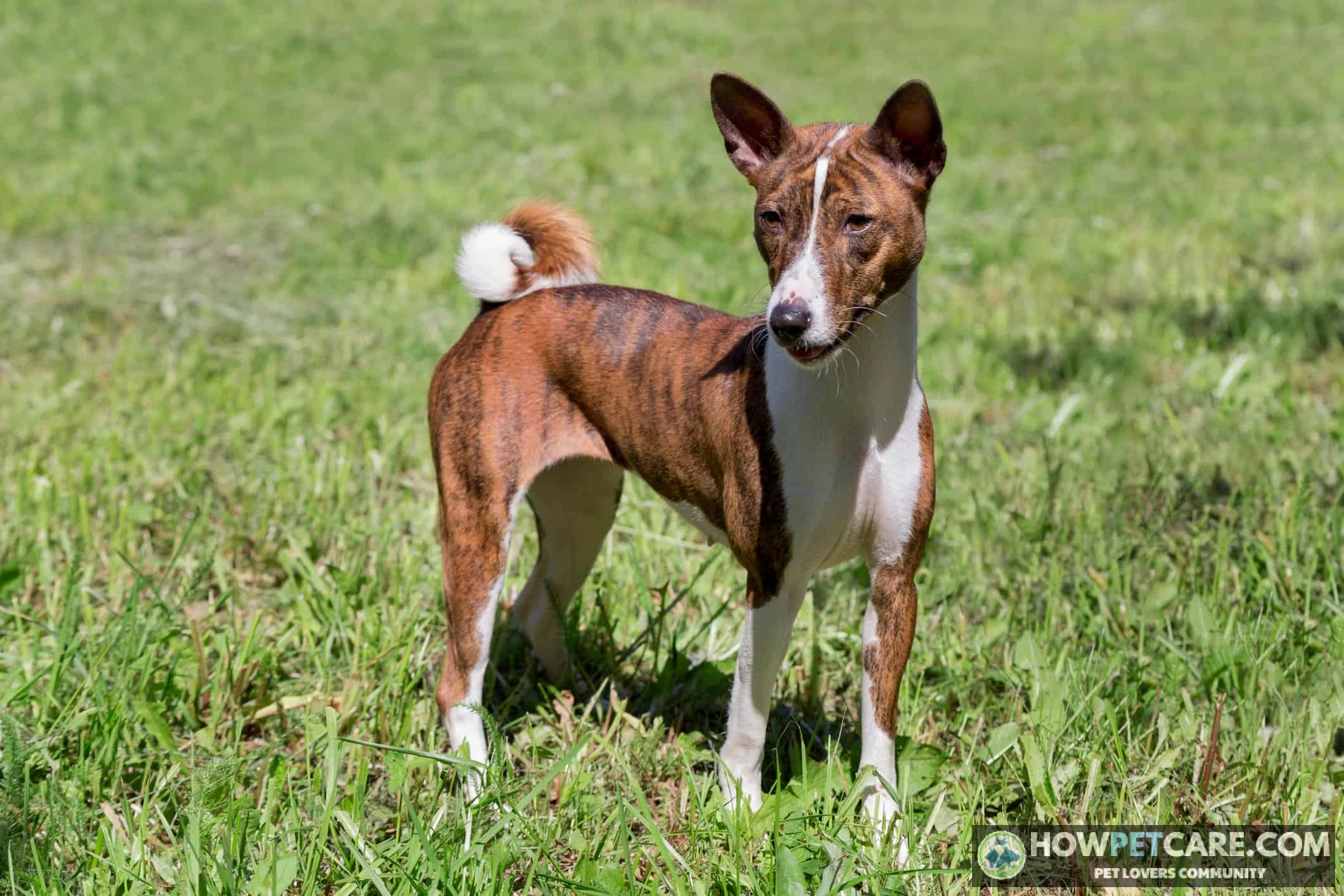
Basenjis are a small to medium breed. AKC breed references list typical weights of about 22 to 24 pounds for males and 22 pounds for females. Dogs in this size band generally live longer than large and giant breeds, so a Basenji usually outlives the all-dog average. Results vary widely: a Basenji with kidney disease caught early can live many years, while one with severe inherited disease may not.
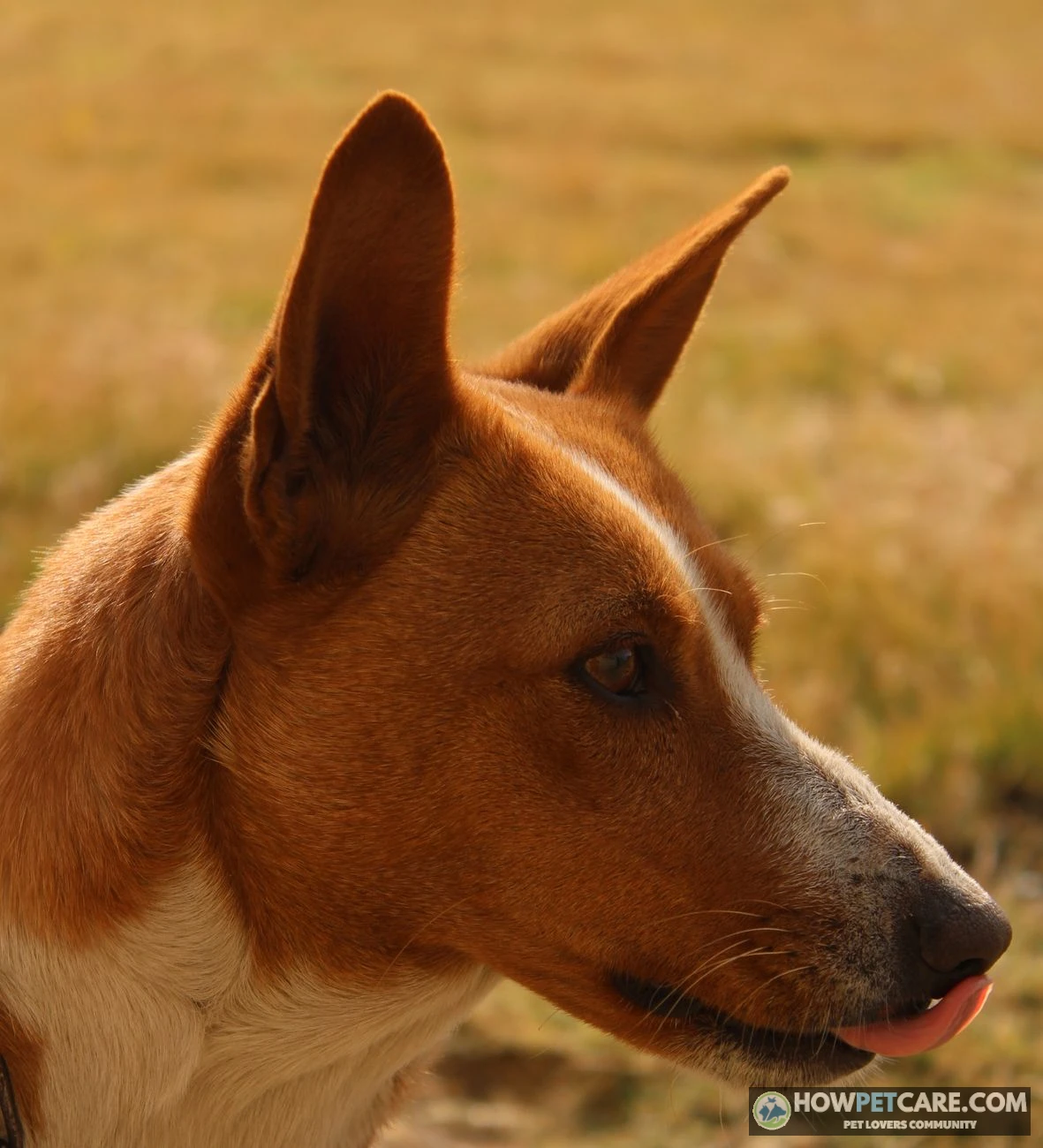
The rest of this article traces where the 13- to 14-year figure comes from, covers the conditions that shorten Basenji lives, looks at sex and spay-neuter questions, compares the breed with similar dogs, and ends with a life-stage screening and care plan.
10–12 Years or 13–14 Years? Why Basenji Lifespan Sources Disagree
Where each figure comes from
The 13- to 14-year figure is a breed-club and registry convention. It appears in AKC breed information and similar references. The lower 10- to 12-year range appears on PetMD-associated and veterinary clinic pages, including Colony Animal Clinic. Forum discussions sometimes push the maximum to 15 to 18 years, but those are individual anecdotes, not population data.
These ranges diverge for methodological reasons, not because one source is secretly wrong. Breed-club figures usually reflect owner-reported information about well-cared-for purebreds. Clinic-based figures reflect dogs that were sick enough to be examined, which can make a breed look shorter-lived than it is in the general population. A figure might also be a median, a mean, or simply a typical range chosen by an editor, and those are not interchangeable.
The Basenji gene pool is small and closely related, so inherited conditions can concentrate in certain lines. Longevity can differ between countries, registries, and breeding communities even within the same breed.
Which estimate has epidemiological support
No widely cited Basenji lifespan figure is backed by recent, Basenji-specific epidemiological research such as a large primary-care veterinary records study. The 13- to 14-year range rests on breed-club convention and older owner surveys. The 10- to 12-year figure traces to general references and clinic-oriented summaries, and no recent breed-specific study supports the lower end. Claims of 15- to 18-year Basenjis describe possible individuals but are not verifiable as a population average.
For practical purposes, quote 13 to 14 years as the best-supported typical range, with the explicit caveat that it is an average and not a guarantee. A Basenji that reaches age 10 in good condition has already outlived some dogs in its birth cohort and typically has additional years ahead.
What Kills Basenjis and How Many Survive to 10, 12, 14 and 16
Leading causes of death in the breed
Published breed health information points to several conditions that matter for Basenji survival. Fanconi syndrome is an inherited disorder in which the kidneys leak glucose, electrolytes, and amino acids into the urine, and it typically appears between ages 2 and 6. If not detected early, it can progress to kidney failure. Immunoproliferative small intestinal disease, or IPSID, is a Basenji-associated chronic enteropathy that can cause weight loss and declining health over time. Cancer and age-related kidney disease also appear in older dogs. Pyruvate kinase deficiency, an inherited red-cell disease, causes severe anemia, and most affected dogs die before age 4.

Breed-specific survival percentages at ages 10, 12, 14, and 16 are not published in the sources available for this article, and I won’t invent those figures. The nearest useful statement is that Basenjis, as a small-to-medium breed, generally sit toward the longer-lived end of the dog population. Individual outcomes depend heavily on whether inherited conditions are caught early.
Survival at age milestones
Because Basenji-specific survival tables are unavailable, any percentage claiming that X percent of Basenjis survive to age 12 or 14 should be treated as unsupported. The sound principle is the survivorship effect: a dog that has already reached 10 has a longer expected remaining life than the breed’s average at birth implies, because it has survived puppy, young-adult, and middle-age risks that kill some dogs earlier.
The oldest Basenji: verified records vs. forum claims
Forum threads sometimes describe Basenjis living to 15, 16, or even 18 years. Those reports may be genuine, but they are usually unverified: there is no public registry record, veterinary date-of-birth documentation, or independent confirmation. An unverified anecdote is not evidence that the breed commonly reaches those ages. For practical planning, assume a typical Basenji will live into its early teens, and treat any dog older than 14 as an exceptional individual rather than an expectation.
Health Conditions That Shorten a Basenji’s Life, Ranked by Impact
Fanconi syndrome: the condition most tied to survival
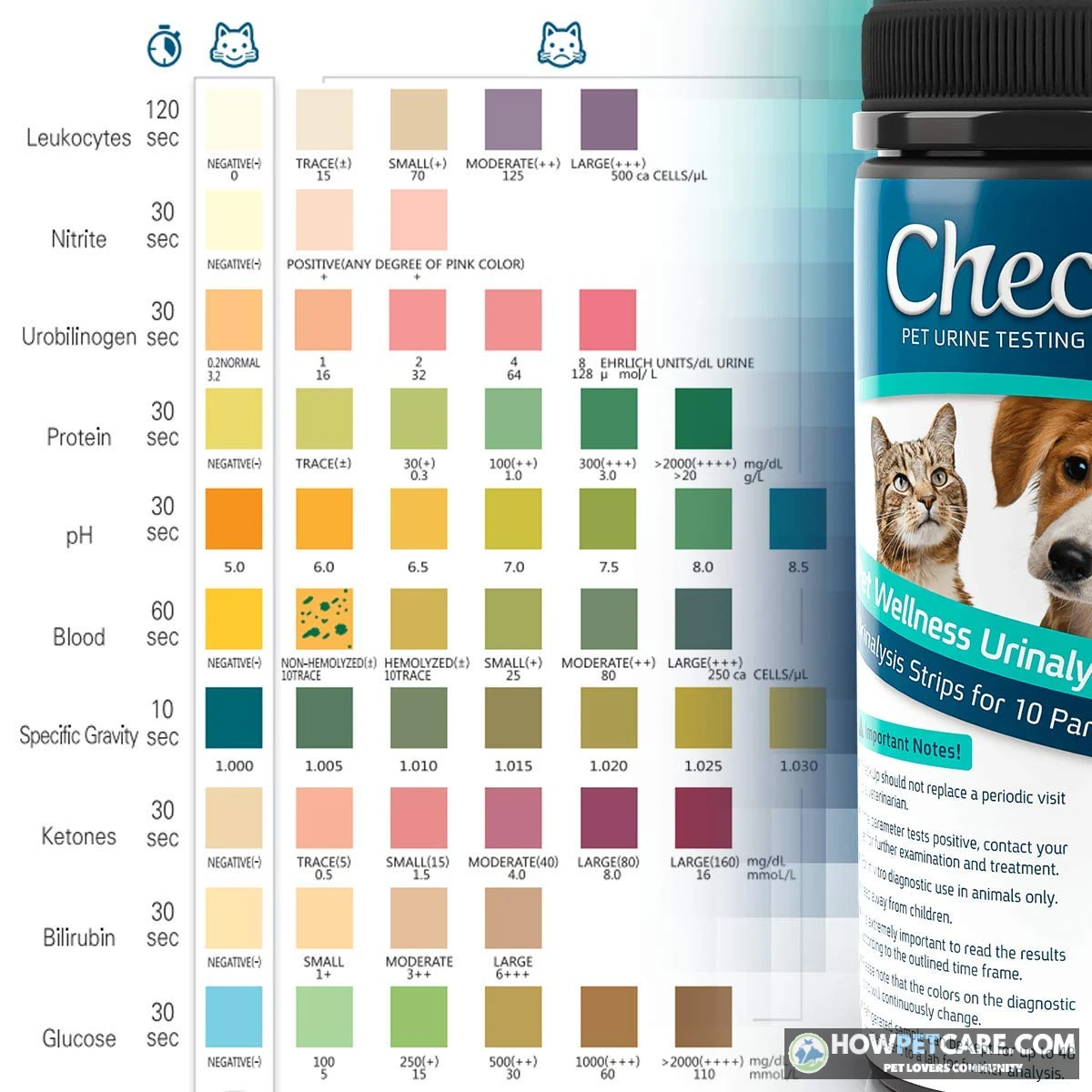
Fanconi syndrome is the inherited condition most strongly tied to Basenji lifespan. The kidneys fail to reabsorb glucose, electrolytes, and amino acids, so those substances spill into the urine. Onset usually occurs between ages 2 and 6. Early signs include increased thirst, increased urination, and, when tested by a vet, glucose in the urine despite normal blood sugar.
A DNA test can identify Fanconi carrier or affected status. Affected dogs can be managed with veterinary-guided supplementation. Dogs caught early and managed consistently can live for years, while late-detected or untreated cases often progress to kidney failure and shortened survival. A DNA result shows risk, not current disease status, so owners should also use home urine glucose screening as described later.
Progressive retinal atrophy, hypothyroidism, and joint problems
Progressive retinal atrophy is a late-onset inherited eye disease with a gene test available. It causes blindness, but blindness itself is not life-threatening. Blind Basenjis can adapt well and live full lives in a stable home, so PRA is mainly a quality-of-life condition rather than a direct cause of early death.
Hypothyroidism causes weight gain, lethargy, and skin changes. It is identified through thyroid panels, including those offered through OFA. With daily medication, it is generally well controlled and does not meaningfully shorten lifespan.
Hip dysplasia and patellar luxation occur in Basenjis but are generally less severe than in larger breeds. They mainly cause pain and mobility problems in senior years. That can affect quality of life and, indirectly, lifespan if mobility loss leads to weight gain or injury.
Other breed-linked issues worth knowing include IPSID and other chronic enteropathies, pyruvate kinase deficiency (usually fatal before age 4), persistent pupillary membranes, and the rare Pelger-Huet anomaly, which is lethal when a puppy inherits the abnormal gene from both parents.
Male vs. Female Basenjis and the Effect of Spaying or Neutering on Lifespan
Do male or female Basenjis live longer?
The sources reviewed for this article do not contain Basenji-specific lifespan data by sex. Large studies across many breeds have found only modest sex differences, and those differences are usually smaller than the effects of size, weight management, and preventive care. For Basenjis specifically, I can’t say that males or females live longer based on published breed data.
Female Basenjis typically cycle once a year, which is one factor owners discuss with a veterinarian when deciding whether to keep a dog intact. That detail does not translate into a proven longevity advantage for either sex.
Spay/neuter timing and longevity: what the research supports
Evidence on spaying or neutering and Basenji lifespan is lacking. Large multi-breed cohort studies show that outcomes depend on breed, sex, and age at surgery, and results are not uniform. Intact females face risks such as pyometra and mammary tumors. Early neutering has been linked in some breeds to joint disorders and certain cancers. None of those findings can be applied to Basenjis without breed-specific data.
No published evidence is strong enough to say one sex or neuter status gives a Basenji a longer life. This is a decision to make with a veterinarian based on the individual dog’s health, not a rule that will reliably add or subtract years.
Basenji Lifespan Compared With Shiba Inu, Whippet, Beagle and the All-Dog Average
| Breed | Typical lifespan range (years) | Typical adult weight (lb) | Source and year | Notes on data quality |
|---|---|---|---|---|
| Basenji | 13–14 | 22–24 | AKC breed references; owner-reported surveys | Convention-based; Basenji sample is small |
| Shiba Inu | 13–16 | 17–23 | AKC | Comparable size; similar primitive-breed profile |
| Whippet | 12–15 | 25–40 | AKC | Slightly larger sighthound build |
| Beagle | 10–15 | 20–30 | AKC | Wide range reflects two size varieties |
| All-dog average | Varies widely by size | Varies | General veterinary and insurance literature | Includes giant breeds that pull the mean down |
These figures come from different methodologies and countries, so compare them loosely rather than as a controlled experiment. The consistent pattern is that Basenjis sit near the top of the medium-small dog range. Their compact size and relatively low burden of the cancers common in large breeds help.
Small dogs generally live longer than large dogs because large breeds age faster and accumulate age-related disease earlier. At roughly 20 to 25 pounds, the Basenji falls in the size band associated with above-average longevity.
Basenji mixes vs. purebred Basenjis
There is no breed-specific lifespan study for Basenji mixes. Mixed-breed dogs as a group tend to live about as long as or slightly longer than purebreds of similar size, so a Basenji mix’s expected lifespan depends mainly on its adult size and the other breeds in its background. Mixes also vary more in inherited risk because their genetic makeup is less predictable.
Basenji Age in Dog Years: Life Stages, Senior Age, and Early Signs of Aging
Age conversion and life stages
The old ‘multiply by seven’ rule is inaccurate. Dogs mature quickly in their first two years, then age at rates that depend heavily on size. Modern veterinary care uses life stages rather than a single multiplier. The table below is an estimate for a Basenji-sized dog.
| Basenji age | Life stage | Approximate human-equivalent age | What to focus on |
|---|---|---|---|
| 0–1 year | Puppy | Roughly 15–24 | Vaccinations, socialization, baseline DNA and eye checks |
| 2–6 years | Adult | Roughly 25–45 | Fanconi urine screening from about age 3, weight control, dental care |
| 7–8 years | Mature adult | Roughly 45–55 | Transition to senior monitoring; discuss timing with your vet |
| 8 years and older | Senior | Roughly 55 and older | Wellness exams every six months, bloodwork, urinalysis, mobility support |
Many veterinarians consider dogs of this size senior around age 7 or 8, though individual dogs vary. The AAHA life-stage framework and similar veterinary guidelines treat senior status as a clinical judgment rather than a fixed birthday.
Warning signs of cognitive decline
Physical aging signs include reduced stamina after exercise, stiffness after rest, graying around the muzzle, weight or muscle loss, changes in drinking and urination, and dental disease. Increased drinking and urination deserve special attention because they can indicate Fanconi syndrome or kidney disease rather than simple aging.
Cognitive decline, or canine cognitive dysfunction, shows up as disorientation, getting stuck in corners, altered sleep-wake cycles, house-soiling, reduced interaction with family, and night waking. These are not inevitable parts of old age, and a Basenji showing several signs should be examined by a vet.
In Basenjis specifically, watch for personality shifts. A breed-typical independent, aloof dog that becomes clingy, anxious, or unusually needy may be signaling early cognitive or physical decline. That change is worth mentioning at a senior wellness visit.
- Drinking noticeably more water than usual
- Urinating more often, or having accidents after years of clean habits
- Weight loss despite a normal appetite
- Glucose on a home urine strip while eating normally
- Stiffness after rest or hesitation on stairs and jumps
- Muscle loss along the spine or rear legs
- New lumps, or existing lumps that changed in size
- Getting stuck in corners or staring at walls
- Sleeping more by day and restless or vocal at night
- Forgetting house training or familiar walking routes
- Bad breath, drooling, or dropping food
- Cloudy vision or bumping into furniture
Any item can warrant a scheduled visit. Items involving drinking, urination, or urine glucose should be reported promptly because they can signal Fanconi syndrome or kidney disease.
How to Help Your Basenji Live Longer: A Screening and Care Plan for Each Life Stage
Screening timeline: genetic tests, OFA, and veterinary checkups
| Test or exam | Condition screened | Recommended age or frequency | Method | Who to ask or where to register |
|---|---|---|---|---|
| Fanconi DNA test | Fanconi syndrome | Once, any age, as a baseline | Cheek swab DNA test | OFA or major DNA labs |
| Home urine glucose test | Fanconi syndrome, early detection | Monthly starting at about age 3 | Urine strips at home | Pharmacy strips; report positives to your vet |
| PRA DNA test | Progressive retinal atrophy | Once, ideally before breeding or as a puppy | Cheek swab DNA test | OFA-registered labs |
| CAER eye exam | PRA, persistent pupillary membranes, cataracts | First by age 1–2, then annually | Board-certified veterinary ophthalmologist | ACVO diplomate; OFA CAER program |
| OFA thyroid panel | Hypothyroidism | Baseline at 1–2 years, repeat every 1–2 years or if symptoms appear | Blood draw via OFA-approved lab | Your vet submits; results registered with OFA |
| Hip radiographs | Hip dysplasia | Once at 24 months or older | Sedated radiographs | Your vet; OFA scoring |
| Patellar luxation exam | Luxating patella | At 1 year, then at routine checkups | Manual orthopedic exam | Any vet; OFA registration optional |
| Senior wellness panel | Kidney disease, thyroid, blood pressure, general decline | Every 6 months from about age 8 | Bloodwork, urinalysis, blood pressure, thyroid | Your vet |
DNA testing tells you inherited risk, not current disease status. A Basenji with a clear Fanconi or PRA result still needs routine urine screening and eye exams because other conditions can appear later. Start Fanconi urine screening at about age 3 under Basenji Club of America guidance, and continue it for the dog’s life.
Senior-care routine for Basenjis 8 years and older
Once a Basenji reaches senior age, schedule veterinary checkups every six months. Those visits should include bloodwork, urinalysis, blood pressure measurement, and thyroid evaluation so kidney, thyroid, and metabolic changes are found while they are still manageable.
Support senior health with these breed-specific habits:
- Keep the dog lean. Obesity adds strain to the heart, joints, and metabolism, and it meaningfully shortens dog lifespans. You should be able to feel the ribs easily and see a waist.
- Brush teeth daily or near-daily and arrange professional cleanings. Untreated dental disease can shorten a dog’s life by an estimated 1 to 3 years through heart, liver, kidney, and joint strain.
- Protect from heat and cold. The short coat and low body fat make Basenjis less tolerant of temperature extremes.
- Watch for enteropathy signs. Persistent vomiting, diarrhea, or weight loss may point to IPSID or another chronic gut condition and deserves a vet-guided diet plan rather than random food changes.
- Provide daily moderate exercise to maintain muscle, while avoiding overheating.
- Use ramps or rugs for stiff joints, keep furniture in consistent places for a dog losing vision, and add mental enrichment to support cognitive health.
Your action checklist by life stage
Puppy and young adult (under 3):
- Schedule baseline Fanconi and PRA DNA testing.
- Arrange a first CAER eye exam by age 1–2.
- Begin monthly home urine glucose screening at about age 3.
- Keep vaccinations and parasite prevention current.
Adult (3 to about 7):
- Continue monthly urine glucose checks.
- Repeat thyroid and eye exams on your vet’s schedule.
- Maintain lean body weight and daily dental care.
- Discuss hip radiographs at 24 months and patellar exams at 1 year if not already done.
Senior (8 and older):
- Visit the vet every six months for bloodwork, urinalysis, blood pressure, and thyroid panel.
- Increase monitoring of drinking, urination, weight, and mobility.
- Adjust the home for stiffness or vision loss.
- Call the vet promptly for increased drinking, urination accidents, urine glucose positives, or cognitive changes.
When to call the vet right away: excessive thirst or urination, urine glucose on a home strip, sudden collapse, severe vomiting or diarrhea, or a rapid change in behavior or mobility.
Genetics set the range, but care decisions determine where a Basenji falls inside it. Monthly Fanconi screening, weight control, dental care, and twice-yearly senior exams are the habits most likely to add healthy years.
FAQ
How long do Basenji mixes live?
There is no breed-specific lifespan data for Basenji mixes. Mixed-breed dogs as a group tend to live about as long as or slightly longer than purebreds of similar size, so a mix’s expected lifespan depends mainly on its size and the other breeds in it.
Can a Basenji with Fanconi syndrome live a normal lifespan?
Outcomes depend on how early the disease is caught and how well it is managed. Dogs diagnosed early and treated with electrolyte and bicarbonate supplementation under veterinary guidance can live for years, while untreated Fanconi progresses to kidney failure.
Does a clear Fanconi or PRA DNA test mean my Basenji will live a long life?
No. A clear result rules out those specific inherited variants but does not rule out other conditions such as thyroid disease, enteropathy, or cancer. Routine checkups and age-appropriate screening are still needed.
How often should a senior Basenji see the vet?
Most veterinarians recommend a checkup every six months once a dog reaches senior age. These visits should include bloodwork and a urinalysis so kidney, thyroid, and metabolic changes are found early.
Does blindness from PRA shorten a Basenji’s life?
Blindness from PRA is not itself life-threatening. Blind dogs adapt well in a stable home environment, so lifespan is determined mainly by other health conditions.