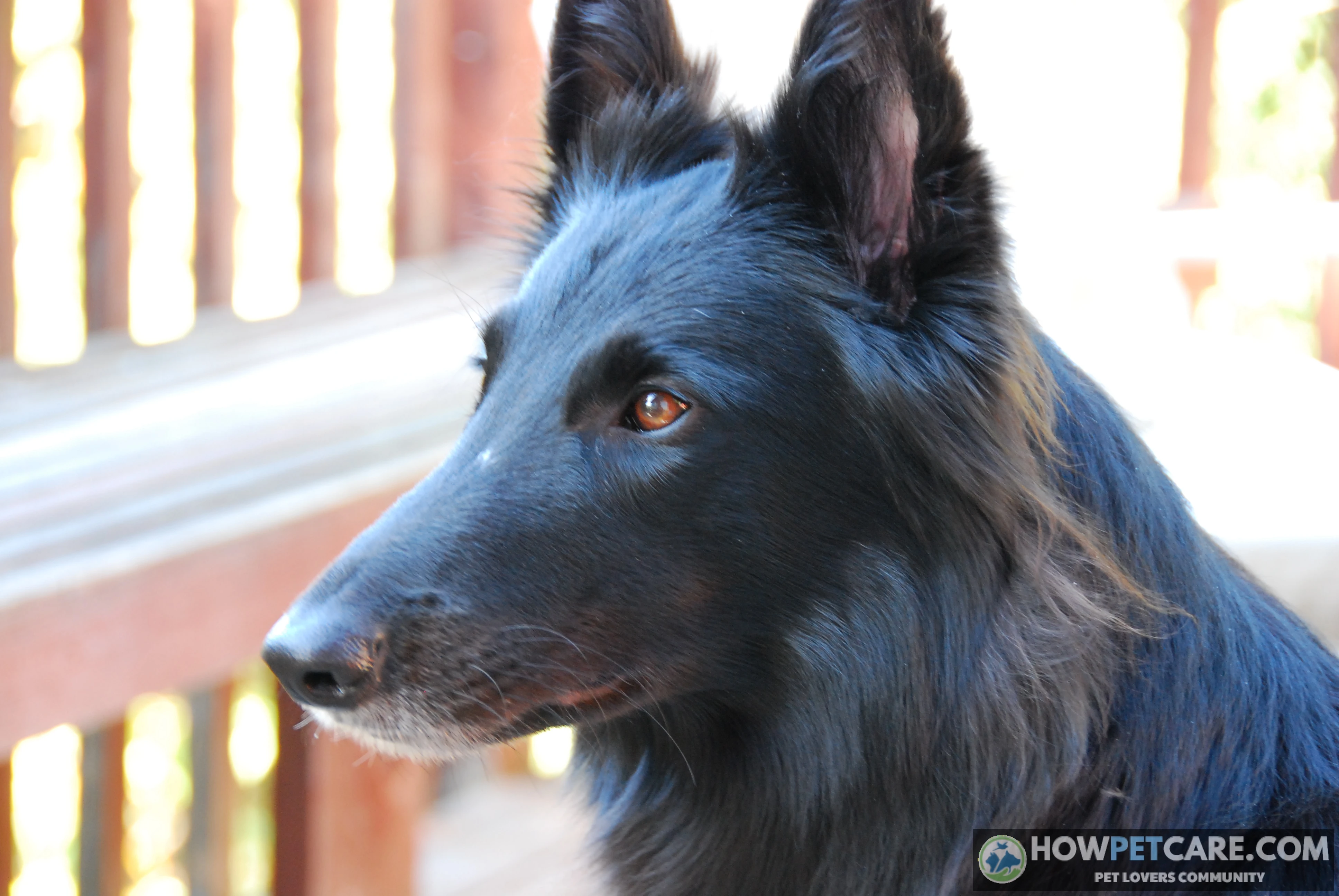

A Groenendael is the long-haired, all-black variety of the Belgian Shepherd. In the United States, the AKC registers it as a separate breed called the Belgian Sheepdog, while the FCI and UKC treat it as one of four Belgian Shepherd varieties. It’s an energetic, trainable herding dog needing daily exercise, training, and regular grooming.
Groenendael or Belgian Sheepdog? The breed identity in one minute
A Groenendael is the long-haired, black variety of Belgian Shepherd. Yes — in the United States, the Groenendael and the Belgian Sheepdog are the same dog: the American Kennel Club (AKC) registers it as the Belgian Sheepdog and recognizes it as a separate breed. The Fédération Cynologique Internationale (FCI) and United Kennel Club (UKC), by contrast, classify the Groenendael as one of four varieties of the Belgian Shepherd.
This athletic herding dog is typically alert, energetic and highly trainable. Its long black double coat is distinctive, but appearance alone is a poor reason to choose one. The dog also needs daily activity, training, companionship and regular grooming.
Why US and international breed names differ
The Belgian Shepherd varieties are Groenendael, Malinois, Tervuren and Laekenois. The AKC recognizes them as separate breeds and calls the Groenendael the Belgian Sheepdog. FCI and UKC use a single-breed, four-variety classification.
If a US breeder advertises Groenendael puppies, ask which registry issued the pedigree. An AKC-registered Groenendael appears on its papers as a Belgian Sheepdog.
The breed developed in Belgium as a herding dog. Nicolas Rose’s dogs Petite and Picard d’Uccle were important foundation dogs in the Groenendael’s history.

Groenendael temperament, family fit, and first-time-owner demands
Groenendaels are often described as loyal, alert and closely attentive to their people. Many are eager learners and capable watchdogs, but their sensitivity can make harsh corrections counterproductive. Dogs differ as individuals: breeding, early experiences, health and training all affect behavior.
Plan for reward-based training that teaches household skills as well as obedience. Practice settling on a mat, greeting visitors without rushing them and responding when called away from distractions. Introduce new places, people and sounds gradually. Don’t force the dog to interact when it’s uncomfortable.
A committed first-time owner can succeed with experienced support, but this isn’t an easy default choice. If you want a quiet, low-energy dog, can’t manage regular training, or expect a dog to spend long stretches alone without a care plan, consider a less demanding match.

Is a Groenendael a good family dog?
A well-matched Groenendael can be an affectionate family companion. What matters is whether the particular dog’s energy and behavior fit the people and animals in the home. Meet adult dogs when possible, and ask breeders or rescue staff how a prospective dog responds to handling, visitors, noise and separation.
Busy households should also plan for downtime. A dog that’s constantly expected to participate in family activity may have difficulty resting. Give it a quiet place where it can sleep undisturbed.
Managing herding instincts around children
Fast-running children can trigger chasing or nipping in some herding dogs. Supervise closely and use gates or a leash to prevent the dog from practicing chasing games. Teach children not to pull at the dog, disturb it while it’s eating or sleeping, or run away screaming if it follows them.
Interrupt early by calmly calling the dog away and rewarding an alternative, such as going to its mat. Provide a child-free retreat. If chasing, nipping or fear persists, separate the dog and children and seek help from a qualified reward-based trainer or veterinary behavior professional. Never leave a young child and dog together unsupervised.
Living with cats and small pets. An adult Groenendael may learn to live with a cat it didn’t grow up with, but success isn’t guaranteed. Start with scent exchange and secure barriers; give the cat elevated escape routes and a dog-free room. Keep the dog leashed for controlled early meetings, reward calm behavior and avoid allowing chasing. Small pets should have secure housing away from the dog. Continue supervision and seek professional help if the dog fixates, lunges or can’t disengage.

Groenendael vs. Malinois, Tervuren, and Laekenois
All four Belgian Shepherd varieties have herding origins, but their coats and common breeding emphases differ. These descriptions are tendencies, not promises about an individual dog.
| Variety | Coat and typical color | Shedding and grooming | Temperament and drive considerations | Common work or sport roles |
|---|---|---|---|---|
| Groenendael, or AKC Belgian Sheepdog | Long, straight black double coat | Regular brushing; heavier seasonal shedding | Often attentive and sensitive; individual activity needs vary | Herding, obedience, tracking, agility and other sports |
| Malinois | Short coat; typically fawn to mahogany with black shading and mask | Sheds despite the shorter coat; generally less detangling | Some working lines are exceptionally intense and need skilled management | Police and military work, detection and protection sports |
| Tervuren | Long coat; typically fawn to mahogany with black overlay | Regular brushing and seasonal shedding, much like the Groenendael | Often alert and responsive; assess the individual and its line | Herding, obedience, agility and other sports |
| Laekenois | Rough, tousled coat; typically fawn with black shading | Rough coat needs appropriate maintenance; ask an experienced groomer about hand-stripping | Active and alert; individual temperament and breeding matter | Herding and companion sports |
Choosing by coat, work, and household fit
The Groenendael and Tervuren share a long-coated look, while the Malinois has a shorter coat and the Laekenois has a rough one. A short coat doesn’t mean a nonshedding dog.
Malinois are more prominent in modern police and protection work, but a suitable Groenendael can also participate in demanding work or sport. Neither name guarantees the nerve, health or motivation needed for a particular job.
Ask about the actual dogs behind a litter. A breeder emphasizing working performance may select for intense drive and persistence; a breeder emphasizing conformation may prioritize structure and appearance. These categories overlap, and a show-line dog isn’t automatically easy to live with. Describe your household honestly and ask how the breeder matches puppies to homes.
A Groenendael is a separate Belgian herding breed, not a black German Shepherd. Both breeds need training and activity. Evaluate individual dogs rather than assuming one breed will always be calmer or easier.
Daily exercise, joint-safe puppy activity, and at-home brain work
A healthy adult Groenendael generally needs substantial daily activity. Some breed profiles suggest close to two hours of physical exercise a day, but the right amount depends on the dog’s conditioning, age and health. Treat that figure as a planning prompt, not a target for an unfit dog or a puppy.
Combine walks and sniffing with training, play or a suitable sport. Make time to relax afterward, too. A dog that becomes increasingly frantic after repeated fetch may need a quieter activity and rest, not another round.

Exercise by life stage
Puppies need movement to develop, but they should be able to choose their pace and stop. There’s no reliable universal minute-per-month formula that protects every puppy’s joints. Ask your veterinarian for an individual plan, especially before starting sustained running or jumping sports.
| Life stage | Suitable activity | Session approach | Activities to limit | Adjustment cues |
|---|---|---|---|---|
| 8–12 weeks | Gentle exploration, sniffing and brief leash introductions | Several short, self-paced outings with plenty of sleep | Forced walks, repeated jumps and rough play | Stop if the puppy lags, sits down or disengages |
| 3–4 months | Short walks, simple recalls and food searches | Keep sessions brief; let the puppy pause | Repetitive fetch, forced running and repeated stairs | Shorten the session if coordination or enthusiasm fades |
| 5–7 months | Gradually longer walks and controlled play with suitable dogs | Increase activity gradually, with rest days as needed | Running beside a bicycle, repeated jumping and abrupt turns | Reduce activity and consult a vet about limping or stiffness |
| 8–12 months | Varied walks, sniffing and low-impact training foundations | Build gradually according to fitness and recovery | Sustained forced running and repetitive high-impact sport | Watch for soreness after rest or reluctance to move |
| 12–18 months | Progressive conditioning and age-appropriate sport foundations | Discuss readiness for higher-impact work with your vet | Sudden increases in distance, speed or jumping | Back off if the dog is stiff, fatigued or uncomfortable |
Growth and readiness vary between dogs. Don’t assume a birthday means that growth plates have closed or that a dog is ready to run long distances.
Mental-stimulation games for home
Rotate activities to keep sessions enjoyable. When appropriate, use part of the dog’s daily food allowance as rewards.
- Scatter feeding: Toss kibble across a safe room or patch of grass for the dog to find.
- Find the toy: Hide a favorite toy in an easy spot, then gradually make searches harder.
- Shaping box: Reward the dog for investigating a cardboard box, then build toward a simple action, such as putting a paw inside.
- Hide-and-seek: Have a person hide nearby and call the dog; reward a successful search.
- Toy names: Teach the dog to distinguish and retrieve individual toys.
- Settle practice: Reward the dog for lying calmly on a mat while ordinary household activity continues.
End while the dog is still engaged. Heavy panting, frantic grabbing, inability to respond or walking away can signal that the game is too difficult, exciting or long.
Double-coat grooming, seasonal shedding, and hot-weather safety
The Groenendael’s double coat has a dense undercoat beneath a longer outer coat. Expect visible shedding and more loose hair during seasonal coat changes. Regular brushing helps you find tangles before they become tight mats.
A practical weekly and seasonal routine
Set aside a weekly brushing session and brush more often when loose undercoat is coming out heavily. Work gently. Pulling hard can hurt the dog and damage its coat or skin.

-
Prepare the coat
Choose a comfortable surface and gather a slicker or suitable pin brush, a metal comb and treats. Lightly mist the coat if needed to reduce breakage.
-
Brush in sections
Part the hair and line-brush from the skin outward, working a small section at a time. Avoid scraping the skin.
-
Check trouble spots
Use the comb behind the ears, under the collar, in the armpits and around the rear furnishings. Ease out small tangles rather than pulling.
-
Remove loose undercoat
During a coat blow, use a suitable undercoat tool gently and only as needed. Stop if the skin becomes irritated or the dog is uncomfortable.
-
Finish the inspection
Check ears, paws, nails and skin. Bathe when dirty, rinse thoroughly and dry dense areas completely.
During heavy shedding, shorter, more frequent sessions are often easier than one long session. A groomer familiar with double coats can help with stubborn tangles or a thorough bath and dry. Don’t routinely shave the coat as a shedding or heat-control shortcut; discuss a medical or severe matting situation with your veterinarian or groomer.
Keeping a black double-coated dog safe in heat
A black coat can absorb solar heat, but humidity, exertion, acclimation and the individual dog also affect heat risk. Walk in cooler hours, carry water, provide shade and use an air-conditioned indoor space when needed. Check pavement with your hand before walking on it.
Heavy panting, weakness, stumbling, vomiting or collapse can signal a heat emergency. Move the dog to a cool area, begin cooling with cool—not ice-cold—water and airflow, and contact a veterinarian immediately. Never leave a dog in a parked car.
Groenendael health, lifespan, and screening timeline
A commonly reported lifespan is 12–14 years, though individual dogs may live shorter or longer lives. Genetics, body condition, preventive care and chance all play a role.
Discuss these concerns with your veterinarian and prospective breeder:
- Hip and elbow dysplasia: Developmental joint problems can cause pain or lameness. Ask for documented hip and elbow evaluations for both parents, not just an assurance that the dogs move well.
- Eye disease, including progressive retinal atrophy (PRA): PRA can cause progressive vision loss. Ask about eye examinations, relevant DNA tests and any affected relatives; a normal eye exam and a DNA test answer different questions.
- Epilepsy: Ask about seizures in the parents and extended family. A normal screening result for another condition doesn’t rule out epilepsy.
- Anesthesia sensitivity and planning: Tell your veterinarian the breed and provide the dog’s full medical and medication history before a procedure. Don’t assume every Groenendael is unusually sensitive to anesthetics; the veterinarian should select and monitor the protocol for the individual dog.

These are topics to investigate, not predictions that a puppy will develop disease. No screening program eliminates every risk.
Questions to ask about health clearances
Check the Belgian Sheepdog Club of America and Orthopedic Foundation for Animals (OFA) for the breed’s current recommended tests. Ask the breeder for the registered names or OFA identification numbers of both parents, then verify the results independently. Discuss any unavailable results and ask about the health and longevity of close relatives.
A puppy’s vet check, a DNA panel or a registration certificate isn’t a substitute for the recommended evaluations of both parents. Ask the breeder how they make decisions when a relative has a serious health problem.
Care milestones from puppyhood through adulthood
- New puppy: Arrange an initial veterinary exam soon after arrival. Bring vaccination, deworming and microchip records, and discuss nutrition, parasite prevention and safe socialization.
- Puppy visits: Follow your veterinarian’s vaccination schedule and local rabies requirements. The timing of boosters depends on the puppy’s age, history and local risk.
- Adolescence: Monitor weight, gait and recovery after activity. Discuss spay or neuter timing and readiness for higher-impact exercise with your vet.
- Adulthood and senior years: Maintain preventive exams, dental care, parasite prevention and a healthy body condition. Report changes in movement, vision or behavior promptly.
US puppy prices, breeder checks, adoption, and ownership costs
A responsible acquisition decision starts with health and household fit, not the lowest advertised price. A 2026 US Groenendael puppy price range cannot be verified from the evidence available for this guide. Ask several breeders for written, current quotes and what each price includes; don’t apply European prices to US litters. Adoption fees also vary by organization and location.
The planning ranges below are illustrative 2026 US budget assumptions, not verified national averages or breeder quotes. Obtain local estimates before relying on them. Your costs can be higher, especially for specialist care, boarding or frequent professional training.
How to evaluate a breeder or rescue
Ask to see health documentation for both parents, learn how puppies are raised and socialized, and discuss the temperaments and activity levels of related adult dogs. A responsible breeder should welcome questions, ask about your household, explain the contract and describe what happens if you can’t keep the dog.
Avoid pressure to pay immediately or ship a puppy before you can verify the seller and documentation. Registration alone doesn’t establish good breeding practices.
For adoption, contact the Belgian Sheepdog Club of America about rescue resources and check reputable shelters and breed-specific rescues. Availability may be limited. Ask what the organization knows about the individual dog’s behavior around children, other animals, visitors and time alone. An unknown history isn’t a guarantee of compatibility.

What to budget beyond the purchase price
| Expense | Typical frequency | Estimated cost range | What changes the cost | Source and date |
|---|---|---|---|---|
| Food | Monthly | $60–$110 | Food choice, body size and activity | Illustrative US planning assumption, 2026; obtain local quotes |
| Routine veterinary care | Monthly equivalent | $40–$70 | Exam fees and preventive services included | Illustrative US planning assumption, 2026; ask your vet |
| Parasite prevention | Monthly | $20–$40 | Products, weight and local parasite risk | Illustrative US planning assumption, 2026; ask your vet |
| Accident-and-illness insurance | Monthly | $40–$80 | Age, location, deductible and exclusions | Illustrative US planning assumption, 2026; request policy quotes |
| Grooming supplies or occasional professional care | Monthly equivalent | $15–$40 | Home grooming versus salon visits | Illustrative US planning assumption, 2026; check local rates |
| Ongoing training or sport | Monthly equivalent | $0–$100 | Classes, private help and sport participation | Illustrative US planning assumption, 2026; check local rates |
These assumptions total $175–$440 per month, or $2,100–$5,280 per year, before acquisition, initial equipment, boarding and emergency costs. Insurance is optional and doesn’t remove deductibles, exclusions or reimbursement limits.
For a worksheet example, a hypothetical $2,200 puppy, $550 in initial veterinary costs, $300 in supplies, $250 in initial classes and $235 per month in recurring costs add up to $6,120 in the first year. These are calculation inputs, not a verified puppy quote. Replace each with your own figures, and avoid counting a service twice if it’s already included in your recurring budget. Keep an emergency fund or a financing plan even if you buy insurance.
Use this decision checklist before choosing a Groenendael
A quick household-fit checklist
Use these questions to identify gaps before contacting a breeder or rescue:
- Can we provide substantial daily exercise, training and opportunities to settle, including on busy days?
- Can we arrange company or care when the dog would otherwise be alone for long stretches?
- Are we comfortable with regular brushing and visible shedding?
- Can we pay for preventive care and manage an unexpected veterinary bill?
- Will every household member follow the same supervision and training plan?
- Have we identified a reward-based trainer and a veterinarian?
- Can we meet adult Groenendaels and ask about the specific dog’s temperament and family history?
A securely fenced yard can be useful, but it doesn’t replace walks, training or companionship. A household without a yard can still provide suitable activity with a realistic plan.
Before committing, meet adult dogs and speak with more than one responsible breeder or rescue. If your household can’t provide the time, management and care this particular dog needs, choosing a less demanding dog is a sound decision, not a failure.

| Variety | Coat and Typical Color | Shedding and Grooming | Temperament and Drive | Common Work or Sport Roles |
|---|---|---|---|---|
| Groenendael (AKC Belgian Sheepdog) | Long, straight black double coat | Requires regular brushing; heavier seasonal shedding | Attentive and sensitive; individual activity needs vary | Herding, obedience, tracking, agility, and other dog sports |
| Laekenois | Rough, tousled coat; typically fawn with black shading | Rough coat requires appropriate maintenance; consult an experienced groomer regarding hand-stripping | Active and alert; individual temperament depends on breeding | Herding and companion sports |
| Malinois | Short coat; typically fawn to mahogany with black shading and a black mask | Sheds despite the shorter coat; generally requires less detangling | High-drive; working lines can be exceptionally intense and require skilled management | Police work, military work, detection, and protection sports |
| Tervuren | Long coat; typically fawn to mahogany with a black overlay | Requires regular brushing and seasonal shedding maintenance, similar to the Groenendael | Alert and responsive; individual temperament varies by line | Herding, obedience, agility, and other dog sports |
FAQ
Can a Groenendael do police or protection work like a Malinois?
Groenendaels can participate in demanding working and dog-sport activities, but suitability depends on the individual dog’s temperament, health, training, and breeding. Malinois are more commonly selected for modern police and protection roles, so prospective handlers should evaluate the specific dog and working program rather than assume the varieties are interchangeable.
Can an adult Groenendael learn to live with a cat it did not grow up with?
Sometimes, but no introduction can guarantee safety, particularly if the dog has a strong chase or herding response. Use gradual, controlled introductions, secure barriers, and ongoing supervision, and provide the cat with dog-free escape routes.
Does a Groenendael’s black coat make it more prone to overheating?
A black coat can absorb more solar heat, but heat risk also depends on weather, exertion, acclimation, and the individual dog. Avoid strenuous activity during hot hours, provide shade and water, and move the dog to a cool area promptly if it shows signs of heat stress.
Are Groenendaels rare in the United States?
They are less commonly encountered than many popular breeds, and finding a well-matched litter may require patience and travel. Contacting national or regional breed clubs and rescue groups can help identify responsible sources and current availability.