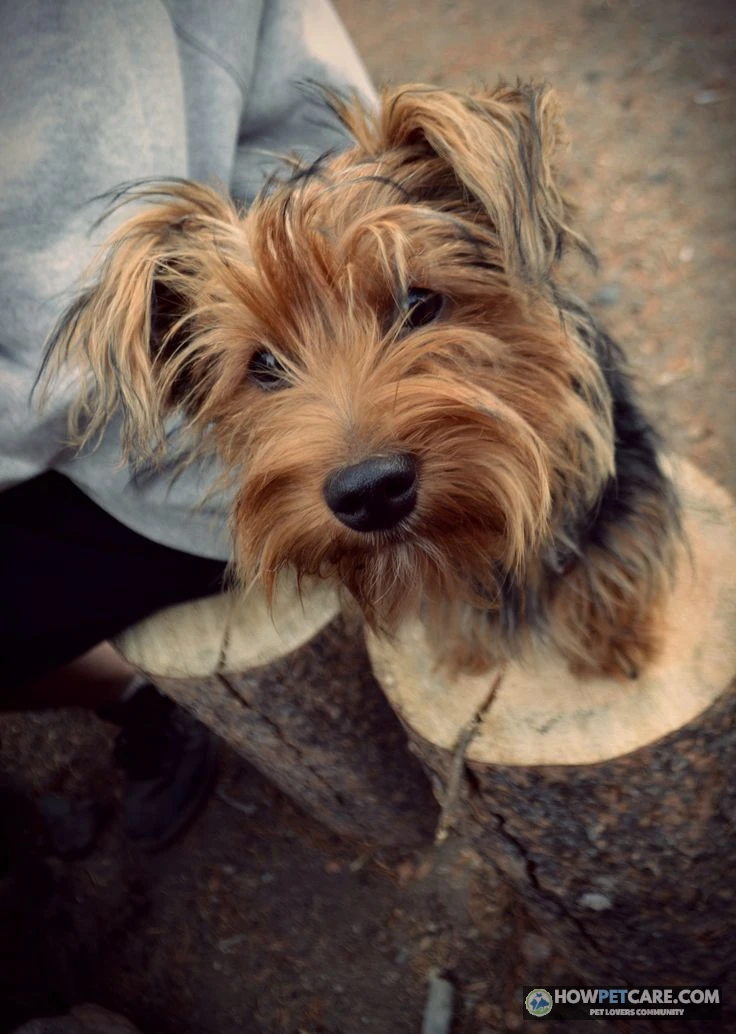

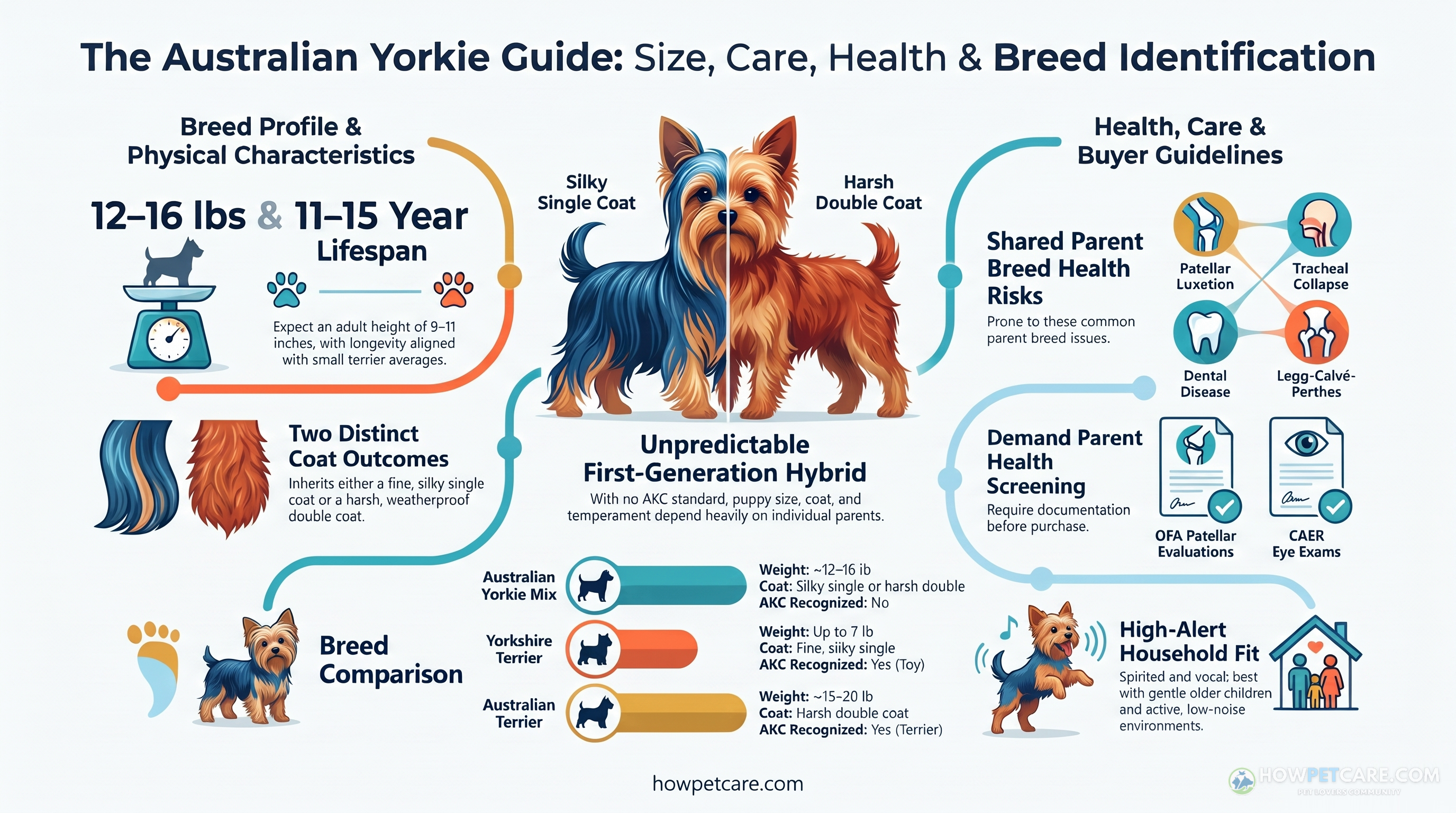
“Australian Yorkie” usually means an Australian Terrier × Yorkshire Terrier designer mix: a small, alert, low-shedding terrier, about 12–16 lb and 9–11 in, with no AKC standard. Some sellers use the name for a Silky Terrier or a Yorkie × Mini Australian Shepherd, so confirm both parent breeds.
“Australian Yorkie” doesn’t name one standardized breed. In most U.S. listings, it refers to an Australian Terrier × Yorkshire Terrier mix, a first-generation designer cross. The phrase is also used loosely for two other dogs: the Australian Silky Terrier, an established purebred developed from the same two ancestral breeds, and the “Yorkshire Aussie,” a Yorkie × Miniature Australian Shepherd mix with herding instincts. This guide helps you identify the dog in a listing, then covers the Australian Terrier × Yorkie mix’s size, temperament, grooming, health, price, and buying checklist so you can assess the fit for your household and budget.
What “Australian Yorkie” Actually Means: Three Different Dogs
The Australian Terrier × Yorkshire Terrier mix (the usual meaning)
Most breeders and pet sites using “Australian Yorkie” mean a cross between an Australian Terrier and a Yorkshire Terrier. It’s a designer or hybrid dog, not a fixed breed: there’s no written breed standard or AKC or UKC recognition, and puppies in one litter can differ in size, coat texture, and temperament. The mix is typically small, often described as low-shedding and well suited to apartment living, and inherits terrier traits such as barking, digging, and a strong prey drive.
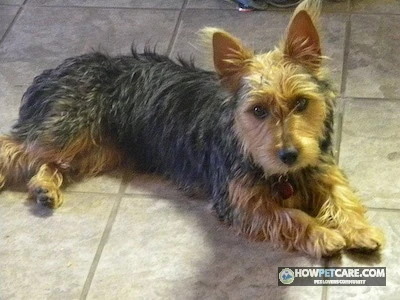
The Silky Terrier nickname and how it differs from the mix
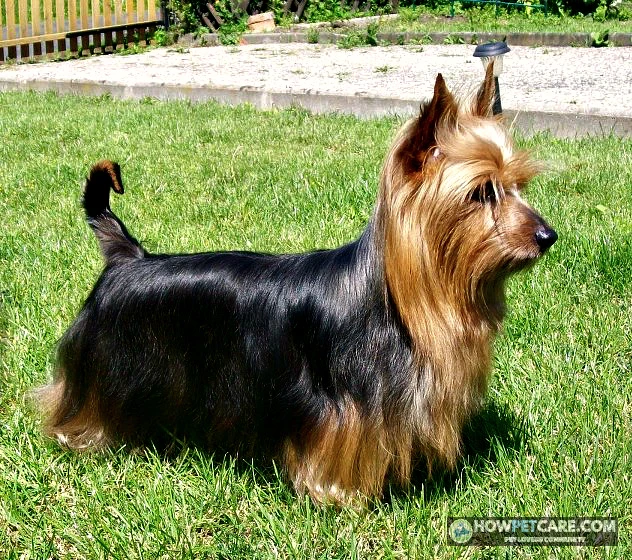
The Australian Silky Terrier is sometimes called a “Silky” or “Aussie Silky.” Developed in Australia from Yorkshire Terrier and Australian Terrier ancestry, it’s sometimes confused with the mix by sellers. The distinction matters: the Silky Terrier is a standardized purebred with a written breed standard, established breed clubs, and predictable adult size and coat. The “Australian Yorkie” mix is a fresh cross, and what each puppy inherits from its parents is less predictable.
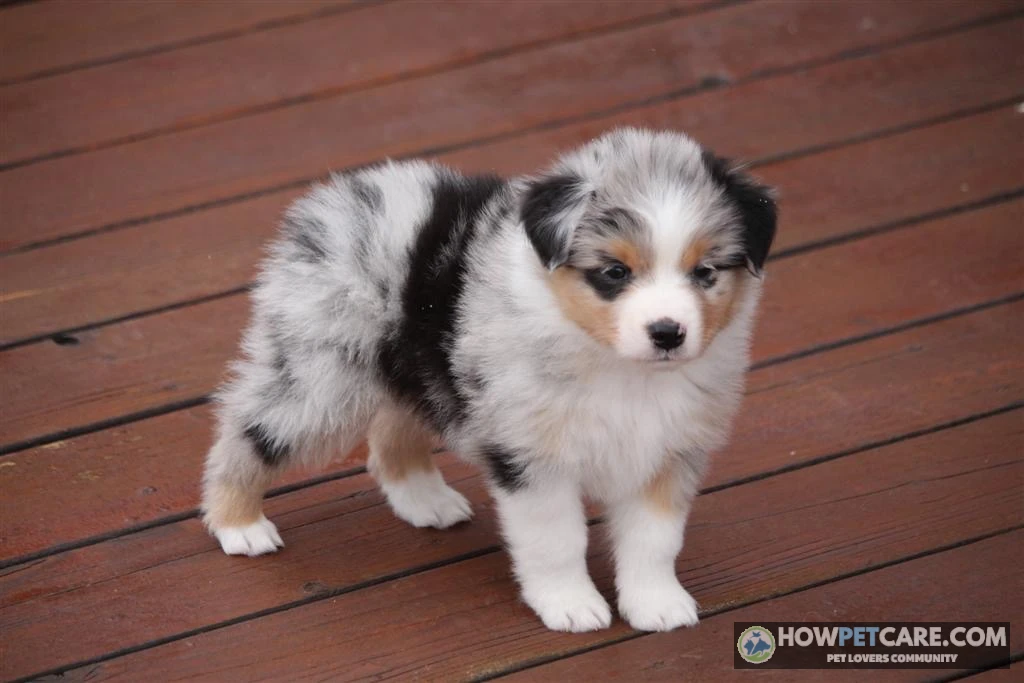
The Yorkshire Aussie (Yorkie × Mini Australian Shepherd)
A third, unrelated meaning is the “Yorkshire Aussie,” a cross between a Yorkshire Terrier and a Miniature Australian Shepherd. This dog has no connection to the Australian Terrier. It tends to have herding-dog energy, higher exercise needs, and sometimes merle coloring, so it suits a different kind of household than a small terrier mix.
Quick check: which dog is this listing actually selling?
Before reading further, match the ad or listing in front of you to one of the three dogs below:
- ☐ The ad names an Australian Terrier parent and a Yorkshire Terrier parent, uses words like “mix,” “cross,” “hybrid,” or “designer,” and offers no breed standard → You’re looking at an Australian Yorkie (the mix this guide covers).
- ☐ The ad says “Silky Terrier,” “Australian Silky Terrier,” or “purebred,” mentions AKC papers or a breed standard, and both parents are Silkies → You’re looking at a Silky Terrier—an established breed, not a cross.
- ☐ The ad mentions “Mini Aussie,” “Australian Shepherd,” “Yorkshire Aussie,” or merle coloring → You’re looking at a Yorkie × Mini Australian Shepherd mix, a different dog with herding-dog energy.
- ☐ The ad just says “Australian Yorkie” with no parent breeds named → Ask the seller which two breeds the parents are. If they cannot answer, walk away.
The rest of this guide covers the Australian Terrier × Yorkie mix and points out where the Silky Terrier and Yorkshire Aussie differ.
Australian Yorkie Size, Weight, Lifespan and Coat Colors
Full-grown weight and height by parent size
An adult Australian Yorkie mix is generally expected to stand about 9–11 inches tall and weigh roughly 12–16 pounds, with males sometimes at the higher end and females at the lower end. Because the mix has no breed standard, treat those figures as estimates based on the parent breeds, not guarantees. The Yorkshire Terrier is a toy breed under the AKC breed standard, while the Australian Terrier is a slightly larger, sturdier terrier. A puppy’s adult size usually follows whichever parent it takes after. The best predictor is the actual weight and height of the sire and dam—ask for both before putting down a deposit.
Some older or conflicting listings cite much smaller weights, around 4–7 pounds, but those figures appear to confuse the mix with a toy Yorkshire Terrier. The 12–16 pound estimate is the more consistent consensus for the Australian Terrier × Yorkie cross.
Small breeds generally reach adult height within about 9 to 12 months, though coat texture can continue to change after the frame is set.
How long an Australian Yorkie lives
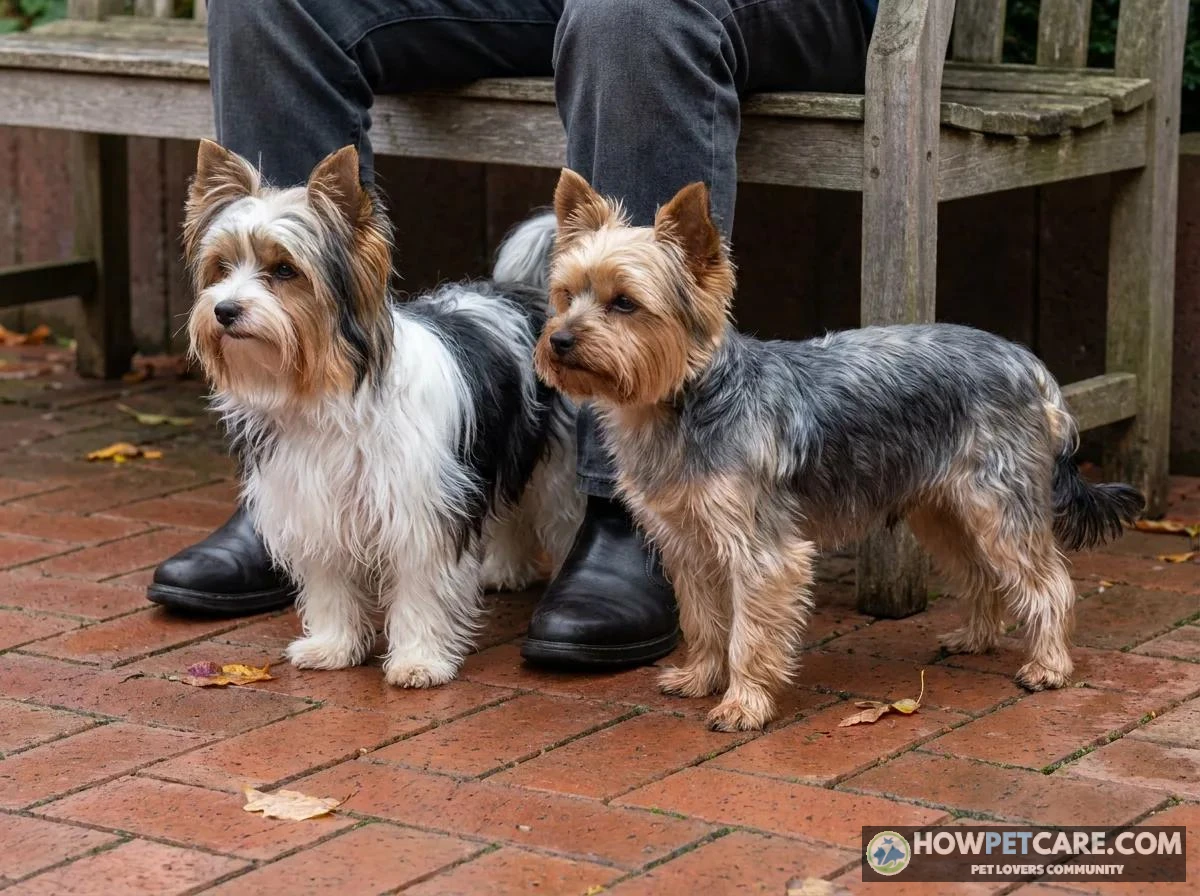
The expected lifespan is about 11–15 years, based on the typical longevity of both parent breeds. No mix-specific longevity study exists, so the range is an estimate. Weight management, dental care, routine veterinary visits, and avoiding obesity all influence where an individual dog lands in that range.
Coat colors you can expect
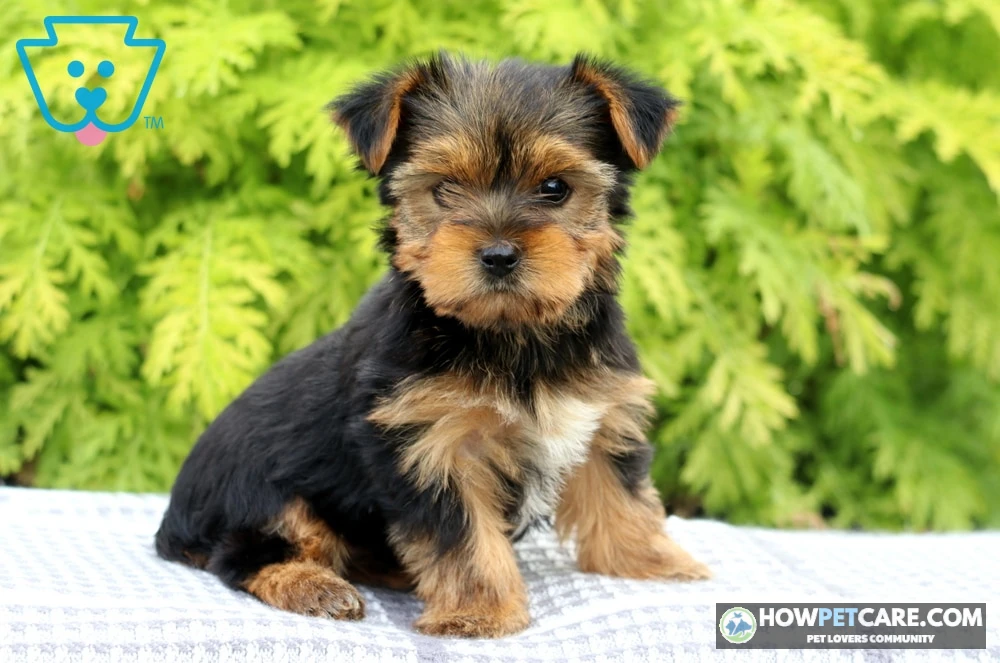
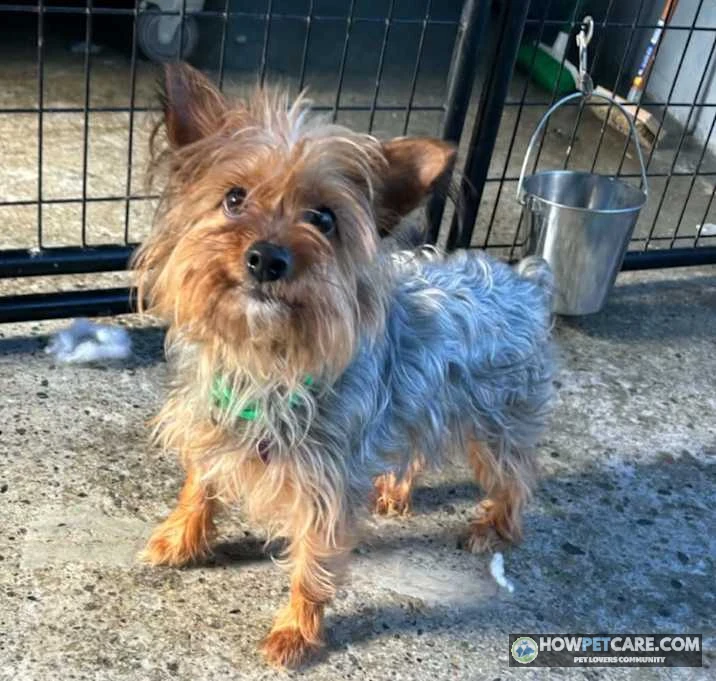
Puppies are often born black-and-tan or blue-and-tan, and their color can shift as they mature. You may also see sandy or redder variations inherited from the Australian Terrier side. Coat color and texture aren’t fixed in a first-generation cross, so two puppies from the same litter can look quite different as adults.
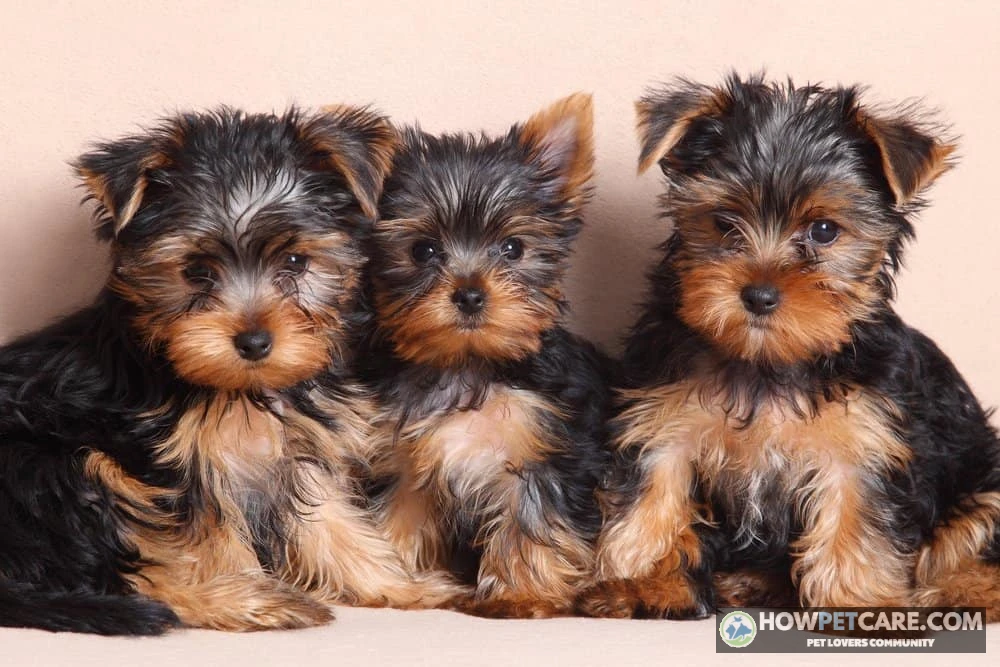
If you’re researching the Silky Terrier instead, expect a standardized blue-and-tan or gray-and-tan silky coat and a more predictable adult look. The Yorkshire Aussie may carry merle patterns from the Miniature Australian Shepherd side, which the terrier mix does not typically produce.
Australian Yorkie Temperament: Kids, Other Pets, Apartments and Shedding
Are Australian Yorkies good family dogs?
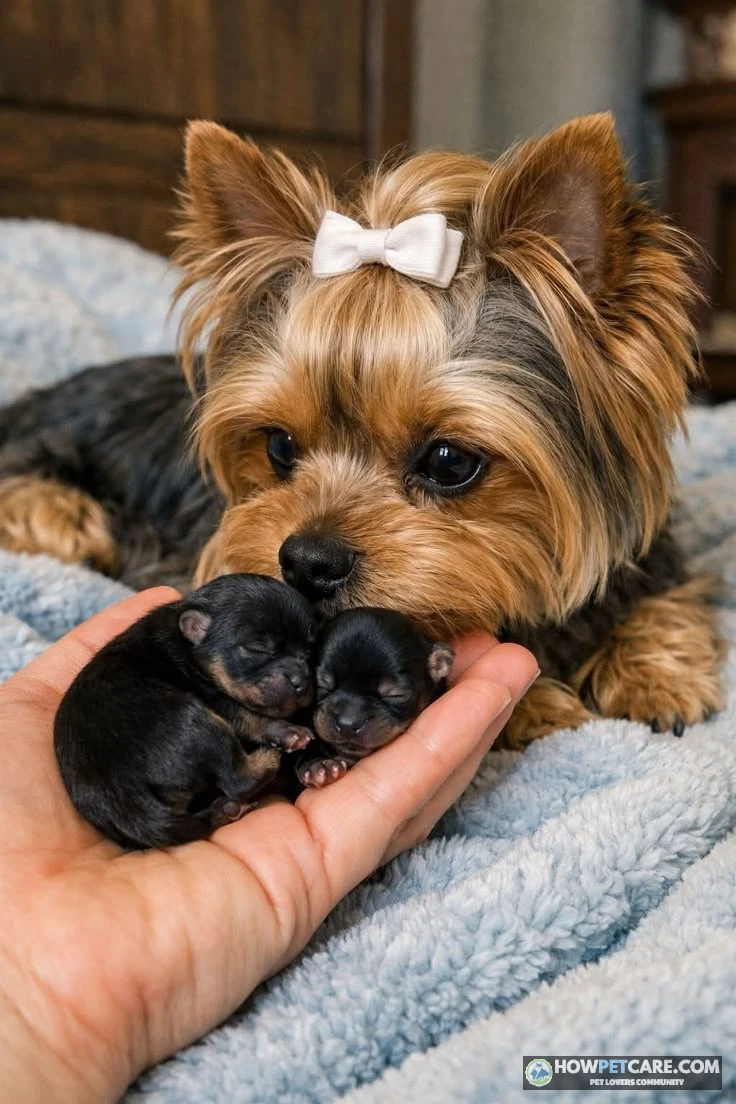
The mix blends Yorkie boldness and alertness with Australian Terrier confidence and working-terrier drive. Expect a spirited, vocal dog that can be affectionate with its people but isn’t a soft lap dog. The mix is generally best suited to gentle, older children who know how to handle a small dog. Very young children can accidentally injure a fragile toy-sized puppy, so supervision is essential.
Living with other pets
Terrier prey drive means the mix may chase hamsters, rabbits, or small birds. Living with cats is usually workable with careful, early introductions, but don’t trust the dog unsupervised with small pets until you know its individual temperament. Early socialization improves the odds of peaceful coexistence.
Apartment living and the barking question
The dog’s small size fits apartment life, but barking is a real concern when you share walls. Both parent breeds are alert watchdogs, so the mix will likely sound off at hallway noise, visitors, or passing dogs. Teaching a quiet cue, providing enough exercise, and avoiding long stretches alone can keep barking manageable. If you need a quiet dog or are away from home most of the day, this mix is probably a poor fit.
Does an Australian Yorkie shed? What “hypoallergenic” really means
The mix is often described as low-shedding. No dog is truly hypoallergenic; allergen levels depend on the individual dog’s coat, dander, and saliva, as well as the allergic person’s sensitivity. A silky single coat generally sheds less than a harsh double coat, but you can’t guarantee which coat a puppy will inherit. Allergic households should spend time with the specific puppy and its parents before committing.
Australian Yorkie vs Yorkshire Terrier vs Australian Terrier vs Silky Terrier
Australian Yorkie vs Yorkshire Terrier: the key differences
The Yorkshire Terrier is an AKC-recognized toy breed with a fixed standard: tiny size, a fine silky single coat, and high grooming needs if the coat is kept long. The Australian Yorkie mix is larger on average, less predictable, and may inherit either a silky or a harsh double coat. Unlike the standardized Yorkie, the mix is a variable cross.
Mix vs Australian Terrier: what changes
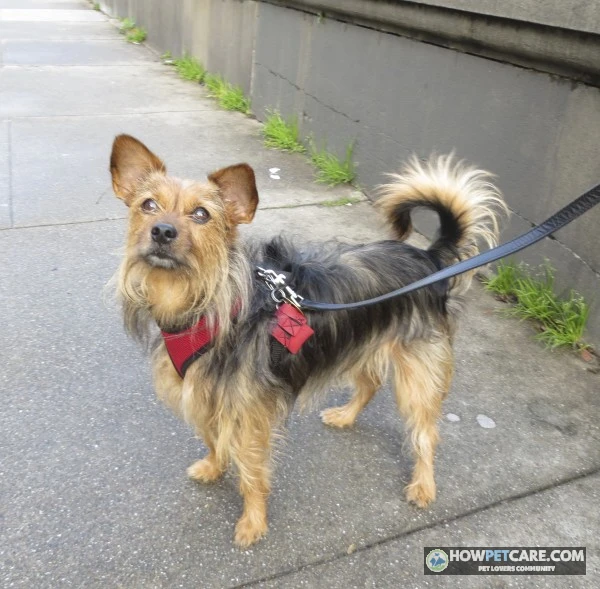
The Australian Terrier is a sturdy, weatherproof terrier with a harsh double coat and a recognized breed standard. The mix is usually smaller and may have a softer coat, but it lacks the Australian Terrier’s breed-club health programs and predictable temperament.
Mix vs Silky Terrier: when the two are close and when they are not
Because the Silky Terrier was developed from Yorkie and Australian Terrier ancestry, it’s the closest “finished” version of this cross. Its size, coat, and temperament are predictable; with the mix, buyers should expect more variation in a less standardized dog.
Australian Yorkie vs Yorkshire Terrier vs Australian Terrier vs Silky Terrier
| Trait | Australian Yorkie (Australian Terrier × Yorkie mix) | Yorkshire Terrier | Australian Terrier | Silky Terrier |
|---|---|---|---|---|
| Origin | Recent designer cross | England (1800s), established breed | Australia (1800s), established breed | Australia, developed from Yorkie × Australian Terrier ancestry |
| AKC recognition | No (hybrid registries only) | Yes, Toy Group | Yes, Terrier Group | Yes, Toy Group |
| Adult weight | ~12–16 lb (estimate; sire/dam weight is the best predictor) | Up to 7 lb | ~15–20 lb | ~10 lb |
| Adult height | ~9–11 in (estimate) | ~7–8 in | ~10–11 in | ~9–10 in |
| Lifespan | ~11–15 yr (estimate; no mix-specific study exists) | ~11–15 yr | ~11–15 yr | ~13–15 yr |
| Coat | Silky single or harsh double, varies even within a litter | Fine, silky, single coat | Harsh, weatherproof double coat | Fine, silky, single coat |
| Shedding | Low to moderate depending on coat outcome | Very low | Low–moderate | Very low |
| Temperament | Bold, alert, terrier drive; varies by parent | Affectionate, feisty, vocal | Confident, spirited, independent | Alert, friendly, toy-breed sociability |
| Grooming load | Moderate–high; unknown until adult coat shows | High (daily brushing if kept long) | Low–moderate (hand-stripping) | High (daily brushing if kept long) |
| Common health concerns | Patellar luxation, tracheal collapse, liver shunt, Legg-Calvé-Perthes, diabetes | Luxating patella, tracheal collapse, portosystemic shunt, dental disease | Patellar luxation, Legg-Calvé-Perthes, diabetes, allergies | Patellar luxation, Legg-Calvé-Perthes, tracheal collapse |
| Predictability | Low—size, coat, and temperament vary per puppy | High | High | High |
All mix figures are estimates based on the parent breeds. A first-generation cross has no breed standard, so individual puppies can land anywhere in the range. Purebred figures reflect AKC breed standards and profiles.
How to read this table: the mix usually lands between its parents on size and lifespan, but its coat is unpredictable—one litter can produce both silky and harsh coats. If predictability matters most, the Silky Terrier is the closest standardized alternative. It was developed from the same two ancestral breeds, with generations of breeding behind it. If you’re comfortable with variation, the mix can fit a household looking for an individual small terrier.
Grooming an Australian Yorkie: Predicting Harsh Double vs Silky Single Coats
How to guess a puppy’s adult coat
No one can guarantee the adult coat of a first-generation puppy, but you can get a better idea of the possibilities before you commit.
-
Look at both parents first
This is the strongest signal. If both parents have silky single coats, most puppies will too. Ask for clear photos, not just a live viewing, and find out whether either parent had a different coat texture as a puppy.
-
Check the puppy’s texture at 8–16 weeks
Silky-coat puppies tend to have soft, flat-lying hair that parts easily down the back, with wispy feathering on the ears, muzzle, and legs. Harsh-coat puppies have coarser, wirier hair that stands slightly off the body and feels rough when rubbed backward.
-
Check the face and legs
A bearded, scruffy muzzle and stiff leg hair by 10–12 weeks point toward the Australian Terrier coat. A smooth, clean muzzle points toward a silky coat.
-
Ask for photos of adult relatives
Request pictures of previous litters at 12+ months and of grandparents. Repeated harsh coats across a breeder’s litters can tell you something a photo of a 6-week-old cannot.
Puppy coats can change dramatically. Some silky adults start out fluffy, and some harsh coats don’t fully wire up until after the first adult molt. Treat these checks as clues, not guarantees. If coat type matters enough to affect your decision, a purebred Silky or an adult rescue removes the guesswork entirely.
Silky single coat routine
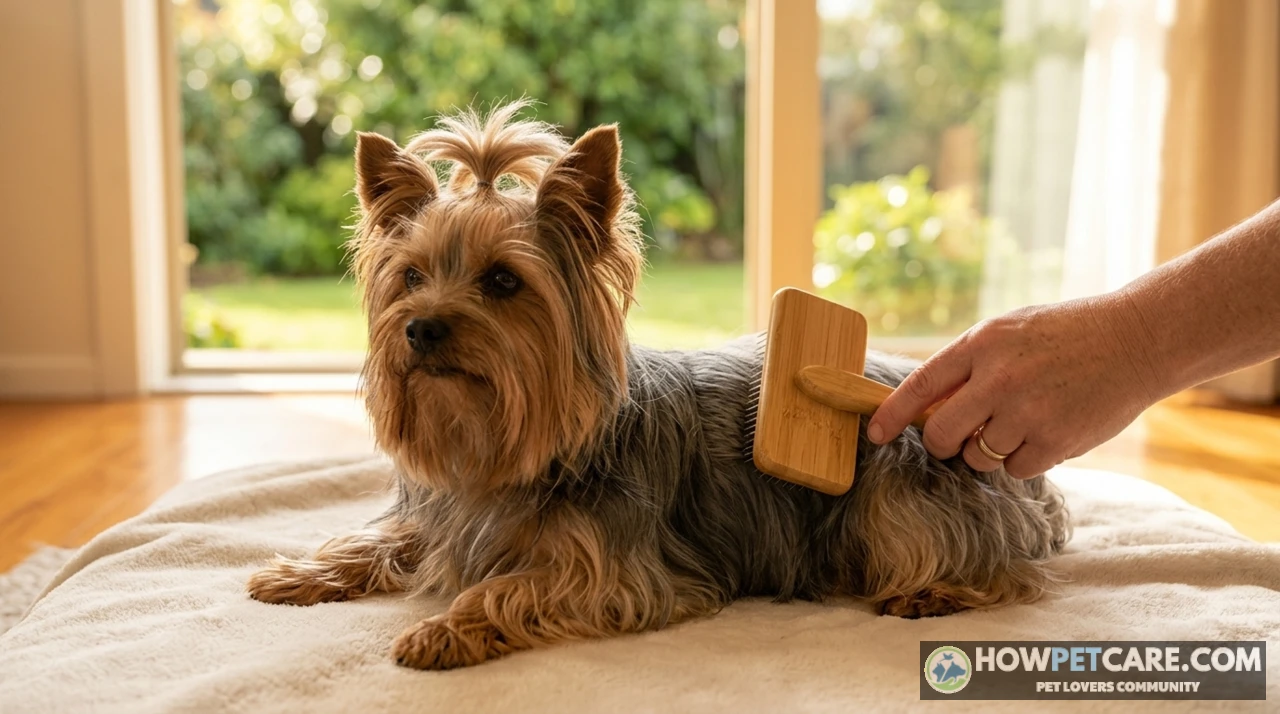
A silky single coat tangles easily, especially around the ears, legs, and under the arms. Plan to brush and comb several times a week, bathe as needed, and trim the coat regularly to keep it manageable. Mats can form quickly behind the ears and in the leg furnishings, so check those spots at every grooming session.
Harsh double coat routine
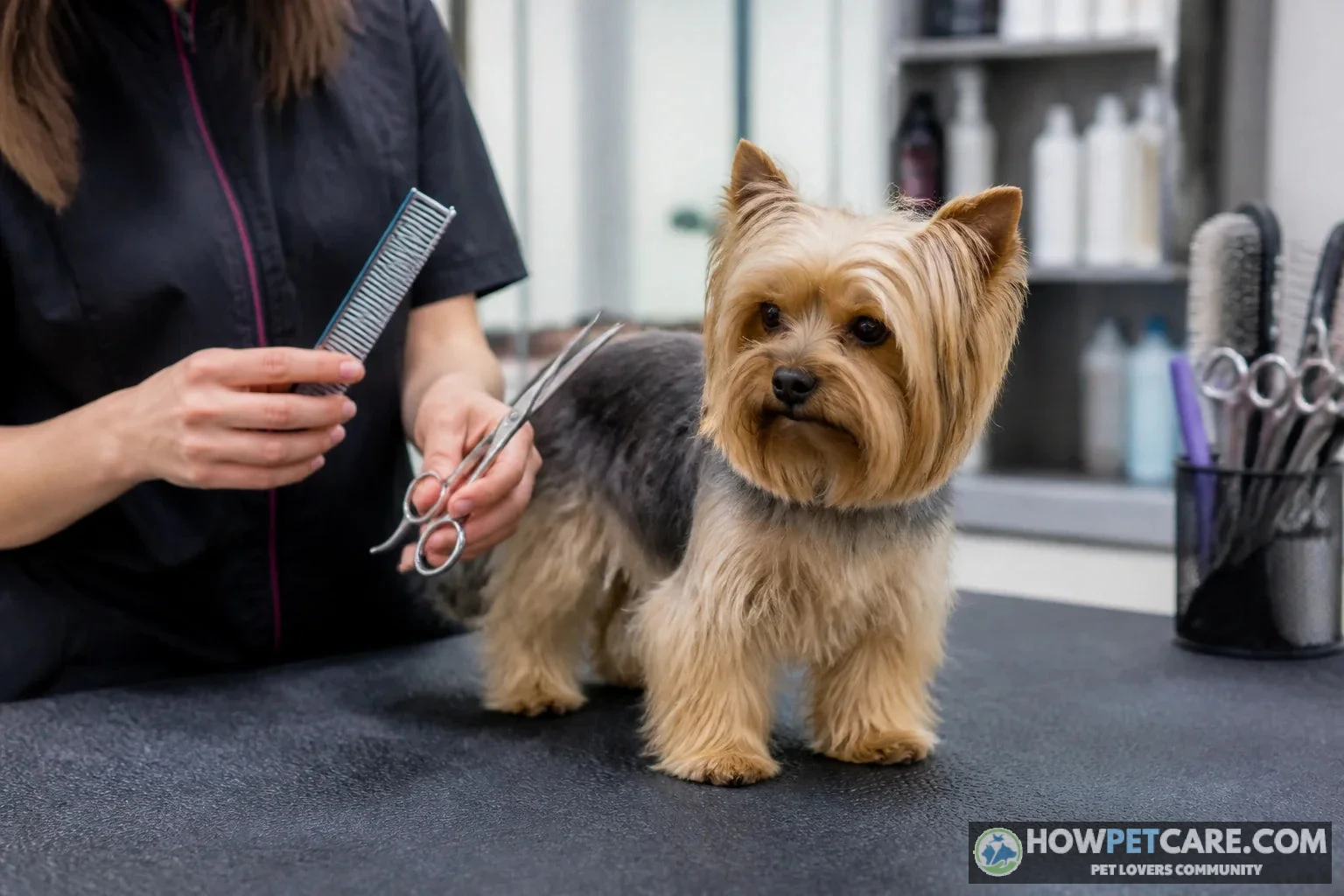
A harsh double coat needs less frequent brushing but benefits from seasonal hand-stripping or a professional groom to remove dead coat. Avoid repeated clipping, which can soften the texture and reduce the coat’s weather resistance. A professional groomer familiar with terrier coats can advise on how often to strip it.
Teeth, ears, nails and eyes
Small breeds are prone to dental disease because their teeth sit close together in a small mouth. Brush the dog’s teeth several times a week and schedule veterinary dental checks. Trim nails every few weeks, clean ears as needed, and wipe the eye area to prevent staining and irritation.
Exercise, Training and Socialization for a Stubborn Terrier Streak
How much exercise a small terrier mix needs
Aim for daily walks and active play, with roughly 20–30 minutes of exercise per day as general guidance for a small active terrier. Mental work, including sniffing walks, puzzle toys, and short training games, matters as much as physical exercise for a clever, easily bored terrier mix.
Puppy socialization checklist
Introduce puppies to people, sounds, surfaces, and other dogs early and safely, following your veterinarian’s vaccination guidance. Positive experiences before about 16 weeks shape an adult dog’s confidence and reduce fear-based barking later.
Training around the stubborn streak
Terriers can be stubborn, so keep sessions short and use reward-based methods consistently. Harsh corrections backfire with this type. Teach a quiet cue for barking, provide an acceptable digging area or redirect digging to a sandbox, and keep the dog leashed or in a fenced yard when prey drive is likely to kick in.
Housetraining small breeds is often slower. Use a regular schedule and crate training, and expect setbacks. Build alone-time gradually to help prevent separation distress, which is common in small companion breeds.
Australian Yorkie Health Problems: What Each Parent Breed Passes On and Which Tests to Demand
Conditions from the Yorkshire Terrier side
Yorkshire Terrier-related risks include luxating patella, dental disease, tracheal collapse, portosystemic (liver) shunt, and hypoglycemia in very small puppies. Typical signs include a dry “goose honk” cough for tracheal collapse, poor growth or disorientation after meals for liver shunt, and tremors or lethargy for hypoglycemia.
Conditions from the Australian Terrier side
Australian Terrier-related risks include patellar luxation, Legg-Calvé-Perthes disease, diabetes mellitus, and allergies. Hind-leg lameness and hip pain in puppies around 4–12 months can indicate Legg-Calvé-Perthes; excess thirst and urination with weight loss can indicate diabetes.
Genetic screening a breeder should show you
Crossbreeding doesn’t guarantee hybrid vigor. A puppy can inherit conditions from either parent, so ask for documentation for both rather than accepting verbal assurance. Recommended screening includes an OFA patellar evaluation for both parents, a recent CAER or ophthalmologist eye exam, and any DNA tests recommended by the parent breed clubs. Ask about bile acid testing or line history for liver shunt, as well as the breeder’s feeding protocol to prevent hypoglycemia in the smallest pups.
Budgeting for vet care
Ongoing veterinary costs include wellness visits, vaccines, dental cleanings, parasite prevention, and possible pet insurance. Estimated annual veterinary care runs roughly $500–$1,000. Dental cleanings and treatment for chronic conditions such as diabetes or tracheal collapse can add significantly to that baseline.
| Condition | Parent breed it traces to | Typical signs | Screening or test a breeder should show | Notes for buyers |
|---|---|---|---|---|
| Luxating patella | Both — Yorkie and Australian Terrier | Skipping or hopping on a back leg, intermittent limp | OFA patellar evaluation for both parents | Common in small breeds; mild cases managed, severe cases may need surgery |
| Tracheal collapse | Yorkshire Terrier | Dry “goose honk” cough, worse with excitement or collar pressure | Vet history; ask about respiratory issues in the line | Use a harness, never a collar, on this mix |
| Portosystemic (liver) shunt | Yorkshire Terrier | Poor growth, disorientation after meals, head pressing | Bile acid test results or line history | Yorkies are overrepresented; ask directly |
| Dental disease | Both, especially Yorkie | Bad breath, tartar, tooth loss by middle age | Dental records for parents; ask about puppy dental care | Budget for professional cleanings; start brushing young |
| Legg-Calvé-Perthes disease | Australian Terrier | Hind-leg lameness and hip pain in puppies ~4–12 months | OFA hip/patella records; honest line history | Degeneration of the femoral head; surgery is the usual fix |
| Diabetes mellitus | Australian Terrier | Excess thirst/urination, weight loss | Ask about diabetes in the pedigree; blood glucose records if flagged | One of the better-documented Australian Terrier risks |
| Puppy hypoglycemia | Yorkshire Terrier | Tremors, weakness, lethargy, seizures in pups under ~4 months | Breeder’s feeding protocol for small pups | Emergency-level issue in toy-size puppies; feed small frequent meals |
| Eye conditions | Both | Squinting, cloudiness, vision loss | CAER/ophthalmologist exam for both parents | Ask for a recent exam, not one from years ago |
Signs that warrant a vet visit include persistent coughing or honking, limping or skipping on a back leg, and lethargy or tremors in a young puppy.
Australian Yorkie Puppy Price, Breeders, Registries and Rescue Options
How much an Australian Yorkie puppy costs in the US
There’s no breed-club price list for this unregistered mix, and the cost varies by region, breeder, and generation. Expect a broad range—roughly $800 to $2,500 for a puppy in the U.S. in 2026—rather than a fixed number. Factors driving the price include parentage, health testing, size, color, and local demand. Because there’s no AKC standard, treat any seller quoting one exact price with caution.
What ACHC and DRA registration means for a buyer
The mix isn’t recognized by the AKC or UKC. It may be registered with hybrid registries such as the American Canine Hybrid Club (ACHC) and the Dog Registry of America (DRA). Hybrid registration records parentage; it doesn’t prove health, quality, or adherence to a breed standard, and it isn’t a substitute for health testing.
How to vet a breeder: questions to ask
Copy this list into a message to any breeder you’re considering. A good breeder answers all of it without hesitation; evasive answers are useful information.
Parentage and the dog itself
- Which two breeds are the sire and dam? Can I see photos and meet, or video-call with, the mother?
- How much do both parents weigh, and what coat type does each have?
- Do you have photos of previous litters at adult age?
Health
- Can you send me OFA patellar evaluations and recent eye exams for both parents?
- Has either parent’s line produced cases of liver shunt, tracheal collapse, diabetes, or Legg-Calvé-Perthes?
- What is your feeding protocol for preventing hypoglycemia in the smallest puppies?
- What vet care have the puppies had so far, and can I see the records?
Terms
- What does the written contract cover—health guarantee length, return terms, and what happens if I cannot keep the dog?
- Is the puppy registered with ACHC or DRA? Remember that hybrid registration records parentage and does not prove health or quality.
- Can I visit in person, or at minimum do a live video tour of where the puppies are raised?
No visits or video calls allowed, pressure to pay by wire or gift card, “rare” size or color used to inflate price, multiple unrelated breeds for sale at once, or a seller who cannot name both parent breeds.
Rescue and adoption routes
Adoption is an alternative to buying a puppy. Search breed-specific rescues for Yorkshire Terriers, Australian Terriers, and Silky Terriers, as well as small-dog rescues and shelters using terms like “terrier mix.” Adoption fees are approximate and vary by organization. Adult dogs often come with a known temperament and health history, removing some of the unpredictability of a first-generation mix.
First-year cost estimate for an Australian Yorkie
| Cost category | Estimated range (USD) | One-time or recurring | What affects the cost | Source or basis |
|---|---|---|---|---|
| Purchase or adoption fee | Varies widely; no breed-club price list | One-time | Region, breeder, health testing, generation | No fixed standard |
| Supplies (crate, harness, brush, bed, toys) | $150–$400 | One-time | Quality and brand | Approximate |
| Veterinary care (wellness, vaccines, preventives) | $500–$1,000 | Recurring | Location, clinic, dog’s health | Annual estimate |
| Food | $200–$500 | Recurring | Food type, dog size | Approximate |
| Grooming | $200–$600 | Recurring | Coat type, professional vs. DIY | Approximate |
| Training classes | $100–$300 | One-time or recurring | Format and trainer | Approximate |
Is an Australian Yorkie Right for You? Pre-Purchase Checklist and Next Steps
Who this dog suits and who should look elsewhere
The Australian Yorkie mix suits owners who want a small, spirited terrier, can commit to regular grooming and training, and can manage barking in close quarters. It’s less suitable for people who are away most of the day, households with very young children, owners who want a quiet dog, or anyone who needs a guaranteed adult size and coat. Those buyers should consider a Silky Terrier, a Yorkshire Terrier, or an Australian Terrier instead.
Supplies and home prep before pickup day
Have a crate, a small-breed harness (never a collar for a dog that may have tracheal sensitivity), a soft brush and comb, dental supplies, puppy-proofed spaces, and stairs or ramps for furniture access. Book a veterinary appointment for the first week.
Your next three steps
- Shortlist breeders and rescues, then request health documentation and photos of adult relatives.
- Visit or video-call before committing, and confirm which two breeds the parents are.
- Bring the puppy to your veterinarian within the first week for a checkup, vaccination plan, and care baseline.
FAQ
Do Australian Yorkies bark a lot?
They often do. Both parent breeds are alert terriers that tend to bark at sounds and passersby. Early training with a quiet cue, plus enough exercise and attention, keeps it manageable.
Can an Australian Yorkie be left home alone while I work?
Adult dogs can usually manage a few hours, but small companion terriers are prone to separation distress. Puppies need much shorter stretches. Build alone-time gradually and arrange a midday break if your workday is long.
When is an Australian Yorkie fully grown?
Small-breed dogs usually reach adult size within about 9 to 12 months. The coat can keep changing in texture for longer, so the final coat type may not show until the dog is 1 to 2 years old.
Is an Australian Yorkie a good first dog?
It can be, if you can commit to regular grooming, consistent reward-based training, and managing barking. The stubborn terrier streak and the need for early socialization make it more demanding than a calm lap dog.
Are Australian Yorkies prone to dental problems?
Yes. Small breeds, including the Yorkshire Terrier, are prone to dental disease because their teeth sit close together in a small mouth. Daily or frequent tooth brushing and regular vet dental checks help prevent it.