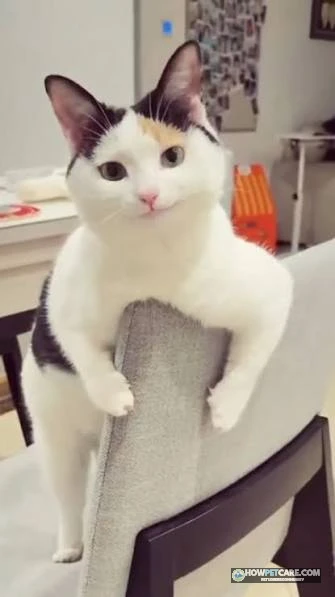

A cat smile is usually a relaxed facial shape, not proof of human-like happiness. Judge the whole cat: soft eyes, neutral ears, loose whiskers, and calm posture matter more than mouth shape. Slow blinking can signal trust, while bared teeth or tension may indicate stress, pain, or Flehmen.
What a Cat Smile Actually Means

A cat smiling usually means its face looks relaxed to a human—not that the cat is smiling in the human sense. Cats can move their facial muscles into expressions that resemble a smile, but mouth shape alone doesn’t reveal a cat’s emotional state. To understand the expression, look at the eyes, ears, whiskers, posture, tail, behavior, and immediate context.
A content cat may have soft or half-closed eyes, neutral ears, relaxed whiskers, a loose jaw, and mouth corners that appear slightly upturned. Stronger signs of comfort and trust include slow blinking, kneading, head bunting, resting nearby, and purring in a relaxed setting. Cats commonly express contentment through purring and kneading rather than through a human-style grin.
By contrast, an open mouth with visible teeth isn’t normally a happy cat face. Bared teeth, flattened ears, a tense muzzle, dilated pupils, or a rigid body may indicate fear, stress, pain, overheating, breathing difficulty, or a defensive warning. A briefly raised upper lip after sniffing may be the Flehmen response, which involves scent processing rather than smiling.

Anthropomorphism—the tendency to assign human motives or emotions to animals—makes a neutral cat facial expression easy to misread. A useful rule is: Treat the mouth as one clue, not the verdict. A relaxed pattern across the whole body matters more than a cat grin.
A face-reading guide cannot diagnose pain, illness, fear, or a behavioral condition. If an expression is new, persistent, or accompanied by hiding, reduced appetite, breathing changes, aggression, or unusual inactivity, contact a veterinarian.
Why Cats Appear to Smile

Cats appear to smile for several mechanical and behavioral reasons. Relaxed facial muscles after eating, grooming, or settling down can make the mouth corners look lifted. Jaw shape, muzzle length, cheek contours, camera angle, and fur patterns can strengthen the illusion. A cat may therefore look cheerful while experiencing nothing comparable to a deliberate human smile.
The surrounding behavior supplies the meaning. A loose cat resting after grooming is different from a rigid cat showing teeth while cornered. Likewise, a cat that opens its mouth after investigating an odor may be using the Flehmen response. In that moment, the raised lip helps the cat analyze chemical information; it isn’t a grin.
Cats communicate more reliably through combinations of signals. Ear position, eye narrowing, whisker tension, tail movement, posture, vocalization, and willingness to approach generally tell you more than the curve of the mouth. Cats may also recognize familiar human expressions and routines, but they don’t necessarily interpret your smile as another person would. Your voice, movement, gaze, and history of safe interactions all contribute to their response.
Breed-specific facial structures that look like smiling

Breed anatomy can create a permanent smile-like resting face. Brachycephalic, or short-faced, cats such as Persians, Exotic Shorthairs, and Himalayans have compressed facial structures that change the apparent relationships among the nose, cheeks, eyes, and mouth. Depending on the individual, that structure may look like a smile, frown, or scowl even when the cat is neutral.
Sphynx cats can also appear unusually expressive because their skin folds and visible facial contours aren’t obscured by a full coat. Many Sphynx cats have sparse or absent whiskers, so owners can’t rely on whisker position in the same way they might with other cats. Ear position, eye tension, posture, activity, and changes from that individual cat’s baseline become especially useful.
Other cats simply have naturally upturned mouth corners or contrasting fur markings that resemble a curved smile. There is no technical name or special breed category for a smiling cat. Anatomy creates the resting appearance; it doesn’t establish the mood.
Why a cat smile with teeth is usually a meme, not a mood

A photograph of a cat smiling with neat rows of human-like teeth is usually edited, staged, or presented as a meme. Real cats don’t expose their teeth to display friendly happiness as humans do. If real teeth are visible, assess the context rather than assuming the cat is posing.
A cat may bare its teeth during a defensive hiss, briefly lift its lip during the Flehmen response, pant after exertion, vocalize with its mouth open, or have a health issue affecting its mouth or breathing. Flattened ears, a crouch, a tucked or thrashing tail, and a fixed stare make a defensive interpretation more likely. Give that cat space instead of moving closer for a photograph.
How to Tell If Your Cat Is Happy

To tell whether your cat is happy, look for several relaxed signals occurring together. Soft eyes and a loose muzzle are useful, but whole-body cat language is more dependable than a single expression.
Common signs associated with comfort and trust include:
- Soft or partially closed eyes, sometimes followed by a slow blink
- Ears resting upright or neutrally rather than pinned back
- Whiskers held naturally instead of pressed back or thrust forward tensely
- Loose muscles and comfortable resting positions
- A tail carried upright with a gentle curve during a friendly approach
- Purring while resting, kneading, grooming normally, or rubbing the head against you
- Choosing to sleep nearby or remaining relaxed in your presence
A cat exposing its belly may feel safe, but the display isn’t necessarily an invitation to touch the abdomen. Watch what the cat does next and respect withdrawal, tail lashing, skin twitching, or a sudden turn toward your hand.
Compare every observation with your cat’s normal baseline. One cat may purr frequently, while another rarely does. A naturally reserved cat may show trust by remaining in the room rather than climbing into a lap. Sudden changes matter more than whether an individual matches a generic picture of cat happiness.
Observable slow-blink cues and what they mean

A slow blink happens when a cat gently narrows or closes its eyes and then reopens them without facial or body tension. It’s often associated with calm, positive cat-human communication and trust. Unlike tightly squeezed eyes, a relaxed slow blink doesn’t usually involve a tense muzzle, flattened ears, or a guarded posture.
Watch the complete sequence. Soft eyes, a gradual closure, a relaxed reopening, and perhaps a comfortable head turn suggest a social signal. Persistent squinting in one or both eyes, discharge, redness, rubbing at the eye, or obvious facial tension isn’t the same pattern and warrants veterinary attention.
Whiskers, ears, and tail as supporting happiness signals
Relaxed whiskers usually sit in a natural, slightly curved position. Whiskers pulled tightly toward the cheeks can accompany fear or discomfort, while whiskers pushed rigidly forward may occur during intense interest, hunting, agitation, or pain. Interpret them alongside the ears and body.
Neutral ears can swivel toward sounds without remaining flattened. A friendly approaching cat often carries its tail upright, sometimes with a curved tip. A tucked tail, hard lashing, puffed fur, crouched posture, or ears held sideways or back suggests that the cat needs distance or a change in the situation.
Printable Happy Cat Face Checklist
Check what you can observe without touching or startling your cat. Mark each cue that fits right now.
- ☐ Ears: Resting upright or in a neutral position, not pinned flat or turned sharply sideways.
- ☐ Eyes: Soft rather than tightly narrowed; a slow blink may happen, but is not required.
- ☐ Mouth: Closed or loosely resting, with no bared teeth, tense muzzle, or repeated lip licking.
- ☐ Whiskers: Resting naturally, not pressed tightly against the cheeks or thrust forward in a tense stare.
- ☐ Posture: Muscles look loose; the cat is resting, sitting comfortably, or moving without a crouch.
- ☐ Context: The cat is behaving normally for this moment and setting.
Also mark stress cues that are present instead of relaxed cues:
- ☐ Ears: Pinned flat, sharply sideways, or held unusually still.
- ☐ Eyes: Tightly squeezed, fixed, unusually wide, or persistently squinting.
- ☐ Mouth: Bared teeth, a tense muzzle, panting, or repeated lip licking.
- ☐ Whiskers: Pulled tightly back or pushed rigidly forward.
- ☐ Posture: Crouched, rigid, tucked, hiding, or reluctant to move.
- ☐ Context: The expression or behavior is suddenly different from the cat’s usual baseline.
Read the pattern, not the score: Several relaxed cues together are more informative than one feature. This checklist cannot diagnose pain or prove happiness. If the face or behavior is suddenly different, or changes come with hiding, reduced appetite, or aggression, contact a veterinarian.
How to Slow Blink With Your Cat

Slow blinking offers a gentle way to communicate without touching or approaching your cat. Choose a calm moment rather than trying it during active play, feeding, conflict, or a stressful event.
Step-by-step slow-blink communication steps
-
Choose a calm moment
Wait until your cat is settled and looking generally toward you. Sit at a comfortable distance and keep your shoulders and hands relaxed.
-
Soften your gaze
Avoid a fixed stare. Let your eyelids lower naturally while keeping your mouth and forehead loose.
-
Close and reopen
Close your eyes gently for about one to two seconds, then open them slowly. Do not squeeze your eyelids shut.
-
Reduce social pressure
Turn your gaze slightly away after the blink. Looking away can be less confrontational than maintaining direct eye contact.
-
Wait for the response
Give your cat time to blink, soften its gaze, turn its head, approach, remain settled, or leave. Let the cat control the interaction.
You can repeat the sequence occasionally over several days, but don’t pursue the cat or demand a response. An absent return blink doesn’t mean the cat dislikes you. The cat may be distracted, sleepy, cautious, or simply uninterested at that moment.
Observable cues that mean your cat is responding
A returned slow blink is the clearest response, but it isn’t the only one. Your cat may soften its eyes, relax its posture, turn its head away, remain comfortably in place, or approach you. These behaviors may indicate that the interaction feels safe.
Stop or increase distance if the cat becomes rigid, flattens its ears, lashes its tail, retreats, or stares with a tense face. Slow blinking is an invitation, not a cat-training command.
Cat Smile Versus Pain, Fear, and Stress Signals

The difference between a smile-like resting face and discomfort lies in tension, supporting body signals, context, and change from normal. A mechanical facial expression is a shape produced by anatomy or momentary muscle position. It becomes concerning when it appears with persistent tension or broader behavioral changes.
Four Expressions That Can Be Misread as a Smile
| Expression | What you may notice | What it may mean | What to do |
|---|---|---|---|
| Relaxed, smile-like face | Loose muzzle, closed or resting mouth, soft eyes, neutral ears | A relaxed resting expression; mouth shape alone cannot confirm happiness | Check posture and behavior against your cat’s usual baseline |
| Slow blink | Eyes gently narrow or close, then reopen | A calm social signal; not the same thing as a grin | Blink slowly back if the cat is calm, then look away |
| Flehmen response | Upper lip lifts after the cat sniffs something; teeth may show briefly | The cat is processing a scent, not smiling | Let the cat investigate without interruption |
| Stress or pain grimace | Tense muzzle, narrowed or squeezed eyes, ears flattened or held unusually, body tense | Possible discomfort, fear, or stress; a face alone cannot identify the cause | Give space; contact a veterinarian if signs persist, are sudden, or come with other changes |
Flehmen response versus an actual cat smile
The Flehmen response can look like a cat grin because the upper lip lifts and teeth may become visible. It commonly follows close investigation of an interesting scent. The cat may pause with its mouth partly open before returning to normal behavior.
| Feature | Flehmen response | Relaxed cat smile-like face |
|---|---|---|
| Mouth | Upper lip lifted; mouth partly open | Usually closed or loosely resting |
| Teeth | May show briefly | Usually not visible |
| Trigger | Often follows focused sniffing | Often noticed during rest, grooming, or calm observation |
| Duration | Brief and linked to scent investigation | May persist because of resting anatomy or relaxation |
| Body | Focused on the odor source | Loose posture with neutral ears and soft eyes |
| Meaning | Scent analysis | A neutral or relaxed appearance, not proof of human-like smiling |
A cat making a Flehmen face is gathering chemical information. Let the cat finish investigating rather than interrupting or treating the expression as an invitation to interact.
Pain grimace and stress face: what to look for
A possible pain grimace may include narrowed or squeezed-shut eyes, a tightened muzzle, altered whisker position, and ears held flat or unusually apart. Fear can involve dilated pupils, a low crouch, tucked tail, flattened ears, bared teeth, growling, or hissing. Stress may appear as repeated lip licking, hiding, excessive grooming, restlessness, freezing, or a tense face.
No single feature identifies the cause. Squinting could reflect discomfort, but a cat may also narrow its eyes during a relaxed slow blink. Visible teeth could accompany Flehmen, vocalization, or a defensive response. Use timing and the whole body to distinguish them.
| Signal | Likely content or relaxed | Possible pain, fear, or stress |
|---|---|---|
| Eyes | Soft, gently narrowed, blinking normally | Tightly squeezed, fixed, unusually wide, or persistently squinting |
| Ears | Upright or neutral; moving casually toward sounds | Flattened, sharply sideways, or held unusually still |
| Whiskers | Resting naturally | Pulled tightly back or pushed rigidly forward |
| Mouth and muzzle | Closed or loosely resting; muzzle appears soft | Tense muzzle, bared teeth, panting, repeated lip licking |
| Body | Loose posture; normal movement | Crouched, rigid, tucked, hiding, or reluctant to move |
| Behavior | Normal eating, grooming, resting, and social choices | Sudden withdrawal, appetite change, aggression, or unusual inactivity |
What Current Research Says About Cat Communication
Research supports slow blinking as a form of positive cat-human communication, but it doesn’t turn the behavior into a universal happiness test. In the 2020 study “The role of cat eye narrowing movements in cat–human communication,” Tasmin Humphrey and colleagues conducted two experiments examining how cats responded to human slow blinking.
The cats were more likely to produce eye-narrowing movements after people slow-blinked at them. They were also more likely to approach an unfamiliar experimenter’s outstretched hand after a slow-blink interaction than after a neutral expression. The study appeared in Scientific Reports, volume 10, article 16503, on October 5, 2020, with DOI 10.1038/s41598-020-73426-0.
What this supports: Slow blinking can function as positive communication between cats and people and may make approach behavior more likely in the tested setting.
What it does not prove: A slow blink doesn’t certify happiness, guarantee an approach, or explain every cat’s response. Researchers tested specific interactions, not a universal method for measuring cat emotions.
Claims that slow blinking directly causes an oxytocin increase in cats require more caution. Oxytocin is studied broadly in human-animal bonding, but cat-specific evidence connecting the hormone directly to slow-blink exchanges remains limited. It’s more accurate to describe slow blinking as a positive communication signal than as proof of a particular hormonal response.
Current feline-behavior guidance favors whole-body observation. Facial movements provide useful information, but veterinary behavior assessment also considers posture, environment, medical history, behavior changes, and the cat’s individual baseline.
Face Check: Is Your Cat Content or Uncomfortable
Start with distance. Observe without touching, lifting, cornering, or waking your cat. Then use the face and body together to decide what to do next.
Read One Smile-Like Face in Four Steps
Imagine your cat is resting on a chair after grooming. Its mouth corners look slightly lifted.
- Check the mouth: It is closed, with no teeth showing and no repeated lip licking. The shape alone doesn’t tell you the cat’s mood.
- Check the eyes and ears: The eyes look soft, and the ears point neutrally rather than flattening or swiveling tensely.
- Check the body: The cat is lying loosely, not crouched or rigid; its tail is resting rather than tucked or lashing.
- Check the change and context: This is a familiar resting spot, and the cat is acting as it usually does after grooming.
Best reading: The cat appears relaxed. The upturned mouth is a smile-like resting shape, not proof that it is experiencing a human-style grin. If the same face came with a tense body, flattened ears, or an abrupt behavior change, pause the interpretation and give the cat space.

For a real-time face check, follow this decision order:
- Look at posture, tail, ears, and whiskers before interpreting the mouth.
- If the body is loose and the eyes are soft, remain calm and let the cat choose whether to interact.
- If appropriate, offer one slow blink, soften your gaze, and look away.
- If teeth are bared or the body is tense, stop approaching and give the cat an escape route.
- If facial tension is sudden or comes with hiding, reduced appetite, aggression, breathing changes, or altered movement, contact a veterinarian.
A photo can freeze a Flehmen response, vocalization, blink, or defensive moment into what looks like a smiling cat. Watch the living sequence whenever possible. Your goal isn’t to label the expression perfectly; it’s to notice whether the cat appears comfortable, needs space, or shows a change that deserves professional attention.
| Expression | Observable Features | Actual Meaning | Trigger or Context | Recommended Action |
|---|---|---|---|---|
| Relaxed, smile-like face | Loose muzzle, closed or resting mouth, soft eyes, neutral ears | A relaxed resting expression; mouth shape alone cannot confirm happiness | Often noticed during rest, grooming, post-eating, or calm observation | Check posture and behavior against your cat's usual baseline |
| Slow blink | Eyes gently narrow or close, then reopen without facial or body tension | A calm social signal; not the same thing as a grin | Calm moments, positive cat-human communication moment, settled environment | Blink slowly back if the cat is calm, then look away |
| Flehmen response | Upper lip lifts after the cat sniffs something; teeth may show briefly, mouth partly open | The cat is processing a scent/gathering chemical information, not smiling | Often follows focused sniffing/investigation of an interesting scent or odor | Let the cat investigate without interruption |
| Stress or pain grimace | Tense muzzle, narrowed or squeezed eyes, ears flattened or held unusually, body tense | Possible discomfort, fear, or stress; a face alone cannot identify the cause | Discomfort, physical pain, illness, fear, or sudden environmental changes | Give space; contact a veterinarian if signs persist, are sudden, or come with other changes |
FAQ
Can cats tell when you are smiling?
Cats can recognize human facial expressions and tone, but they do not interpret a smile the way people do. They respond more to your voice, body language, and familiar routines than to your mouth shape alone.
What is a smiling cat called?
There is no special breed or technical term for a cat that looks like it is smiling. Some cats simply have facial structures or resting expressions that resemble a human smile.
Is my cat smiling or in pain?
Look at the whole face and body: relaxed whiskers and soft eyes suggest contentment, while flattened ears, tightened muzzle, or pulled-back whiskers may indicate pain. When in doubt, consult a veterinarian rather than guessing from a photo.