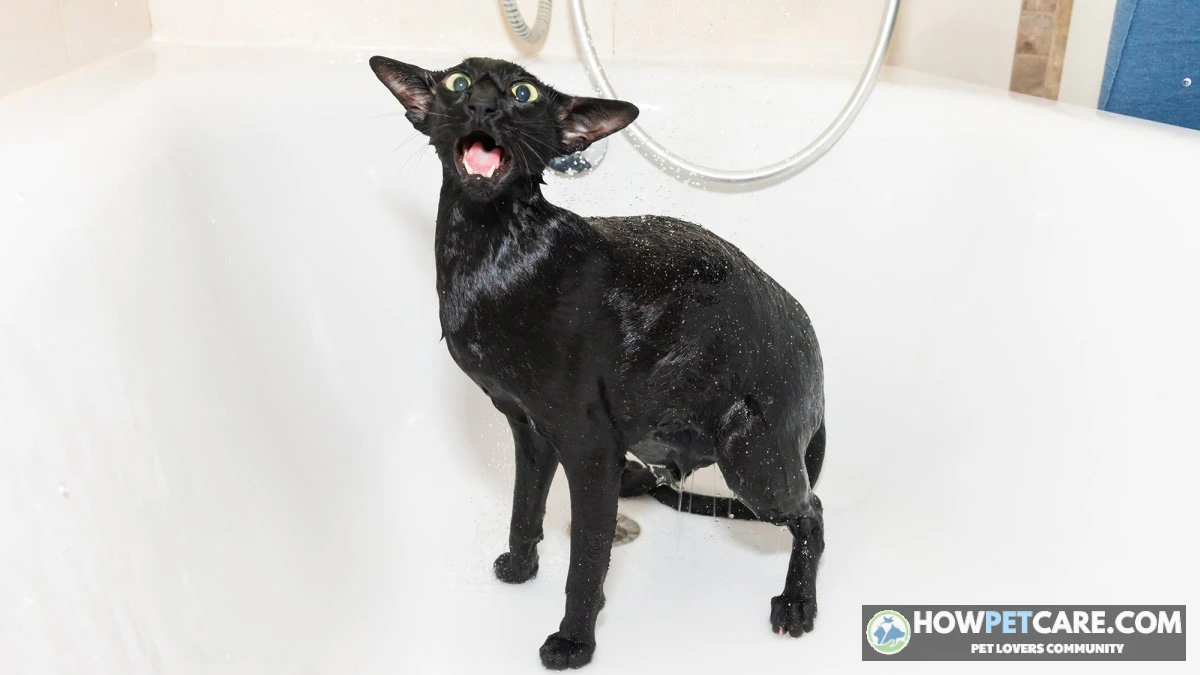

Cats dislike water mainly because soaked fur becomes heavy, cold, and slow to dry, and immersion removes their sense of control. Unfamiliar sensations, washed-away scent, and past bad experiences reinforce the aversion. Desert ancestry is a popular theory but remains unproven — and most cats can swim.
Why Do Cats Hate Water? The Four Explanations and How Well Each Is Supported
Why do cats hate water? There is no single proven answer, and several explanations overlap. The best-supported ideas involve physical discomfort and a loss of control: a soaked coat becomes heavy, loses insulation, and slows a cat down; immersion is unfamiliar and takes away the cat’s choice; and bad experiences with restraint, a loud tap, or a spray bottle can create learned fear. The desert-ancestor theory is widely repeated, but experts disagree on how much it explains. No rigorous survey has measured how many cats actually dislike water.
So why do cats hate water so much if most of them can swim? What they tend to avoid is wet, heavy fur and a loss of choice, not water itself. Here are the four main explanations and the evidence behind each.
Wet fur, heavy coats and lost insulation
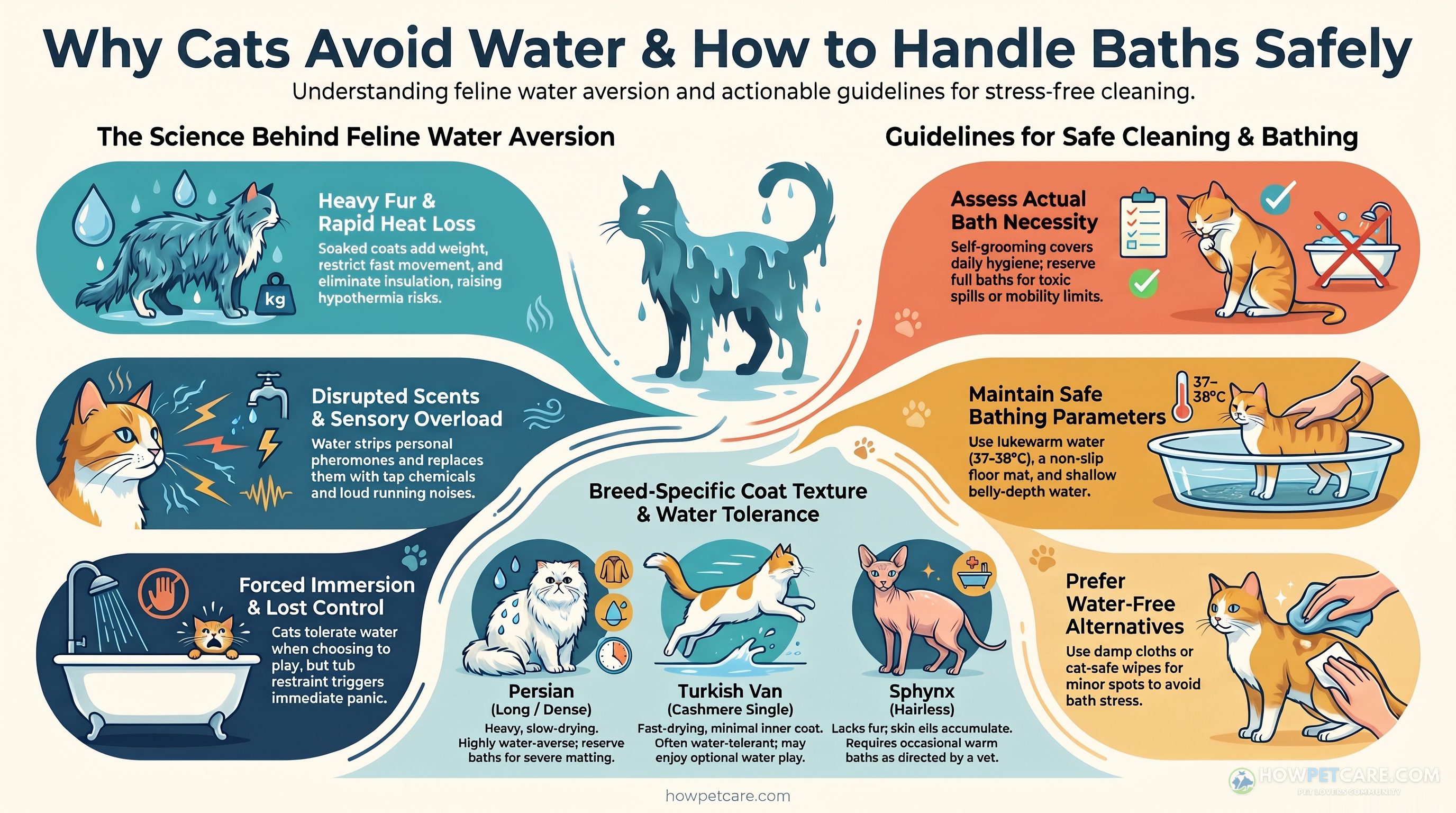
A cat’s coat is built for dry warmth, not swimming. Most domestic cat fur isn’t water-resistant. When soaked, it holds water and adds weight, making it harder for the cat to move quickly or defend itself. Wet fur also loses much of its insulating value. A wet cat can lose body heat faster and faces a higher risk of hypothermia, especially kittens, seniors, and ill cats [#N]. Researchers haven’t measured exactly how much weight different breeds gain when soaked, so any specific number you see online is invented.
The discomfort is easy to imagine: a heavy, cold blanket you can’t take off. A cat that suddenly feels weighed down and chilled will want to escape. If it’s held in a tub, it can’t.
Scent loss, grooming and sensory sensitivity
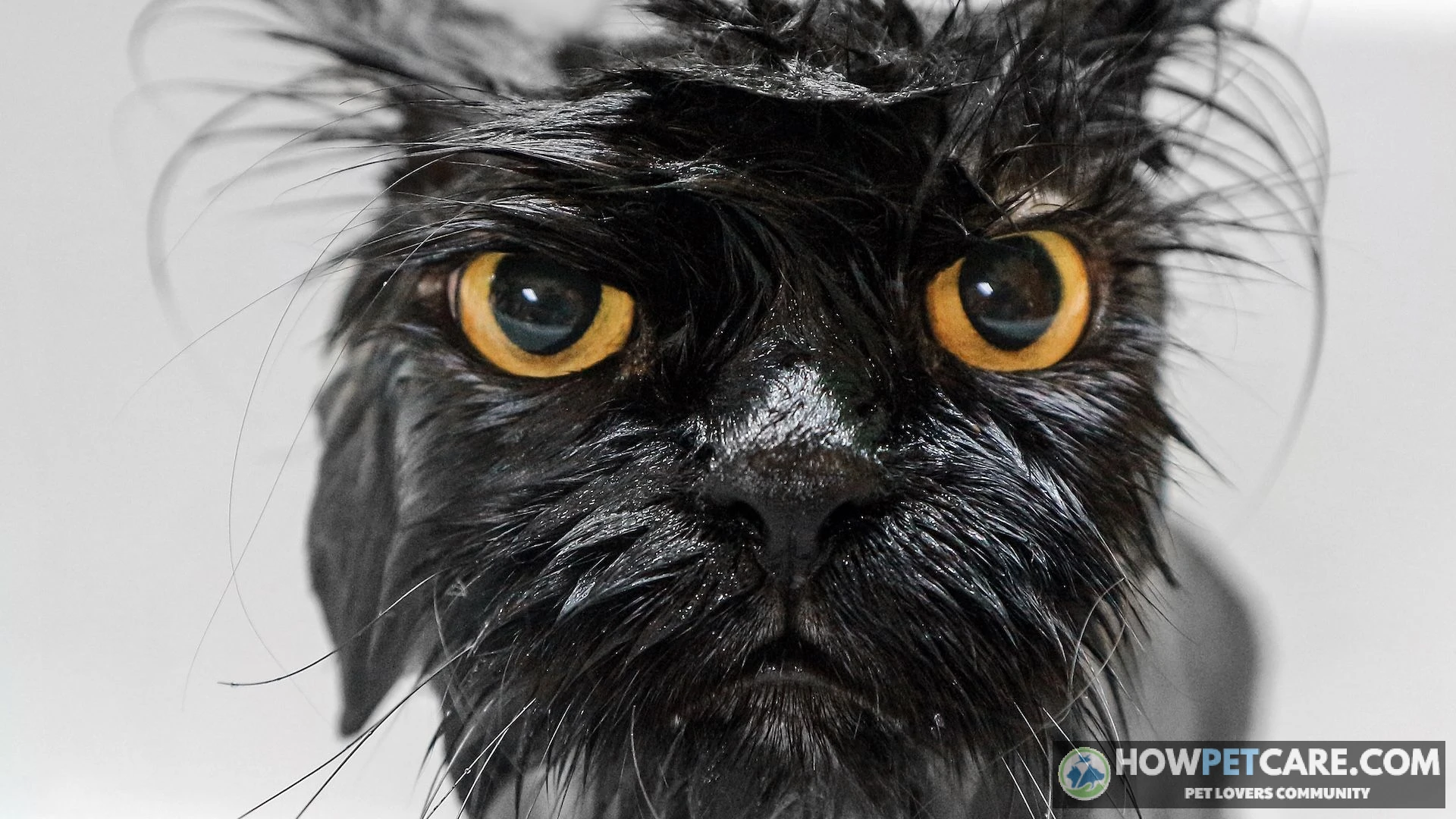
Cats spend nearly half of their waking hours grooming [#N]. Grooming keeps a cat clean and maintains its own scent and pheromone markers, which help it feel safe and oriented. A full soak washes away those signals and replaces them with the smell of tap water, chlorine, soap, or shampoo. Cats have a sensitive sense of smell, so strong chemical scents in water or grooming products can be unpleasant or alarming.
Sensory sensitivity likely plays a role too. Water on the fur, skin, and paws feels unfamiliar to many indoor cats, while running water adds noise and unpredictable motion. Behaviorists consider scent disruption and sensory overload plausible hypotheses, not proven mechanisms. Cats notice these sensations, but researchers don’t yet know how much each factor drives the average cat’s avoidance.
Fear, loss of control and learned negative associations
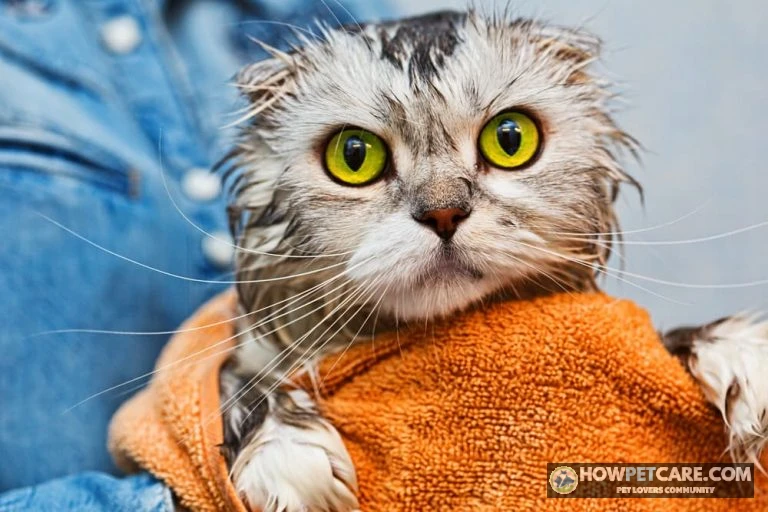
Control matters. A cat batting at a dripping faucet has chosen to interact with water; a cat in a bath has not. Restraint, being lifted into a tub, or being sprayed with a bottle takes away the cat’s ability to leave, which can trigger cat anxiety and a defensive reaction. One bad experience can create a lasting negative association. A cat startled by a spray bottle or overwhelmed by a first bath may panic at the sight of water years later.
Learning helps explain why reactions vary so widely. Two cats of the same breed can respond in opposite ways because one had gentle early exposure and the other was trapped in a rainstorm or scolded with water.
The desert-ancestor theory, and where experts disagree (Losos vs. Vitale)
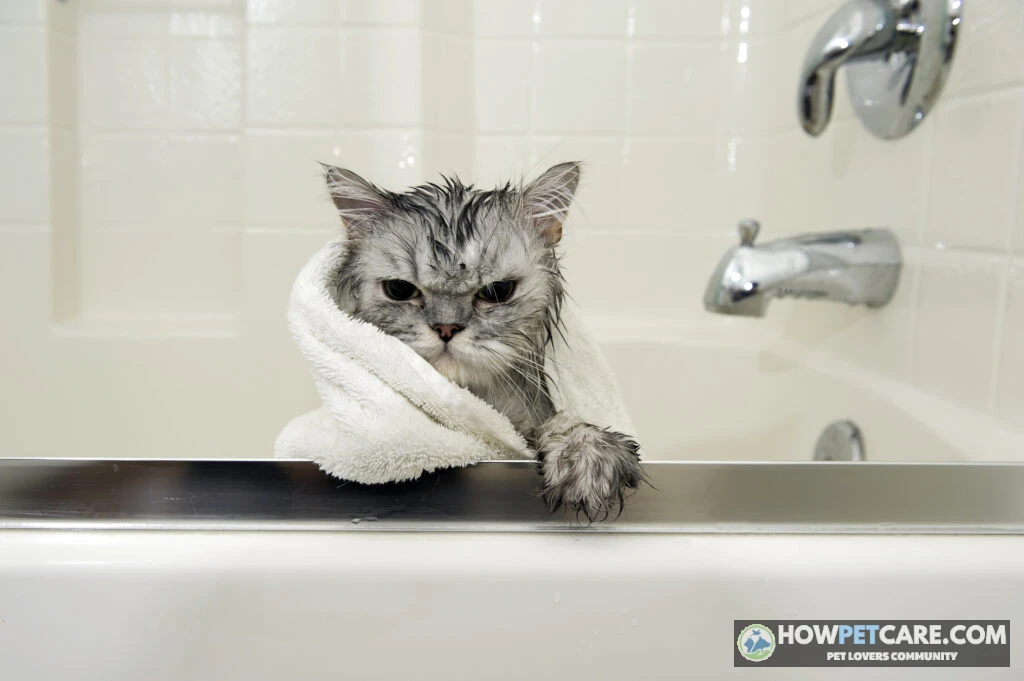
The most common explanation traces house cats to Felis silvestris lybica, the African wildcat from arid parts of the Near East and North Africa. Domestic cats began living alongside people roughly 10,000 years ago and are direct descendants of that desert species, which had little exposure to large bodies of water and may not have evolved swimming instincts [#N]. The PNAS semi-domestication study offers context for how cats became companions while retaining many wild traits.
The theory isn’t settled, though. Some experts question how much desert ancestry explains modern water aversion, especially since big cats such as tigers and jaguars swim well. Evolutionary biologist Jonathan Losos treats the ancestry argument as a meaningful part of the story, while Kristyn Vitale and other feline behavior researchers emphasize individual experience, early exposure, and learning over ancestry alone. Treat desert origin as a leading theory among several, not as proven fact.
Why dogs, tigers and domestic cats diverged on water
Dogs were often selected for tasks involving water, and many breeds have coats that shed it more effectively. Tigers and jaguars actively swim to hunt and cool off. Domestic cats didn’t face the same evolutionary pressure. Their wild ancestor lived in dry terrain, and house cats have spent thousands of years as small predators that rely on agility and dry fur rather than aquatic hunting. That divergence helps explain why a tiger might willingly enter a river while a house cat flees a bathtub, although the desert theory remains debated.
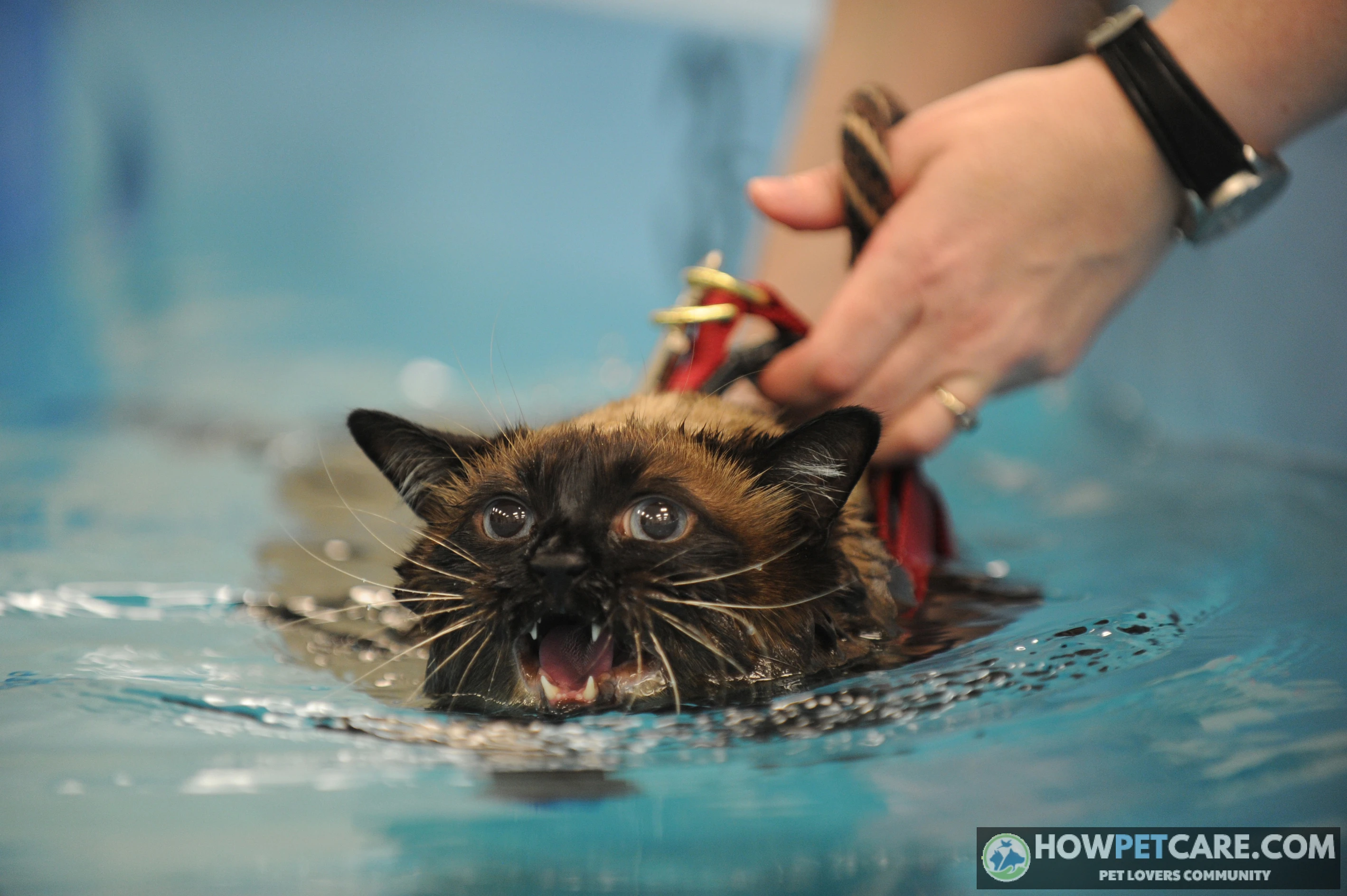
Why Cats Hate Water but Drink It, Paw at Faucets and Can Still Swim
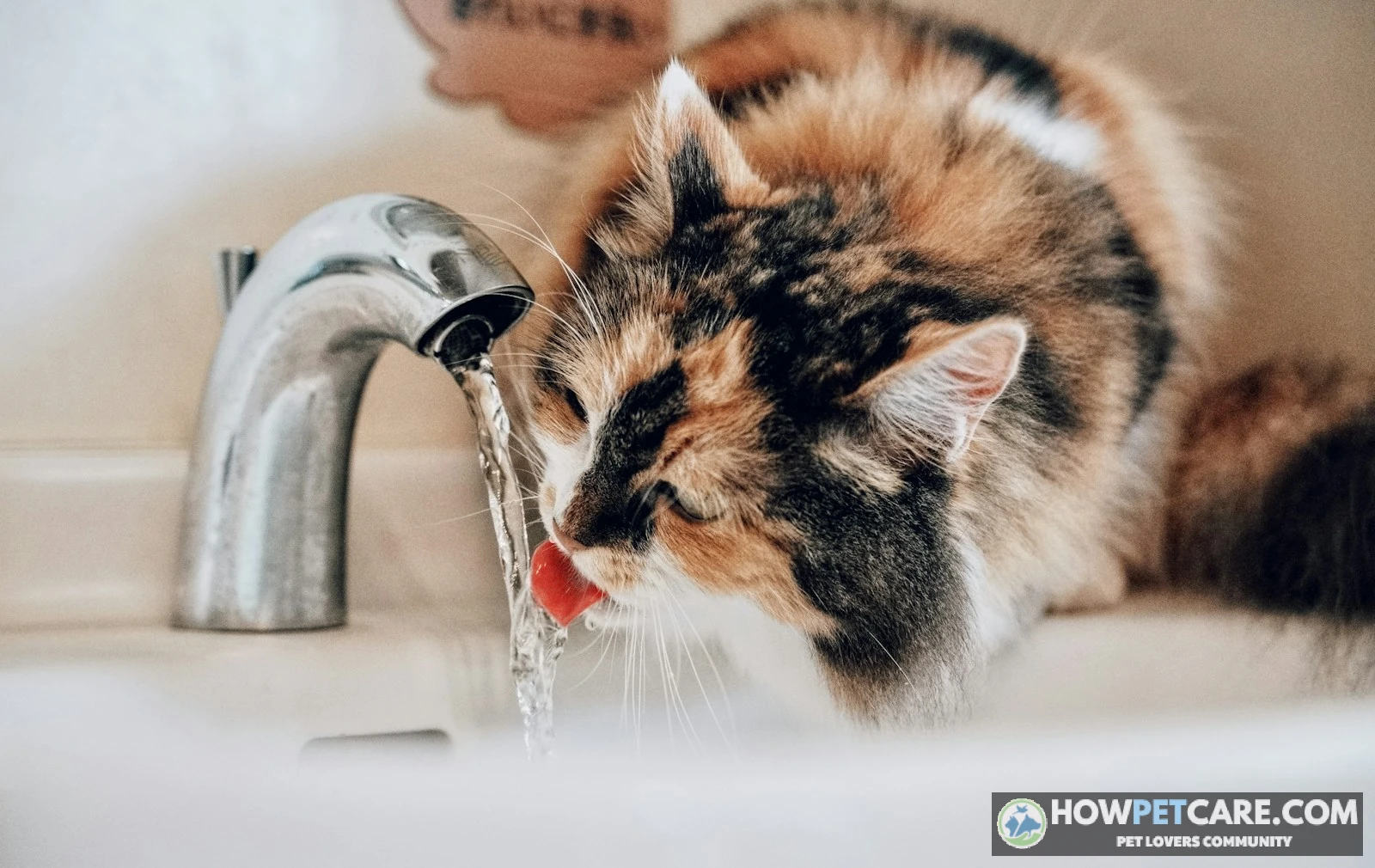
The apparent contradiction makes more sense when you separate drinking and play from immersion. Cats usually choose when and how they touch water. A dripping faucet or a water bowl is under the cat’s control; a bath, rainstorm, or spray bottle isn’t. That difference in agency helps explain why a cat might ignore a full tub while staring at a running tap.
Drinking, batting and play versus immersion
A cat pawing at water or watching a faucet is responding to movement, sound, and possibly the hunting instinct triggered by moving objects. Some cats also prefer flowing water because it may taste fresher or cooler than stagnant bowl water. These behaviors involve curiosity and choice. Immersion takes away both and leaves the cat feeling vulnerable.
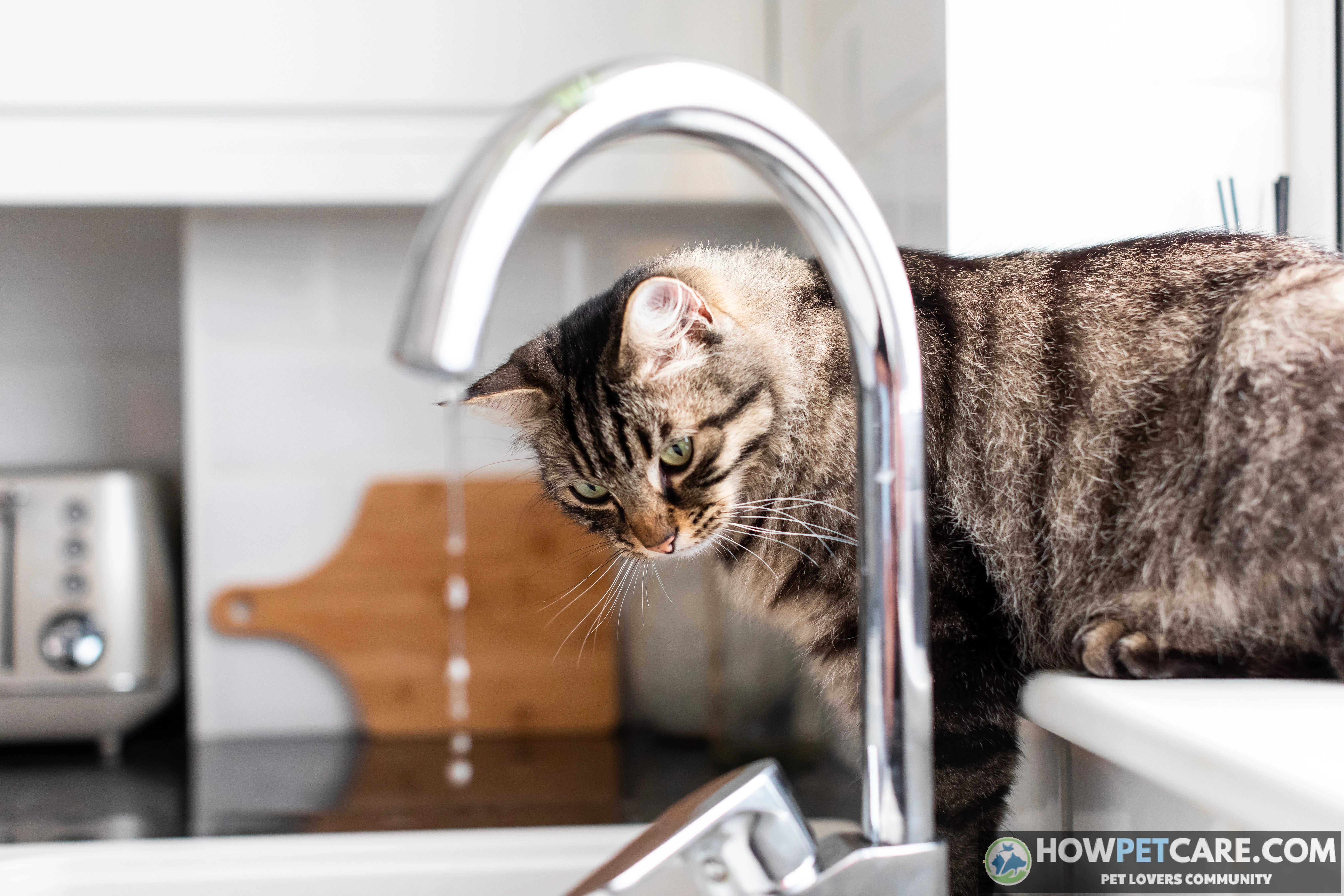
Why cats paw at the water bowl
Pawing at a bowl may reflect a preference for moving water, a test of depth, or simple play. Whisker sensitivity could make some cats avoid deep bowls that touch their whiskers, but no dedicated research confirms this. Pawing is an observed behavior with plausible, untested explanations.
Most cats can swim, so their aversion isn’t about physical inability. A cat that falls into water can paddle to safety. What it dislikes is the combination of wet fur, cold, noise, and having no exit.
Do All Cats Hate Water? Breed Exceptions, Coat Types and Individual History
The claim that most cats dislike water is repeated everywhere, but no source quantifies it. No dedicated research has measured the percentage of cats that avoid water, so don’t trust a specific figure you encounter. The evidence comes from behaviorists, breeders, and owners, and it’s anecdotal.
Breed tendencies are hints, not verdicts. Coat texture and thickness appear to matter: cats with water-shedding or fast-drying coats are more often reported to tolerate water, while those with long, dense, slow-drying coats are more often reported to avoid it.
Water-tolerant vs. water-averse breeds, compared by coat
| Breed or cat type | Coat texture and thickness | Reported water tendency | Evidence level | Notes for owners |
|---|---|---|---|---|
| Turkish Van | Semi-long, cashmere-soft single coat; dries relatively fast | Frequently described as enjoying water and swimming | Anecdotal / breeder-reported; no controlled studies | Often nicknamed the ‘swimming cat,’ but individual cats still vary widely |
| Maine Coon | Dense, shaggy double coat with a water-shedding outer layer | Often reported to tolerate or seek out water play | Anecdotal / breeder-reported | May bat at faucets or join owners near sinks; still supervise around deep water |
| Bengal | Short, sleek, tight-lying coat | Commonly reported as curious about and tolerant of water | Anecdotal / breeder-reported | High-energy breed; water play can be enrichment rather than aversion |
| Abyssinian | Short, fine, ticked coat | Mixed reports; some individuals enjoy water play | Anecdotal | Curiosity-driven; more likely to play with water than tolerate immersion |
| Norwegian Forest Cat | Thick double coat developed for cold, wet climates | Often described as water-tolerant | Anecdotal / breed-history inference | Coat evolved for harsh weather, which may explain reported tolerance |
| Persian | Very long, dense, slow-drying coat | Typically reported as water-averse | Anecdotal; coat mechanics support the logic | A soaked long coat is heavy and slow to dry |
| Sphynx / hairless | No fur; skin oils accumulate | Needs regular bathing but often dislikes cold water | Owner-reported; bathing need is vet-acknowledged | Tolerance often improves with warm water and early habituation |
| Typical domestic shorthair | Short single or light double coat | Commonly reported as avoiding immersion | Owner and behaviorist observation only | The ‘average’ cat most advice is written for; individual history dominates |
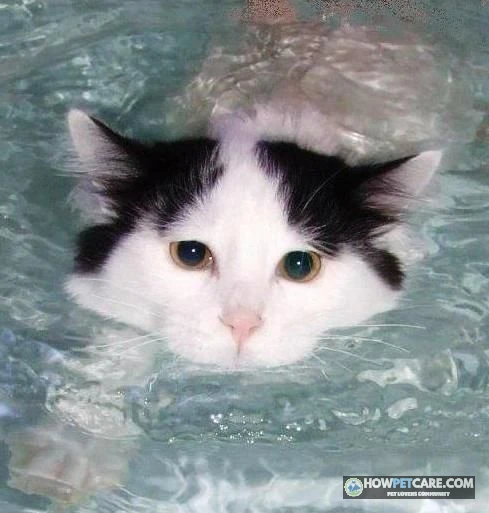
How to read this table: Each reported water tendency rests on breeder claims, owner reports, and behaviorist observations. No peer-reviewed study has measured water tolerance by breed. Treat breed as a hint about your cat’s likely coat behavior, not a verdict.
Why your cat’s history can matter more than its breed
Early exposure, past trauma, and temperament can override breed tendencies. A Turkish Van with a bad bath experience may fear water, while a Persian handled gently from an early age may tolerate a damp cloth. Individual history is the strongest predictor you can observe.
Can kittens be socialized, and is it too late for an adult cat?
Gentle, positive exposure during kittenhood may help a cat accept water later, though evidence is limited. Adult cats aren’t a lost cause. The gradual acclimation steps later in this guide apply to adults as well as kittens, although progress is slower and success isn’t guaranteed.
Does Your Cat Actually Need a Bath? Frequency by Coat, Lifestyle and Health
Most healthy short-haired indoor cats don’t need regular baths. They groom themselves extensively, and self-grooming covers routine cleaning. Bathing is the exception, not the rule. Alarmist advice suggesting monthly baths isn’t supported by veterinary consensus.
Bath frequency by coat type and lifestyle
| Cat situation | Typical bathing need | Why | Water-free alternative | When to ask a vet or groomer |
|---|---|---|---|---|
| Short-haired indoor cat | Rarely or never | Self-grooming is usually sufficient | Damp cloth spot cleaning | Only if coat becomes oily, sticky, or contaminated |
| Long-haired indoor cat | Occasionally, as needed | Mats and grease can exceed self-grooming | Brushing and grooming wipes | Severe matting or skin irritation |
| Sphynx / hairless | Occasionally, as directed by vet | Skin oils build up without fur | Warm damp cloth | Visible oily buildup or skin problems |
| Outdoor or messy cat | Occasionally, as needed | Dirt, sap, or contaminants may exceed grooming | Spot cleaning | Known chemical or toxin exposure |
| Senior, overweight, or mobility-limited cat | Occasionally, as needed | Arthritis or obesity can limit grooming reach | Waterless foam or wipes | Coat becomes greasy, matted, or flaky |
| Cat with skin condition | Only on veterinary instruction | Medicated bathing may be part of treatment | Not a substitute | Always consult the vet first |
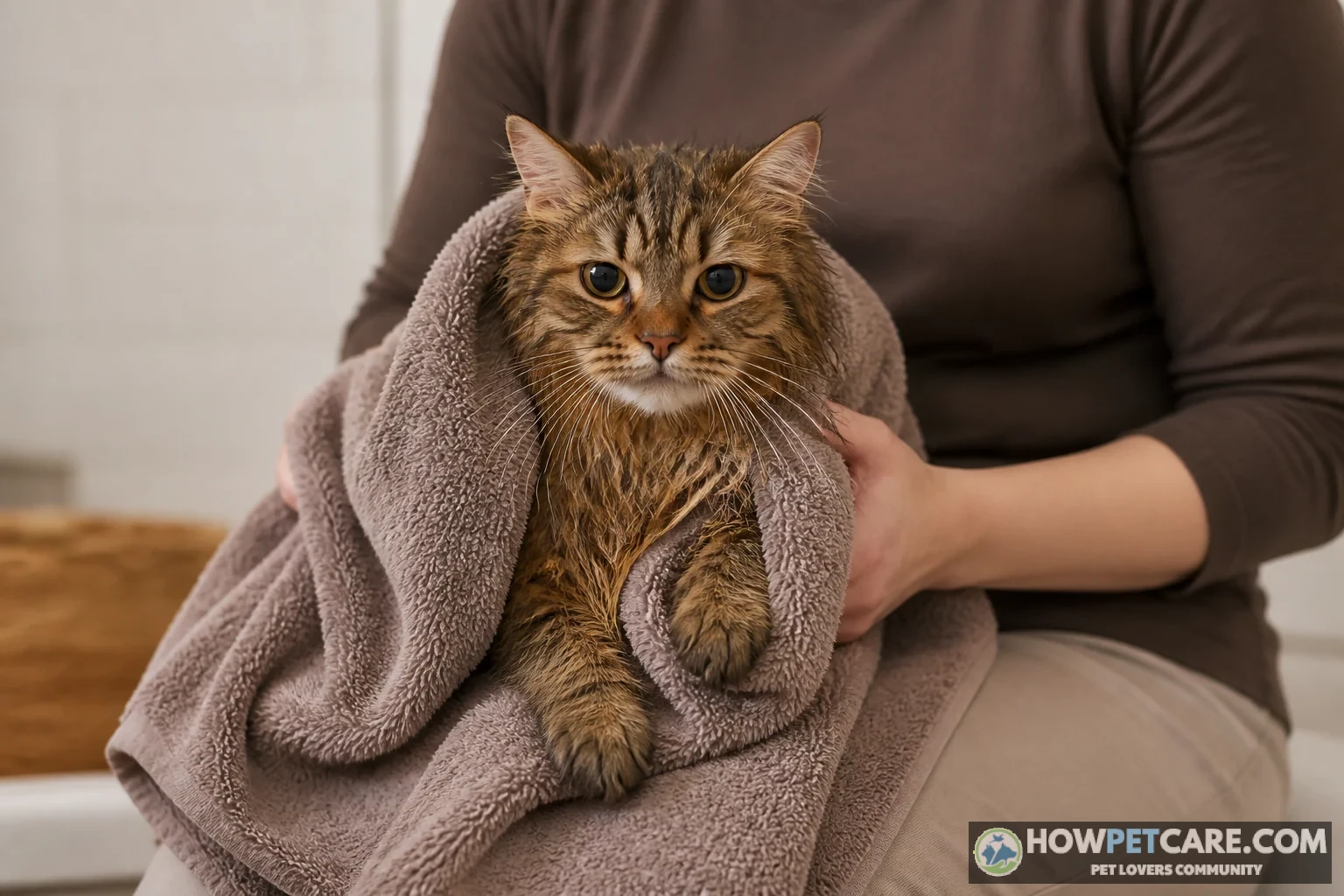
Don’t treat these as fixed rules. Frequency guidance from veterinary sources varies: some associations suggest baths only when truly necessary, while others cite a typical range of about every three to four months starting at age one if a bath is genuinely required. Base your decision on your cat’s condition, not a calendar.
When a vet or groomer is the better choice
Severe matting, aggression during handling, or medical skin conditions are reasons to book a professional groomer or see a veterinarian rather than forcing a bath at home. Scratches, injury, and a lasting fear response are real risks. A professional has equipment and restraint experience most owners lack.
Does my cat need a bath? A three-answer decision checklist
Work through the questions in order and stop at the first YES. That answer is your result.
Step 1 — Is anything on the coat that is dangerous to lick?
- Oil, paint, antifreeze, pesticides, cleaning chemicals, or unknown substances
YES: Bathe now, and treat it as urgent. Prevent licking immediately and call a vet or animal poison control line first.
Step 2 — Can the cat physically groom itself right now?
- Arthritis, obesity, injury, or post-surgery recovery limits reach
- Senior cat whose coat has become greasy, matted, or flaky
- Hairless breed with visible oily buildup on the skin
YES to any: Bathe occasionally. The cat can’t do the job alone. Follow the low-stress protocol below, or book a groomer if the cat reacts aggressively.
Step 3 — Is there soiling the cat can’t or won’t clean?
- Sticky, matted, or fecal or urine-soiled fur
- Vet-directed flea or medicated bath
- Long-haired coat with mats that brushing won’t release
YES to any: Bathe rarely, as needed, not on a schedule. Try spot cleaning or a waterless method first.
If none of the above apply:
- Healthy adult cat, indoor lifestyle, coat looks and smells clean
Never. Routine bathing is the exception, not the rule.
How to Bathe a Cat That Hates Water: Safe Parameters and a Step-by-Step Protocol
When a bath is genuinely necessary, aim to make it short, predictable, and as low-stress as possible. The following parameters are conservative and consistent with typical veterinary guidance. Use them as a starting point, not a guarantee that your cat will enjoy the process.
Bathing parameters at a glance: temperature, depth, duration
- Water temperature: lukewarm, roughly 37 to 38 degrees Celsius (98 to 100 degrees Fahrenheit)
- Water depth: shallow, about belly height or less
- Surface: rubber mat or towel for grip so the cat cannot slip
- Room: warm and free of drafts
- Session length: as short as possible; stop at the first sign of escalating stress
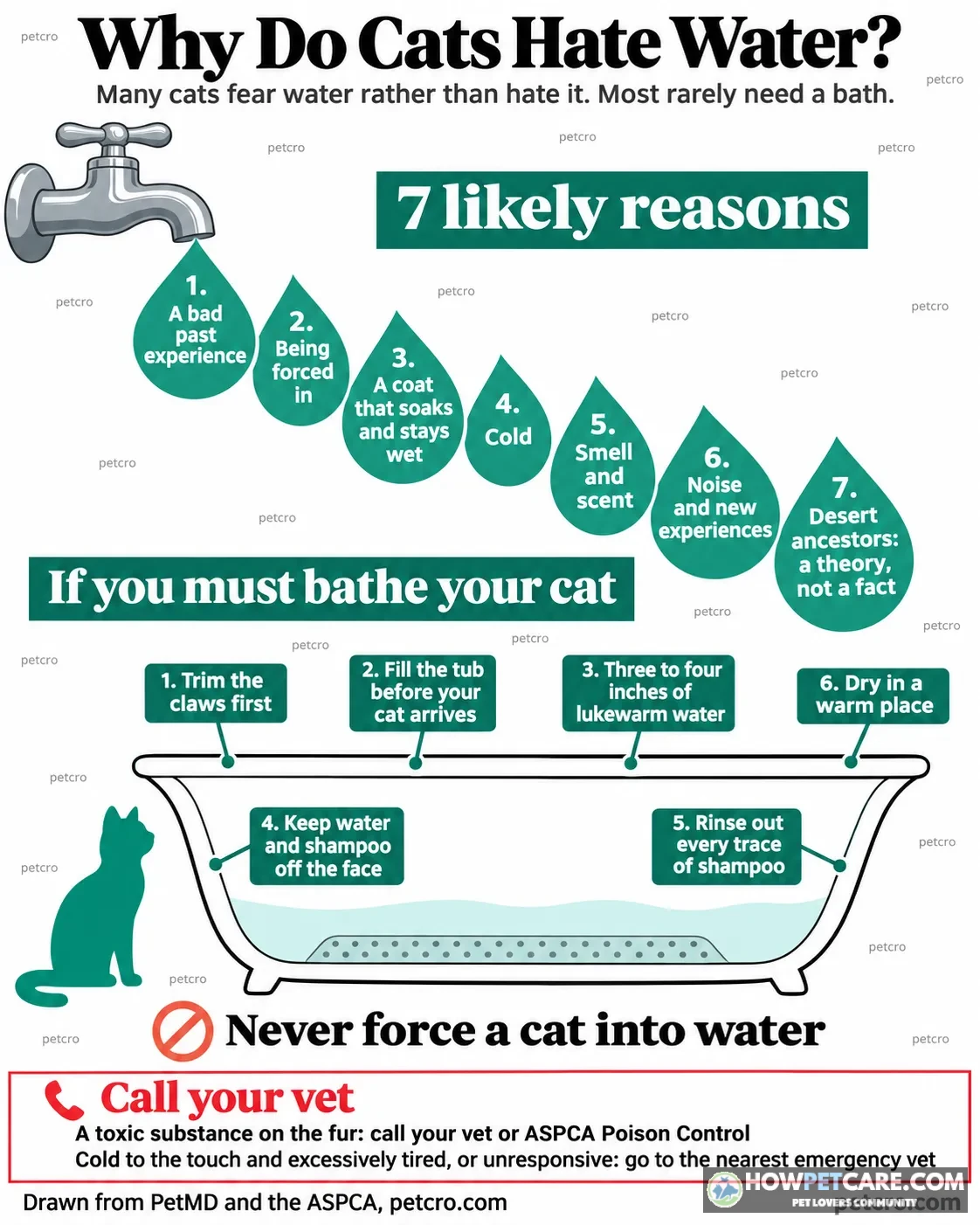
These numbers are typical ranges, not universal rules. Kittens, seniors, and sick cats lose body heat faster and have a higher risk of hypothermia.
Step-by-step: a low-stress bath
- Place a rubber mat or towel in the tub or sink for grip, then fill it with shallow lukewarm water before bringing the cat in — the sound of running water can startle it.
- Brush out tangles first so wet fur doesn’t tighten into mats.
- Trim nails beforehand if you can do so without stressing the cat.
- Bring the cat in and lower it gently onto the mat.
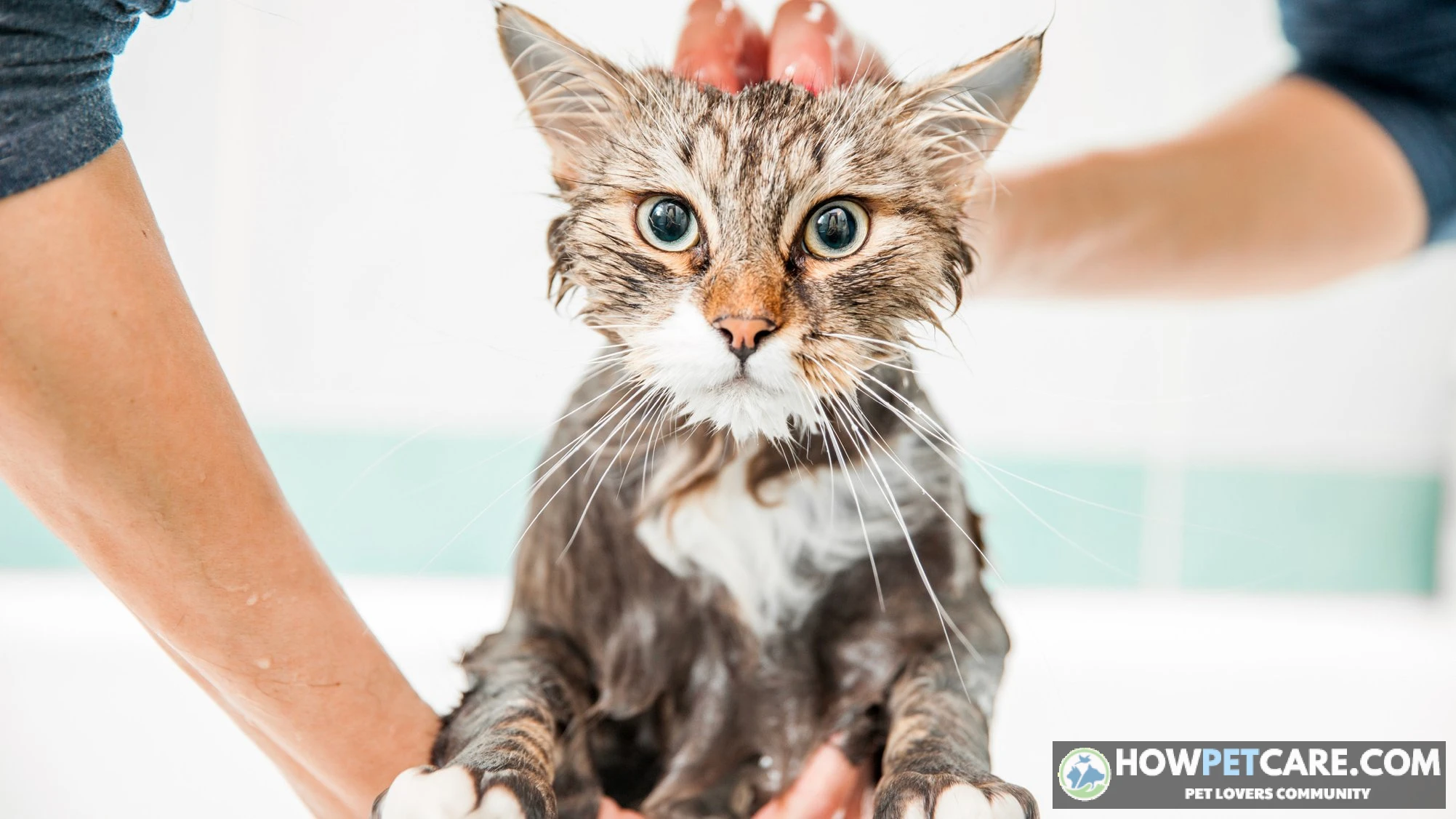
- Wet the body with a cup or a handheld sprayer on the lowest pressure. Avoid the face, eyes, and ears.
- Use a cat-safe shampoo only if needed. Human and dog shampoos aren’t formulated for cats.
- Rinse thoroughly. Residue can irritate the skin, and the cat will ingest it while grooming.
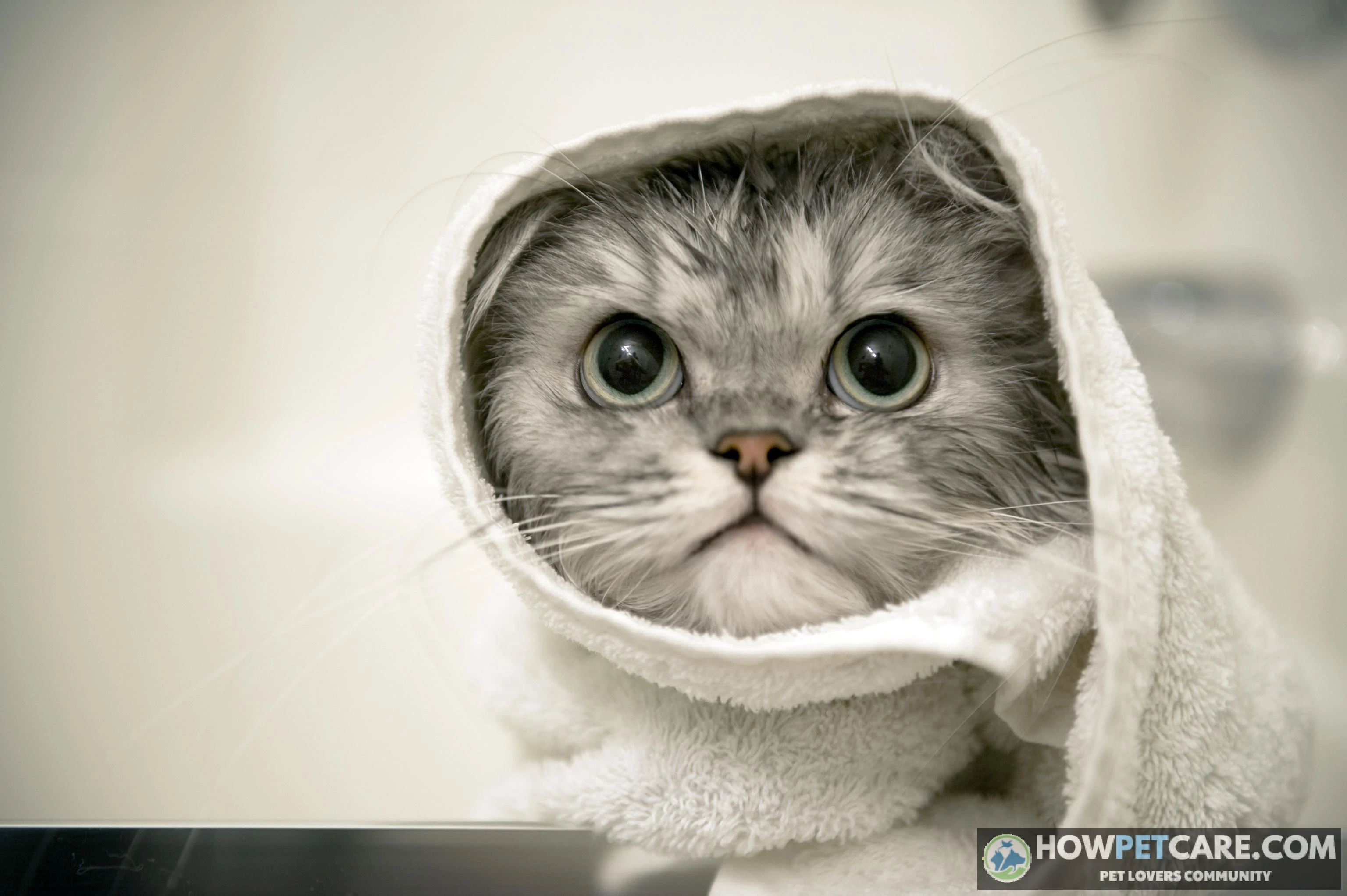
- Wrap the cat in a warm towel and dry it in a warm room. Use a low-heat, low-noise dryer only if the cat tolerates it; towel drying is the safer default.
Gradual acclimation for adult cats that panic around water
-
Days 1-3: Dry room, wet reward
Offer treats or a meal in the bathroom without running water. The goal is for the room to stop predicting something bad.
-
Days 4-7: The damp cloth
Touch the cat’s back and sides with a wrung-out warm, damp cloth for two to three seconds, then offer a treat. Keep sessions under a minute.
-
Days 8-11: Paws only
Dip one front paw in a shallow dish with about one inch of lukewarm water, offer a treat, and release the paw. Repeat for each paw without restraint.
-
Days 12-16: Wet cloth along the body
Slowly draw a wetter cloth down the back and flanks. The cat should be damp enough to towel dry, but free to leave.
-
Days 17-21: Shallow stand
Place the cat in an empty tub or sink with a non-slip mat. Add one to two inches of lukewarm water and offer treats continuously for 30 to 60 seconds.
-
Days 22-28: Mini-rinse
With the cat standing in shallow water, slowly pour one cup of lukewarm water over its back once. Towel it off, offer a reward, and end calmly.
Move up a rung only after two or three calm repetitions. Drop back one rung at any sign of panic, such as flattened ears, growling, or frantic escape attempts. Cats that complete the ladder calmly usually tolerate the full bath protocol. For cats stuck at an early rung, waterless cleaning or a professional groomer are reasonable options.
Stop signs: when to end the session
End the bath immediately if you see flattened ears, dilated pupils, hissing, growling, struggling, panting, or frantic escape attempts. Forcing a bath can deepen negative associations with water and make the next cleaning harder. Pheromone diffusers or calming products may help anxious cats, but evidence varies. A veterinarian can advise on whether they’re appropriate.
Water-Free Ways to Clean a Cat and What Happens When Your Cat Licks It Off
Anything you put on a cat’s coat can end up in its mouth because cats groom by licking. That makes product choice more consequential than it is for dogs.
Wipes, foams, powders and damp cloths compared
| Method | Best use | Licking-risk consideration | What to check on the label | Stop and call a vet if |
|---|---|---|---|---|
| Damp washcloth | Spot cleaning small areas | Minimal; plain water is safest | None needed for water alone | Cat seems stressed by handling |
| Cat-specific grooming wipes | Quick surface cleaning | Low if product dries or is wiped off | Labeled for cats; no essential oils | Drooling, vomiting, or lethargy |
| Waterless foam or dry shampoo | Oily spots without water | Moderate; residue stays on coat until next groom | Labeled for cats; avoid fragrances | Skin redness or excessive licking |
| Cornstarch-based powder | Absorbing oil on small areas | Low if brushed out thoroughly | No talc or added scents | Inhalation distress or coughing |
| Brushing and combing | Loose hair and light debris | None | N/A | Skin injury from mats |
Reading the label: what to avoid if your cat will lick it
Choose products labeled specifically for cats. Avoid human or dog products and anything containing essential oils, strong fragrances, or ingredients known to be toxic to cats. Use small amounts, and where possible, wipe the product off or let it dry before the cat can groom the area. Distracting your cat with a treat or toy for a few minutes reduces immediate licking.
If your cat drools, vomits, becomes lethargic, or refuses food after a product is used, call a veterinarian. These are product categories and safety criteria, not endorsements.
Is a Spray Bottle Harmful to Your Cat, and Does It Damage Trust?
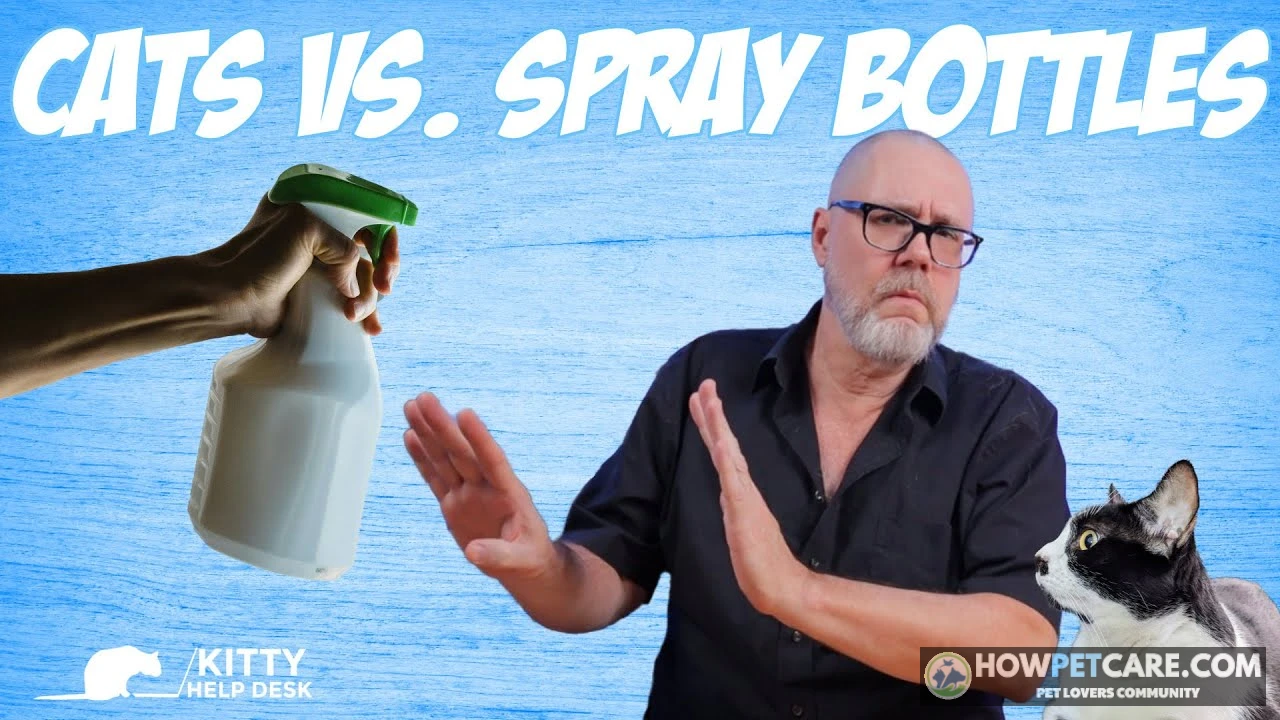
Spraying a cat with water is a form of punishment that most feline behaviorists advise against. It can create fear, stress, and negative associations with water without teaching the cat what to do instead. The evidence rests on expert consensus and behavioral reasoning rather than controlled trials; it shouldn’t be presented as a finding from studies.
A squirt of water stops unwanted behavior because the cat is startled, not because it has learned anything. Repeated spraying can create the water aversion described here, making future baths and vet visits harder.
How it backfires
Your cat may link the spray to you or to the room, not to the behavior. Scratching may then happen when you’re out of sight, and the cat learns to avoid you rather than the sofa. Spraying suppresses behavior instead of replacing it, so the underlying need—scratching, climbing, or attention—usually resurfaces elsewhere. It can also damage trust and make a cat harder to bathe.
Why it seems to work
The behavior stops in the moment because the cat is startled. That immediate pause looks like success, but without an acceptable outlet, the behavior returns or shifts location.
Better alternatives by common problem
For common cat behavior problems, use kinder fixes. If your cat scratches furniture, place a sturdy scratching post next to the target spot, reward its use, and add a deterrent cover to the furniture itself. If your cat jumps on counters, keep counters clear of food rewards and provide a permitted high perch nearby. If your cat wakes you at night, add a play session and a food puzzle before bed, and ignore attention-seeking noise rather than reacting to it.
If your cat is already afraid of spray bottles, expect a lingering startle response around bottles and sinks. Retire the bottle permanently and use the gradual acclimation ladder above to rebuild a neutral association with water.
What to Do If Your Cat Gets Oil, Chemicals or Toxins on Its Coat
This is an emergency. Contact a veterinarian or an animal poison control service immediately; some lines charge a consultation fee, so verify current contact details before you need them. Ingestion during self-grooming is often more dangerous than skin contact itself.
First five minutes: stop licking, contain, call
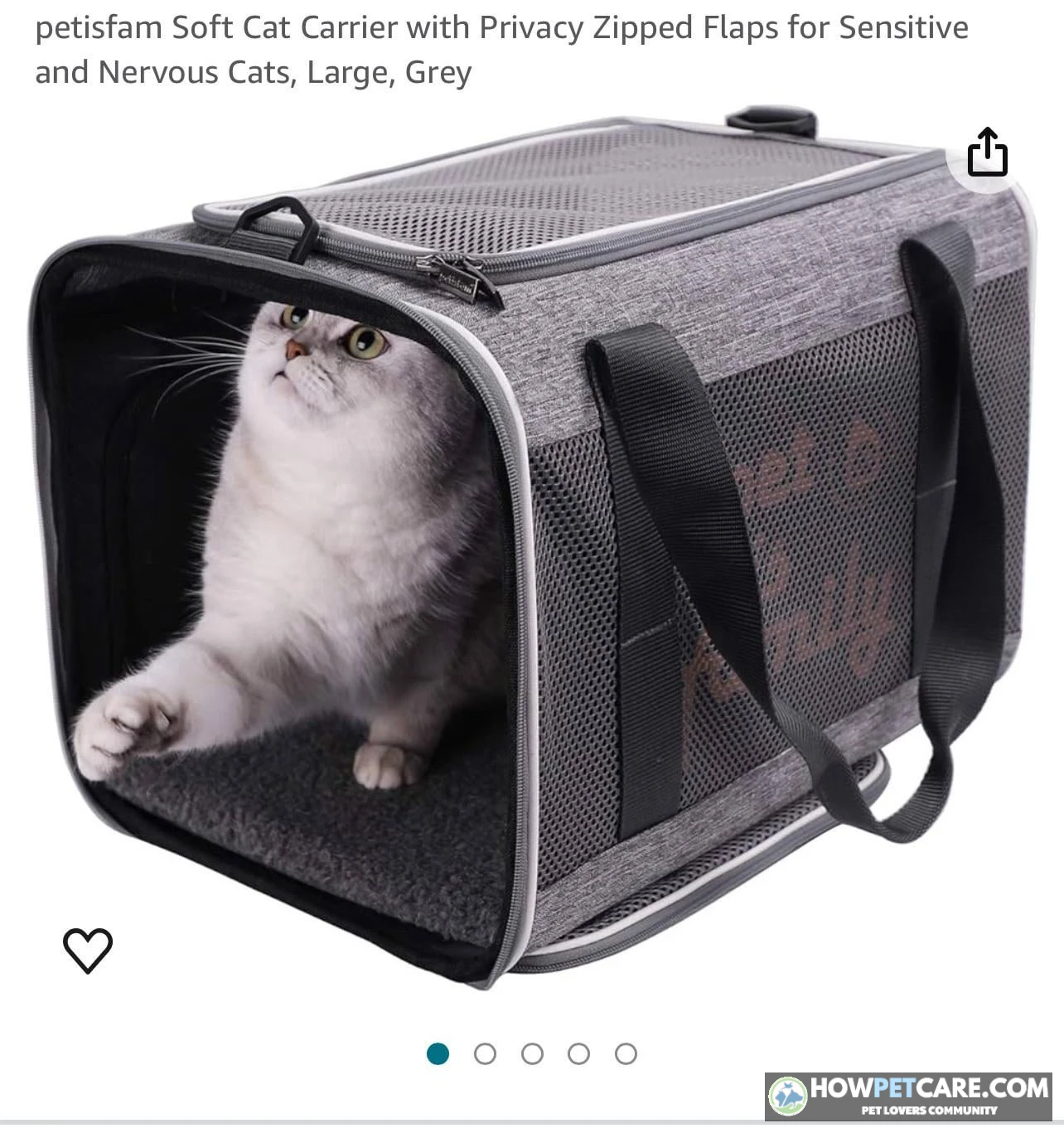
Minute zero to one: stop the licking. Fit an e-collar or cone if you have one. If not, wrap the cat loosely in a towel or confine it to a carrier or small room where you can watch it continuously.
Minute one to two: contain and protect. Put on gloves, because some substances transfer to human skin or are toxic to people too. Move the cat away from the spill so it can’t contact or track the substance again.
Minute two to five: call before you clean. Call your vet, an emergency clinic, or an animal poison control center. Be ready to explain what the substance is, roughly how much contacted the coat, when it happened, and your cat’s weight.
What not to do
Don’t induce vomiting unless a veterinarian instructs you to. Don’t apply solvents, turpentine, paint thinner, or dish soap to the coat. Don’t start a full bath unless the vet specifically directs it. Some substances, especially caustics and hydrocarbons, do more damage when washed or vomited.
What to bring to the vet
Bring the product container or label. Note the substance, amount, time of exposure, and your cat’s weight. While you wait for instructions, blot excess product off the coat with paper towels; never rub. Keep the cat warm. Decontamination plus wet fur can drop body temperature quickly.
Urgent signs that mean your cat needs a vet now, not a phone consult, include drooling, vomiting, tremors, unsteady walking, lethargy, or difficulty breathing. If a bath is part of decontamination, it should happen only as directed by a veterinarian, using lukewarm water and a mild cleanser, with the cat kept warm afterward.
Your Action Plan: Decide Whether Your Cat Needs Water, Then Choose the Gentlest Method
Use this path the next time you’re deciding whether your cat needs water.
First, check whether anything dangerous is on the coat. If so, prevent licking and call a vet or poison control line immediately. If not, consider whether your cat can groom itself. If age, weight, injury, or coat type prevents grooming, an occasional bath or a groomer visit is justified. If the cat can groom but has a small soiled spot, start with spot cleaning or a waterless wipe. If none of these apply, a healthy indoor cat doesn’t need a bath.
For a low-stress bath, prepare the room, trim nails, brush tangles, and use shallow lukewarm water around 37 to 38 degrees Celsius (98 to 100 degrees Fahrenheit). Keep the session short, towel dry in a warm room, and stop at the first stress signal. To build confidence over time, start desensitization early, make water exposure predictable, reward calm behavior, avoid spray punishment, and keep fresh drinking water available.
Call a veterinarian if your cat has oil, chemicals, or toxins on its coat; develops a skin problem; or shows a sudden new fear of water or reluctance to drink. A change like that can signal pain or illness rather than simple preference.
Wet fur can be heavy and cold, while scent, control, and past experiences may also shape a cat’s reaction. Desert ancestry remains a leading but contested theory. The evidence varies for each explanation, so let your cat’s coat, breed tendency, and history guide your approach. Choose water-free cleaning whenever possible, and reserve baths for the rare situations where they’re truly necessary.
FAQ
Is it bad for a cat to get rained on?
A brief soaking is usually not harmful for a healthy adult cat, but a wet cat can get cold, especially kittens, seniors and sick cats. Dry the cat with a towel and let it warm up indoors, and call a vet if it shivers for long or seems unwell.
Can I use a hair dryer on my cat after a bath?
Only if the cat tolerates it. Use the lowest heat and noise setting, keep it moving and well away from the skin, and stop if the cat panics. Towel drying in a warm room is the safer default for most cats.
Why does my cat shake its paws after stepping in water?
Cats’ paws are sensitive, and wet fur and skin feel unusual to them, so shaking is likely a reaction to the sensation. No dedicated research confirms the reason, so treat it as a reasonable explanation, not an established fact.
Do cats hate water because they can’t swim?
No. Most cats can swim if they have to. What they avoid is the experience of wet, heavy fur and not having control, which is why a cat may happily bat at a dripping tap but panic in a tub.
Why do cats hate the rain?
Rain combines wet fur, cold, noise and loss of control, with no way to dry off quickly. Individual cats vary, and some outdoor cats tolerate light rain better than others.