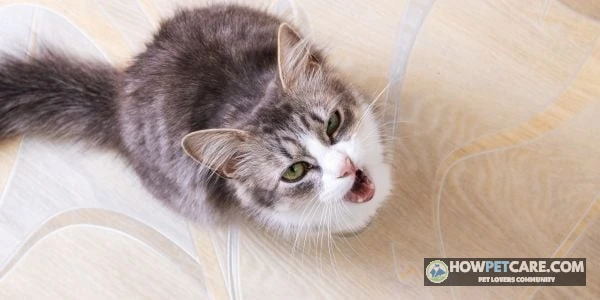

Most adult cat meowing is normal, human-directed communication requesting food, attention, access, or comfort. Sudden, constant, or low-pitched meowing paired with appetite changes, weight loss, litter-box accidents, or breathing changes warrants a veterinary visit.
Most adult cat meowing is normal communication aimed at people rather than other cats. A short meow is often a greeting or a request, while repeated loud meowing usually signals an unmet need such as food, access, or play. Sudden, constant, or low-pitched meowing paired with appetite changes, weight loss, litter-box accidents, or breathing changes calls for a veterinary visit rather than behavioral fixes alone.
This guide explains why cats meow at humans, separates routine vocalization from concerning vocalization, and gives you concrete tools: a normal-versus-urgent checklist, a sound-and-body-language decoding table, a nighttime food-demand decision tree, kitten and senior-specific guidance, and clear veterinary red flags.
What Cat Meowing Means and Why It Targets Humans
Meowing is primarily a human-directed vocalization. Adult cats use meows to request attention, food, access, comfort, or interaction from people, but they rarely meow at other adult cats. Kittens meow to signal hunger, cold, or separation to their mother, and how owners respond shapes how much an adult cat continues to meow.

Meowing vs. purring and other feline vocalizations
Cats use purring, trilling, chirping, hissing, growling, and yowling alongside meowing. Purring often signals contentment, though it can also occur during stress or pain. Meowing is distinct because cats developed it largely for communicating with people. Context matters: the same short meow at the food bowl means hunger, while the same meow at a closed door means access.
Why adult cats meow more to people than to other cats
Adult cats reserve most meowing for humans. When cats communicate with each other, they rely more on scent, body posture, and other vocalizations such as hissing or yowling. If your cat meows at you, she is usually asking for something specific.
Meowing is primarily a human-directed vocalization.
Myth: Cats meow because they are mysterious and unpredictable
Myth: Cats meow to be cryptic, and there is no way to know what they want.
Fact: Adult cats meow almost exclusively to communicate with people, not with other cats. Most meows are requests for food, access, attention, or comfort. Pairing the sound with context, timing, and body language makes the meaning clear enough for beginners to act on without guessing.
Why Is My Cat Meowing So Much? Common Causes and Context
Frequent meowing usually traces back to a few everyday triggers (see common causes of excessive meowing). Hunger, thirst, litter-box issues, boredom, and social contact are common routine causes. Attention-seeking meows often stop when the need is met or the cat is redirected. Environmental changes, stress, territorial pressure, and mating-related vocalization can increase meowing. Repetition, timing, and body language help separate a routine request from distress.
Routine needs: food, water, litter, and access
Check the basics first. An empty food bowl, an empty water dish, a dirty litter box, or a closed door are the most common reasons a cat meows at an owner. Scheduled feeding and predictable routines reduce demand meowing because the cat learns when resources arrive.

Behavioral and environmental triggers
Stress from new pets, visitors, moving, or construction can trigger more vocalization. Unneutered cats may yowl as part of mating behavior; spaying or neutering significantly reduces heat-cycle yowling. Territorial tension with outdoor cats visible through windows can also increase meowing.
Seven-day meow monitoring log walkthrough
Tracking episodes for one week turns vague worry into usable data.
Step 1: Create a simple log with columns for date, time of meow, duration in minutes, trigger if known, what you did, and whether the cat settled.
Step 2: Record every meowing episode for 7 consecutive days, including nights.
Step 3: At the end of each day, add one note about food intake, water intake, litter-box use, and any vomiting or hiding.
Step 4: Review the log after 7 days. If meowing happens at consistent times and stops after a need is met, it is likely routine. If it is new, constant, or paired with red-flag symptoms, contact your veterinarian.
Step 5: Bring the log to the veterinary visit so the vet can see frequency, timing, and patterns instead of relying on memory.
Why Do Cats Meow at Night? A Food-Demand Decision Tree
Nighttime meowing is one of the most common complaints among cat owners. It can stem from hunger, habit, play demand, loneliness, or senior confusion. Checking feeding schedule, evening meal timing, water access, and litter-box cleanliness first rules out simple causes.
Nighttime decision tree
| Question | If yes | If no | Action |
|---|---|---|---|
| Is the food bowl empty or is it past the evening meal time? | Feed a measured portion now; consider moving the last meal closer to bedtime | Go to next question | Rule out hunger first |
| Is the water bowl empty or the litter box dirty? | Refill water and clean the litter box | Go to next question | Meet basic needs before bedtime |
| Did the cat have active play within the last 1–2 hours before bed? | Offer 10–15 minutes of interactive play now | Play for 10–15 minutes, then feed a small snack | Tire the cat out before your sleep window |
| Is the cat meowing at your bedroom door or scratching to get in? | Provide a comfortable sleeping area nearby; do not open the door if you are training against it | Go to next question | Avoid reinforcing attention-seeking meowing |
| Is the cat older than 10 years and showing disorientation, accidents, or night waking? | Schedule a senior veterinary exam; mention cognitive dysfunction | Continue monitoring | Rule out medical causes before treating as habit |
| Has the cat meowed at night for more than 7 nights despite routine changes? | Keep a 7-night log of time, duration, and triggers; contact your veterinarian | Keep monitoring | Use data to guide next steps |

How to stop rewarding meowing without ignoring real needs
Never ignore meowing until medical and urgent needs have been ruled out. Once basic needs and health are confirmed, avoid opening the door or giving food in response to attention-seeking meows at night. Reward quiet behavior instead. Consistency for one to two weeks usually shows whether the pattern is habit or need.
How Meow Sounds, Tones, and Body Language Change Meaning
Meow sounds, tones, and accompanying body language change what a vocalization means. Short, mid-pitched meows often signal greeting or request. Repeated loud meows may indicate urgency, frustration, or unmet needs. Low-pitched or harsh vocalizations can signal discomfort, fear, or territorial arousal. Tail position, ear angle, pupil size, posture, and movement refine the interpretation.
Sound and tone decoding
| Vocalization | Likely meaning | Body-language cues | Next step |
|---|---|---|---|
| Short, mid-pitched meow | Greeting or simple request | Ears forward, tail up, approaching you | Acknowledge or offer what is being requested |
| Repeated loud meows | Urgency, frustration, or unmet need | Pacing, tail flicking, rubbing against legs | Check food, water, litter box, and access within 5–10 minutes |
| Low-pitched or harsh meow | Discomfort, fear, or territorial arousal | Ears back or flattened, pupils dilated, crouched or tense posture | Give space, check for injury or stressors, contact vet if it continues |
| Long, drawn-out meow | Annoyance or persistent demand | Tail thumping, staring, following you | Redirect with play or a scheduled activity rather than food |
| Soft, trill-like meow | Affection or attention request | Head bumping, slow blinking, relaxed body | Offer brief petting or interactive play |
| Nighttime howling in senior cat | Confusion or sensory decline | Staring at walls, disoriented movement, accidents outside litter box | Record timing and frequency; schedule senior veterinary exam |
| Silent open-mouth meow | Possible respiratory or throat issue | Neck extended, breathing changes, blue or pale gums | Seek emergency veterinary care immediately |

Body-language pairing checklist
Look at the whole cat, not just the mouth. Relaxed ears forward or neutral, a tail up or gently swaying, and normal pupil size usually accompany routine meowing. Ears flattened, tail low or tucked, dilated pupils, or a crouched posture suggest fear, pain, or stress.
Kitten Meowing Development and Early Communication
Kittens meow to signal cold, hunger, separation, or discomfort, especially before weaning. Their meows are often higher-pitched and more urgent than adult meows. As kittens gain mobility, social skills, and independence, meowing changes and becomes more focused on people.

Normal kitten vocalization by age
Young kittens mew frequently to locate their mother and littermates. As they wean and explore, meowing becomes more situational around feeding, play, and access. Persistent, high-pitched crying in a very young kitten can signal that she is too cold or not feeding well.
When kitten meowing needs veterinary attention
Excessive kitten vocalization may signal illness, poor temperature regulation, or feeding problems. Contact a veterinarian if a kitten meows constantly, refuses to eat, feels cool to the touch, or appears weak.
Senior Cats, Cognitive Dysfunction, and Excessive Meowing
Older cats may meow more due to sensory decline, pain, anxiety, or confusion. Nighttime meowing in seniors can relate to cognitive dysfunction, disorientation, or vision loss. Hyperthyroidism, hypertension, kidney disease, and pain are common medical contributors.

Senior-cat vocalization patterns
Senior cats often vocalize more at night. Disorientation, changes in sleep-wake cycles, and decreased vision or hearing can make nighttime confusing. A cat who meows at walls, gets stuck in corners, or has litter-box accidents may be experiencing cognitive changes rather than simple attention-seeking.
Cognitive dysfunction red flags
Track timing, sleep changes, appetite, thirst, and litter-box habits before the vet visit. Red flags include staring at walls, getting lost in familiar rooms, night waking with howling, and accidents outside the litter box.
From Nighttime Howling to Quiet Nights: A Worked Example
Luna is a 12-year-old domestic shorthair who began meowing loudly at 3:00 a.m. four nights a week. Her owner logged the behavior for 7 days and found the meowing lasted 10–20 minutes each time and stopped when the owner opened the bedroom door.
The vet ruled out hyperthyroidism, kidney disease, and high blood pressure. With medical causes excluded, the owner moved Luna’s last meal to 9:30 p.m., added a 15-minute play session at 9:45 p.m., and placed a heated bed next to the bed. The owner did not open the door when Luna meowed at night. Within two weeks, nighttime meowing dropped from four nights to zero nights per week.
Key takeaway: track the pattern first, rule out medical issues, then change one routine variable at a time rather than guessing.
Breed and Individual Vocalization Differences
Some cats are naturally more vocal, including many Siamese and Oriental-type cats. Individual personality, early socialization, and owner interaction style strongly shape meowing. Breed tendencies are patterns, not diagnoses or guarantees.
Commonly vocal breeds and caveats
Siamese cats are commonly described as talkative, but an individual cat of any breed may be quiet or vocal. Avoid relying on breed stereotypes when judging your own cat.
How to establish your cat’s normal baseline
Compare changes from your cat’s own baseline rather than breed averages. Note typical meow frequency, volume, times of day, and triggers so you can spot deviations quickly.
Quantitative At-Home Thresholds and Veterinary Red Flags
Concern rises when meowing is new, sudden, persistent, or different from the cat’s baseline. There is no universal decibel or meows-per-day threshold that separates normal from urgent vocalization. Instead, track frequency, duration, time of day, triggers, and accompanying symptoms for 3 to 7 days.
Normal versus Urgent Meowing Threshold Checklist
- ☐ Meow happens at the same times each day and stops once food, water, play, or access is provided
- ☐ Cat eats, drinks, grooms, and uses the litter box normally between meows
- ☐ Body language is relaxed: ears forward or neutral, tail up or gently swaying, pupils normal size
- ☐ Meow pitch and volume stay consistent from day to day
- ☐ Cat approaches you or the food bowl, then settles when the need is met
- ☐ Meowing started suddenly within the last 24–48 hours with no change in routine
- ☐ Meowing is constant or nearly constant and does not stop after needs are met
- ☐ Meow sounds low-pitched, harsh, strained, or like a howl
- ☐ Ears flattened, tail low or tucked, pupils dilated, or body crouched
- ☐ Appetite change, weight loss, increased thirst, vomiting, lethargy, or litter-box changes accompany the meowing

Items in the second half of this list point toward concern. If several apply, contact a veterinarian.
When to call the vet immediately
Seek emergency veterinary care for open-mouth breathing, blue or pale gums, straining to urinate or defecate, collapse, or a silent open-mouth meow with neck extended.
Veterinary Red-Flag Checklist: When to Call the Vet
- ☐ New or sudden meowing that started within 24–48 hours and is different from the cat’s baseline
- ☐ Appetite decrease or refusal to eat for more than 24 hours
- ☐ Visible weight loss or easily felt ribs and spine
- ☐ Increased thirst or urination, or accidents outside the litter box
- ☐ Vomiting more than once in 24 hours
- ☐ Lethargy, hiding, or reluctance to move for more than one day
- ☐ Signs of pain: flinching when touched, reluctance to jump, or excessive grooming of one spot
- ☐ Breathing changes: open-mouth breathing, rapid breaths, or wheezing
- ☐ Meowing accompanied by straining to urinate or defecate
- ☐ Nighttime meowing in a cat over 10 years old with confusion or disorientation
How to Reduce Excessive Cat Meowing Safely
Meeting predictable needs with scheduled feeding, enrichment, play, and safe resting areas reduces demand meowing. Avoid punishment; use calm redirection, environmental changes, and consistent routines. Do not ignore meowing until medical and urgent needs have been ruled out.
At-home management plan
- Rule out medical causes with a veterinary visit if meowing is new or paired with symptoms.
- Feed on a consistent schedule and move the last meal closer to bedtime if nighttime hunger is a trigger.
- Provide 10–15 minutes of interactive play daily, especially before your sleep window.
- Keep litter boxes clean and water fresh.
- Use puzzle feeders or safe toys to reduce boredom.
- Reward quiet behavior and avoid giving food or attention immediately after demand meowing.

What not to do
Do not yell at, hit, or spray a cat for meowing. Punishment increases stress and can worsen vocalization. Do not ignore persistent meowing without first checking for pain, illness, or unmet needs.
Track your cat’s pattern for 3 to 7 days using the monitoring log. If meowing is routine, adjust feeding, play, and access as needed. If meowing is new, constant, or accompanied by red-flag symptoms, contact your veterinarian with your log in hand. Early action separates manageable behavior from treatable medical problems.

FAQ
What does it mean when a cat meows at you?
It usually means the cat is requesting something from you, such as food, attention, play, access, or comfort. The exact meaning depends on the sound, timing, and body language around the meow.
How do I know if my cat’s meowing is excessive?
Meowing is more concerning when it is new, sudden, much louder, or different from your cat’s usual pattern. Track frequency, duration, time, triggers, and other symptoms for several days before deciding whether to adjust care or call a veterinarian.
Can kittens meow differently from adult cats?
Yes. Kittens often use higher-pitched, more urgent meows to signal hunger, cold, or separation, and their vocalization changes as they mature. Persistent kitten meowing can also indicate feeding or health problems.
Is nighttime meowing always a medical problem?
No. Nighttime meowing can be routine hunger, habit, play demand, or boredom, but it can also signal pain, cognitive dysfunction, or other medical issues in older cats. A simple needs-first decision tree helps separate these possibilities.