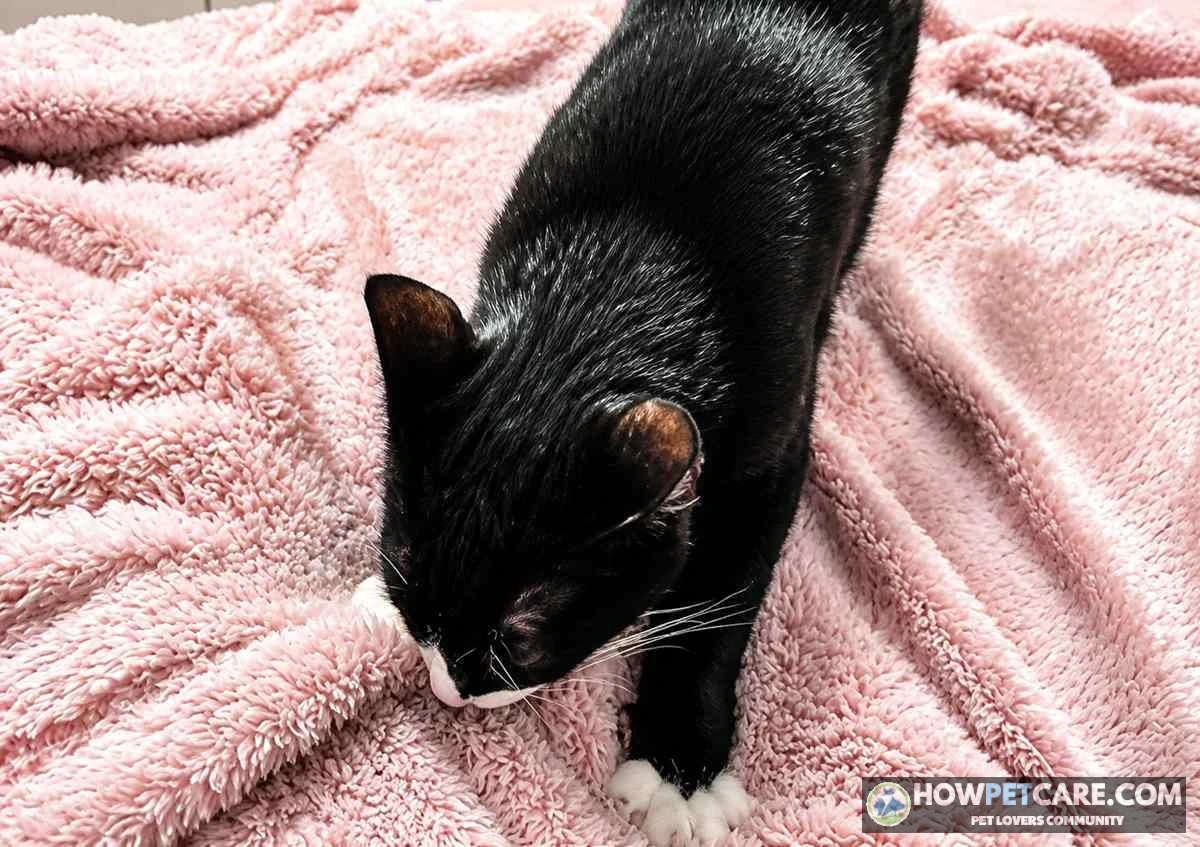

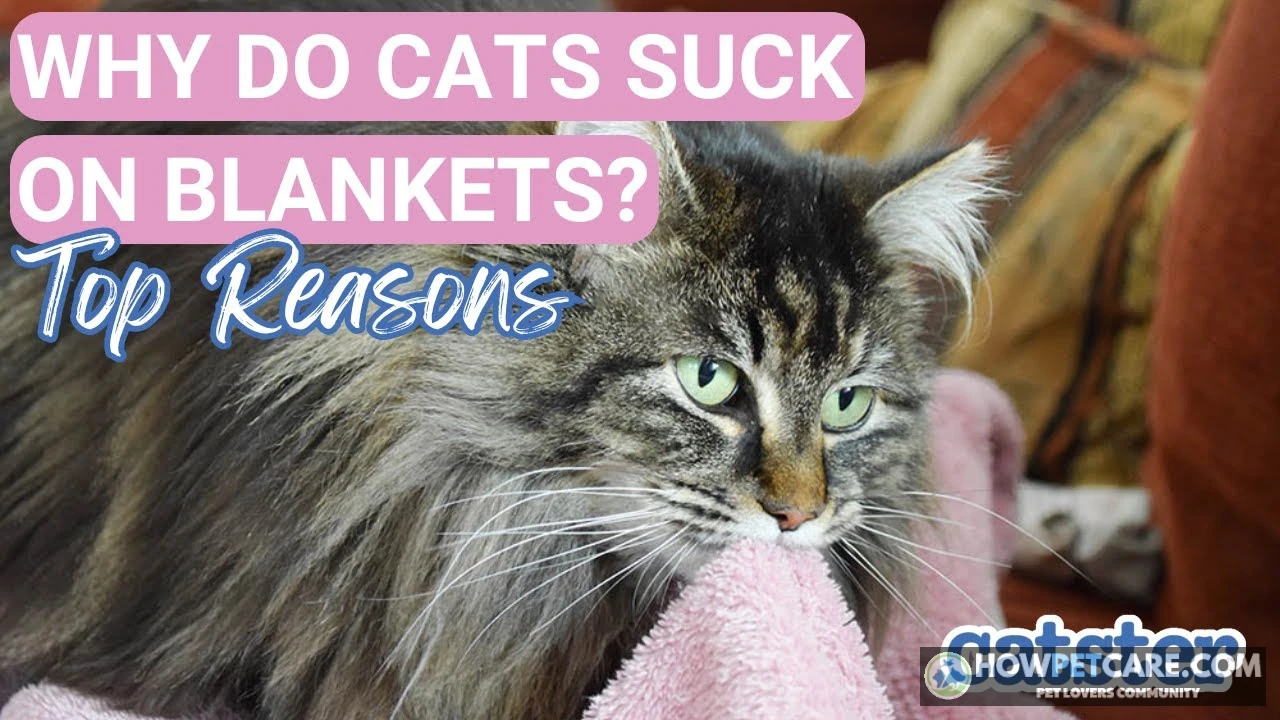
Cats suck on blankets as a self-soothing comfort habit rooted in kittenhood nursing, usually paired with kneading and purring. It’s normal when sessions are brief and no fabric is swallowed. Sucking plus chewing or missing fabric signals pica — a medical risk that needs a vet call.
Why Your Cat Sucks on Blankets, and the One Question That Decides If It Matters
Most cats who suck on blankets are practicing a normal comfort habit rooted in kittenhood nursing. Soft fabric, warmth, and your scent can trigger a self-soothing reflex, often accompanied by kneading and a rumbling purr. Veterinary behavior sources describe wool sucking as a self-soothing mechanism that stimulates oxytocin and endorphin release — roughly the same calming chemistry a kitten gets at the nipple.
The question that changes the answer is whether your cat is swallowing fabric. A cat that mouths and suckles a blanket, leaving a wet patch, is in a different category from one that chews holes and swallows threads. Sucking alone carries very little physical risk. Swallowed fibers can form a linear foreign body, bunch the intestine, and cause a life-threatening obstruction.
The rule that guides everything below: sucking without swallowing is a comfort habit; swallowing fabric is a medical risk.
That distinction gives you three possible outcomes. Most cats fall into the first: normal self-soothing, best managed with a safe blanket and a weekly check for damage. In the second, the behavior is frequent, hard to interrupt, and escalating. That points toward feline compulsive behavior and calls for redirection and a vet visit. A smaller group falls into the third: feline pica with actual ingestion, which means a same-day vet call. The three-tier triage checklist a few sections down can help you identify the right path for your cat.
Kneading, Purring and Suckling Together: The Kitten Nursing Reflex in Adult Cats
For a kitten, nursing is a full-body sequence. The kitten kneads its mother’s belly to stimulate milk flow, purrs, and suckles in rhythm. Those three actions are learned as one package. A soft, warm blanket with a familiar smell can offer similar tactile cues, prompting an adult cat to replay the sequence: paws working, eyes half-closed, purr rumbling, mouth fastened to the fabric.
That’s why owners so often describe the behavior as kneading and sucking blankets, rather than one or the other. The combination of kneading, suckling, and purring is the strongest signal that you’re seeing contentment or self-soothing rather than distress. It usually happens when the cat is drowsy, settling down for a nap or the night, or being petted on a lap. It tends to fade when food, play, or a noise in the hallway distracts the cat.
There are limits to what we know about the mechanism. A widely accepted working explanation is that suckling re-creates a nursing memory and delivers a calming release of oxytocin and endorphins. But it isn’t a proven single cause that explains every cat, and behavior specialists describe the exact origin as unsettled. Think of the nursing-memory explanation as the best available frame, not a lab result.
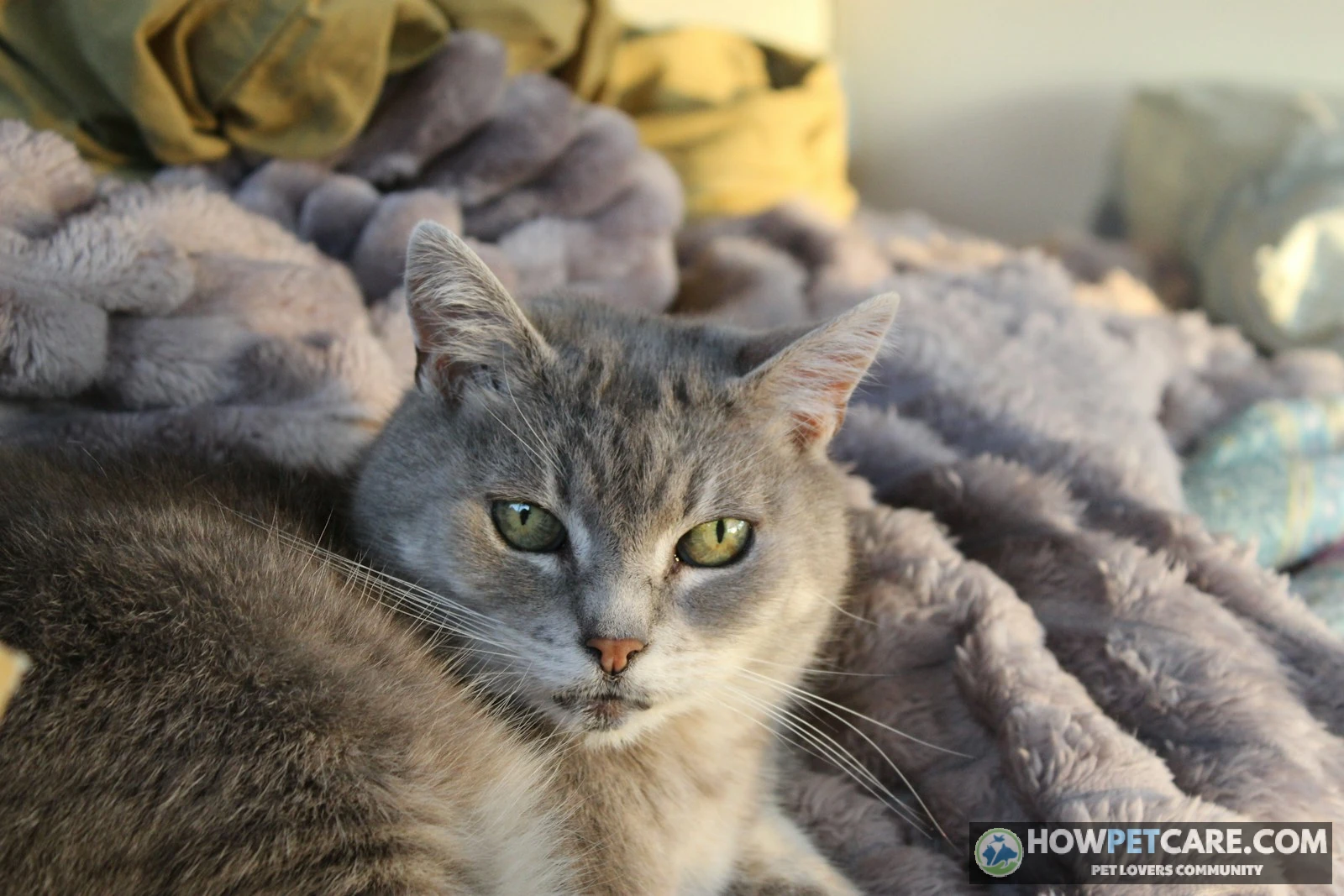
Cat sucking vs. kneading: what each one tells you
Kneading alone is extremely common and has nothing to do with ingestion. Cats knead laps, beds, and other cats for comfort and scent marking, and many cats that knead never suckle anything. Suckling adds mouth contact with fabric, which creates the possibility of chewing and swallowing.
The distinction matters for your response. Kneading alone means contentment and needs no management. Kneading with suckling suggests a retained comfort habit that needs monitoring. Add visible fabric damage, and there’s a risk of ingestion that needs action today.
Why some cats pick one specific blanket
Cats often fixate on a single textile for an ordinary reason: it holds the owner’s scent, has a preferred texture, or was present during a calm period. Owners frequently report that their cat loses interest after a wash, which points to scent rather than health. You can keep the chosen blanket as a designated comfort item if it passes the safety audit later in this article. If it needs replacing, look for a similar weave rather than a similar color.
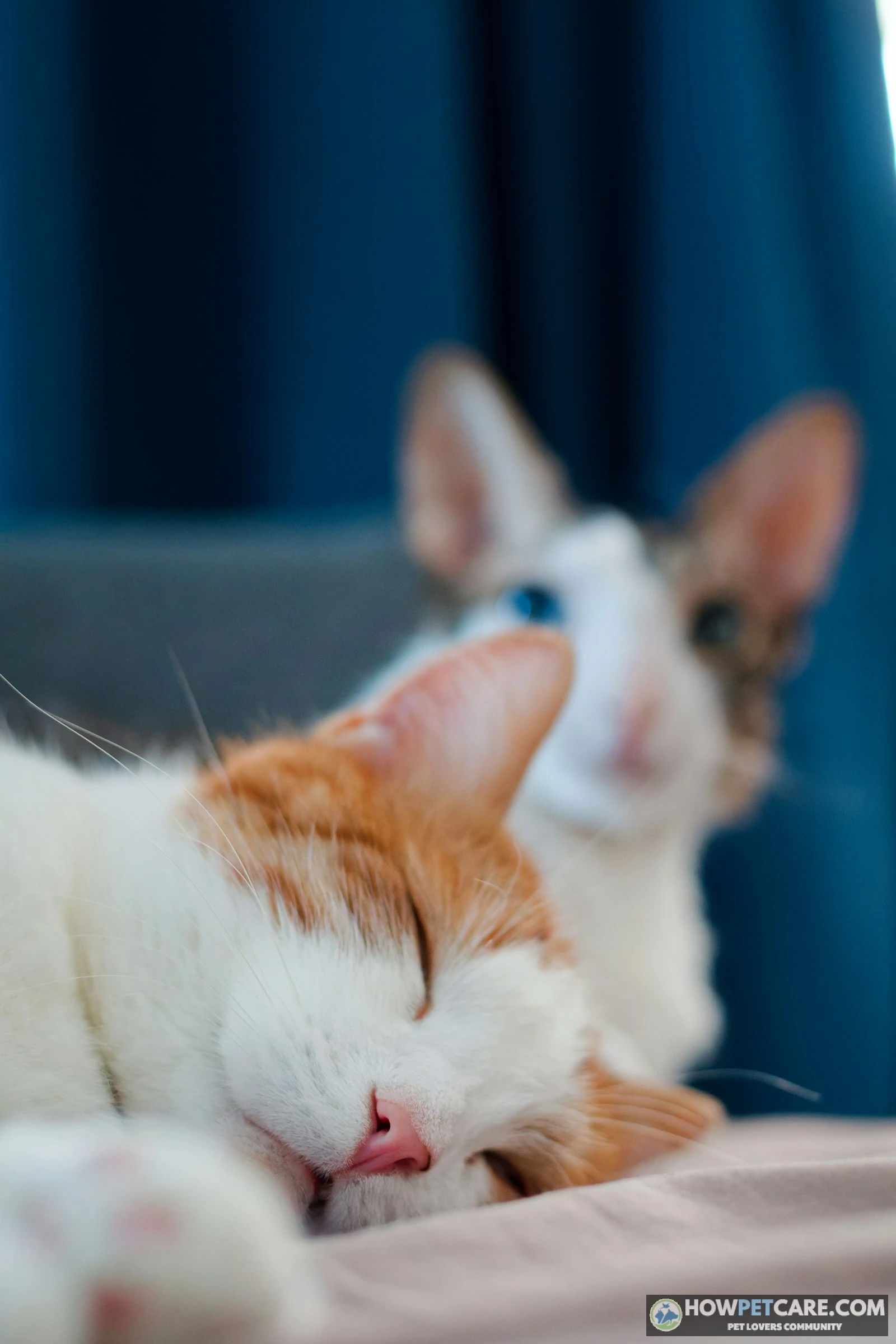
Early Weaning, Breed and Age of Onset: Who Does This and Why
Does blanket sucking mean your cat was weaned too early? Possibly, but early weaning is a risk factor, not a diagnosis. Kittens naturally wean and separate from their mother at around three months. Cats that were weaned early, orphaned, or separated from their mother too soon are more likely to keep suckling objects into adulthood. The correlation is real and commonly cited, but it doesn’t tell the whole story: plenty of cats raised on a normal schedule suck blankets, and plenty of early-weaned cats never do.
Breed matters more than many owners expect. Breeds with oriental ancestry — Siamese, Burmese, Abyssinian, and Birman — show higher rates of fabric and wool sucking than other breeds. That points to a heritable component alongside environment. If your cat is one of those breeds and started young, the behavior has a relatively clear explanation.
How common the behavior is overall remains unknown. Any article quoting a percentage for blanket sucking in the general cat population is guessing. One veterinary behaviorist has publicly said wool sucking is not a common trait in most cats, while other veterinary outlets describe it as a natural and very common kitten behavior. No reliable population-wide figure exists.
Lifelong habit vs. sudden adult onset: what changes
A cat that has quietly sucked one blanket since kittenhood is showing a retained habit. Owners often notice the intensity ease as the cat matures; the behavior commonly begins to diminish somewhere around one to two years of age. Some cats keep the habit for life, and it remains harmless.
A cat that suddenly starts sucking blankets as an adult is showing a symptom. Sudden onset in a grown cat can be linked to stress, separation anxiety, boredom, or a physical problem such as gastrointestinal disease or food allergy. Whether your cat has always done it or started last month is one of the most useful pieces of history you can give a veterinarian. It also changes the advice you should follow today.
The dividing line vets actually use isn’t whether the cat suckles — it’s when it started.
A cat that has quietly sucked blankets since kittenhood is showing a retained habit: the working explanation is self-soothing, and the response is monitoring.
A cat that starts suckling out of nowhere at age 3, 5, or 8 is showing a symptom, not a quirk. The common triggers to check before assuming it’s nothing:
- Pain: dental disease, mouth pain, or GI discomfort — oral comfort-seeking is a real pattern in cats with sore mouths
- Illness: nausea and digestive upset can present as new fabric-mouthing
- Stress and change: new pet or baby, moved house, changed routine, lost a companion, owner schedule change — look at the 4–6 weeks before onset
- Diet: a sudden switch to a very restricted or bland diet can coincide with pica-type behavior
What to do: write down what changed in the last two months, then book a routine vet visit (not an emergency — unless ingestion or blockage signs are present). Mention the onset date specifically; "she’s always done it" and "she started last month" lead to very different workups.
Is it normal for adult cats to suckle blankets?
Yes, for a meaningful minority of cats. Normal doesn’t mean the behavior looks identical to kitten nursing, though. An adult cat that suckles briefly at bedtime, purrs, and leaves the fabric undamaged is behaving within the range veterinarians see routinely. A cat that newly begins suckling as an adult, chews and shreds fabric, or seems unable to stop is different. Those three patterns deserve a professional opinion rather than a wait-and-see approach.
Normal Self-Soothing, Compulsive Behavior or Pica? A Three-Tier Triage Checklist
The categories below offer practical guidance, not diagnostic criteria. Only a veterinarian or veterinary behaviorist can formally diagnose feline pica or a compulsive disorder. The signs are distinct enough, however, to help you place your cat in the right tier tonight.
| Tier | What you see | Typical frequency and duration | Fabric swallowed? | Action |
|---|---|---|---|---|
| 1 — Normal self-soothing | Suckles and kneads, often purring; drowsy or being petted; stops when you speak or offer food | Short sessions, often under 10 minutes; stable for months or since kittenhood | No — fabric intact, wet at most | Keep one audited safe blanket; monitor weekly |
| 2 — Compulsive behavior | Hard to interrupt; suckles in many contexts; sessions lengthening; displaces eating, play, or sleep | Frequent, prolonged, or increasing over weeks | No, but intensity is rising | Vet visit plus the redirection plan; behaviorist if no improvement by week 6–8 |
| 3 — Pica with ingestion | Chews, shreds, bites off fibers; holes or missing pieces; vomiting, appetite loss, straining | Any frequency — a single confirmed episode counts | Yes | Call the vet; emergency if blockage signs are present |
Wool sucking vs. pica: what separates them. Wool sucking is mouthing and suckling fabric without swallowing it. Feline pica is the ingestion of non-food material; in a blanket-sucking cat, signs include chewed edges, shredded seams, and missing pieces. The behaviors can look nearly identical from across the room, so inspecting the blanket matters more than watching alone. Check the litter box and vomit for fibers, too. Confusing sucking with swallowing can lead owners to delay a necessary vet call.
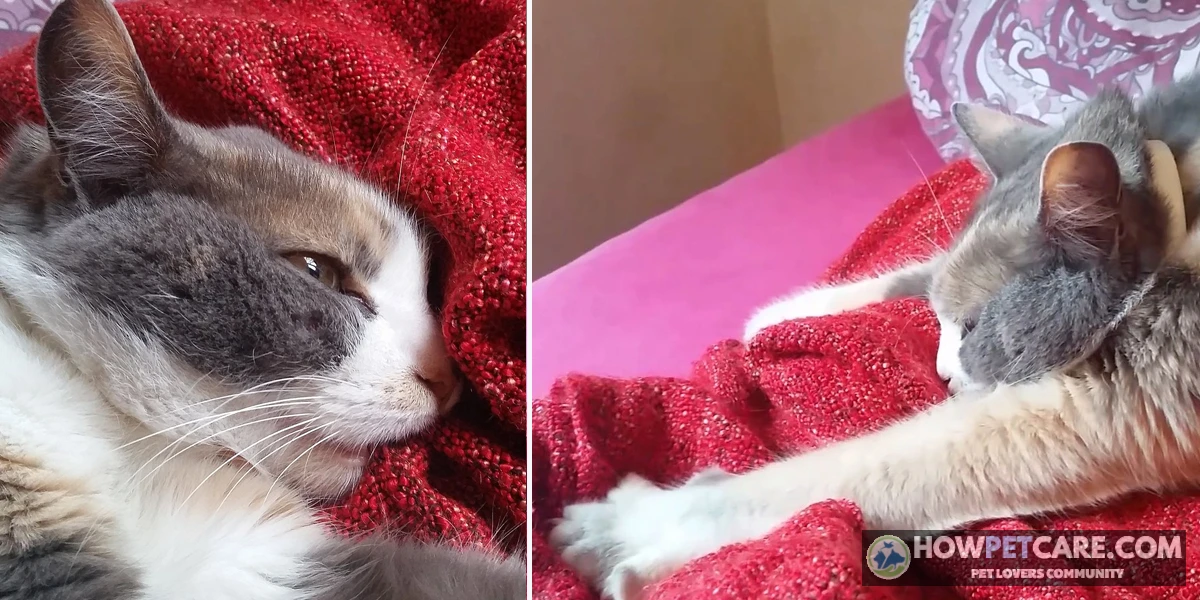
Run through this in order. Stop at the first tier that matches — higher tiers override lower ones.
GREEN — Normal self-soothing (monitor, no action needed)
- Sessions last under ~10 minutes and happen mainly when the cat is drowsy, settling to sleep, or being petted
- Cat is easily interrupted — it stops for food, a toy, or your voice
- Only suckles and kneads; fabric stays intact, wet at most
- Appetite, play, litter box, and weight are all normal
- Behavior has been stable for months or since kittenhood
YELLOW — Possible compulsive behavior (home redirection + vet visit within weeks)
- Sessions are frequent, long, or lengthening over the past month
- Cat is hard to interrupt — ignores food or toys to keep suckling
- Happens in many contexts, not just at rest
- Started suddenly as an adult, or escalated after a household change
- Interferes with eating, play, or sleep
RED — Pica / ingestion (call the vet; same day if signs below)
- You find holes, chewed edges, or missing pieces of fabric
- You’ve seen the cat bite off and swallow fibers or threads
- Vomiting, appetite loss, lethargy, straining, or no stool — treat as an emergency
- Thread or fabric visible at the mouth or anus — do NOT pull it, go to the vet now
If you can’t tell whether fabric is being swallowed, put a camera on the blanket for a few days or check the blanket and the litter box for fibers. When in doubt between Green and Yellow, treat it as Yellow.
A 7-day observation log you can keep on your phone
Before changing anything, record a week of baseline data. For each session, note the date and time, how long it lasted, and what happened just beforehand: lights dimming, dinner, you sitting down, or another pet entering the room. Record whether the cat stopped when interrupted and whether the blanket showed new damage. Once a day, note appetite, litter box output, and energy level. Seven days of notes give you numbers to compare against later, so you can tell whether redirection is working. They’ll also give your vet useful information.
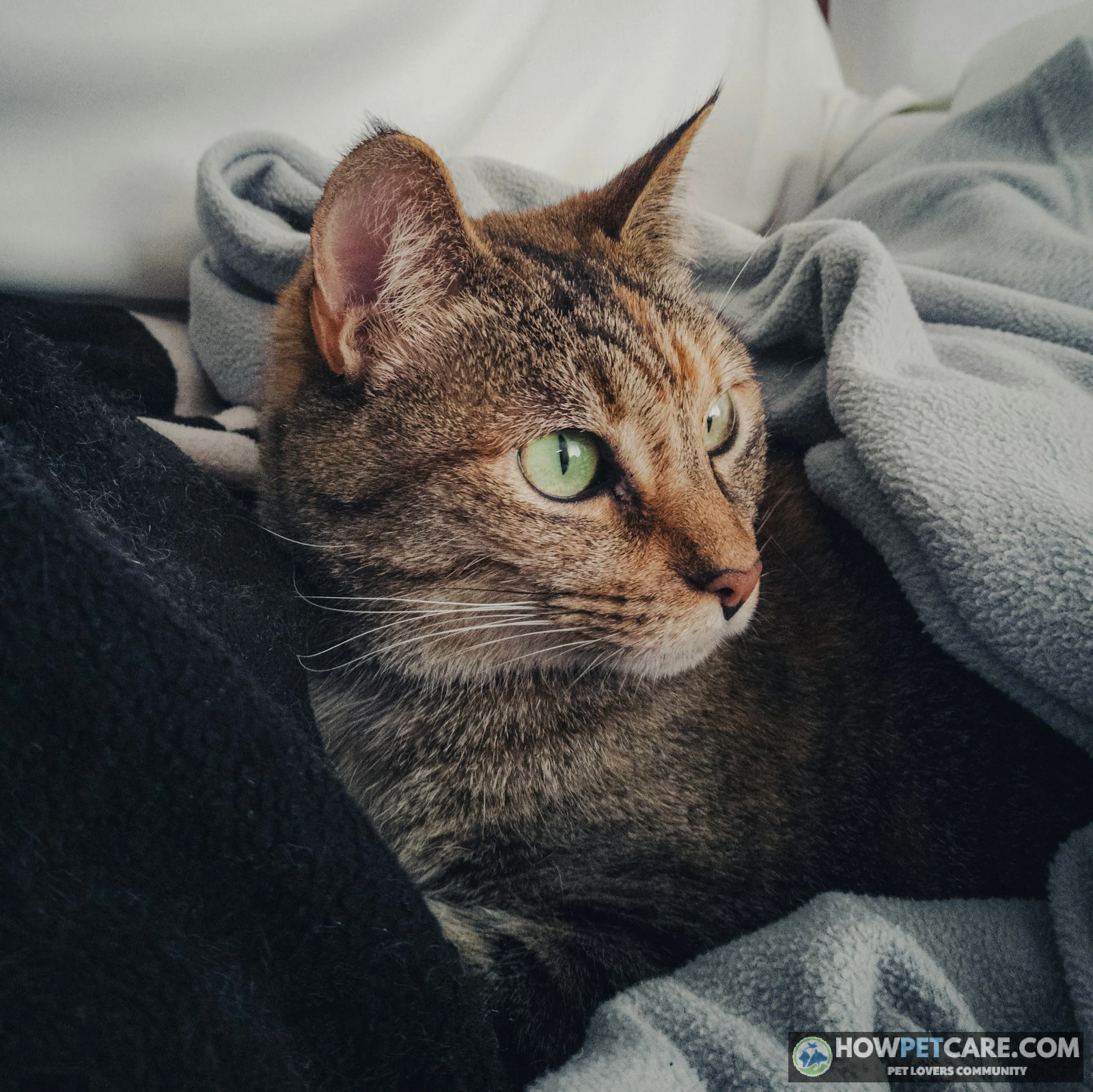
When Blanket Sucking Becomes Dangerous: Fabric Ingestion, Blockage Signs and Vet Costs
Suckling carries little physical risk. Swallowing fabric is another matter. A length of thread or a run of fleece fibers can anchor at one point in the intestine while the rest of the gut continues to move. The bowel then bunches around the fixed thread, creating what’s called a linear foreign body. It’s a surgical emergency and can be fatal if allowed to progress.
Signs of a blockage you should never wait on
Treat these signs as an emergency: repeated vomiting, especially with unproductive retching; refusal of food; lethargy or hiding; straining to defecate or producing no stool; a tender or distended abdomen; or any thread visible at the mouth or anus. If you see thread at either end, don’t pull it. Pulling can saw through the intestine. Cut nothing, pull nothing, and go.
Make a same-day call, rather than an emergency visit, if you find chewed fabric or holes in a blanket for the first time but your cat is eating, playing, and passing normal stools. Also call the same day if your cat has vomited once and then seems fine. A single episode in a known fabric chewer still warrants a check.
A thread hanging from the mouth or rectum may be anchored inside the intestine. Pulling it can cut the bowel wall. Cover it if you must, keep the cat from chewing it, and call your vet or an emergency hospital immediately.
What a vet workup and foreign-body treatment typically cost
Cost is a question owners often ask privately and rarely see answered. The ranges below are typical US estimates for 2026. They vary widely by region, clinic type, and severity, and emergency and specialty hospitals generally charge substantially more than general practices.
| What the vet does | When it applies | Approximate cost range |
|---|---|---|
| Physical exam and history review | Every visit; bring your 7-day log and photos of damaged fabric | $50–$150 |
| Bloodwork and urinalysis | Ruling out illness, anemia, or GI causes behind new suckling or pica | $100–$250 |
| Dental exam, possibly with sedation | Suspected oral pain driving fabric mouthing | $100–$300 for the exam; more with treatment |
| X-ray | Suspected swallowed fabric or blockage | $150–$400 |
| Ultrasound | Foreign body not visible on X-ray; checking the intestine | $300–$600 |
| Endoscopic removal | Material still in the stomach, caught early | $800–$2,500 |
| Foreign-body surgery | Linear foreign body or intestinal obstruction | $2,000–$5,000 or more; emergency clinics higher |
These are planning estimates, not quotes, and local costs may fall well outside them. An early exam plus an X-ray might cost around $200–$550. Waiting until a linear foreign body bunches the intestine can push costs past $3,000 for surgery and hospitalization, with a much sicker cat.
A vet will also screen for medical causes that can look like a behavior problem, including dental disease and mouth pain, gastrointestinal disease, food allergy, and other illness. New fabric-mouthing in an adult cat isn’t automatically behavioral. A physical exam helps sort out the cause.
Which Blankets Are Safe to Leave With a Sucking Cat (and Which Are Not)
Choosing the right blanket is an inexpensive way to reduce risk, regardless of brand. Judge the fabric by whether it can shed anything your cat might swallow.
| Material or feature | Risk level | Why it matters | Safer alternative or rule |
|---|---|---|---|
| Loose knit, crochet, open weave | Remove | Claws and teeth catch loops; threads come free and get swallowed | Replace with a tightly woven, smooth-finish blanket |
| Fringe, tassels, pom-poms, drawstrings | Remove | Swallowed string can act as a linear foreign body, anchoring and bunching the intestine | No exceptions — these never stay in reach |
| Frayed edges, unraveling seams | Remove or repair | Loose threads are the most commonly swallowed item | Trim and hem once; discard if it frays again |
| Wool and wool blends that shed | High — supervise or remove | Favorite suckle target, but sheds fibers a sucking cat can ingest | If the cat only mouths and never chews, supervised sessions may be acceptable; remove at any sign of chewing |
| Fleece or sherpa that pills and sheds | High — supervise | Loose pile detaches into fibers during suckling | Choose a low-pile, tightly constructed fleece and inspect weekly |
| Tightly woven cotton or fleece with hemmed edges | Low — keep | Nothing to detach; withstands suckling without damage | Wash weekly; retire it at the first loose thread |
| Blankets with buttons, appliqué, or stuffing | Remove | Parts can be chewed off and swallowed | Plain fabric only, no embellishments |
Rule of thumb: a cat that only suckles can keep one audited, hemmed blanket. A cat that chews or swallows should have access to textiles only under supervision: keep the blanket in a closet and bring it out when you’re in the room. A label reading "cat-safe" means nothing on its own; check the item against the table instead.
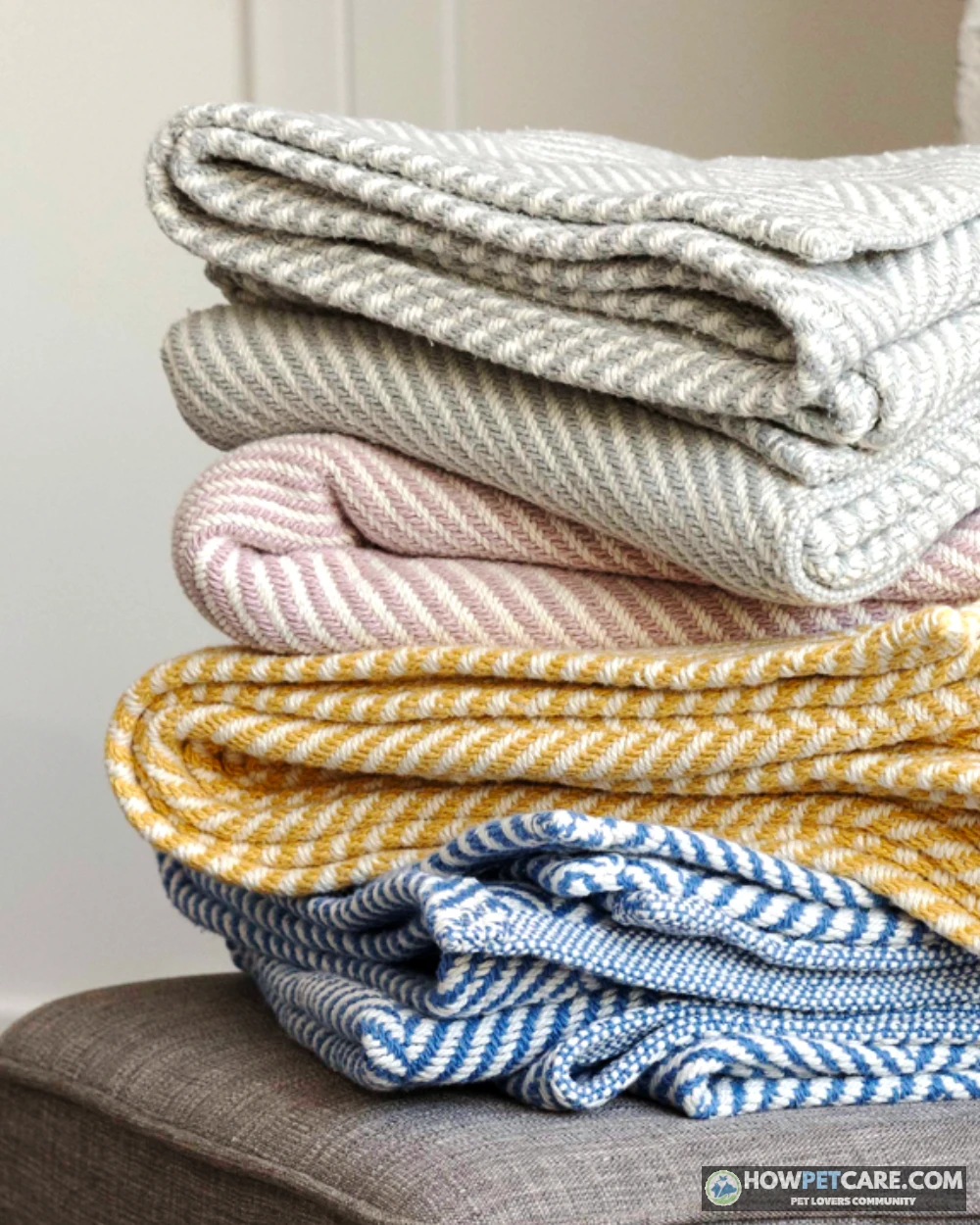
Once a week, hold the cat’s chosen blanket up to a window and run your fingers along every seam and edge. Look for new holes, thinning patches, loose loops, and pulled threads. Retire the blanket at the first fray — repairing a suckled blanket once is fine, twice means it belongs in the trash.
Why cats suck on wool blankets in particular
Some cats seek out wool, though no one has established a proven reason. Plausible explanations involve texture and behavior rather than chemistry: wool has a dense, springy resistance that may feel like a nipple to a determined suckler, and it sheds short fibers that a mouthing cat can work loose. That’s also why wool is a higher-risk material in the table above. The same quality that attracts the cat makes swallowing more likely. If your cat sucks a wool blanket without damaging it, supervised use is reasonable; remove the wool if you find chewed fibers.
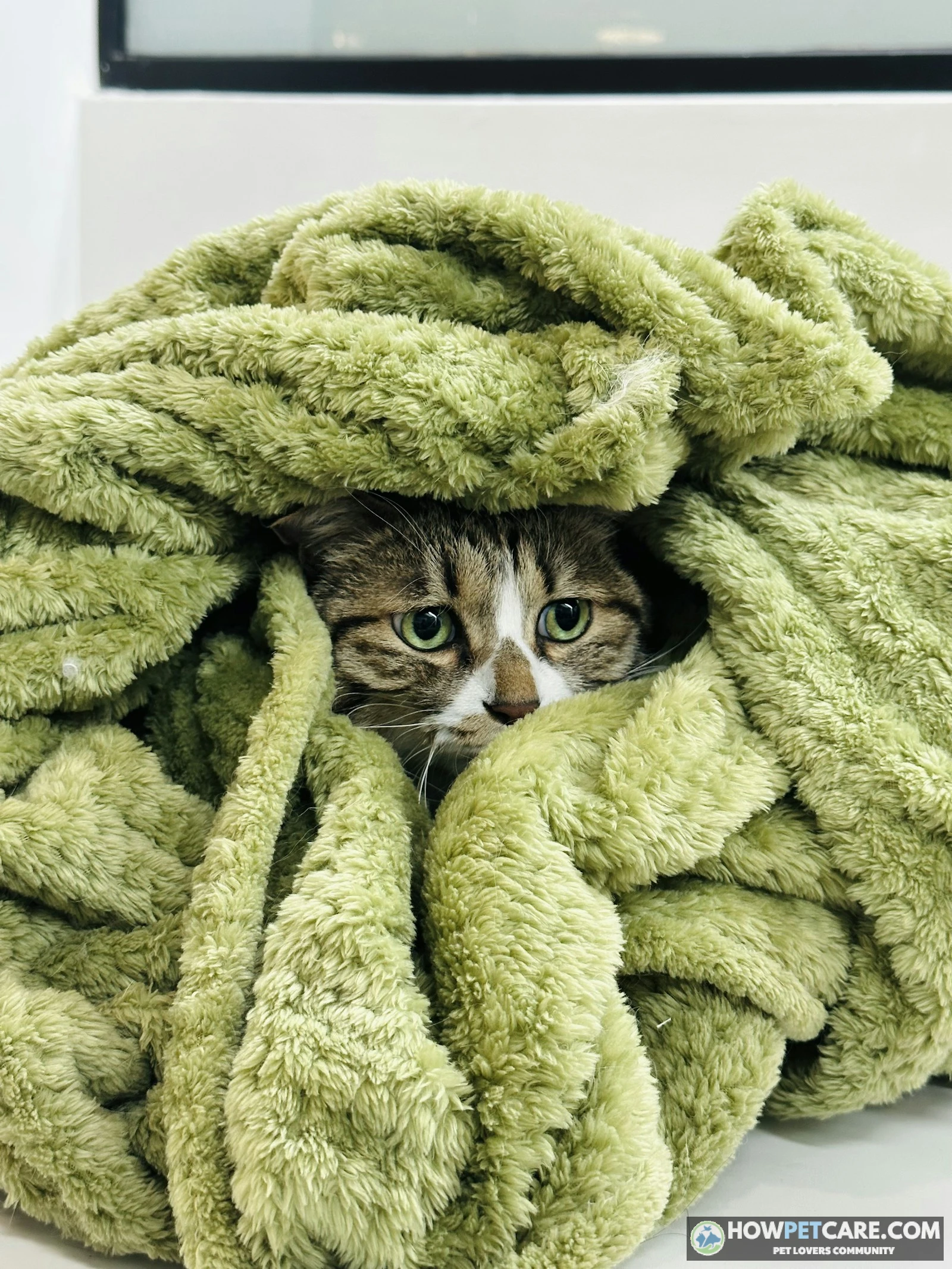
How to Stop a Cat From Sucking on Blankets: A Step-by-Step Redirection Plan With Timeline
Redirection works best as a sequence, rather than an improvised response. This plan runs eight weeks, with a checkpoint at week 4. A workable plan you can follow consistently is better than a perfect one you can’t sustain, so choose the parts you can keep up.
Before day one: confirm your cat is in the Green or Yellow tier and isn’t swallowing fabric. Start the 7-day baseline log, and remove every high-risk textile identified in the safety audit.
-
Week 1 — reset the environment
Audit and remove unsafe fabrics, and leave one hemmed, tightly woven substitute blanket in the cat’s usual spot. Add two scheduled play sessions daily, timed 15–30 minutes before the cat’s usual suckling times — for most cats that is evening and bedtime. Keep feeding times identical every day, because predictability lowers the stress that fuels suckling.
-
Weeks 2–3 — actively redirect
At the first sign of suckling, calmly place a wand toy or a small treat within reach. Interrupt without touching or scolding. The moment the cat switches to the toy or leaves the blanket, reward it with a treat, praise, or more play. Add one food puzzle per day so the mouth has a job. If the cat suckles at night, run a vigorous 10-minute play session and a small meal right before your bedtime.
-
Week 4 — first checkpoint
Compare the week’s log against baseline: sessions per day and average duration. Working means sessions are clearly down, or the cat accepts redirection and stays off the target blanket — continue to week 8. Not working means flat or rising numbers — book a vet or veterinary behaviorist now instead of waiting out the full eight weeks.
-
Weeks 4–8 — reduce access, Yellow tier only
Limit the trigger blanket to one room or to times you can supervise. Keep the substitute available in sleeping spots. Do not taper the play sessions or food puzzles that made the plan work in the first place.
-
Weeks 6–8 — escalation decision
If there is no meaningful improvement by week 6–8, or any ingestion appears at any point, stop self-managing and get professional help. A plan that has not moved the numbers in two months will not move them with more of the same.
Never spray, yell at, or grab your cat off the blanket. Punishment doesn’t teach the cat what to do instead, and added stress tends to intensify compulsive behavior rather than reduce it.
How to know it’s working, and when it isn’t
Success means a sustained drop in daily sessions compared with your baseline log, along with a cat that accepts redirection and settles without the blanket. A Green-tier cat that keeps a safe blanket and needs no intervention is also a success; those cats should be left alone. One bad night doesn’t mean the plan has failed. Judge the trend across a full week against the numbers you recorded before starting, not your memory of how things used to be.
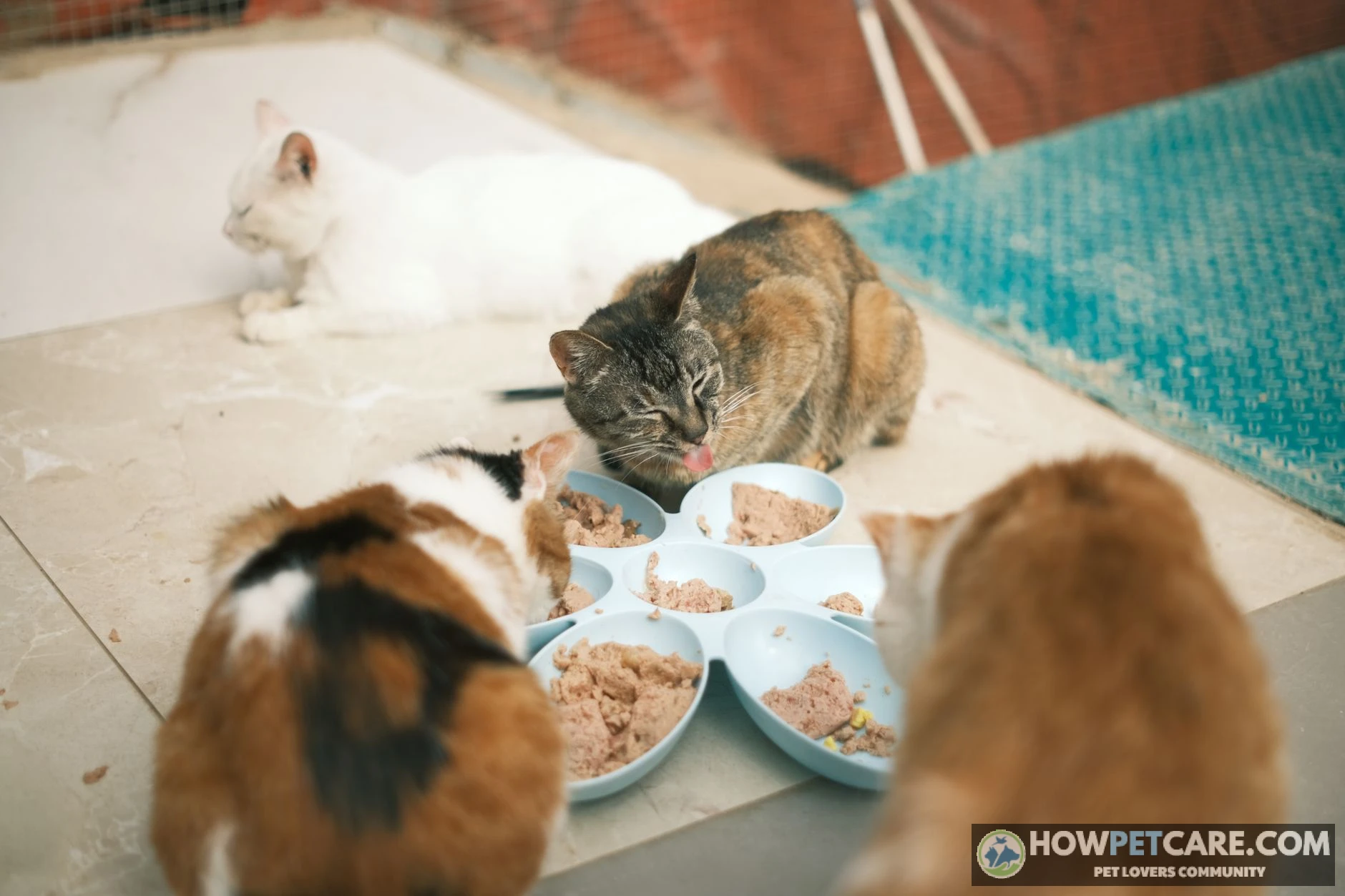
The Escalation Ladder: Diet and Fiber, Feliway, Fluoxetine and What Each Realistically Offers
Behavior modification is the foundation, but it isn’t the only option. When it isn’t enough, veterinarians may turn to the approaches below. Each comes with different expectations.
| Step | What it involves | Realistic expectation | Vet needed? | Approximate cost range |
|---|---|---|---|---|
| Environment and enrichment | Play before trigger times, predictable routine, safe substitute, hiding spots and perches | Most stress-linked cases improve over 4–8 weeks; no side effects | No | $0–$50 |
| Pheromone therapy | Diffuser or spray in the cat’s core area, used for at least 4–6 weeks | Modest and variable evidence; low risk, worth one trial | No (non-prescription) | $30–$80 |
| Vet workup | Exam, bloodwork, dental check, imaging if indicated | Rules in or out pain, dental disease, GI disease, other illness | Yes | $50–$600 |
| Diet or fiber trial | Vet-guided fiber addition or a diet change, time-boxed | Limited, mixed evidence; try it as a trial, not a cure | Yes | $20–$80 per month |
| Prescription medication | Fluoxetine or a similar SSRI for compulsive behavior or anxiety, always paired with behavior modification | Takes several weeks to judge; requires monitoring for side effects; not a standalone fix | Yes | $15–$60 per month plus rechecks |
Cost ranges are planning estimates, vary by region and clinic, and aren’t quotes.
Diet and fiber changes for pica-prone cats
Consider diet changes after a vet has ruled out medical causes, not before. Fiber or diet adjustments are sometimes tried for pica-type behavior, but the evidence is limited and mixed. Treat an adjustment as a time-boxed trial with a review date, rather than a fix. A sudden switch to a very restricted or bland diet can also coincide with pica-type behavior. That makes recent diet changes worth examining as a possible trigger, rather than assuming the current diet is the solution.
Pheromones vs. prescription medication: how to compare them
Pheromone products such as Feliway are a low-risk first option: they need no prescription, have few downsides, and help some cats whose suckling is linked to stress. Results vary and the evidence is modest, so treat a six-week trial as an experiment you’ll evaluate. Fluoxetine belongs to a different category. It’s prescription-only, used for feline compulsive behavior or cat anxiety under veterinary supervision, and meaningful only alongside behavior modification. Expect weeks rather than days before you can judge it, as well as recheck exams and a request from your vet for the observation log. A veterinary behaviorist is worth the referral when two tiers of intervention haven’t worked, when the cat is harming itself, or when the household can’t sustain the modification plan alone.
Sudden-onset, stress-driven suckling and feline anxiety
When cat anxiety or separation anxiety is the trigger, rather than a retained kitten habit, the medical options above support behavioral work but don’t replace it. Routine, predictable comings and goings, dedicated play, and perches near windows do more for most cats than any single product. If your cat tends to suckle around your departure or return, log those times specifically. The pattern is useful information for your vet.
1What is the fundamental rule that distinguishes normal blanket sucking from feline pica?
Mouth contact alone leaves wet fabric without physical harm, while actual ingestion of non-food fibers creates a severe risk of intestinal blockages.
2Why do adult cats frequently combine kneading, purring, and suckling when on a soft blanket?
Nursing naturally combines paw kneading to stimulate milk flow with purring and suckling, creating an integrated self-soothing pattern into adulthood.
3Which group of cat breeds exhibits higher rates of wool and fabric sucking, suggesting a genetic predisposition?
Veterinary sources note elevated rates of wool and fabric sucking in oriental-ancestry breeds, pointing to a heritable component.
4What does the sudden onset of blanket sucking in a mature adult cat with no prior history usually indicate?
Late adult onset functions as a clinical symptom requiring investigation into dental pain, GI illness, or recent environmental changes.
5According to the three-tier triage checklist, which sign places a cat into Tier 2 (Compulsive behavior)?
Increasing intensity, context expansion, and resistance to interruption without fabric ingestion define Tier 2 compulsive patterns.
6Why is it vital NEVER to pull a string or thread visible at a cat's mouth or anus?
A linear foreign body anchors at one point while the intestine bunches; pulling can cause the string to act like a saw against the gut tissue.
7Which blanket feature should be removed immediately from a sucking cat's environment due to foreign body risks?
Dangling strings, tassels, and loose trims are easily chewed off and present severe linear foreign body risks.
8When selecting a replacement for a cat's favorite unsafe suckling blanket, what property is most important to match?
Matching tactile weave and texture satisfies the cat's physical preference while eliminating loose thread hazards.
9In a behavioral redirection plan, when should structured play sessions ideally be scheduled?
Preempting predictable suckling periods with energetic play redirects energy and satisfies oral/hunting drives before comfort habits initiate.
10Why is physical or verbal punishment strictly discouraged when managing a blanket-sucking cat?
Adding fear or stress elevates anxiety chemistry, frequently escalating the compulsive drive to self-soothe.
Your Next Step: Decide in Five Minutes Whether to Redirect at Home or Book the Vet
The question of why do cats suck on blankets can point you toward four paths. For most cats, the question of whether fabric is being swallowed sorts out the next step in under a minute.
- Any swallowed fabric, or any blockage sign: vet now, emergency hospital if vomiting, lethargy, straining, or visible thread.
- Sudden onset in an adult cat: routine vet visit this week, plus a written review of what changed in the previous four to six weeks.
- Tier 2 compulsive pattern, no ingestion: vet visit within a few weeks and start the redirection plan now; reassess at week 4 and escalate at week 6–8 if the numbers have not moved.
- Tier 1 normal self-soothing: keep one audited, tightly woven blanket, run the weekly inspection, and change nothing else.
For a printable checklist covering the next eight weeks: start the 7-day log tonight, remove every high-risk textile this week, set up one safe substitute blanket, and schedule play sessions before the usual suckling times. Put the week 4 and week 8 reviews on your calendar.
Bring the observation log to the appointment, along with photos or a sample of damaged fabric, a list of diet and household changes in the last two months, and a note of anything you’ve seen in stool or vomit.
Most cats with this habit are in the first tier and need nothing more than a blanket that won’t come apart in their mouths. Cats whose behavior is changing, escalating, or leaving holes behind need help. For them, acting promptly can make the difference between an inexpensive early exam and costly surgery. If you aren’t sure which group your cat belongs to, keep the log, remove the risky fabric, and let a veterinarian take a look.
| Behavior Category | Observable Signs | Typical Frequency and Duration | Fabric Ingestion Status | Risk Level | Recommended Action |
|---|---|---|---|---|---|
| Tier 1 — Normal self-soothing | Suckles and kneads, often purring; drowsy or being petted; stops when you speak or offer food | Short sessions, often under 10 minutes; stable for months or since kittenhood | No — fabric intact, wet at most | Green / Low / Safe (harmless comfort habit) | Keep one audited safe blanket; monitor weekly |
| Tier 2 — Compulsive behavior | Hard to interrupt; suckles in many contexts; sessions lengthening; displaces eating, play, or sleep | Frequent, prolonged, or increasing over weeks | No, but intensity is rising | Yellow / Moderate / Escalating | Vet visit plus the redirection plan; behaviorist if no improvement by week 6–8 |
| Tier 3 — Pica with ingestion | Chews, shreds, bites off fibers; holes or missing pieces; vomiting, appetite loss, straining | Any frequency — a single confirmed episode counts | Yes | Red / High / Emergency risk (life-threatening obstruction/linear foreign body potential) | Call the vet; emergency if blockage signs are present |
FAQ
Why does my cat suck on blankets at night?
Cats often settle into comforting habits when they are drowsy and the house is quiet, so sucking and kneading are common right before sleep. If it is brief and no fabric is swallowed, it is usually harmless. If the cat is restless, chewing the fabric or waking you to do it, consider boredom or stress and remove risky textiles from the bedroom.
Should I punish or scold my cat for sucking on blankets?
No. Punishment does not teach a cat what to do instead and can raise stress, which may make compulsive behavior worse. Calmly redirect to a toy or a safe substitute and reward the switch.
Will my cat grow out of sucking on blankets?
Some cats outgrow it, and others keep it as a harmless lifelong comfort habit. Whether it is likely to fade is less important than whether it is escalating or involves swallowing fabric, which calls for a vet visit.
Is it okay to let my cat keep a blanket to suckle on?
Yes, if the cat only suckles and does not chew or swallow fibers. Choose a tightly woven blanket with hemmed edges and no loose threads, and check it often for fraying.
Does getting another cat or kitten stop blanket sucking?
There is no reliable evidence that a companion cat stops the habit, and a new pet can add stress for some cats. Treat the cause first and introduce a new pet only for other reasons.