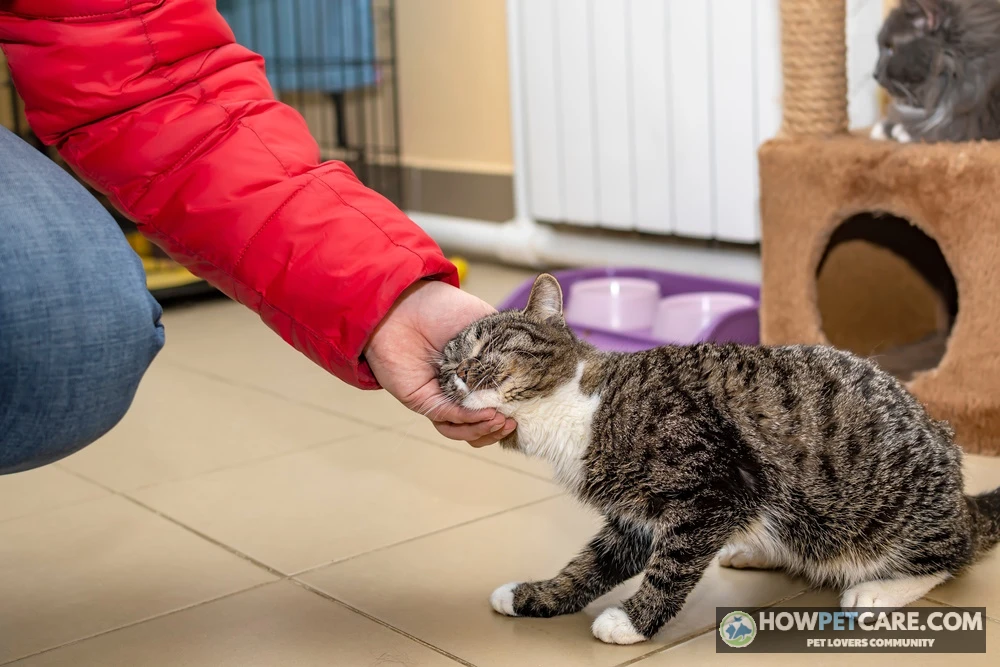

Cats rub against you to communicate — depositing scent from facial glands, greeting you, gathering information about where you’ve been, bonding socially, or requesting food and attention. Often it’s several motives at once. A relaxed rub is usually friendly, but it doesn’t prove any single emotion like affection.
Cats rub their cheeks, forehead, flanks, or tail against people to communicate — the direct answer to “why do cats rub against you.” Head rubbing is often called bunting; allorubbing describes social body contact between cats or between cats and humans. As they rub, cats deposit chemical signals from facial scent glands around the cheeks, forehead, and chin, plus glands at the tail base. These include pheromones such as the F4 fraction, which researchers associate with marking familiar individuals and creating a shared group odor. Rubbing can be a greeting, social bonding, information-gathering, scent marking, or a request for food or attention — often several at once. It doesn’t prove any single emotion or human-like affection.
The myth: Rubbing is the feline version of a hug — a direct display of affection you can take at face value.
What’s actually true: Rubbing is scent communication, and affection is just one of its roles. When a cat rubs its cheeks and forehead on you, it deposits chemical signals from facial scent glands. That gesture might mean ‘you smell like part of my group,’ ‘let me gather information about where you’ve been,’ ‘I want food or attention,’ or ‘I need to re-mark you after you’ve been out.’
Two practical corrections:
- A cat rubbing on you doesn’t prove a bond. A stranger’s cat may rub you to gather scent information or mark unfamiliar objects — including you. A rub isn’t consent to pet.
- More rubbing isn’t always better. Cats may rub more when anxious, when household routines change, or — in intact females — during heat. Frequency reflects arousal and context, not a love meter.
The most reliable read: a relaxed cat that chooses to rub on you is engaging socially, which is usually a positive sign. But behavior shows what a cat is doing, not exactly what it feels. Read the whole body, not just the rub.
Read the rub: what head bunts, leg weaves, and tail wraps can mean
Cats often rub against legs because they’re easy to reach: legs are at nose height and move predictably. Weaving between them lets a cat deposit scent from several gland sites in one sequence. The same rubbing can mean different things at mealtime, when you come home, near a stranger, or around a new object. Rubbing furniture, doorways, or belongings also leaves scent and gathers information. It’s related to rubbing on a person, but the social context isn’t identical.
Look at the cat’s full body language to interpret the gesture: tail position, ears, posture, vocalizing, and whether the cat pauses or retreats. A relaxed, upright or softly curved tail, forward ears, loose posture, and slow blinks usually signal a friendly greeting or scent exchange. A stiff body, flattened ears, lashing tail, or sudden stillness can point to overstimulation, anxiety, or a shift toward play aggression.

A quick decoder for rubbing types and situations
| Gesture or context | Possible meaning | Body-language clues | Recommended response |
|---|---|---|---|
| Head bunt (forehead pressed into you) | Greeting, scent exchange, social bonding | Relaxed posture, upright or softly curved tail, slow blinks, may purr | Pause and let the cat finish; offer a hand to sniff, then brief cheek or chin strokes if it stays loose |
| Cheek or face rub along your hand or leg | Depositing facial pheromones; marking you as familiar | Ears forward, body loose, rubbing repeats or travels along your side | A low hand at nose height is welcome; pet cheeks and chin only, not belly or tail base |
| Full-body leg weave (rubbing while circling between your feet) | Greeting plus scent exchange; often a request for attention or food | Tail up, sometimes quivering; may meow or glance toward the kitchen | Speak calmly and move deliberately to avoid tripping; address the likely request, then give brief attention |
| Tail wrap (tail curls around your leg or arm) | Social contact; a wrapping gesture seen between affiliated cats | Tail tip relaxed, no lashing; body stays pressed in | Accept it as contact — you don’t need to touch the tail back; gentle scratch at the cheeks is fine |
| Mealtime rubbing (rubs you, then walks to bowl or food area) | Request behavior chained to a reward; greeting plus ‘feed me’ | Rubs repeatedly, looks back at you, vocalizes, leads you somewhere | This is communication, not manipulation — respond to the request on your schedule, not the cat’s, if you’re managing weight |
| Homecoming rubbing (intense rubbing right when you walk in) | Re-establishing shared scent after you picked up outside smells | Full rub sequence: face, flanks, tail wrap, sometimes follows you | Give 30–60 seconds of calm attention before moving on; rushing past can frustrate a social cat |
| Rubbing a stranger or visitor | Information-gathering and scent marking — not an invitation to pet | Approach is curious but the cat may flinch if you reach down | Stay still, let the cat rub, keep hands at your sides; ask the owner before attempting any contact |
| Gesture or Context | Possible Meaning | Body-Language Clues | Recommended Response |
|---|---|---|---|
| Head bunt (forehead pressed into you) | Greeting, scent exchange, social bonding | Relaxed posture, upright or softly curved tail, slow blinks, may purr | Pause and let the cat finish; offer a hand to sniff, then give brief cheek or chin strokes if it stays loose |
| Cheek or face rub along your hand or leg | Depositing facial pheromones; marking you as familiar | Ears forward, body loose, rubbing repeats or travels along your side | Offer a low hand at nose height; pet cheeks and chin only, avoiding the belly or tail base |
| Full-body leg weave (rubbing while circling between your feet) | Greeting plus scent exchange; often a request for attention or food | Tail up, sometimes quivering; may meow or glance toward the kitchen | Speak calmly and move deliberately to avoid tripping; address the likely request, then give brief attention |
| Mealtime rubbing (rubs you, then walks to bowl or food area) | Request behavior chained to a reward; greeting plus "feed me" | Rubs repeatedly, looks back at you, vocalizes, leads you somewhere | Recognize as communication; respond to the request on your schedule, not the cat's, if managing weight |
| Homecoming rubbing (intense rubbing right when you walk in) | Re-establishing shared scent after you picked up outside smells | Full rub sequence: face, flanks, tail wrap, sometimes follows you | Give 30–60 seconds of calm attention before moving on; rushing past can frustrate a social cat |
| Rubbing a stranger or visitor | Information-gathering and scent marking; not an invitation to pet | Approach is curious, but the cat may flinch if you reach down | Stay still, let the cat rub, keep hands at your sides, and ask the owner before attempting contact |
| Tail wrap (tail curls around your leg or arm) | Social contact; a wrapping gesture seen between affiliated cats | Tail tip relaxed, no lashing; body stays pressed in | Accept as social contact without touching the tail back; a gentle scratch at the cheeks is fine |
How to respond when a cat rubs against you
With a familiar cat, pause and let it choose whether to continue the contact. Offer a hand to sniff, then try brief cheek or chin strokes if its body language stays relaxed. Don’t restrain, chase, or rub the cat’s head back; you don’t have to reciprocate. Let the cat’s response — not an assumed effect of your touch — guide what happens next. Stop if the cat stiffens, turns its ears back, lashes its tail, or moves away. On stairs, give it a safe route around you; at night, redirect face-rubbing with a consistent routine.

A stranger’s cat rubbing your legs can feel like permission, but it isn’t. Follow this order instead:
- Stand still and let the cat finish. Don’t bend over, reach down, or step toward it. Reaching from above can turn a confident rub into a swat.
- Ask the caregiver first. ‘Is it okay if I pet her?’ takes five seconds and prevents most bad outcomes.
- If the caregiver agrees, offer one finger at the cat’s nose height, about a hand’s length away. Let the cat close the distance — don’t push your hand into its face.
- If the cat sniffs and rubs your finger, stroke the cheeks, chin, or the area between the ears only. Give two or three short strokes, then pause.
- Check the cat’s response after each pause. Leaning in or rubbing again means you can continue. Turning away, sitting down facing elsewhere, twitching skin, or a low tail means you’re done. Stop while it’s still a good interaction.
- Skip the belly and tail base entirely on an unfamiliar cat, even if it rolls over. A displayed belly signals trust, not a request.
Keep the greeting under 15–20 seconds. Ending early with a cat that wanted more is better than ending late with a cat that bites.
Preventing tripping and unwanted face-rubbing
- Stairs and hallways: Move deliberately; pause at the top or bottom until the cat clears your path. A wall-mounted perch or mat near the stairs gives the cat a designated greeting spot.
- Nighttime face-rubbing: Set up a pre-bed play session (5–10 minutes with a wand toy), then offer a small meal. Close the bedroom door if needed; consistency matters more than the specific barrier.
- Excessive demand rubbing: If the cat rubs and vocalizes persistently for attention, reward calm behavior instead. Wait for a sit or a quiet moment, then pet briefly. This shifts the exchange from a demand to an offer.

When rubbing turns into biting: read the sequence, then change the interaction
A bite after petting may signal overstimulation. Watch for tension, skin twitching, tail lashing, or a sudden turn toward your hand. A quick, inhibited nip during social contact differs from a hard bite. A cat that rubs and then pounces may be switching into play or redirected hunting behavior. Note what happened just before the bite — petting location and duration, nearby movement, noise, or frustration — to help identify the trigger. Stop petting at the first warning signs, keep your hands still rather than pushing the cat away, and use toys for play. For repeated or escalating bites, consult a veterinarian or feline behaviorist.

Overstimulation, social nips, or hunting play?
Work through this list just after a bite, while the sequence is fresh.
If the bite followed petting, suspect overstimulation. Check for:
- ☐ Skin twitching or rippling along the back just before the bite
- ☐ Tail lashing or thumping that sped up while you stroked
- ☐ Ears rotating back or flattening, pupils going wide
- ☐ A sudden head turn toward your hand
Your response: stop petting and keep your hands still; pulling away fast can trigger a grab. Make future sessions about half as long, ending before the warning signs appear.
If the bite was soft and the cat stayed relaxed, suspect an affection nip. Check for:
- ☐ A quick, inhibited nip with no injury or skin break
- ☐ Loose body, possibly purring or continued rubbing after
- ☐ No warning signals beforehand — the cat seemed content
Your response: punishment isn’t needed. Briefly end the interaction so hard nips don’t become a habit, then resume calm contact later.
If the cat rubbed, then stalked or pounced on your hand or foot, suspect redirected hunting/play. Check for:
- ☐ Crouched posture, hind-end wiggle, fixed stare before the bite
- ☐ The ‘bite’ was part of a grab-kick or chase sequence
- ☐ It happens at predictable times (evenings, after naps, when you walk past)
Your response: don’t use hands or feet as toys. Redirect to a wand toy for 5–10 minutes and add a daily play session at that trigger time.
Escalate to a vet or feline behaviorist if: bites break skin repeatedly, the pattern escalates, or the cat bites with no readable warning at all.
Normal bunting or a medical warning? Know when rubbing needs attention
Normal rubbing is usually brief and purposeful: a cat presses or glides its face or body against a person or surface, then moves on while staying responsive. Head-pressing is different. A cat persistently pushing its head against a wall or other object without an obvious social interaction may have a serious neurological or systemic problem. Contact a veterinarian promptly about persistent head-pressing, disorientation, circling, seizures, loss of balance, vision changes, or a sudden, marked behavior change. Seek veterinary advice for new, compulsive, painful, or one-sided rubbing, especially if it comes with skin irritation, discharge, appetite changes, or other signs of illness.

Normal rubbing is brief and social: the cat presses or glides its face or body against you or an object, then moves on. It stays responsive — it looks at you, reacts to sound, and can be interrupted.
Head-pressing is a different behavior: the cat compulsively pushes its head against a wall, corner, or hard surface and holds it there. It isn’t directed at anyone, often can’t be interrupted, and may come with disorientation, circling, staring at walls, or stumbling. Head-pressing can signal a serious neurological or systemic problem. Call a veterinarian the same day; don’t wait and see.
Also call your vet promptly if you see:
- Persistent head-pressing or pushing the head into objects
- Circling, loss of balance, seizures, or vision changes
- Frantic or one-sided rubbing paired with scratching, head shaking, or ear discharge (possible ear infection or mites)
- Sudden compulsive rubbing, apparent pain when touched, or rubbing plus appetite or behavior changes
Brief, purposeful, interruptible = communication. Compulsive, repetitive, unresponsive = call the vet.
Why rubbing frequency changes with age, sex, and routine
Both males and females rub socially. Intact females may rub and vocalize more during heat, while intact males may show more rubbing and other scent-marking when a female in heat is nearby. Hormonal behavior and mating signals can contribute, but rubbing alone doesn’t diagnose heat. Neuter status can change hormone-driven behaviors; neutering may reduce hormone-driven marking or restlessness, but it won’t remove social rubbing. A cat’s history, temperament, and environment also shape how often it seeks contact. Kittens may begin rubbing during early social contact, while senior cats may rub more or less as pain, sensory changes, or illness alter their routines. A sudden shift deserves attention. Consider timing and context — coming home, meals, or household changes — before attributing frequent rubbing to sex, age, or affection. Veterinary behaviorist Dr. Stephanie Borns-Weil of Tufts University and certified cat behavior consultant Marilyn Krieger (The Cat Coach) emphasize that context and body language matter more than demographic generalizations.

Use this response checklist for your cat’s next rub
Start with the context and body language. A relaxed approach and loose posture fit a calm greeting; tension or avoidance means give the cat space. Let it initiate and set the pace. Offer brief, low-pressure contact only when welcome, and stop at early signs of overstimulation. With a stranger, treat rubbing as contact — not permission — and ask the caregiver before petting. Persistent head-pressing, neurological signs, pain, or abrupt behavior changes warrant a call to the veterinarian, not treatment as normal bunting.
Quick decision path:
- Is the cat relaxed and responsive? → Offer a hand to sniff, then brief cheek or chin strokes.
- Is the cat a stranger? → Stay still, ask the caregiver, offer one finger at nose height.
- Did the cat just rub then bite? → Run the rub-then-bite checklist above; adjust petting duration or add play.
- Is the cat head-pressing, circling, or acting disoriented? → Call the vet today.
- Has rubbing suddenly increased or become one-sided with skin changes? → Schedule a veterinary exam.
- Is the cat tripping you or rubbing your face at night? → Add a pre-bed play-meal routine and a designated greeting spot.

Read the whole cat, not just the rub, and you’ll be better able to keep both of you safe and comfortable.

FAQ
Why does my cat rub its cheeks on furniture and people?
Cheek rubbing can deposit scent from facial glands and help a cat interact with familiar people or mark places and objects. The context and the cat’s body language help distinguish social contact from routine scent marking.
Do cats rub against you to show affection?
Rubbing can be part of friendly social contact and bonding, but it can also serve greeting, scent-marking, information-gathering, or request-making. It is a positive interaction for many cats, but does not establish one specific emotion on its own.
Why does my cat rub against me and purr?
The cat may be greeting you, seeking contact, or asking for food or attention; purring can accompany these situations. Read the surrounding signals and routine rather than treating purring as a definitive explanation.
Is it good when a cat rubs against you?
Usually, brief rubbing from a relaxed, responsive cat is normal social or scent-marking behavior. Give the cat space if it seems tense, and contact a veterinarian if rubbing becomes compulsive or appears with pain, disorientation, or other sudden changes.