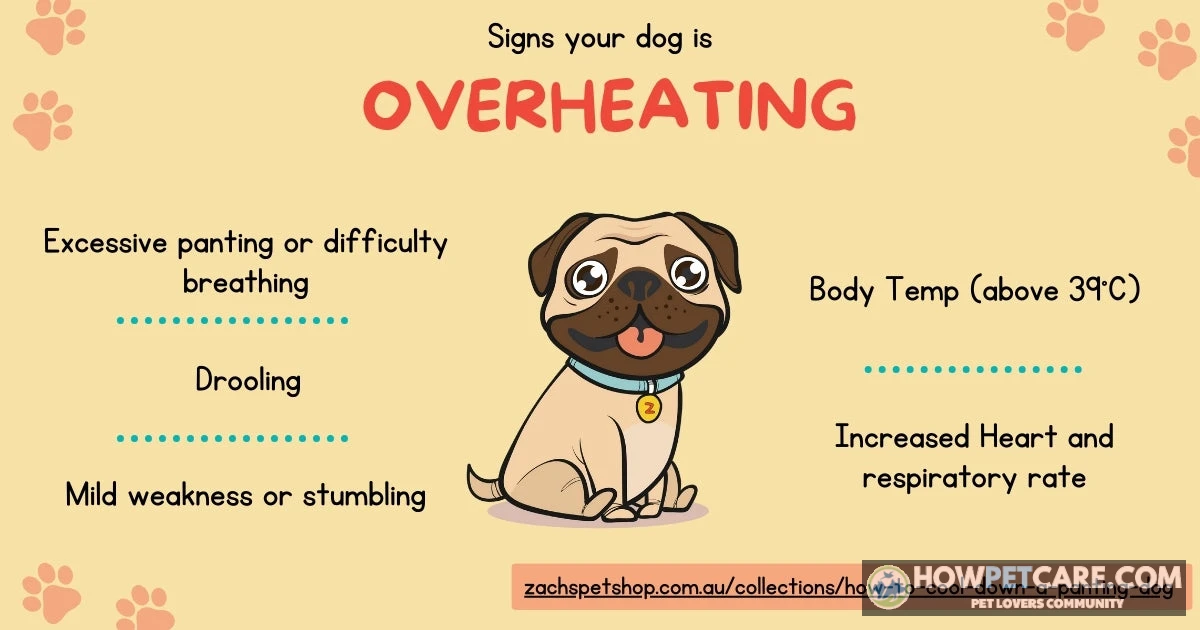

Dogs pant mainly to cool down through evaporative cooling, but panting can also signal stress, pain, illness, or anxiety. Normal panting follows a clear trigger and settles within about 10 minutes; sustained resting breathing above about 40 breaths per minute or red-flag signs like pale gums, collapse, or vomiting needs veterinary attention.
Dogs pant to cool down, but heavy panting can also signal stress, pain, or illness. To tell whether it’s normal, check three things: resting breathing rate, how quickly panting settles after the trigger ends, and whether warning signs such as pale gums, collapse, or vomiting appear. Sustained panting above about 40 breaths per minute at rest, or panting that doesn’t ease with rest and cooling, warrants veterinary attention.
Why Dogs Pant: The Cooling Mechanism Explained

Panting is rapid, shallow breathing that moves air across the tongue, mouth, and upper respiratory tract. As saliva evaporates from those surfaces, it draws heat away from the dog’s body through evaporative cooling. This is the dog’s primary way to regulate temperature, because dogs have very few sweat glands, and most sit in the paw pads.
Panting also helps dogs exchange oxygen and carbon dioxide more quickly after activity. Because of that, panting is normal during heat exposure, exercise, excitement, and stress. Stress releases adrenaline, which raises heart rate and breathing. Panting becomes abnormal when it happens at rest without a clear trigger, continues long after the dog has cooled down, or appears with warning signs such as labored breathing or pale gums. Labored breathing and tachypnea—an abnormally high respiratory rate—differ from normal panting and deserve closer attention.
What panting means physiologically
When a dog pants, moisture on the tongue and in the mouth evaporates into the air. That evaporation removes body heat and lowers the dog’s core temperature. A healthy dog’s normal resting body temperature runs between 100 and 102.5 degrees Fahrenheit. Panting becomes less effective in high humidity or confined spaces, which is why heat can escalate quickly inside a parked car or a poorly ventilated room.
Normal panting vs. abnormal panting
Normal panting has a clear cause—warm weather, play, a car ride, or excitement—and stops once the dog cools down or settles. Abnormal panting appears at rest, persists for an extended period, or comes with other symptoms such as coughing, shaking, vomiting, or changes in gum color. Brachycephalic breeds, such as Pugs and French Bulldogs, have narrower airways and cool themselves less efficiently through panting, which puts them at higher risk for heatstroke.

Is Panting Normal for Dogs? Numeric Thresholds You Can Use
The normal resting breathing rate for a healthy dog at rest or asleep is commonly cited as 10 to 30 breaths per minute. Other published sources give a range of 15 to 35 breaths per minute. Veterinarians reconcile this conflict by treating either range as a general screening guide rather than a strict cutoff; an individual dog’s baseline can fall inside either band depending on size, age, fitness, and measurement conditions.
Sustained resting rates above about 40 breaths per minute are flagged as abnormal and worth veterinary attention. Brachycephalic breeds, senior dogs, and overweight dogs often run higher baselines, but even those dogs should be monitored if their resting rate stays elevated or climbs over time.
Resting respiratory rate by dog size and age
There is no universally accepted, weight- or breed-specific table that standardizes normal resting respiratory rates beyond the general brachycephalic category. Because of this, owners should establish their own dog’s personal baseline through repeated home measurements rather than comparing their dog to a single published number.
Why published normal ranges disagree
Sources disagree partly because they measure different populations and circumstances—some count fully asleep dogs, others count quietly resting dogs, and small samples can shift the band. The 10–30 and 15–35 ranges overlap substantially, and both sit below the commonly used abnormal threshold of roughly 40 breaths per minute at rest. Rather than picking one number as definitive, treat the overlap as context: a rate in the high 30s may be normal for one dog and abnormal for another, which is why a personal baseline matters more than a universal chart.
How to Measure and Log Your Dog’s Resting Breathing Rate at Home
Measuring your dog’s resting breathing rate gives you a concrete number to share with a veterinarian instead of saying, ‘my dog seems to be breathing fast.’ Wait until your dog is asleep or deeply resting, and avoid measuring within 30 minutes of exercise, play, excitement, or a meal. Place one hand lightly on the chest or watch the flank rise and fall. Count one breath for each full in-and-out movement. Count for 30 seconds, then multiply by 2; if breathing is irregular, count for a full 60 seconds.
Step-by-step measurement at home
- Choose a quiet time when your dog is asleep or deeply resting.
- Watch the chest or flank, or place a hand lightly on the ribcage.
- Count one breath for each rise-and-fall cycle.
- Count for 30 seconds and multiply by 2, or count for 60 seconds if the rhythm is uneven.
- Record the number, the date and time, and what your dog was doing in the prior two hours.
- Repeat at the same time daily for 3 to 7 days to establish a baseline.
- Record a 20- to 30-second video showing the chest or flank movement, plus a view of the gums, and save it with your notes.

What to log and when to share it with a vet
A useful log includes the date, time, resting rate, recent activity, room temperature, and any trigger you noticed. Share this with your veterinarian if the resting rate is repeatedly above 40 breaths per minute, or if episodes are new, worsening, or unexplained. Bringing a video can help the vet assess whether the breathing is true panting, labored breathing, or something else entirely.
Normal vs. Abnormal Panting: Triage Matrix
First-time owners can classify panting in real time by combining rate, duration, recovery, and accompanying signs into one quick-reference view.
| Category | Resting breathing rate | Typical duration | Recovery after trigger | Red-flag signs | Recommended action |
|---|---|---|---|---|---|
| Normal panting | Under 30 breaths/min at rest; often 10–30 breaths/min | Stops within minutes after cooling or rest | Returns to baseline within about 10 minutes in mild conditions | Pink gums, relaxed body, normal drinking, normal responsiveness | Monitor; no action needed |
| Monitor-worthy panting | 30–40 breaths/min at rest, or repeated episodes without clear trigger | Persists 15–30 minutes after trigger ends | Takes longer than 10 minutes to settle | Slightly tacky gums, restlessness, mild coughing, appetite change | Log rate, video, and triggers; book a non-urgent vet visit within 1–2 weeks |
| Emergency panting | Above 40 breaths/min at rest, or any panting with collapse | Continuous or worsening; does not settle with cooling | No meaningful recovery | Pale, blue, or brick-red gums; thick saliva; vomiting; disorientation; glassy eyes; inability to stand | Start cooling and transport to emergency veterinary care immediately |

Normal panting profile
Normal panting follows a clear trigger and resolves quickly. A dog that has been playing in warm weather may pant hard for a few minutes, then settle once it finds shade or a cool floor. The dog remains responsive, drinks normally, and has pink gums.
Monitor-worthy panting profile
Monitor-worthy panting lacks an obvious cause or outlasts the trigger. It may appear repeatedly at night, after a short walk, or while the dog is resting indoors. These episodes deserve a log and a non-urgent veterinary visit, especially if they recur over several days.
Emergency panting profile
Emergency panting is continuous, worsening, or paired with collapse, vomiting, disorientation, or abnormal gum color. This is a medical emergency. Begin cooling measures and go to an emergency veterinary clinic right away.
The unified decision rule
Combine three factors: rate, duration, and recovery. If the resting rate is above about 40 breaths per minute, or if panting does not settle within roughly 10 minutes after mild exercise or heat exposure in comfortable conditions, treat it as monitor-worthy at minimum. Add any red-flag sign, and the situation moves to emergency.
When Panting Is an Emergency: Heatstroke and Urgent Warning Signs
Heatstroke is a life-threatening emergency marked by heavy panting, dark or bright-red tongue, thick saliva, vomiting, disorientation, or collapse. It requires immediate cooling and veterinary care. Never use ice-cold water baths, ice packs, or alcohol rubs, because extreme cold can cause blood vessels to constrict and trap heat inside the body.

Heatstroke first-aid sequence step by step
| Step | Action | Water temperature | Body zone or method | What to avoid |
|---|---|---|---|---|
| 1 | Move the dog to shade or an air-conditioned space | Not applicable | Shade, cool floor, fan airflow | Leaving the dog in a hot car or direct sun |
| 2 | Wet the groin, armpits, and paw pads | Tepid to cool, not ice-cold | Shallow water, wet towels, or gentle spraying | Ice water, ice packs, or very cold baths |
| 3 | Add airflow across wet areas | Tepid to cool water already applied | Fan or open windows | Wrapping in wet towels without airflow |
| 4 | Offer small sips of water | Cool drinking water | Small amounts by mouth if alert and swallowing | Forcing water or large volumes |
| 5 | Check gum color and responsiveness | Not applicable | Visual check every few minutes | Delaying transport while waiting for full recovery |
| 6 | Transport to a veterinarian | Continue cooling during travel | Car with air conditioning; call ahead | Stopping cooling once panting lessens |

Urgent signs that mean call the vet now
Call a veterinarian or emergency clinic immediately if you see pale, blue, or brick-red gums; collapse; vomiting; disorientation; thick saliva; glassy eyes; or an inability to stand. Do not wait to see whether the dog recovers on its own.
[!NOTE] Use tepid to cool water—not ice-cold water—on the groin, armpits, and paw pads, and keep air moving with a fan while you head to the veterinary clinic.
Pain Panting vs. Anxiety Panting: Telling Them Apart at Home
Pain-driven panting and stress-driven panting can look similar, but home clues help separate them. Pain panting often worsens when a specific body part is touched or moved. The dog may guard a limb, resist stairs or jumping, whine, shift positions frequently, or fail to find a comfortable resting spot. Anxiety panting tends to follow a trigger—a car ride, storm, visitor, or nighttime noise—and may come with pacing, trembling, hiding, or hypervigilance. The dog often settles when the trigger ends or when near a trusted person, and gum color usually stays pink.
Home indicators of pain-driven panting
- Panting worsens when a specific body part is touched or moved
- Guarding, limping, or resisting stairs, jumping, or lying down
- Whining, restlessness, or frequent position changes with panting
- Panting worse after daytime activity and not settling with comfort alone
- Inability to find a comfortable resting position
Home indicators of stress-driven panting
- Panting starts with a trigger such as car rides, storms, visitors, or nighttime noises
- Pacing, trembling, hiding, or hypervigilance with panting
- Settles when the trigger ends or when near a trusted person
- Pink gum color and shallow but not labored breathing
- No guarding, limping, or touch sensitivity

Both pain and anxiety can overlap, especially at night. Never give human pain medications to a dog. If the pattern is new, chronic, or unclear, schedule a veterinary evaluation.
Nighttime Panting Decision Tree
Nighttime panting interrupts sleep and often leaves owners wondering whether it is pain, anxiety, or something more serious. The table below separates the most likely causes by timing, posture, and accompanying symptoms.
| Trigger pattern | Likely cause | Key signs to watch | Recommended next step |
|---|---|---|---|
| Panting starts after daytime activity or a warm evening and settles with cooling | Heat or overexertion | Heavy panting, seeking a cool floor, normal gum color | Cool the room, offer water, monitor; call the vet if not settling within 20–30 minutes |
| Panting with frequent position changes, whining, or guarding | Pain | Restlessness, reluctance to lie down, worsening after touch or movement | Keep the dog comfortable; do not give human pain medicine; schedule a same-week veterinary evaluation |
| Panting with pacing, trembling, or reaction to storms, fireworks, or household noises | Anxiety | Hiding, vocalizing, hypervigilance, settling only when the owner is near | Reduce triggers, provide a safe resting space; discuss an anxiety plan with a veterinarian |
| Panting that worsens when lying down, with coughing or exercise intolerance | Possible cardiac or respiratory issue | Cough, fainting, blue or pale gums, reduced stamina | Treat as urgent; contact a veterinarian immediately, especially overnight |
| Panting with collapse, vomiting, blue gums, or confusion | Emergency | Glassy eyes, inability to stand, thick saliva | Begin cooling and go to emergency care now |

When nighttime panting is likely pain
Pain-related nighttime panting often follows daytime activity. The dog may lie down, get up, circle, and lie down again, unable to settle. Whining or licking a specific spot may accompany the panting. Because senior dogs are prone to arthritis and other painful conditions, nighttime panting in an older dog deserves veterinary attention even if the dog seems fine by day.
When nighttime panting is likely anxiety
Anxiety-related nighttime panting tracks with household changes—a storm outside, a new pet, or a shift in the owner’s schedule. The dog may pace, whine, or follow the owner from room to room. Gum color typically remains pink, and the dog may settle when the owner sits nearby.
When nighttime panting may be cardiac
Cardiac-related panting often worsens when the dog lies down, because fluid shifts can make breathing more difficult in that position. Watch for coughing, exercise intolerance, fainting, or pale or blue gums. This pattern should be treated as urgent, particularly overnight when regular clinics may be closed.
What a Veterinarian Does for Chronic Unexplained Panting
If panting continues without an obvious cause, a veterinarian will work through a diagnostic pathway rather than guessing at a treatment. The initial exam typically includes listening to the heart and lungs, checking gum color, taking the dog’s temperature, and taking a full history about when the panting started, what triggers it, and whether other symptoms are present.
Typical veterinary exam findings
The vet will assess respiratory effort, heart sounds, lung sounds, mucous membrane color, and hydration. Abnormal heart rhythms, muffled lung sounds, pale gums, or fever can point toward cardiac, respiratory, or systemic illness.
Diagnostic tests and what they rule in or out
Likely diagnostics include bloodwork, urinalysis, chest X-rays, and possibly an echocardiogram or abdominal ultrasound. Bloodwork can reveal infection, endocrine disorders such as Cushing’s disease, or anemia. Chest X-rays evaluate the heart, lungs, and airways. An echocardiogram assesses heart function, and abdominal ultrasound can uncover organ abnormalities. Diagnosis may require multiple visits, and treatment depends on the underlying condition found.

Panting Action Checklist: What to Do Right Now
Use this checklist to convert what you have observed into immediate action.
Immediate steps by triage category
- Assess the situation: note recent exercise, heat exposure, stress triggers, or an unknown cause.
- If the dog is calm and asleep, check its resting breathing rate.
- Apply the triage matrix: classify the panting as normal, monitor-worthy, or emergency.
- Call a veterinarian or emergency clinic immediately for heatstroke, collapse, blue gums, or sustained rapid breathing at rest.
- Schedule a non-urgent veterinary visit if panting is chronic, nighttime, or unexplained.
When to book a vet appointment vs. go to emergency
Go to emergency care now for collapse, blue or pale gums, vomiting with heavy panting, disorientation, or continuous panting that will not settle with cooling. Book a regular appointment within one to two weeks for repeated monitor-worthy episodes, nighttime panting without red flags, or a resting rate repeatedly above 40 breaths per minute.
[!WARNING] This guide provides owner-screening information only. It is not a veterinary diagnosis. If your dog shows emergency signs, contact a veterinarian or emergency animal hospital immediately.

| Category | Resting Breathing Rate | Typical Duration | Recovery After Trigger | Red-Flag Signs | Recommended Action |
|---|---|---|---|---|---|
| Normal panting | Under 30 breaths/min at rest (often 10–30 breaths/min) | Stops within minutes after cooling or rest | Returns to baseline within about 10 minutes in mild conditions | Pink gums, relaxed body, normal drinking, normal responsiveness | Monitor; no action needed |
| Monitor-worthy panting | 30–40 breaths/min at rest, or repeated episodes without clear trigger | Persists 15–30 minutes after trigger ends | Takes longer than 10 minutes to settle | Slightly tacky gums, restlessness, mild coughing, appetite change | Log rate, video, and triggers; book a non-urgent vet visit within 1–2 weeks |
| Emergency panting | Above 40 breaths/min at rest, or any panting with collapse | Continuous or worsening; does not settle with cooling | No meaningful recovery | Pale, blue, or brick-red gums; thick saliva; vomiting; disorientation; glassy eyes; inability to stand | Start cooling and transport to emergency veterinary care immediately |
FAQ
Why do dogs pant when they are not hot?
Dogs also pant from excitement, stress, pain, or anxiety. Panting is not only a cooling mechanism; it can be a response to emotion or discomfort, so context matters when judging whether it is normal.
Why does my dog pant so much at night?
Nighttime panting can stem from pain, anxiety, or cardiac issues. If it happens repeatedly or is accompanied by restlessness, coughing, or difficulty settling, contact your veterinarian.
Why does my dog pant after drinking water?
Brief panting after drinking can simply be part of normal recovery, especially after exercise or warmth. Heavy panting that persists long after drinking, or panting with vomiting or lethargy, warrants a veterinary check.
How much panting is normal for a dog?
Panting after exercise or in heat is normal if it subsides as the dog cools down, typically within about 10 minutes in mild conditions. Resting breathing rates above about 40 breaths per minute, or panting that does not ease with rest, should be evaluated.
Is panting normal for dogs?
Yes, panting is a normal way for dogs to regulate body temperature through evaporative cooling. It becomes abnormal when it happens at rest without a clear trigger, persists after cooling down, or comes with warning signs like pale gums or collapse.
Why is my dog panting and shaking?
Panting combined with shaking can indicate pain, fear, anxiety, or a medical emergency such as heatstroke or poisoning. Because shaking can signal something serious, it is safest to contact a veterinarian promptly.