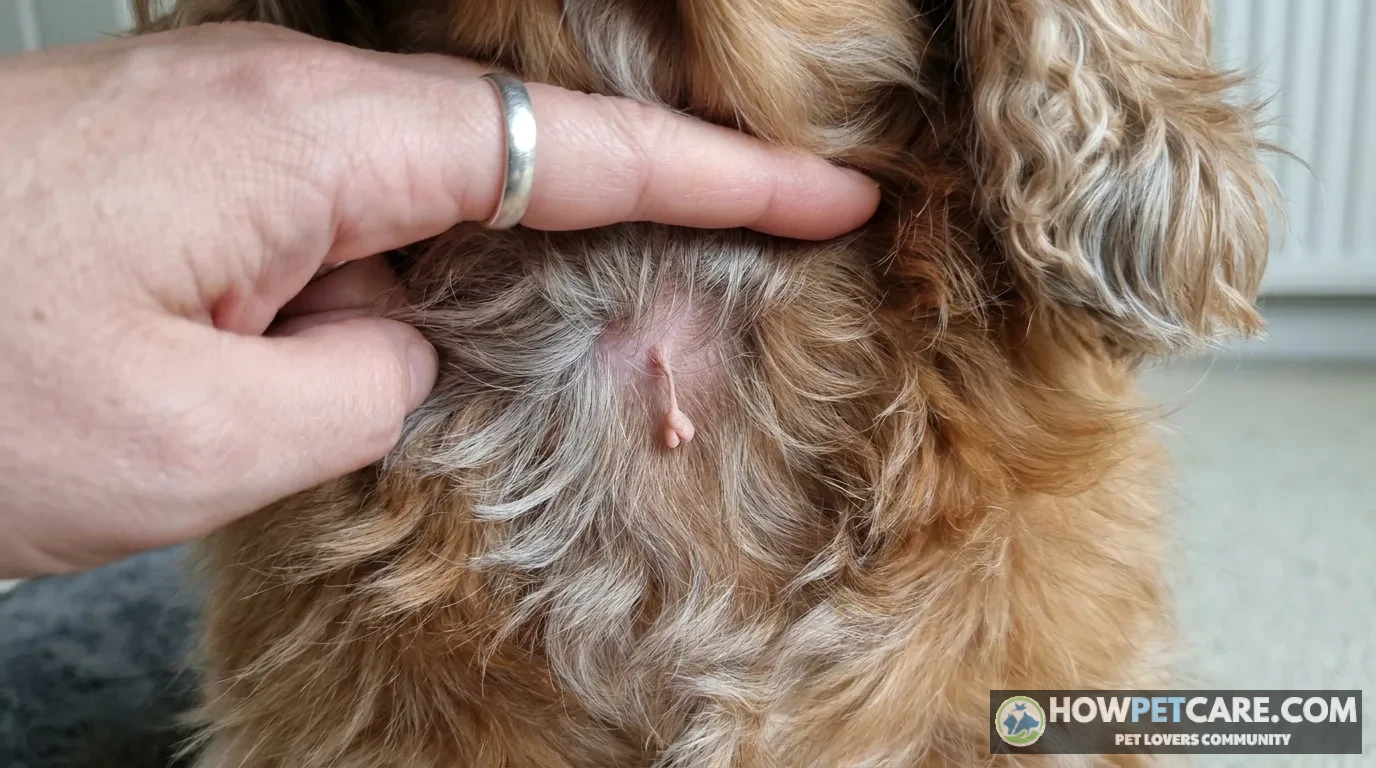

A dog skin tag is a small, soft, benign growth that usually sits on the skin’s surface. Most are painless and harmless, but new or changing lumps should be monitored. Compare it with ticks, nipples, warts, and tumors, and contact a veterinarian for bleeding, rapid growth, pain, or uncertain identity.
A dog skin tag is a small, soft, benign growth that usually sits on the surface of the skin rather than beneath it. Most are painless, slow-growing, and harmless, but several serious conditions can look similar, so every new or changing lump deserves a careful look — and, when in doubt, a veterinary evaluation. This guide gives you clear criteria for comparing a growth against common look-alikes, a 60-second home check with stop rules, and transparent expectations for veterinary removal costs and recovery.
What a Dog Skin Tag Looks Like and Where It Appears

A dog skin tag is usually a benign tumor or fibroma made of epithelial cells. On the body these growths are called acrochordons; on the eyelid they may be referred to as meibomian cysts or fibrovascular papillomas. They’re typically round or conical, flesh-colored to pink, grey, or black, and range from a few millimeters to a centimeter or more in size. They may feel firm or soft, be flat or stalked, and usually match or slightly darken the surrounding skin.
Typical Shape, Color, and Attachment
Most skin tags are soft, hairless, stalk- or teardrop-shaped growths that sit on top of the skin rather than beneath it. They usually match the surrounding skin’s color and tend to stay stable over time without changing or bleeding. A narrow stalk or broad base is common, and the growth is generally movable rather than fixed to deeper tissue. Skin tags aren’t painful unless they’re traumatized or repeatedly irritated.
Common Body Locations and Friction-Prone Spots
Skin tags often develop on older dogs in friction-prone areas such as the neck, armpits, groin, eyelids, lips, and skin folds. They usually form over high-pressure areas such as elbows, knees, and chest, and are typically solitary but can form plaques in chronically irritated areas. Common risk factors include middle age or senior status, large or giant breeds, breed susceptibility, chronic irritation, and papilloma virus. Breeds such as cocker spaniels, poodles, and miniature schnauzers are among those more often reported with skin tags.
This article is not a veterinary diagnosis. Any new, changing, bleeding, ulcerated, or painful growth should be evaluated by a veterinarian. Benign appearance alone does not rule out cancer.
Dog Skin Tag vs Tick, Nipple, Wart, or Tumor: Side-by-Side Criteria
Telling a skin tag apart from a tick, nipple, wart, or tumor is one of the most common worries for dog owners. Use the comparison below to sort out what you’re seeing before deciding on next steps.

Ticks and Embedded Parasites
A tick is a parasite, not a growth. It’s usually dark, oval, or seed-like with visible legs or mouthparts and attaches firmly at one point. A skin tag has no legs and is part of the skin. If you suspect a tick, remove it promptly with a proper tick tool and call your veterinarian if mouthparts remain or symptoms develop.
Nipples and Normal Anatomy
Nipples are symmetrical, paired bumps arranged in predictable rows on the chest and belly of both male and female dogs. To distinguish a nipple from a new lump, check the matching spot on the opposite side of the belly. A nipple is normal anatomy, not a growth.
Warts and Viral Growths
Warts often look rough, cauliflower-like, or scaly and may be linked to viral papillomas. They can be firm or slightly rough and may cluster, especially around the mouth, lips, and feet. A wart that is multiplying, bleeding, or interfering with function warrants a veterinary check.
Tumors, Cysts, and Other Concerning Lumps
Tumors may be firm, irregular, rapidly growing, ulcerated, or fixed to deeper tissue. Lumps that don’t clearly match benign skin tag criteria, including a possible dog histiocytoma, may need a skin biopsy to determine their nature. A lump that is larger than a pea, hard, irregular, or repeatedly irritated should be scheduled for a veterinary visit rather than watched.
| Growth | Typical appearance | Feel and attachment | Common location | Urgency guidance |
|---|---|---|---|---|
| Skin tag | Small, soft, flesh-toned, pink, brown, or slightly darker growth; narrow stalk or broad base | Soft, movable, painless unless irritated | Neck, armpits, groin, eyelids, lips, skin folds | Low if stable; vet check if changed or irritated |
| Tick | Dark, oval, or seed-like parasite with visible legs or mouthparts | Firmly attached at one point; not part of skin | Anywhere on coat or skin, often head, neck, ears | Remove promptly with proper tick tool; call vet if mouthparts remain or symptoms occur |
| Nipple | Small, symmetrical bump in a predictable row | Fixed, paired, normal anatomy | Chest and belly in rows on both sexes | None; do not confuse with a new lump |
| Wart | Rough, cauliflower-like, scaly, or raised | Firm or slightly rough; may cluster | Mouth, lips, feet, young or older dogs | Vet check if multiplying, bleeding, or interfering with function |
| Tumor, cyst, or other lump | Firm, irregular, rapidly growing, ulcerated, or oddly colored | May be fixed, hard, or attached to deeper tissue | Anywhere | Prompt veterinary evaluation, especially if changing quickly |

Is This Growth Cancer? Red Flags and Urgency Thresholds
Most skin tags are harmless unless they continue to grow or interfere with another body part. Owners should still monitor the tag for changes in color, bleeding, or discharge, and mention it to the veterinarian during the dog’s next visit. A skin tag that changes color, shape, firmness, or surface texture needs veterinary evaluation.
Visual and Tactile Red Flags
Rapid growth, ulceration, bleeding, crusting, or repeated irritation are higher-priority warning signs. Damaged skin tags can ooze pus and may lead to infection, so irritated tags should be left untouched and evaluated by a veterinarian. A growth that is larger than a pea, firm, irregular, fixed, or repeatedly irritated should be scheduled for a visit rather than waited on.
Size, Growth-Rate, and Location Thresholds
Larger growths or tags in high-friction areas such as the eyelid, lip, or skin fold warrant closer monitoring. Skin tags on the eyelid or lip may affect comfort, vision, eating, or grooming and often need professional assessment. A skin biopsy may be needed when a lump doesn’t clearly match benign skin tag criteria. Urgency timelines to keep in mind: bleeding, ulceration, or rapid growth should be examined within days, not weeks; a stable, small, painless tag can be monitored and mentioned at the next routine visit.
Contact a veterinarian promptly for any growth that bleeds, ulcerates, grows quickly, causes pain, or cannot be clearly identified. Do not wait to see if it resolves on its own.
Safe Home Check for a Dog’s Skin Growth With Stop Rules
A short, safety-first check can help you document the growth and decide whether to call the veterinarian. This isn’t a removal guide and doesn’t replace professional care.
Step-by-Step Visual and Gentle Touch Check

-
Observe in good light
Compare the growth with photos from prior weeks if available. Note size, color, texture, stalk or base, and whether it is soft or firm.
-
Estimate size
Use a ruler or a coin placed beside the growth for scale. Record the measurement.
-
Inspect the surface
Check for redness, crusting, bleeding, odor, or discharge. Note any licking, chewing, rubbing, or catching on a collar or harness.
-
Gentle touch nearby only
Touch the skin around the growth, not the growth itself. Stop immediately if the dog flinches, pulls away, growls, or shows pain.
-
Log your findings
Record date, size, photo, and symptoms in a simple log. Set a recheck date and repeat weekly or sooner if symptoms change.
Stop Rules That Require Veterinary Care
Stop the check and contact a veterinarian now if the growth bleeds, the skin breaks, the dog shows pain, the lump grows quickly, or you can’t clearly identify it. Don’t cut, tie off, burn, or apply caustic home remedies to any dog skin growth. Avoid applying topical ointment or creams to a growth unless a veterinarian recommends them.
When to Monitor at Home vs Book a Veterinary Visit
Monitor-at-Home Criteria
Monitor at home when the growth is small, soft, stable, painless, and unchanged over at least two to four weeks. Keep a simple log with date, size estimate, photos, and symptom notes to support growth monitoring. Take clear, well-lit photos from multiple angles and measure the growth with a ruler or coin for scale.
Clear Triggers for a Vet Appointment
Book a vet visit for new growths, rapid changes, irritation, bleeding, ulceration, or uncertain identity, especially when other canine skin problems are present. A veterinary dermatologist may help with complex, recurrent, or difficult-to-diagnose skin growths. If the growth is on an eyelid, lip, skin fold, or under a collar or harness contact point, arrange professional assessment even if it looks benign.
- Is the growth small, soft, stable, painless, and unchanged for at least two to four weeks? If yes, monitor at home.
- Is it new, growing, changing color, changing texture, bleeding, crusting, or ulcerated? If yes, book a veterinary visit.
- Is it on an eyelid, lip, skin fold, or under a collar or harness contact point? If yes, arrange professional assessment, even if it looks benign.
- Is it larger than a pea, firm, irregular, fixed, or repeatedly irritated? If yes, schedule a visit rather than waiting.
- If unsure after the home check, take dated photos and measurements, then call the clinic for triage guidance.
- Keep monitoring weekly until the growth resolves, is removed, or a veterinarian gives a clear plan.

Removal Methods, Anesthesia, Recovery, and Cost Breakdown
Skin tags are mostly cosmetic and typically don’t require removal. When removal is recommended, it’s performed by a veterinarian. Common methods include surgical excision, cryosurgery, and electrocautery. The choice depends on the growth’s size, location, and number.
Veterinary Removal Methods

Surgical excision removes the growth with a scalpel or scissors. Cryosurgery freezes the tissue, and electrocautery uses heat to remove or shrink it. Your veterinarian will recommend the method that best fits the growth’s characteristics and your dog’s health.
Anesthesia and Recovery Expectations
Anesthesia or sedation needs depend on growth size, location, number of growths, and the dog’s temperament. Recovery may involve incision care, activity restriction, an e-collar, and a follow-up visit. Ask the veterinary team what warning signs should prompt a call during recovery.
Cost Factors and Budgeting
Costs vary by region, clinic, anesthesia, pathology, and number of growths; owners should request an estimate. Pet insurance coverage depends on the policy, waiting periods, and whether the removal is considered medically necessary rather than cosmetic. Owners should check their plan details and ask the clinic for an itemized estimate. Ask about how many growths can be removed in one visit and whether there’s a discount for multiple removals.
| Method | Anesthesia or sedation | Recovery considerations | Cost factors |
|---|---|---|---|
| Surgical excision | Often local or general depending on size and location | Incision care, activity restriction, e-collar, follow-up | Growth size, number of growths, pathology, region |
| Cryosurgery | Often minimal or none for small growths | Crusting and healing over days to weeks | Equipment, location, number of growths |
| Electrocautery | Sedation or anesthesia as needed | Wound care, activity limits, follow-up | Equipment, anesthesia, pathology, region |

Ask the veterinary team before scheduling removal: which method is recommended and why; whether sedation or anesthesia is needed and what monitoring is included; whether pathology is recommended and its added cost and turnaround time; what incision care, activity restriction, e-collar use, and follow-up are expected; what warning signs should prompt a call; how many growths can be removed in one visit; and whether a written estimate with separated costs is available.
Friction-Prone Locations: Collars, Eyelids, Lips, and Skin Folds
Collars, harnesses, and skin folds can rub skin tags and cause inflammation, bleeding, or infection. Keeping the area clean, dry, and free from repeated friction can reduce secondary irritation and help prevent hot spots on dogs.
Collar and Harness Irritation
Check the collar line and neck folds for rubbing, hair loss, redness, crusting, or catching. Adjust fit and keep the area clean and dry. Inspect armpits and groin after walks and baths, and reduce moisture and friction from harness straps.
Eyelid, Lip, and Skin-Fold Concerns

Eyelid tags may affect comfort, vision, eating, or grooming and often need professional assessment. Watch for blinking, squinting, tearing, or grooming changes, and seek veterinary assessment for any growth near the eye. Lip and mouth-edge tags can cause drooling, food dropping, or chewing changes. For skin folds, keep them dry, check for odor, redness, or moisture, which can signal a yeast infection in dogs, and arrange care if irritation repeats. Any location with repeated licking or scratching should be documented with frequency and photos, then discussed with a veterinarian.
Next Steps: Document, Monitor, or Schedule Care
Take clear, well-lit photos from multiple angles and measure the growth with a ruler or coin for scale. Set a recheck date and repeat the home check weekly or sooner if symptoms change. Contact a veterinarian promptly for bleeding, ulceration, rapid growth, pain, or uncertain diagnosis. Ask about pet insurance coverage, pathology, and follow-up before scheduling removal. A skin tag that is small, soft, stable, and unchanged can be monitored and mentioned at the next routine visit, while any red flag should move you from monitoring to care without delay.
If you are unsure whether a growth is a skin tag, tick, nipple, wart, or tumor, or if it is changing in any way, contact your veterinarian. Early evaluation is safer than waiting.
FAQ
Do dog skin tags fall off on their own?
Some small skin tags may shrink or detach after irritation, but this is not reliable and can cause bleeding or infection. A veterinarian should evaluate any growth that changes, bleeds, or does not clearly match a benign skin tag.
Can a skin tag on a dog’s eyelid be treated?
Yes, eyelid skin tags can often be removed or managed by a veterinarian, especially if they irritate the eye or affect blinking. Because the eyelid is delicate, owners should avoid home treatment and seek professional care.
Does pet insurance cover dog skin tag removal?
Coverage depends on the policy, waiting periods, and whether the removal is considered medically necessary rather than cosmetic. Owners should check their plan details and ask the clinic for an itemized estimate.
Are skin tags more common in certain breeds or older dogs?
Skin tags are commonly reported in older dogs and may appear more often in areas with friction or skin folds. Breed-specific risk statistics are not well supported, so monitoring and veterinary evaluation matter more than breed assumptions.