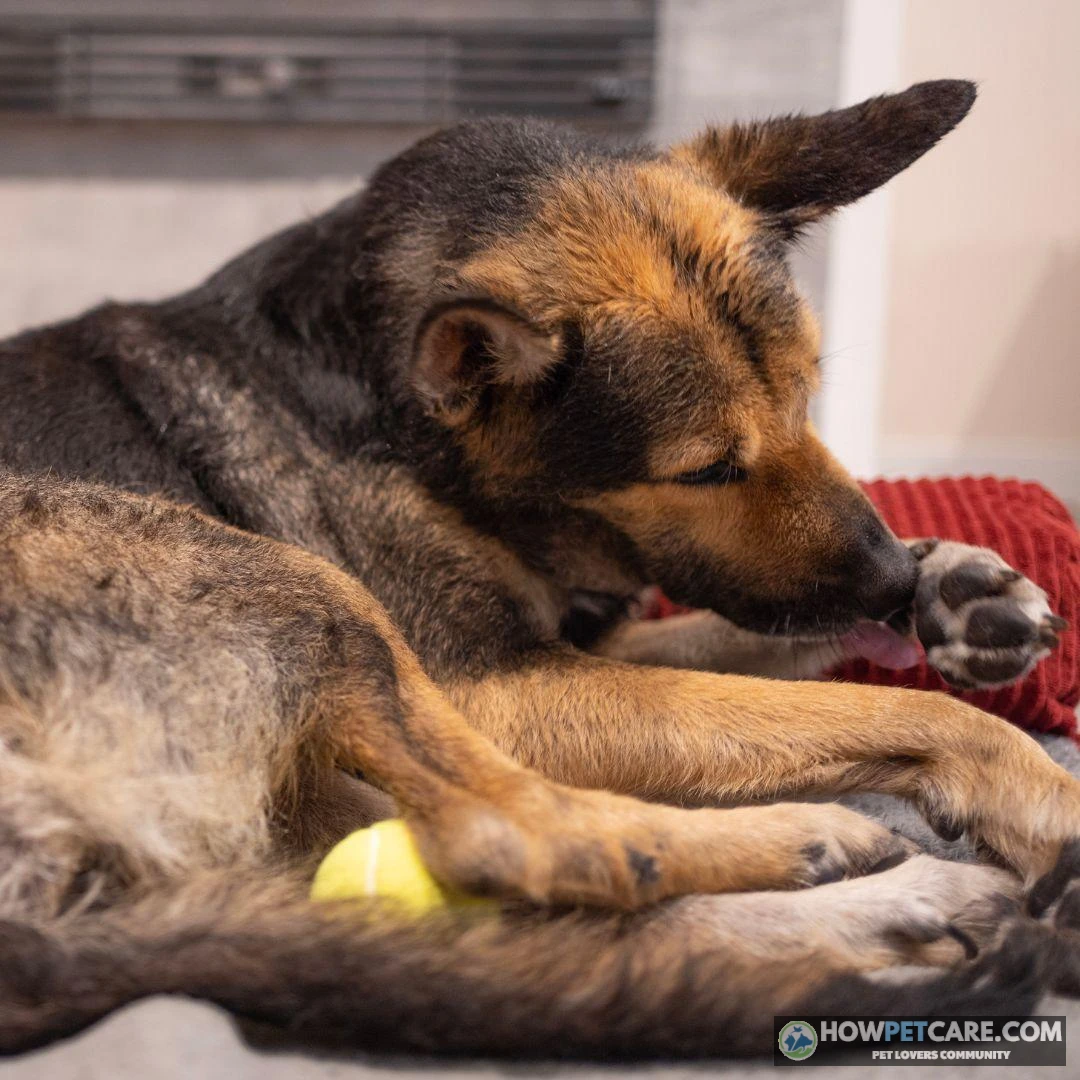

Dogs lick their paws primarily due to environmental or food allergies, secondary yeast and bacterial infections, external parasites, or acute physical trauma like thorns and torn nails. Single-paw licking usually points to a localized injury or cyst, whereas licking all four paws typically indicates systemic allergies, requiring veterinary cytology or an elimination diet.
Why Do Dogs Lick Their Paws? Normal Grooming vs. Medical Distress
Dogs clean their paws occasionally after walking through damp grass or stepping in dirt. Normal self-grooming lasts only a minute or two, happens rarely, and leaves the paw pads intact without swelling, redness, or broken skin. In contrast, excessive paw licking serves as a clinical symptom of an underlying physical or behavioral health issue rather than a harmless habit. When a dog constantly licks paws, chews at the pads, or grooms until the fur discolors, that behavior signals discomfort, inflammation, or pain requiring structured evaluation.
Clinical triage starts by separating single-paw licking from multi-paw licking. Sudden, intense licking focused on a single foot almost always points to acute focal trauma, such as an embedded thorn, a cracked claw, or localized joint distress. Symmetrical licking across several feet usually indicates systemic triggers, most commonly environmental atopy, contact allergies, or metabolic imbalances.
Catching red-flag signs early prevents mild skin inflammation from turning into deep tissue infection or chronic lameness. If your dog shows visible limping, open bleeding, marked localized heat, or foul-smelling discharge, skip home monitoring. These warning signs demand a prompt veterinary exam.
Red‑Flag vs. Routine Paw‑Licking Signs
| Sign | Typical (Routine) Presentation | Red‑Flag (Urgent) |
|---|---|---|
| Licking Duration | Brief (seconds) after walks, stops quickly | Persistent (≥5 min) or obsessive licking lasting hours |
| Paw Distribution | One paw, often the one that injured | All four paws simultaneously, suggesting systemic issue |
| Heat & Swelling | Mild warmth, no visible swelling | Noticeable heat, swelling > 5 mm, or swelling that worsens over hours |
| Bleeding / Open Sores | Rare, tiny crusts that heal | Fresh bleeding, large raw areas, or pus‑filled lesions |
| Odor | No scent or faint "wet" smell | Strong sour, yeasty, or foul odor indicating infection |
| Lameness | Occasional limp after activity, resolves | Continuous limping, refusal to bear weight on the affected limb |
| Sudden Onset | Gradual increase over days | Abrupt onset within minutes to an hour, especially with pain signs |
Quick Decision Tree: Is Your Dog’s Paw‑Licking an Emergency?
Is the licking focused on a single paw?
- Yes → Proceed to Question 2.
- No (all four paws) → Proceed to Question 3.
Does the paw feel hot, look swollen, or is there visible bleeding?
- Yes → Urgent – Call your vet now; these are classic signs of trauma or infection.
- No → Routine – Continue with a home inspection using the Paw Inspection Checklist; monitor for 24 hours.
Is there a strong sour or yeasty odor, or does the skin look red‑brown and moist?
- Yes → Urgent – Possible secondary bacterial or yeast infection; schedule a veterinary visit within 24 hours.
- No → Routine – Likely environmental or allergic irritation; start a gentle foot-bath regimen and track changes with the Elimination-Diet Log.
What to do after the tree:
- If you land on Urgent, avoid home remedies and seek professional care.
- If you land on Routine, follow the home care steps in the interim relief section and re-evaluate in 48 hours.

One Paw vs. All Four: Decoding Canine Licking Patterns and Saliva Staining
Noticing which paws your dog targets narrows down the underlying cause before you even touch a toe. Canine pododermatitis looks distinct depending on whether the irritation stems from a focal or systemic issue.
| Distribution Pattern | Common Accompanying Signs | Probable Cause Category | Triage Urgency Level | Recommended Next Step |
|---|---|---|---|---|
| Single Paw (Acute) | Limping, holding paw elevated, sudden onset | Puncture, foreign object, torn claw, bee sting | Semi-Urgent (12–24 hrs) | Perform gentle physical inspection; restrict outdoor running |
| Single Paw (Chronic) | Thickened skin, hair loss, localized lump | Interdigital cyst, lick granuloma, focal arthritis | Routine (3–5 days) | Veterinary exam for cytology and joint assessment |
| Both Front Paws | Face rubbing, red muzzle, watery eyes | Environmental atopy, seasonal pollens, contact allergy | Routine (2–3 days) | Wipe paws post-walk; start symptom tracking log |
| All Four Paws | Recurrent ear infections, GI upset, itchy flanks | Food allergy, widespread atopic dermatitis | Routine (2–3 days) | Veterinary workup; discuss elimination diet trial |
| Paw Underside / Pads | Peeling skin, chemical burns, crusts | Sidewalk heat, de-icing salt, lawn fertilizers | Urgent to Semi-Urgent | Flush immediately with lukewarm water; vet check if blistered |

Single-Paw Focus: Injuries, Foreign Bodies, and Cysts
When a dog focuses exclusively on one foot, external physical trauma is the primary clinical suspect. Foxtails, grass awns, burrs, and glass fragments easily penetrate the soft interdigital webbing between the toes. Once lodged beneath the dermis, grass seeds migrate inward, forming painful, draining fistulas.
Torn dewclaws or fractured nails also produce intense single-paw licking. Dogs repeatedly lick exposed nail quicks to soothe nerve pain, unintentionally introducing oral bacteria into the ungual fold. Additionally, interdigital furunculosis—often called interdigital cysts—presents as solitary or multiple nodular, inflammatory swellings between the digits. These painful lesions stem from deep follicular rupture, frequently aggravated by coarse hair shafts being driven backward into the tissue during movement.

Symmetrical Four-Paw Licking: Environmental and Food Allergies
Systemic pruritus manifests symmetrically across multiple feet. Environmental atopy represents the second most prevalent allergic skin disease in domestic canines, triggered by microscopic airborne allergens including grass pollens, tree spores, ambient molds, and house dust mites. Symptoms frequently emerge in dogs between 1 and 5 years of age. Dogs absorb these environmental allergens both percutaneously (directly through their skin barrier) and via inhalation, triggering an inflammatory cascade that concentrates in distal extremities, periorbital tissue, and inner pinnae.
Food allergies (cutaneous adverse food reactions) produce clinically identical paw pruritus. When an animal’s immune system mounts an inappropriate response to dietary proteins—most frequently beef, dairy, chicken, or wheat—the resulting histamine and cytokine release triggers widespread pedal itching. Dogs with food allergies typically lick all four paws and often suffer from concurrent digestive irregularities or recurrent otitis externa (ear infections).
The Science Behind Red-Brown Saliva Stains
A hallmark sign of chronic paw licking is rusty, pinkish-brown staining on light-colored coats. Many owners mistake this pigment for blood or external dirt. In reality, the discoloration is caused by porphyrins—iron-rich metabolic byproducts of red blood cell breakdown naturally excreted through canine saliva, tears, and urine.
When a dog repeatedly saturates its paws with saliva, porphyrins bind to the hair keratin and oxidize under ambient light and air, producing a stubborn reddish-brown stain. While porphyrin staining itself is not a standalone medical emergency, it serves as objective biological proof of persistent, chronic licking. The continuous moisture created by constant licking breaks down the protective epithelial barrier, turning the warm interdigital spaces into a prime incubator for opportunistic microbial infections.

Core Biological and Behavioral Triggers Behind Persistent Paw Chewing
Understanding the physiological and psychological triggers of paw chewing helps owners address the root issue instead of merely treating outward symptoms.
Secondary Yeast and Bacterial Pododermatitis
A dog’s paws harbor balanced populations of commensal flora, notably Staphylococcus pseudintermedius and the lipophilic yeast Malassezia pachydermatis. Under normal conditions, these organisms cause no harm. However, continuous licking damages the protective skin barrier and creates a warm, humid microenvironment that allows these microbes to multiply rapidly.
Secondary yeast infections produce a distinct, pungent odor reminiscent of moldy corn chips or stale cheese. The skin between the pads becomes greasy, thickened (lichenified), and bright pink or red. Bacterial pododermatitis introduces sticky yellow exudate, pustules, and focal swelling that makes walking painful.
Parasitic Irritants and Contact Reactions After Walks
External parasites frequently trigger intense, sudden paw biting:
- Demodectic Mites (Demodex canis): While generalized demodicosis affects multiple body regions, localized pododemodicosis confines itself strictly to the paws, causing deep follicular swelling, hair loss, and secondary bacterial infections that resist basic topical therapy.
- Sarcoptic Mange (Sarcoptes scabiei): Highly contagious burrowing mites that trigger severe allergic pruritus across the hocks, elbows, and paw margins.
- Harvest Mites (Neotrombicula autumnalis / Chiggers): Active during late summer and autumn, these tiny orange parasites cluster between toes and within the skin folds around claw bases, causing acute pedal distress immediately after walks.
- Flea Allergy Dermatitis (FAD): Even if fleas do not colonize the feet directly, systemic hypersensitivity to flea saliva causes peripheral itching that manifests as frantic paw gnawing.
Contact dermatitis also flares after outdoor exercise. Chemical de-icing salts used on winter pavements, caustic lawn fertilizers, industrial weed killers, and coarse agricultural mulch burn delicate paw pads. Walking on asphalt heated above 125°F (52°C) causes thermal burns and micro-blisters that drive dogs to lick their feet in an attempt to cool damaged skin.

Compulsive Habits, Lick Granulomas, and Nighttime Licking
When physical examinations and diagnostics rule out pathogens, veterinary focus shifts toward psychogenic and orthopedic origins. Canine boredom, prolonged isolation, and separation anxiety can trigger repetitive grooming routines. The act of licking releases endorphins in the dog’s brain, providing temporary comfort that quickly evolves into a compulsive behavior loop.
This self-reinforcing loop can lead to acral lick dermatitis, commonly called a lick granuloma. Lick granulomas typically appear on the dorsal carpus (the front of the wrist) or metacarpal area, developing into raised, ulcerated, hairless plaques from chronic mechanical abrasion. Debate persists within veterinary medicine regarding the exact initiation of lick granulomas: some clinicians view them primarily as self-soothing rituals for stress and boredom, while others argue that subclinical orthopedic trauma, localized arthritis, or deep tissue micro-injuries initiate the initial licking response.
Dogs frequently lick their paws at night because environmental distractions fade. During active daylight hours, household activities and walks distract the dog from mild itching or low-grade joint aches. Once the house falls quiet and the dog settles into a bed, the lack of sensory competition magnifies itching and dull arthritic pain, prompting hours of uninterrupted licking.

How to Safely Inspect Your Dog’s Paws at Home: A Step-by-Step Protocol
Conducting a systematic home paw check allows you to catch foreign objects and cuts before they abscess. Inspecting an inflamed paw requires gentle restraint, as even gentle dogs may snap when painful areas are handled.
-
Set up a calm, well-lit examination space
Choose a quiet room with bright, direct lighting. Have a small flashlight handy. If your dog is large, examine them while they rest comfortably on their side. For small dogs, place them on a secure, non-slip table surface with an assistant providing gentle support.
-
Inspect the dorsal coat and interdigital webbing
Gently separate the toes from above. Part the fur completely to view the interdigital webbing. Check for red, moist skin, swelling, dark crusts, ticks, or foreign debris such as burrs and seeds.
-
Examine the underside pads and deep crevices
Turn the paw slightly to expose the weight-bearing pads. Inspect the large central metacarpal pad and smaller digital pads. Look for rough fissures, horizontal cracks, thermal burns, peeling skin, or small puncture holes.
-
Palpate claws, nail beds, and dewclaws
Examine the ungual fold where each claw meets the skin. Press lightly on each toe joint to check for fractures, torn sheaths, or nail bed redness. Never pull forcefully on a broken nail.
Watch your dog’s subtle stress signals throughout the check. Lip-licking, head turning, yawning, tense posture, or low growls mean the paw is painful. If your dog shows these signs, stop the inspection immediately to prevent bites and let your veterinarian conduct the exam with proper pain management.
Paw Inspection Checklist
Use this printable checklist during home exams. Check every box; if you find an abnormal issue, record the details for your veterinary visit.
- ☐ Pad Condition – smooth, resilient, free from cracks, blisters, or rough patches.
- ☐ Claw Length & Base – trim if longer than pad level; zero ingrown, loose, or torn dewclaws.
- ☐ Webbing & Interdigital Skin – pale pink, clean, completely dry, free of matting or foreign debris.
- ☐ Swelling / Edema – digits show uniform size; no heat or focal puffiness.
- ☐ Odor – neutral scent; absence of sour, moldy, yeasty, or putrid smells.
- ☐ Discoloration – clear hair shafts; no reddish-brown porphyrin staining or black pigmentation.
- ☐ Foreign Bodies – clear of embedded gravel, thorns, foxtail awns, or glass slivers.
- ☐ Bleeding / Open Sores – healthy skin surfaces; absence of fresh blood, serous drainage, or pus.

Next Steps:
- If any red-flag items (fresh blood, sudden swelling, foul odor, or intense defensive pain) are checked, pause the exam and schedule a veterinary evaluation.
- If only routine findings are present (mild dryness, minor mud accumulation), clean the feet using safe home hygiene.
Safe Interim Relief and Common Over-the-Counter Products to Avoid
Interim care should protect irritated skin from further trauma without introducing chemical toxins.
Cleansing and Moisture-Control Protocols
If your dog licks their paws after walks, clear off environmental allergens before they cross the skin barrier. Prepare a shallow foot bath using lukewarm water. Submerge each paw for 15 to 30 seconds to dissolve salt residues, dust mites, and pollens. For dogs prone to recurrent skin infections, your veterinarian may recommend veterinary chlorhexidine pads or a medicated shampoo bath.
Moisture control is essential. After soaking or wiping, thoroughly dry the paws with a soft, absorbent microfiber towel. Gently pat and dry the skin between every toe and around the pads. Leaving moisture trapped between the digits accelerates yeast proliferation.

Barrier Management: When to Use an Elizabethan Collar
Physical barriers break the continuous cycle of self-trauma. If your dog chews their paws raw, human socks or fabric boots might seem like a simple solution. However, dogs often chew off and swallow socks—creating life-threatening gastrointestinal blockages—or soak the fabric with saliva, which traps bacteria against the irritated skin.
A properly fitted Elizabethan collar (e-collar) or rigid recovery cone is the safest mechanical barrier. While dogs dislike cones initially, an e-collar stops paw chewing without holding moisture against the skin. Use the cone as a short-term tool while you wait for a veterinary evaluation.
Toxic Topical Hazards: Human Creams You Must Never Apply
Many human first-aid ointments are hazardous to pets. Dogs naturally lick off anything applied to their paws, turning topical treatments into ingested poisons.
| Intervention / Product | Safety Classification | Potential Ingestion Risk | Safe Alternative |
|---|---|---|---|
| Lukewarm Water Soak | Safe | None; completely benign when paws are dried thoroughly afterward | Plain lukewarm water foot rinse |
| Veterinary Chlorhexidine Wipes | Safe (when prescribed) | Very low; formulated at safe concentrations for pets | Dilute chlorhexidine solution under veterinary instruction |
| Hydrocortisone Cream (Human) | Unsafe / Toxic | Iatrogenic Cushing’s syndrome, liver strain, skin thinning | Veterinary-prescribed oral or topical antipruritic therapies |
| Zinc Oxide (Diaper Creams) | Highly Toxic | Destructive red blood cell lysis, severe hemolytic anemia | Veterinary-approved paw barrier waxes |
| Triple Antibiotic (Neosporin) | Unsafe / High Risk | Severe vomiting, diarrhea, contact hypersensitivity | Prescription antimicrobial sprays |
| Tea Tree Oil (Melaleuca) | Extremely Toxic | Central nervous system depression, tremors, ataxia, hypothermia | Gentle plain water rinse; avoid essential oils entirely |
| Human Calamine Lotion | Highly Toxic | High zinc content triggers acute organ damage | Cool water compress on uncompromised skin |

Never apply diaper rash creams or mineral sunscreens to a dog’s paws. Zinc oxide causes severe zinc toxicosis if swallowed, leading to intestinal distress, jaundice, and life-threatening red blood cell destruction (hemolytic anemia). Keep all human ointments out of your pet’s reach.
High-Risk Breeds and Tracking Dietary Triggers: The Elimination Log
Certain canine breeds carry strong genetic predispositions for cutaneous allergies and pedal inflammation. French Bulldogs, English Bulldogs, and American Pit Bull Terriers often suffer from defective epidermal barriers, leaving them prone to allergic pododermatitis. Labrador Retrievers, Golden Retrievers, Boxers, German Shepherd Dogs, and West Highland White Terriers also show elevated rates of atopic dermatitis and food sensitivities.
Deep-chested, heavy breeds like Mastiffs and Great Danes are prone to pressure-induced interdigital cysts, while anxious, working breeds—such as Border Collies and Doberman Pinschers—more frequently develop stress-induced lick granulomas.
In senior dogs, distal paw licking can also stem from referred orthopedic pain. Degenerative joint disease in the elbows, carpal joints, or lower cervical spine sends radiating pain down the legs. Senior dogs often lick their front feet continuously to cope with this deep, unaddressed joint ache.
Tracking Dietary Triggers: The Veterinary Elimination Trial
Diagnosing an adverse food reaction requires a strict elimination diet supervised by a veterinarian. Blood and saliva allergy panels lack scientific validation for diagnosing canine food allergies. The clinical gold standard remains an 8- to 12-week strict dietary elimination trial using an authentic hydrolyzed protein diet or an unusual novel single-protein source. Tracking symptoms throughout this window clarifies whether food ingredients are driving the paw irritation.
7‑Day Elimination‑Diet Log (Sample)
| Day | Food Given (protein + carb) | Meal Time | Licking Episodes (yes/no) | Paw Notes (redness, swelling, odor) | Other Symptoms (itchy ears, GI upset) |
|---|---|---|---|---|---|
| 1 | Hydrolyzed soy prescription | Breakfast | No | Baseline pale pink skin; no odor | None |
| 1 | Hydrolyzed soy prescription | Dinner | No | Minor dryness around pad edges | None |
| 2 | Hydrolyzed soy prescription | Breakfast | Yes (1–2 min) | Slight redness on right front interdigital skin | Head shaking; scratched right ear once |
| 2 | Hydrolyzed soy prescription | Dinner | Yes (2 min) | Redness stable; no swelling | Stool firm, normal |
| 3 | Hydrolyzed soy prescription | Breakfast | No | Redness faded; skin cool | None |
| 3 | Hydrolyzed soy prescription | Dinner | No | Interdigital skin clear | None |
| 4 | Hydrolyzed soy prescription | Breakfast | No | Paws look calm; no odor | None |
| 4 | Hydrolyzed soy prescription | Dinner | Yes (30 sec) | Brief lick after walking outside; resolved | None |
| 5 | Hydrolyzed soy prescription | Breakfast | No | Nails and pads clean | Stool normal |
| 5 | Hydrolyzed soy prescription | Dinner | No | No licking observed | None |
| 6 | Hydrolyzed soy prescription | Breakfast | No | Skin healthy, pale pink | None |
| 6 | Hydrolyzed soy prescription | Dinner | No | Paw pads smooth | None |
| 7 | Hydrolyzed soy prescription | Breakfast | No | Zero redness | Ears clean, non-odorous |
| 7 | Hydrolyzed soy prescription | Dinner | No | Baseline normal | Systemic symptoms calm |

How to use this log:
- Feed only the prescribed novel or hydrolyzed diet. Eliminate all table scraps, commercial treats, dental chews, flavored chew toys, and gelatin-coated vitamins.
- Note every licking episode lasting longer than 30 seconds.
- Record changes in skin redness, swelling, moisture, or odor.
- Take this completed tracking log to your veterinary appointments to assess dietary response trends.
Veterinary Diagnosis, Prescription Pathways, and Next Steps
When paw licking persists past 48 hours despite gentle cleansing, professional clinical diagnostics are required. Trying to stop paw licking without identifying its physical cause leads to treatment failures and unnecessary discomfort.
A veterinarian uses several targeted diagnostic tools:
- Impression Cytology: Pressing a glass slide or clear adhesive tape strip against the interdigital skin to quantify bacterial populations (Staphylococcus) and budding yeast organisms (Malassezia).
- Deep Skin Scrapings: Scraping the skin until capillary blood appears to detect microscopic Demodex mites.
- Intradermal Allergy Testing: Dermatologists evaluate hypersensitivity reactions by injecting roughly 60 standardized environmental allergen extracts beneath the skin.
- Orthopedic & Radiographic Exams: Palpating joints and taking digital X-rays to rule out carpal arthritis, bone spurs, or foreign body abscesses.

Prescription therapies must be tailored directly by a veterinarian to match the diagnosis, the dog’s organ health, and their medical history. For allergic itch management options, Apoquel (oclacitinib) and Atopica (modified cyclosporine) are the two non-steroidal medications specifically approved by the FDA for canine atopic dermatitis. Modern veterinary clinics also frequently utilize Cytopoint (lokivetmab), an injectable monoclonal antibody therapy that neutralizes interleukin-31 (IL-31), a key cytokine responsible for sending itch signals to the brain.
Prescription antipruritic dosing must be tailored to each dog’s weight, skin barrier status, and concurrent medications. A dog that looks borderline may still need a full label dose, while a toy breed can develop toxicity at half that amount. Always provide your veterinarian with your dog’s exact weight, keep an updated list of all supplements, and never adjust medication doses at home without clinical direction.
Schedule a non-urgent veterinary appointment within 48 to 72 hours if you notice low-grade licking, mild saliva staining, or a faint corn-chip odor. However, seek immediate veterinary care if your dog cannot bear weight on the paw, shows sudden severe swelling, develops bleeding open sores, or shows extreme pain when touched.
| Intervention / Product | Safety Classification | Potential Ingestion Risk | Safe Alternative |
|---|---|---|---|
| Lukewarm Water Soak | Safe | None; completely benign when paws are dried thoroughly afterward | Plain lukewarm water foot rinse |
| Veterinary Chlorhexidine Wipes | Safe (when prescribed) | Very low; formulated at safe concentrations for pets | Dilute chlorhexidine solution under veterinary instruction |
| Hydrocortisone Cream (Human) | Unsafe / Toxic | Iatrogenic Cushing's syndrome, liver strain, skin thinning | Veterinary-prescribed oral or topical antipruritic therapies |
| Triple Antibiotic (Neosporin) | Unsafe / High Risk | Severe vomiting, diarrhea, contact hypersensitivity | Prescription antimicrobial sprays |
| Zinc Oxide (Diaper Creams) | Highly Toxic | Destructive red blood cell lysis, severe hemolytic anemia | Veterinary-approved paw barrier waxes |
| Human Calamine Lotion | Highly Toxic | High zinc content triggers acute organ damage | Cool water compress on uncompromised skin |
| Tea Tree Oil (Melaleuca) | Extremely Toxic | Central nervous system depression, tremors, ataxia, hypothermia | Gentle plain water rinse; avoid essential oils entirely |
FAQ
Why does my dog lick its paws immediately after eating?
Post-meal paw licking often indicates contact irritation from a food bowl material (such as plastic sensitivity) or an immediate oral histamine reaction to an ingredient. If accompanied by face rubbing, it strongly points toward food-induced allergic inflammation that warrants an elimination trial.
Can I apply coconut oil to soothe my dog’s irritated paws?
While small amounts of pure coconut oil are not toxic, applying it to irritated paws is generally discouraged. Dogs almost immediately lick it off, which adds oral moisture to the skin folds, worsens inflammation, and can promote yeast or bacterial proliferation.
Can an untreated lick granuloma become a medical emergency?
While rarely immediately fatal, an unmanaged lick granuloma can progress to deep chronic bacterial osteomyelitis (bone infection) or severe tissue necrosis. It requires veterinary intervention to resolve both the underlying stimulus and the physical lesion.
Should I let my dog lick a minor cut on their paw pad?
No. Canine saliva does not disinfect wounds and contains oral bacteria such as Pasteurella and Staphylococcus that quickly infect broken tissue. Minor cuts should be gently rinsed with water, kept dry, and protected with a cone until healed.