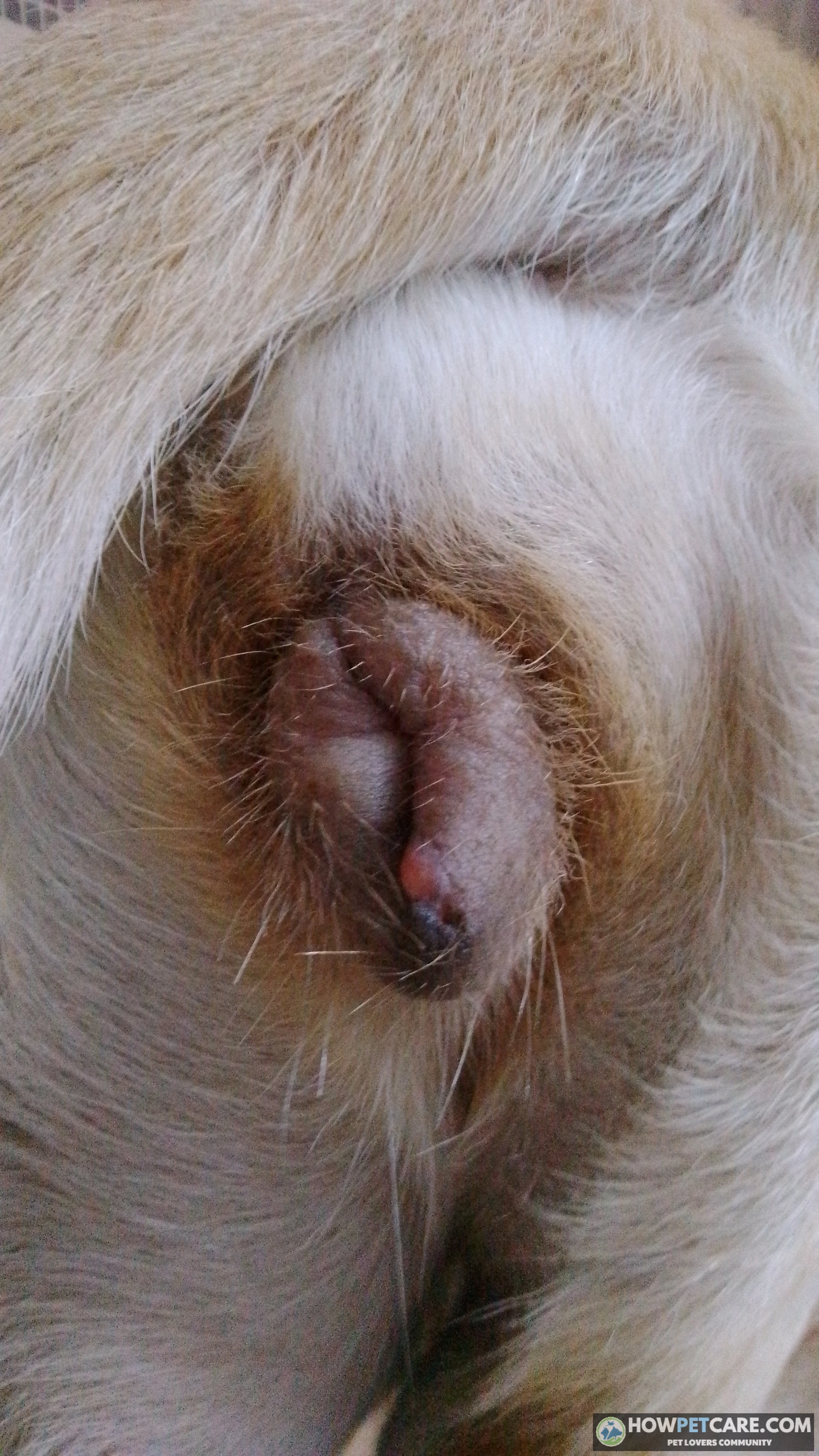

The correct veterinary term for a female dog’s external genital area is the vulva, not "dog pussy." Vulvar swelling and discharge are often normal during a dog’s heat cycle, but foul odor, green or yellow discharge, lethargy, or vomiting can signal infection or pyometra and need prompt veterinary care.
The correct veterinary term for a female dog’s external genital area is the vulva. If you found this page by searching crude phrasing such as "dog pussy," this guide will help you name what you see, distinguish normal heat-related swelling and discharge from signs of disease, and decide how quickly your dog needs veterinary care.
Dog Pussy: The Correct Veterinary Term Is the Vulva
What the vulva does
The vulva is the external part of the female dog’s genital tract. It includes the labia and surrounds the openings to the urethra and vagina. For comparison, male anatomy and emergency signs are covered in our companion guide. Using precise terms such as vulva, vagina, and canine reproductive system when you speak with a veterinarian helps avoid confusion and gets your dog the right care faster.
Normal appearance by age and body condition
Vulva size, color, and skin folds vary by age, breed, weight, and reproductive status. Some dogs have a prominent vulva; in others, surrounding skin folds may partially hide it. A recessed vulva is partially hidden by skin folds and may be linked to genetics and higher body weight. This conformation can trap moisture and bacteria, predisposing dogs to perivulvar dermatitis, vaginitis, and urinary tract infections. Signs can include scooting, excessive vulvar licking, foul odor, urinary incontinence, and urinary tract infection symptoms.

Is Vulvar Swelling Normal During a Dog’s Heat Cycle?
Normal heat timeline
Vulval swelling is normal during proestrus, driven by estrogen, and softens during estrus when the female dog becomes receptive. It typically settles over a few weeks after whelping. A puppy’s first season can arrive anywhere from 6 to 18 months, with small breeds cycling earlier than large breeds. Heat-related swelling and discharge typically last days to a few weeks, but there is no universal day count that applies to every dog. If you are unsure how canine bleeding differs from menstruation, see how canine heat cycles work.
What normal swelling looks like
During a normal heat cycle, the vulva may enlarge, soften, and become pinker than usual. Normal heat changes are usually symmetric and not painful to gentle touch. Discharge often changes from bloody to pink, clear, or straw-colored as heat progresses. Swelling that stays symmetric, with a dog who remains bright, eats normally, and keeps normal thirst and energy, generally fits routine hormonal change.

[!ref]
 You might be wonderingGreyhound dogGreyhound Dog Breed Guide: Size, Temperament, Care & AdoptionRead the answer
Normal vs Abnormal Discharge: Color, Odor, and Consistency
Vaginal discharge can be normal during heat, but certain colors, odors, and consistencies point to infection or another medical problem. The table below is a triage guide, not a diagnosis.
| Observation | Likely normal heat | Possible problem | Action |
|---|---|---|---|
| Discharge color | Bloody at first, then pink, clear, or straw-colored | Green, yellow, thick white, or pus-like | Call vet same day if green or yellow; urgent if foul or with lethargy |
| Odor | Mild, blood-like or faintly metallic | Strongly fishy, sour, rotten, or foul | Call vet same day |
| Consistency | Thin to slightly bloody, stringy as it dries | Thick, clumpy, cottage-cheese-like, or watery and excessive | Call vet within 24 hours |
| Duration | Days to a few weeks, gradually lightening | Persists beyond the heat window or restarts after stopping | Schedule vet exam within a few days |
| Volume | Spotting to light flow, manageable | Sudden gush or steadily increasing amount | Call vet same day |
| Associated signs | Dog bright, eating normally, normal thirst | Lethargy, fever, vomiting, increased thirst, loss of appetite | Emergency clinic immediately |

Discharge color guide
Normal heat discharge may be bloody at first, then pink, clear, or straw-colored. Abnormal discharge includes green, yellow, thick white, or pus-like material. Sudden increases in volume or discharge with lethargy need prompt veterinary assessment.
Odor and consistency red flags
Normal heat discharge has a mild odor, often blood-like or faintly metallic. Strongly fishy, sour, rotten, or foul odors are abnormal. Consistency matters too: thin to slightly bloody discharge that dries stringy is typical of heat, while thick, clumpy, cottage-cheese-like, or watery and excessive discharge is more concerning.
Home-Triage Checklist: Discharge, Odor, and Behavior
Check once daily at the same time. Use clean disposable gloves or wash your hands before and after. Do not insert anything into the vulva or rinse internally.
- ☐ Note discharge color: bloody, pink, clear, straw-colored, green, yellow, or pus-like
- ☐ Note odor: none or mild, metallic, fishy, sour, rotten, or foul
- ☐ Note consistency: thin, thick, clumpy, stringy, or watery
- ☐ Estimate volume: spotting, light flow, or pooling or sudden gush
- ☐ Check vulva appearance: symmetric swelling, redness, sores, or excessive licking
- ☐ Record appetite: normal, reduced, or refusing food
- ☐ Record thirst: normal, increased, or excessive drinking
- ☐ Record energy: bright and active, subdued, or lethargic
- ☐ Take temperature if your dog seems unwell (normal canine range is about 101 to 102.5 °F)
- ☐ Log date, time, and any photos to show the veterinarian

If any emergency sign appears, go to a veterinary emergency clinic immediately: collapse, pale gums, vomiting, severe abdominal pain, foul discharge with fever, or inability to stand.
How Long Swelling or Discharge Should Last Before Concern
Heat-related swelling and discharge often last days to a few weeks, varying by individual dog. Swelling that persists well beyond the expected heat window warrants a veterinary check. Discharge that worsens instead of gradually changing is more concerning than duration alone.
Using a home observation log
Track dates, photos, appetite, energy, thirst, and urination to share with your vet. A simple log helps a veterinarian spot whether changes are improving, stable, or getting worse.
When duration becomes a red flag
If swelling or discharge does not begin to taper after the heat window ends, or if it worsens instead of gradually improving, schedule a veterinary check rather than waiting for a specific calendar date.
Side-by-Side: Normal Heat Changes vs Pathology
Normal heat profile
A dog in normal heat usually has symmetric vulvar swelling, discharge that lightens over time, and normal behavior. She stays bright, eats normally, and maintains normal thirst and energy.
Abnormal swelling or discharge profile
Pathology may include asymmetric swelling, thick green or yellow discharge, foul odor, fever, lethargy, vomiting, increased thirst, abdominal discomfort, or loss of appetite. Vaginal hyperplasia, recessed vulva, vaginitis, and pyometra require different veterinary approaches.

Common causes of vulvar swelling include allergies, irritants such as anal-gland problems or chemical contact, vaginitis, urinary tract infections, tumors, cysts, growths, trauma, and vaginal hyperplasia. Vaginitis can appear before the first season and typically resolves after it. Vaginitis can affect female dogs of any age or breed, whether spayed or unspayed. Puppy vaginitis often resolves after the first heat cycle or spaying, while adult-onset cases usually respond well to treatment. Known causes include bacterial infections, congenital abnormalities, fecal contamination, folded skin around the vulva, foreign bodies, and hormonal factors. Common symptoms include vaginal discharge, licking, scooting, and swelling.
Risk Context: Age, Body Condition, Breed Size, and Reproductive Status
Recessed vulva risk
Overweight dogs and those with skin folds are more prone to recessed vulva and moisture-related irritation. Extra fat and skin folds can trap moisture, urine, and debris around the vulva. Conditions to watch include recessed vulva, chronic irritation, and vaginitis.
Pyometra and age-related risk
Older intact females carry higher risk for pyometra and other reproductive disease. Repeated heat cycles without pregnancy increase uterine infection risk with age. Vaginal hyperplasia is more common in young intact females during heat. Spay status, breed size, and prior reproductive history change both risk and treatment options.
| Factor | Why it matters | Conditions to watch |
|---|---|---|
| Overweight or skin folds | Extra fat and skin folds can trap moisture, urine, and debris around the vulva | Recessed vulva, chronic irritation, vaginitis |
| Older intact female | Repeated heat cycles without pregnancy increase uterine infection risk with age | Pyometra, uterine infection |
| Young intact female during heat | Hormonal changes can cause vaginal tissue to protrude or swell excessively | Vaginal hyperplasia |
| Spay status | Spayed dogs cannot develop pyometra, but may still have vaginitis or urinary issues | Vaginitis, urinary tract irritation |
| Breed size and anatomy | Some conformations have hooded or recessed vulvas that predispose to infection | Recurrent vaginitis, skin-fold dermatitis |
| Prior reproductive history | Whelping, previous infections, or hormonal treatment can change future risk | Recurrent vaginitis, uterine disease |

Breed size and anatomy matter because some conformations have hooded or recessed vulvas that predispose to infection. Prior reproductive history, including whelping, previous infections, or hormonal treatment, can change future risk.
[!ref]
Urgency Tiers: Emergency vs Routine Veterinary Care
Emergency red flags
Emergency signs include fever, collapse, vomiting, severe lethargy, foul discharge, or abdominal pain. Go to an emergency clinic immediately if you see collapse, pale gums, vomiting, severe abdominal pain, foul discharge with fever, or inability to stand.
What to expect at the vet
Diagnosis begins with a physical exam and may include blood work, urinalysis, urine culture, imaging, and skin swabs. Treatment depends on the condition. Pyometra often requires urgent surgery and hospitalization, and cost ranges vary by region and severity. Hospitalization and surgery can run from several hundred to several thousand dollars. Same-day concerns such as thick green or yellow discharge, foul odor, sudden increased volume, lethargy, or reduced appetite without collapse should receive a veterinary exam the same day. Routine concerns such as mild odor, mild swelling that persists after heat, recurrent licking without systemic illness, or mild skin irritation can be handled with a scheduled veterinary exam.
| Urgency | Signs | Typical care | Cost range |
|---|---|---|---|
| Emergency | Fever, collapse, vomiting, pale gums, severe abdominal pain, foul discharge, inability to urinate, or straining to urinate | Emergency clinic; possible IV fluids, diagnostics, and urgent surgery such as pyometra | Varies widely by region and clinic; hospitalization and surgery can run from several hundred to several thousand dollars |
| Same-day | Thick green or yellow discharge, foul odor, sudden increased volume, lethargy, or reduced appetite without collapse | Veterinary exam same day; possible antibiotics, cytology, imaging, or urine testing | Exam plus diagnostics; generally lower than emergency surgery but varies by clinic |
| Routine | Mild odor, mild swelling that persists after heat, recurrent licking without systemic illness, or mild skin irritation | Scheduled veterinary exam; possible topical care, weight management, or evaluation for recessed vulva | Standard exam fee plus any recommended tests or medications |
Safe home monitoring
Owners can monitor safely by using clean gloves, avoiding internal cleaning, and preventing contamination. Wipe only the external area with a damp, clean cloth or pet-safe wipe. Do not insert anything into the vagina or use harsh products.
Spaying is an option to discuss with your veterinarian as prevention. A spayed dog cannot develop pyometra, but she may still have vaginitis or urinary issues. Spaying is not presented here as a mandatory or emergency decision tool.
This article is triage guidance, not a veterinary diagnosis. Do not delay care if pyometra, systemic illness, or severe pain is possible. If your dog shows emergency signs, contact a veterinary emergency clinic immediately.
 You might be wonderingDog water dogWater Dog Breeds: Complete Guide, Comparisons & SafetyRead the answer
FAQ
Can a spayed dog have vulvar discharge?
A spayed dog should not have heat-related vulvar discharge. Any discharge, swelling, or odor after spaying should be checked by a veterinarian.
Is constant licking of the private area always abnormal?
Occasional cleaning is normal, but constant licking can indicate heat, irritation, infection, or discomfort. If it persists or comes with redness, odor, or discharge, schedule a veterinary exam.
How can I clean a female dog’s vulva safely at home?
Wipe only the external area with a damp, clean cloth or pet-safe wipe. Do not insert anything into the vagina or use harsh products.
Does vulvar swelling always mean my dog is in heat?
No. Swelling can also occur with infection, vaginal hyperplasia, recessed vulva, trauma, or other conditions. Heat is only one possible cause.
Can a recessed vulva be corrected?
Yes, depending on severity and symptoms, a veterinarian may recommend weight management, topical care, or surgery. The best option depends on the dog’s anatomy and infection history.