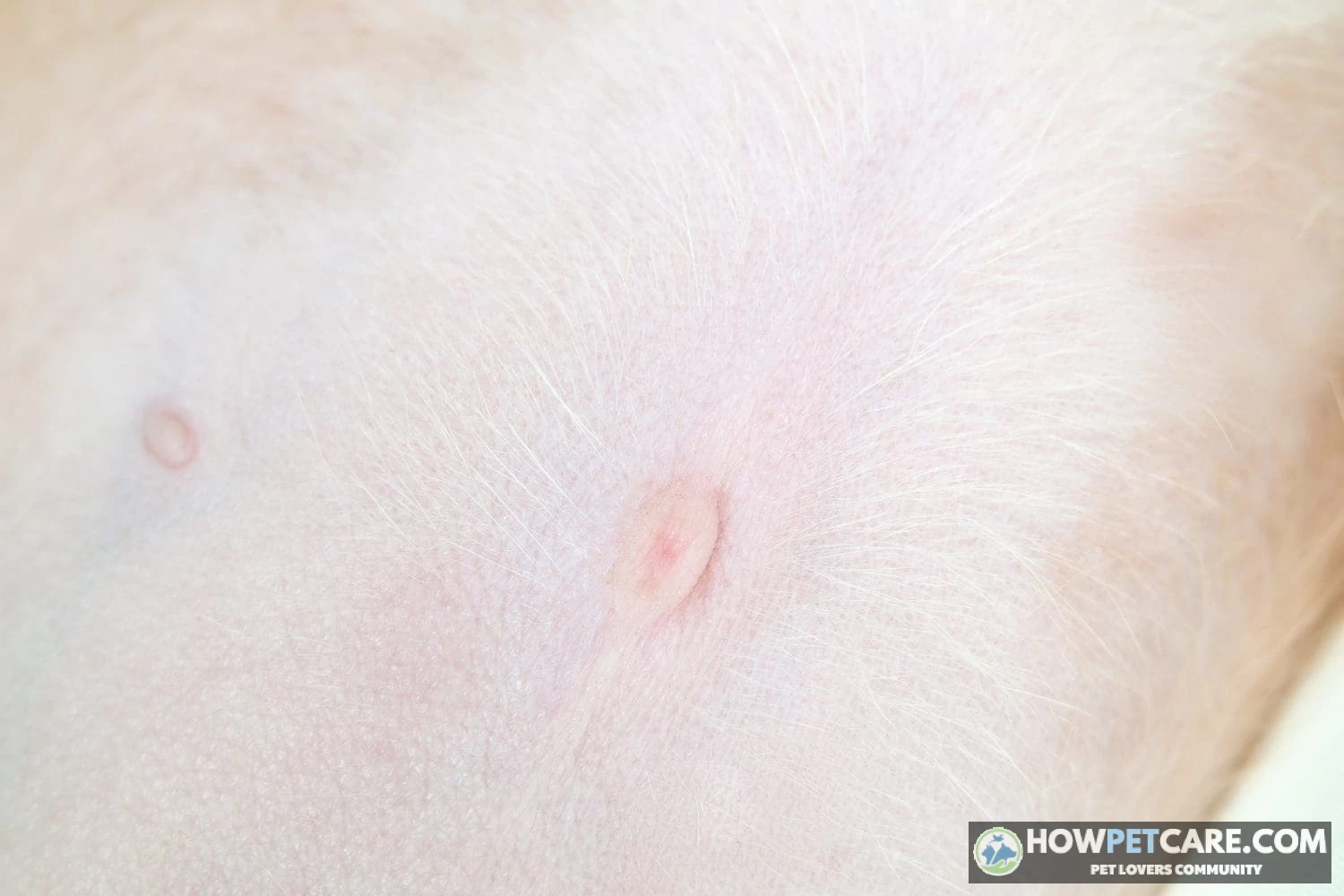

Yes, dogs have belly buttons. A dog’s navel is a small scar called the umbilicus, left where the umbilical cord connected the puppy to the placenta. It usually appears as a flat line, dimple, or subtle texture change on the lower abdomen, often hidden by fur.
Yes, dogs have belly buttons. A dog’s belly button is a small scar called the umbilicus, left behind after the umbilical cord that connected the puppy to the placenta is cut and the stump heals. Because dogs are placental mammals, they share this basic anatomy with humans and cats. While a human navel is often a noticeable deep hole, a dog’s belly button is usually a tiny, flat scar or slit near the base of the rib cage, easily hidden by fur.
What a Dog Belly Button Actually Is

The belly button marks the spot where the umbilical cord delivered oxygen and nutrients to the developing fetus. After birth, the cord is severed and the remaining stump dries, shrinks, and falls away, leaving a small umbilical scar. This is normal for every placental mammal. Marsupials and egg-laying monotremes, such as platypuses, are the mammal exceptions that lack belly buttons. Most adult dog belly buttons fade over time and may look like a faint line, a shallow dimple, or nothing more than a subtle change in skin texture.
Where a Dog’s Belly Button Is Located

A dog’s belly button sits on the midline of the lower abdomen, roughly halfway between the chest and the pelvis. It is often near the base of the rib cage and can sit between or just below the nipples. Because it is usually small and flat, it is most often hidden under fur as the dog grows older.
How to Find a Belly Button Under Thick Fur

Part the hair gently along the center of the belly with your fingers. Good lighting helps, and slightly damp fur can make the scar easier to see on fluffy or long-haired dogs. Feel for a tiny flat scar, faint line, or slight dimple rather than a deep hole. Do not confuse it with nipples or mammary glands (see whether male dogs have nipples), which sit in paired rows on either side of the midline and are symmetrical. The navel is a single midline mark.
 You might be wonderingWhy do dogs pant?Why Do Dogs Pant? Normal vs Emergency Panting GuideRead the answer
What a Normal Dog Belly Button Looks Like at Every Age

Adult dogs usually have a flat scar that is barely visible and may become shallower or more elongated as the dog ages. Coat length, weight, and skin folds all affect how easy it is to see. Male dogs have belly buttons just like females, because every placental mammal develops an umbilical connection in the womb.
Newborn Puppy Umbilical Stump Healing Timeline
Newborn puppies do not arrive with a healed belly button. They have an umbilical stump that dries, shrinks, and falls off before the flat scar forms.
| Age | What to Expect |
|---|---|
| Day 1 | Stump is moist, dark, and attached; keep the area clean and dry |
| Days 2-3 | Stump begins drying and darkening; slight scabbing is common without odor |
| Days 4-5 | Stump shrinks and may loosen at the base |
| Days 6-7 | Most stumps fall off or are nearly detached |
| Days 8-10 | Small flat scar remains; area should be dry and non-red |
| Week 2 | Scar fades and blends with skin; monitor for any bulge |
| Weeks 3-4 | Navel should look like a flat, quiet scar in healthy puppies |
Puppies have belly buttons when born in the sense that the umbilical attachment existed, but what you see at birth is the stump, not the finished scar. The stump generally heals within about 3 to 10 days.

How to Safely Check Your Dog’s Belly Button at Home
A gentle home check lets you establish what is normal for your dog so you can spot changes early. Calm your dog first and stop if they tense up, growl, or pull away. Never press, pinch, or poke the area.
Step-by-Step Home Check
- Wash and dry your hands.
- Help your dog relax in a quiet spot with good lighting.
- Find the midline on the lower abdomen, roughly halfway between the chest and pelvis.
- Part the fur gently with your fingers; slightly damp fur can help on fluffy dogs.
- Look for a small flat scar, faint line, or slight dimple rather than a deep hole.
- Lightly touch with one fingertip only. Do not press, pinch, or poke.
- Note that normal feels flat, soft, cool, and non-painful.
- Stop immediately if you notice pain, resistance, heat, swelling, redness, discharge, or a bulge.
- Photograph anything unusual and date the photo for later comparison.

60-Second Belly Button Home Check
- Wash and dry your hands.
- Calm your dog first; stop if they tense, growl, or pull away.
- Find the midline on the lower abdomen, roughly halfway between the chest and pelvis.
- Part the fur gently with your fingers; use good light and slightly damp fur for fluffy dogs.
- Look for a small flat scar, faint line, or slight dimple rather than a deep hole.
- Lightly touch with one fingertip only; do not press, pinch, or poke.
- Normal feels flat, soft, cool, and non-painful.
- Stop immediately for pain, resistance, heat, swelling, redness, discharge, or a bulge.
- Note anything you find with a photo and date for comparison later.
Any visible hole or protrusion should be checked by a veterinarian for umbilical hernia or abscess rather than left alone.
Normal Scar Versus Umbilical Hernia: A Visual Comparison
An umbilical hernia happens when abdominal muscles do not close fully or properly, allowing tissue or fat to push through the opening. If untreated, it can become life-threatening and may require surgical correction.
| Feature | Normal Belly Button | Umbilical Hernia |
|---|---|---|
| Appearance | Flat scar, faint line, or slight dimple | Soft or firm bulge that protrudes outward |
| Texture | Flat and smooth | May feel like a bubble or firm lump under the skin |
| Pain | Non-painful | May be painful, especially if growing or hard |
| Change with activity | Stays the same | May enlarge with coughing or straining |
| Reducibility | Not applicable | Small bulge may sometimes be gently pushed back by a vet only |
| Healing in puppies | Scar forms and fades | Small hernias sometimes close on their own as the puppy grows |

Small umbilical hernias in puppies sometimes close on their own as the puppy matures. A soft small bump in a young puppy may be normal to watch briefly, but a growing, painful, or red bump always needs veterinary attention.
Side-by-Side Comparison
| Finding | Usually Normal | Needs Veterinary Attention |
|---|---|---|
| Small flat scar | Yes, especially in adults | No |
| Flat navel with no bump | Yes | No |
| Soft small bump in a puppy | Sometimes, may close as puppy grows | If growing, painful, or present after 6 months |
| Hard lump | No | Yes, especially if non-reducible |
| Redness | No | Yes |
| Discharge or odor | No | Yes |
| Pain when touched | No | Yes |
Infection and Abscess Warning Signs That Need Veterinary Care
An infection or abscess at the navel is more urgent than a simple hernia because it can spread quickly. Seek veterinary care when you see redness, heat, swelling, discharge, foul odor, or an open wound at the navel. Fever, lethargy, loss of appetite, or pain when touched are also concerning. Abscess signs include a firm lump, draining pus, or rapid growth around the area.
Urgent Signs
- Pain when the navel area is touched
- Redness, heat, or swelling around the scar
- Discharge, pus, or foul odor
- Open wound or bleeding at the navel
- Hard, rapidly growing lump
- Lump that cannot be gently pushed back by a veterinarian
- Vomiting, loss of appetite, lethargy, or guarding the abdomen
Routine Monitoring Signs
- Flat scar with no redness, heat, swelling, discharge, or pain
- Tiny soft bulge in a puppy that is not growing and is not painful
- Dog eating, drinking, playing, and acting normally
Any painful, enlarging, red, leaking, or firm navel change needs prompt veterinary evaluation.
Monitor at Home or Call the Vet: A Decision Framework
Use this framework to turn your observations into action. When in doubt, contact your veterinarian rather than waiting.
Monitor at Home
Monitor at home when all of these are true:
- The navel is a flat scar with no redness, heat, swelling, discharge, or pain.
- Your dog eats, drinks, plays, and acts normally.
- A puppy has a tiny soft bulge that is not growing and is not painful.
Book a Routine Vet Visit
Book a routine visit when:
- A small bulge persists beyond a few weeks or past 6 months of age.
- There is mild irritation, itching, or recurring moisture at the navel.
- You are unsure whether a lump is reducible or changing size.
Seek Urgent Care
Seek urgent care when:
- There is pain, redness, heat, swelling, discharge, odor, or an open wound.
- The lump is hard, rapidly growing, or cannot be gently pushed back.
- Your dog vomits, stops eating, becomes lethargic, or guards the abdomen.
Monitor at Home Versus Call the Veterinarian
| Situation | Recommended Action |
|---|---|
| Flat scar, no symptoms, dog behaving normally | Monitor at home |
| Tiny soft puppy bulge, not growing or painful | Monitor at home with weekly checks |
| Small bulge persisting past a few weeks or 6 months | Book a routine vet visit |
| Mild irritation, itching, or recurring moisture | Book a routine vet visit |
| Pain, redness, heat, swelling, discharge, odor, or open wound | Seek urgent care |
| Hard, rapidly growing, or non-reducible lump | Seek urgent care |
| Vomiting, lethargy, appetite loss, or abdominal guarding | Seek urgent care |
What Umbilical Hernia Repair and Recovery Usually Involve
A veterinarian diagnoses an umbilical hernia by physical exam and decides whether monitoring or repair is appropriate. Repair is typically done under anesthesia: the hernia contents are returned to the abdomen and the opening in the abdominal wall is closed. Recovery commonly includes incision monitoring, an Elizabethan collar, restricted activity, and a follow-up visit. Owners should not attempt to push a bulge back in, change dressings without instructions, or adjust medications on their own.
Dog Belly Button Versus Cat Belly Button
Both dogs and cats have belly buttons because both are placental mammals. The scar remains after the umbilical cord detaches and is clamped. Cats’ belly buttons are usually very small and hidden by fur, while dogs often have a slightly more visible scar, though it is still easy to miss. The underlying anatomy is the same: a flat umbilical scar left after birth. No breed-specific hernia-rate claims are made here beyond the general understanding that some breeds are commonly reported in veterinary literature.
Do male dogs have belly buttons? Yes. Male dogs have belly buttons just like females, because every placental mammal develops an umbilical cord connection in the womb. The scar sits on the midline of the abdomen and is often easy to miss under fur.
Why can’t I see my dog’s belly button? Most adult dog belly buttons are flat, small scars hidden by fur and skin folds. Parting the hair along the midline of the lower abdomen and feeling gently usually reveals a tiny dimple or line.
Do dogs have belly buttons that stick out? A flat scar is normal, but a soft or firm lump that sticks out may be an umbilical hernia. Small hernias in puppies sometimes close on their own, but any growing, painful, or red bump should be checked by a veterinarian.
Do puppies have belly buttons when born? Newborn puppies have an umbilical stump rather than a healed scar. The stump dries, shrinks, and falls off within about 3 to 10 days, leaving the flat belly button scar.
Is a dog’s belly button an innie or outie? Dogs do not have deep innies or outies like humans. A normal dog belly button is a flat or slightly indented scar; an outward bulge usually points to a hernia rather than a normal navel.
Start with a gentle home check today so you know what your dog’s normal navel looks like. Photograph the area, note the date, and check it periodically during grooming or petting. If you ever see pain, redness, discharge, a hard lump, or a change in your dog’s energy or appetite, contact your veterinarian promptly. When the navel is flat, quiet, and your dog is acting like itself, routine monitoring is all that is needed.
 You might be wonderingWhy do dogs have whiskers?Why Do Dogs Have Whiskers: Function, Anatomy & CareRead the answer
FAQ
Do male dogs have belly buttons?
Yes. Male dogs have belly buttons just like females, because every placental mammal develops an umbilical cord connection in the womb. The scar sits on the midline of the abdomen and is often easy to miss under fur.
Why can’t I see my dog’s belly button?
Most adult dog belly buttons are flat, small scars hidden by fur and skin folds. Parting the hair along the midline of the lower abdomen and feeling gently usually reveals a tiny dimple or line.
Do dogs have belly buttons that stick out?
A flat scar is normal, but a soft or firm lump that sticks out may be an umbilical hernia. Small hernias in puppies sometimes close on their own, but any growing, painful, or red bump should be checked by a veterinarian.
Do puppies have belly buttons when born?
Newborn puppies have an umbilical stump rather than a healed scar. The stump dries, shrinks, and falls off within about 3 to 10 days, leaving the flat belly button scar.
Is a dog’s belly button an innie or outie?
Dogs do not have deep innies or outies like humans. A normal dog belly button is a flat or slightly indented scar; an outward bulge usually points to a hernia rather than a normal navel.