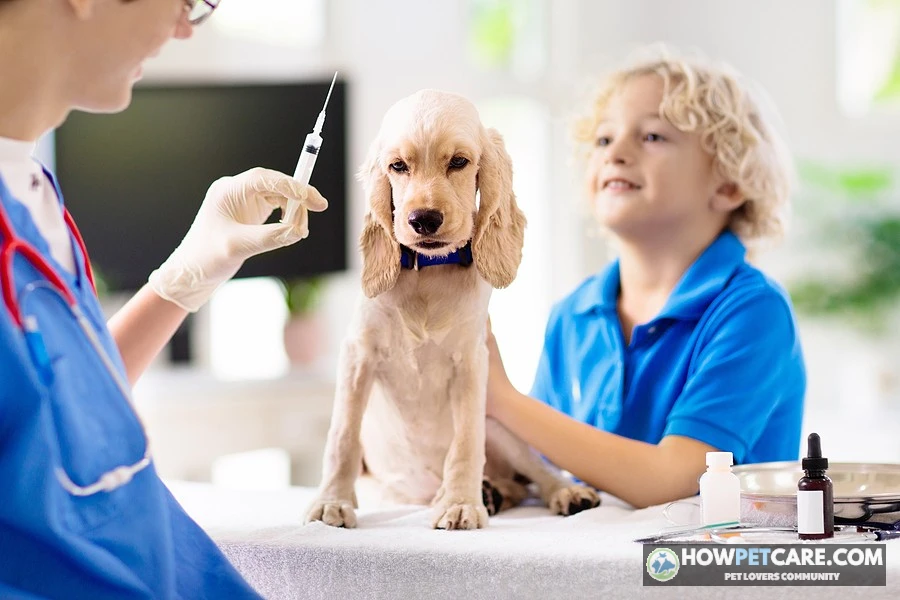

A standard puppy vaccination schedule begins at 6–8 weeks with the first DHPP/DAPP shot, followed by boosters every 2–4 weeks until 16 weeks of age or older. Rabies is administered at 12–16 weeks. Non-core vaccines such as Leptospirosis, Bordetella, and Lyme are scheduled based on lifestyle and regional disease risk.
Puppy Vaccination Schedule by Age: 6 Weeks to 1 Year
The puppy vaccination schedule below shows what vaccine to give, when to give it, and what other preventive care should accompany each visit. This complete week-by-week roadmap applies to the United States in 2026. It follows the American Veterinary Medical Association (AVMA) and the American Animal Hospital Association (AAHA) recommendations, and it highlights where state rabies laws intersect with clinical best practice.
Master Puppy Vaccination Schedule: Core vs. Lifestyle Timing
| Target Age | Core Vaccines (All Dogs) | Additional Vaccines (Risk-Based or Broadly Recommended) | Formula Acronyms & Purpose | Routine Co-Treatments |
|---|---|---|---|---|
| 6–8 Weeks | DHPP/DAPP (Dose 1) | Bordetella (intranasal/oral if early social exposure planned) | DAPP/DHPP: Distemper, Adenovirus‑2 (hepatitis), Parvovirus, Parainfluenza. Primes initial immune recognition. | Fecal flotation; oral pyrantel dewormer (≈ 12 USD) |
| 10–12 Weeks | DHPP/DAPP (Dose 2) | Leptospirosis (Dose 1); Lyme (Dose 1); Canine Influenza (Dose 1) | DHLPP/DHPPL: Core plus Leptospirosis. Bacterial serovars target renal colonization. | Start monthly heartworm & flea/tick preventives |
| 14–16 Weeks | DHPP/DAPP (Dose 3 critical final); Rabies (1‑yr killed virus) | Leptospirosis (Dose 2); Lyme (Dose 2); Canine Influenza (Dose 2) | Rabies: Legally required, induces neutralizing antibodies across all states. | Second fecal check; weight‑adjusted parasite prevention |
| 18–20 Weeks | DHPP/DAPP (Optional Dose 4 – recommended in high‑risk parvovirus zones) | None required unless series was delayed | Extended booster to overcome outlier maternal antibodies. | Weight check for preventive dosing |
| 1 Year | DHPP/DAPP (1‑yr or 3‑yr booster per product label); Rabies (1‑yr or 3‑yr per state law) | Leptospirosis (annual); Bordetella (annual or bi‑annual); Lyme (annual) | Solidifies adult adaptive immunity; transitions dog to long‑term revaccination schedule. | Annual heartworm antigen test; full wellness exam |
- The foundation series starts at 6–8 weeks, repeats every 2–4 weeks, and continues until the puppy reaches 16 weeks; this schedule overcomes maternal antibody interference.
- Give the final core dose at 16 weeks or later; in regions with known parvovirus hotspots, many vets also schedule a fourth dose at 18–20 weeks.
- Rabies is the only vaccine with a legal mandate; most states require the first dose by 4 months of age (California) and a follow‑up at 1 year or 3 years depending on product and local ordinance.
- Bordetella, Lyme, and Canine Influenza remain lifestyle vaccines, while Leptospirosis is now broadly recommended for all dogs because exposure is not limited to rural areas.
6–8 Weeks: First DHPP/DAPP Dose and Initial Preventive Care
- Vaccines: DHPP/DAPP (Dose 1). Rabies isn’t given yet—dogs aren’t eligible until 12 weeks.
- Preventive: Fecal flotation, oral pyrantel dewormer, and a physical exam.
- Owner Action: Record the lot number, planned date, and next due date (typically 3‑4 weeks later) on the printable tracker (see table below).
9–12 Weeks: Combination Vaccine Booster and Risk Assessment
- Vaccines: DHPP/DAPP (Dose 2). Consider Bordetella (intranasal) if the puppy will go to a grooming salon or a puppy class.
- Risk Assessment: Discuss regional Lyme prevalence and urban rodent exposure; schedule the first Leptospirosis dose and consider Lyme based on local risk.
- Preventive: Start monthly heartworm prevention (officially recommended from 6 months, though many vets begin at 8 weeks in high‑risk areas).
12–16 Weeks: Rabies, Leptospirosis, and Continued DHPP/DAPP
- Vaccines: DHPP/DAPP (Dose 3 – critical final core dose); Rabies (1‑yr killed virus) – first legal dose; Leptospirosis, Lyme, Canine Influenza (first doses if indicated).
- Why now? By 16 weeks maternal antibodies have mostly faded, letting the final core dose produce protective titers.
- Post‑vaccination wait: Keep the puppy off public grass for 10‑14 days to let immunity peak.

16–20 Weeks: Final Puppy‑Series Dose and High‑Risk Adjustments
- Vaccines: Optional DHPP/DAPP 4 (if local parvovirus risk is high). Complete Leptospirosis and Lyme boosters if the first dose was given at 12–14 weeks.
- Safe Outdoor Milestone: After 14 days post‑final core dose, the puppy may safely explore public grass, sidewalks, and supervised dog parks (see the “Safe Steps” matrix below).
6–12 Months: First‑Year Boosters and the Adult Schedule Transition
- Vaccines: DHPP/DAPP booster (1‑yr or 3‑yr schedule depending on product label); Rabies booster (1‑yr or 3‑yr per state law). Lifestyle boosters (Leptospirosis, Bordetella, Lyme) are typically annual.
- Preventive: Annual fecal check, heartworm antigen test, and a full wellness exam.
- Owner Action: Use the printable tracker to mark the next due dates for each vaccine and preventive measure.
Printable Puppy Vaccination and Preventive‑Care Schedule
| Puppy age | Core vaccines due | Additional vaccines to discuss | Deworming and parasite prevention | Safe exposure milestone | Planned date | Completed date | Next due date |
|---|---|---|---|---|---|---|---|
| 6–8 wks | DHPP/DAPP 1 | Bordetella (if early socialization) | Oral pyrantel (single dose) | Indoor only – carrier walks | |||
| 10–12 wks | DHPP/DAPP 2 | Leptospirosis 1; Lyme 1; Flu 1 (if needed) | Start monthly heartworm/flea‑tick | Private fenced yard, stroller rides | |||
| 14–16 wks | DHPP/DAPP 3; Rabies 1 | Leptospirosis 2; Lyme 2; Flu 2 | Second fecal check; weight‑adjusted preventives | Public grass after 14 days post‑dose | |||
| 18–20 wks | DHPP/DAPP 4 (optional) | – | Weight check for dosing | Full neighborhood walks | |||
| 12 months | DHPP/DAPP booster; Rabies booster | Leptospirosis annual; Bordetella annual; Lyme annual | Annual heartworm test; wellness exam | Unrestricted public access |
Print the table above, fill in the planned and completed dates after each vet visit, and keep it in a folder with the puppy’s health certificate. The “Next due date” column automatically becomes your reminder for the following appointment.
Core Vaccines vs. Lifestyle Vaccines: What Each Shot Prevents
Understanding core versus non‑core (lifestyle) vaccines helps you ask the right questions at the exam. DHPP/DAPP and Rabies are core vaccines for every puppy. Bordetella, Lyme, and Canine Influenza are selected according to exposure risk, while current AAHA guidance broadly recommends Leptospirosis for all dogs.
DHPP vs. DAPP: Different Acronyms, Similar Core Protection
- DHPP = Distemper, Hepatitis (Adenovirus‑2), Parvovirus, Parainfluenza. The dhpp vaccine for dogs remains the central pillar of initial puppy immunization.
- DAPP is a branding variant that swaps the order of adenovirus and parainfluenza but covers the same four diseases. Both are core for every dog, regardless of breed or size.
Why Leptospirosis Is Now Broadly Recommended
In 2024 the AAHA upgraded Leptospirosis from a “lifestyle‑only” vaccine to a core recommendation for all dogs due to rising urban rodent populations and documented outbreaks in suburban parks. Many clinics now protect against this bacterial threat by administering a dhlpp shot for dogs, integrating lepto coverage directly into the core routine. Even small‑breed city puppies face exposure through contaminated puddles, stormwater runoff, and shared concrete areas where rodents deposit urine. This shift recognizes that urban residence does not eliminate exposure: rodents, wildlife, standing water, and runoff can carry contamination into city and suburban environments.
Bordetella, Lyme, and Canine Influenza Risk Factors
| Vaccine | Primary Pathogen | Typical Risk Scenarios |
|---|---|---|
| Bordetella bronchiseptica | Bacterial kennel cough | Dog‑daycare, boarding, grooming salons |
| Lyme disease (Borrelia burgdorferi) | Tick‑borne spirochete | Forested or suburban yards with high tick counts |
| Canine Influenza (H3N2/H3N8) | Viral respiratory infection | Frequent exposure to other dogs in parks or shows |
If your puppy will attend puppy‑socialization classes, the clinic should require Bordetella (intranasal) and verify that every attendee has started the core series. For dogs visiting crowded boarding kennels or busy dog parks, veterinarians may also discuss the canine influenza vaccine to guard against contagious respiratory pathogens.

Why Puppies Need Repeat Boosters Every 2–4 Weeks
Maternal Antibodies and the Puppy Immunity Gap
Puppies receive passive IgG antibodies from the dam’s colostrum. Those antibodies protect the newborn but can neutralize a vaccine if given too early, leaving the puppy unprotected after the antibodies fade. The decay rate varies widely; some puppies lose protection as early as 6 weeks, others retain it until after 12 weeks.
Why the Final Dose Must Be Given at the Right Age
A single early dose only primes the immune system. Repeated doses increase the probability that at least one injection occurs after maternal antibodies have fallen below the protective threshold, allowing the puppy to develop its own adaptive response. The critical final dose at ≥ 16 weeks is what generates a durable antibody titer that can survive natural exposure.

Puppy Series vs. Adult Booster Timeline
- Puppy series: 3–4 doses of DHPP/DAPP spaced 2–4 weeks apart, ending at ≥ 16 weeks.
- Adult booster: Usually a single DHPP/DAPP at 1 year, then every 1–3 years depending on product label and risk assessment.
- Rabies: Legally mandated first dose at ≥ 12 weeks, followed by a 1‑year or 3‑year booster per state law.
- Titer testing: Useful for adult dogs to decide on revaccination but cannot replace the initial puppy series.
When Puppies Can Touch Public Grass, Walk, and Socialize Safely
Balancing the critical 8–16‑week socialization window with the danger of parvovirus‑contaminated environments is the most common source of anxiety for new owners deciding when can puppies go outside without excessive disease risk.
The ‘Safe Steps’ Outdoor Exposure Matrix
Phase 1: After Dose 1 (6–9 weeks) – Zero Public Ground Contact
- Prohibited: Public sidewalks, dog‑park perimeters, pet‑store floors.
- Permitted: Clean indoor floors, private fenced yard with no recent dog traffic, vehicle interior.
- Socialization Action: Carry the puppy in a front‑pack, sling, or stroller through parks, sidewalks, and busy streets. They experience sounds, sights, and scents without paw‑to‑ground exposure.
Phase 2: After Dose 2 (10–13 weeks) – Controlled Private Surfaces
- Prohibited: Dog parks, communal relief strips at rest stops, trails with stray‑dog activity.
- Permitted: Concrete patios, driveways (hose‑down after use), sanitized puppy‑class academy floors (must require proof of first shots and bleach‑equivalent disinfection).
- Socialization Action: One‑on‑one indoor playdates with a fully vaccinated adult dog owned by a trusted friend.
Phase 3: After Dose 3 + 14 Days Post‑Booster (16–18 weeks) – Full Public Ground Clearance
- Clearance Marker: Immune protection is not instantaneous: the final core dose must activate lymphocytes and drive antibody production, which reaches peak protective titers 10–14 days after administration at ≥ 16 weeks.
- Permitted Surfaces: Public grass, neighborhood sidewalks, hiking trails, dog‑friendly patios, grooming facilities.
- Ongoing Precaution: Avoid stagnant, warm puddles or storm‑runoff water (primary vectors for Leptospira) until the two‑dose Leptospirosis series is complete.

Can a Puppy Attend Controlled Puppy Socialization Classes Before 16 Weeks?
Yes, if the class:
- Requires proof of the first DHPP/DAPP dose and a negative health screen.
- Enforces strict sanitation (bleach‑based surface cleaning after each session).
- Limits attendance to healthy, vaccinated dogs and excludes any canine with coughing, discharge, or recent illness.
If those conditions are not met, defer class attendance until after the final core dose plus the 14‑day waiting period.
Missed Booster and Rescue Puppy Catch‑Up Protocols
Puppies rarely follow the textbook schedule perfectly. Whether you’re a few days late, several weeks behind, or adopting an older rescue with no records, the following decision tree keeps you on track without unnecessary re‑vaccination.
-
Assess the puppy’s age and documentation
Determine the exact chronological age and collect any vaccination cards, shelter records, or owner‑verbal histories.
-
Identify the booster that is overdue
If a DHPP/DAPP booster is > 4–6 weeks late, do not restart the series; give the next dose immediately and continue every 3–4 weeks until a dose is given at ≥ 16 weeks.
-
Late‑starter (≥ 12 weeks) with no prior shots
Administer DHPP/DAPP Dose 1, Rabies 1‑yr, and Leptospirosis Dose 1 as recommended. Schedule a second DHPP/DAPP and Leptospirosis dose 3–4 weeks later; continue the core series until a dose has been administered at ≥ 16 weeks.
-
Rescue with unknown history
Treat the puppy as unvaccinated until a vet confirms otherwise. Perform a full physical exam, run a fecal test, and start the standard puppy series as above.
-
Two‑dose lifestyle vaccines (Leptospirosis, Lyme, Flu)
If the interval between Dose 1 and Dose 2 exceeds 6 weeks, consult the administering veterinarian and product label to determine whether the two‑dose series must be restarted.
-
Rabies catch‑up
Follow local law: administer a legal Rabies dose now, document the date, and obtain a Rabies certificate. Titers do not replace a required Rabies vaccination.
Bottom line: An overdue DHPP/DAPP booster is generally given promptly rather than automatically restarting the foundation series. Two‑dose vaccines require product‑specific guidance when the booster window has been exceeded.

Normal Vaccine Side Effects vs. Emergency Warning Signs
Use this Green / Yellow / Red triage matrix to distinguish expected mild vaccine lethargy from warning signs and a potentially life‑threatening anaphylactic emergency.
| Symptom Category | Clinical Presentation | Likely urgency | Action to take |
|---|---|---|---|
| Green: Mild & Expected (Within 24–48 hrs) | Sleepiness (2–4 hrs extra); mild soreness at injection site; reduced appetite; low‑grade fever (< 102.8 °F/39.3 °C) | Low – monitor at home | Provide a quiet crate, fresh water, and keep the puppy calm. No human NSAIDs – they are toxic to dogs. |
| Yellow: Moderate Warning (Call Vet Same Day) | Small firm lump < 1 cm under skin; vomiting once; mild diarrhea; persistent loss of appetite > 24 hrs | Medium – call clinic during business hours | Note the exact location of any nodule; the vet may request an exam if it grows or persists > 3 weeks. |
| Red: Critical Emergency (Minutes‑to‑hours) | Facial swelling, hives, repeated vomiting, pale/blue gums, collapse, sudden unsteady gait, wheezing or stridor | High – go to the nearest 24‑hr emergency veterinary clinic immediately | Call ahead so staff can prepare epinephrine, antihistamines, and IV fluids. |

If any critical emergency signs appear, transport the puppy immediately; do NOT wait for symptoms to subside.
Puppy Vaccination Costs: Per‑Visit and First‑Year Budget
Understanding the price breakdown lets you budget confidently and compare clinic models.
| Item / Service | Full‑Service Private Veterinary Practice | Corporate Veterinary Chain (e.g., Banfield / VCA) | Non‑Profit Community / Mobile Vaccine Clinic |
|---|---|---|---|
| Physical Exam Fee (Per visit, 3–4 needed) | $65 – $95 per visit ($195 – $380 total) | $70 – $110 per visit (often included in $45–$65/mo wellness plan) | $0 – $25 basic screening (brief visual check only) |
| DHPP / DAPP Core Series (3–4 injections) | $38 – $55 per dose ($114 – $220 total) | $42 – $60 per dose ($126 – $240 total) | $18 – $30 per dose ($54 – $120 total) |
| Rabies Vaccine (1‑Year) | $25 – $45 | $30 – $50 | $15 – $25 (often subsidized by county programs) |
| Leptospirosis Series (2 doses) | $32 – $48 per dose ($64 – $96 total) | $35 – $52 per dose ($70 – $104 total) | $20 – $32 per dose ($40 – $64 total) |
| Lifestyle Add‑ons (Bordetella + Lyme / Flu) | $70 – $130 total combined | $80 – $145 total combined | $45 – $80 total combined |
| Diagnostic Fecal Ova & Parasite Exam | $45 – $75 per test (1–2 tests recommended) | $50 – $85 per test | $25 – $45 per test |
| 6 Months of Heartworm / Flea Prevention | $120 – $180 (weight‑adjusted oral chews) | $130 – $195 (weight‑adjusted oral chews) | $90 – $150 (counter purchase or script) |
| Estimated 1st‑Year Preventive Baseline | $642 – $1,196 | $671 – $1,349 (or ~$600–$850 via plan premiums) | $284 – $569 |

Tips for cost‑saving:
- Many low‑cost clinics bundle the DHPP series with a single exam fee, but they may not perform a full wellness exam.
- Pet‑insurance plans often exclude routine vaccinations; verify coverage before enrolling.
- Ask for a written estimate before the first visit to avoid surprise fees.
Build Your Puppy’s Personalized First‑Year Action Plan
Turn the information above into a concrete checklist you complete with your veterinarian and keep on hand for the whole first year.
Before the First Appointment
- Write down the puppy’s birthdate (or estimated age). Calculate the target dates for each vaccine using the 2–4 week interval rule.
- Gather any existing vaccine cards, shelter paperwork, or health certificates.
- List your puppy’s anticipated risk factors: daycare, boarding, frequent park visits, tick‑infested yard, urban rodent exposure.
Questions to Ask at Every Vet Visit
- “What is the exact next due date for the core series?”
- “Do we need a Leptospirosis or Bordetella shot based on my lifestyle?”
- “When will the puppy be cleared for public grass after the final core dose?”
- “What should I watch for that indicates a vaccine reaction?”
- “Can you provide a written invoice that breaks down exam, vaccine, and preventive costs?”
Records and Dates to Track Through the One‑Year Booster
- Vaccine record: product name, lot number, date administered, next due date.
- Puppy health certificate: signed by the vet, required for interstate travel.
- Rabies certificate: legal proof needed for licensing; note whether the booster is 1‑year or 3‑year.
- Invoices: keep for budgeting and potential insurance reimbursement.
- Reaction notes: any side‑effects, their onset time, and treatment given.

Final Checklist (printable)
| Item | Status |
|---|---|
| Birthdate recorded | |
| Core DHPP/DAPP series complete (≥ 16 weeks) | |
| Rabies certificate obtained | |
| Lifestyle vaccines administered (if needed) | |
| Heartworm & flea/tick prevention started | |
| First‑year booster scheduled (12 months) | |
| Safe outdoor exposure cleared (post‑final dose + 14 days) | |
| All invoices & health certificates filed |
Print the master schedule table and the first‑year checklist today. Bring both to your first vet appointment and fill in the actual dates as you go. This single document will keep vaccinations, deworming, and safe‑socialization milestones organized for the entire year.

| Target Age | Core Vaccines | Additional Vaccines | Purpose and Formula Details | Routine Co-Treatments | Safe Outdoor Milestone |
|---|---|---|---|---|---|
| 6–8 Weeks | DHPP/DAPP (Dose 1) | Bordetella (intranasal/oral if early social exposure planned) | DAPP/DHPP: Distemper, Adenovirus‑2 (hepatitis), Parvovirus, Parainfluenza. Primes initial immune recognition. | Fecal flotation; oral pyrantel dewormer (approx 12 USD) | Indoor only – carrier walks |
| 10–12 Weeks | DHPP/DAPP (Dose 2) | Leptospirosis (Dose 1); Lyme (Dose 1); Canine Influenza (Dose 1) | DHLPP/DHPPL: Core plus Leptospirosis. Bacterial serovars target renal colonization. | Start monthly heartworm and flea/tick preventives | Private fenced yard, stroller rides |
| 14–16 Weeks | DHPP/DAPP (Dose 3 critical final); Rabies (1‑yr killed virus) | Leptospirosis (Dose 2); Lyme (Dose 2); Canine Influenza (Dose 2) | Rabies: Legally required, induces neutralizing antibodies across all states. | Second fecal check; weight‑adjusted parasite prevention | Public grass after 14 days post‑dose |
| 18–20 Weeks | DHPP/DAPP (Optional Dose 4 – recommended in high‑risk parvovirus zones) | None required unless series was delayed | Extended booster to overcome outlier maternal antibodies. | Weight check for preventive dosing | Full neighborhood walks |
| 1 Year | DHPP/DAPP (1‑yr or 3‑yr booster per product label); Rabies (1‑yr or 3‑yr per state law) | Leptospirosis (annual); Bordetella (annual or bi‑annual); Lyme (annual) | Solidifies adult adaptive immunity; transitions dog to long‑term revaccination schedule. | Annual heartworm antigen test; full wellness exam | Unrestricted public access |
FAQ
Does a small-breed puppy need a different vaccination schedule?
Usually no. Core vaccine timing is based mainly on age, maternal antibody interference, health, and exposure risk rather than body weight, though a vet may space injections across multiple visits if a puppy has specific medical concerns.
Can my puppy eat before receiving vaccinations?
Healthy puppies can usually eat and drink normally before routine vaccinations. If your puppy is experiencing vomiting, diarrhea, lethargy, or loss of appetite, inform the veterinary staff before the visit.
Is a vaccine record the same as a puppy health certificate?
No. A vaccine record lists administered immunizations, product lot numbers, and booster due dates, while a health certificate is an official, signed veterinary document verifying fitness for specific purposes like interstate travel.
How does an adult dog’s vaccine timeline differ from a puppy’s?
Puppies require frequent doses every 2–4 weeks to bypass maternal antibodies. After the 1-year booster, adult core boosters are typically administered every 1 to 3 years, while Rabies follows state law and lifestyle vaccines remain annual.
Should a sick puppy receive scheduled vaccines?
Vaccines are generally postponed if a puppy has a moderate or severe illness or fever so the immune system can mount a proper response. Always consult your veterinarian before the appointment rather than skipping the visit entirely.