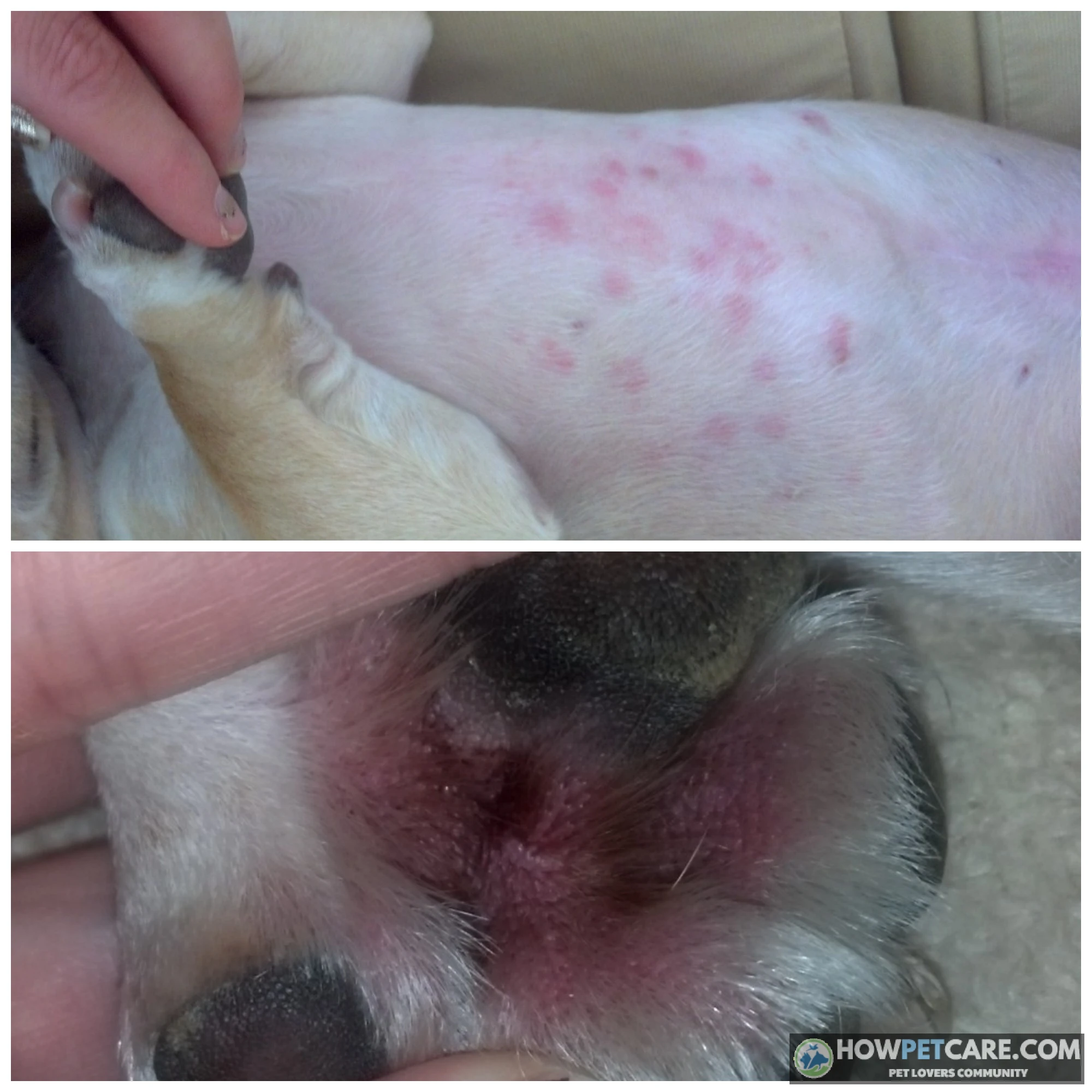

Allergy symptoms in dogs most often appear as skin itching, paw licking, ear inflammation, and redness. The four major patterns—food, environmental, flea, and contact—overlap, so compare body location, timing, and triggers with your veterinarian rather than diagnosing at home.
Most allergy symptoms in dogs show up on the skin, not in the nose or eyes. If your dog is scratching, licking its paws, shaking its head, or developing red, irritated skin, allergies are one possible explanation—but parasites, infections, and other causes can look very similar. This guide helps U.S. dog owners recognize likely allergy-related signs, compare the four major allergy patterns, perform safe home differential checks, understand emergency thresholds, and know what to expect when they visit a veterinarian.
Symptom recognition is not a veterinary diagnosis. Only a veterinarian can determine whether your dog has allergies and what is causing them.
Most Common Allergy Symptoms in Dogs and Early Warning Signs
Itching is the most common clinical symptom of allergies in dogs, expressed through scratching, paw licking, chewing, biting, rubbing, or rolling. Respiratory signs such as sneezing, a runny nose, or watery eyes can occur, but they are less dominant in dogs than in people.
Early signs to watch for daily
Subtle changes often appear before obvious skin damage. Watch for:
- Mild or occasional paw licking and chewing
- Gentle scratching with a hind leg, especially after meals or after time outdoors
- Head shaking or rubbing the face against furniture or carpet
- Occasional sneezing or clear nasal discharge
- Mild watering of the eyes
- Small areas of pink or reddened skin on the belly, groin, or armpits
Obvious skin and respiratory signs
As irritation progresses, signs become harder to miss:
- Intense, persistent pruritus with scratching that interrupts sleep or play
- Red, inflamed skin or rashes on the paws, belly, face, ears, or groin
- Hair loss in patches, especially around the eyes, ears, paws, or lower back
- Scabs, crusts, or moist, weeping sores
- Recurrent ear inflammation, head shaking, or ear odor (otitis externa may be the first or only sign of allergy in some dogs)
- Hives—raised, bumpy welts that may appear suddenly after exposure
- Sneezing, reverse sneezing, runny nose, or watery eyes
- Vomiting, soft stool, or diarrhea, which can accompany food allergy symptoms in dogs

Symptom locations by body part
Allergy signs often concentrate in specific areas:
- Paws: licking, chewing, redness between the toes, brown staining from saliva
- Belly and groin: redness, rash, or pimples in sparsely haired areas
- Ears: redness, debris, odor, head shaking, or repeated ear infections
- Face: rubbing the muzzle or eyes, redness around the lips or chin
- Tail base and lower back: intense scratching, scabs, and hair loss, often linked to flea allergy dermatitis
Safe boundaries matter here: noticing these patterns helps you describe what you see, but it does not establish a diagnosis.
How to Tell If Your Dog Has Allergies: Home Differential Checks
Before assuming allergies, check for common mimics such as fleas, mites, yeast, and bacterial infections. These steps are observation only; do not scrape skin, express anal glands, or attempt deep ear cleaning at home.
Checking for fleas and flea dirt at home
Flea allergy dermatitis can cause intense itching even when you do not see live fleas.
- Use a fine-toothed flea comb over the tail base, lower back, and groin for about ten minutes.
- Place any debris on damp white paper or a paper towel.
- Watch for small black specks that turn reddish-brown when moistened—this indicates flea dirt, which is digested blood.
- Check bedding and resting areas for similar debris.

Finding flea dirt strongly suggests fleas are involved, but it does not prove that fleas are the only cause of your dog’s symptoms.
Distinguishing allergic skin from infected skin
Allergic skin and infected skin can look similar, but some clues differ:
- Allergic skin: redness, itching, hair loss from self-trauma, and sometimes greasiness without a strong odor
- Yeast overgrowth: musty odor, greasy coat, brown ear debris, and darkened or thickened skin in folds
- Bacterial infection: pustules, honey-colored crusts, circular hair loss, or a bad odor
- Mites: thick ear debris, crusty elbows or hocks, or intense nighttime itching
If skin is raw, bleeding, painful, hot to the touch, or accompanied by fever, lethargy, or appetite loss, stop home checks and call a clinic.
Keeping a symptom log for your veterinarian
A symptom log gives your veterinarian useful information without asking you to diagnose. Record:
- Date and time of each noticeable itching episode
- Location on the body (paws, belly, ears, face, groin, tail base)
- What your dog was doing before the episode (outdoors, after eating, after grooming, on new bedding)
- Season and local weather conditions
- Foods, treats, chews, and flavored medications given
- Flea, tick, and heartworm prevention dates and products used
- Bathing or shampoo changes
- Photos of skin, ears, or paws taken in consistent lighting
Bring this log to your veterinary appointment. Patterns across two to four weeks are more useful than a single bad day.

Food, Environmental, Flea, and Contact Allergy Symptoms Compared
Dogs can develop four major allergy patterns. Their symptoms overlap, which is why a comparison table helps owners organize what they are seeing. Itching location and lesion appearance alone cannot reliably distinguish environmental allergy from food allergy, so this comparison should guide your conversation with a veterinarian, not replace testing.
Food allergy symptom pattern
Food allergies in dogs often develop after months or years of eating the same diet, though they can begin at any age. Commonly affected body locations include the ears, paws, groin, and around the anus. Key clues include recurrent ear infections, persistent paw licking, anal gland issues, and gastrointestinal signs such as vomiting or diarrhea. Food allergy symptoms are usually year-round and do not improve with changes in season.
Environmental and seasonal allergy symptom pattern
Environmental allergies, including canine atopic dermatitis, commonly begin between one and three years of age. Commonly affected areas include the face, belly, paws, ears, and armpits. Key clues include itchy paws, facial rubbing, seasonal flare-ups, and chronic ear disease. Timing often shows spring and fall spikes from outdoor pollens, but indoor triggers such as dust mites can cause year-round symptoms.
Flea allergy dermatitis symptom pattern
Flea allergy dermatitis develops after repeated flea bites and can begin at any age. Commonly affected locations include the tail base, lower back, thighs, and belly. Key clues include intense scratching, scabs, hair loss, and visible flea dirt. Symptoms are often worse in warm months but may persist indoors where fleas survive year-round.
Contact allergy symptom pattern
Contact allergy appears hours to days after a new exposure and affects only the skin that touched the trigger—belly, paws, chin, or groin. Key clues include localized redness, rash, swelling, and itching in contact zones. Timing is tied to specific products, plants, fabrics, or surfaces.
Four Allergy Patterns Symptom Comparison
| Allergy type | Typical onset | Commonly affected body locations | Key symptom clues | Typical timing pattern |
|---|---|---|---|---|
| Food allergy | Often after months or years on the same diet; can start at any age | Ears, paws, groin, around the anus; may include vomiting or diarrhea | Recurrent ear infections, paw licking, anal gland issues, GI upset | Year-round; does not improve with seasons |
| Environmental (atopic) | Commonly 1-3 years of age | Face, belly, paws, ears, armpits | Itchy paws, facial rubbing, seasonal flare-ups, chronic ear disease | Spring/fall spikes or year-round indoor triggers |
| Flea allergy dermatitis | After repeated flea bites; can develop at any age | Tail base, lower back, thighs, belly | Intense scratching, scabs, hair loss, visible flea dirt | Worse in warm months; may persist indoors |
| Contact allergy | Hours to days after a new exposure | Only where skin touched the trigger: belly, paws, chin, groin | Localized redness, rash, swelling, itching in contact zones | Tied to specific products, plants, fabrics, or surfaces |
Because allergic and non-allergic skin disease can look identical, veterinarians usually rule out parasites and infections before pursuing allergy testing.
Breed, Age, and Seasonal Risk Context for Canine Allergies
Breed predisposition, life stage, and geography influence allergy risk and how symptoms present. These are patterns, not rules, and individual dogs vary widely.
Breed and age risk factors
Some breeds are reported with higher allergy risk, including French Bulldogs, West Highland White Terriers, Labrador Retrievers, and Golden Retrievers. Canine atopic dermatitis often begins between one and three years of age, with a reported clinical onset range of six months to four years. Puppies under one year may show milder or localized itching, and food allergy is possible. Adult dogs in the one-to-six-year window represent a peak period for environmental allergy diagnosis. Senior dogs with new itching may have endocrine, immune, or other skin disease, although allergy remains possible.
Seasonal triggers and geographic variation
Seasonal allergy symptoms in dogs in spring often track with pollen cycles. In warm, humid regions, flea and yeast problems can dominate because of longer flea seasons and higher skin infection risk. Indoor allergens such as dust mites can matter more than pollen in some households, especially during winter months when homes are closed up. Record the age at first itch, body areas affected, and seasonal changes to share with your veterinarian.
Emergency Triage: Allergy Symptoms That Require Immediate Veterinary Care
Most allergy symptoms are uncomfortable but not life-threatening. A small number of signs indicate a possible severe allergic reaction or anaphylaxis and require immediate veterinary care. In dogs, anaphylactic shock affects the liver predominantly rather than the lungs, which can produce acute gastrointestinal symptoms.
Call-an-ambulance signs for dogs
Seek emergency veterinary care immediately if any of the following are present:
- Facial swelling around the muzzle, eyes, or ears
- Hives with any breathing change, wheezing, or noisy breathing
- Breathing difficulty, labored breathing, or blue or pale gums
- Collapse, extreme weakness, or inability to stand
- Sudden severe itching with restlessness or panic
- Seizure-like episode or loss of consciousness

Emergency Red-Flag Checklist
- Facial swelling around the muzzle, eyes, or ears
- Hives with any breathing change, wheezing, or noisy breathing
- Collapse, extreme weakness, or inability to stand
- Pale, blue, or brick-red gums
- Severe repeated vomiting or diarrhea, especially with lethargy
- Sudden severe itching with restlessness or panic
- Seizure-like episode or loss of consciousness
If any item is present: stop home checks, keep the dog calm, avoid giving human medications, and seek emergency veterinary care immediately.
Same-day versus next-day symptoms
Same-day or urgent care: widespread hives, facial swelling without breathing change, vomiting or diarrhea more than once, significant lethargy, or skin that is raw, bleeding, or painful.
Next-day or routine appointment: mild itching that continues for several days, occasional head shaking, mild paw licking, or a small rash without systemic illness.
Never give human antihistamines or other medications during an acute reaction without veterinary direction; some products contain ingredients that are toxic to dogs.
When to Take Your Dog to the Vet for Allergy Symptoms
Schedule a veterinary appointment when itching, skin redness, ear inflammation, or gastrointestinal signs persist for more than a few days, recur after temporary improvement, or interfere with your dog’s sleep, eating, or normal activity.
Routine visit triggers
- Persistent paw licking or chewing for more than one week
- Recurrent ear infections or head shaking
- Mild to moderate skin redness, rash, or hair loss
- Intermittent sneezing or watery eyes with skin signs
- Soft stool or occasional vomiting with skin itching
Urgent care triggers
- Facial or muzzle swelling
- Hives, especially if spreading
- Repeated vomiting or diarrhea
- Lethargy, weakness, or collapse
- Breathing changes or noisy breathing
- Skin that is bleeding, oozing, hot, or painful
Preparing for the allergy appointment
Bring your symptom log, photos taken in consistent lighting, a complete diet history including treats and table food, and records of flea, tick, and heartworm prevention. Ask the veterinarian about the diagnostic steps that make sense for your dog, what cytology or scraping may show, whether a parasite-control trial is appropriate, and whether an elimination diet should be considered.

The Veterinary Diagnostic Pathway for Dog Allergy Symptoms
Veterinarian-led diagnosis follows a sequence designed to rule out mimics before confirming allergies. Skin cytology and parasite control trials often come before allergy testing or diet trials.
Minimum database and cytology
A minimum dermatologic database usually includes a physical exam and skin cytology to check for bacteria, yeast, or inflammatory cells. Skin scrapings may be used to look for mites. Blood, saliva, and hair tests do not have diagnostic value for identifying food allergies in dogs.
Parasite control and allergen testing
A parasite-control trial for eight to twelve weeks using veterinarian-directed products is often completed even if no fleas are seen, because flea allergy dermatitis can exist without visible fleas. Allergen testing may be discussed after other causes are ruled out. Allergen-specific immunotherapy can improve clinical signs in roughly 50 to 100 percent of dogs, with typical itch reduction above 60 percent, though maximum response may take twelve to eighteen months.
Elimination diet step by step
If food allergy is suspected, a veterinary-supervised elimination diet typically lasts eight to twelve weeks. The dog receives one novel or hydrolyzed protein source with no treats, table food, or flavored medications. The old diet is reintroduced once; worsening signs support a food allergy. Improvement may appear earlier, but the full trial is needed before drawing conclusions.

Simplified Diagnostic Pathway Flowchart
- Book a veterinary visit and bring a 2-4 week symptom log, photos, diet history, and parasite prevention records.
- The veterinarian performs a physical exam and may run cytology or skin scrapings to rule out infection and mites.
- Complete a parasite-control trial for 8-12 weeks using veterinarian-directed products, even if no fleas are seen.
- If signs persist, start an 8-12 week elimination diet with one novel or hydrolyzed protein and no treats, table food, or flavored medications.
- Reintroduce the old diet once; worsening signs support a food allergy.
- If food allergy is ruled out, discuss environmental allergy testing, skin care, and long-term management with your veterinarian.
- Schedule follow-up to adjust treatment and document quality-of-life changes.
Antihistamines and other treatments fit after diagnosis, not before. Starting medication before a veterinary exam can mask signs and make diagnosis harder.
Chronic Itching: Behavioral and Quality-of-Life Effects in Dogs
Persistent pruritus affects more than skin. Dogs with chronic itching may experience sleep disruption, restlessness, irritability, and anxiety. Nighttime scratching can wake a dog repeatedly, and daytime itching may interrupt play or rest. Behavioral changes such as pacing, whining, or avoiding touch can be early allergy signals and are worth mentioning to your veterinarian.
These are quality-of-life observations, not behavioral diagnoses. Chronic discomfort can lower a dog’s tolerance for handling and increase stress in the household, which supports earlier veterinary attention rather than watchful waiting.
Sleep and mood impacts of pruritus
Chronic itching often worsens at night when the house is quiet, leading to broken sleep for both dog and owner. Restlessness, frequent position changes, and licking or chewing in bed are common. Mood changes may include clinginess, withdrawal, or irritability when the affected area is touched.

Behavior changes to mention to your vet
Tell your veterinarian if your dog:
- Scratches or licks during the night
- Avoids being petted on previously enjoyed areas
- Paces or whines when itching begins
- Shows less interest in walks, toys, or food
- Develops new fear or aggression around handling
Your Next Steps: Symptom Checklist and Safe Home Care
Use this section to decide what to do today and what to schedule for later.
Home allergy-symptom checklist
Review this list weekly and share it with your veterinarian:
- Is your dog scratching, licking, or chewing daily?
- Are paws, belly, ears, face, or groin red or irritated?
- Is there head shaking, ear odor, or ear debris?
- Are there scabs, crusts, hair loss, or moist sores?
- Is vomiting, diarrhea, or soft stool present with skin signs?
- Are symptoms worse after meals, outdoors, grooming, or new product use?
- Have symptoms lasted more than several days or returned after improvement?
Safe home care versus veterinary-guided treatment
Safe general care includes regular grooming, wiping paws after walks, using veterinarian-approved parasite prevention, and maintaining a stable diet. Avoid the following without veterinary guidance:
- Human antihistamines or allergy medications
- Over-the-counter skin creams or ointments
- Home remedies such as vinegar, essential oils, or baking soda on broken skin
- Changing diets or starting supplements as a treatment
Antihistamines should only be used if your veterinarian recommends them and confirms a safe dose for your dog’s weight and health history. Follow-up timing depends on the diagnosis; red flags such as facial swelling, breathing difficulty, collapse, or severe vomiting reset the urgency timeline and require immediate emergency care.
If you are unsure whether your dog’s symptoms need a vet, call the clinic and describe what you are seeing. A brief conversation can determine whether a same-day visit, a routine appointment, or continued home monitoring is appropriate.

| Allergy Type | Typical Onset Age/Time | Commonly Affected Body Locations | Key Symptom Clues | Typical Timing & Seasonal Patterns |
|---|---|---|---|---|
| Food allergy | Often after months or years on the same diet; can start at any age | Ears, paws, groin, around the anus; may include vomiting or diarrhea | Recurrent ear infections, paw licking, anal gland issues, GI upset | Year-round; does not improve with seasons |
| Environmental (atopic) | Commonly 1-3 years of age | Face, belly, paws, ears, armpits | Itchy paws, facial rubbing, seasonal flare-ups, chronic ear disease | Spring/fall spikes or year-round indoor triggers |
| Flea allergy dermatitis | After repeated flea bites; can develop at any age | Tail base, lower back, thighs, belly | Intense scratching, scabs, hair loss, visible flea dirt | Worse in warm months; may persist indoors |
| Contact allergy | Hours to days after a new exposure | Only where skin touched the trigger: belly, paws, chin, groin | Localized redness, rash, swelling, itching in contact zones | Tied to specific products, plants, fabrics, or surfaces |
FAQ
Can I give my dog over-the-counter antihistamines for allergy symptoms?
Only give antihistamines if your veterinarian recommends them and confirms a safe dose for your dog’s weight and health history. Some human products contain ingredients that are toxic to dogs. Never start medication without veterinary input.
Do dog allergy symptoms look like human allergy symptoms?
Dogs and people can both sneeze and have runny noses, but dogs more often show allergies through skin itching, paw licking, and ear inflammation. Respiratory signs can occur but are less dominant than in humans.
How long does a dog elimination diet take to show results?
A veterinary-supervised elimination diet typically lasts 8 to 12 weeks to accurately assess food allergy symptoms. Improvement may appear earlier, but the full trial is needed before drawing conclusions.