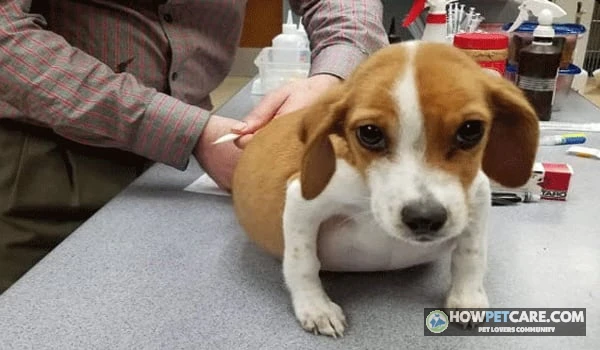

Go to an emergency vet now if your puppy shows any of these bloat signs:
- Swollen or hard, drum-tight belly
- Retching or gagging with little or nothing coming up
- Heavy drooling with restless pacing
- Pale or grayish gums
- Collapse, weakness, or inability to stand
- Fast, labored breathing
When in doubt, call an emergency clinic — a twisted stomach (GDV) can kill a puppy within hours.
Puppy Bloat Signs Ranked by Urgency: Go Now, Call Now, or Watch
Scan this before reading anything else. Stop at the first tier that matches your puppy right now.
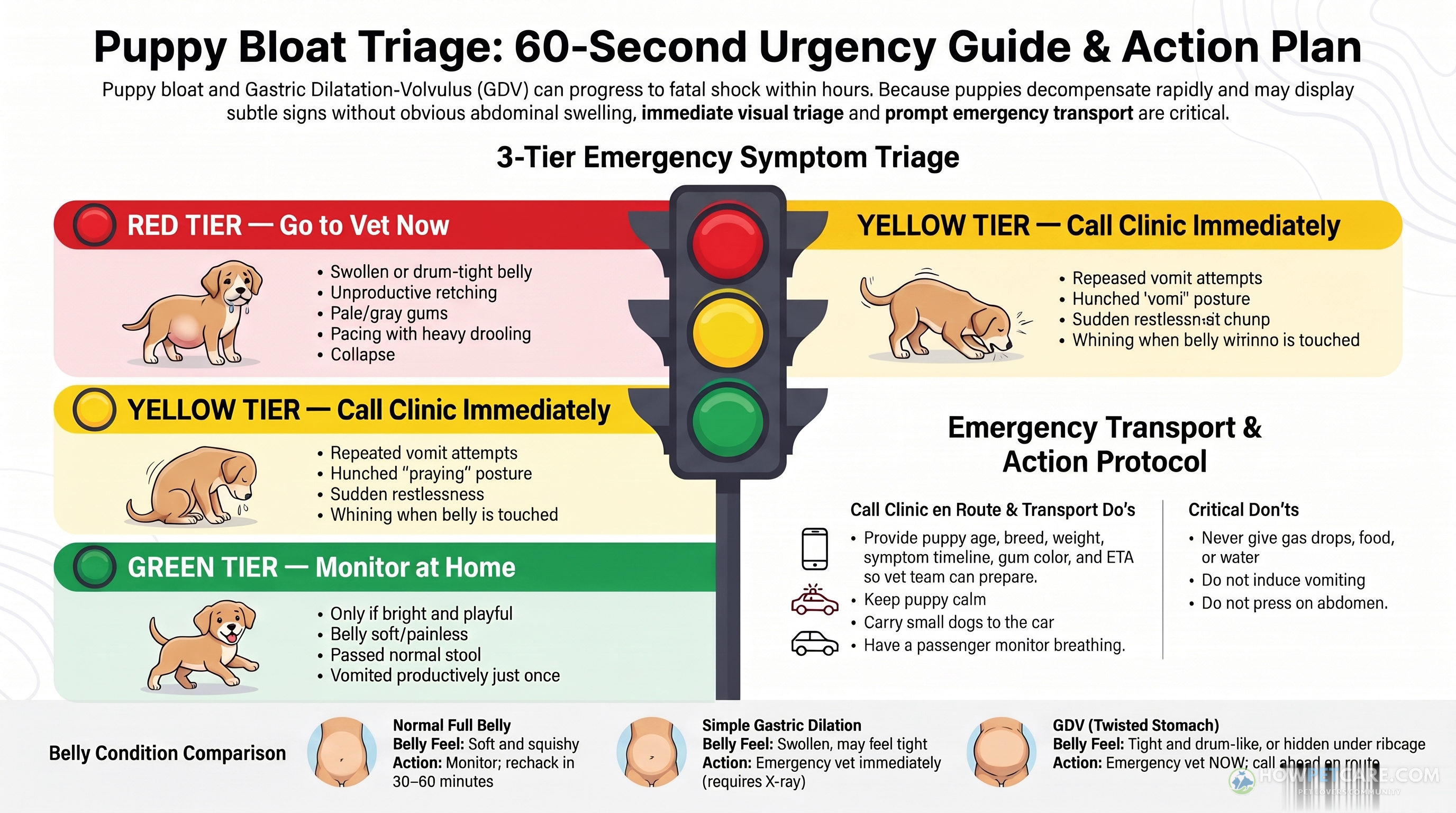
RED — go to an emergency vet now (call while you’re leaving)
- ☐ Belly looks swollen or feels hard and tight like a drum
- ☐ Retching or gagging with little or nothing coming up
- ☐ Collapse, extreme weakness, or can’t stand
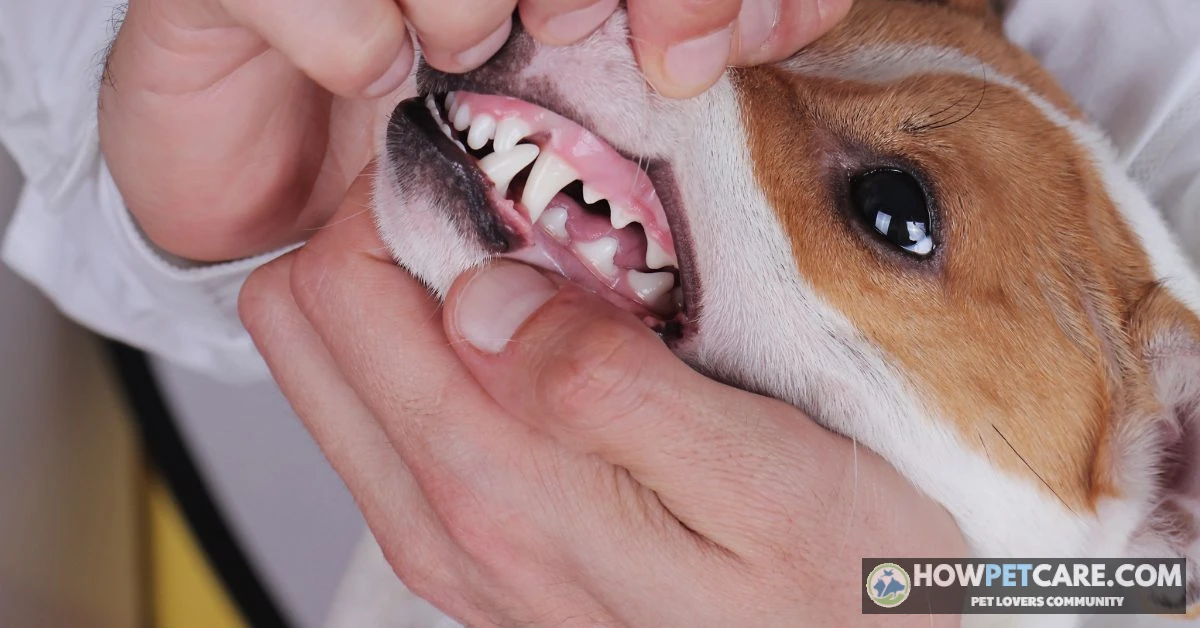
- ☐ Pale or grayish gums (lift the lip and check)
- ☐ Fast, labored breathing combined with distress
- ☐ Restless pacing plus heavy drooling, especially after a meal
YELLOW — call the emergency clinic right now, describe what you see
- ☐ Repeated attempts to vomit, even if a little comes up
- ☐ Hunched or "praying" posture; whines when the belly is touched
- ☐ Sudden restlessness, or refusing food/play right after eating
- ☐ Any red-tier sign that looks mild or just started — early GDV can look minor before it escalates
GREEN — monitor at home, only if ALL of these are true
- ☐ Bright, playful, willing to move and to lie down and rest
- ☐ Belly is soft and not painful to a gentle touch
- ☐ Vomited once productively, then settled back to normal
- ☐ Passing normal stool, no retching, no drooling
Recheck every 15–30 minutes. If any Green answer changes, move to Yellow.
Tie-breaker rule: Stuck between Yellow and Green? Treat it as Yellow. A call to an emergency clinic costs almost nothing; a missed GDV can cost a puppy’s life. No home remedy fixes a twisted stomach.
Go-now signs (Tier 1)
A distended or drum-tight abdomen, unproductive retching, excessive drooling, restlessness and pacing, rapid or labored breathing, pale gums, weakness or collapse are classic red flags for gastric dilatation-volvulus (GDV). In this condition, the stomach twists, cutting off blood flow, and can kill a puppy within hours. If you see any one of these signs, don’t wait. Call the nearest 24-hour emergency clinic while you load the car.
Early warning signs to call about immediately (Tier 2)
Early signs of bloat in puppies can be subtle: sudden restlessness after a meal, repeated attempts to vomit, a hunched or "praying" stance, whining when the belly is touched, or refusing food or play. A hunched stance and belly pain can also overlap with pancreatitis in dogs, so describe exactly what you see. They often appear minutes to an hour after eating and can escalate quickly. Puppies decompensate faster than adult dogs, so call the vet now if you see any combination of these signs.
When home monitoring is reasonable (Tier 3)
Home monitoring is appropriate only if your puppy is bright and playful, passes normal stool, vomits productively once and then settles, has a soft belly that isn’t painful, and isn’t retching or drooling. Even then, recheck every 15 to 30 minutes. If anything changes — the belly tightens, retching starts, or gums turn pale — move to Yellow immediately.
What to Do in the Next 10 Minutes: First Aid and Safe Transport to the Emergency Vet
What to say when you call the emergency clinic
Call the nearest 24-hour emergency clinic first. Tell them you suspect bloat or GDV so they can prepare, and ask whether to come straight in. Have the following ready: your puppy’s age, breed and weight; when and what it last ate and drank; when the signs started; whether it’s retching or drooling; its belly appearance, breathing and gum color; any known conditions or medications; and your ETA.
Copy this, fill in the brackets, and read it to the receptionist. It puts the information the triage team needs first.
"Hi — I have a [age]-month-old [breed], about [weight] pounds. I think it may have bloat. Its belly looks [swollen and hard / swollen but soft / normal], and it is [retching without producing vomit / drooling heavily / restless and pacing / collapsed]. This started about [X minutes/hours] ago, roughly ☑ after it last ate. Its gums look [pink / pale / I haven’t checked], and breathing is [normal / fast / labored]. I’m ☑ minutes away — should I come straight in?"
Then ask this one question before hanging up:
"Is there anything you want me to do — or not do — on the drive?"
Don’t know an answer? Say "I don’t know" instead of guessing. A wrong number is worse than a missing one. If someone else is with you, have them make the call while you drive.
Do’s and don’ts during the drive
Do: Keep your puppy calm and as still as possible. If you can, have someone else drive so a person can watch the puppy. Bring any toxin packaging or a photo of the vomit if relevant — including whether it resembles a dog throwing up yellow — and carry a small puppy rather than letting it walk or run.
Don’t: Give food, water, home remedies, gas-relief drops, or human medication. Don’t induce vomiting, press on or massage the belly, try to "walk it off," or wait to see if it resolves overnight. Needle or tube decompression is a veterinary procedure; don’t try to relieve the stomach at home. Keep your puppy warm and handle it gently on the way. A puppy in distress can deteriorate quickly in transit.
Can Puppies Get Bloat? How GDV Looks in Puppies, Including Without a Swollen Belly
Does bloat in puppies look different from bloat in adult dogs?
Yes. Puppies can get gastric dilation and GDV, though both are more common in adult and older large dogs. Don’t assume age protects a puppy. Puppies have smaller bodies and can decompensate faster; they may show vague signs such as lethargy, crying, or refusing food rather than the classic distended abdomen. Bloat in puppies often follows gulping a large meal during excitement or play. Veterinary literature notes that GDV incidence in puppies under six months isn’t well quantified, but the Dog Aging Project and other cohort studies confirm that young dogs aren’t immune.
Can a puppy have GDV without a visibly swollen belly?
GDV can occur without an obviously swollen belly because the stomach sits under the ribcage in deep-chested dogs. Restlessness, drooling, unproductive retching, and rapid breathing are enough to warrant going in, even if the belly looks normal. This hidden distension is an important distinction: a lack of visible swelling doesn’t rule out a twisted stomach. Bloat sits within the broader world of dog digestive problems, but it is the version that cannot wait.
Which breeds and risk factors raise a puppy’s risk?
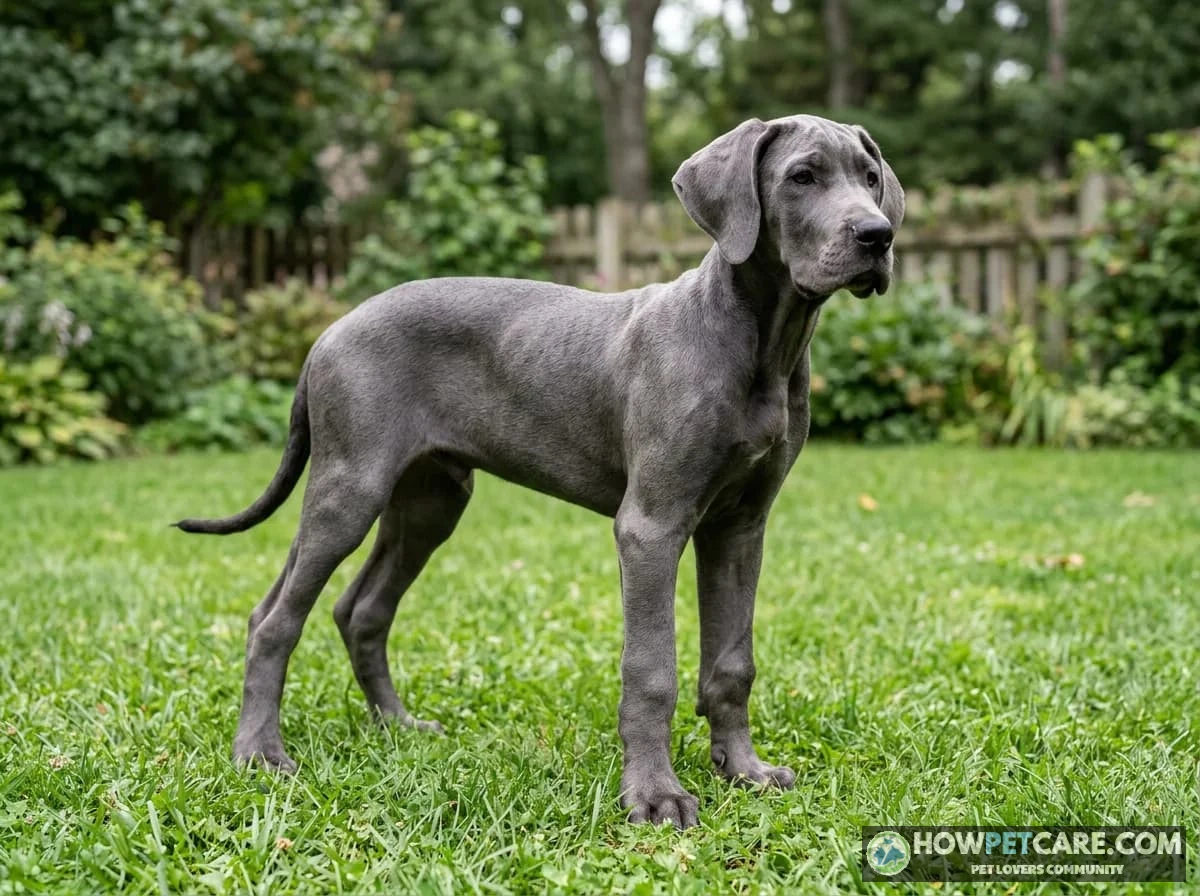
Deep-chested large and giant breeds, such as Great Danes, Standard Poodles, Weimaraners, Saint Bernards, Irish Setters, and Doberman Pinschers, are at higher risk. Smaller and mixed-breed puppies can also be affected. Risk factors include a deep, narrow chest, a first-degree relative that had GDV, eating very fast, one large meal per day, exercise right around meals, and stress. The link between temperament and GDV is inconsistent. Some studies suggest anxious dogs may be at higher risk, but the evidence is weak.
Puppy Bloated Stomach After Eating: Bloat vs Potbelly, Worms, and a Full Belly
Normal puppy potbelly vs a belly that is truly swollen
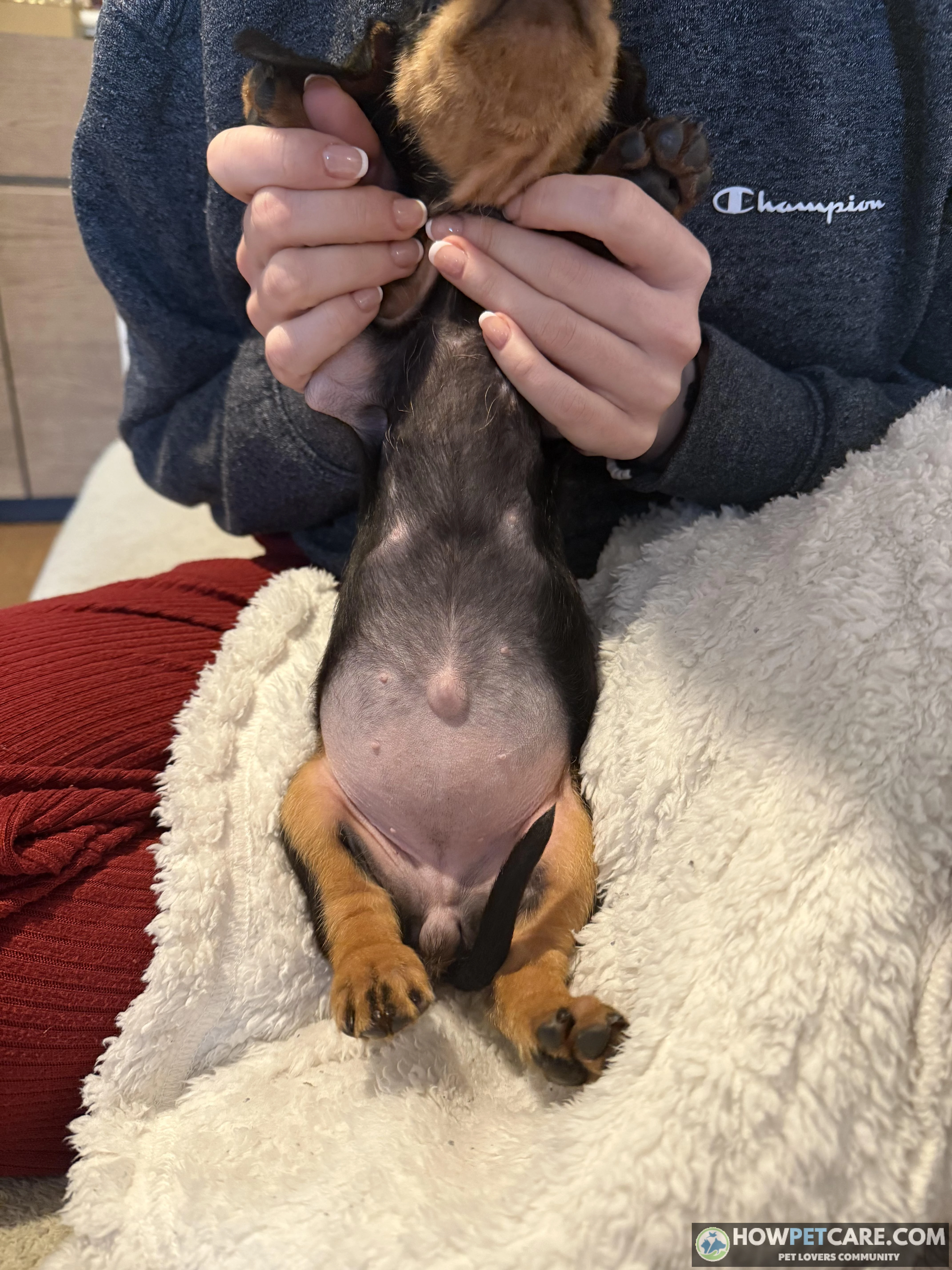
A round belly in a bright, playful puppy that settles within a short time is usually benign. A tight belly with distress, retching, or drooling is not. Look at both how the belly feels and how your puppy behaves.
Worms vs bloat: how the timeline differs
A worm-related potbelly develops gradually over days to weeks, often alongside a dull coat, poor growth, diarrhea, or blood in the stool. It doesn’t come with sudden distress. It still warrants a vet visit and a deworming plan, but isn’t a same-minute emergency by itself.
The one-line rule: A round belly on a bright, playful puppy that settles quickly is usually benign. A tight belly plus distress, retching, or drooling is not. And "simple" dilation and GDV look identical from your kitchen floor.
| Condition | How fast it starts | Belly feel and look | Behavior and retching | Breathing and gum color | What to do |
|---|---|---|---|---|---|
| Normal full belly / overeating | Within minutes of a big meal | Round but soft and squishy | Bright, playful or sleepy; no retching, or one productive vomit then settles | Normal pink gums, normal breathing | Monitor; recheck in 30–60 minutes |
| Worm-related potbelly | Gradual — builds over days to weeks | Persistently round, not tight or painful | Usually normal energy; may show poor growth, dull coat, or diarrhea | Normal | Book a vet visit for a fecal test and deworming plan — not a same-minute emergency by itself |
| Simple gastric dilation (gas/food, stomach not twisted) | Sudden — minutes to about an hour | Swollen, may feel tight | Uncomfortable, restless; retching is possible | May still look normal early | Treat as an emergency. It can’t be reliably told apart from GDV at home — an X-ray is needed |
| GDV (twisted stomach) | Sudden and escalates fast | Tight and drum-like — or hidden under the ribcage with no obvious swelling | Unproductive retching, drooling, pacing, then weakness or collapse | Fast or labored breathing; pale gums | Emergency vet now. Call ahead while leaving |
How Fast Bloat Progresses and Why Minutes Matter
Stage 1 to Stage 4: what each phase looks like at home
Progression from early dilation to full volvulus and shock can take hours or move much faster. You can’t tell at home whether the stomach has rotated, so base your decision on the signs, not the clock.
What happens inside the body as time passes
The stomach fills with gas and may rotate (volvulus), trapping blood flow and compressing large veins and the diaphragm. This can lead to shock and tissue damage. Outcomes are consistently better when treatment starts before shock and stomach-wall damage set in; veterinary studies report markedly higher survival in dogs treated early. The timeline varies, though: some puppies skip stages or progress in well under an hour.
| Stage | Typical signs at home | What’s happening in the body | Urgency and action |
|---|---|---|---|
| Stage 1 — first minutes to ~30 min | Restlessness, drooling, lip-licking, looking at the belly, discomfort after a meal | Stomach is filling with gas and stretching | Call the emergency clinic now; get ready to leave |
| Stage 2 — roughly 30–120 min | Unproductive retching, belly starting to tighten, pacing, can’t settle | Stomach is distended and may be rotating (volvulus) | Red tier — you should already be driving |
| Stage 3 — often within a few hours, but can be much faster | Rapid breathing, pale gums, weakness, anxiety | Rotation traps blood in the stomach; pressure on major veins and the diaphragm begins starving the heart and tissues | Critical — deterioration accelerates from here |
| Stage 4 | Collapse, can’t stand, grayish or white gums, unresponsive | Shock; the stomach wall and spleen can start dying | Life-threatening; survival now depends on immediate surgery |
Why this matters: Decide based on the signs in front of you, not on how long they’ve been going on.
What the Emergency Vet Will Do and What Bloat Treatment Costs
Step-by-step: what happens when you arrive
- Triage and stabilization — immediate assessment, IV fluids, pain control, shock treatment.
- X-rays — usually 2–3 views to confirm dilation vs. rotation.
- Decompression — release of trapped gas using an orogastric tube or needle.
- Emergency surgery (if GDV confirmed) — untwist and reposition the stomach, remove any dead tissue, and tack the stomach to the body wall (gastropexy).
- Hospitalization — 1–3 days typical; heart-rhythm monitoring and continued fluids.
Itemized cost ranges and ways to manage the bill
Costs vary widely by region and clinic. The ranges below are typical US estimates drawn from pet-insurance claims data and veterinary cost guides published in 2023–2024. Use them as ballpark figures, not quotes. Full GDV treatment is commonly reported in the $2,000–$7,500 range.
| Treatment step | What it involves | Estimated cost range* | What changes the price |
|---|---|---|---|
| Emergency exam & triage | Immediate assessment, vitals, gum check | ~$100–$250 | Night/weekend hours, region, clinic type |
| Stabilization | IV catheter, fluids, pain control, shock treatment | ~$200–$600 | How compromised the puppy is on arrival |
| X-rays | Usually 2–3 views to confirm dilation vs. rotation | ~$150–$400 | Number of views, whether sedation is needed |
| Decompression | Orogastric tube or needle release of trapped gas | ~$150–$400 | Sometimes bundled into stabilization or surgery |
| GDV surgery + gastropexy | Untwist and reposition the stomach, remove any dead tissue, tack stomach to body wall | ~$1,500–$5,000+ | Dead tissue removal (splenectomy), complications, surgeon and facility |
| Hospitalization | 1–3 days typical; heart-rhythm monitoring, continued fluids | ~$500–$1,500 per day | Length of stay, ICU-level care, cardiac issues |
*Ranges are typical US estimates drawn from pet-insurance claims data and veterinary cost guides published in 2023–2024. They vary widely by region and clinic — treat them as ballpark figures, not quotes.
Money moves that don’t delay care: Ask for a written estimate once your puppy is stable, ask about payment plans or financing like CareCredit, and check your pet insurance’s emergency coverage. Make the call first; clinics discuss payment after they start saving the dog.
How to Prevent Bloat in Large-Breed Puppies: Feeding, Exercise, and Gastropexy Timing
Feeding and exercise habits that help
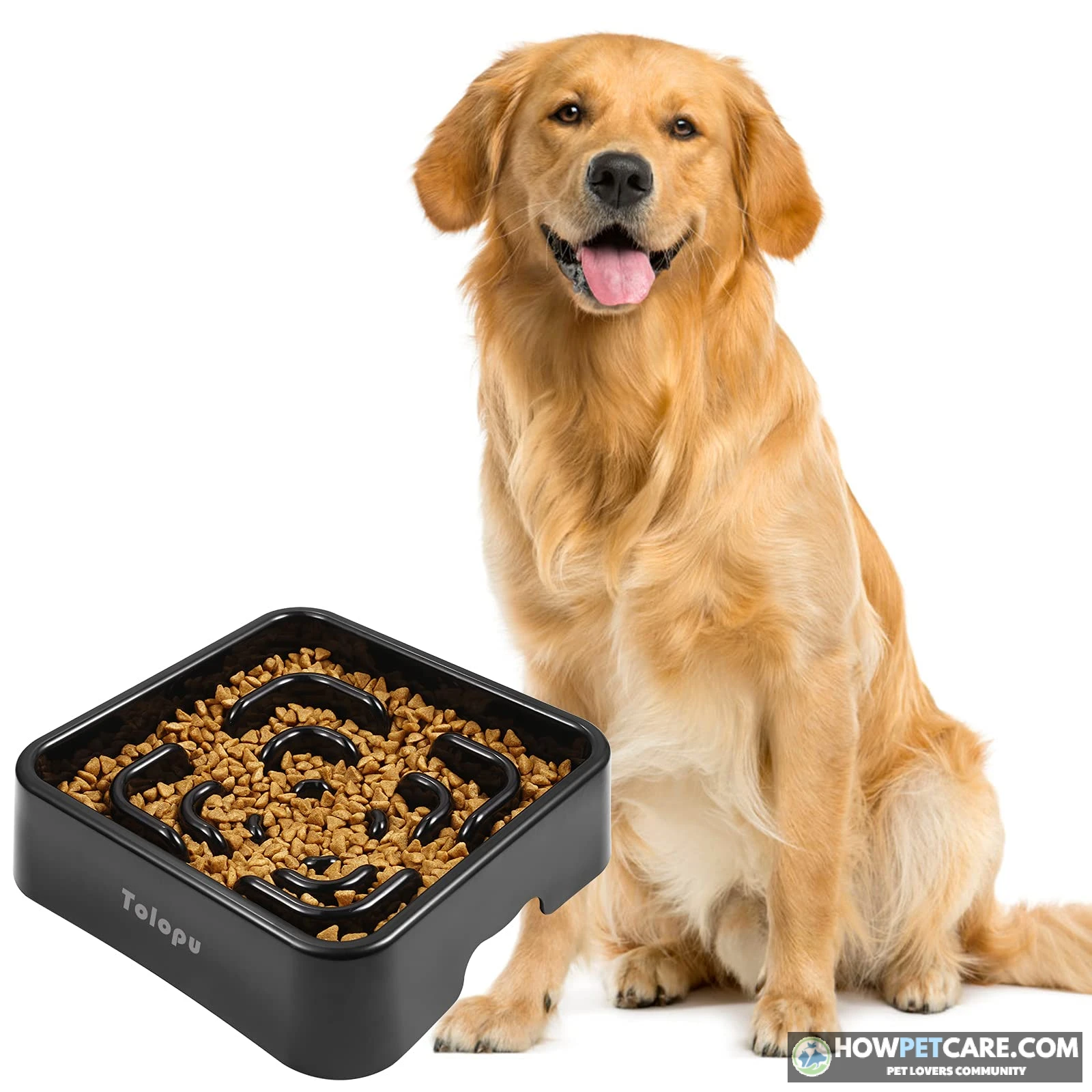
Split daily food into multiple smaller meals, use a slow feeder bowl for fast eaters, and discourage gulping. Evidence for any single feeding change, including kibble size, is limited, so consider these sensible ways to reduce risk rather than guarantees. Keep mealtimes calm and avoid vigorous exercise right before and after eating. The evidence is moderate and not absolute.
Raised bowls and other prevention myths
Older advice to elevate bowls isn’t supported, and some studies associated raised bowls with higher GDV risk in large breeds. Don’t raise bowls specifically for bloat prevention. Other debunked or weak claims include the idea that dry kibble alone causes bloat or that a single large meal is a direct cause. The Dog Aging Project (2026) challenged several traditional risk factors. Temperament associations are inconsistent.
Prophylactic gastropexy at spay/neuter: timing, cost factors, and recovery
Prophylactic gastropexy surgically tacks the stomach to the body wall to prevent twisting. It doesn’t prevent gas dilation, but it greatly reduces the risk of volvulus. For high-risk breeds, discuss having it done at spay or neuter; both laparoscopic and open options exist. There’s no fixed optimal age, so decide with your vet based on breed, family history, and growth stage. Recovery typically involves activity restriction, incision care, and a gradual return to normal feeding according to the surgeon’s instructions. Exact timelines depend on the technique and the surgeon’s guidance.
Your Puppy Bloat Action Plan: Save This Checklist Before You Need It
Recap the decision rule: A tight belly or unproductive retching, drooling, restlessness, or fast breathing means emergency vet now. If you’re unsure, call.
Prepare now: Save the number and address of the nearest 24-hour emergency clinic, plan a route, and keep a card with your puppy’s weight, medications, and regular vet’s contact information.
Today’s action items: Review the feeding schedule and bowl setup, ask your regular vet about gastropexy at the next visit if your puppy’s breed is high risk, and check your pet insurance or emergency fund.
For broader vomiting, diarrhea, and stool triage, see our pillar article on dog digestive problems. This guide focuses on bloat; sibling articles cover yellow vomit, pancreatitis, and bloody stool.
FAQ
Can I give my puppy gas drops like simethicone if I think it is bloated?
No. Gas drops do not fix a twisted stomach and can waste time you need to get to an emergency vet. If your puppy has a swollen belly with retching, drooling, or restlessness, go to the clinic instead.
How soon after eating can a puppy bloat?
Bloat often appears within a few hours of a meal, but it can happen at other times, including after drinking or exercise. Do not rule it out just because it has been a while since your puppy ate.
Can small-breed puppies get bloat?
Yes, but GDV is much more common in large, deep-chested breeds. A small puppy with a tight belly, retching, or distress still needs a prompt vet call.
Can a puppy recover from bloat without surgery?
A simple gas or food dilation without twisting may resolve with veterinary decompression and supportive care. GDV, where the stomach has rotated, needs emergency surgery, and only a vet can tell the difference with X-rays.
Will my puppy burp or pass gas if it has bloat?
Not reliably. A puppy with GDV often cannot burp or vomit effectively, and passing some gas does not rule out a twisted stomach. Go by the overall signs, not by one symptom.