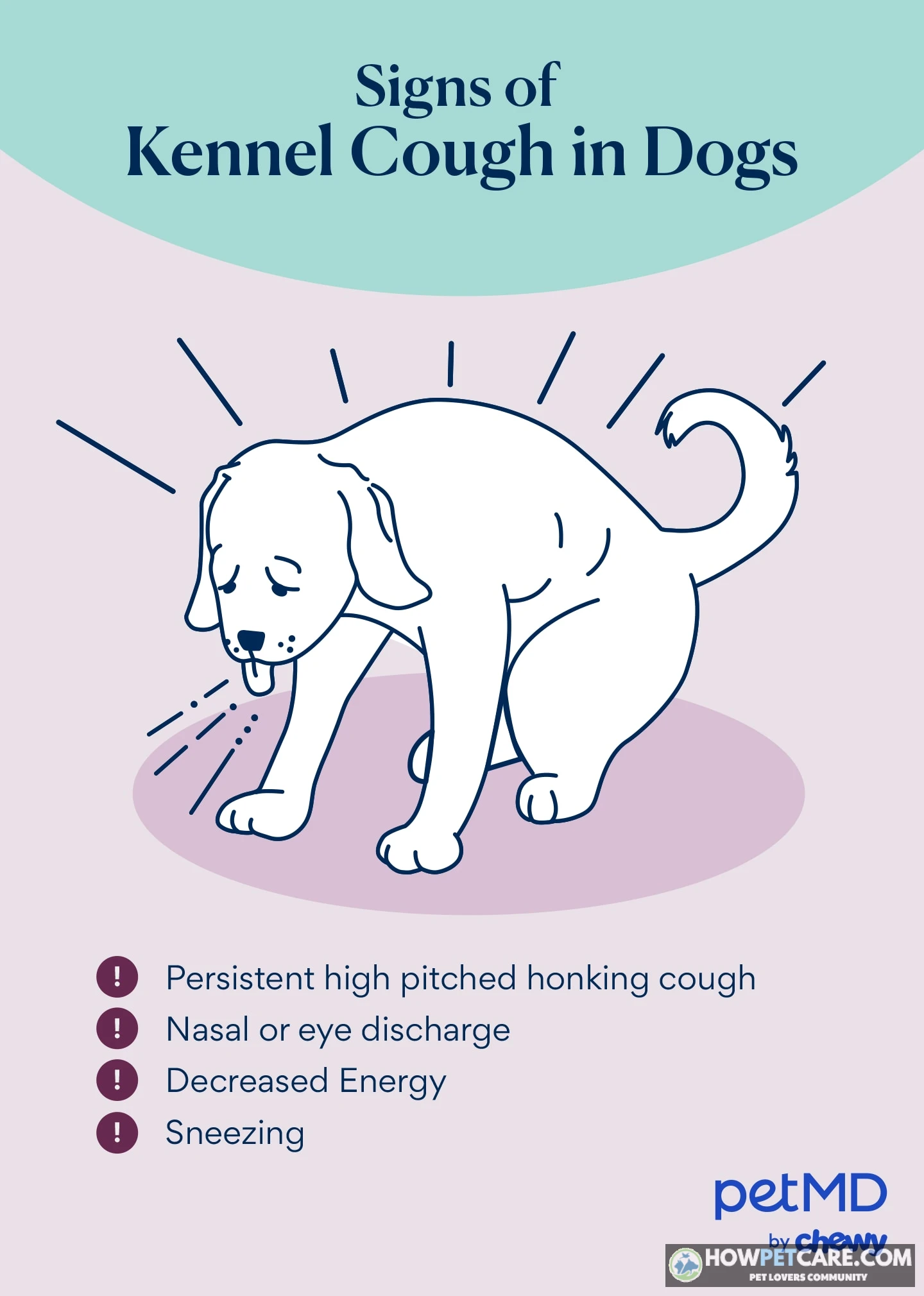

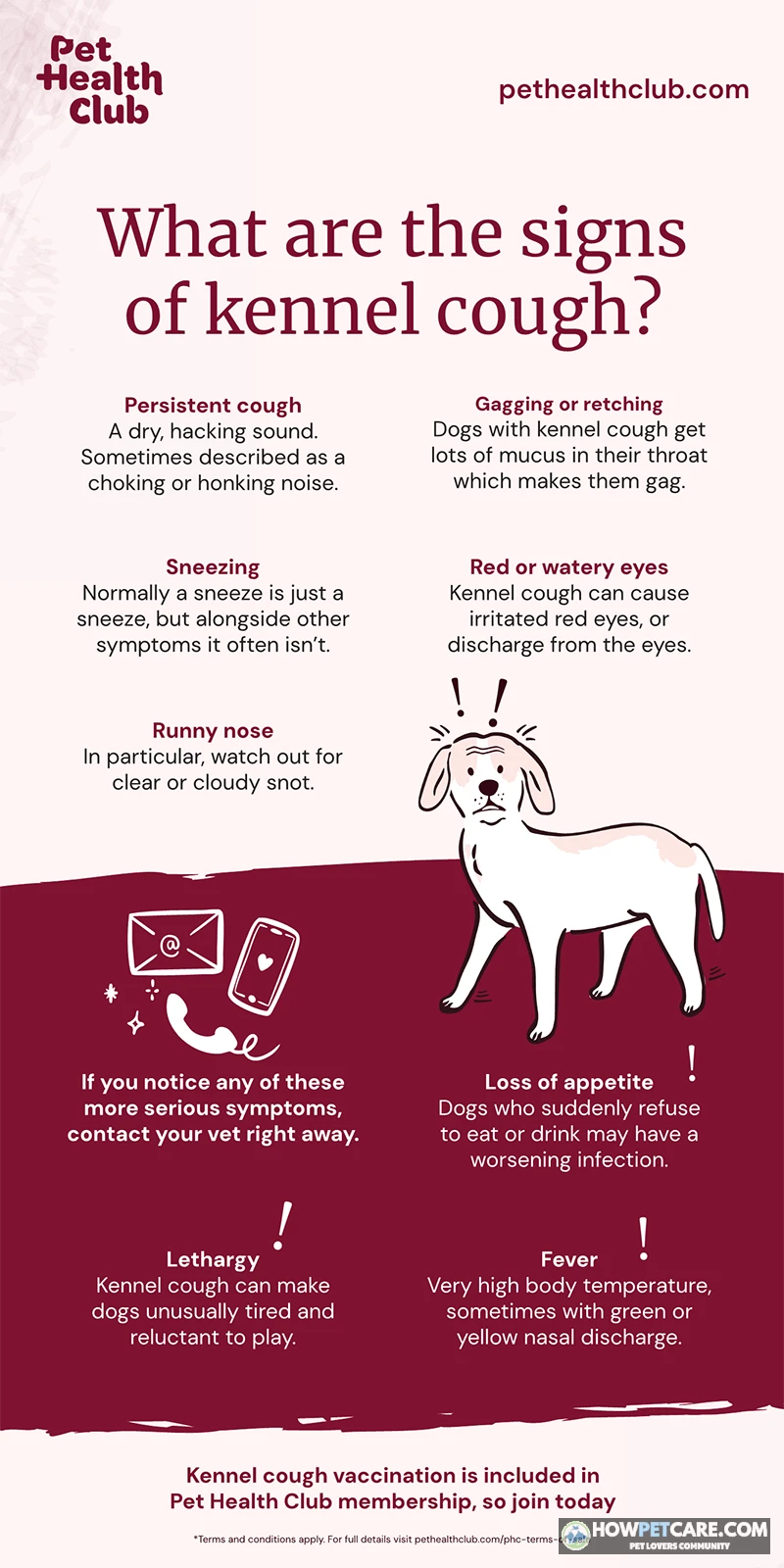
The classic kennel cough symptoms are:
- A sudden dry, honking "goose-honk" cough, often ending in a gag
- Retching that may produce a little white foamy phlegm
- Mild sneezing and clear nasal discharge
- Slight lethargy, but a normal appetite and energy between fits
- Cough triggered by collar pressure, excitement, or pulling on a leash
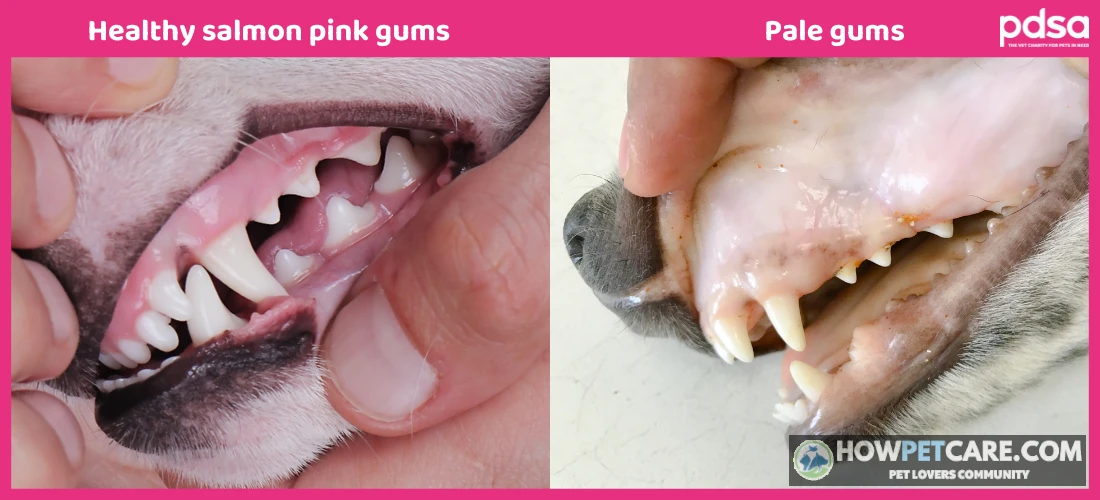
See a vet urgently if your dog has labored breathing, blue or pale gums, or stops eating.
What Kennel Cough Sounds and Looks Like: The Dry, Honking Cough
The hallmark sign is a sudden, dry, hacking "goose honk" cough that often ends with a gag or a splash of white foamy phlegm — while the dog still acts bright, eats, and wants to play between fits. The cough sounds dry, harsh, and repetitive, like a goose honk or a seal bark, and it gets louder when the dog pulls on a leash, gets excited, or feels pressure on the throat. You may see the dog extend its neck, make a retching motion, and then spit up a little foam. Most dogs keep a normal appetite and energy level despite the noisy episodes.
The sound: how to describe it and compare it with your dog’s cough
Listen for a dry, non‑productive honk that repeats in short bursts, often followed by a gag. It is distinct from a wet, rattling cough or the snorting inhalations of reverse sneezing. If you can record a 20‑second clip on your phone, you’ll have a ready reference for the vet.
The look: what a coughing fit looks like
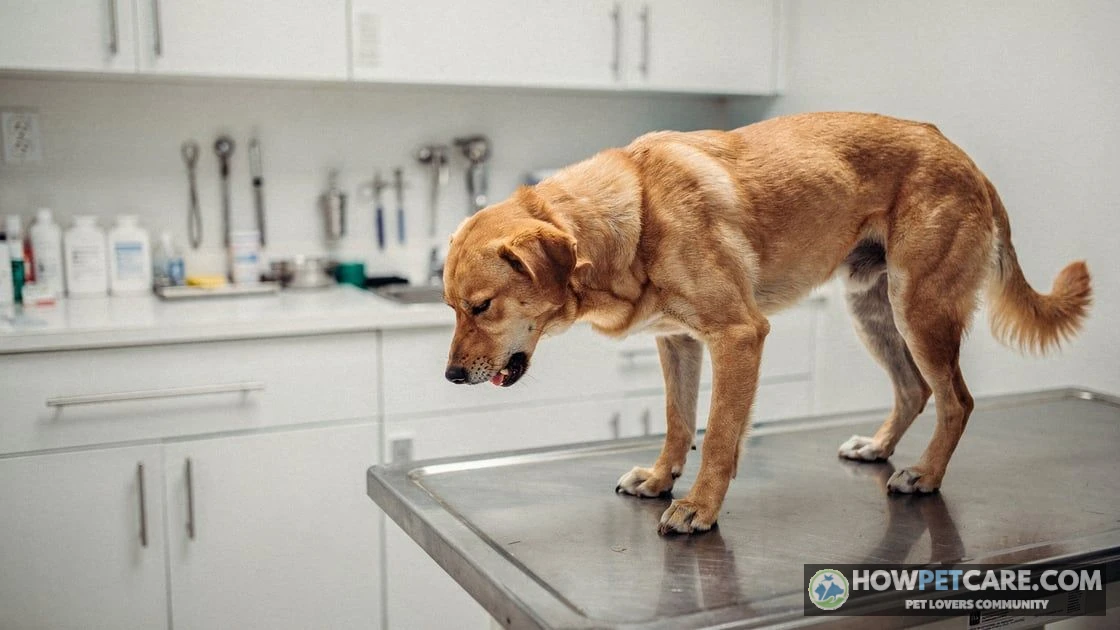
During a fit the dog stands with elbows slightly out, neck stretched, and makes a forceful hacking motion. The episode usually lasts a few seconds and ends with a gag or a small puddle of white foam. Between fits the dog typically resumes normal behavior.
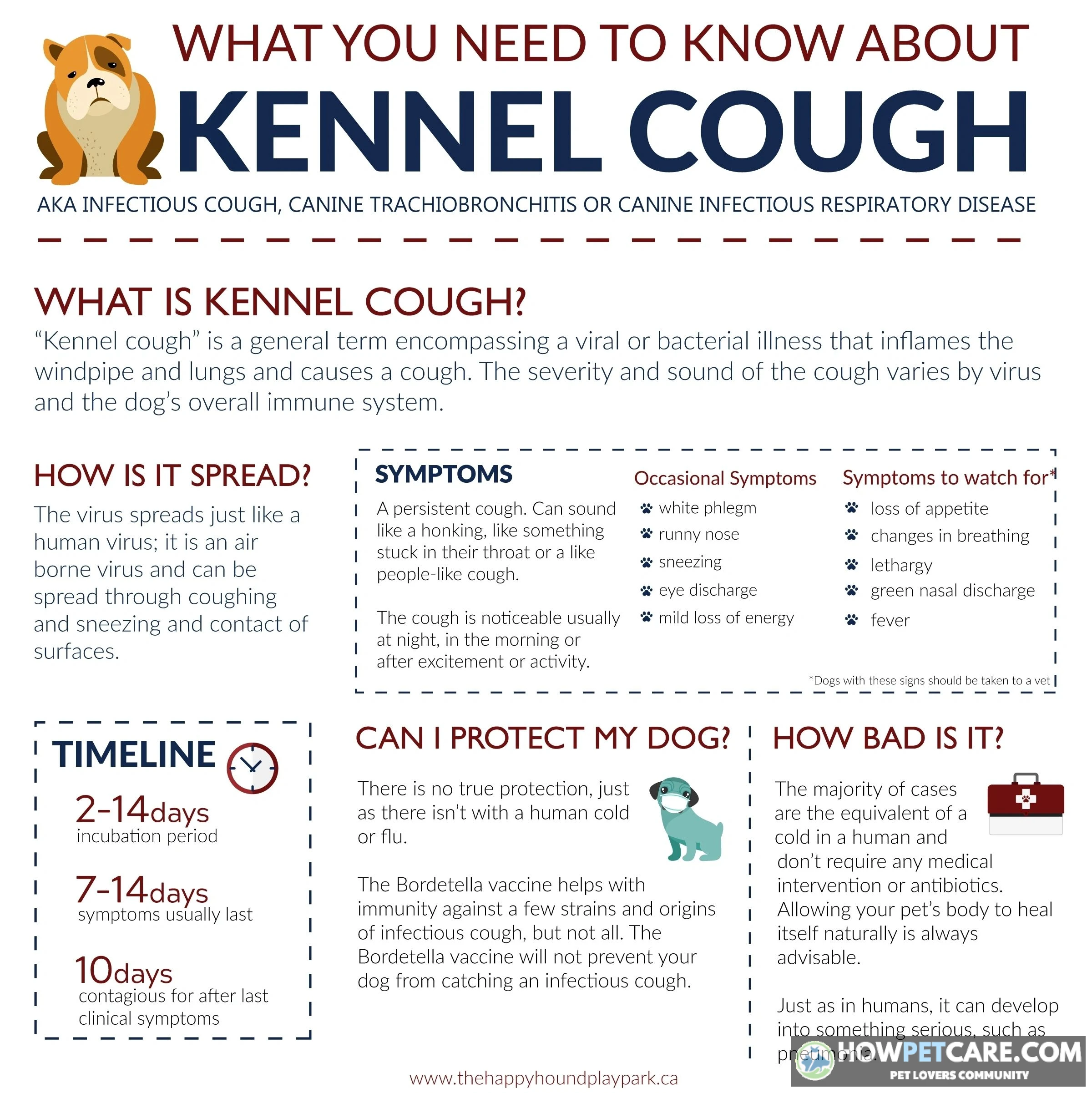
Quick symptom checklist
- Dry, honking cough (goose‑honk sound)
- Gagging or retching after coughing, sometimes producing white foam
- Mild clear nasal discharge or sneezing
- Slight lethargy, but still interested in food and play
- Low‑grade fever or none at all
- Normal appetite and water intake
These signs together point to canine infectious tracheobronchitis (CIRDC), most often driven by Bordetella bronchiseptica together with canine parainfluenza virus (CPIV) and canine adenovirus type 2 (CAV‑2).
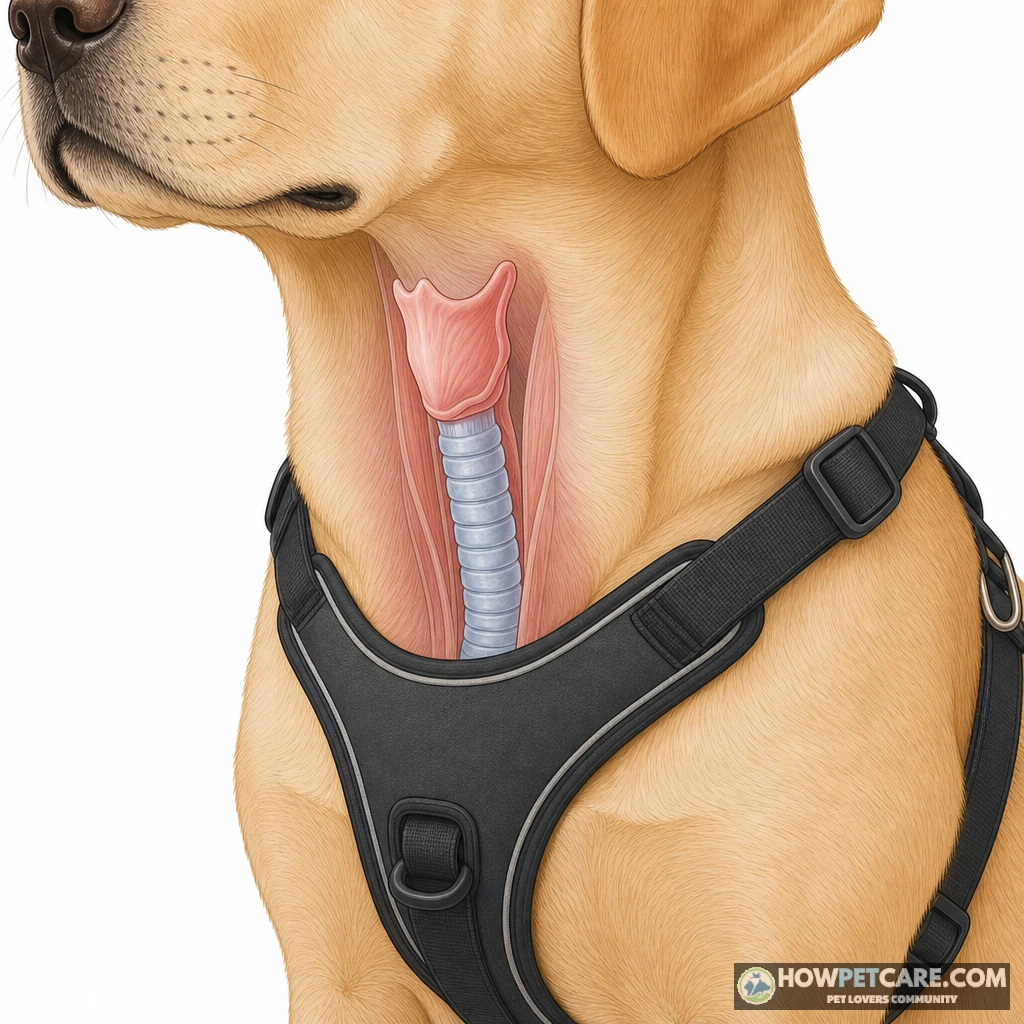
The cough is triggered or worsened by pressure on the trachea — collars, excitement, or pulling on a leash — which is why a harness is recommended during recovery.
How Kennel Cough Starts: Early Signs, Timing After Boarding or Daycare, and Puppy Symptoms
The incubation period is roughly 2–14 days after exposure, so symptoms often appear after a stay at a boarding kennel, daycare, groomer, dog park, or shelter. Early signs include an occasional dry cough, sneezing, clear nasal discharge, and mild lethargy — the same vague pattern seen in other common dog illnesses — before the cough becomes frequent. Transmission is airborne via droplets and also through shared bowls, toys, and surfaces.
Early signs in adult dogs
- Occasional dry hack that may be mistaken for a throat clear
- Clear runny nose and sneezing
- Slight drop in energy, but still eating
Kennel cough symptoms in puppies
Puppies show the same honking cough plus lower energy, poor nursing or eating, and noticeably faster breathing. Because their immune systems are immature, they can deteriorate quickly, and vague signs like lethargy and poor appetite overlap with parvo in dogs; a puppy that stops nursing or seems unusually quiet should see a vet the same day.
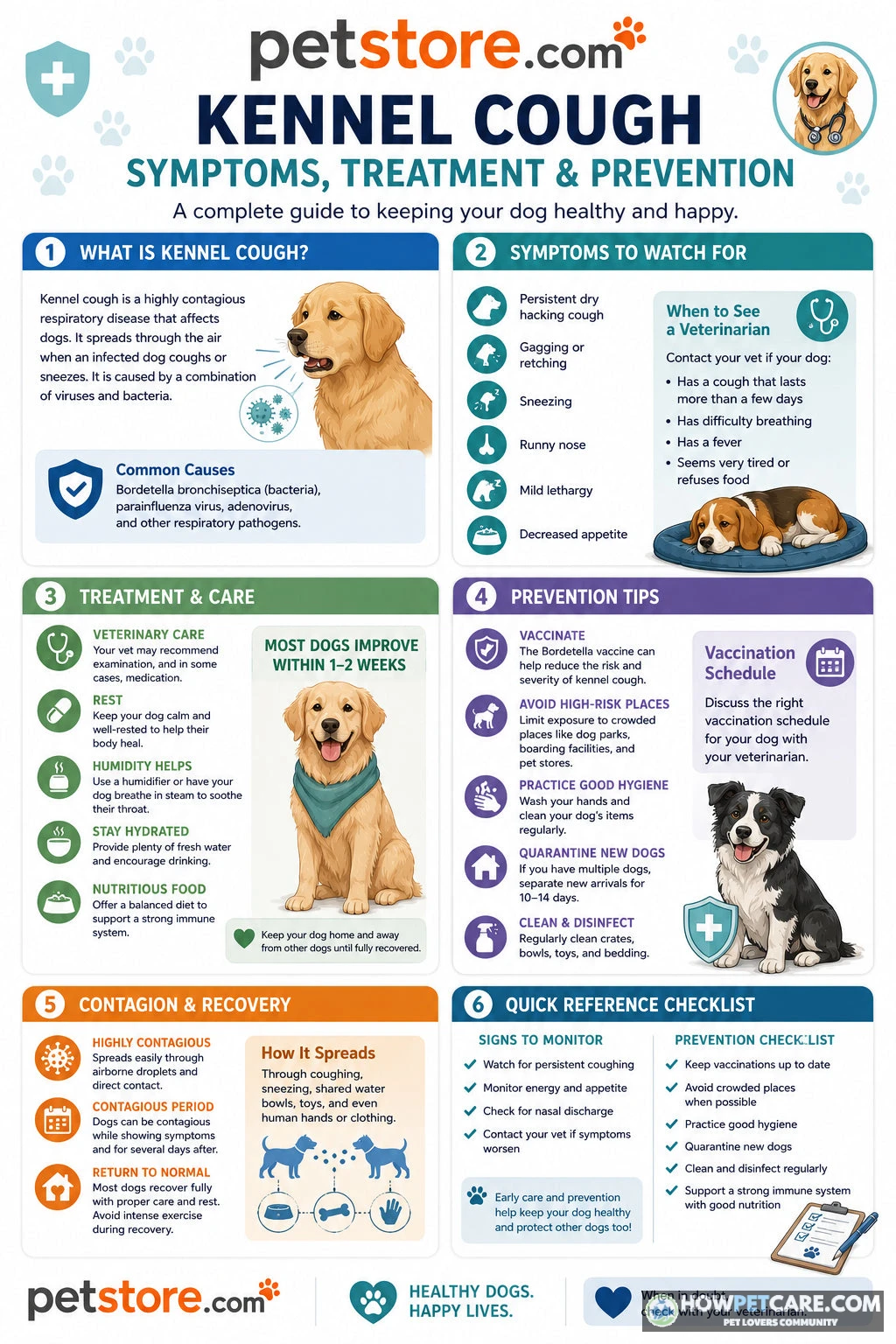
Symptoms after boarding or daycare: the timing clue
If the cough starts within two weeks of a known group exposure, the probability of kennel cough rises sharply. Even vaccinated dogs can catch it because the Bordetella vaccine does not cover every pathogen in the CIRDC complex; breakthrough cases are usually milder.
Intranasal and oral Bordetella vaccines start protecting in about 3–4 days; injectable versions take a bit longer. Boosters are often recommended every 6 months for dogs that frequent daycare or boarding.
Is It Kennel Cough or Something Else? Look-Alike Conditions Compared
No single symptom is pathognomonic, so a side‑by‑side comparison helps you decide whether to monitor at home or head to the clinic — coughing in dogs can point to half a dozen different problems. The table below is a triage aid, not a diagnosis — only a veterinary exam (and sometimes chest X‑ray or PCR panel) can confirm the cause.
Side-by-side comparison table
| Condition | Cough sound/type | Typical onset and who it affects | Other signs | Fever/contagious? | Urgency level |
|---|---|---|---|---|---|
| Kennel cough (CIRDC) | Sudden dry, harsh "goose honk," often ends in gagging or white foam | 2–14 days after boarding, daycare, grooming, or dog park; any age | Bright and playful between fits, mild nasal discharge, sneezing, normal appetite | Sometimes mild; yes, highly contagious | Monitor at home if dog eats, plays, and breathes normally |
| Collapsing trachea | Chronic dry honk, very similar sound | Gradual onset, months‑long history; middle‑aged or older small breeds (Yorkies, Pomeranians, Chihuahuas) | Worse with excitement, leash pressure, or heat; dog otherwise well; no exposure history needed | No; not contagious | Non‑emergency, but needs vet workup |
| Heart disease | Soft, wet, moist‑sounding cough | Gradual; older dogs, often small breeds with valve disease | Coughs more at night or lying down, fast resting breathing, exercise intolerance, fainting | No; not contagious | Same‑day or next‑day vet visit |
| Foreign body (grass, bone, toy piece) | Sudden frantic gagging/hacking | Minutes after chewing, eating, or running through grass | Pawing at mouth, drooling, distress, possible choking | No; not contagious | Emergency if breathing is affected; otherwise same‑day |
| Reverse sneezing | Rapid snorting inhalations (not a true cough) | Any age; short episodes, seconds to a minute | Stands still, elbows out, then acts completely normal | No; not contagious | Usually harmless; vet only if frequent or new |
| Canine influenza | Cough plus whole‑body illness | 1–4 days after exposure; outbreaks in shelters/daycare | Fever, thick nasal discharge, lethargy, poor appetite, cough lasting 2–3+ weeks | Yes, often high fever; contagious | Vet visit recommended, especially in puppies/seniors |
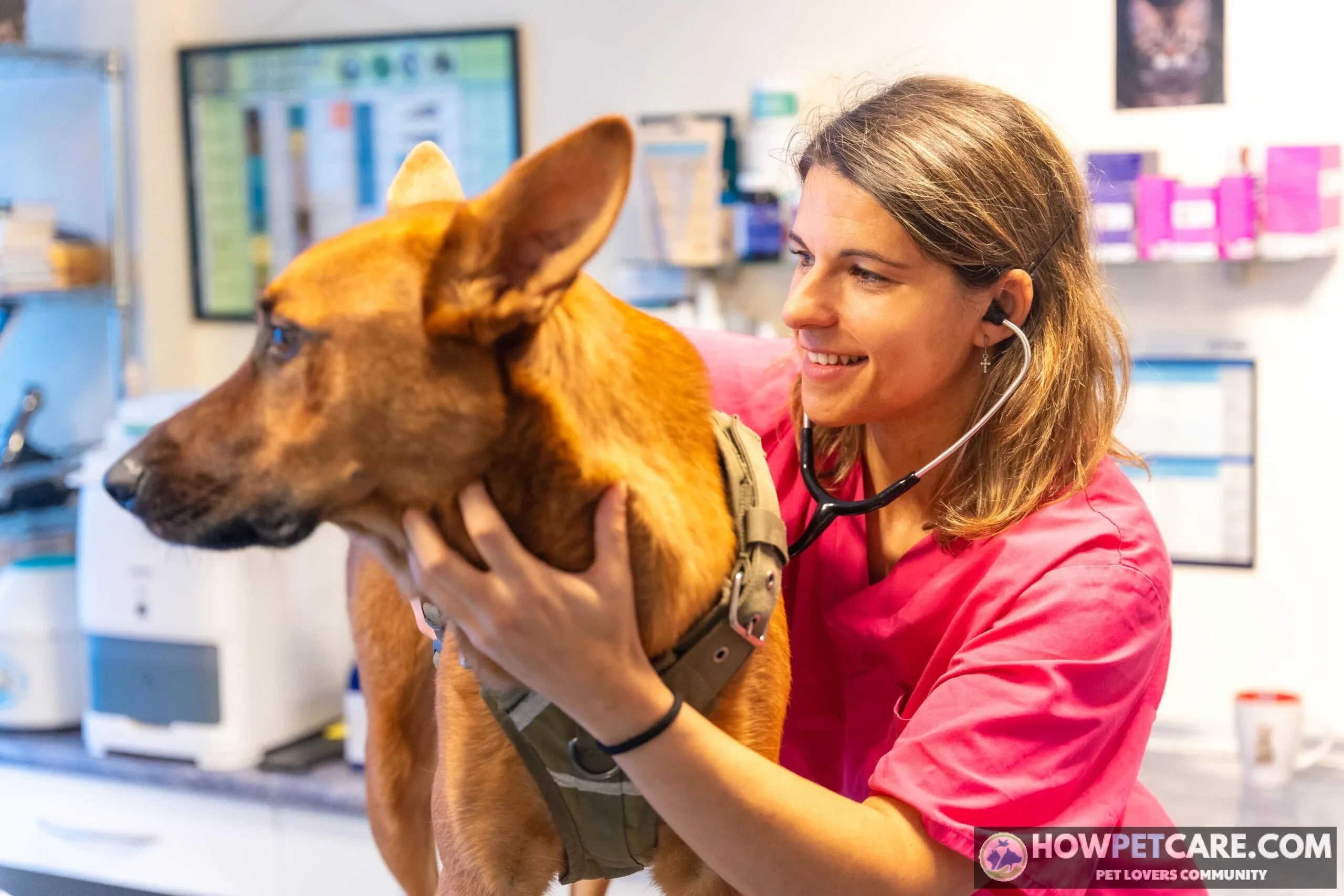
Three clues that point away from kennel cough
- No social exposure in the last two weeks.
- Cough has been present for months rather than days.
- Dog seems systemically ill — fever, no appetite, low energy — instead of bright between fits.
If any of the three clues above apply, or if your dog is a puppy, senior, or has known heart/lung disease, skip the wait‑and‑see approach and call your veterinarian.
Red Flags: When to See a Vet and When Home Monitoring Is Reasonable
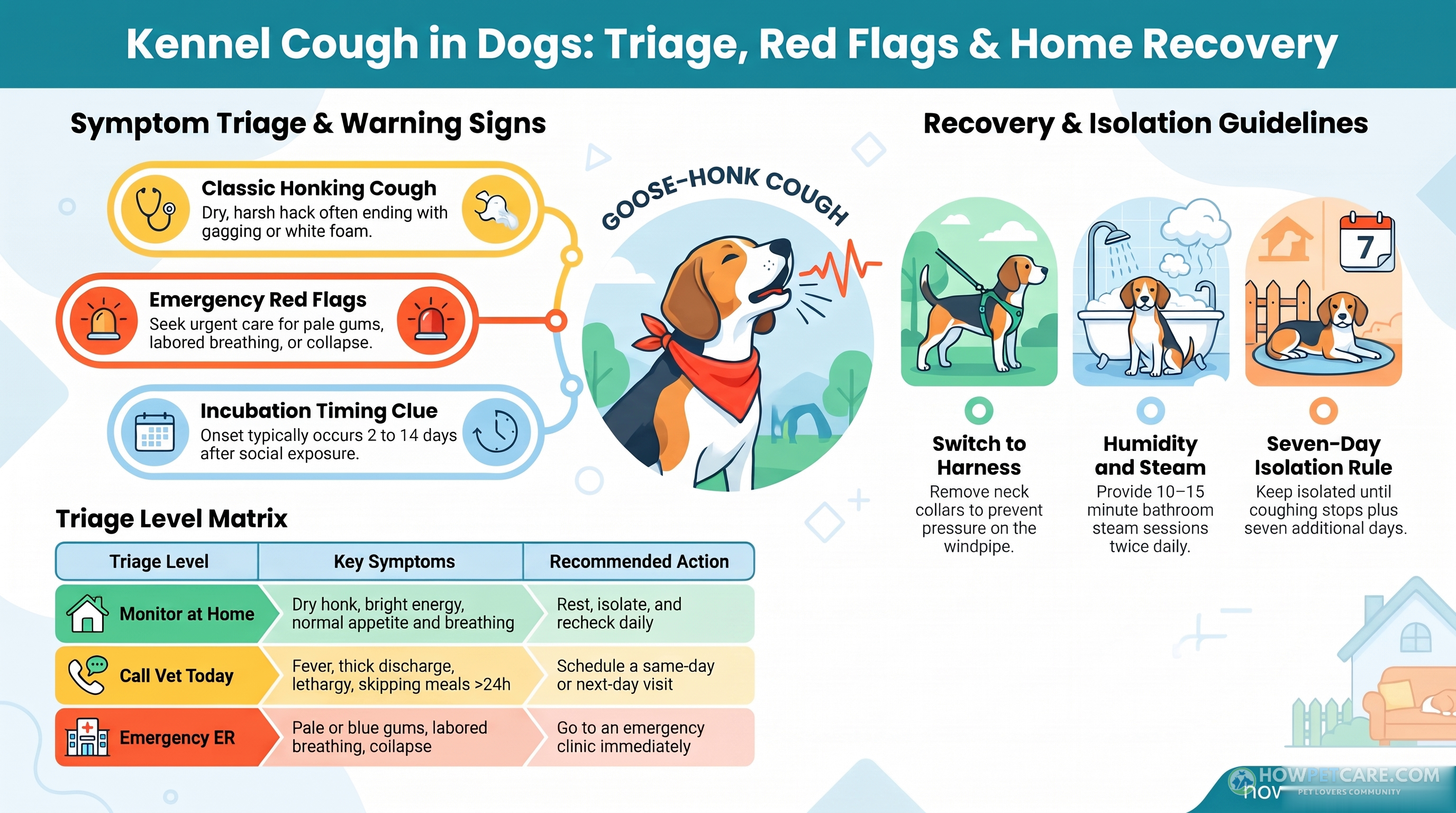
Use this concrete, tiered checklist instead of vague "see your vet" advice. Sort your dog into exactly one tier; if any item in a higher tier applies, follow the higher tier.
Emergency checklist — go now (any one of these)
- ☐ Blue, grey, or very pale gums
- ☐ Labored breathing: belly pumping, open‑mouth breathing, or resting breaths over 40 per minute
- ☐ Collapse, fainting, or unable to stand
- ☐ Coughing nonstop without breaks to rest
- ☐ Coughing up blood or pink froth
Call‑the‑vet‑today checklist — same‑day or next‑day appointment
- ☐ Warm ears/body suggesting fever (a vet can confirm — above 103 °F / 39.4 °C is a fever)
- ☐ Thick yellow or green nasal or eye discharge
- ☐ Has not eaten for more than 24 hours
- ☐ Obvious lethargy — won’t play, greet, or take treats
- ☐ Resting breathing noticeably faster than usual (over ~30 breaths per minute)
- ☐ Cough getting worse instead of better after the first week
Safe to monitor at home — only if ALL of these are true
- ☐ Dry honking cough, but dog is bright and alert between fits
- ☐ Eating and drinking normally
- ☐ Normal gum color (bubble‑gum pink) and normal resting breathing
- ☐ No known heart or lung disease, and dog is a healthy adult
Recheck every 24 hours. Escalate if there’s no improvement by day 7–10, the dog worsens after improving, or any cough is still going at 3 weeks.
Lower your threshold if the dog is a puppy under 6 months, a senior, on steroids/chemo, or has heart/lung disease: for these dogs, "call the vet today" applies to ANY persistent cough, and watch extra closely for fast breathing, poor nursing/eating, and lethargy.
Quick checks: count resting breaths while the dog sleeps — each chest rise is one breath; count for 30 seconds and double it. Lift the lip for gum color — pink is normal; white, grey, or blue is an emergency.
The main complication to fear is bronchopneumonia. If breathing effort increases or fever spikes, treat it as an emergency.
How Long Kennel Cough Lasts: A Day-by-Day Recovery Timeline
A typical uncomplicated case runs 1–3 weeks, with milder cases improving within 7–10 days. Track where your dog is in the sequence — a stall at any stage is more informative than the calendar alone.
Week-by-week expectations
| Stage/Day range | What’s normal | Warning signs | Action |
|---|---|---|---|
| Days 1–14 after exposure (incubation) | No symptoms yet; dog may already be spreading germs | Symptoms that start more than ~2 weeks after the last exposure | Note the exposure date — your vet will ask |
| Days 1–3 of cough | Occasional dry honk, mild sneezing or clear discharge | Any emergency‑tier sign (labored breathing, blue gums, collapse) | Isolate from other dogs; start home care |
| Days 3–7 (peak) | Frequent honking fits, gagging after coughing, still eating and bright | Fever, thick discharge, lethargy, skipping meals | Fits should be annoying but the dog should seem well otherwise |
| Days 7–14 | Cough steadily fading — fewer and shorter fits each day | No improvement at all by day 10, or worse after improving | Call the vet if progress has stalled |
| Weeks 2–3 | Occasional lingering honk, especially with excitement | Cough unchanged or worse at week 3; breathing changes | Recheck vet visit — consider X‑ray |
| Beyond week 3 | Recovery expected | Persistent cough | Vet exam to rule out pneumonia, influenza, or a non‑infectious cause |
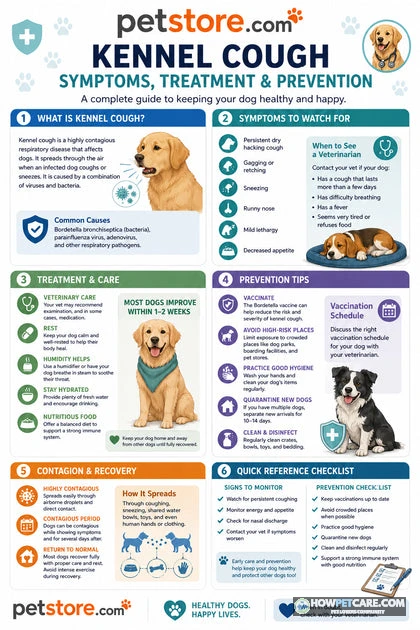
Contagiousness marker: dogs can shed Bordetella and other pathogens for roughly 10–14 days or longer after symptoms start — often past the point where the cough sounds gone. Plan on keeping the dog home until the cough has fully resolved plus about 7 more days, and get the facility’s or vet’s sign‑off before daycare or boarding.
Home Care for Kennel Cough: Doses, Evidence, and Cautions
Evidence note upfront: rest, humidity, and removing throat irritants are standard supportive care; honey is extrapolated from human cough data and anecdotal use in dogs — helpful for soothing, not a treatment for the infection.
-
1. Remove the collar, use a harness
Any pressure on the windpipe triggers honking fits. Walks should be short and calm; skip the dog park entirely.
-
2. Run a humidity session, once or twice daily
Sit with your dog in a steamy bathroom (hot shower running, door closed) for 10–15 minutes, OR run a cool‑mist humidifier near the dog’s sleeping area. Never hold the dog near or over hot steam — the point is moist room air, not direct steam contact. Stay in the room the whole time.
-
3. Honey, if you choose to use it (soothing only)
- Small dogs (under ~20 lb): about ½ teaspoon
- Medium dogs (~20–50 lb): about 1 teaspoon
- Large dogs (over ~50 lb): about 1 tablespoon
Give once or twice daily, straight or on a small amount of food.
Do NOT use for puppies under 1 year (botulism risk), diabetic or overweight dogs, or any product containing xylitol. Ask your vet first if unsure.
-
4. Hydration and air quality
Fresh water always available; keep the dog away from cigarette smoke, scented sprays, candles, and dusty litter areas — all trigger coughing fits.
-
5. Medications — know the rules
- Do not give human cough syrups or decongestants: combination dextromethorphan products often contain xylitol or acetaminophen, which are dangerous to dogs. Cough suppressants are only appropriate for dry, non‑productive coughs and only when a vet prescribes them.
- Most mild kennel cough is viral or self‑limiting — antibiotics are NOT automatically needed. Vets typically prescribe doxycycline (5–10 mg/kg every 12 h for 7–14 days) only when a bacterial component (like Bordetella) is suspected or the dog is higher risk. Never use leftover antibiotics; partial courses fuel resistance and can mask a worsening case.
Stop rule: if coughing fits increase despite this routine for 48 hours, or any red‑flag symptom appears, move to the triage checklist tier that matches.
Doxycycline and amoxicillin/clavulanate are prescription‑only. Using them without veterinary guidance contributes to resistance and may delay proper treatment for pneumonia.
Contagiousness and Isolation: How Long to Keep a Dog Home and When to Return to Daycare
Dogs can shed pathogens before symptoms appear and typically for about 10–14 days or longer after they start, with Bordetella shedding possibly lasting weeks. Common isolation guidance: keep the dog home until coughing has resolved, with at least about 7 days after symptoms end, and follow any facility policy and the vet’s clearance.
How long dogs shed and spread it
- Pre‑symptomatic shedding: 1–2 days before cough onset.
- Active shedding: 10–14 days after cough begins, sometimes longer.
- Post‑symptom shedding: can continue for days to weeks; assume contagious until a week after the last cough.
Return-to-daycare and dog‑park rules
- Cough completely gone for ≥ 7 days.
- Vet clearance (especially if antibiotics were given).
- Facility‑specific policy — many require a written note.
Multi‑dog household checklist
- Separate rooms or crates for the sick dog.
- Separate bowls, bedding, toys.
- Disinfect shared surfaces daily (bleach‑diluted solution works for Bordetella).
- Wash hands after handling each dog.
- Monitor all housemates for cough onset.
Vaccine types at a glance
| Vaccine type | Route | Onset of protection | Typical schedule | Notes |
|---|---|---|---|---|
| Intranasal | Nose drops | 3–4 days | Initial at 3 weeks, booster annually or every 6 months for high‑risk dogs | Local mucosal immunity, may reduce shedding |
| Oral | By mouth | 3–4 days | Same as intranasal | Easier for some owners, similar efficacy |
| Injectable | Subcutaneous | 7–10 days | Two doses 2–4 weeks apart, then annually | Systemic immunity only; does not block nasal colonization as well |
Even fully vaccinated dogs can contract kennel cough because the vaccine covers Bordetella and a few viruses, but not every pathogen in the CIRDC complex. Illness is usually milder and shorter.
Higher-Risk Dogs: Puppies, Seniors, Immunocompromised and Pregnant Dogs
Puppies
Lower threshold for a same‑day vet visit. Watch for not nursing, fast breathing (> 30 breaths/min at rest), and lethargy. Incomplete vaccination series adds risk.
Seniors and dogs with heart or lung disease
Coughs can mask or worsen chronic conditions. A vet check is advisable early, even if the cough looks classic.
Immunocompromised dogs (steroids, chemotherapy, chronic disease)
Higher pneumonia risk — call the vet at first cough.
Pregnant dogs
Avoid self‑medicating; contact the vet promptly and isolate from newborn puppies.
Brachycephalic and small breeds with tracheal problems
Extra caution: any respiratory compromise can escalate quickly.
Recent atypical respiratory disease outbreaks
Persistent cases that do not respond to standard treatment deserve a vet recheck; some regions have reported Bordetella antibiotic‑resistance patterns and novel viral strains such as canine influenza in dogs.
For the latest outbreak updates, check the AVMA and state veterinary medical association bulletins.
What a Vet Visit for Kennel Cough Costs and Your Next Steps
Typical cost ranges
US price ranges below are estimates and vary widely by region, clinic type, and whether you visit a general practice or an emergency hospital (ER fees can run 2–3× higher).
| Condition | Cough Sound and Type | Typical Onset and Affected Population | Other Signs and Symptoms | Contagiousness and Fever Status | Urgency Level and Action |
|---|---|---|---|---|---|
| Kennel cough (CIRDC) | Sudden, dry, harsh "goose honk," often ends in gagging or white foam | 2–14 days after exposure (boarding, daycare, grooming, dog park); any age | Bright and playful between fits, mild nasal discharge, sneezing, normal appetite | Sometimes mild fever; highly contagious | Monitor at home if dog eats, plays, and breathes normally |
| Canine influenza | Cough plus whole‑body illness | 1–4 days after exposure; outbreaks in shelters or daycare | Fever, thick nasal discharge, lethargy, poor appetite, cough lasting 2–3+ weeks | Yes, often high fever; highly contagious | Vet visit recommended, especially in puppies or seniors |
| Collapsing trachea | Chronic, dry "goose honk" sound | Gradual onset, months‑long history; middle‑aged or older small breeds (Yorkies, Pomeranians, Chihuahuas) | Worse with excitement, leash pressure, or heat; dog otherwise well; no exposure history needed | No fever; not contagious | Non‑emergency, but needs vet workup |
| Heart disease | Soft, wet, moist‑sounding cough | Gradual onset; older dogs, often small breeds with valve disease | Coughs more at night or when lying down, fast resting breathing, exercise intolerance, fainting | No fever; not contagious | Same‑day or next‑day vet visit |
| Foreign body (grass, bone, toy piece) | Sudden, frantic gagging or hacking | Minutes after chewing, eating, or running through grass | Pawing at mouth, drooling, distress, possible choking | No fever; not contagious | Emergency if breathing is affected; otherwise same‑day vet visit |
| Reverse sneezing | Rapid snorting inhalations (not a true cough) | Any age; short episodes lasting seconds to a minute | Stands still, elbows out, then acts completely normal | No fever; not contagious | Usually harmless; vet visit only if frequent or new |
| Service | Typical US cost range | When it’s usually needed |
|---|---|---|
| Physical exam (incl. tracheal pinch test) | $50–$100+ | Every visit — the exam alone often confirms a classic case |
| Chest X‑ray | $100–$250+ | If lungs sound abnormal, pneumonia is suspected, or cough won’t resolve |
| PCR respiratory panel | $100–$250 | To identify the specific pathogen — useful in outbreaks, persistent cases, or multi‑dog households |
| Cough suppressant prescription | $15–$40 | Dry, non‑productive cough disrupting sleep |
| Doxycycline course | $15–$60 | Suspected Bordetella/bacterial component or higher‑risk dogs |
| Hospitalization for pneumonia | $800–$2,500+ | Only for complications — oxygen support, IV fluids, monitoring |
Budget reality check: a straightforward kennel cough case often costs only the exam plus possibly one medication — roughly $65–$160 total. Costs climb when the cough isn’t a textbook case.
Save money and time at the visit: bring the exposure dates (boarding, daycare, dog park), vaccine history, a 20–30 second video of the cough (dogs rarely perform on cue at the clinic), and a resting breath count from that morning. This can eliminate guesswork and unnecessary tests.
Your action plan: tonight, the next 48 hours, and day 10
- Tonight – Record a short cough video, count resting breaths, note gum color, and write down the last group exposure date.
- Next 48 hours – Run the three‑tier triage checklist. If any emergency item appears, go to the ER. If any "call‑today" item appears, book a same‑day or next‑day appointment. If all "monitor at home" boxes are checked, start the home‑care routine and re‑check daily.
- Day 10 – If the cough hasn’t faded noticeably, schedule a recheck. Bring your notes, video, and breath counts.
1A middle-aged Pomeranian presents with a chronic dry, honking cough that gets worse during moments of excitement or leash pressure. The dog shows no signs of fever, nasal discharge, or lethargy, and has no recent history of stay at a boarding facility or dog park. Which condition is most consistent with these clinical signs?
Small breeds frequently develop a chronic, non-contagious honking cough due to tracheal weakness, which progresses gradually over months without systemic illness or social exposure.
2An owner notices that their dog developed a sudden cough shortly after staying at a daycare facility. Which of the following clinical signs indicate that the dog requires immediate emergency veterinary care rather than home monitoring?
Discoloration of the mucous membranes signals severe oxygen deprivation, requiring immediate medical stabilization.
3A dog owner needs rapid protection against Bordetella bronchiseptica prior to boarding their dog in 5 days. Why would a veterinarian recommend an intranasal or oral vaccine over an injectable vaccine in this scenario?
Mucosal vaccines stimulate rapid local immunity in the respiratory tract faster than systemic injectable vaccines can generate an immune response.
4An owner considers giving honey to soothe their 8-month-old puppy's dry cough. What safety restriction applies to using honey in this situation?
Young animals with immature digestive and immune systems are susceptible to botulism spores present in unpasteurized honey.
5A dog's coughing fits have completely resolved after 10 days of illness. Which measures should be taken before returning the dog to group activities such as dog parks or daycare facilities?
Pathogen shedding can persist for days to weeks after clinical cough signs resolve, making post-symptomatic quarantine necessary.
6A 10-year-old Cavalier King Charles Spaniel with known heart valve disease develops a soft, moist cough that is most prominent when lying down at night. How does this dog's urgent care priority differ from a healthy adult dog presenting with a sudden honking cough?
Older dogs with underlying cardiac conditions who present with moist nocturnal coughs are at high risk for heart failure complications rather than simple upper airway disease.
Tip: a quick phone video of the cough is often the single most helpful thing you can give the vet — it saves time, reduces stress for your dog, and may avoid an extra X‑ray.
Film in a quiet room, 20–30 seconds, with the dog standing. Capture at least two full honk‑gag cycles.
FAQ
Can humans or cats catch kennel cough from dogs?
Humans rarely catch it from dogs, and healthy people usually have no problem; people with weakened immune systems should avoid contact with a sick dog. Cats can occasionally catch Bordetella bronchiseptica, so keep them separated.
Can a vaccinated dog still get kennel cough?
Yes. The Bordetella vaccine doesn’t cover every pathogen that causes kennel cough, so vaccinated dogs can still get sick, though the illness is usually milder.
Does my dog need antibiotics for kennel cough?
Not always. Many mild cases clear on their own with rest, but a vet may prescribe antibiotics such as doxycycline if a bacterial infection is suspected or the dog is high risk.
Is kennel cough an emergency?
Usually not, but difficulty breathing, blue or pale gums, collapse, or refusal to eat are emergencies and need immediate veterinary care.
Can I walk my dog while they have kennel cough?
Short, calm walks on a harness away from other dogs are usually fine, but avoid dog parks, daycare, and boarding until your vet says the dog is no longer contagious.