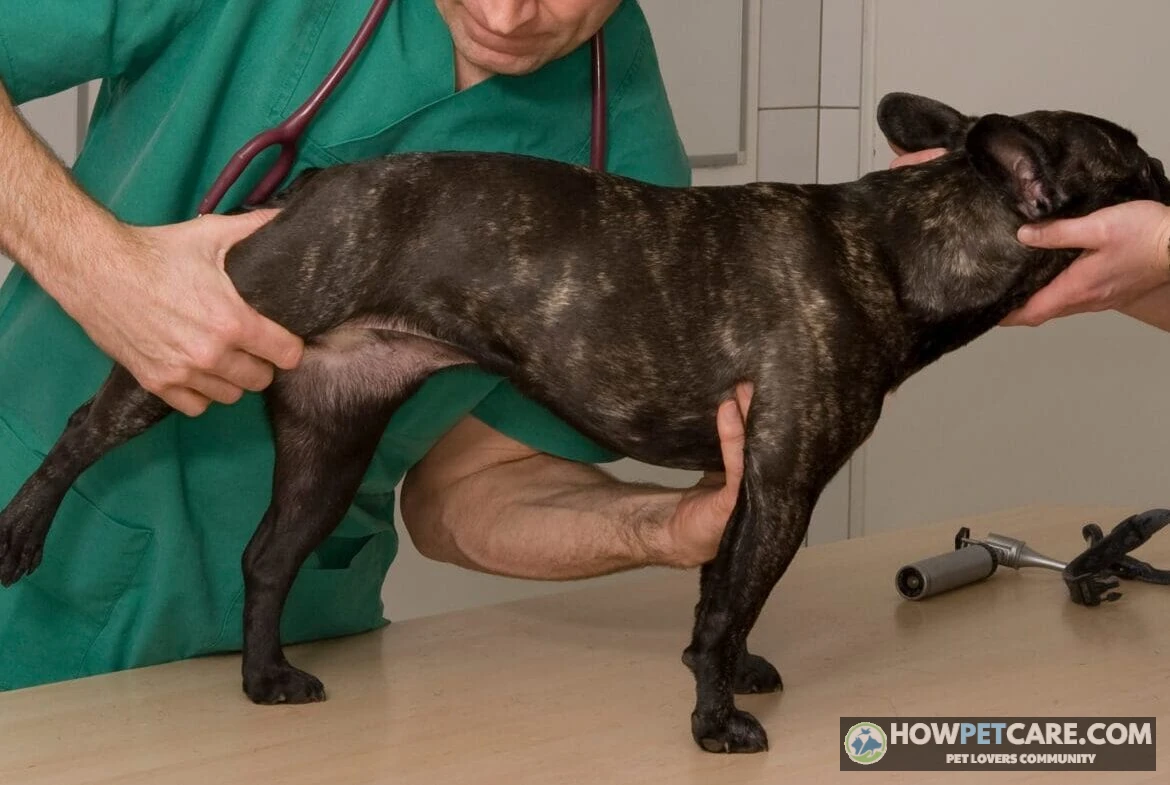

Hip dysplasia in dogs is an inherited developmental condition where the ball of the thigh bone fits loosely in the pelvic socket. The resulting joint laxity causes wear and osteoarthritis over time. It cannot be cured, but weight control, pain management, rehab, and surgery keep most affected dogs comfortable.
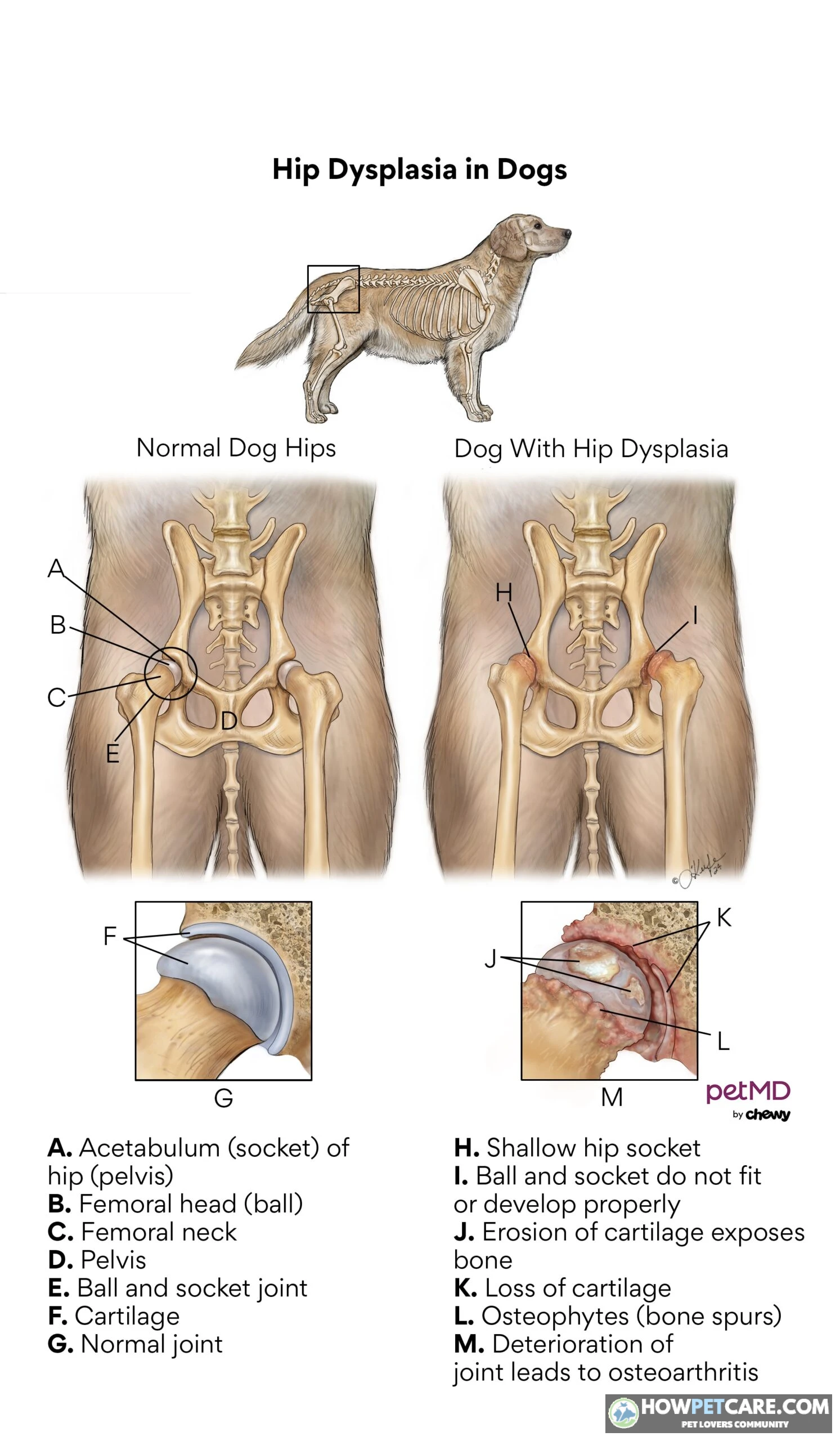
Canine hip dysplasia is a developmental condition: the femoral head — the ball at the top of the thigh bone — does not sit snugly in the acetabulum, the pelvis’s socket. That looseness, called joint laxity, lets the two surfaces grind instead of glide. Over months and years, the friction wears cartilage away and osteoarthritis follows. Hip dysplasia does not go away on its own, but it is not a death sentence. With the right plan, many dogs live comfortable, normal-length lives.
Before you spend money on treatments you might not need, start with a diagnosis. Schedule a veterinary orthopedic exam and expect your vet to recommend sedation and hip X-rays. The deciding factors are your dog’s age, how much arthritis is already visible, your dog’s size, and your budget. A puppy under about 20 weeks may still qualify for a relatively inexpensive preventive surgery. A young dog with loose joints but clean X-rays has options that disappear once arthritis sets in. An older dog with advanced disease is usually managed with weight control, pain medication, and rehab — or salvage or replacement surgery if pain can’t be controlled.
Hip Dysplasia in Dogs: What It Is, What to Do First, and How Treatment Is Chosen
What is happening inside the joint
Hip dysplasia is an inherited developmental condition in which the femoral head and acetabulum do not grow into a matched pair, leaving the joint loose and eventually arthritic. Puppies are born with anatomically normal hips. The laxity develops during growth, as inherited genes interact with environmental factors such as body weight, growth rate, and activity.
When the joint is loose, weight moves through the hip in ways it was never built to handle. The body responds by laying down bone, thickening the joint capsule, and destroying cartilage. That end stage is osteoarthritis, and once it appears, it does not reverse. Treatment targets two separate problems: the loose joint (correctable early, especially in puppies) and the arthritis (manageable, not curable).
What to do in the next 48 hours
- If you only suspect it: Book an orthopedic exam. Ask specifically for hip X-rays and whether sedation will be needed. Film your dog walking toward and away from the camera, then bring the video.
- If your dog was just diagnosed: Ask your vet for a second read of the X-rays, whether arthritis is already present, and your dog’s weight and body condition score (BCS) so you have a baseline.
- If your dog is already being managed: Reassess when pain control stops working, when your dog hesitates to rise, or when a previously active dog becomes quiet. That is the signal to revisit the plan — not to wait for a crisis.
- Same-day emergency vet visit: If your dog suddenly cannot bear weight, drags a hind leg, cries out when touched, or loses bladder or bowel control. These signs can point to a spinal or ligament emergency rather than ordinary hip dysplasia.
How the right treatment path is chosen (preview)
Four factors decide the path: age at diagnosis, degree of arthritis, body size, and budget. Surgery can correct the joint and prevent years of arthritis when caught early. Once arthritis is established, the choice is between salvaging the hip (FHO) and replacing it (THR), with size, pain severity, and cost driving the decision. Medical management is not a consolation prize — many dogs do well on weight control, pain medication, and rehab alone.
Signs of Hip Dysplasia in Dogs by Age, and Look-Alike Conditions
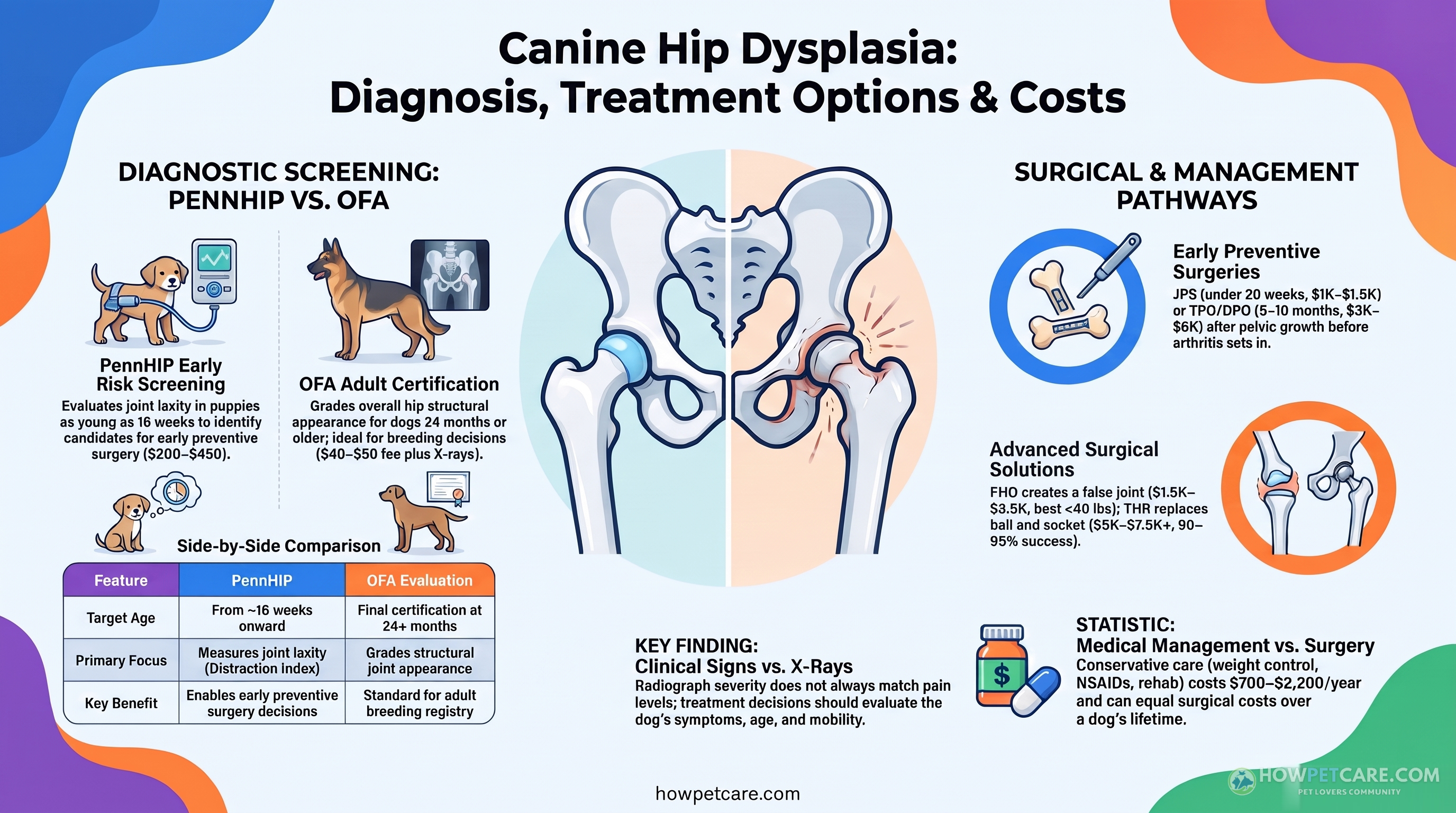
Pain and lameness do not reliably track X-ray severity. Some dogs with severely arthritic hips are comfortable; others with mild changes limp badly. Never let a radiograph alone decide how aggressively to treat.
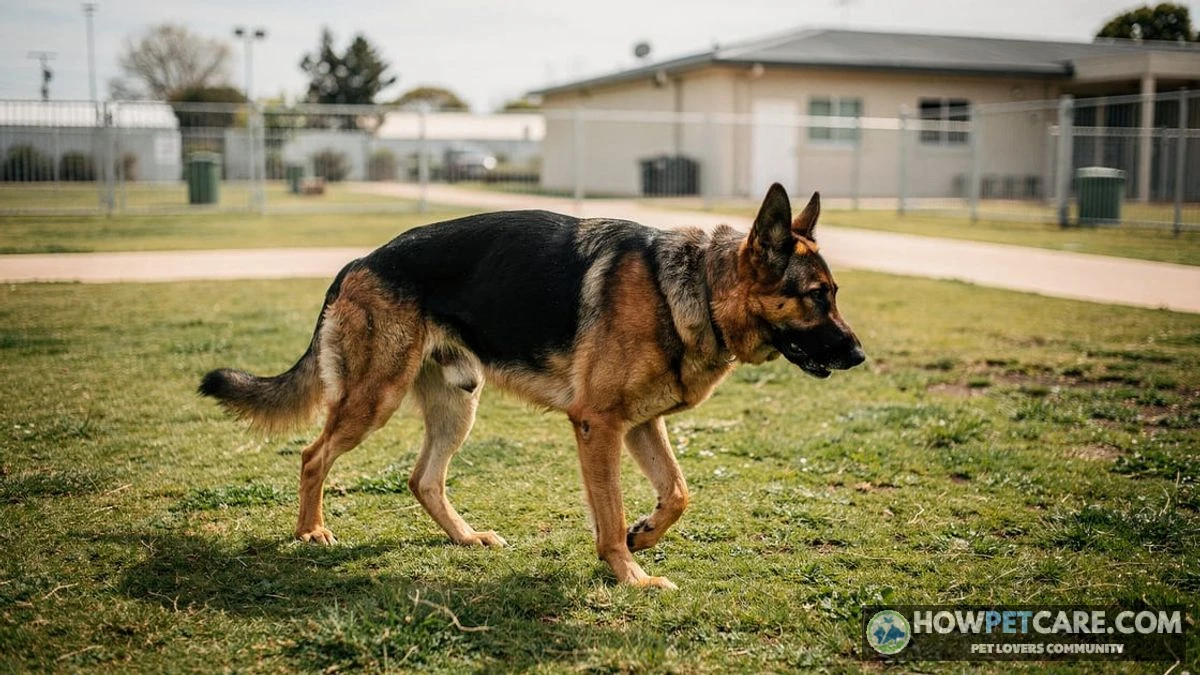
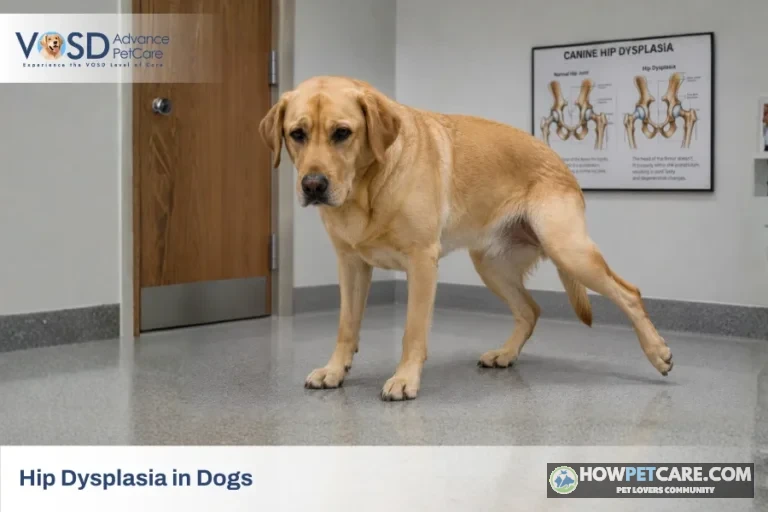
Early signs in puppies are easy to miss because affected pups still play and keep up with littermates — for a while. Watch for "bunny hopping," where the dog pushes off with both hind legs together at a run. From directly behind, look for hips that sway side to side, back feet that stand unusually close together, and reluctance to jump into a car or onto a couch. A puppy who sits down mid-play, climbs stairs stiffly, or takes longer than its littermates to get up after a nap is worth examining. Puppies with hip dysplasia often show signs by 4 to 12 months, but a bad X-ray at 4 months does not always mean pain today.
Early signs of hip dysplasia in puppies
- Bunny-hopping gait at a run
- Hindquarters that sway or "swivel" when walking (watch from behind)
- Narrow stance behind; back feet close together
- Hesitation before jumping onto furniture or into the car
- Reluctance to climb or descend stairs
- Stiff or slow to rise after sleep
- Shorter bursts of play than littermates; lies down early
Signs in adult and senior dogs
- Stiffness for the first few minutes after rest, then warming out of it
- Lameness that worsens after exercise and eases after rest
- Thigh muscles that look visibly thinner — compare left and right, and against old photos
- Shoulders and chest that look bulkier as the dog shifts weight forward
- Avoids stairs, stops mid-staircase, or refuses to jump
- Audible clicking or a grinding feel when the hip is moved
- Licking or chewing at the hip or flank area
- A personality change: grumpy when touched near the rear, less interest in walks
Is it hip dysplasia, a CCL tear, or lumbosacral disease?
Many hind-limb problems look alike to a pet owner. A partial or complete tear of the cranial cruciate ligament (CCL) in the stifle (knee) often causes sudden, severe lameness in one leg — the dog will barely touch the toe to the ground, and the knee swells and feels unstable. Lumbosacral disease (cauda equina syndrome, sometimes called lumbosacral stenosis) causes pain on rising, pain when the tail base is lifted, scuffing or dragging of the toes, and sometimes incontinence: a lower-back problem masquerading as a hip problem. Patellar luxation makes the dog skip a step, yelp, then carry on. Degenerative myelopathy in older dogs causes a slow, painless wobble and dragging of both hind paws, with no pain on hip extension. Any of these can coexist with hip dysplasia, and dogs frequently have two problems at once — a dysplastic dog who also ruptures a cruciate ligament is common. If the exam points away from the hips, your vet may recommend knee X-rays, a spinal workup, or a referral.
When limping is an emergency
Seek same-day veterinary care for sudden inability to bear weight, dragging of a limb, crying out when moved, a new head tilt, knuckling of the paws, or loss of bladder or bowel control. These can signal a spinal injury or other neurological emergency, and time matters.
What Causes Hip Dysplasia and Which Dog Breeds Are Most Prone
Is hip dysplasia genetic?
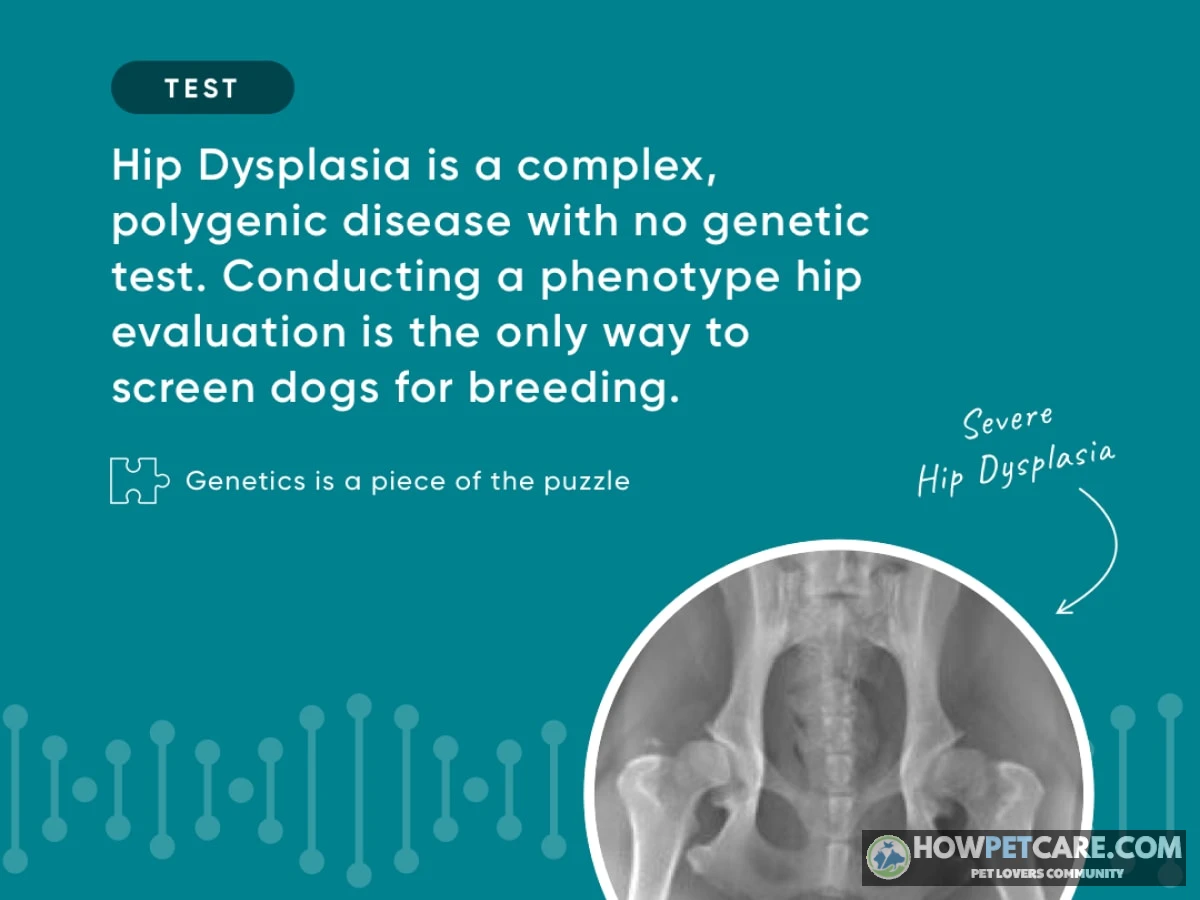
Yes, but not in a simple single-gene way. Hip dysplasia is polygenic: many genes each contribute a small amount, and environmental factors during growth decide whether a dog with the genetic tendency actually develops bad hips. Two full siblings can end up with very different hips, and two clear-screened parents can produce a dysplastic puppy. That is why pedigree alone is an incomplete guide — the whole line matters more than any one dog. Breeders who screen grandparents, aunts, and uncles give you more information than breeders who screen only the mother.
Growth, weight, and nutrition factors
Owners have real leverage on the environmental side of the equation, especially in large and giant breeds. In a landmark lifetime study, at-risk Labradors fed ad libitum (free choice) developed hip dysplasia at 66.7% (2 of 3), versus 33.3% (1 of 3) in littermates fed a measured, portion-controlled diet. Overweight German Shepherd puppies carried close to double the risk of hip dysplasia compared with lean littermates. Excess calories, rapid growth, and high calcium intake in large-breed puppy food all add load to immature joints. Forced high-impact exercise — long repetitive runs, jumping off furniture, agility training at too young an age — is a plausible but less firmly proven contributor. The message is consistent: keep a growing large-breed puppy lean and let it grow slowly and steadily.
Breeds with the highest reported rates
The Orthopedic Foundation for Animals (OFA) database reports the highest hip dysplasia prevalence in Bulldogs, Pugs, Mastiffs, Saint Bernards, Labrador Retrievers, Golden Retrievers, German Shepherds, Rottweilers, and Newfoundlands. Large and giant breeds dominate the list because size and rapid growth amplify the effect of laxity, but small breeds and mixed breeds are not immune. No breed is safe. If you are choosing a dog, "which breed has the lowest rate?" is the wrong question; "which breeder screens this line, and how tightly?" is the right one.
How Hip Dysplasia Is Diagnosed: Exam, X-Rays, OFA vs. PennHIP, and What They Cost
What happens at the vet visit
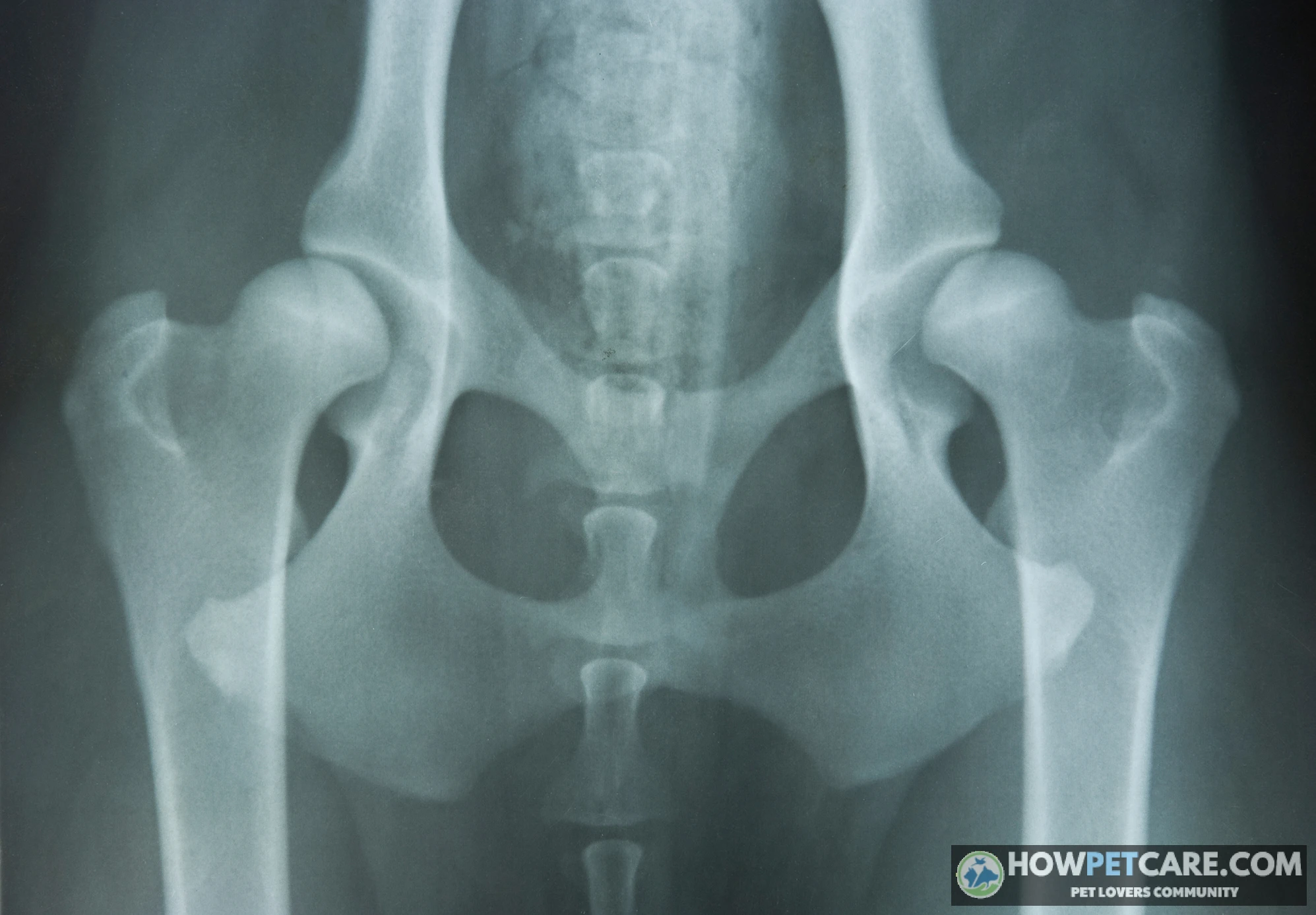
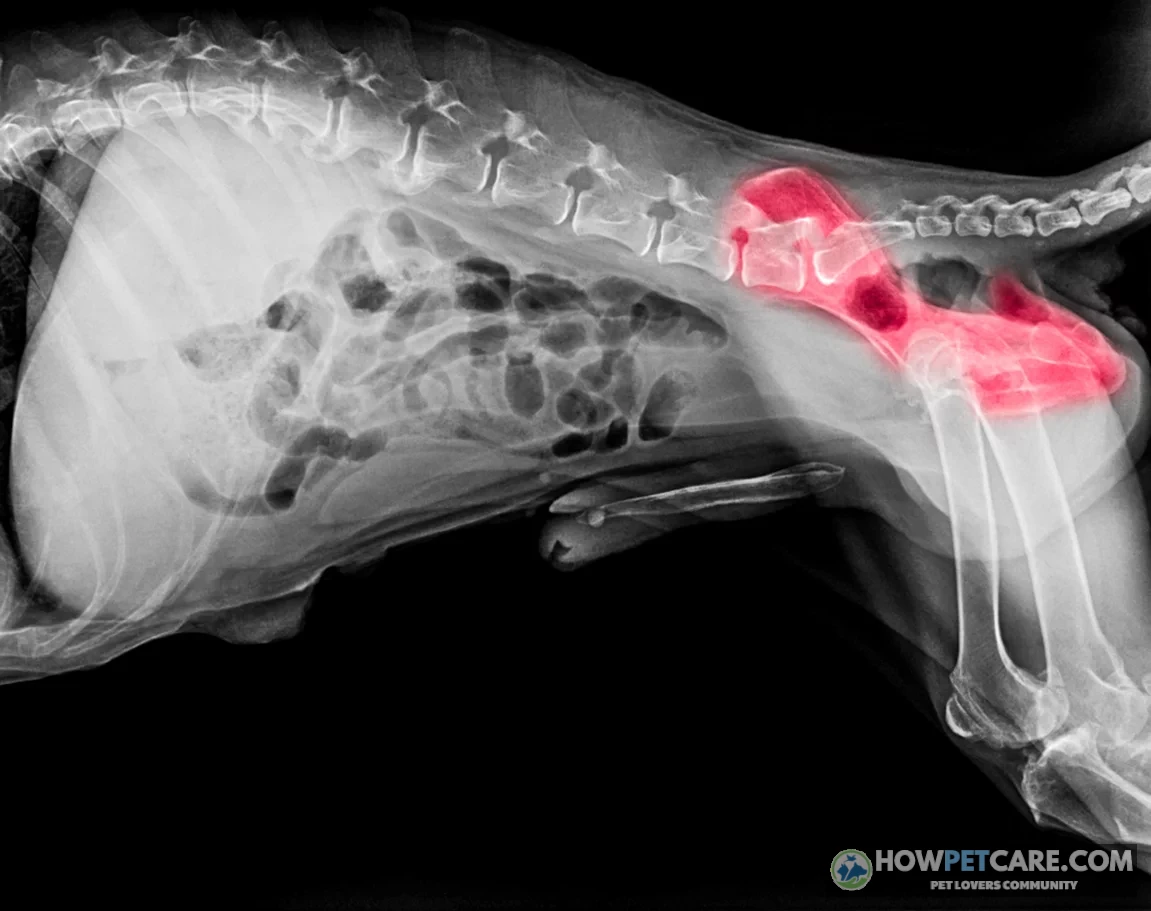
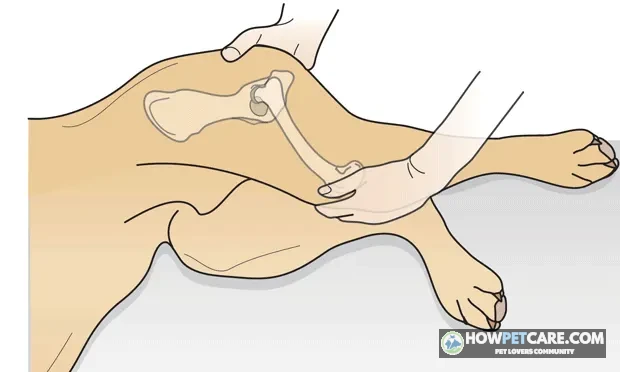
Your vet begins with a hands-on orthopedic exam: watching your dog walk and trot, checking for pain when the hip is extended, measuring range of motion, and examining the stifles and spine to rule out other causes. The classic test for laxity is the Ortolani sign — the vet rotates the hip and feels for a "clunk" as the femoral head moves in and out of the acetabulum. The Barden test is similar. Both are far more accurate under sedation or anesthesia, since a tense, painful dog can mask the laxity. Radiographs then confirm the anatomy and show whether osteoarthritis has begun: osteophytes along the femoral neck, sclerosis of the socket, and a shallow acetabulum are the classic findings. Sedation or general anesthesia is usually needed for correctly positioned X-rays, so ask ahead whether the visit will include it.
OFA vs. PennHIP: how they differ and when to do each
The OFA and PennHIP methods answer different questions and are best used at different ages.
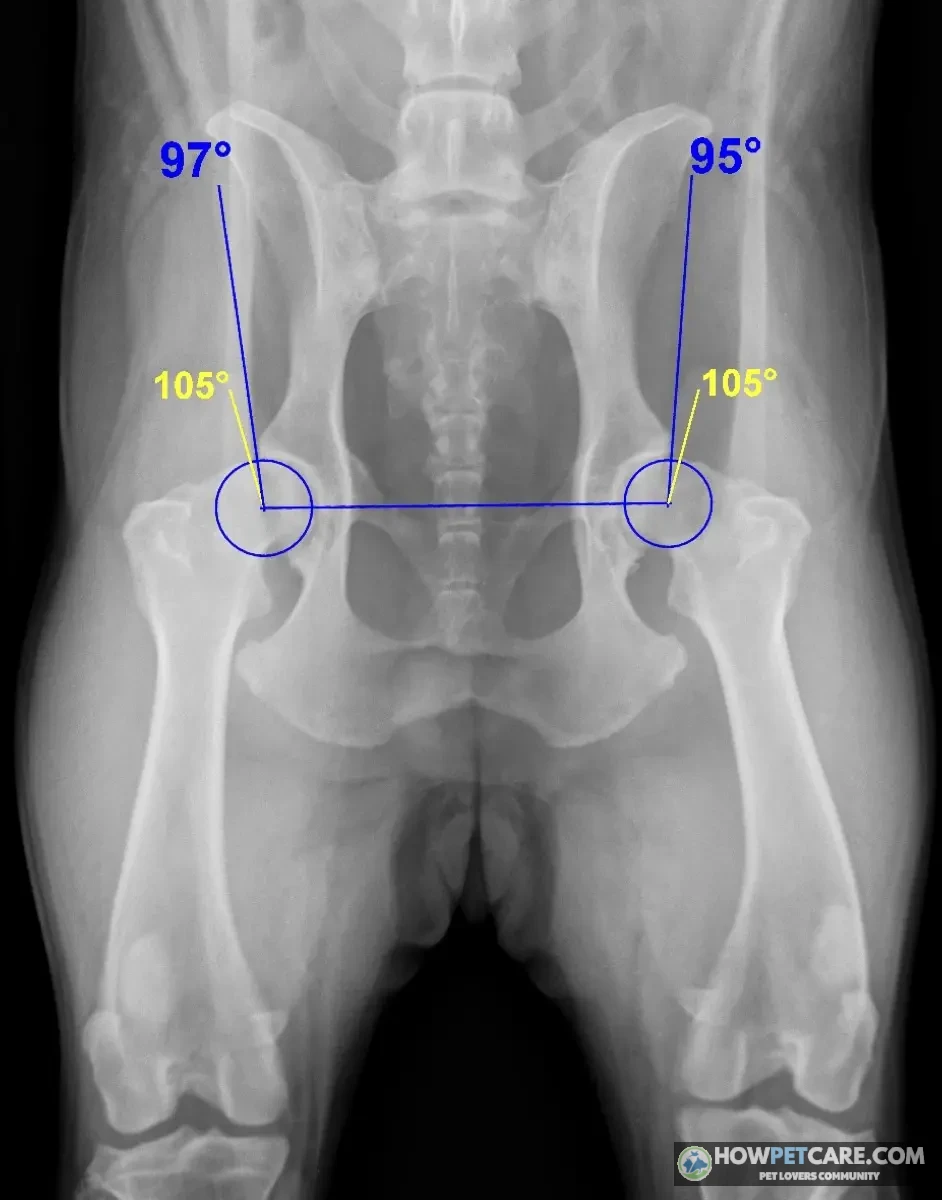
OFA requires the standard hip-extended (ventrodorsal) view, taken at 24 months or older for final certification. The dog lies on its back with hind legs extended straight out. A panel of veterinary radiologists grades the hips Excellent, Good, or Fair (passing), or Borderline, Mild, Moderate, or Severe (not passing). A preliminary evaluation can be submitted earlier, but final OFA certification is not possible until 24 months of age — the system was never designed to predict hip development in puppies. OFA is best for breeding decisions on adults and for a definitive grade.
PennHIP measures laxity directly. The vet takes a series of views, including a distraction view that measures how far the femoral head can be pushed out of the socket. The result is a distraction index (DI) — a number closer to zero means tighter hips — plus a percentile compared with other dogs of the same breed. PennHIP can be performed from about 16 weeks of age, making it the most accurate way to assess laxity in dogs under 20 weeks. It requires a PennHIP-certified veterinarian, and fewer clinics offer it. If you want to know your puppy’s risk while a relatively inexpensive preventive surgery is still an option, PennHIP is the test that gives you the answer.
| Feature | OFA | PennHIP | Standard diagnostic X-ray |
|---|---|---|---|
| Timing | Final at 24+ months; preliminary earlier | From about 16 weeks | Any time — used to diagnose, not to screen |
| What it measures | Radiographic appearance and congruity of the hip | Joint laxity, expressed as a distraction index (DI) | Anatomy and presence of arthritis |
| Sedation | Often required | Required for the distraction view | Usually required for positioning |
| Result | Grade: Excellent to Severe | DI number plus breed percentile | Written report on hip anatomy and arthritis |
| Best for | Breeding certification, definitive adult grade | Early puppy risk assessment; predicting future OA | Diagnosing symptoms in an individual dog |
| Cost ballpark (US) | $40–$50 registry fee plus X-rays | $200–$450 total through a certified clinic | Included in exam + sedation + X-ray visit |
Which should you choose? If your dog is young, symptomatic, or you want an early read on risk, go with PennHIP. If your dog is mature and you need a formal grade — for breeding or peace of mind — choose OFA. Many owners get a diagnostic X-ray first and decide from there.
What diagnosis costs
Approximate US ranges, which vary by region and clinic: an orthopedic exam with sedation and two hip views runs $300–$700. Adding an OFA submission is roughly a $40–$50 registry fee on top of those X-rays. A PennHIP evaluation costs about $200–$450 all in, since it is done through certified clinics. If your vet suspects another problem, expect add-ons: knee X-rays, a spinal workup, or a CT scan at a referral hospital. Always ask for an itemized written estimate before approving sedation.
How to Treat Hip Dysplasia in Dogs Without Surgery: Medications, Supplements, and Home Care
Weight, exercise, and rehab
Weight management is the single highest-yield intervention you control, and it costs less than anything else in this article. The goal is a lean body condition score: ribs easily felt with light pressure, a visible waist from above, and an abdominal tuck from the side. In the Labrador feeding study, lean-fed dogs developed arthritis later and limped less than free-fed littermates. Weigh your dog monthly and adjust portions accordingly; measure meals rather than free-feeding.
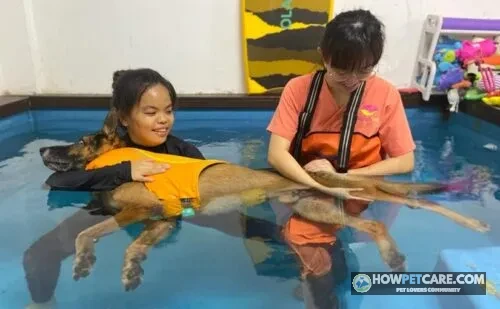
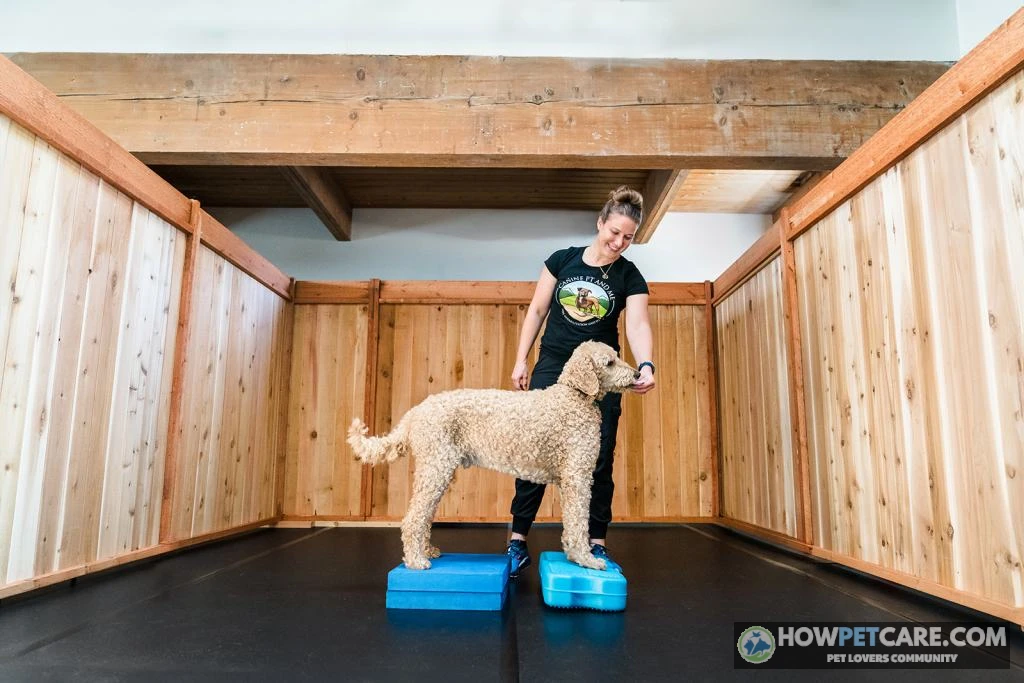
Exercise should be regular, moderate, and low-impact: steady leash walks, swimming, and controlled play. Avoid repetitive jumping, frisbee sprints, and stairs if your dog is in pain. A certified canine rehabilitation practitioner can build a program that includes an underwater treadmill, sit-to-stand exercises, cavaletti poles, and basic passive range-of-motion work. Rehab is not a luxury add-on — after FHO surgery in particular, it strongly affects the outcome.
NSAIDs and other pain medications
Prescription nonsteroidal anti-inflammatory drugs (NSAIDs) are the backbone of medical management, consistently reducing pain and improving mobility in dogs. Commonly used drugs include carprofen (Rimadyl), meloxicam (Metacam), deracoxib (Deramaxx), and grapiprant (Galliprant). They are dosed by body weight and prescribed by your vet. Before starting, your vet will usually run baseline bloodwork to check kidney and liver values, then monitor periodically. NSAIDs can cause stomach upset, vomiting, and, rarely, kidney or liver damage, so never give human NSAIDs such as ibuprofen or naproxen to a dog, and never combine a veterinary NSAID with a steroid — that combination can cause serious gastrointestinal bleeding.
Add-on pain drugs exist for dogs that need more. Gabapentin and amantadine are commonly layered onto NSAIDs for chronic pain, and amantadine is thought to help with the "wind-up" pain of long-standing conditions. Gabapentin may cause sedation at first. Tramadol, an opioid-like drug, is still prescribed, but controlled studies show little benefit for osteoarthritis pain in dogs; if it is suggested, ask why.
Librela and other newer therapies
Librela (bedinvetmab) is a monthly injectable monoclonal antibody that binds nerve growth factor (NGF), blocking a pain signal involved in osteoarthritis. It is not an anti-inflammatory and works by a different mechanism than NSAIDs, which makes it useful for dogs who cannot tolerate NSAIDs because of kidney, liver, or stomach problems. It treats pain, not the shape of the joint, and it is typically given monthly at the clinic. Reported adverse events are under ongoing safety review, so have an open conversation with your vet about monitoring. At roughly $80–$120 per dose plus exam fees at some clinics, cost is a real factor.
Supplements: what has evidence and what does not
Supplements are where marketing most outruns evidence. The honest ranking, from strongest to weakest:
- Omega-3 fatty acids (EPA and DHA) have the best support of any supplement. Studies show improved weight-bearing and reduced lameness at meaningful doses. Most products underdose, so look for the actual EPA+DHA milligrams per serving rather than a vague "fish oil" figure, and consider products with third-party quality seals such as the NASC (National Animal Supplement Council) mark.
- Glucosamine and chondroitin are the best-selling joint supplements, but trial results are inconsistent and a recent evidence review found little demonstrable benefit. They are not harmful; they are simply not where you should spend first.
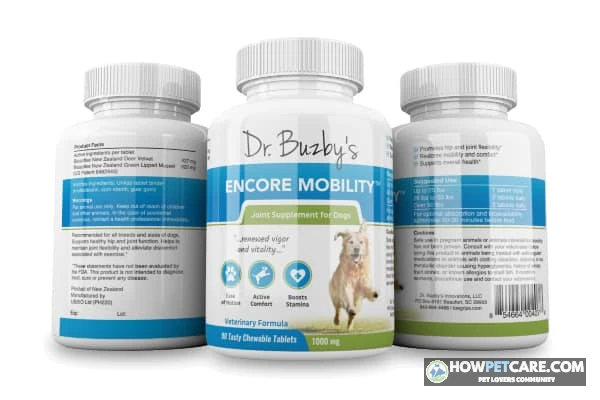
- Green-lipped mussel and veterinary joint diets show modest benefit in some controlled trials, often because they combine omega-3s at therapeutic doses.
- Collagen, MSM, and turmeric have weak or mixed evidence.
Dosing varies by product and body weight, and the quality of over-the-counter supplements is not guaranteed — this is one area where asking your vet for a specific product and dose, and confirming with the manufacturer’s data, is worth the conversation.
Stem cell and PRP: where the evidence stands
Platelet-rich plasma (PRP) and stem cell therapies are regenerative injections that aim to reduce inflammation and stimulate repair. PRP is made from your dog’s own blood; stem cells are usually harvested from fat tissue. Some dogs improve, but the published evidence is limited to small studies with inconsistent results. A course typically costs $800–$2,500 and is not a proven substitute for weight control, NSAIDs, or surgery. They are reasonable to discuss with a specialist, especially when standard options are exhausted, but treat them as experimental additions, not cures.
Home setup: floors, ramps, harnesses, and braces
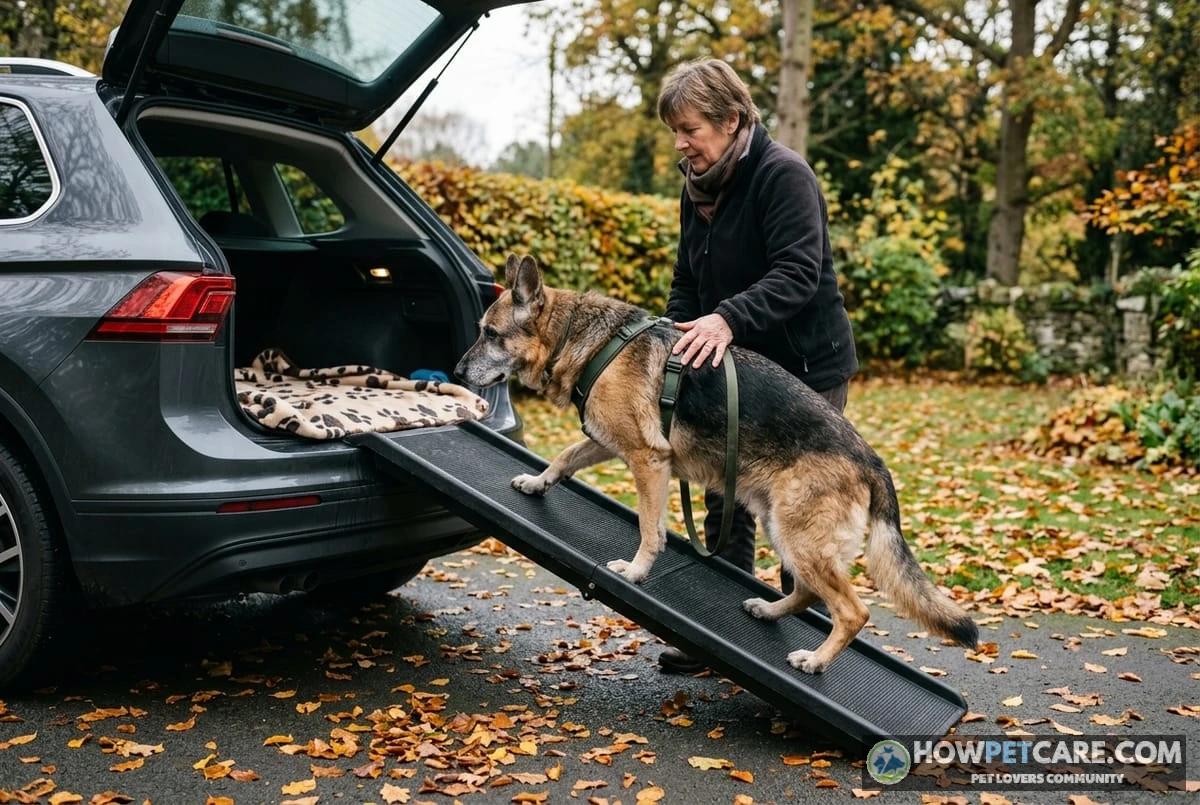
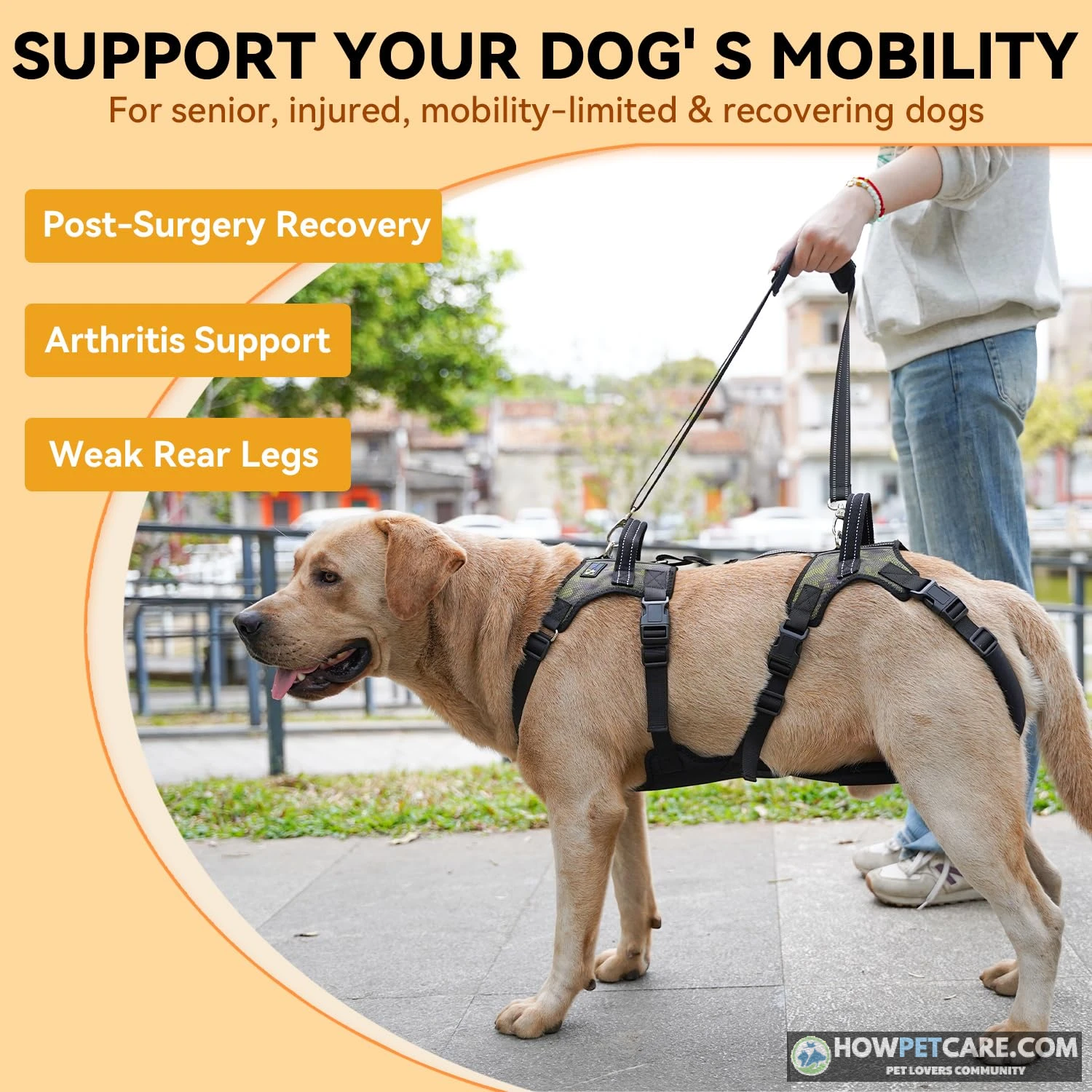
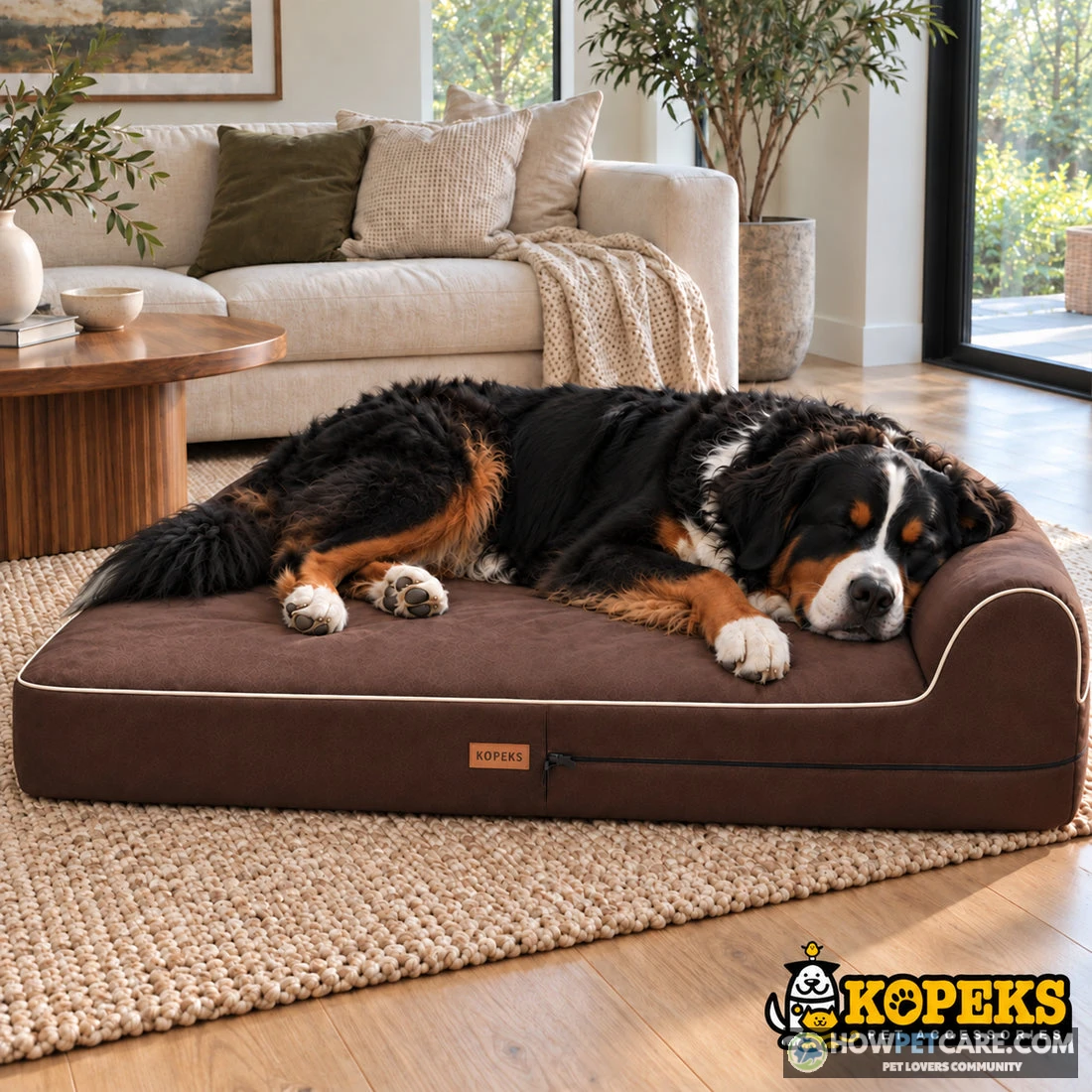
Small changes to your home reduce daily pain: non-slip rugs or runners on hardwood, ramps to cars and sofas, raised food and water bowls, an orthopedic bed, and a rear-support lifting harness for walks. Toe-grips can help on slick floors. Hip braces have almost no quality evidence for hip dysplasia specifically, and a poorly fitted brace can rub the skin raw — ask your vet or a rehab specialist before buying one, and treat any brace as an adjunct, not a treatment.
Hip Dysplasia Surgery Options Compared: JPS, TPO/DPO, FHO, and Total Hip Replacement
Quick comparison of all four procedures
The four surgical options differ by age, arthritis stage, size, and budget. The earlier the surgery, the more it functions as prevention; the later, the more it becomes salvage or replacement.
| Procedure | Typical age window | Best candidates | Approximate US cost (per hip) | Recovery time | Reported success rate | Main limitations or risks |
|---|---|---|---|---|---|---|
| JPS (juvenile pubic symphysiodesis) | Before ~20 weeks (ideally 12–20 weeks, best around 15–20) | Puppies flagged as lax by early PennHIP screening, before arthritis starts | $1,000–$1,500 | Minimal; normal activity in days | Reduces laxity and later arthritis risk in most treated puppies; only works while the bones are still growing | Useless after the growth window closes; requires screening early enough to catch it |
| TPO/DPO (triple/double pelvic osteotomy) | ~5–10 months (the window closes around 8–10 months) | Young dogs with laxity but little or no arthritis on X-rays | $3,000–$6,000 | ~8–12 weeks restricted activity; full function ~3–6 months | Roughly 9 in 10 well-selected candidates achieve good to excellent hip function in published series | Fails if arthritis is already advanced; pelvic fracture risk during healing; needs strict crate rest |
| FHO (femoral head ostectomy) | Any age | Dogs needing a lower-cost salvage option; best results under ~18 kg (40 lb), though large dogs can do well | $1,500–$3,500 | Weight-bearing in days; best function at 3–6 months with aggressive rehab | About 70–90% of owners report satisfactory, pain-free function, depending on the study | The "false joint" never equals a real hip; outcomes depend heavily on post-op physical therapy; some leg shortening and gait change |
| THR (total hip replacement) | Skeletally mature (usually 9–12+ months; above ~8 months at the earliest) | Moderate-to-severe dysplasia with arthritis; medium and large breeds especially | $5,000–$7,500+ | Crate rest ~4–6 weeks; near-normal function by 8–12 weeks in many dogs | Commonly cited 90–95% good-to-excellent outcomes in the veterinary literature | Most expensive; implant luxation (~5–10%), infection, or fracture can require revision; only done by board-certified surgeons |
Who is a candidate for each surgery
- JPS is for puppies identified as lax before 20 weeks of age — ideally 12 to 20 weeks, with 15 to 20 weeks the sweet spot — before osteoarthritis develops. It works by prematurely fusing the pubic symphysis so the pelvis rotates and the socket grips the femoral head better as the dog grows. The surgery is quick and inexpensive relative to the others, but it is useless once the growth plates close. This is why early PennHIP screening matters: it is the only way to know a puppy is a candidate while the window is open.
- TPO/DPO is for young dogs (roughly 5 to 10 months — the window closes around 8–10 months of age) with laxity but little or no arthritis. The surgeon cuts and reorients the pelvis to improve coverage of the femoral head. It can help a young dog with a loose but not yet arthritic hip, but if arthritis is already present on X-rays, it will not reverse the damage.
- FHO is the salvage option, available at any age. The surgeon removes the femoral head, and scar tissue forms a "false joint." It is often chosen when THR is not affordable. Results are generally better in dogs under about 40 lb (18 kg), but larger dogs can do well with strong rehabilitation. It is not as good as a real hip, but for many dogs it is the difference between pain and comfort.
- THR replaces both the ball and socket with implants and is the closest thing to a normal hip. It requires a skeletally mature dog (usually 9–12+ months, and not below about 8 months), is performed only by board-certified surgeons, and restores function in 90–95% of cases, with a combined complication rate under 10% (infection, implant luxation, fracture). Basic function typically returns in around 8 weeks, and most dogs reach their best result by 3–4 months. It is the most expensive option, and the right one for a medium or large dog with severe arthritis who is otherwise healthy.
Recovery timeline: FHO
Recovery after FHO is faster than after THR, but it is not nothing. Expect incision care and short leash walks for toilet breaks in week one, gradual increases over weeks 2–6, and meaningful strength and function by 3–6 months with a structured rehab program. Many dogs are weight-bearing within days. The single biggest predictor of a good result is how much rehabilitation you commit to — skip it and a large dog may never build the muscle the false joint needs.
Recovery timeline: total hip replacement
THR recovery is stricter. Weeks 0–2: strict confinement, incision checks, leash walks only for toileting, and an e-collar if needed. Weeks 2–6: gradual increase in leash walks, beginning of controlled rehab exercises. Weeks 6–12: recheck X-rays to confirm the implant, increasing activity, and return toward normal function — basic recovery is commonly around 8 weeks, with many dogs reaching their best function by 3–4 months. Follow your surgeon’s protocol exactly; implant stability in the first weeks depends on your compliance.
Questions to ask your surgeon
- Am I a candidate for FHO, THR, or neither? Why?
- Should we operate on one hip or both, and in what order? Staging both hips means two anesthetics and two recoveries; some surgeons combine or stage closely, and operating on the worse hip first is common.
- What is the total written estimate, including pre-op bloodwork, implants, follow-up X-rays, and rehab?
- What does your complication rate look like, and what happens if the implant luxates?
What Hip Dysplasia Really Costs: Diagnosis, Surgery, and Lifetime Management
Cost by test and procedure
Here is the itemized picture, in approximate US ranges. Metro and specialty-referral hospitals typically run 20–40% higher.
| Item or scenario | Approximate US cost range | How often or how long | Notes and assumptions |
|---|---|---|---|
| Orthopedic exam + sedation + hip X-rays | $300–$700 | Once at diagnosis | Sedation usually required for correct positioning |
| OFA submission (on top of X-rays) | ~$40–$50 fee | Once (final at 24+ months) | Preliminary reads available earlier; the full visit still runs $300–$500 |
| PennHIP evaluation | $200–$450 total | Once, possible from ~16 weeks | Only through certified PennHIP vets; fewer clinics offer it |
| NSAID prescription (carprofen/meloxicam generic) | $20–$60/month | Ongoing | Plus baseline and annual bloodwork, ~$100–$250/year |
| Grapiprant (Galliprant) | $50–$90/month | Ongoing | Brand-name only; often pricier than older NSAIDs |
| Librela (bedinvetmab) injection | ~$80–$120/dose | Monthly | Price scales with dog size; excludes exam fees at some clinics |
| Quality joint supplement / omega-3 | $25–$70/month | Ongoing | Look for the NASC quality seal; cheaper products often underdose EPA/DHA |
| Rehab / underwater treadmill session | $60–$120 | Weekly to monthly | Typical post-surgical course: 6–12 sessions |
| JPS | $1,000–$1,500 | Once | Only if caught before ~20 weeks |
| TPO/DPO | $3,000–$6,000 | Once per hip | Add ~$500–$1,000 for recheck X-rays and rehab |
| FHO | $1,500–$3,500 | Once per hip | Rehab strongly affects outcome; budget $500–$1,200 for it |
| Total hip replacement | $5,000–$7,500+ | Once per hip | Both hips: some surgeons discount the second |
| PRP or stem cell treatment | $800–$2,500 | Once or repeated | Evidence still limited; not a replacement for standard care |
Hidden costs are real: pre-op bloodwork, anesthesia, implants, follow-up X-rays, post-op medications, rehab, and revisions can add 15–30% to a quoted surgical fee. Ask for an itemized written estimate and ask what is not included.
Medication vs. surgery: a lifetime cost comparison
The math surprises many owners. With assumptions stated, here is how the three common paths compare.
- Mild case, managed conservatively: lean diet plus omega-3 (about $40/month) plus NSAIDs only during flares (about $300/year on average) plus annual rechecks ≈ $700–$1,000 per year, or roughly $7,000–$10,000 over 10 years.
- Moderate case, monthly medication: NSAID or Librela (about $80/month average) plus supplements (about $40/month) plus bloodwork and rechecks (about $400/year) ≈ $1,800–$2,200 per year, or $18,000–$22,000 over 8–10 years.
- Early surgery path: THR on one hip (about $6,500) plus rehab (about $1,000) plus rechecks ≈ $8,000–$9,000 once, often followed by far lower annual medication costs.
The point is not that surgery is always cheaper — it is that a decade of monthly medication can cost as much as a single surgery while delivering less pain relief. Run the 10-year number before you decide.
Insurance, payment plans, and lower-cost routes
Hip dysplasia is a hereditary condition, and many pet insurance policies exclude hereditary or congenital conditions or treat them as pre-existing once symptoms appear. If you have a policy, read the wording before your dog shows any sign. If you are considering insurance, the time to buy is before diagnosis — waiting periods and pre-existing rules apply after. Payment options without promoting any specific product: CareCredit and similar veterinary credit lines, payment plans offered directly by your clinic, and lower-cost care through veterinary teaching hospitals, which often charge less than private specialty practices. Some nonprofit assistance funds help with costs; your vet’s office can point you to local resources.
How to Prevent Hip Dysplasia: A Puppy Buyer’s Playbook
Prevention is risk reduction, not a guarantee. You cannot eliminate a polygenic, environment-influenced condition, but you can lower the odds substantially — and if you already own a puppy, the window for the cheapest intervention is short.
How to verify OFA and PennHIP results step by step
A "vet-checked" puppy is not a hip-screened puppy. Here is how to check the paperwork yourself before you pay a deposit.
-
Go to the OFA database
Visit ofa.org and click "Search OFA." You do not need an account.
-
Search by the parent's name or registration number
Ask the breeder for the registered name or AKC registration number of the sire and dam. If they won’t share it, that is your answer.
-
Confirm the dog's identity
The registered name, breed, and sex on the certificate must match the actual parent. Breeders sometimes show certificates for a different dog in the line.
-
Check the evaluation date and age
Final OFA hip results require the dog to be 24 months or older. A "preliminary" rating on a 14-month-old is not a final grade.
-
Read the grade
Excellent, Good, and Fair are passing. Borderline, Mild, Moderate, or Severe are not — ask hard questions if either parent scored below Fair.
-
For PennHIP, ask for the written DI report
A distraction index tighter than the breed median is what you want; the report shows the breed comparison directly.
-
Check both parents and, ideally, the grandparents
Hip status is searchable in the same database. A single screened parent only halves your information, not your risk.
Red flags that end the conversation: "our vet looked at them," X-rays taken but never submitted to a registry, screening on only one parent, or any reluctance to share registration numbers.
If you already own a large-breed puppy, ask your vet about PennHIP at the 16–20 week visit. That is the only window when JPS — the cheapest intervention on the table — is still possible.
Feeding and growth plan for large-breed puppies
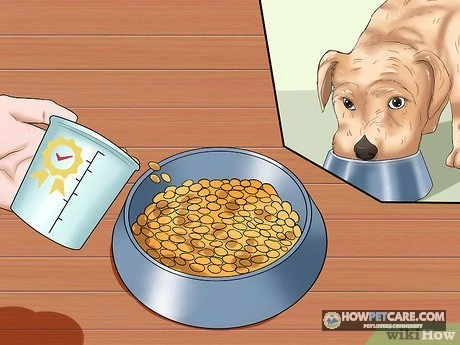
Feed a large-breed puppy formula, which is calorie- and calcium-controlled for slower, steadier growth. Measure meals instead of free-feeding. Keep the puppy lean — you should feel ribs easily and see a waist. In the lifetime Labrador study, lean-fed puppies developed hip dysplasia at half the rate of free-fed littermates, and overweight German Shepherd puppies carried close to double the risk. Avoid puppy supplements with extra calcium; a complete large-breed diet already has the right balance.
Spay/neuter timing by breed type
Early spaying or neutering has been associated with higher rates of joint disorders in some large breeds. In studies from the University of California, Davis, Golden Retrievers and Labrador Retrievers neutered before about 12 months showed measurably higher rates of hip dysplasia and cruciate ligament tears than dogs left intact until later or neutered after maturity, while small breeds did not show the same pattern. The practical takeaway: if you own a large or giant breed, talk to your vet about timing rather than defaulting to six months. For some breeds, waiting until skeletal maturity (often 12–18 months, later for giants) may reduce joint risk, though the right age depends on breed, sex, and lifestyle, and there are other health trade-offs to weigh. This is a conversation, not a fixed rule.
Red flags when choosing a breeder
- Cannot or will not share the parents’ OFA numbers or PennHIP reports
- "Vet-checked" with no registry documentation
- Screening on only one parent
- X-rays taken but never submitted to OFA or PennHIP
- Refuses to let you verify the certificates yourself
- Breeds dogs with Borderline, Mild, or worse hips
- Cannot tell you the grandparents’ hip status
Making the Call: A Decision Guide, Quality-of-Life Checks, and Your Next Steps
Which path fits your dog
- Puppy under 20 weeks: PennHIP now. If the DI is loose, JPS is on the table — and it is the cheapest fix you will ever get. Discuss with your vet immediately.
- Young dog under ~10 months with laxity and little arthritis: TPO/DPO may be an option if the hips are loose but not yet arthritic. Get the X-ray read and act before arthritis starts.
- Adult with moderate disease: weight control, NSAIDs or Librela, omega-3s, and rehab are the first-line plan. Reassess in 8–12 weeks; if pain is not controlled, discuss surgery.
- Large dog with severe arthritis: the real choice is FHO (lower cost, salvage, better in smaller dogs) versus THR (near-normal function, expensive, needs a board-certified surgeon). Size, budget, and general health decide.
- Small dog with pain: FHO often works well at this size, and medical management may be enough. Weight control remains the highest-yield step.
- Senior dog with other illnesses: prioritize comfort. Adjust the environment, manage pain, and weigh anesthesia risk against quality of life.
Questions to bring to the vet or surgeon: What is the arthritis stage? Is surgery likely to change the long-term outcome? What is the written total cost? Should I get a referral to a board-certified surgeon or a rehab specialist? If you are unsure, a referral is reasonable — specialists see more of these cases than a general practice does.
Quality of life and end-of-life decisions in severe disease
Advanced hip dysplasia can reach a point where pain control stops working, and it is worth thinking about this before a crisis. Use a structured tool such as the HHHHHMM scale (hurt, hunger, hydration, hygiene, happiness, mobility, more good days than bad) or a simple daily journal. Track whether your dog can rise and toilet without help, whether appetite and interest in family remain, whether bad days outnumber good days, and how well current medications are working.
When is it time to discuss euthanasia? Generally when pain cannot be controlled with the available options, when your dog can no longer rise or toilet on its own, or when bad days consistently outnumber good days. This is a deeply personal decision, and your veterinarian is the right partner for it — they can assess your dog objectively and talk through hospice and palliative options as well. There is no failure in choosing comfort when comfort is no longer possible.
Your 30-day action checklist
- Schedule the orthopedic exam and hip X-rays; ask whether sedation is included and what it costs.
- Record your dog’s weight and body condition score, and set a target weight.
- Put down non-slip rugs, get a ramp for the car, and raise the food and water bowls.
- Start a daily pain and mobility log — good days, bad days, medications, and what changed.
- Get a written estimate for diagnosis and each treatment path you are considering, including lifetime medication costs.
- If you have a young dog, ask about PennHIP before the JPS window closes.
- If you have pet insurance, read the policy now; if you don’t, get quotes before symptoms escalate.
- Book the recheck, and decide then whether the current plan is working.
Hip dysplasia is manageable. The dogs who do best are the ones whose owners acted early, kept them lean, controlled pain consistently, and chose the treatment that fit their dog’s age, size, and budget — not the most expensive one.
FAQ
Can hip dysplasia in dogs go away on its own?
No. The joint malformation does not correct itself, and the resulting osteoarthritis tends to progress over time. Weight control, pain management, rehab, or surgery can keep many dogs comfortable.
How long can a dog live with hip dysplasia?
Many dogs with hip dysplasia have a normal or near-normal lifespan when pain and weight are managed. Severe, untreated disease can cut quality of life well before lifespan is affected.
Does pet insurance cover hip dysplasia?
Often yes if the policy was in place before any signs appeared and the waiting period has passed. Many insurers treat hip dysplasia as pre-existing once symptoms or a diagnosis exist, and some exclude hereditary conditions, so check the policy wording.
Should a dog with hip dysplasia still exercise?
Yes, in a controlled way. Low-impact activity such as steady leash walks and swimming helps maintain muscle and joint support, while repetitive jumping and hard sprinting can aggravate pain.
Does my dog need a hip brace?
Evidence for hip braces in hip dysplasia is limited, and a poorly fitted brace can irritate the skin. Ask your vet or a rehab specialist whether one could help your dog before buying.
Is hip dysplasia painful for dogs?
It can be, especially once osteoarthritis develops. Some dogs show only stiffness or reduced activity rather than obvious pain, so a vet exam is the best way to judge.