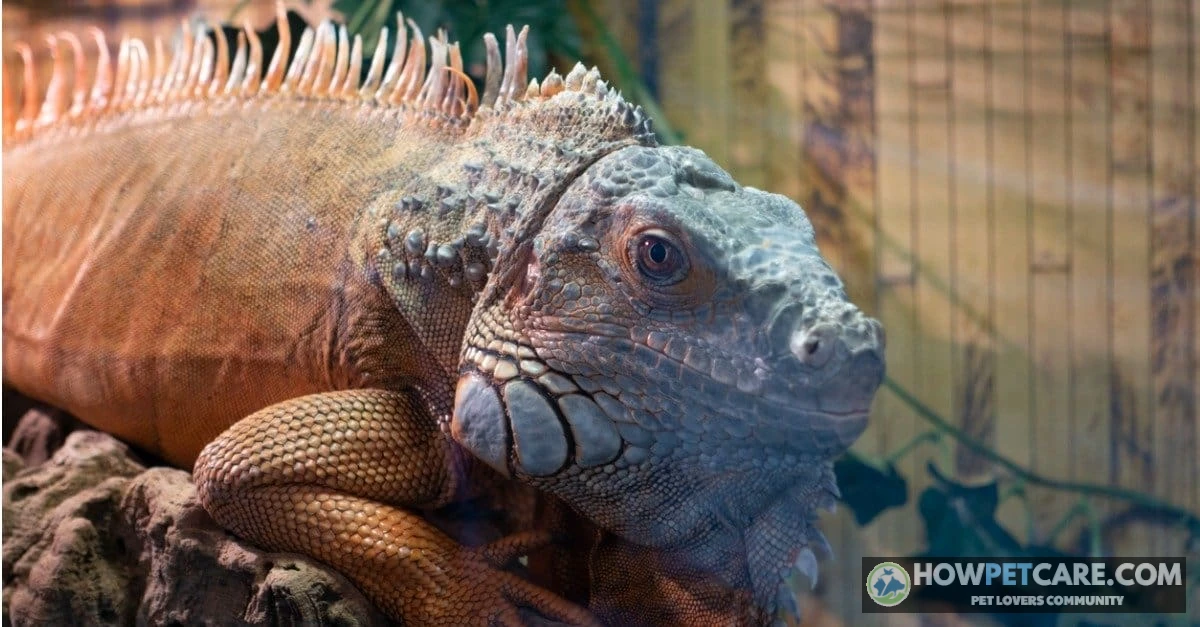

Pet green iguanas can live 15–20 years or longer with correct heat, UVB, diet, and space, so plan for a long commitment. Wild lifespans are less certain—no reliable average is established. Rock iguanas may live longer in captivity, but verified species records vary.
Iguana Lifespan: What the Evidence Supports
In captivity, a pet green iguana can live for 15–20 years or longer, so prospective owners should plan for a long commitment. The available care evidence supports a lifespan of up to 15 years with appropriate care, but it doesn’t establish how commonly pets reach 20. Wild green iguana life expectancy is less certain: the available evidence doesn’t establish a reliable average or typical range.
In this article, “iguana” means the green iguana unless another species is named. Lifespan claims also depend on which animals are counted. A record holder, a healthy adult pet and every hatchling born into a population answer different questions. That distinction matters just as much as captivity versus the wild.
Maximum vs. Typical vs. Realistic Average: Why “20+ Years” Can Mislead
These three terms may sound interchangeable, but they describe different things:
- Maximum documented lifespan is the oldest age supported by a reliable record for a named species and setting. One exceptional animal doesn’t tell you what most animals achieve. The evidence here doesn’t establish a verified maximum for green iguanas.
- Typical pet lifespan would describe an ordinary outcome for a clearly defined group of pets. A care-sheet statement that a green iguana can live up to 15 years with appropriate care is useful for planning, but it isn’t a measured typical lifespan.
- Realistic average survival would include animals that die young as well as long-lived survivors. The available evidence doesn’t establish a representative average for all pet green iguanas.
A 15–20-year planning horizon is prudent, not a promise that a well-kept animal will reach that age. An owner may accurately report a high age for an individual iguana, but that age doesn’t necessarily represent the average for pets.

Why some pet iguanas die young
You may read that most captive iguanas die within their first year or two. The claim circulates in pet-care discussions, but the evidence provided doesn’t establish a population-wide death rate or show that most die in that period. Surrender isn’t the same as death, either: a rehomed iguana may live for many more years.
Husbandry failures are nevertheless serious. Inadequate UVB can prevent an iguana from making the vitamin D it needs to absorb calcium, contributing to metabolic bone disease. An inappropriate diet can cause serious illness, too. Incorrect temperatures and an unsuitable enclosure add risks that owners should address early, rather than after symptoms appear.

How to read a lifespan claim critically
Ask four questions: Which species? Wild or captive? Is the number a measured average, a possible age or a record? And does the source explain how it counted animals that died young? If those details are missing, treat the number as a rough care-planning claim—not a survival guarantee.
Iguana Lifespan in Captivity vs. the Wild
Captivity can remove threats such as predators and provide steady food, shelter and veterinary treatment. That doesn’t automatically make every captive iguana long-lived. The keeper must supply the heat, ultraviolet light, space and diet the animal can’t find for itself.
Wild iguanas face different pressures, including predation, disease, extreme weather and human activity. Hatchlings and juveniles can be especially vulnerable. A study that follows animals from hatching will therefore produce a different average from one that describes only adults that have already survived those hazards.
For green iguanas, the available evidence doesn’t establish a reliable wild average or a directly comparable pet-versus-wild survival study. It would be misleading to assign the wild population a precise 8–15-year range or claim that every pet will outlive a wild iguana.
Wild iguanas in Florida, Mexico, and Costa Rica
Location changes the threats an iguana encounters. In Florida, cold snaps can leave green iguanas cold-stunned; roads and other human activity can also pose hazards. Wild populations in Mexico and Costa Rica face their own local combinations of predators, weather, habitat changes and human pressure.
Those differences don’t give us a defensible separate average lifespan for each place. Green iguanas don’t truly hibernate, and a cold-stunned animal isn’t simply enjoying a healthy seasonal sleep. If you encounter an apparently incapacitated wild iguana, don’t handle it yourself; contact local wildlife authorities for guidance.

How Long Do Green Iguanas Live? Lifespan by Species Compared
The table separates what the available evidence supports from what it doesn’t. “Not established here” means the supplied evidence doesn’t substantiate the figure—not that the animal has no published longevity records elsewhere.
| Species | Setting | Typical lifespan | Realistic average survival | Maximum documented or reported | Evidence quality / notes |
|---|---|---|---|---|---|
| Green iguana (Iguana iguana) | Pet or captive | Not established for a representative pet population | Not established, including early deaths | Up to 15 years with appropriate care is a reported care estimate, not a verified maximum. | Care estimate available; population survival data absent. |
| Green iguana | Wild | Not established here | Not established here | Not established here | Wild average is an identified evidence gap. |
| Rock iguanas (Cyclura species) | Captive or zoo | Not established here | Not established here | Not verified here | Species differ; a zoo record cannot automatically be applied to every rock iguana or to pets. |
| Rock iguanas (Cyclura species) | Wild | Not established here | Not established here | Not verified here | A genus-wide wild average would hide species and population differences. |
| Desert iguana (Dipsosaurus dorsalis) | Pet or captive | Not established here | Not established here | Not verified here | The supplied evidence does not support a numerical estimate. |
| Desert iguana | Wild | Not established here | Not established here | Not verified here | The supplied evidence does not support a numerical estimate. |
Rock iguanas vs. green iguanas
Rock iguanas are often described as exceptionally long-lived, and some captive animals may outlive green iguanas. The available evidence doesn’t verify a species-specific record or support a reliable estimate of how many extra years a rock iguana typically lives. Don’t transfer a Cyclura age claim to a green iguana.
Rock iguanas also encompass multiple species with distinct needs and conservation concerns. Their longevity claims aren’t a substitute for researching the exact animal and its legal status.

Desert iguanas and other species
Desert iguanas aren’t small versions of green iguanas: differences in habitat and care matter. The available evidence doesn’t establish a trustworthy pet or wild average for desert iguanas, or a comparable figure for spiny-tailed iguanas. Ask for the scientific name whenever a source makes a broad claim about an “iguana lifespan.”

Can iguanas really live 75 years?
A 75-year iguana lifespan is an extraordinary claim, not an established expectation for a pet green iguana. It appears in informal longevity discussions, but the supplied evidence doesn’t identify a named animal, its species, an age-verification method or a record that confirms it. That isn’t proof no iguana has ever reached the age; it means the claim can’t be verified here.
The same caution applies to claims of rock iguanas reaching 40 years or more. Such ages may be reported, but a useful record should identify the animal and explain how its age was documented. Until then, don’t use an exceptional-age claim as a species average.
A documented old animal can show what’s possible for its species in its setting. It can’t tell you how long the average pet lives or how often an animal reaches that age.
How Husbandry Quality Changes Lifespan: Poor, Average, and Optimal Care
The supplied evidence includes no reliable dataset that converts a particular care tier into an expected number of years. The matrix therefore maps care to risk, not invented survival ranges. For a green iguana, plan for a potential 15–20-year or longer commitment, while recognizing that the cited care estimate supports up to 15 years, not a guaranteed outcome.
| Care level | Heat and UVB | Diet and hydration | Enclosure and vet care | Expected lifespan range | Typical failure outcomes |
|---|---|---|---|---|---|
| Poor | Heat is unsuitable; UVB is absent or ineffective | Inappropriate foods; unreliable water or calcium | Cramped housing; illness goes untreated | No reliable range; premature death can cut life well short of the 15-year care estimate | Bone disease, weakness, dehydration or other serious illness |
| Mixed or inconsistent | Equipment works sometimes, but temperatures or UVB replacement are not checked | Suitable foods are offered inconsistently | Space or preventive care falls short | No reliable range; lifespan depends on which husbandry gaps persist | Problems may develop gradually and be missed |
| Strong, consistent care | Measured thermal gradient and suitable working UVB | Varied herbivorous diet, water and a vet-guided calcium plan | Room to climb and move; reptile-vet care | Plan for 15–20 years or longer; the cited care estimate supports up to 15 years | Illness can still occur; preventive care improves the chance of finding it early |
Heat and UVB
A green iguana needs a thermal gradient: a warmer basking area and a cooler area it can move between. One supplied care reference gives an enclosure range of about 80–95°F. Measure the actual temperatures at the animal’s basking and resting sites rather than relying on the room thermostat.
UVB lighting helps the iguana make the vitamin D needed for calcium absorption; inadequate exposure can contribute to metabolic bone disease. Use a reptile-appropriate UVB lamp at the distance recommended for that specific fixture, without ordinary glass blocking the rays. Bulbs can lose useful UVB before visible light fails. The supplied care guidance suggests replacement at 6–12 months, but follow the lamp manufacturer’s schedule and a reptile veterinarian’s advice for the particular setup.

Diet and hydration
Green iguanas are herbivores, and an inappropriate diet can cause serious illness. Offer a varied diet of suitable leafy greens and vegetables, provide fresh water, and discuss calcium and vitamin D3 supplementation with a reptile veterinarian. The right supplement plan depends on the diet, UVB exposure and animal; more isn’t automatically better.
Humidity matters as well. One supplied care reference recommends about 80% humidity for green iguanas. Use a hygrometer to check conditions, and ask your vet how to maintain appropriate humidity without creating persistently dirty, poorly ventilated housing.
Enclosure size and stress
A green iguana is an arboreal climber, not an animal that can thrive indefinitely in a small starter tank. Adults can reach 4–6 feet in total length. Provide a tall, secure enclosure with sturdy climbing areas and enough length for the animal to move and turn comfortably. Plan the adult space before acquiring a juvenile.
The supplied guidance calls for enclosure height and length of at least three times the animal’s body size, illustrating why adult housing can become a room-scale commitment. Discuss practical dimensions and safe furnishings with an experienced reptile veterinarian.

Vet care
Arrange a baseline examination with a veterinarian who treats iguanas, then follow their schedule for preventive visits and fecal testing. At least an annual check is a sensible planning point; an individual animal may need more frequent monitoring. Veterinary care can’t replace correct heat and diet, but it can help identify problems before they become emergencies.
Male vs. Female Iguanas: Lifespan Differences and Life-Shortening Risks
The available evidence doesn’t establish whether male or female green iguanas live longer on average. Sex does affect some health and management risks, though, so knowing your animal’s sex can help you and your veterinarian plan care.
Egg-binding in females
A female iguana can develop eggs without mating. If she can’t pass them, egg-binding, also called dystocia, can become an emergency; reproductive activity can also place demands on calcium reserves. Provide an appropriate nesting opportunity as advised by your reptile veterinarian, and seek prompt help for straining, weakness, a swollen abdomen or a suspected inability to lay.
Sexual maturity varies with the animal and its conditions rather than arriving on one dependable birthday. Discuss reproductive risks before you notice a problem. Spaying may be appropriate in some cases, but it’s a surgical decision that requires an experienced reptile veterinarian’s assessment of the individual animal and its risks.
Aggression and neutering in males
Some males become more territorial or aggressive during breeding season. Repeated rubbing against an enclosure can cause injuries, while unsafe handling can injure both iguana and keeper. Review enclosure design and handling practices with an experienced professional if behavior changes.
Neutering isn’t a guaranteed cure for aggression or a proven way to extend an iguana’s life. Surgery and anesthesia carry risks, so discuss possible benefits and alternatives with a veterinarian experienced in reptile care.
Iguana Life Stages and Signs of Aging: Hatchling to Senior
Life stages by approximate age
The supplied evidence doesn’t contain a single validated age chart for every green iguana, and growth and maturity vary. Use the stages below to guide observations, not to diagnose a problem or declare an animal old on a fixed birthday.
| Life stage | Approximate age | What to expect | Key health risks | Care focus |
|---|---|---|---|---|
| Hatchling | Newly hatched | Small and still developing | Husbandry errors can have serious consequences | Establish correct heat, UVB, food and hydration from the start |
| Juvenile | Growing, before maturity | Rapid changes in size and enclosure needs | Poor calcium balance and inadequate UVB | Track growth and arrange a baseline vet examination |
| Maturing iguana | Age varies | Reproductive or territorial behavior may appear | Injury, stress or reproductive complications | Discuss sex-specific care with a reptile vet |
| Adult | After maturity | Full adult space becomes essential | Chronic husbandry problems and reproductive disease | Maintain measured conditions and preventive care |
| Senior | No universal starting age | Activity or mobility may change | Disease can be mistaken for normal aging | Monitor weight and function; reassess vet-visit frequency |

For planning, some keepers start paying particular attention to senior needs in the later part of a long-lived pet’s life. There’s no well-supported universal age at which every iguana becomes senior, and the timeline shouldn’t be transferred between species.
Senior iguana care changes
Signs that deserve attention include reduced activity, stiff movement, thinning muscle, weight loss, slower or difficult shedding, and changes in appetite. None proves an iguana is simply aging: each can also signal a treatable disease. Dull coloration alone isn’t a reliable age test.
Weigh your iguana regularly using a safe, consistent method and tell your veterinarian about a downward trend. For an animal with mobility trouble, make basking and resting areas easier to reach without removing the needed heat gradient. Ask whether more frequent examinations, bloodwork, hydration support or diet adjustments are appropriate.
When reduced appetite becomes an emergency
Don’t use the number of days an iguana might survive without food as a safe waiting period. A young, weak or already sick animal can deteriorate quickly. Contact a reptile veterinarian promptly if an iguana stops eating, and seek urgent care sooner if it’s lethargic, losing weight, unable to move normally, straining or showing breathing difficulty.
Check the measured temperatures and UVB setup while arranging advice, but don’t assume a seasonal slowdown explains a new appetite change. Green iguanas don’t truly hibernate, and cold exposure can be dangerous.
A refusal to eat alongside weakness, weight loss, straining or breathing trouble needs prompt veterinary assessment. Young and already ill iguanas need especially quick attention.
Can You Commit? A Checklist for Getting an Iguana to 15–20 Years
Before you buy
- ☐ I can plan for a pet that may need care for 15–20 years or longer, including during moves, travel and other life changes.
- ☐ I have space for a large, climbing adult—not just a juvenile setup. A green iguana may reach 4–6 feet in total length.
- ☐ I have found a veterinarian who treats iguanas and can budget for routine visits, emergency treatment, lighting and electricity.
- ☐ I accept that a large iguana can scratch, bite or strike with its tail, and that behavior may change as it matures.
- ☐ I have a backup caregiver and a responsible contingency plan if I can no longer provide care.

First-year survival checklist
- ☐ Install and test the heat gradient, UVB lighting and humidity monitoring before the iguana arrives.
- ☐ Prepare a suitable herbivorous diet, fresh water and a supplement plan discussed with a reptile veterinarian.
- ☐ Arrange a baseline veterinary examination and ask how to monitor weight, growth and parasite risk.
- ☐ Check that climbing surfaces are secure and that the enclosure can be expanded as the animal grows.
Ongoing longevity routine
- ☐ Check basking and cooler temperatures and humidity regularly; correct equipment failures promptly.
- ☐ Replace the UVB lamp on the schedule appropriate to the product, even if it still produces visible light.
- ☐ Track weight and appetite, maintain clean water, and keep veterinary appointments.
- ☐ Seek prompt veterinary help for weakness, fractures, straining, breathing difficulty or a significant change in eating or movement.
If you can’t provide the adult space, daily care or veterinary access, postponing acquisition or choosing not to keep an iguana is responsible. If you already have one and your circumstances have changed, contact an experienced reptile rescue or veterinarian about safe rehoming rather than releasing it outdoors.
1What does a care-sheet statement claiming a green iguana can live up to 15 years represent?
Care estimates provide a prudent target for long-term planning, but they do not reflect a measured survival average across all captive pets.
2What happens to wild green iguanas in Florida when exposed to sudden cold snaps?
Freezing conditions incapacitate green iguanas, leaving them vulnerable and cold-stunned rather than resting safely.
3Why must UVB lighting in a green iguana enclosure be replaced periodically even if the bulb still lights up?
Bulbs lose their ability to emit effective UVB wavelengths necessary for vitamin D production well before visible illumination stops.
4What is the primary dietary classification that pet owners must accommodate for green iguanas?
Green iguanas are natural herbivores that depend on diverse plant matter and suitable hydration for proper health.
5According to the provided care guidance, how large should an adult green iguana enclosure be relative to the animal's length?
Proper arboreal housing requires vertical and horizontal dimensions of at least three times the iguana's overall length.
6Which health condition poses a serious emergency risk to female green iguanas, even if they have not mated?
Unmated females can still produce eggs, and failure to lay them creates a life-threatening medical emergency.
7What does the source material state regarding the surgical neutering of male green iguanas?
Anesthesia and surgery pose genuine hazards, and evidence does not establish that neutering increases overall longevity.
8How should a keeper interpret signs like stiff movement, reduced activity, or thinning muscle in an older iguana?
Changes in mobility, weight, or appetite can signal treatable medical issues rather than simple, unmanageable aging.
9What is the recommended response if a green iguana stops eating and exhibits weakness or lethargy?
Appetite loss accompanied by lethargy or straining requires immediate professional evaluation rather than delayed monitoring.
10Why is it misleading to apply lifespan records from rock iguanas (Cyclura species) to green iguanas?
Longevity claims for Cyclura species cannot be transferred to green iguanas due to major biological and genus differences.
| Species | Setting | Typical Lifespan | Realistic Average Survival | Maximum Documented or Reported | Evidence Quality / Notes |
|---|---|---|---|---|---|
| Green iguana (Iguana iguana) | Pet or captive | Not in source | Not in source | Up to 15 years | Care estimate available; population survival data absent. Early deaths are not established. Reported care estimate is not a verified maximum. |
| Green iguana (Iguana iguana) | Wild | Not in source | Not in source | Not in source | Wild average is an identified evidence gap. |
| Rock iguanas (Cyclura species) | Captive or zoo | Not in source | Not in source | Not in source | Species differ; a zoo record cannot automatically be applied to every rock iguana or to pets. |
| Rock iguanas (Cyclura species) | Wild | Not in source | Not in source | Not in source | A genus-wide wild average would hide species and population differences. |
| Desert iguana (Dipsosaurus dorsalis) | Pet or captive | Not in source | Not in source | Not in source | The supplied evidence does not support a numerical estimate. |
| Desert iguana (Dipsosaurus dorsalis) | Wild | Not in source | Not in source | Not in source | The supplied evidence does not support a numerical estimate. |
FAQ
How long can an iguana go without food?
A healthy adult iguana can survive a few weeks without eating, but a refusal to eat beyond a few days (especially with weight loss or lethargy) warrants a reptile vet visit. Juveniles and sick animals deteriorate much faster.
Do iguanas live long?
For reptiles of their size, iguanas live fairly long: roughly 10-20 years for well-kept pet green iguanas. Some larger species such as rock iguanas can live longer, though the numbers vary by source.
What is the average lifespan of a pet iguana?
Documented averages are lower than the best-case figures because many captive iguanas die early from preventable husbandry problems. Those that survive the first couple of years with correct heat, UVB, and diet commonly reach 10-20 years.
Can iguanas hibernate?
Green iguanas do not truly hibernate, but they can slow down and eat less in cooler or shorter-daylight periods. Wild iguanas in cold climates can become cold-stunned, which is dangerous rather than a healthy dormancy.
What is the most common cause of early death in pet iguanas?
Metabolic bone disease from inadequate UVB lighting and poor calcium balance is among the most common, along with low enclosure temperatures and improper diet. These problems are largely preventable.