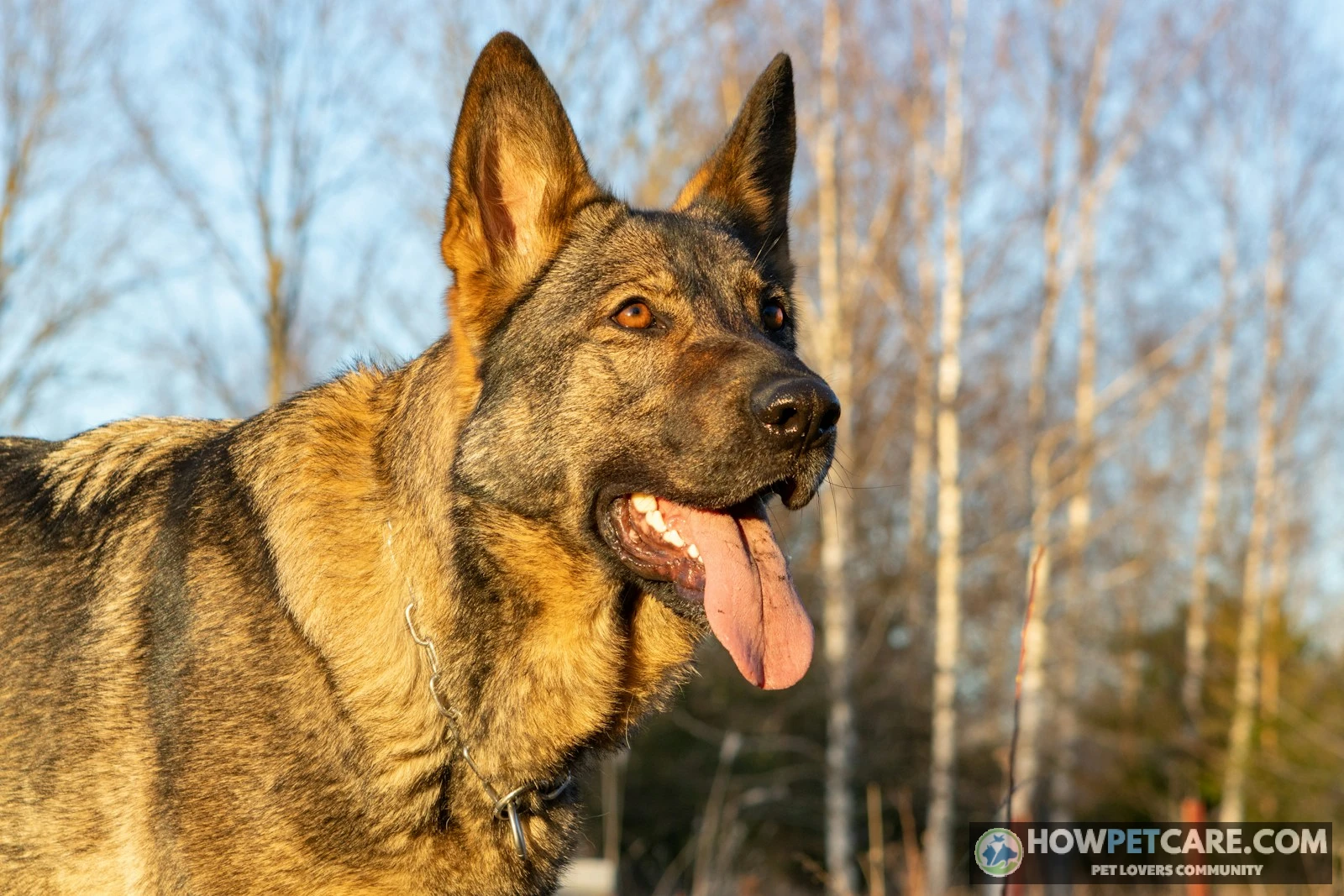

German Shepherds are confident, intelligent, high-energy dogs with strong loyalty and guarding instincts. They suit active households that can commit to daily exercise, consistent training, and supervision around children. They’re a poor fit for people seeking a low-maintenance pet or those away for long hours without a care plan.
German Shepherd Traits at a Glance: Who Fits and Who Doesn’t
German Shepherds are alert, quick-learning dogs that often stay close to their people. They also have a strong working heritage and substantial exercise and training needs. They can be affectionate family companions, but their size, energy, shedding, and potential to become wary or reactive make them demanding dogs for an unprepared household. The American Kennel Club (AKC) describes the breed as confident, courageous, steady, and highly intelligent.
The short verdict: A German Shepherd can be a good family dog when adults commit to training, socialization, and supervision around children. A first-time owner can succeed, but should be ready for a steeper learning curve than with many lower-demand companion dogs. If you want an easygoing pet, are away for long stretches without help, or can’t make time for daily activity, consider another breed.
Individual dogs vary considerably. Temperament, upbringing, health, and breeding background matter more than a simple label such as male, female, working line, or show line. Use the comparisons and scorecard in this guide to consider what those differences mean for your household.
Personality and Temperament Traits, Decoded by Real Behavior
German Shepherds were developed as herding dogs for demanding work alongside people. That history helps explain why many pay close attention to their surroundings and like working with a handler. It doesn’t mean every dog has the same personality or can settle easily in every home.
- Loyalty: A dog may follow you from room to room or rest near your feet. That closeness can be rewarding, but it also makes practice spending relaxed time apart important.
- Intelligence and trainability: A Shepherd may quickly learn that sitting earns a reward—or that jumping on a counter yields an unattended sandwich. Consistency matters because both useful and unwanted habits can be reinforced.
- Alertness: Barking when someone approaches the door can reflect awareness, uncertainty, excitement, or a learned response. The goal at home isn’t to eliminate awareness; it’s to help the dog recover and respond to you.
- Protective instinct: Some dogs place themselves between an owner and an unfamiliar person. Context matters: the same movement can reflect curiosity or discomfort, not a reliable assessment of danger.
- Energy and persistence: A dog that repeatedly brings a toy or patrols the yard may need appropriate activity, rest, and guidance. More exercise alone won’t teach an excited dog how to settle.
- Prey drive: Fast-moving squirrels, cats, bikes, and joggers can trigger chasing. Leash management, secure fencing, and reward-based training help prevent the dog from rehearsing that behavior.

German Shepherds take part in activities ranging from detection and search and rescue to obedience and agility. Scent games, such as finding a hidden toy, can give a companion dog an accessible outlet.
Staring, Following, Head Tilting, and Whale Eye: What Your Dog Is Telling You
A stare may mean a dog is waiting for a cue, watching food, or feeling concerned. Look at its whole body and the situation before deciding. Following can simply mean the dog enjoys company. If it comes with panic when you leave, though, seek help for possible separation anxiety rather than assuming it’s ordinary loyalty.
A head tilt may accompany attentive listening and processing of sounds or speech. Frequent or sudden head tilting, especially with balance problems, warrants a veterinary assessment.
Whale eye describes a dog showing the whites of its eyes, often while turning its head away from something it’s watching. It can signal discomfort, especially alongside a stiff body, lip licking, or an attempt to move away. Give the dog space and remove the pressure rather than forcing an interaction.

Herding Instincts in a Family Home
Moving children can excite a young herding dog. Circling, chasing, bumping, or nipping at heels isn’t a game to ignore, even when the dog doesn’t intend harm. Interrupt calmly, separate the dog and child, and redirect the dog to an appropriate toy or activity. Use gates and adult supervision to prevent repetition, and teach children not to chase, corner, or climb on a dog.

Are German Shepherds Aggressive or Dangerous? Negative Traits and How Manageable They Are
A German Shepherd isn’t inherently dangerous, but a large, powerful dog can cause serious injury if it bites. Breed alone can’t tell you whether an individual dog is safe in a particular setting; genetics, health, past experiences, socialization, and management all matter. Temperament also varies widely within the breed, and some individuals struggle around other animals.
Protectiveness isn’t the same as aggression. A dog may alert its household to a visitor and then relax when guided. Reactivity means an intense response—such as barking or lunging—to a trigger and may stem from fear, frustration, or excitement. Aggression includes behaviors intended to threaten or cause harm. A reactive dog isn’t necessarily aggressive, and an outwardly quiet dog isn’t automatically comfortable.
A sudden increase in growling, snapping, or reactivity calls for a veterinary examination to rule out pain or illness. If a dog has bitten, create distance, prevent access to the trigger, and consult a qualified reward-based behavior professional; don’t punish warning signals.
Common German Shepherd Behavior Problems and Fixes
- Barking and leash reactivity: These are often manageable, but progress depends on the trigger and the dog. Increase distance, reward calm observation, and work with a qualified trainer if reactions persist. Avoid forcing close encounters.
- Mouthing and chasing: These are common management priorities for young, energetic dogs. Use gates and leashes, provide suitable chew items, and reward alternative behaviors. Persistent or hard biting calls for professional help.
- Destructive chewing: Check whether the dog has appropriate outlets, enough rest, and safe chew options. Confinement or fatigue alone won’t resolve every cause.
- Separation anxiety: This is distress about being left, not spite. Signs can include persistent vocalizing, escape attempts, or destruction during departures. A veterinarian and qualified behavior professional can help develop a gradual plan; severe cases may require medical support.
- Shedding and physical strength: These are ownership demands rather than behavior problems. Regular brushing, secure equipment, and training make them easier to manage, but won’t make them disappear.

Guard Dog Traits: What Helps and What Needs Managing
Alertness, confidence, physical presence, and responsiveness to a handler can make a German Shepherd an effective working dog. At home, those same traits call for controlled greetings, reliable cues, and a dog that can disengage. Don’t encourage suspicion of visitors or attempt protection training without qualified professional oversight. A dog that barks at everything isn’t necessarily protecting anyone.
Male vs Female German Shepherd Traits
Sex gives you some information about likely adult size, but it’s a poor shortcut for predicting a particular dog’s personality. Claims that males are naturally dominant, females protect people rather than property, or one sex is always easier to train aren’t dependable rules for choosing a household dog.
| Trait | Male | Female | What It Means for Your Household |
|---|---|---|---|
| Typical adult size | About 65–90 pounds and 24–26 inches at the shoulder | Often smaller; individual size varies | Consider whether every adult can safely handle the dog on leash and lift or transport it in an emergency. |
| Maturity | Individuals develop at different rates | Individuals develop at different rates | Meet the individual dog and ask about its behavior rather than assuming one sex will mature sooner. |
| Protectiveness and alertness | Varies by individual and experience | Varies by individual and experience | Neither sex guarantees a particular response to visitors or a threat. |
| Trainability | Can be highly trainable | Can be highly trainable | Motivation, health, training, and the individual dog matter more than a sex stereotype. |
| Life with other dogs | Compatibility depends on the dogs and management | Compatibility depends on the dogs and management | Plan careful introductions and consider the resident dog’s preferences. |
| Reproductive care | An intact male needs management around females in heat | An intact female experiences heat cycles and needs pregnancy prevention | Discuss timing and individual health risks of spaying or neutering with your veterinarian. |

If physical handling is a concern, a smaller individual may be easier to manage, but a smaller dog can still pull strongly. Don’t count on surgery to solve fear or aggression. Spay and neuter decisions involve reproductive, orthopedic, and other health considerations, so ask your veterinarian to assess the individual dog’s circumstances.
Working-Line vs Show-Line vs Backyard-Bred: How Background Can Affect Temperament
Breeding goals can influence the traits a dog is likely to express, but the categories overlap. Working line and show line describe broad selection goals; backyard-bred describes an informal breeding context, not a recognized genetic line. An individual dog from any category may differ from the tendencies below.
| Trait | Working Line | Show Line | Backyard-Bred | Best Fit Owner |
|---|---|---|---|---|
| Typical selection goal | Performance in work or sport | Appearance and movement evaluated against a breed standard | Goals and practices vary widely | Match the individual dog’s demonstrated traits to your life. |
| Drive and energy | Often selected for strong motivation and sustained engagement | May be more moderate, though some are intense | Unpredictable without reliable information | High-drive dogs suit people who enjoy regular structured activity. |
| Training demands | Often thrives with skilled, consistent work and an appropriate outlet | Still needs training, exercise, and socialization | Depends on temperament and early experience | Novices should prioritize a manageable individual over a label. |
| Guarding and reactivity | Alertness may be valued; reactions vary | Alertness may also be present | Fearfulness or confidence cannot be predicted from the label alone | All households need a dog that can recover and disengage. |
| Family fit | Can work well in an active, experienced home; may overwhelm a novice | Some individuals suit active companion homes | May fit well or have substantial unknowns | Choose for observed behavior, support, and lifestyle—not appearance alone. |
| Health documentation | Verify parent evaluations; working ability is not proof of health | Verify parent evaluations; show success is not proof of health | Documentation may be absent or incomplete | Require verifiable health information wherever available. |

The AKC breed standard describes an ideal, not a guarantee about any puppy. A show-line dog isn’t automatically calm or structurally sound, and a working-line dog isn’t automatically unsuitable as a companion. An informally bred dog can be a wonderful pet, too; the difficulty is that its health and early history may be harder to assess.
How to Choose a Line for Your Lifestyle
For a typical family, an individually assessed dog with a moderate activity level, stable behavior, and a documented health background is a more useful target than a particular sex or line. Ask what the adult dogs do on an ordinary day, how they respond to unfamiliar people and other dogs, and how they settle after activity. If you’re considering a high-drive working prospect, be honest about whether you want structured training as a regular hobby—not just an occasional walk.

Meet adult German Shepherds when possible. Ask about the specific dog’s behavior, health, and ability to settle; a pedigree category can’t answer those questions on its own.
Daily Care Numbers: Exercise, Mental Stimulation, Feeding, Grooming, and Living Situation
An adult German Shepherd generally needs substantial daily activity, but no single exercise prescription fits every dog. A practical planning allowance is roughly one to two hours a day, divided among walks, play, and suitable activities, with adjustments for health, age, weather, and the individual. Use this as a budgeting guideline, not a guarantee that every dog needs or can tolerate that amount.
Plan additional short sessions of mental work, such as scent games, food puzzles, or reward-based obedience practice. A starting allowance of 15–30 minutes across the day can help you assess your schedule. Allow downtime, too: a dog that’s constantly stimulated may struggle to settle.
Puppies need free play and age-appropriate exploration rather than an adult exercise schedule. Avoid repetitive forced running and jumping while they grow, and ask your veterinarian about safe activity, particularly if the puppy shows lameness or tires quickly.

Can a German Shepherd Live in an Apartment or Be Left Alone?
An apartment can work if the dog has regular outdoor activity, opportunities to toilet, a quiet place to rest, and management for noise and shared spaces. Square footage matters less than whether the individual dog can cope with the building and your routine. Check lease, insurance, and local rules before committing; some housing policies restrict large dogs or specific breeds.
For planning, aim to arrange a break if a healthy adult will routinely be alone for more than roughly four to six hours. This isn’t a universal safety limit: puppies, seniors, dogs with medical needs, and dogs distressed by separation may need help much sooner. A walker, trusted helper, or flexible schedule can make a long workday more workable, but doesn’t replace a treatment plan for separation anxiety.

Feeding and Grooming Basics
Food quantities depend on the food’s calorie density and the dog’s body condition, activity, age, and health. There’s no reliable universal number of cups for a German Shepherd of a given weight: one cup of one food may contain substantially different calories from another. Start with the feeding guide on a complete and balanced food, measure portions, and ask your veterinarian to adjust the amount based on body condition and growth. Choose a puppy food appropriate for large-breed growth while the dog is growing; avoid adding supplements without veterinary advice.
German Shepherds have a double coat and shed heavily. As a practical routine, brush several times a week and more often during heavy shedding; bathe as needed. Check nails, ears, and teeth regularly, and expect loose hair on floors and clothing even with good grooming.

How German Shepherd Traits Change from Puppy to Adolescent to Mature Adult
A German Shepherd can reach adult size before it develops adult self-control. The breed may mature slowly, with some dogs continuing to develop behaviorally up to around four years; that’s a broad observation, not a deadline or a promise that training needs will disappear. As you think about a typical German Shepherd lifespan, expect needs to shift with age.
- Puppy, up to about six months: Expect chewing, mouthing, naps, rapid learning, and a need for close supervision. Establish predictable routines and make safe encounters with everyday sights and sounds positive.
- Adolescent, roughly six months to two years: Energy, curiosity, and responses to familiar cues may become less consistent. Continue rewarding desired behavior and use management rather than interpreting every mistake as a challenge to your authority.
- Young adult, roughly two to three years: Many dogs become more settled as experience and training accumulate, though activity and attention needs remain significant.
- Mature adult, around four years and beyond: Some dogs are steadier, but personality and needs remain individual. A mature Shepherd still benefits from exercise, enrichment, veterinary care, and continued practice.

Puppy Socialization Protocol: A Staged Plan for Calm Encounters
Socialization means helping a puppy feel safe around the world, not making it greet everyone. Early positive experiences can support confidence, but no schedule can guarantee prevention of guarding, fear, or reactivity. Coordinate outings with your veterinarian based on vaccination status and local disease risk; a well-run puppy class and controlled visits can be options before a puppy has completed every vaccination.
-
Weeks 8–9: Build a safe home base
Pair ordinary household sounds with treats at a comfortable volume. Let the puppy choose whether to approach calm visitors, and gently introduce handling of paws, ears, and mouth.
-
Weeks 10–11: Observe from a distance
Offer short car rides and let the puppy watch traffic, people, and bicycles from a place where it can remain relaxed. Arrange a low-pressure veterinary visit if the clinic offers one.
-
Weeks 12–13: Practice with suitable companions
Consider a well-managed puppy class and calm interactions with healthy, known dogs approved by your veterinarian. Reward attention to you and allow breaks.
-
Weeks 14–16: Broaden experiences gradually
Introduce different surfaces and everyday environments at the puppy’s pace. Reward calm observation of passing people rather than insisting on greetings.
Continue positive exposure beyond this early period. If the puppy freezes, backs away, tucks its tail, or shows other signs of discomfort, increase distance and make the situation easier. Seek qualified help early if fear recurs or reactions escalate.
What German Shepherd Ownership Costs: First Year and Monthly Budget
The figures below are illustrative US planning allowances, not verified national averages or quotes. Prices vary by location, dog, provider, insurance coverage, and adoption or purchase route. Ask local veterinary clinics, trainers, and insurers for estimates before deciding.
Possible first-year setup costs:
- Adoption or purchase: allow roughly $300–$3,500 or more, depending on the source and dog.
- Puppy examinations and initial vaccinations: roughly $150–$400, with additional care potentially needed.
- Spay or neuter, if performed during the first year: roughly $200–$800.
- Microchip and registration: roughly $30–$75.
- Crate, bed, leash, bowls, and initial toys: roughly $200–$500.
- Group training or puppy classes: roughly $150–$500.
These setup allowances total approximately $1,030–$5,775, before food, ongoing preventives, insurance, and unexpected care. A dog adopted as an adult may already have some veterinary services included; confirm what the fee covers.
Possible recurring monthly costs:
- Food: roughly $60–$120.
- Flea, tick, and heartworm prevention: roughly $20–$40.
- Optional pet insurance: roughly $30–$70, depending on the policy and dog.
- Treats, replacement toys, and grooming supplies: roughly $15–$40.
That’s approximately $125–$270 per month with insurance, or $1,500–$3,240 over a year. Adding those illustrative recurring costs to the setup allowances produces a broad first-year planning range of about $2,530–$9,015, assuming all listed expenses apply. Actual costs can fall outside that range. Budget separately for routine follow-up veterinary visits, dental care, emergency treatment, boarding, and any individual training.

Insurance may exclude preexisting conditions and impose waiting periods, deductibles, or payout limits. Compare policy terms and maintain an emergency fund whether or not you buy coverage.
Health Testing to Require from a Breeder
Health background affects both likely veterinary costs and how confidently you can predict them. German Shepherds can be affected by hip and elbow dysplasia, degenerative myelopathy, and gastric dilatation-volvulus (GDV, or bloat). Health testing reduces uncertainty; it can’t guarantee a healthy dog or eliminate the need for future care.
Ask for verifiable records for both parents rather than accepting a general assurance that they’re healthy:
- Hips: Orthopedic Foundation for Animals (OFA) hip evaluations or a PennHIP assessment. Ask your veterinarian how to interpret the results.
- Elbows: OFA elbow evaluations or an equivalent documented assessment. PennHIP evaluates hips, not elbows.
- Degenerative myelopathy: DNA test results for the parents, interpreted with a veterinarian or genetics professional. A result indicates genetic risk or carrier status; it isn’t a certain prediction of disease.

Ask about relevant family health history as well. A lower purchase price doesn’t prove a dog will have higher lifetime costs, and health-tested parents don’t guarantee lower costs. Documentation helps you assess known risks, but it can’t predict every outcome.
Regardless of breeding background, one emergency is worth knowing in advance. A swollen or painful abdomen, repeated unproductive attempts to vomit, marked distress, or collapse can indicate a possible emergency such as GDV. Seek emergency veterinary care immediately rather than waiting to see whether signs pass.
German Shepherd Trait Scorecard and Your Next Steps
These editorial ratings are a practical guide to common breed tendencies, not measured test results or predictions for an individual dog. A higher score means more of the named trait; it isn’t automatically better.
| Trait | Score (1–5) | What It Means in Daily Life |
|---|---|---|
| Energy | 5 | Plan for regular activity and a dog that may want to participate in your day. |
| Intelligence | 5 | Expect a dog that learns from both your training and your household habits. |
| Trainability | 5 | Many enjoy learning, but training still requires time and consistency. |
| Alertness and guarding tendency | 4 | Visitors and unusual sounds may attract attention; teach calm responses. |
| Shedding | 5 | Hair removal and brushing are ongoing chores. |
| Vocalness | 4 | Barking may need management, especially in shared housing. |
| Exercise needs | 5 | A quick trip into the yard is unlikely to meet every adult’s needs. |
| Child friendliness | 3 | Some make excellent family dogs; supervision and individual temperament are essential. |
| Other-pet friendliness | 3 | Introductions and management matter, particularly around small or fast-moving animals. |
| Alone-time tolerance | 2 | Plan for company, breaks, and gradual practice rather than assuming long absences are easy. |
| Apartment adaptability | 3 | Possible with a suitable individual, consistent activity, and attention to noise. |
| First-time-owner ease | 2 | Achievable for a prepared novice, but not a low-effort introduction to dog ownership. |
Is a German Shepherd Right for You? A Quick Checklist
Before committing, ask yourself:
- Can I make room every day for exercise, enrichment, rest, and training—even in bad weather?
- Can the adults in my household safely manage a strong dog and supervise interactions with children?
- Do I have a plan for workdays, travel, emergencies, and the dog’s care if I’m unavailable?
- Can I afford routine care and have a realistic plan for unexpected veterinary bills?
- If I rent, have I checked the actual lease and insurance requirements?
- If I already have pets, can I arrange careful introductions and separate animals when needed?
A likely fit: An active household that enjoys training, has time for companionship, and can manage shedding and veterinary costs. Choose the individual whose behavior and activity needs match the household; either sex may work.
A possible fit: A first-time owner or apartment dweller with a realistic schedule, appropriate support, and a dog assessed as manageable for that setting. A moderate-energy show-line individual may be worth considering, but the label alone isn’t enough.
Probably not a fit: A household seeking a low-maintenance dog, unable to provide regular activity or supervision, or routinely absent for long days without a reliable care plan. A high-drive working prospect is also a poor match if structured training doesn’t appeal to you.
AKC Popularity and Your Next Steps
The AKC’s 2022 registration data placed the German Shepherd fourth in popularity. A newer ranking isn’t established by the evidence available here, so don’t treat that historical position as a current rank—or popularity as evidence that the breed fits your home.
Meet adult dogs, speak with knowledgeable owners or rescue staff about daily routines, and assess the individual rather than relying on sex or line alone. Then get local cost estimates, identify a veterinarian and reward-based trainer, and map out who will handle exercise, socialization, and care before bringing a dog home.
1What does the body language signal known as 'whale eye' typically indicate in a German Shepherd?
Showing the whites of the eyes while turning away signals discomfort or feeling pressured, indicating the dog needs space.
2What is the recommended response when a young German Shepherd exhibits herding behaviors like nipping or circling around running children?
Managing herding instincts requires calm intervention, physical management, and channeling the dog's focus onto a safe toy or task.
3How do general temperament and trainability traits compare between male and female German Shepherds?
Individual variance, health, training, and breeding background have a far greater impact on behavior than physical sex.
4Which orthopedic evaluation specifically assesses hip joint laxity but does NOT evaluate a dog's elbows?
PennHIP is a specialized diagnostic method for measuring hip laxity and does not cover elbow dysplasia assessments.
5What is a key selection characteristic distinguishing working-line German Shepherds from show-line dogs?
Working-line breeding focuses primarily on high performance, work capacity, and handler engagement.
6What is a recommended daily baseline allowance for physical activity for an adult German Shepherd?
This guideline provides a practical budget for physical exercise, adaptable to an individual dog's health and age.
7As a planning benchmark, how long can a healthy adult German Shepherd routinely be left alone before arranging a break?
Planning for a mid-day break around this timeframe helps maintain physical comfort and prevents distress in healthy adults.
8Up to what age can some German Shepherds continue to mature behaviorally?
German Shepherds mature slowly, and some individuals continue developing self-control and temperament up to about four years.
9During weeks 10 to 11 of a puppy socialization protocol, what is the primary focus of outings?
At this stage, low-pressure observation from a distance helps puppies process novel stimuli while staying relaxed.
10Which combination of symptoms indicates a potential emergency such as Gastric Dilatation-Volvulus (GDV/bloat)?
These acute physical signs point to bloat, requiring immediate veterinary intervention to prevent fatal complications.
| Breeding Line | Typical Selection Goal | Drive and Energy | Training Demands | Guarding and Reactivity | Family Fit | Health Documentation | Best Fit Owner (Inferred) |
|---|---|---|---|---|---|---|---|
| Working Line | Performance in work or sport | Often selected for strong motivation and sustained engagement | Often thrives with skilled, consistent work and an appropriate outlet | Alertness may be valued; reactions vary | Can work well in an active, experienced home; may overwhelm a novice | Verify parent evaluations; working ability is not proof of health | Experienced, highly active owners or trainers seeking a dog for work, sports, or high-level activities, or people who enjoy regular structured activity and have experience with high-drive dogs. |
| Show Line | Appearance and movement evaluated against a breed standard | May be more moderate, though some are intense | Still needs training, exercise, and socialization | Alertness may also be present | Some individuals suit active companion homes | Verify parent evaluations; show success is not proof of health | Active families, companion homes, or prepared first-time owners looking for a balanced dog with potentially more moderate drive. |
| Backyard-Bred | Goals and practices vary widely | Unpredictable without reliable information | Depends on temperament and early experience | Fearfulness or confidence cannot be predicted from the label alone | May fit well or have substantial unknowns | Documentation may be absent or incomplete | Prepared owners who prioritize evaluating the individual dog's observed behavior and health, and are ready for potential unknown health or behavioral challenges. |
FAQ
Are German Shepherds good with kids?
Generally yes when well socialized and trained, as they are loyal and protective of family. Their herding instinct can lead to nipping or bumping small children, so supervision and teaching both dog and kids boundaries are essential.
Are German Shepherds good for first-time dog owners?
They can be if the owner commits to daily training, exercise, and early socialization. Show-line dogs from a reputable breeder are usually a better first-time choice than high-drive working lines.
Why does my German Shepherd follow me everywhere?
Following is a hallmark of the breed’s close attachment and working heritage, as they are bred to stay near their handler. If it comes with distress when you leave, it may signal separation anxiety and need training.
Are German Shepherds smart?
Yes, they consistently rank among the most trainable breeds and learn commands quickly. That intelligence also means they need mental work, or they may invent their own, often destructive, activities.
Do German Shepherds shed a lot?
Yes. Their double coat sheds year-round with heavier seasonal blowouts in spring and fall, so regular brushing and vacuuming are part of ownership.
Are German Shepherds prone to health problems?
They are predisposed to hip and elbow dysplasia, degenerative myelopathy, and bloat. Choosing a breeder who tests parents and feeding appropriately can reduce risk.