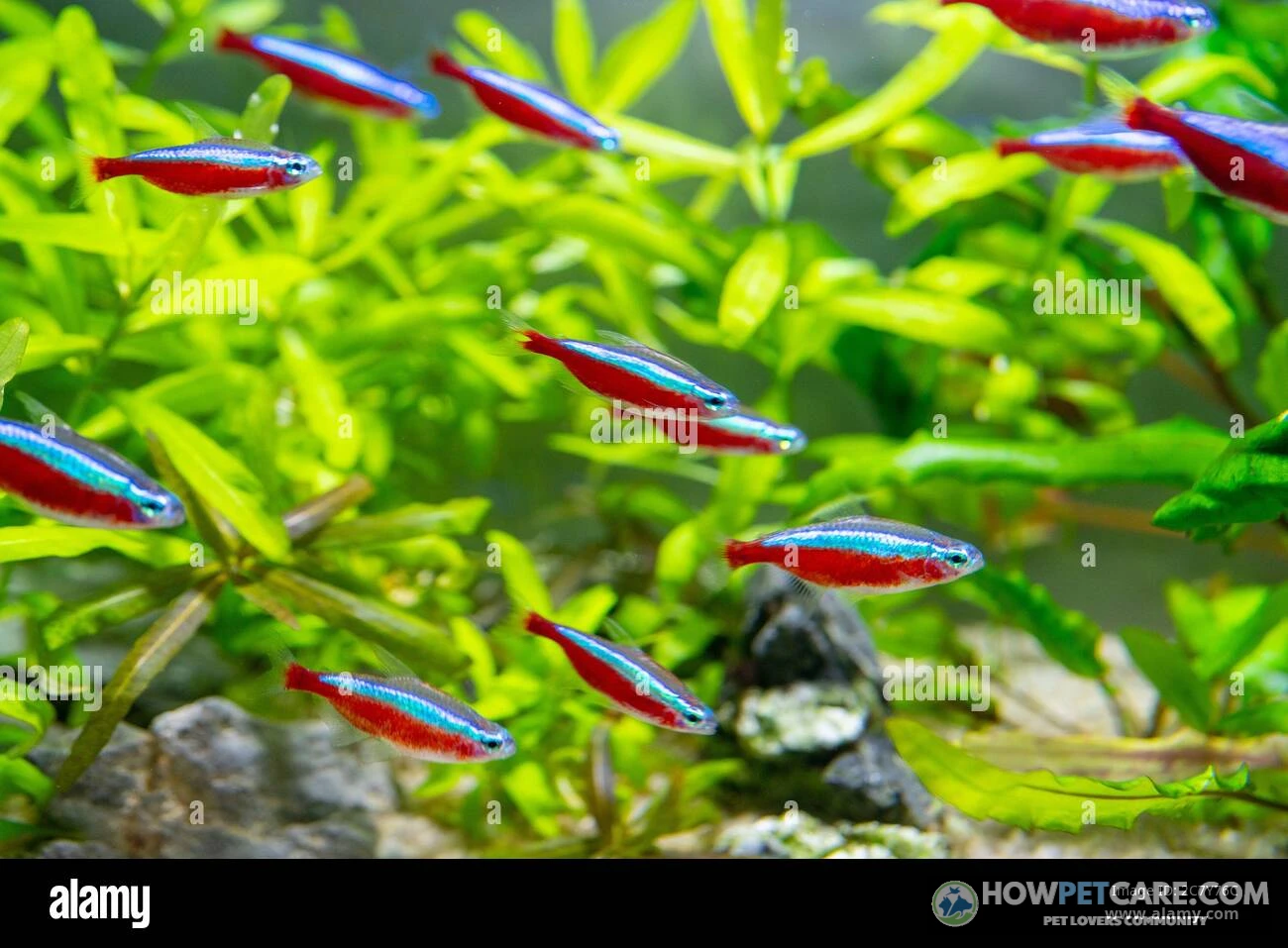

Proper neon tetra care requires an established, fully cycled aquarium of at least 10 gallons with a school of 6 or more fish. Keep water temperature between 72–76°F (22–24°C), pH at 6.0–7.0, and general hardness at 1–4 dGH (20–70 ppm), with zero detectable ammonia and nitrite.
Neon tetras do well in a mature, planted aquarium with stable, soft water and a properly sized school. A practical baseline is a 10-gallon long tank, at least six fish, a temperature of 72–76°F (22–24°C), pH of 6.0–7.0, and no detectable ammonia or nitrite. Most early losses come from an incomplete nitrogen cycle, abrupt changes in hardness or temperature, poor stock, or introducing these small fish to an unstable aquarium.
This guide explains how to care for neon tetras from acclimation through breeding. It includes precise water targets, compatible tank mates, disease comparisons, and a printable maintenance routine.
Neon Tetra Overview: Lifespan, Size, and Schooling Basics
The neon tetra fish, Paracheirodon innesi, is a peaceful South American schooling fish that usually occupies the middle of a freshwater aquarium. Its narrow body has an iridescent blue stripe and a red stripe that extends from about mid-body to the tail. By comparison, a cardinal tetra’s red stripe runs nearly the full length of its body. A neon tetra instead has silver coloration below the blue stripe near the head.

Neon Tetra Quick-Facts
- Adult length: 1.25–1.5 inches (3.2–3.8 cm)
- Typical lifespan: 5–8 years in a stable, well-cycled aquarium
- Minimum tank volume: 10-gallon long, about 38 liters, for one school
- Ideal temperature: 72–76°F (22–24°C)
- Ideal hardness: 1–4 dGH, approximately 20–70 ppm
- School size: Six fish minimum; 10–12 preferred
- Observed U.S. price: One major pet retailer lists individual fish at $2.99 for in-store purchase

Prices vary by region, quantity, color strain, and shipping method. Retailer stock and pricing change often, so compare the current total cost—including insulated shipping where applicable—before buying. Price shouldn’t be the only consideration. Active schooling, full bodies, clear eyes, and intact fins are more useful signs of healthy stock.
Adult Size and Growth Milestones
A neon tetra size of roughly 1.25–1.5 inches might suggest that these fish belong in a nano tank, but body length doesn’t reflect how much swimming room they need. Neon tetras move as a coordinated group and require horizontal space. A 10-gallon long is the absolute practical minimum. A 15- or 20-gallon long offers more stable chemistry and enough room for a larger school.

Healthy adults should have straight spines, rounded but not swollen abdomens, and vivid lateral stripes. Juveniles may look thin or pale after shipping, but their color should improve after acclimation. Persistent wasting, isolated white muscle patches, or spinal curvature calls for immediate quarantine.
In stable water and on a varied diet, the expected neon tetra lifespan is about 5–8 years. Repeated ammonia exposure, chronic nitrate accumulation, temperature swings, and unsuitable hardness can substantially reduce it.
Schooling Dynamics: Why Six Is the Absolute Minimum
Keep at least six neon tetras of the same species. Established husbandry guidance also recommends tetra schools of six or more. A group of 10 to 12 fish usually moves more naturally and spreads chasing among more individuals.

A lone fish or undersized group may hide, lose color, stop feeding, or become unusually aggressive. Schooling isn’t merely decorative—it forms part of the fish’s stress-management system.
A 5-gallon nano tank can’t support an appropriate school over the long term, even with a high-flow filter. Strong filtration doesn’t create swimming length, automatically increase oxygen, or prevent rapid shifts in temperature and chemistry. Too much current can also exhaust these small fish. Choose a longer tank instead of trying to compensate with filter turnover.
Ideal Neon Tetra Water Temperature, pH, and Chemistry Parameters
Consistency matters more in neon tetra care than chasing a perfect reading. Soft, mildly acidic water resembles the species’ natural blackwater environment. Reputable care guidance recommends pH 6.0–7.0, 70–77°F (21–25°C), dim light, plants, and dark substrate. Captive-bred fish may tolerate somewhat broader conditions, but a sudden move between waters with different hardness levels can cause osmotic shock.
Water Parameter Reference Thresholds
| Parameter | Ideal Target Range | Tolerable Range | Consequence of Drift |
|---|---|---|---|
| Temperature | 72–76°F (22–24°C) | 70–78°F (21–26°C) | Temperature shock, reduced appetite, stress |
| pH | 6.0–7.0 | 5.5–7.5 | Irritation and impaired biological stability after rapid change |
| General hardness | 1–4 dGH (20–70 ppm) | 0–6 dGH (0–105 ppm) | Osmoregulatory stress after abrupt shifts |
| Carbonate hardness | 0.5–2 dKH | 0–3 dKH | Very low KH allows sudden pH changes |
| Ammonia | 0 ppm | Any detected level requires action | Gill damage and potentially rapid death |
| Nitrite | 0 ppm | Any detected level requires action | Impaired oxygen transport |
| Nitrate | Below 15 ppm | Up to 30 ppm briefly | Chronic stress and declining condition |

Ammonia and nitrite must stay at 0 ppm. Both compounds appear when waste production exceeds the capacity of nitrifying bacteria in the filter and substrate. Complete the nitrogen cycle before adding fish. Then confirm that the aquarium can process an ammonia source without leaving detectable ammonia or nitrite.
Test daily while cycling, after adding livestock, and whenever the fish behave abnormally. In an established tank, record temperature and visible condition each day, then test pH, ammonia, nitrite, and nitrate weekly. Warning signs include gasping, clamped fins, erratic darting, faded stripes, unusual hiding, and a loss of coordinated schooling.
A water conditioner neutralizes chlorine or chloramine; it doesn’t reliably make hard water soft or acidic. Choose a conditioner labeled for your municipal disinfectant. To reduce hardness, blend tap water with reverse-osmosis water, then remineralize and test the mixture before adding it to the aquarium.
Acclimation Protocol to Prevent Immediate Losses
Place new fish in a dim, quarantined aquarium after measuring its temperature and chemistry. A controlled 60–90-minute acclimation limits sudden temperature and osmotic changes.
-
Float and inspect
Float the closed bag for 15–20 minutes. Check every fish for white spots, lesions, bent spines, rapid breathing, or severe wasting.
-
Compare the water
Test the bag and tank pH and, if possible, GH. A large difference calls for slower acclimation rather than a rapid pour-and-release.
-
Start a drip
Transfer the fish and bag water to a clean container. Use airline tubing to add quarantine water at roughly two to four drops per second.
-
Dilute gradually
When the water volume doubles, remove half and continue dripping. Finish within 60–90 minutes instead of leaving fish in deteriorating shipping water for hours.
-
Net the fish
Move the fish with a net and discard the shipping water. Keep the lights low, then wait until the next day before offering the first small feeding.
Recreating the Amazon: Planted Tank and Blackwater Setup
A blackwater neon tetra aquarium combines tannins, subdued light, soft water, and shaded planting to create a calmer setting. The tank doesn’t need chemically extreme conditions. Stability still matters more than producing very dark water or an unusually low pH.
| Aspect | Blackwater, Amazon-Style | Standard Community Setup |
|---|---|---|
| pH | 5.5–6.2 | 6.5–7.5 |
| Hardness | 1–2 dGH (20–35 ppm) | 4–8 dGH (70–140 ppm) |
| Lighting | Low and diffused, up to about 30 lux | Moderate, approximately 50–80 lux |
| Substrate | Fine sand with leaf litter and driftwood | Gravel, sand, or planted substrate |
| Plants | Java fern, Cryptocoryne, Amazon sword | Wider range based on light and substrate |
| Water appearance | Tea-colored from tannins | Mostly clear |
| Main challenge | Monitoring low-KH pH stability | Balancing plant light and algae control |

Botanicals and Substrate Selection
A thin layer of rinsed inert sand makes an economical base. Add aquarium-safe driftwood and a modest amount of dried Indian almond leaf or alder cone. Botanicals gradually release tannins and provide cover, but their effect on pH depends on KH. Never use an estimated leaf count as a substitute for testing.
Replace decomposed leaves in stages, not all at once. Avoid wild-collected wood or leaves that may have encountered pesticides, traffic residue, or unknown tree species. Boiling can waterlog botanicals and remove surface debris, but it won’t make chemically contaminated material safe.
For rooted Amazon swords or Cryptocoryne, place root fertilizer beneath each plant instead of buying a deep active substrate. Attach Java fern to wood or stone. Burying its rhizome can cause rot.
Lighting Intensity and Ideal Live Plants
Neon tetras behave more confidently under shaded, moderate lighting than beneath an exposed, intense LED. Floating Salvinia or Amazon frogbit can soften glare, while open gaps maintain feeding and swimming space. Established care guidance also favors planted aquariums with moderate lighting.
Set the light according to the plants’ needs instead of leaving it on continuously. Java fern, Cryptocoryne wendtii, Anubias, and many Amazon swords tolerate lower light, though large swords eventually require substantial root space. Place taller plants and wood at the rear and ends of the aquarium, keeping an open central lane for schooling.
Low-KH blackwater can undergo a rapid pH drop. Add botanicals gradually, test pH at the same time each day during setup, and don’t replace all leaves or filter media simultaneously.
Diet and Feeding Schedules for Optimal Vitality and Color
Neon tetras are small omnivorous micropredators. In nature, they eat tiny crustaceans, worms, and insect larvae. Suitable aquarium supplements include daphnia and other appropriately sized frozen or freeze-dried foods.
Feed once or twice daily and offer only what the school can consume within about 90 seconds. Crush flakes or choose slow-sinking micro-granules that are small enough to swallow whole. Rotate the staple food with:
- Frozen or live baby brine shrimp for protein and feeding response
- Daphnia or moina for small, digestible prey
- Finely chopped frozen foods when particles fit the fish’s mouth
- Quality prepared food containing carotenoid-rich ingredients for color support

Live foods can be especially useful when conditioning breeders, but they should come from clean cultures. Wild-collected larvae may introduce predators, parasites, or contaminants. Treat bloodworms and tubifex as occasional foods rather than the entire diet.
Spread food across the surface so timid fish have a chance to eat before it sinks. Remove visible leftovers, and reduce the next portion if food reaches the substrate. Overfeeding won’t speed healthy growth. Instead, it increases waste, ammonia risk, and bacterial loading.
Neon Tetra Tank Mates: Compatibility Matrix and Betta Dynamics
Choose neon tetra tank mates based on temperament, adult mouth size, temperature range, and swimming zone—not simply on a “community fish” label. Tetras are active schooling fish suited to peaceful community aquariums, but predatory or relentless species are still unsafe.
Safe Community Species
| Species / Group | Compatibility Level | Preferred Tank Zone | Housing Conditions & Caveats |
|---|---|---|---|
| Harlequin rasboras | High | Mid to upper | Keep their own school; allow additional tank volume |
| Corydoras catfish | High | Bottom | Use smooth sand and a species-appropriate group |
| Otocinclus | Conditional | Surfaces and lower zone | Add only to a mature tank with established biofilm |
| Cardinal tetras | Generally high | Middle | Similar temperament; account for two full schools |
| Amano or ghost shrimp | Moderate | Bottom and plants | Adults may coexist; tiny shrimp can be eaten |
| Bettas | Conditional | Upper and middle | Requires space, cover, and individual temperament testing |
| Tiger barbs | Low | Middle | Persistent fin-nipping and high activity create stress |
| Angelfish and large cichlids | Unsafe | All zones | Adult fish can treat small tetras as prey |

Base stocking decisions on adult size and total bioload. A 10-gallon aquarium can house a single neon school, not several complete schools plus bottom dwellers. For a mixed community, a 20-gallon long provides a more practical foundation.
Housing Neon Tetras with Bettas: Rules and Red Flags
A betta and neon tetras may coexist, but the pairing is never guaranteed. Use at least 15 gallons, dense planting, broken sight lines, and a calm Betta splendens. When possible, introduce the tetra school before the betta and keep a backup tank available.
Separate the fish if the betta stalks or ambushes them, the tetras nip fins, or either species stops feeding and begins hiding. Initial calm doesn’t prove long-term compatibility. Behavior can change as fish mature or establish territory.
Reject any prospective tank mate that can swallow an adult neon tetra, requires substantially harder or hotter water, persistently nips fins, or keeps the school from feeding. If all four checks pass, confirm that the aquarium has enough volume for each species’ full social group.

Diagnosing Neon Tetra Disease (NTD) vs. Common Freshwater Ailments
True Neon Tetra Disease is associated with the microsporidian Pleistophora hyphessobryconis. Fading alone isn’t enough for a diagnosis. Progressive localized muscle whitening, wasting, spinal deformation, and loss of normal swimming are more concerning than temporary pallor after lights-on or transport.
Symptom Differential: NTD vs. Columnaris vs. Ich
| Condition | Primary Pathogen | Distinguishing Symptoms | Curable and Treatment Direction |
|---|---|---|---|
| Neon Tetra Disease | Pleistophora hyphessobryconis | Muscle tissue turns pale or white; progressive wasting, curvature, isolation | No established home-aquarium cure; isolate and obtain professional guidance |
| Columnaris | Flavobacterium covae | External gray-white patches, mouth erosion, fin damage, rapid decline | Potentially treatable with veterinarian-directed antibacterial therapy |
| Ich | Ichthyophthirius multifiliis | Multiple salt-like white spots, flashing, rapid breathing | Usually treatable with a labeled antiparasitic protocol appropriate to the tank |
“False NTD” is an imprecise hobby term often used for bacterial disease with pale lesions. Don’t medicate based on that label alone. Photograph the symptoms, test the water immediately, review how quickly the signs appeared, and seek diagnostic help where available.
Disease-treatment advice can’t replace an examination by a qualified aquatic veterinarian. The correct medication depends on the organism, local regulations, tank inhabitants, and active ingredient. Never combine products unless their labels or a veterinarian explicitly allow it.
Biosecurity and Quarantine Procedures
Quarantine new fish separately before moving them into the display. Use dedicated nets and siphons, remove dead fish promptly, and never transfer quarantine water to the main aquarium. If true NTD is strongly suspected, isolate the affected fish immediately. Scavenging a carcass can expose tank mates.
Humane euthanasia may be appropriate for a severely wasted fish that can no longer swim or feed, especially if an incurable infection is suspected. Ask an aquatic veterinarian for an approved method instead of freezing, flushing, or allowing a prolonged decline.
Captive Breeding Protocol: From Spawning Setup to Fry Nutrition
Breeding neon tetras calls for softer, more acidic water and stricter light control than routine community care. Established protocols use a separate dim tank, spawning media, prompt removal of adults, and infusoria for the earliest fry.
Conditioning and Water Manipulation
Prepare a 5-gallon bare-bottom spawning tank with a mature sponge filter, gentle aeration, mesh grate or spawning mop, and no predators such as snails. Target pH 5.5–6.2, 1–2 dGH, and 75°F (24°C). Condition the adults separately with small live foods. Then introduce a well-fed pair or breeding group under dim light.
Provide a long dark period followed by a faint artificial dawn. Once the fish scatter their eggs, remove the adults promptly because they may eat them. Shield the aquarium from ambient light while the eggs develop. Avoid dosing peat casually by the teaspoon. Its strength varies, so prepare and test the breeding water before introducing fish.
Fry Rearing and Feeding Timeline
| Day | Action | Water Management | Fry Food |
|---|---|---|---|
| 0 | Condition adults with small live foods | Hold near 75°F (24°C), pH about 6.2 | Not applicable |
| 1 | Move breeders into the dim spawning tank | Confirm 1–2 dGH and stable temperature | Not applicable |
| 2 | Remove adults after egg scatter | Maintain gentle aeration | Not applicable |
| 3 | Keep eggs shielded from light | Avoid disruptive water changes | Not applicable |
| 4 | Watch for hatching after roughly 24–36 hours | Keep chemistry stable | Prepare infusoria culture |
| 5–6 | Fry become free-swimming | Maintain gentle filtration | Infusoria or paramecia in small portions several times daily |
| 7–8 | Introduce larger microscopic food | Keep hardness at or below 2 dGH | Newly hatched Artemia nauplii alongside infusoria |
| 9–10 | Begin gradual weaning | Raise pH only slowly if needed | Artemia plus microworms or similarly fine food |
| 11 onward | Transition toward powdered prepared food | Begin small, matched water changes | Feed small portions two or three times daily |

Newly hatched brine shrimp are much larger than 10 micrometers, so make sure the fry can eat them before ending infusoria feeding. Siphon waste with narrow airline tubing, check discarded water for fry, and replace it with water matched for temperature and chemistry. Record the date, pH, temperature, hatch timing, food, and losses. A log is more useful than an invented “first-hand” result that no one can independently verify.
Weekly Aquarium Maintenance Checklist and Rapid Troubleshooting
Follow this printable routine to keep the aquarium stable instead of waiting to react after fish become ill.
Neon Tetra Survival Checklist: 7-Step Daily/Weekly Routine
- ☐ Daily visual scan: Check schooling, breathing, appetite, stripe color, fins, and body shape.
- ☐ Feed on schedule: Offer a measured portion once or twice daily; remove leftovers within 90 seconds.
- ☐ Test and record: Check temperature regularly and test pH, ammonia, nitrite, and nitrate at least weekly.
- ☐ Change water weekly: Replace 20–25% with conditioned water matched for temperature and chemistry.
- ☐ Protect filter bacteria: Rinse mechanical media gently in removed aquarium water, never untreated tap water.
- ☐ Clean selectively: Siphon visible debris without deep-cleaning the entire substrate at once.
- ☐ Log anomalies: Record deaths, new livestock, maintenance, medication, and parameter changes.

Replace evaporated water separately from routine water changes because evaporation leaves minerals behind. If you use reverse-osmosis water, remineralize it consistently. Pure RO water lacks the buffering and mineral content required for stable routine husbandry.
When neon tetras die suddenly, work through these checks in order:
-
Stop feeding and test
Measure ammonia, nitrite, nitrate, pH, and temperature immediately. Any ammonia or nitrite reading makes water quality the first priority.
-
Restore oxygen safely
Check filter flow and surface movement. Add gentle aeration if the fish are gasping, but don’t create an exhausting current.
-
Verify equipment
Confirm the heater temperature with a separate thermometer and check for filter stoppage, contamination, or a recent power failure.
-
Make a matched water change
If you detect toxins, replace part of the water with dechlorinated, temperature-matched water. Avoid causing a drastic pH or hardness shift.
-
Scan for disease patterns
Separate affected fish when lesions, white spots, wasting, or abnormal swimming point to an infectious problem. Photograph the signs before treatment.
-
Review the previous 72 hours
Check for new fish, aerosol sprays, overdosed additives, filter cleaning, overfeeding, or an unnoticed death.
Common beginner mistakes include adding neon tetras before the nitrogen cycle is established, keeping too few fish, using a 5-gallon tank, changing the chemistry abruptly, overfeeding, and replacing or washing all filter media at once. Fix the environmental cause before adding replacement fish. Wait until ammonia and nitrite remain at 0 ppm, the surviving fish behave normally, and you understand the source of the loss.
| Parameter | Ideal Target Range | Tolerable Range | Consequence of Drift |
|---|---|---|---|
| Temperature | 72–76°F (22–24°C) | 70–78°F (21–26°C) | Temperature shock, reduced appetite, stress |
| pH | 6.0–7.0 | 5.5–7.5 | Irritation and impaired biological stability after rapid change |
| General hardness | 1–4 dGH (20–70 ppm) | 0–6 dGH (0–105 ppm) | Osmoregulatory stress after abrupt shifts |
| Carbonate hardness | 0.5–2 dKH | 0–3 dKH | Very low KH allows sudden pH changes |
| Ammonia | 0 ppm | Any detected level requires action | Gill damage and potentially rapid death |
| Nitrite | 0 ppm | Any detected level requires action | Impaired oxygen transport |
| Nitrate | Below 15 ppm | Up to 30 ppm briefly | Chronic stress and declining condition |
FAQ
What is the primary difference between neon tetras and cardinal tetras?
While both species display vibrant red and iridescent blue stripes, the cardinal tetra’s red stripe extends the entire length of its lower body from nose to tail, whereas the neon tetra’s red stripe spans only from mid-body to the tail with silver coloration underneath the head.
Why are neon tetras considered fragile or prone to dying quickly?
Decades of intensive commercial breeding have reduced their resilience to sudden osmotic shifts, uncycled aquariums, and unstable water chemistry. Introducing neon tetras into a mature, biologically cycled tank with stable soft water prevents the vast majority of early mortalities.
How much does a neon tetra typically cost?
Individual neon tetras generally retail between $1.50 and $3.00 USD at most local fish stores and major retailers, with discounts often offered when purchasing schools of 6 to 12 fish.
Can neon tetras survive in hard tap water?
Captive-bred neon tetras can adapt to moderate hardness up to 10–12 dGH if acclimated slowly, but prolonged exposure to hard, alkaline water increases osmoregulatory stress, suppresses immune response, and inhibits breeding.