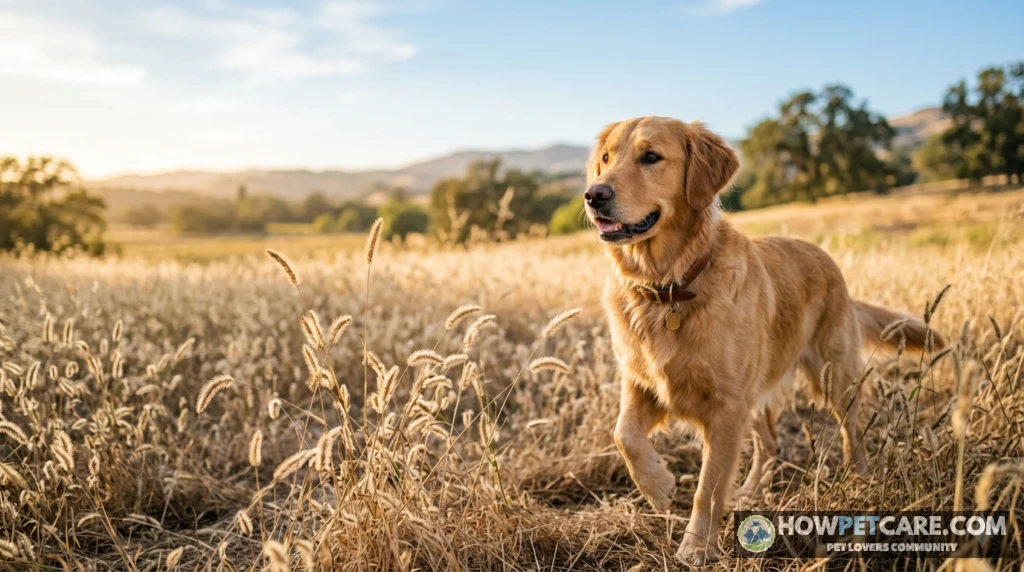

Foxtails are barbed grass awns that can burrow into a dog’s paws, ears, nose, eyes, or skin and cause infection. Remove one at home only if it is fully visible and loose on the coat; embedded awns, or any in the ears, nose, eyes, or mouth, need same-day veterinary care.
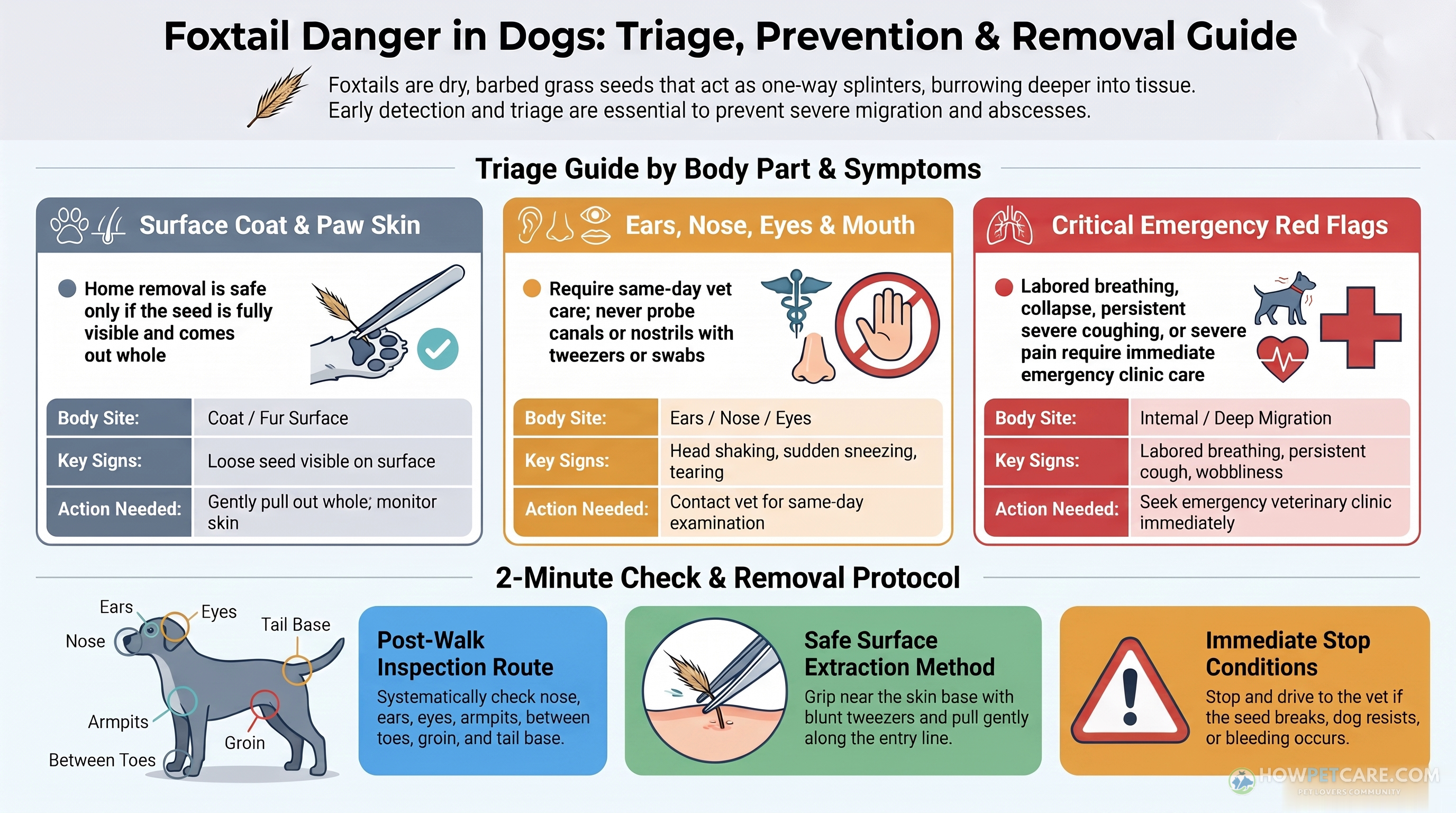
Remove a foxtail yourself only when it is fully visible, loose on the coat or sitting on the skin’s surface, and comes out whole with a gentle pull. If it is embedded, partly hidden, or in the ear, nose, eye, mouth, or genitals, don’t probe or pull: contact a veterinarian. Go to an emergency clinic now for labored breathing, collapse, or new wobbliness or severe neck pain.
Awns in the nose or ear can cause abrupt symptoms, while paw and skin problems may become apparent days or weeks after exposure. The table gives a starting point; if you’re uncertain, call a veterinary clinic for guidance rather than waiting for symptoms to worsen.
Body-Part Urgency: Home Removal vs. Same-Day Vet vs. Emergency
| Body part | Signs to look for | Home removal possible? | Urgency | What to do |
|---|---|---|---|---|
| Coat or skin surface | Awn visible and loose in fur or barely caught at the surface | Yes, if it is fully visible and comes out whole | Home care and monitor | Remove gently, rinse the surface with saline, and check daily for redness, swelling, or discharge |
| Between toes, surface only | Awn lying on top of the skin with its tip exposed; no swelling | Sometimes, surface only | Home care; same-day vet if it breaks or the area is sore | Pull gently along the entry line; don’t dig into the paw |
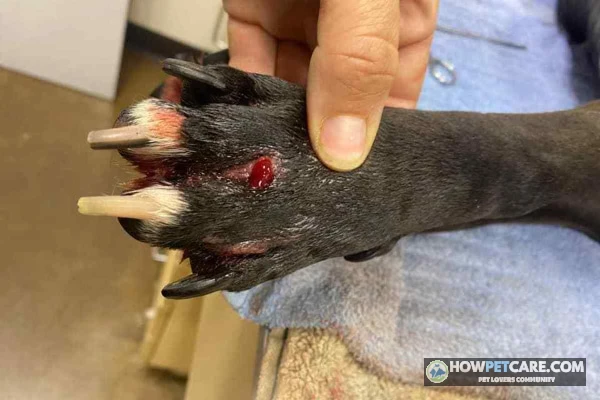
| Between toes, embedded | Limping, persistent licking, red swelling, puncture, or drainage | No | Same-day vet | Don’t squeeze or probe; arrange an examination |
| Ear | Sudden head shaking, head tilt, scratching, or crying at one ear | No | Same-day vet | Don’t put tweezers or swabs into the canal; a vet needs to examine it |
| Nose | Repeated forceful sneezing, face-pawing, one-sided discharge or bleeding | No | Same-day vet | Keep your dog calm and call a vet. Sneezing easing does not prove the awn came out |
| Eye | Squinting, tearing, redness, pawing, or a visible bump beneath the lid | No | Same-day vet | Prevent rubbing and seek care promptly |
| Mouth or throat | Gagging, retching, repeated swallowing, drooling, or reluctance to eat after grass chewing | No | Same-day vet | Don’t sweep a finger down the throat; arrange a veterinary exam |
| Chest, armpit, groin, or skin | A lump or draining opening that heals and returns | No | Vet promptly, generally within days if otherwise stable | Tell the clinic about grass exposure and recurrence; a migrating awn is one possibility |
| Breathing or neurologic signs | Labored breathing, persistent cough, wobbliness, or severe neck pain | No | Emergency now | Go to an emergency veterinary clinic |
What Foxtails Are and Why a Dog’s Body Can’t Push Them Back Out
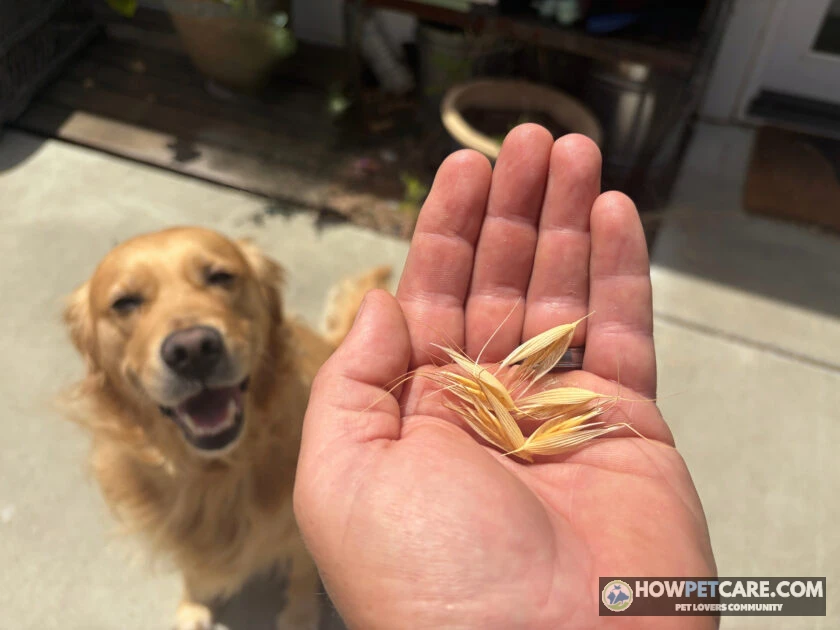
“Foxtail” usually means the dry, bristly seed head of certain grasses. These heads are made of grass awns: pointed plant parts with backward-facing barbs. Wild barley (Hordeum murinum) and grasses in the Bromus group, commonly called brome grasses or cheatgrass, can produce hazardous awns.
A foxtail awn is a one-way plant splinter: its barbs help it move forward into tissue and resist moving backward out. A dog’s motion, muscle contractions, or sneezing can push an embedded awn farther in. The body cannot dissolve or digest it; irritation and bacteria can lead to an abscess or a draining tract. Foxtails are a mechanical injury, not a poison.
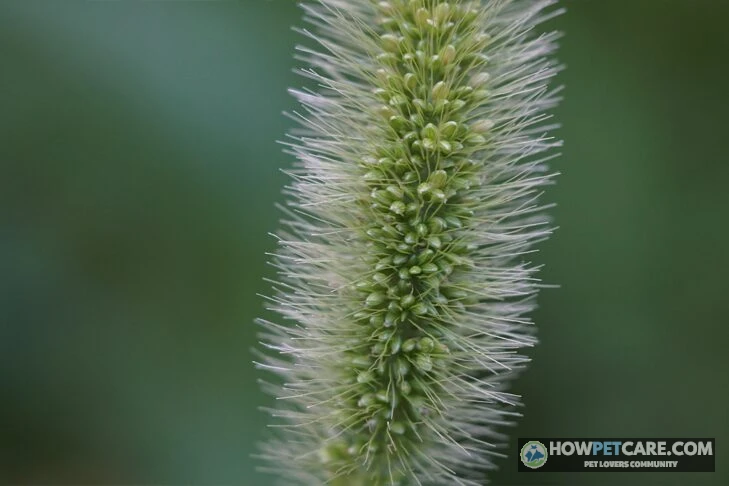
Most cases involve the paws, ears, or nose and can be treated by removing the awn. Migration deeper into the body is possible but uncommon; the risk is a reason to take persistent or recurring symptoms seriously, not a reason to assume the worst.
How to recognize foxtail grass on your route
Look for dry, narrow seed heads with bristles that spread into a bottlebrush or fox-tail shape. When the grass dries, individual seeds can detach and catch in a dog’s coat, between toes, or around the face. Foxtail grass grows along roadsides, trails, vacant lots, dry fields, and neglected yards. A seed head in the coat may look harmless, but check whether it is loose or has started to pierce the skin.
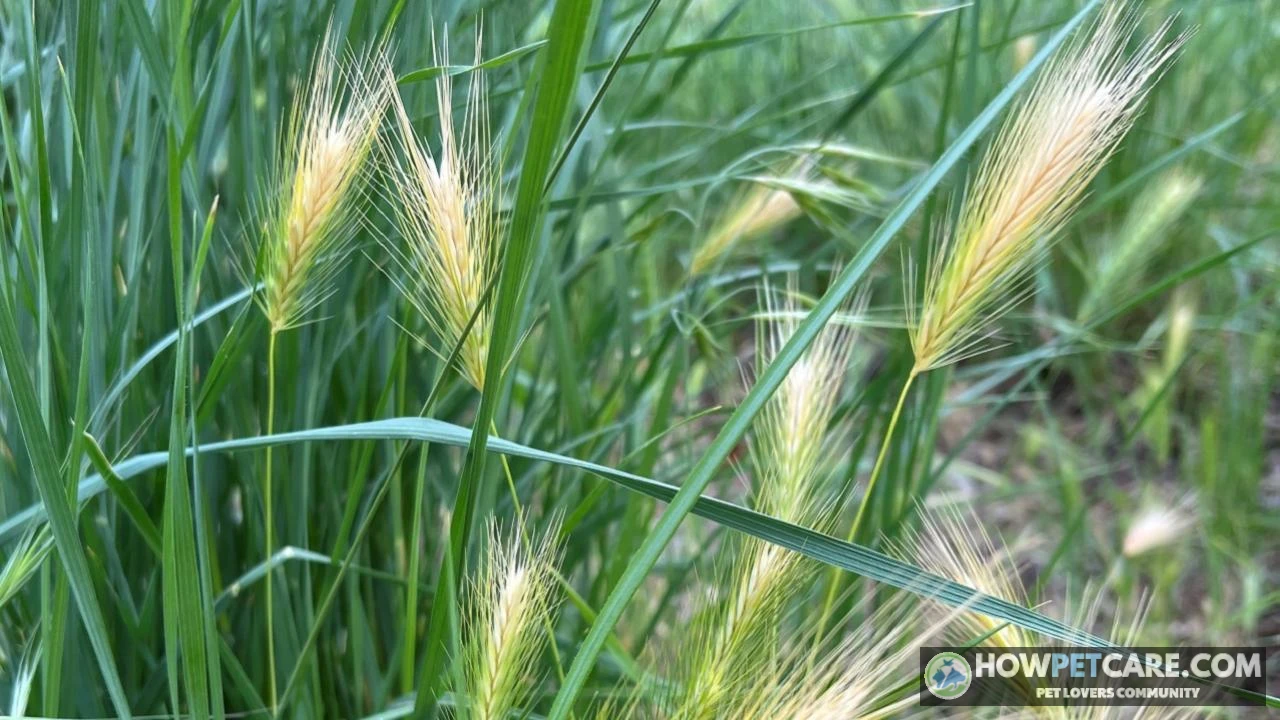
Foxtail vs. cheatgrass: same risk, same response
The name “foxtail” is used for different grasses, and owners may also encounter cheatgrass. Both can produce sharp, barbed awns that lodge in tissue. You don’t need to identify the exact grass to make a safe decision: treat a suspected embedded awn as a foreign body and seek veterinary advice. Don’t handle a painful area just to identify the plant.
Foxtail Symptoms in Dogs by Body Part: Paw, Ear, Nose, Eye, Mouth, Skin
Signs depend on where the awn is and how far it has traveled. A sudden change after a walk through dry grass is useful context, but symptoms alone cannot confirm that a foxtail is present.
Paws and between the toes
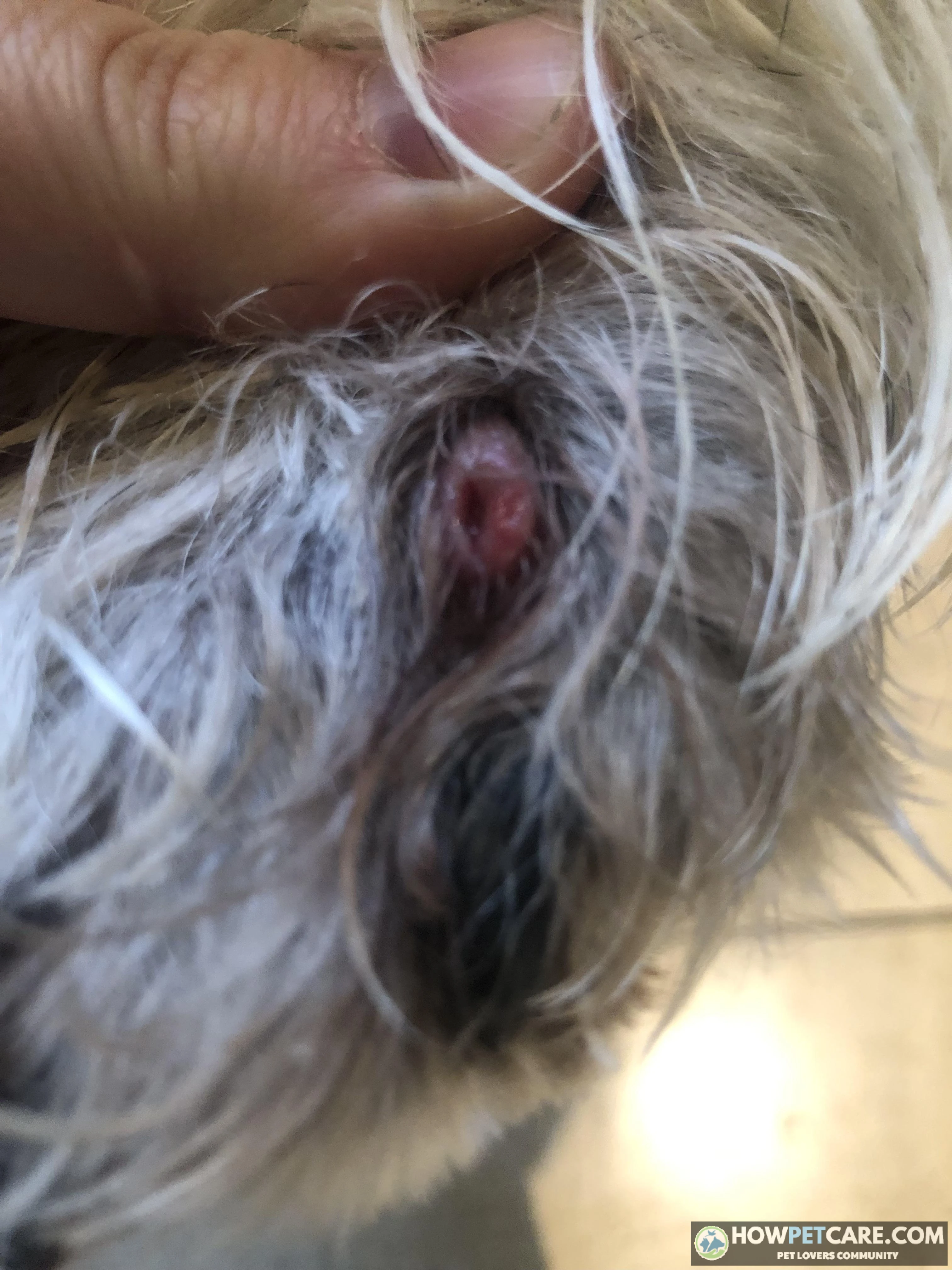
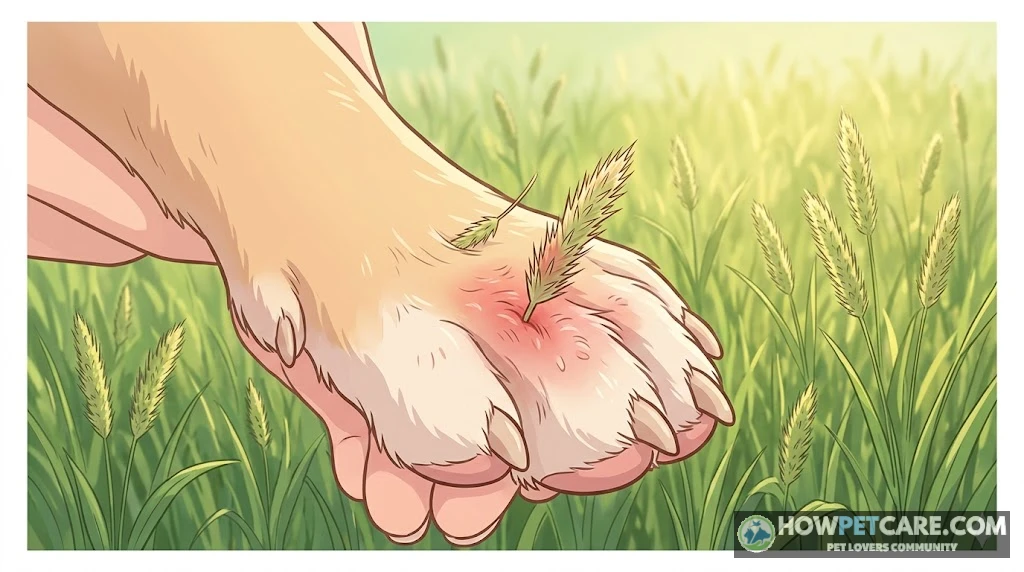
A dog with a foxtail in a paw may lick or chew one foot repeatedly, limp, or develop a red, tender swelling between the toes. A small puncture or a spot that drains, closes, and later opens again can indicate a deeper foreign body. A paw laceration or interdigital lump has other possible causes, too; don’t dig into it at home.
Ears
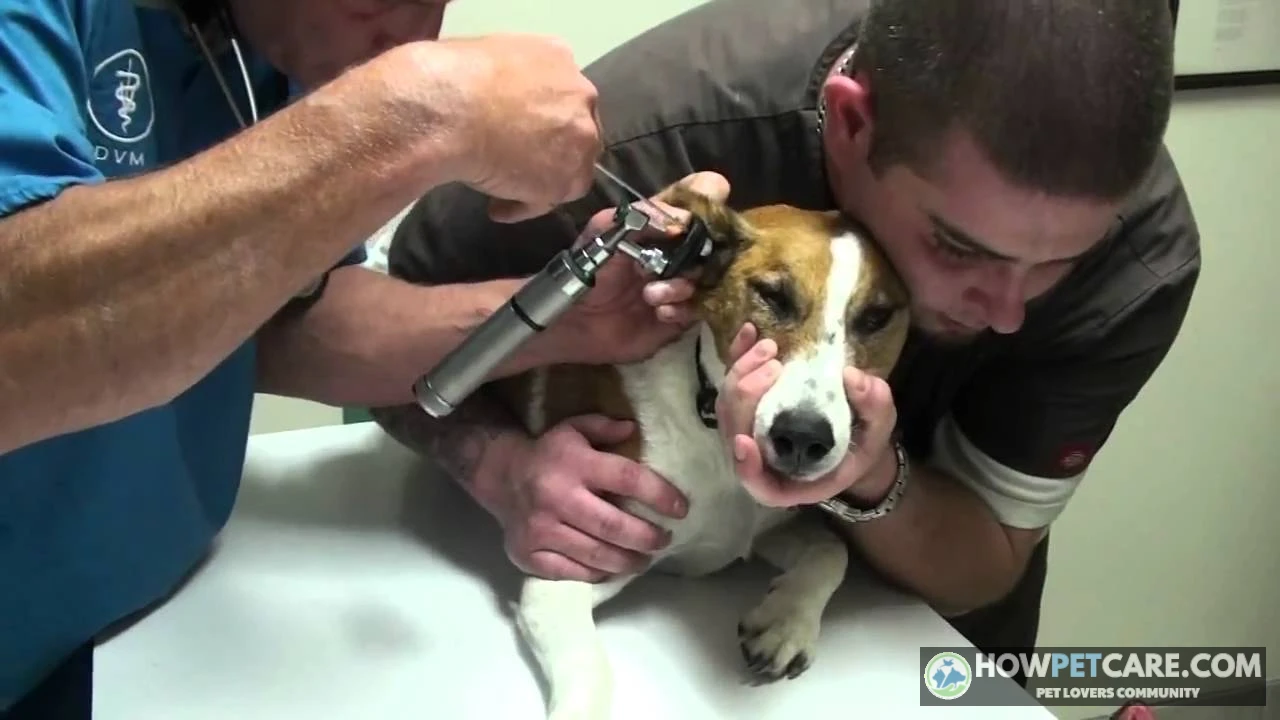
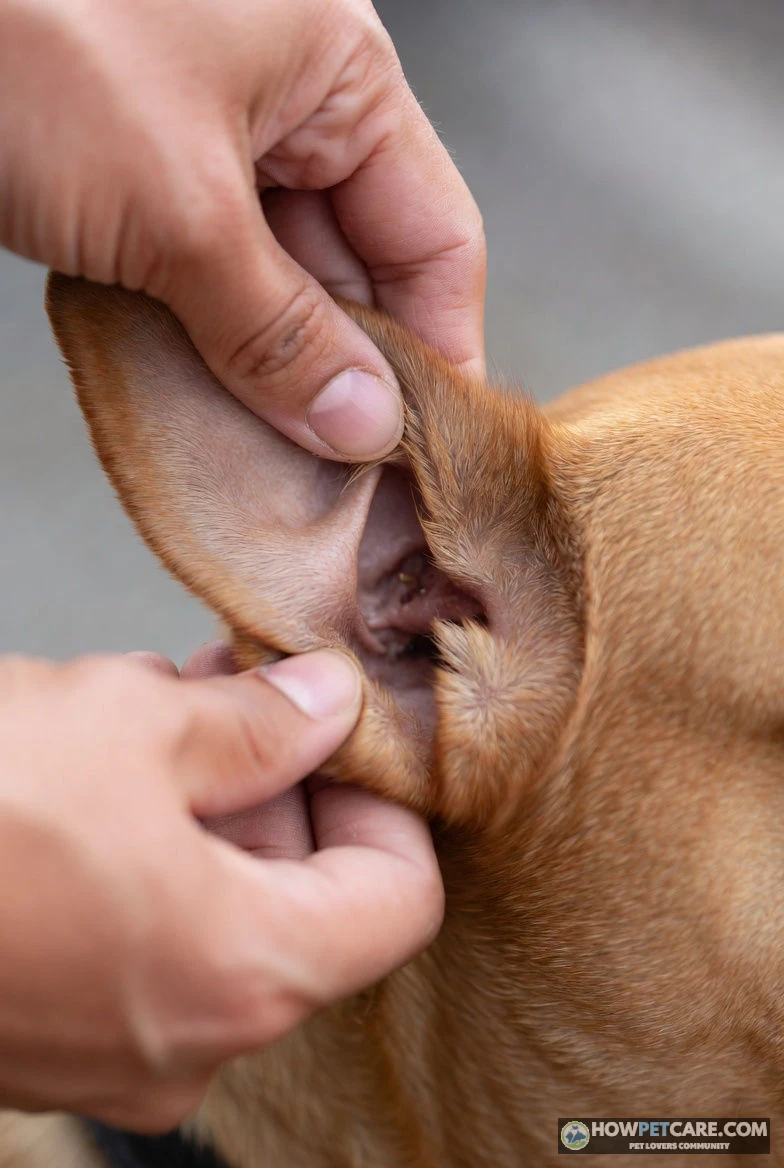
Sudden head shaking, a head tilt, scratching at one ear, or crying when the ear is touched can occur when an awn enters the ear canal. These signs can also come from other ear problems. A vet can examine the canal with an otoscope and remove a foreign body safely. Don’t use tweezers, cotton swabs, oil, or peroxide in the ear.
Nose
Repeated, forceful sneezing that begins after a walk, pawing at the face, and one-sided nasal discharge or bleeding can point to a nasal foreign body. Keep your dog quiet and arrange same-day veterinary care. Do not put tools into the nostril or try to flush it. If the sneezing settles, don’t assume the problem is fixed: the awn may have moved farther in.
Eyes
Squinting, tearing, redness, pawing, or a visible bump under the third eyelid needs prompt veterinary attention. A grass awn can irritate or injure the eye, and rubbing may worsen the damage. Stop your dog from pawing at the eye if you can do so safely, and contact a vet the same day.
Mouth and throat
Gagging, coughing, retching, repeated swallowing, drooling, or refusing food after chewing grass may mean something is lodged in the mouth or throat. Don’t reach blindly into the throat. Call a veterinarian, especially if breathing is affected; breathing difficulty is an emergency.
Skin, armpits, groin, and genitals
A small sore may be hard to spot under a thick coat. Check for a new lump, tenderness, heat, or a draining opening, especially around the chest, armpits, belly, and groin. If a spot drains and returns, tell the vet when it first appeared and whether your dog has had antibiotics or other treatment. Excessive licking, swelling, or discharge around the genitals or anus also warrants an examination; these signs are not specific to foxtails.
Foxtail Wound or Something Else? Telling It Apart from Bites, Allergies, and Cysts
A lump or sore cannot be reliably diagnosed by appearance alone. A bite can swell, an interdigital cyst can drain, and a foxtail tract can resemble either. Use the pattern to decide whether to seek care, not to rule a foreign body in or out.
Differential table: foxtail vs. insect bite vs. allergy vs. interdigital cyst
| Condition | Onset | Typical location | Key signs | Drainage or recurrence | Vet visit needed? |
|---|---|---|---|---|---|
| Foxtail abscess or tract | Nose or ear signs may start suddenly; skin and paw problems can emerge later | Often one spot, such as between toes, armpit, groin, or chest | Possible grass exposure, localized pain or licking, or sudden sneezing or head shaking | A puncture or opening may drain, close, and return | Yes, especially if it drains, persists, or returns |
| Insect bite or sting | Often minutes to hours | Any exposed area; sometimes face or paws | Local swelling or itch; hives or facial swelling may occur | Usually no persistent draining tract | Seek urgent help for breathing changes or marked facial or neck swelling |
| Allergy flare | May recur seasonally or continue over time | Often several areas, such as multiple paws, belly, or ears | Widespread itching or redness rather than one puncture | Not usually a single recurring draining opening | Arrange a vet visit if persistent or uncomfortable |
| Interdigital cyst or nodule | Often recurrent | Between toes | A tender or firm lump may rupture and refill; can look like a foreign-body tract | May recur in cycles | Yes, if persistent or recurrent; an exam is needed to distinguish causes |
A single sore after exposure to dry grass that repeatedly drains deserves a veterinary check, including when it seemed to improve with medication. An interdigital cyst and a foxtail tract can look alike, and a bite can become infected. Don’t assume that recurrence proves a foxtail; ask the vet to investigate the cause.
How to Remove a Visible Foxtail at Home: Step-by-Step with Stop Conditions
Attempt removal only if the entire awn is clearly visible and lies loose in the coat or on the skin’s surface. Awns embedded in tissue may break or be pushed deeper. Never attempt removal from the ear canal, nose, eye, mouth, throat, genitals, or a deep paw wound.
Supplies and setup
Use blunt-tip tweezers or a hemostat, bright light, a helper, treats, and sterile saline. Keep your dog as calm and still as possible. If the dog is painful, frightened, or likely to bite, don’t restrain or force the procedure; call a vet.
Removal technique, step by step
- Position your dog in good light. Ask a helper to hold the dog gently. Don’t attempt this if the dog is struggling.
- Part the fur. Find the whole awn and the point where it touches or enters the skin. If you can’t see that clearly, stop.
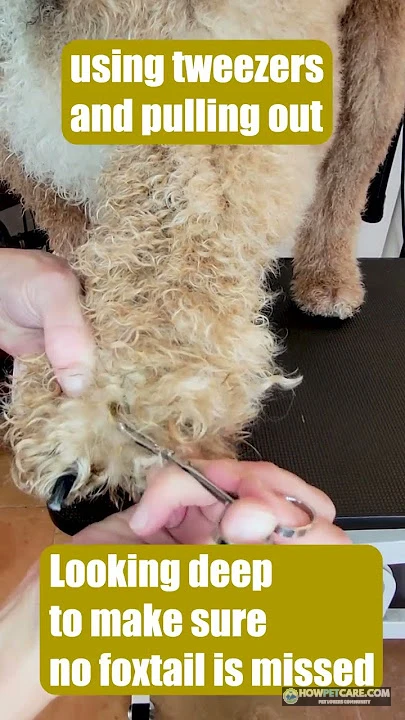
- Grip close to the skin. Hold the awn at its base rather than crushing the bristly tip.
- Pull gently along the entry line. Use a slow, steady pull. Don’t twist, jerk, or dig around the site.
- Check what came out. It should look like a whole awn, not a broken piece. If you’re unsure, have a vet examine the site.
- Rinse and monitor. Rinse the surface with saline, take a photo for comparison, and check the spot daily for redness, warmth, swelling, pain, or discharge over the next several days.
Stop conditions: when to quit and drive to the vet
Stop and contact a veterinarian if the awn breaks or only part comes out, your dog yelps or pulls away, bleeding or swelling appears, or the entry point is not clearly visible. Don’t continue if your dog resists. Any awn in the ear canal, nose, eye, mouth, throat, genitals, or deep in the paw is not a home-removal case.
Never probe with a cotton swab or put oil or hydrogen peroxide into the ear or nose. These actions can injure tissue or make the problem harder to manage. A visible seed on the coat is different from a seed that has entered the body.
What Happens at the Vet: How Foxtails Are Found and What Each Step Costs
The vet will ask where your dog walked, when symptoms began, and whether they have changed. Depending on the suspected location, the exam may include checking the paw, skin, eye, or ear canal. Some removals are straightforward; others require sedation or anesthesia so the dog can stay still and the veterinarian can see and retrieve the awn safely.
Why foxtails hide from X-rays and how vets locate them
Plant material is often difficult to see directly on X-rays because it does not block X-rays like bone or metal. That does not make radiographs useless: a vet may use them to look for secondary changes or investigate another cause of symptoms. A normal X-ray does not, by itself, rule out a foxtail.
The next tool depends on the suspected site. An otoscope helps examine the ear canal. Endoscopy or rhinoscopy uses a small camera to inspect and sometimes retrieve an awn in the nose or airway. Ultrasound can help locate fluid pockets or a soft-tissue tract. CT may be considered when deeper migration or complex anatomy is suspected. If a sore repeatedly drains and imaging does not settle the question, surgical exploration may be needed. Most dogs do not need every test; the vet chooses based on the exam and symptoms.
Foxtail removal cost at the vet: price ranges by procedure
The following are broad US budgeting estimates, not guaranteed quotes. Prices vary substantially by region, clinic, time of day, anesthesia needs, and whether a specialist or emergency hospital is involved. Ask for an estimate that separates the examination, procedure, medications, and recheck.
| Service | Approximate cost range | When it is used | What changes the price |
|---|---|---|---|
| Office examination | $60–$150 | Initial assessment | Clinic location and exam complexity |
| Emergency examination | $100–$250+ | Urgent or after-hours assessment | After-hours fees and hospital type |
| Sedated ear or paw extraction | $250–$700 | Awn that cannot be safely removed during a simple awake exam | Depth, sedation or anesthesia, and procedure time |
| Endoscopic nasal or airway retrieval | $800–$2,500 | Suspected awn beyond the nostril or in the airway | Scope availability, anesthesia, and specialist referral |
| Ultrasound | $300–$600 | Suspected soft-tissue tract or abscess | Whether imaging is combined with a procedure |
| CT scan | $1,000–$2,500 | Suspected deep migration or a complex location | Referral hospital and anesthesia needs |
| Surgical exploration | $1,500–$5,000+ | Persistent abscess or suspected migrating awn | Body location, hospital stay, and complications |
| Medication and recheck | $50–$300 | Follow-up care after removal, when prescribed | Medication, treatment duration, and number of visits |
These estimates are not a substitute for a current clinic quote. The total can rise with emergency fees, longer anesthesia, advanced imaging, specialist care, or complications. Early assessment may prevent a small foreign-body problem from becoming a more complex one, but the right next step is based on symptoms—not an assumption that every case needs surgery.
Does pet insurance cover foxtail removal?
Accident-and-illness policies commonly cover eligible treatment for a foreign body, but coverage depends on the contract. An illness-only plan may treat the event differently, and waiting periods, exclusions, deductibles, reimbursement rates, and pre-existing-condition rules matter. Call your insurer to check your specific policy; don’t delay urgent care while waiting for an answer.
A typical claim may include the exam, sedation or anesthesia, removal, imaging if needed, and prescribed medication. Keep the itemized invoice and medical record, then submit them according to the insurer’s process. Reimbursement is not necessarily the full bill: it is calculated under your plan after applicable deductibles and limits.
What Happens If a Foxtail Stays In: Timeline, Prognosis, and Aftercare
A loose seed caught in the coat may fall away, but an awn that has penetrated tissue should not be left in the hope that it will work itself out. The barbs can help it move farther into tissue, where it may cause irritation, infection, an abscess, or a draining tract.
Timing varies. Ear or nose irritation may be obvious soon after exposure; a paw or skin problem may become noticeable later. A migrating awn can cause signs away from the original entry point, which makes a recurring lump or unexplained cough worth discussing with a vet. Migration into the chest, spine, or other deep areas is possible but uncommon. Those cases can be serious and may require more extensive treatment.
Most dogs with an awn that is found and removed promptly recover well. Deeper migration, chronic infection, or injury to an organ can make treatment and recovery more complicated. A foxtail can be life-threatening in rare cases if it leads to severe internal infection or other complications, but this is not the typical outcome. The practical response is prompt evaluation of suspicious symptoms, not panic.
Timeline by body site
- Ear, nose, or eye: Sudden shaking, sneezing, squinting, or pawing can prompt a same-day examination.
- Paw or skin: Licking, limping, a lump, or drainage may become apparent after the walk rather than during it.
- Possible deeper migration: A recurring tract or new signs such as persistent cough or marked pain need veterinary assessment; breathing difficulty or neurologic changes are emergencies.
These patterns are general, not a reliable way to date or diagnose an awn. If signs recur or worsen, tell the clinic even if your dog was previously treated.
Aftercare after removal
Follow the treating veterinarian’s instructions for pain relief, wound care, activity, and rechecks. Give prescribed medication exactly as directed; don’t stop or change a course without asking the vet. Keep the site clean and dry if instructed, and use an e-collar if needed to prevent licking or rubbing. Restrict activity when advised, especially after sedation or surgery.
When to recheck
Contact the clinic if drainage continues, swelling returns, your dog becomes lethargic, or the original symptom comes back. Fever, worsening pain, a new lump elsewhere, or persistent coughing also deserve prompt advice. After an apparent home removal, inspect the site daily for several days; if it becomes warm, red, swollen, painful, or wet, arrange a veterinary exam.
How to Protect Dogs from Foxtails: Season, Gear, Yard Control, and Cats Too
Foxtail season is tied to local weather and grass growth, not one nationwide calendar. Dry seed heads become a greater concern as grasses mature and drop seeds. California sources describe a hazardous period that can begin in April and extend into October, often peaking in summer; other sources give a broader May-to-December window. The difference reflects local climate and conditions, so use local veterinary or extension guidance rather than treating either calendar as universal.
In the Pacific Northwest and Intermountain West, the timing shifts with elevation, rainfall, and the date grasses dry. In the Southwest, Texas, and the southern plains, warmer conditions can bring earlier or longer periods of dry seed heads. Check trails and yards as grasses mature, especially after a dry spell. During the higher-risk period in your area, avoid dry grassy edges and unmown fields.
When foxtail season peaks by region
There is no single reliable peak for every state, or even every part of a state: elevation, rainfall, and the date grasses dry all change the schedule. Ask a local veterinarian or county extension office when grasses in your area typically dry and seed.
Do field hoods and boots actually work?
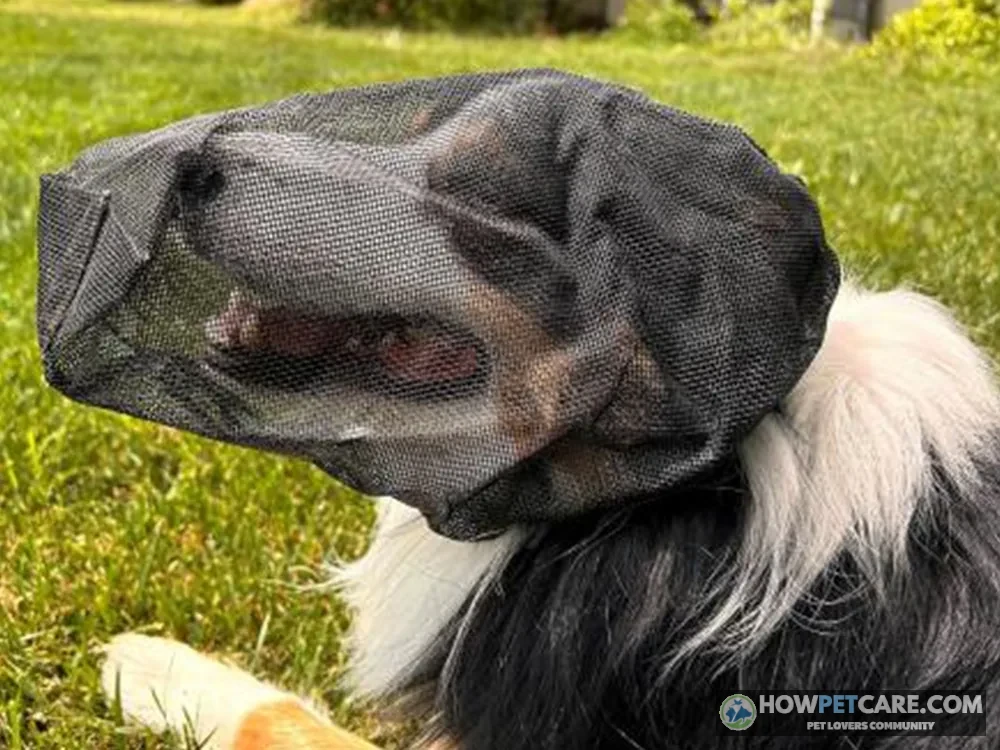
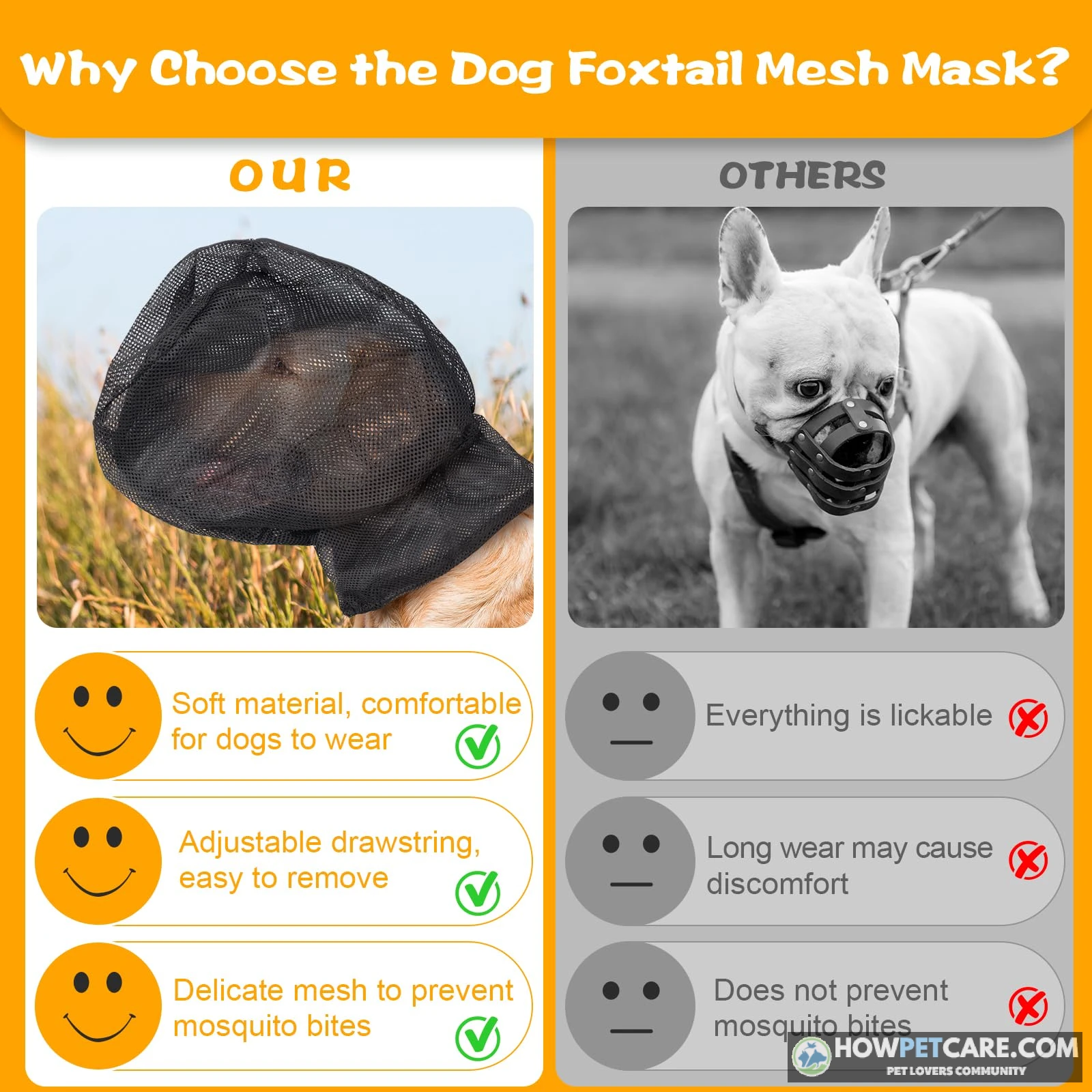
A well-fitted mesh field hood can reduce exposure around the ears and face; dog boots or booties can add a barrier for paws. Neither makes a dog foxtail-proof. Gear only helps if the dog tolerates it, it fits securely, and it is checked after use. Boots can rub, trap debris, or feel uncomfortable, and a hood may not suit every dog or activity. Introduce equipment gradually, watch for overheating or distress, and inspect your dog after the walk regardless.
Yard and property control
Mow or remove weeds before seed heads dry and scatter. Pulling or spot-treating weeds before they seed can reduce exposure; choose products and methods that are safe for pets and follow their labels. Bag and dispose of seed heads and clippings rather than leaving them where a dog can nose through them. Check fence lines, paths, and the edges of neighboring lots where dry grasses may grow into your yard.
Foxtail risk for cats and other pets
Cats and other pets can also be injured by grass awns. A 791-case UC Davis study of foxtail injuries documented cases in dogs and cats, supporting that cats are at risk as well. Outdoor cats may show sneezing, head shaking, pawing, eye irritation, or a painful skin spot. Rabbits and other animals can also be exposed, although risks and signs depend on the species and where an awn lodges. Don’t attempt to remove an embedded awn from any pet; contact a veterinarian.
Your Post-Walk Foxtail Check and What to Do Tonight
A consistent check helps catch seeds before they work into the coat or skin. Take about two minutes after walks through dry grass, and repeat at home once your dog has settled. Hunting dogs, long-haired dogs, and dogs with floppy ears or dense coats may need especially careful checks because seeds can be hard to spot in fur.
The two-minute post-walk checklist
Follow the same head-to-tail route every time:
- Nose: Look at both nostrils from the outside and note any sneezing. Don’t insert anything into the nostrils.
- Ears: Flip each ear flap and look at the visible inner surface and around the opening. Don’t probe the canal.
- Eyes: Check for visible seeds, tearing, redness, or squinting without forcing the eyelids open.
- Armpits: Run your fingers through the fur under both front legs.
- Paws: Spread every toe and check the webbing and the spaces between pads.
- Groin and genitals: Check the belly and surrounding coat, especially on long-haired dogs.
- Tail base and coat: Run your hands against the lay of the fur and brush away loose seeds.
If you find a seed loose on the coat or sitting completely on the skin’s surface, remove it gently using the steps above. If it is partly hidden, embedded, or near the eye, nose, ear, mouth, or genitals, call a vet. A second check at home may catch seeds that shifted during the drive.
Decision path for tonight
If your dog has a visible, superficial awn that comes out whole with a gentle pull, rinse the surface and monitor it. If you cannot see the whole awn, it breaks, or your dog has ear, nose, eye, paw, or mouth symptoms, call a veterinary clinic for same-day advice. Go to an emergency clinic for labored breathing, persistent severe coughing, collapse, wobbliness, or severe pain.
When you call, tell the clinic where and when your dog walked, what symptom you noticed, when it began, and whether your dog is breathing and eating normally. For a recurring lump, take a daily photo and note any treatment dates; that history can help the vet assess what is happening. Keep a pair of blunt tweezers and sterile saline in your walk kit, and save the contact information for a nearby emergency veterinary clinic before you need it.
This article is educational and does not replace an in-person veterinary examination.
FAQ
Can a foxtail kill a dog?
It can in rare cases, usually when an untreated awn migrates into the chest, spine, or brain and causes serious infection. Most foxtail problems involve the ear, nose, or paw and resolve completely once the awn is removed.
Is foxtail grass poisonous to dogs?
No, foxtails are not toxic. The danger is mechanical: the barbed awn burrows into tissue and carries bacteria, which leads to pain, abscesses, and infection.
Will a foxtail come out on its own?
Sometimes a loose awn in the coat falls out, but one that has penetrated skin, an ear, or the nose rarely works its way out. The barbs push it forward, so an embedded foxtail usually needs to be removed by a vet.
How soon after a walk do foxtail symptoms show up?
Nose and ear foxtails usually cause sudden sneezing, head shaking, or pawing within hours. Paw and skin foxtails may produce licking, swelling, or a draining spot days or weeks later.
My dog swallowed a foxtail. What should I do?
Many swallowed awns pass without trouble, but some lodge in the throat or tonsils. Call your vet if your dog gags, coughs, retches, drools, or stops eating, and do not try to make your dog vomit.