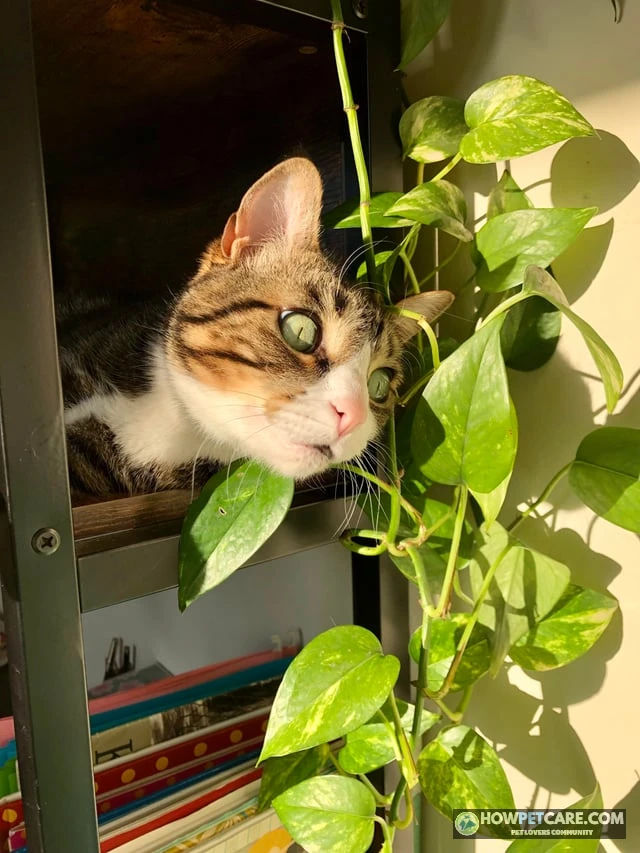

Yes — all pothos (Epipremnum aureum, devil’s ivy) are toxic to cats. The insoluble calcium oxalate crystals cause immediate mouth irritation, drooling, and vomiting, but cases are usually mild and self-limiting rather than life-threatening.
Yes — all pothos (Epipremnum aureum), also called devil’s ivy, are toxic to cats, according to the ASPCA toxic plants list. The risk is usually mild and self-limiting rather than life-threatening: insoluble calcium oxalate crystals in the leaves, stems, and roots cause painful mechanical irritation in the mouth, not organ failure.
Are Pothos Toxic to Cats? The Direct Answer
Yes — all pothos (Epipremnum aureum, devil’s ivy) are toxic to cats, per the ASPCA toxic plants list. "Toxic" here means the plant can harm a cat through contact and chewing; it does not necessarily mean deadly poison. The harm is local and mechanical, not a systemic poisoning that shuts down organs.
There is no "safe dose" because the trigger is physical. Chewing ruptures plant cells and releases needle-like insoluble calcium oxalate crystals (raphides), which irritate the mouth, tongue, and throat on contact. Because the injury comes from crystal contact rather than a chemical dose that must reach a threshold, even a tiny bite can cause burning, drooling, or pawing at the mouth. Most cats stop chewing after one bite because the pain is immediate, which is why true poisoning from large ingestions is uncommon.
Why Pothos Is Toxic to Cats: The Calcium Oxalate Mechanism
Pothos contains insoluble calcium oxalate crystals distributed in the leaves, stems, and roots. When a cat chews the plant, those crystals pierce mouth and tongue tissue, producing immediate burning and oral irritation. Symptoms can begin within minutes to a few hours after ingestion.

The reaction is usually self-limiting: the pain makes the cat stop chewing, so the exposure often stays small. Pothos and philodendron belong to the same plant family (Araceae) and share the same oxalate mechanism, so they carry a similar risk level. Unlike lilies, which can cause fatal kidney failure in cats from even tiny exposures, pothos causes mouth irritation and vomiting but is not considered life-threatening in most cases.
If Pothos Sap Gets in Eyes or on Skin
If sap touches the eyes, rinse the eye gently with clean water or sterile saline for several minutes and then call your vet or poison control for guidance. If sap contacts skin, wash the area with soap and water. Do not use solvents or harsh cleaners. Seek veterinary care if redness, swelling, pain, or vision changes persist.
Folk Remedies Verdict: Milk, Coconut Water, and Other Myths
Milk does not dissolve or neutralize insoluble oxalate crystals and may add stomach upset. Coconut water has no evidence that it neutralizes crystals, and extra fluid is not a treatment. Salt water can irritate tissues further and risks sodium imbalance. The safe response is a water rinse, small amounts of water or soft food, plant identification, and a call to your vet or poison control.
Pothos Poisoning in Cats: Symptoms to Watch For
Common symptoms include drooling, pawing at the mouth, oral irritation and swelling, vomiting, refusal to eat, vocalizing, and difficulty swallowing. Less common but notable signs include lethargy and dehydration from prolonged drooling or vomiting.
Symptoms often appear within minutes and may persist for up to about 24 hours in some cats. Full recovery after veterinary treatment is typically reported as a few days to two weeks, depending on the case.
| Symptom | Typical timing | What it suggests |
|---|---|---|
| Drooling, pawing at mouth, oral burning | First minutes | Direct crystal irritation |
| Vomiting, refusal to eat | Within hours | Stomach irritation from swallowed crystals |
| Swelling, difficulty swallowing | Early to several hours | More significant oral tissue irritation |
| Lethargy or dehydration | Later or prolonged cases | Fluid loss or discomfort; needs vet guidance |

The First 15 Minutes: Step-by-Step First Aid if Your Cat Eats Pothos
| Step | Action | Why it matters |
|---|---|---|
| 1 | Move your cat away from the plant and remove leaf or stem pieces from the mouth only if you can do it safely | Stops further crystal exposure |
| 2 | Rinse the mouth with a small amount of cool water or wipe lips and tongue with a damp cloth | Reduces crystal contact with tissue |
| 3 | Offer a few sips of water or a small amount of soft food to soothe irritation | Helps comfort irritated tissues |
| 4 | Take a photo of the plant and any chewed leaves | Helps your vet or poison control identify the plant |
| 5 | Call your vet or a pet poison helpline, even if symptoms look mild | Professional guidance matters even in mild cases |
Do not induce vomiting. Do not give milk, coconut water, salt water, or other home remedies to "neutralize" the plant. Do not force large amounts of water into the mouth. Do not wait for symptoms to worsen before calling.
-
Remove plant material
Gently clear leaf or stem pieces from the mouth if it is safe to do so.
-
Rinse gently
Use a small amount of cool water or a damp cloth on the lips and tongue.
-
Offer comfort
Give a few sips of water or a small amount of soft food.
-
Document
Photograph the plant and any chewed material.
-
Call for guidance
Contact your vet or a poison helpline before deciding next steps.
When Is Pothos Poisoning an Emergency? Warning Signs and Vet Care
Emergency red flags include breathing trouble, progressive facial swelling, noisy breathing, open-mouth breathing, collapse, inability to swallow, repeated vomiting, worsening drooling, or signs of dehydration. Kittens, seniors, and medically fragile cats also warrant a faster call even when symptoms look mild. If you see airway or severe swelling signs, go to an emergency clinic now. If your cat has repeated vomiting or cannot keep water down, call your vet now; a same-day visit is likely. If your cat has mild, stable symptoms such as drooling, pawing at the mouth, brief vomiting, then settling within one to two hours, monitor at home with veterinary guidance and call if anything changes. If there are no symptoms after two hours, still call your vet or poison line for next-step advice; do not assume zero risk.
Veterinary care typically focuses on symptom management, such as anti-nausea medication and fluids, and is usually a modest-cost visit rather than hospitalization in typical cases. Costs and recovery timelines vary by clinic, region, and the cat’s condition, so treat any figure as a range rather than a guarantee. Most cats improve within hours to 24 hours, and recovery after veterinary treatment is commonly reported as a few days to two weeks. Afterward, offer water and small amounts of soft food as your vet advises; long-term harm is not expected in typical cases.
Are All Pothos Varieties Toxic to Cats? Golden, Neon, Marble Queen, Jade & Satin Compared
All true pothos cultivars — golden, neon, marble queen, jade, and Cebu blue — carry the same calcium oxalate risk. Variegation does not change toxicity. Satin pothos is actually Scindapsus pictus, a different genus, but it is also oxalate-toxic and deserves the same precautions.
| Variety | Botanical name | Toxic to cats? | Identification cue |
|---|---|---|---|
| Golden pothos | Epipremnum aureum | Yes | Heart-shaped green leaves with yellow or cream marbling |
| Neon pothos | Epipremnum aureum ‘Neon’ | Yes | Bright chartreuse leaves; same vining habit |
| Marble Queen pothos | Epipremnum aureum ‘Marble Queen’ | Yes | White-heavy marbled leaves; slower growth |
| Jade pothos | Epipremnum aureum ‘Jade’ | Yes | Solid dark green, less marbling |
| Cebu blue pothos | Epipremnum pinnatum ‘Cebu Blue’ | Yes | Narrower, silvery-blue leaves; may fenestrate with age |
| Satin pothos | Scindapsus pictus | Yes (same precaution) | Silvery spots on dark green leaves; different genus, same oxalate risk |
| Safe lookalike: peperomia | Peperomia spp. | No | Thicker, often succulent-like leaves; not a vine with aerial roots |

Golden pothos and heartleaf philodendron are both toxic, so they are not safe swaps. Peperomia lookalikes have thicker, often succulent-like leaves and are not vines with aerial roots.
Keeping Cats and Pothos Together: Risk Tiers and a Coexistence Decision Framework
Risk tiers matter. A healthy adult cat that ignores plants has a different tolerance for coexistence than a kitten, habitual plant chewer, senior cat, or medically fragile cat. For higher-risk cats, replacement or relocation is the safer choice.
If you keep pothos, use concrete controls: hang it in a high planter with trailing vines secured away from shelves, cat trees, and jump paths; keep vines trimmed so no leaf dangles within jumping reach; use a bitter deterrent spray on leaves and reapply per label; offer cat grass or another approved chew target in a separate, easy-access spot; and re-check placement after furniture moves or new climbing routes.

Decision framework: if your cat has ever chewed any houseplant, switch to a verified cat-safe alternative and remove pothos from the home. If your cat ignores plants for 30 days with no investigation, continue monitoring monthly.
Cat-Safe Plants That Look Like Pothos: Safe Alternatives for Your Home
Safe trailing alternatives include peperomia (such as watermelon peperomia), Swedish ivy, string of hearts, and spider plant. Safe upright options include calathea, prayer plant, areca palm, and Boston fern, all verified non-toxic to cats. These are useful swaps when you want the trailing or leafy look without the oxalate risk.

Cat-safe choices should still be confirmed against a reliable toxic-plant list before you bring them home, because plant common names can be confusing and some lookalikes are not safe.
Pothos is toxic to cats, but most cases stay mild and self-limiting. Remove plant material, rinse the mouth, offer small amounts of water or soft food, identify the plant, and call your vet or poison control even if symptoms seem minor. Never induce vomiting or use folk remedies.

FAQ
Can pothos cause long-term harm to cats?
In typical cases, no. Calcium oxalate irritation is painful but self-limiting, and cats that receive basic care recover fully within about 24 hours without lasting damage.
Do cats eat pothos plants on purpose?
Most cats only bite once because the crystals cause immediate burning, so true poisoning from eating large amounts is rare. Curious kittens and habitual plant chewers are the most likely to ingest enough to show symptoms.
Is pothos toxic to dogs too?
Yes, pothos is toxic to dogs by the same calcium oxalate mechanism, causing drooling, oral pain, and vomiting. The same first-aid steps and vet call apply.
How toxic are pothos to cats compared to lilies?
Pothos is far less dangerous than lilies, which can cause fatal kidney failure in cats from even tiny exposures. Pothos causes mouth irritation and vomiting but is not considered life-threatening in most cases.
Are all pothos varieties toxic to cats?
Yes. All true pothos cultivars — golden, neon, marble queen, jade, and Cebu blue — carry the same calcium oxalate risk, and satin pothos is also oxalate-toxic.
What are safe cat-friendly alternatives to pothos?
Cat-safe trailing options include peperomia, Swedish ivy, string of hearts, and spider plant. Safe upright choices include calathea, prayer plant, areca palm, and Boston fern.