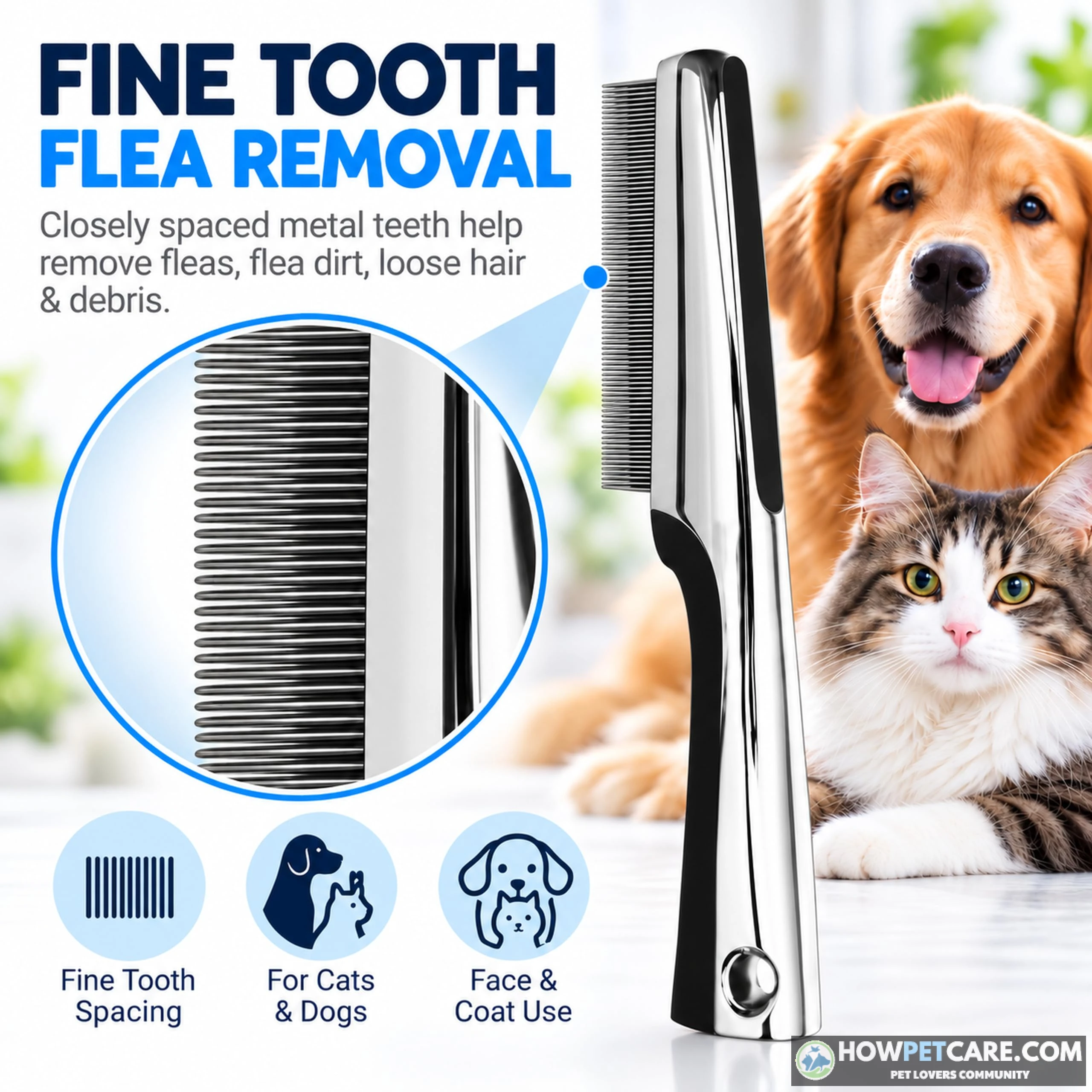

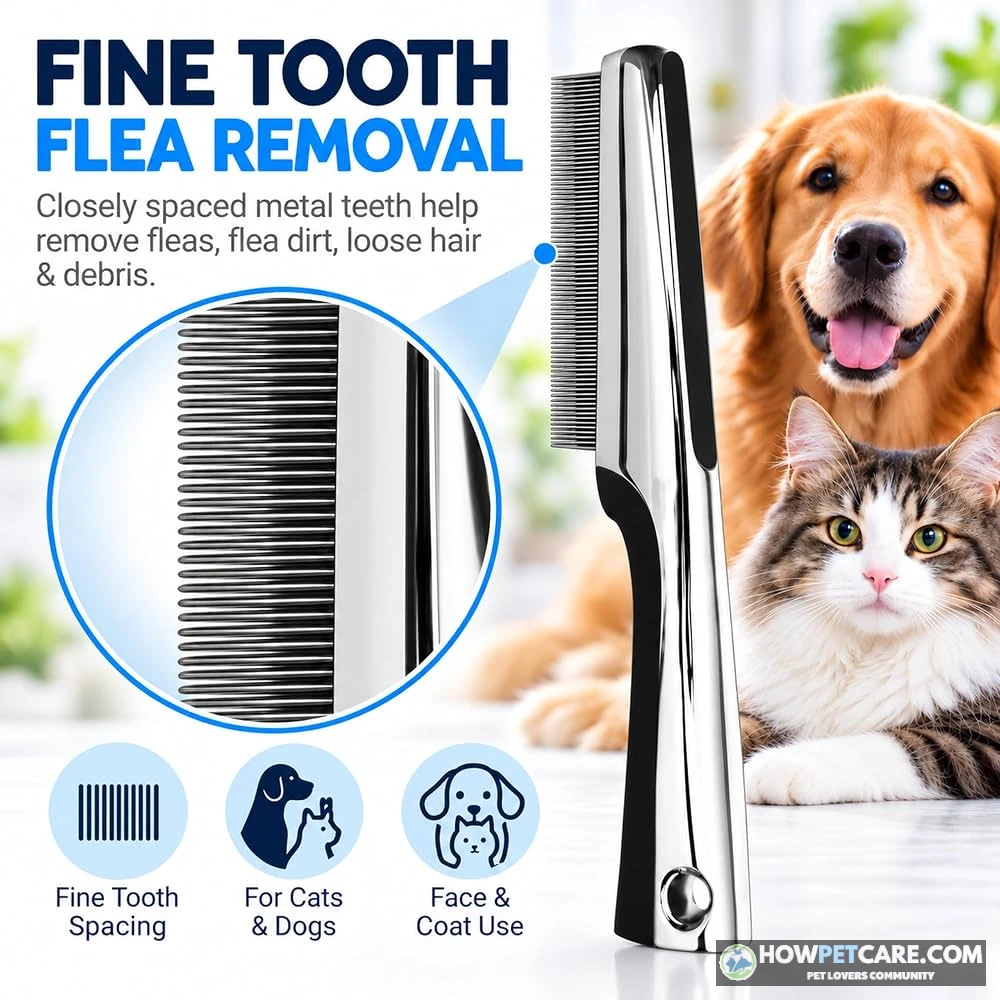
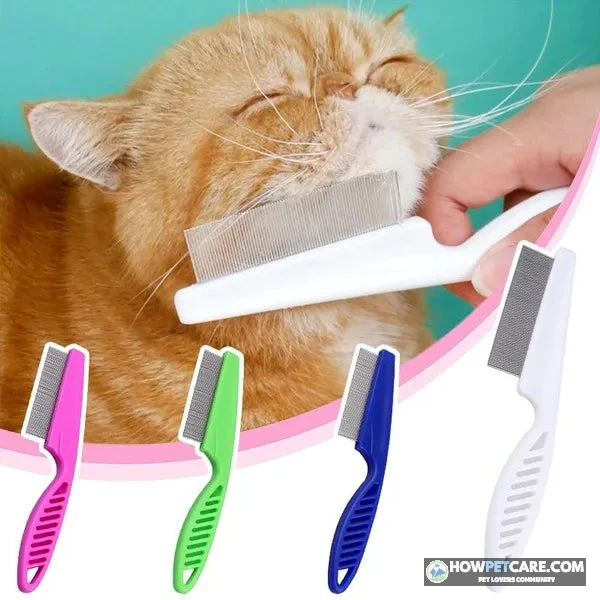
A fine-toothed metal flea comb works for most short-haired dogs and cats; long-haired or thick-coated pets need longer tines that reach the skin. Use a small single-row comb around the face. Combing detects and removes some adult fleas, but it won’t eliminate an infestation on its own.
For a short-haired dog or cat, a basic fine-toothed metal flea comb is usually enough to check for fleas and remove some adults. If you have a long-haired cat or a thick-coated dog, look for longer tines that reach the skin through the coat. A small single-row comb gives you better control around the face and other sensitive areas. Any comb can help you detect and remove fleas, but combing alone won’t eliminate an infestation.
The comparison table below separates features that help from marketing claims. After that, the technique section covers parting the coat, inspecting each pass, and disposing of captured fleas safely.
Which Flea Comb to Buy: The Short Verdict by Pet and Coat Type
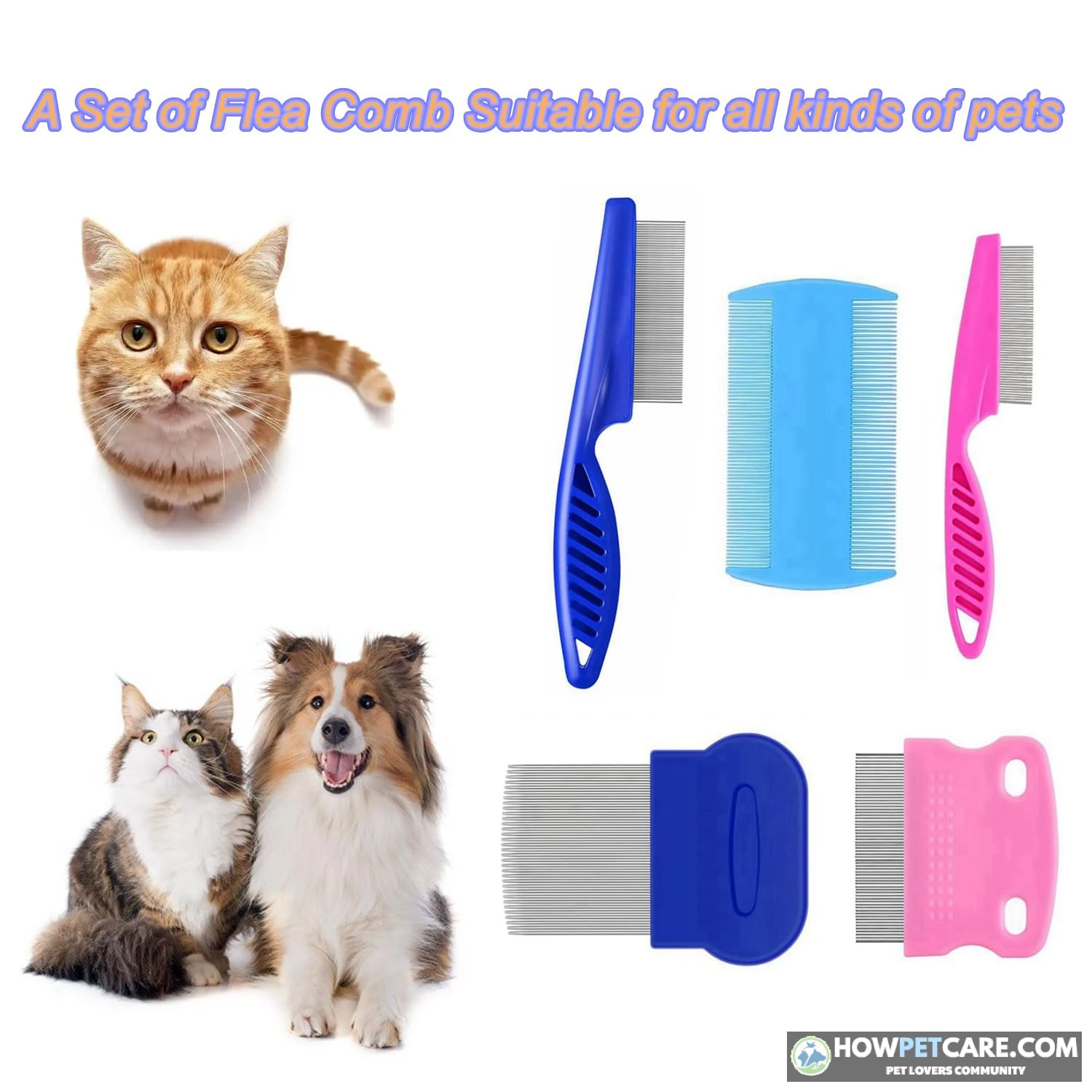
Start with your pet’s coat, not a product’s “all coat types” claim. A flea comb only works when its teeth reach the skin without pulling painfully through tangles. Flat, closely spaced tines are meant to catch adult fleas and flea dirt near the skin.
| Pet and coat type | Recommended comb type | Tine length to look for | Handling tip | Budget tier that works |
|---|---|---|---|---|
| Short-haired cat | Fine-toothed, single-row or double-row metal comb | Long enough to reach the skin | Start where your cat tolerates touch; use short strokes | Budget |
| Long-haired cat | Long-tine single-row comb | Longer than the coat depth | Part the coat first; do not comb over mats | Mid-range or premium |
| Short-haired dog | Fine-toothed metal comb; double-row can cover more area | Long enough to reach the skin | Check the rump, belly, and neck in sections | Budget |
| Thick, double-coated, or doodle-coated dog | Long-tine comb with a comfortable grip | Long enough to pass through the undercoat | Part the coat in layers and work close to the skin | Mid-range or premium |
| Puppy or kitten | Fine single-row comb with smooth, rounded-feeling tips | Suited to the animal’s coat and size | Keep the animal warm and use brief, gentle sessions | Budget |
| Face or detail work | Small single-row comb | Short enough to control easily | Comb away from the eyes; avoid the eyes, nose, and ear canal | Budget |
Here’s a simple rule: if the comb glides over the surface without reaching the skin, the tines are too short for that coat. With very young animals or a heavy flea load, combing is no substitute for contacting a veterinarian promptly.
Single-Row, Double-Row, and Electric Flea Combs: What Actually Differs
A single-row comb gives you more control over where each pass goes. It helps with small areas, short coats, and pets that need a slower introduction to grooming. A double-row design covers more coat per stroke, but it may snag loose undercoat or catch on tangles. Detangle first with the right grooming tool instead of pulling a flea comb through a mat.
Electric flea combs use conductive teeth and claim to kill fleas on contact. They cost more than a basic manual comb, and the teeth still have to touch a flea to work. The evidence here doesn’t establish that electric models outperform a well-used manual comb. They don’t treat the pet’s environment or address the rest of an infestation. For most owners, the extra cost is hard to justify over a simple metal comb and a bowl of soapy water.
Are electric flea combs worth the money?
Usually, they aren’t necessary. A manual comb lets you see what it catches and drop fleas into soapy water. Electric models may appeal to someone who prefers not to handle captured fleas, but they don’t replace inspection, appropriate flea treatment, or household cleaning. Follow the device’s instructions and keep it away from water unless the manufacturer says otherwise.
Metal vs. plastic: why teeth material matters
Metal teeth usually last better for repeated fine combing, while plastic teeth can bend or break. Material alone doesn’t guarantee a good comb: check the teeth for rough edges, uneven spacing, or looseness. A comfortable handle matters too if your pet needs a slow, careful session. Stainless steel teeth are a useful feature when specified, but don’t assume a product has them if the listing doesn’t say so.
Flea Comb Specs That Matter: Tooth Spacing, Tine Length, and Materials
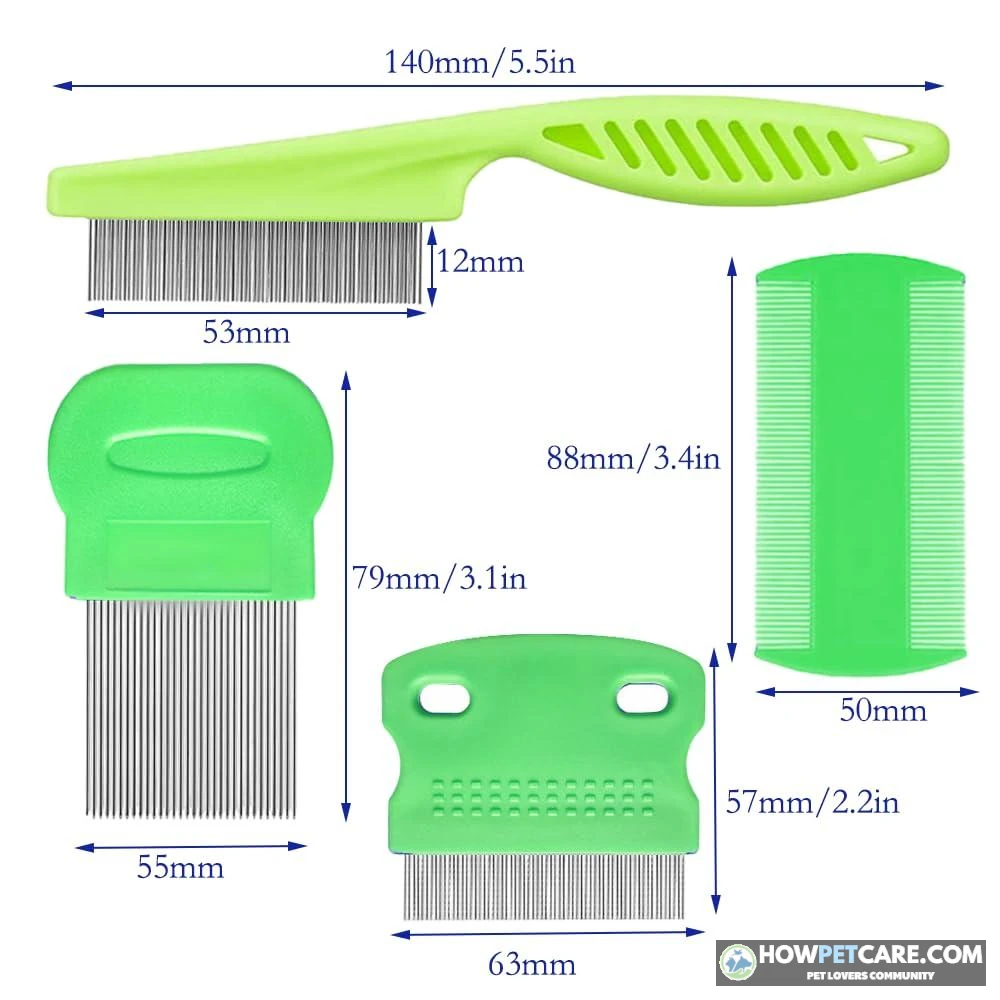
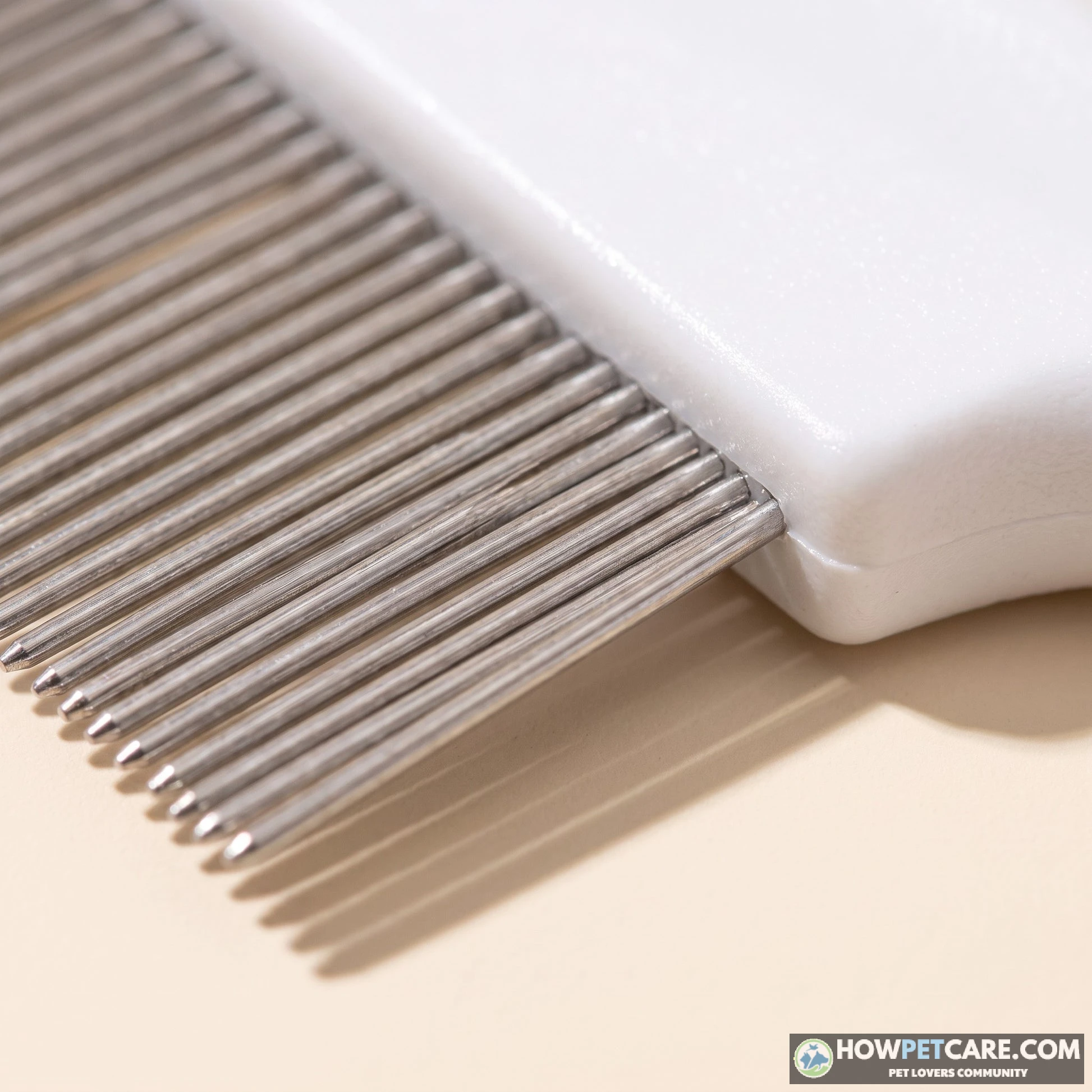
Teeth need to be close enough to catch adult fleas and flea dirt, yet smooth enough to pass through the coat without scraping or snagging. Many manufacturers don’t publish tooth spacing or tine length. When a listing leaves those measurements out, treat them as undisclosed instead of trusting a number copied into an unsourced product description.
For long or dense coats, tine length matters most. The teeth must reach the skin through the undercoat; otherwise, they only skim the outer fur. Hold the comb against your pet’s coat and stop if the teeth tug. A longer tine isn’t automatically better if it bends, has sharp edges, or feels hard to control near thin skin.
Before buying, look for smooth, evenly aligned teeth firmly attached to the head. Skip a comb with burrs, bent tines, or a handle that slips in your hand. In person, inspect the teeth under bright light. Online, check the manufacturer’s stated materials, dimensions, return policy, and whether the product is made for cats, dogs, or both.
Flea Comb Comparison Table and Price Tiers: What $2, $10, and $20 Buy You
Product specifications and prices vary by seller and can change. The table compares representative styles, not laboratory-tested performance. Exact tooth spacing and tine dimensions often aren’t published, so those fields are marked accordingly. Treat any price as approximate and check the current listing before buying.
| Comb type / example | Row style | Tooth spacing | Tine length or coat suitability | Material | Dimensions | Best for | Typical price tier | Notes |
|---|---|---|---|---|---|---|---|---|
| Basic pet-store flea comb | Single row | Often not disclosed | Best for short coats if teeth reach skin | Metal teeth; handle varies | Varies | Short-haired dogs and cats | Budget, about $2–5 | Check for smooth, straight teeth |
| Two-sided grooming and flea comb | Fine and wider rows | Usually not disclosed | Wider side for grooming; fine side for flea checks | Often metal teeth with plastic body | Varies | Owners wanting two grooming functions | Budget, about $3–6 | Use the fine side to look for fleas |
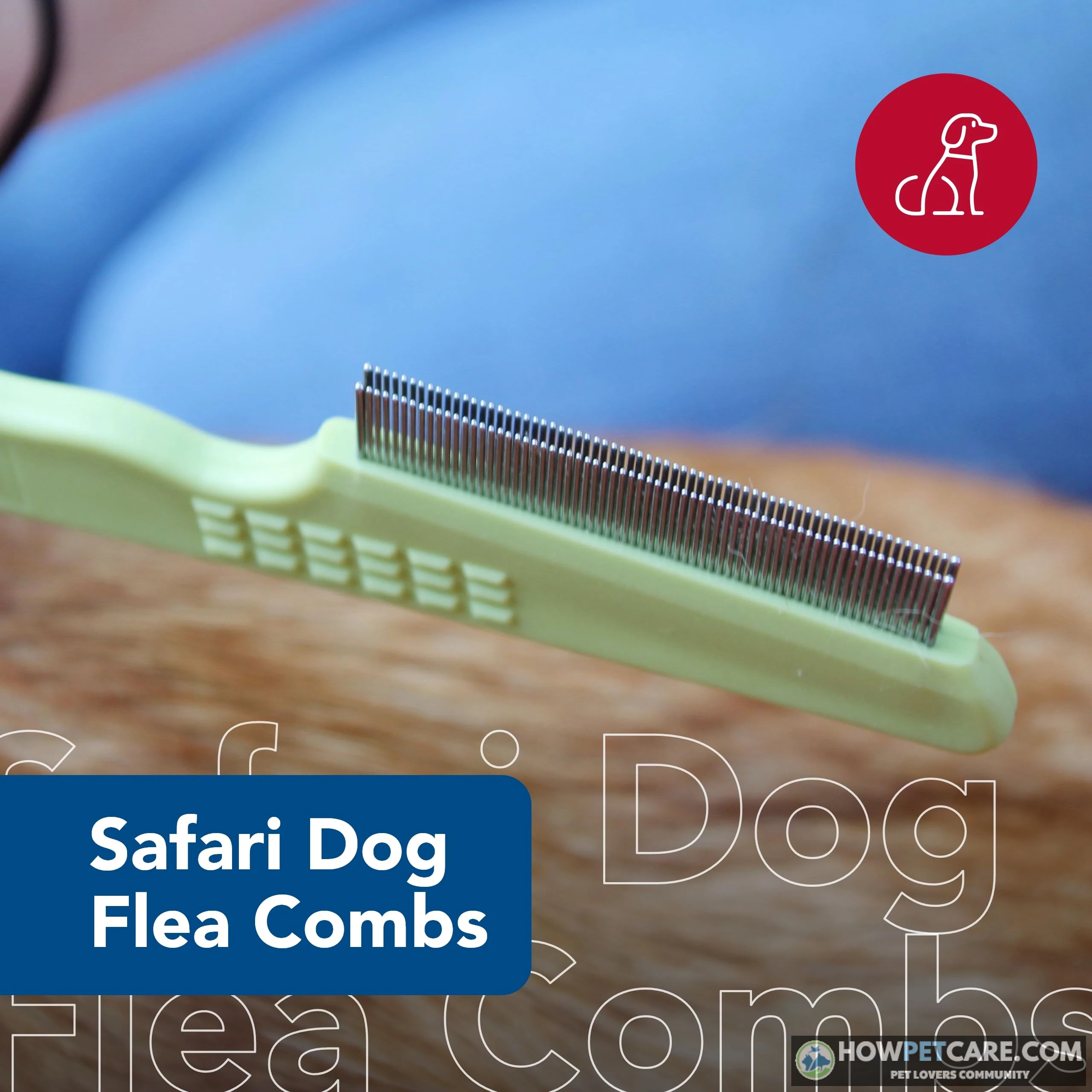
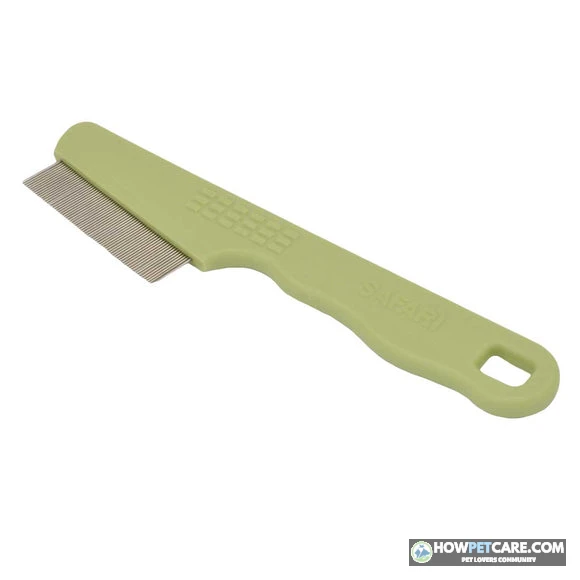
| Safari-style double-row comb | Double row | Manufacturer specification varies or is undisclosed | Check coat depth; may suit short-to-medium coats | Verify listing; some versions specify stainless steel teeth | Varies | General checks on dogs and cats | About $5–9 | More coverage can mean more snagging in loose undercoat |
| Long-tine grooming-brand comb | Usually single row | Manufacturer does not disclose unless stated | Designed for longer or denser coats | Verify listing; stainless steel may be specified | Varies | Long-haired cats and thick-coated dogs | About $15–20 | Pay more only if longer tines or a better grip solve your problem |
| Battery-powered electric flea comb | Usually single row | Manufacturer specification varies | Check the device’s stated coat suitability | Plastic body and conductive teeth vary by model | Varies | Owners interested in an electric option | About $15–25 | Superiority over a manual comb is not established here |
Budget tier
A budget comb can be adequate for short-coat detection. The trade-offs might be a less comfortable handle, less consistent finishing, or limited use on deep coats. Inspect it before use; a low price is no reason to accept teeth that scratch or pull.
Mid-range tier
A mid-range comb may have a sturdier handle or better-finished teeth. Compare the actual design and materials instead of assuming price guarantees quality. A comfortable grip helps when you need to work slowly through several coat sections.
Premium tier
Premium grooming-brand combs may offer a more durable build or longer tines. Those features can matter for a long-haired cat or dense-coated dog, but a higher price doesn’t prove better flea removal on its own. A premium short-tine comb may be less useful than a basic model whose tines reach your pet’s skin.
Our picks by situation
For short-haired pets, choose an affordable metal comb with smooth, closely spaced teeth. For a long-haired cat or thick-coated dog, prioritize tine length and a grip that lets you control the comb. A mid-range or premium model may be worth it if it reaches the skin where a budget comb can’t. For kittens, puppies, and face work, favor a small, simple single-row comb that’s easy to guide gently.
You can check pet-supply stores such as Chewy, Petco, PetSmart, and Walmart, or online marketplaces such as Amazon. Availability and specifications vary. Before buying, confirm the comb’s size, intended species, materials, and return terms; don’t rely on a product title alone.
How to Use a Flea Comb on a Dog or Cat, Step by Step
Fleas move quickly, which makes them hard to spot. Focus your checks on the tail base and rump, then the groin, belly, neck, and behind the ears. Work carefully: a systematic pass beats combing the easiest patch of fur over and over.
Prepare your space and your pet
Set out a flea comb, bright light, a white towel, tissues or paper towel, and a bowl of soapy water. The white surface makes dark specks easier to see. Pick a calm place where your pet can sit or lie comfortably. For a dog, a helper can offer treats while you comb. For a cat, use a secure, familiar surface and stop if handling becomes stressful.
-
Begin with an easy area
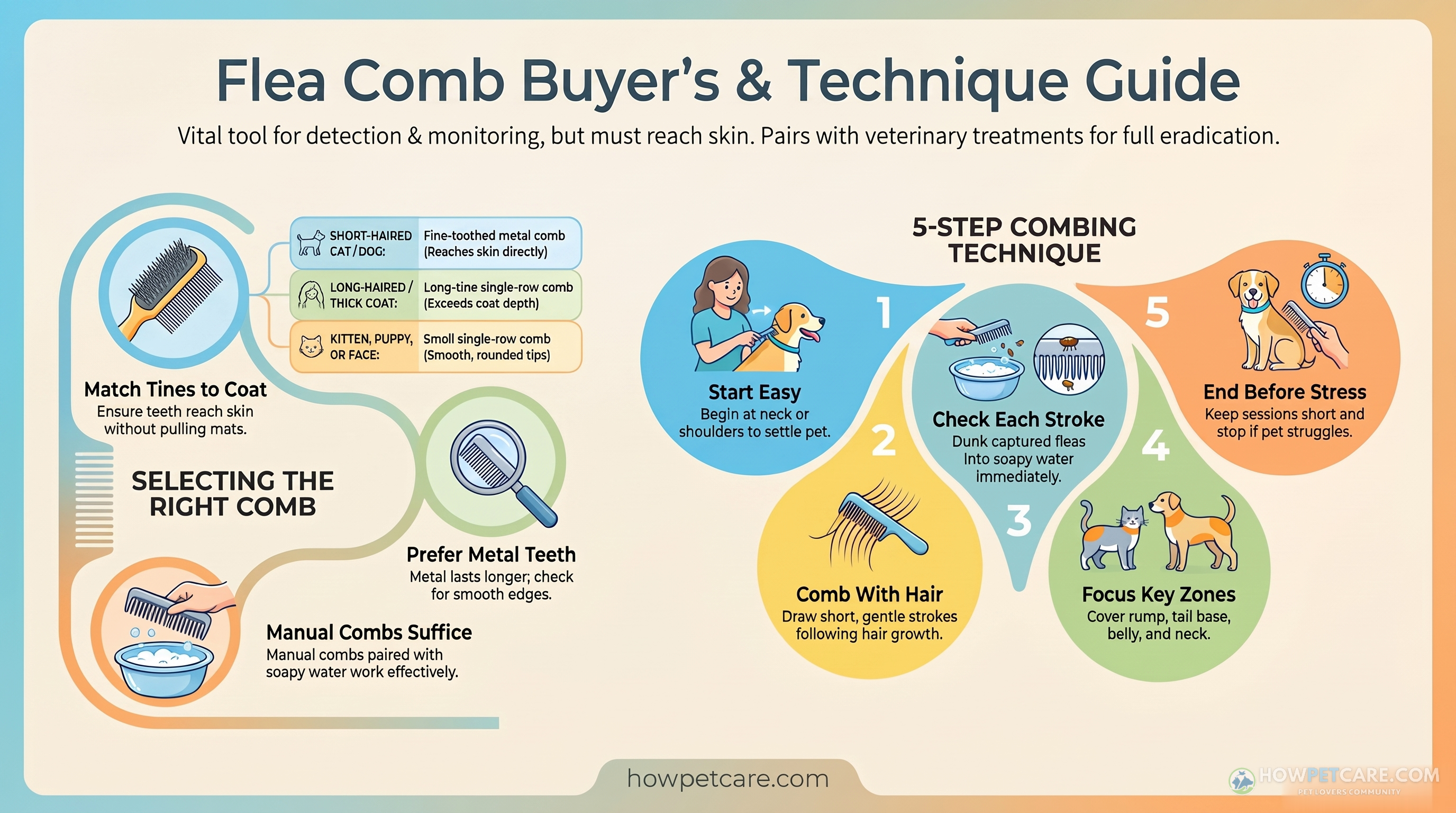
Let your pet settle. Start at the neck or shoulder if that’s comfortable, rather than reaching for a sensitive spot right away.
-
Comb in the direction of the coat
Place the teeth close to the skin and draw the comb in short, slow strokes in the direction the hair grows. Use light pressure; don’t rake or scrape.
-
Check the comb after each pass
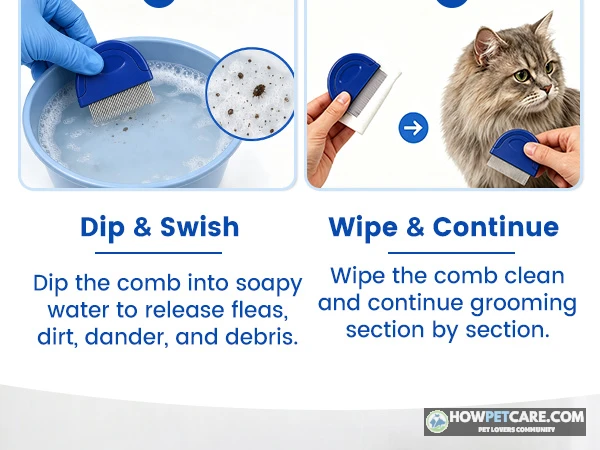
Look between the teeth for live fleas, black specks, and debris. Wipe the comb on a white tissue or dunk captured fleas into soapy water before continuing.
-
Move through focus zones
Work across the rump and tail base, groin, belly, neck, and behind the ears. Keep each pass controlled, and avoid the eyes, nose, and ear canal.
-
Finish when your pet is still comfortable
There’s no single session length that suits every animal. A few calm minutes are better than forcing a long session. Pause or stop if your pet pulls away, becomes distressed, or the comb catches.
Coat sectioning for long, thick, and doodle coats
Use your fingers to part the coat into small sections. Hold the parted hair aside, place the comb close to the skin, and work one layer at a time. On a double coat, move from the skin outward instead of forcing the comb through the full coat in one pass. If you hit a tangle, stop and work it out with an appropriate grooming tool; pulling a fine-toothed flea comb through a mat can hurt.
Calming a squirming cat or anxious puppy
Keep sessions short and pair gentle handling with treats or calm praise. A second person can steady a dog or offer a cat a treat, but don’t pin an animal down. A towel wrap may help some cats feel secure if it leaves the head and breathing unobstructed; stop if the cat struggles or seems distressed. Work on one area at a time and come back to unfinished zones later.
How long and how often to comb
Check the comb after every stroke or small group of strokes, not just at the end. During an active flea problem, daily combing can help you monitor what you’re finding while you arrange appropriate treatment. For routine monitoring, comb when you groom or notice scratching; frequency depends on exposure and your pet’s tolerance. Stop if the skin becomes red, sore, or irritated.
Flea Dirt, Flea Eggs, or Dandruff? How to Read What the Comb Catches
A live flea is small, dark, and quick-moving. Flea dirt is often the more useful clue when you don’t catch an adult. Flea eggs are tiny, pale, and loose in the coat, so they may fall away rather than stay on the comb. Dandruff and ordinary dirt can look confusing under indoor light; a damp white paper towel helps distinguish them.
| What you see | Appearance | Wet paper towel test | Where it appears | What it means |
|---|---|---|---|---|
| Adult flea | Dark, small, fast-moving insect | A smear may look reddish if crushed | Coat, often around common focus zones | Capture it and place it in soapy water |
| Flea dirt | Tiny black or dark-brown specks | Rust-red or reddish-brown smear as digested blood dissolves | Coat, comb, or bedding | Strong evidence fleas have been feeding |
| Flea eggs | Tiny white or translucent ovals | No red smear | May fall from the coat onto bedding or floors | A comb cannot remove eggs from the home |
| Dandruff | Irregular white or gray flakes | No red smear | On the skin or coat | Not a positive flea test by itself |
| Ordinary dirt or debris | Grit or particles in varied colors | No characteristic red halo | Often paws, belly, or outdoor-exposed coat | Usually environmental debris |
The wet paper towel test
Put a few dark specks on a damp white paper towel and wait briefly. Flea dirt can leave a reddish-brown mark because it contains digested blood. Ordinary dirt generally doesn’t create that characteristic red smear. A negative test doesn’t identify every speck with certainty; if your pet is intensely itchy or you’re still unsure, contact your veterinarian.
Flea eggs vs. dandruff
Eggs are small, smooth, pale ovals; dandruff tends to be irregular flakes. Neither should create the red smear associated with flea dirt. Eggs fall off the animal easily, so not finding them on a comb doesn’t rule out fleas. Fleas have multiple life stages, and combing the pet doesn’t collect eggs and immature stages throughout the home.
If you find a firmly attached insect rather than a fast-moving flea, it could be a tick. Don’t yank or crush it with the comb. Use appropriate tick-removal guidance or ask your veterinarian how to remove it safely.
Safe Combing for Kittens, Puppies, and Sensitive Areas
A flea comb can help when a young animal is too young or too small for a particular flea product, but age limits vary by product. Ask a veterinarian which options are safe for your pet’s age, weight, and species instead of assuming a product is suitable. A heavy flea load in a young or small animal can become urgent; combing shouldn’t delay veterinary advice.
Kittens and puppies
Use light pressure and a comb with smooth teeth that don’t feel sharp. Work in a warm room and keep a dry towel nearby, especially if the animal is small or young. Keep sessions brief and stop before the pet gets cold or distressed. If you find many fleas, don’t rely on repeated combing alone: contact a veterinarian promptly.

Face and sensitive areas
Use a small single-row comb and move slowly away from the eyes. Never comb across the eyes or push teeth into the ear canal, nose, or mouth. The belly, groin, and armpits have thin, sensitive skin; use very light pressure and stop if your pet flinches. Don’t comb over open sores, raw skin, or painful irritation.
Cat-specific tips
Cats may tolerate grooming better when it’s part of a familiar routine. Start with a comfortable area and watch for stress signals such as flattened ears, tense posture, or attempts to leave. For a long-haired cat, part the coat and deal with tangles separately before flea combing. A calm, partial check is safer and more productive than forcing a full-body session.
Seek prompt veterinary advice if a kitten or puppy has a heavy flea load, pale gums, weakness, or unusual lethargy, or if your pet has raw, bleeding, or crusted skin. These signs are no reason to keep combing harder.
Can a Flea Comb Get Rid of Fleas on Its Own? Comb vs. Flea Treatment
No. A flea comb can detect fleas, remove some adults, and collect flea dirt, but it can’t eliminate an infestation by itself. Combing alone isn’t effective parasite management because it removes only some adult fleas and doesn’t address the other life stages in the environment.
A flea comb is a useful tool for checking a pet and monitoring what you find. A flea treatment, such as an appropriate spot-on or oral product, controls fleas on the animal; household cleaning helps with fleas and immature stages where the pet rests. Flea shampoos and other products have different uses and limitations. Ask your veterinarian which treatment suits your pet’s species, age, weight, health, and other medications. Some dog flea products can be dangerous for cats, so never move a product between species without veterinary direction.
Combing can be especially helpful for monitoring and for reducing flea numbers on a small puppy or kitten at risk of blood loss, but it shouldn’t replace veterinary care when an animal is young, heavily infested, ill, or has an allergic skin reaction. If scratching continues or the flea count isn’t improving after treatment, contact the veterinarian rather than relying on the comb alone.
After the Comb: What to Do With Captured Fleas, How to Clean the Comb, and Your First 48 Hours
What to do with fleas you comb out
Drop captured fleas into a bowl of soapy water. A standard manual flea comb removes fleas; it doesn’t kill them. Don’t crush them with bare fingers. Wipe the comb over the bowl or a tissue, and dispose of the water and used tissue so fleas can’t get back to the pet.
How to clean and disinfect your comb
After use, remove hair and debris, then wash the teeth and handle with warm water and soap. Rinse and dry the comb completely before storing it. Clean it between pets. If you use a disinfectant, follow its label and the comb manufacturer’s instructions; don’t mix cleaners or soak a handle in a product that could damage it. Replace a comb with bent, rusty, loose, or rough teeth.

Your first 48 hours after confirming fleas
Hours 0–24: Keep removing captured fleas into soapy water. Wash pet bedding and washable blankets on the hottest cycle the fabric allows, and vacuum places your pet rests. Empty the vacuum outside. Check other pets in the household, and call your veterinarian for a treatment recommendation that matches each animal’s species, age, and weight.
Hours 24–48: Follow the veterinarian’s advice and the product label for any treatment; don’t combine products without professional guidance. Keep combing gently to monitor what you find, and repeat bedding and vacuum cleaning as needed. A flea problem may need continued control because combing the pet doesn’t remove every life stage from the home.
Seek veterinary care promptly for pale gums, weakness, lethargy, a heavy infestation in a young animal, or skin that is open or worsening. If flea numbers don’t decline after you start the recommended plan, ask the veterinarian to reassess it.
FAQ
Does a flea comb kill fleas?
No. A standard flea comb traps and removes fleas but does not kill them, so you need to drown the captured fleas in soapy water. Electric combs claim to zap them, but neither type treats the rest of the infestation.
Where can I buy a flea comb near me?
Flea combs are sold at most pet stores, pharmacies, big-box retailers, and online marketplaces, and they are inexpensive. Check the tooth spacing, tine length, and material listed before buying.
Can I use a flea comb on a dog or cat every day?
Yes, if your pet tolerates it and you use gentle pressure. Daily combing is common during an active infestation, while weekly checks work for routine monitoring.
Does a flea comb remove flea eggs?
It can pick up some flea eggs and flea dirt from the coat, but eggs fall off easily and many end up in the environment. A comb alone won’t clear eggs from bedding and carpet.
Is a flea comb the same as a regular grooming comb?
No. A flea comb has much finer, more closely spaced teeth designed to catch fleas and flea dirt, while regular grooming combs and brushes have wider gaps that let fleas pass through.