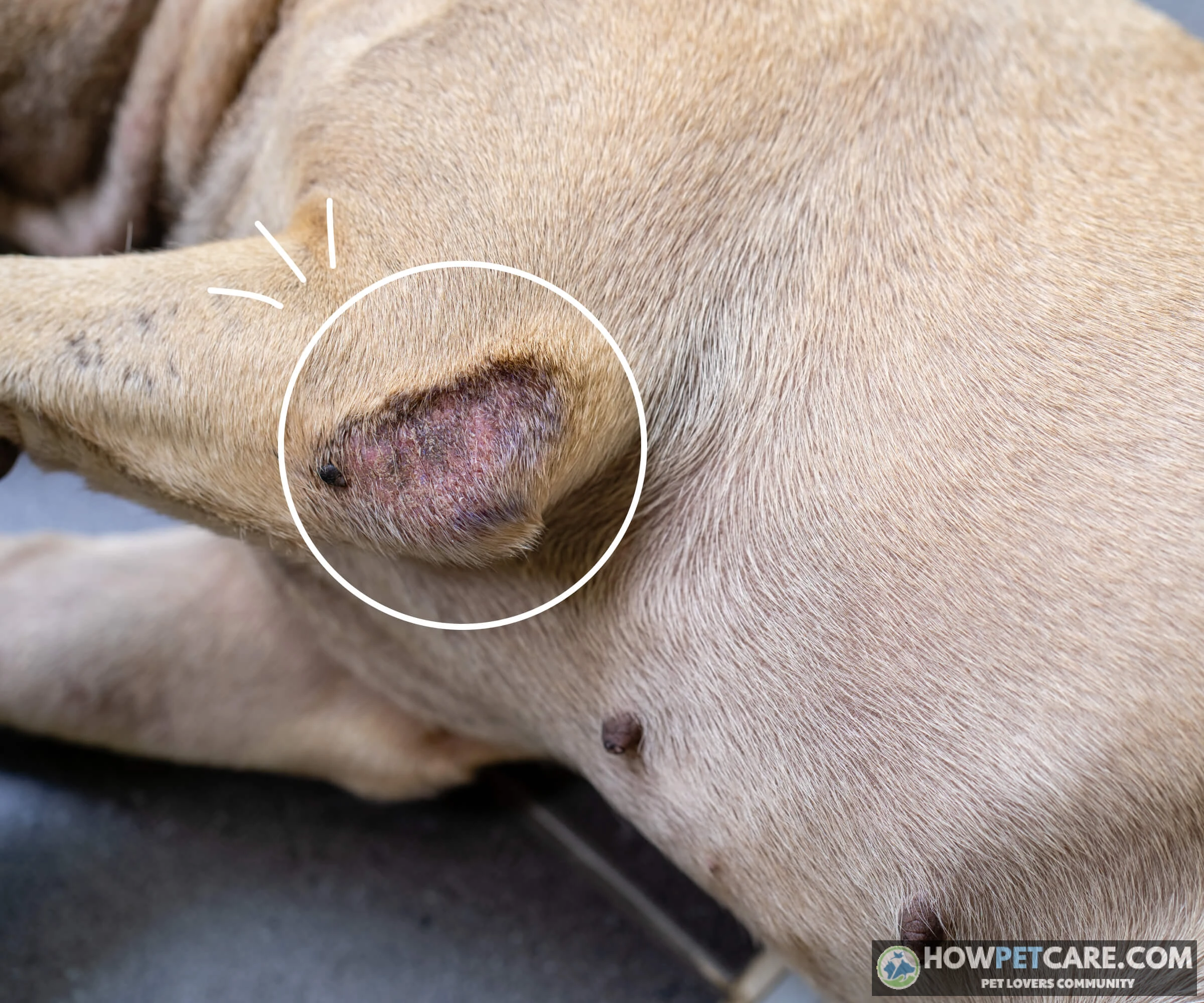

Dry skin in dogs is a symptom, not a diagnosis—work through it in this order:
- Check severity first: facial swelling, breathing trouble, collapse, or spreading painful lesions need urgent veterinary care.
- Book a visit if: itching, odor, hair loss, sores, or flakes persist beyond 1–2 weeks.
- Monitor at home only if: flakes are mild, skin is intact, and your dog acts normally.
- Safe home care: lukewarm baths with a dog-formulated oatmeal shampoo, a humidifier for dry air, and gentle brushing.
- Avoid: vinegar, essential oils, human shampoo, and any product on broken or weeping skin.
If your dog has a few flakes but the skin looks healthy and intact, you can often monitor the problem while simplifying their grooming routine. Dry skin in dogs is a sign, not a diagnosis. Significant itching, odor, hair loss, sores, or changes in energy warrant veterinary attention. First check how severe the symptoms are, then use their location and other clues to decide what to do.
Start here: decide whether your dog’s dry skin can wait
At-home monitoring vs. a scheduled visit vs. prompt care
Start with the most urgent category and follow the first one that fits.
- Emergency care now: Facial or muzzle swelling, especially with difficulty breathing, collapse, or sudden weakness. If possible, call an emergency clinic while you travel.
- Prompt veterinary advice, ideally the same day: Rapidly spreading lesions, pus, bleeding, open sores, obvious pain, severe itching or distress, or skin changes alongside lethargy, vomiting, or loss of appetite. Call promptly if worsening skin affects a puppy, senior, or immunocompromised dog.
- Book a routine appointment: Persistent or recurring flakes, significant itching, redness, bald patches, thickened skin, odor, ear discharge or head-shaking, or repeated paw or tail-base chewing. Contact your vet if you find fleas or flea dirt, or if gentle care hasn’t helped within 1–2 weeks. Mention unexplained changes in weight or energy when you call.
- Monitor at home for up to 1–2 weeks: Flaking is mild, the skin is intact, scratching is occasional, and your dog eats, sleeps, and plays normally. There should be no spreading hair loss, sores, greasy patches, or unpleasant odor.
Use a properly fitted e-collar to prevent licking while you arrange care. Don’t apply oils, vinegar, or other home products to broken or weeping skin.
What causes dry, flaky skin in dogs—and how to tell the difference
Dandruff means visible flakes; pruritus is the medical term for itching. Neither one identifies the underlying cause. Itching is a symptom, not a disease, so treating the flakes alone may leave the real problem unaddressed.
Weather or environment vs. allergy, parasites, infection, or illness
| Possible cause | Common clues | What owners can check | When to contact a vet |
|---|---|---|---|
| Dry air or grooming | Mild flakes, little itch, normal-looking skin; sometimes worse with indoor heating or after bathing | Note seasonal patterns and recent baths or products | If symptoms persist beyond 1–2 weeks or redness or itching develops |
| Environmental or food allergy | Itchy paws or face, red belly or armpits, recurring ear trouble | Record affected areas and any seasonal pattern | Book a visit; allergies need a workup rather than repeated product changes |
| Fleas or other parasites | Itching, bumps, scabs, or hair loss; fleas often affect the lower back and tail base | Comb the coat; black specks that leave a reddish smear on damp white paper suggest flea dirt | Contact your vet for identification and appropriate treatment |
| Bacterial or yeast infection | Redness, greasy scale, odor, moist patches, or ear discharge | Look and smell without probing the ear canal | Arrange a visit promptly, especially for pain, discharge, or spreading lesions |
| Endocrine disease | Dull coat, thinning hair, recurring infections, and sometimes weight or energy changes | Track changes over time and share them with your vet | Book an examination; blood tests may be appropriate |
You may not see fleas even when they’re present. In a sensitive dog, flea allergy dermatitis can cause intense itching after exposure. Mites, including scabies, Demodex, and Cheyletiella, are also possible; some parasites can affect people or other pets. Ringworm is a fungal infection, not a worm, and it can spread too. Your vet can recommend tests and explain what precautions to take. A suddenly red, moist, painful patch—especially with intense scratching—may be a hot spot rather than simple flaking; learn how to triage hot spots on dogs while you arrange care.
Hypothyroidism and Cushing’s disease can cause coat and skin changes, including hair loss. Seborrhea means abnormal scaling or oiliness and may occur alongside another condition, so it helps to compare dry and oily seborrhea when you describe the coat. These clues don’t confirm a diagnosis at home.

 You might be wonderingDog skin tagDog Skin Tag Guide: Identify, Monitor, and Vet Costs in 2026Read the answer
Read the location: what dry skin on ears, elbows, paws, or tail base may suggest
The location of the flakes can help you describe the problem, but causes overlap. Allergies, infections, or parasites can affect several areas at once. If redness comes with pus, spreading heat, or a bad smell, review dog skin infection symptoms before waiting out the week.
| Location | Possible explanations | Additional signs to note | Recommended next step |
|---|---|---|---|
| Ears | Allergies, infection, or mites | Head-shaking, scratching, odor, discharge | Book a vet visit; do not pour home remedies into the ear canal |
| Paws | Allergies, infection, or contact irritation from surfaces or de-icers | Licking, redness between toes, cracked pads | Rinse off winter residue with water and dry gently; book a visit for persistent licking or red, raw skin |
| Elbows | Pressure and friction, including calluses | Thickened skin, cracks, swelling | Provide padded bedding; contact a vet if cracked, swollen, bleeding, or oozing |
| Armpits and belly | Allergies, contact irritation, or infection | Redness, darkened or greasy skin, odor | Arrange an exam if the area is red, uncomfortable, or smelly |
| Tail base and lower back | Fleas or flea allergy dermatitis; other causes are possible | Sudden itching, bumps, thinning hair, flea dirt | Use a flea comb and ask your vet about appropriate prevention or treatment |
| Widespread coat | Dry air, grooming, parasites, infection, or systemic disease | Itch, odor, hair loss, and behavior changes | Monitor only if signs are mild and skin is intact; otherwise book an exam |

Treat mild dog dry skin at home with measured, low-risk care
Try these steps only if your dog fits the monitoring category above. Stop if itching or redness gets worse. If the skin is damaged, arrange an examination rather than trying another remedy.
Bathing frequency, shampoo choice, and water temperature
Choose a fragrance-free, dog-formulated moisturizing or oatmeal shampoo and follow the label. Use lukewarm water, not hot, and keep shampoo out of the eyes and ears. Rinse thoroughly, then press the coat dry with a towel. Avoid human shampoo and essential oils. Too many baths or unsuitable soap can strip natural oils and worsen dryness.
No single bathing schedule suits every dog. If your dog has mild flakes, skip extra baths while you monitor them and ask your vet how often to bathe their coat, especially if they’re using prescribed products. Medicated shampoos may come with different instructions.

Oatmeal, oils, and vinegar: application and safety limits
A plain oatmeal bath may soothe the skin, but it won’t cure parasites, infection, or allergies. Use it only on intact skin, and skip it if your dog reacts to oats. The amount below is a practical preparation range, not a weight-based dose.
-
Prepare the oatmeal
Finely grind 1/3 to 1 cup of plain, unflavored oats, or use a dog-formulated colloidal oatmeal product according to its label.
-
Mix with water
Stir the powder into enough lukewarm bathwater to wet the affected coat until the water looks evenly cloudy. Keep the mixture away from the eyes and inside the ears.
-
Apply gently
Let your dog stand in the water while you sponge or pour it over the affected coat for about 5–10 minutes. Don’t force a distressed dog to soak.
-
Finish and observe
Rinse if the product label directs, then towel-dry gently. Stop if the skin becomes redder or your dog seems uncomfortable.
Keep your dog from drinking the bathwater. A small lick of plain oatmeal mixture may not cause a problem, but larger amounts or added ingredients can upset their stomach. If your dog drinks a substantial amount, consumes a medicated product, or develops symptoms, call your vet and have the ingredient list handy.
Evidence for coconut oil as a treatment for dog dry skin is limited. Ask your vet before trying it. If they approve, apply only a very thin film to a small patch of intact skin, prevent licking, and stop if irritation develops. Don’t use it on ears, raw areas, or wounds. Swallowed oil can upset the digestive system; call your vet if your dog eats a large amount or develops vomiting or diarrhea.

Apple cider vinegar can sting and has no established role as a reliable dry-skin treatment. Even a diluted rinse may irritate skin; do not apply it to red, cracked, or open areas, eyes, or ears. Plain water and a vet-directed plan are safer choices.
Know what supplements and diet can—and cannot—do for a dry coat
Start with a complete, balanced dog food. Omega-3 fatty acids can support the skin barrier, but fish oil supplements aren’t interchangeable: products vary in the amounts of EPA and DHA, the relevant omega-3s. A label that says "1,000 mg fish oil" doesn’t mean the product contains 1,000 mg of EPA and DHA.
Dosing must be based on your dog’s weight, but no per-pound amount is established for these agents—so don’t guess at a dose or combine supplements on your own.
| Agent | Typical use | How the amount is set | Key safety warning |
|---|---|---|---|
| Fish oil (EPA and DHA) | Oral supplement to support the skin barrier | Your vet calculates it by weight, diet, and the product’s listed EPA and DHA | Can upset the stomach and adds calories |
| Vitamin E | Oral supplement sometimes paired with omega-3s | Your vet sets it by weight and health status | A fat-soluble vitamin that can accumulate if oversupplemented |
| Coconut oil | A very thin topical film on intact skin | Your vet approves it; apply only to a small patch | Prevent licking; keep it off ears, wounds, and raw areas |
| Olive oil | Occasionally added to food | Your vet weighs it against total calorie intake | Adds calories and may cause loose stools |
Ask your vet to calculate any supplement amount using your dog’s weight, complete diet, health conditions, medications, and the product’s EPA and DHA content.

Food allergies can cause canine dermatitis, but repeated food changes won’t establish a diagnosis. Your vet may recommend a strict elimination diet and explain which foods, treats, and flavored medications are allowed during the trial.

If your vet recommends omega-3s or a diet trial, set a recheck date together. Coat changes can take weeks, and an elimination diet requires consistent feeding for the period your vet specifies. Don’t wait for a supplement to work if your dog develops any red-flag signs listed in the first section.
What a vet may test—and typical US diagnostic cost ranges
Skin scrape, thyroid testing, and allergy workup
Your vet will ask when the flakes and itching began, examine your dog’s skin and ears, and may use a flea comb. A skin scrape can help detect mites; cytology examines collected material for organisms such as yeast or bacteria, including signs that may point to a yeast infection in dogs. Thyroid blood tests may be considered if the history and examination point to hypothyroidism. Allergy testing is part of a broader workup, not a stand-alone way to diagnose every itchy dog or identify a food allergy.

| Option or test | How it is used | Key safety or cost caveat | Expected timeframe or purpose |
|---|---|---|---|
| Dog-formulated oatmeal shampoo | Apply and rinse according to the label | Intact skin only for home monitoring; avoid eyes and ears | Comfort care; stop if irritation worsens |
| Skin scrape or cytology | A sample is examined for mites or signs of infection | Exam and laboratory fees may be separate | Helps guide treatment rather than identifying every possible cause |
| Thyroid testing | Blood testing when the clinical picture warrants it | Price depends on the tests included and laboratory charges | Helps assess suspected thyroid disease alongside the examination |
| Allergy workup | May include a diet trial or referral to a vet dermatologist | Testing and specialist fees vary; testing is not a general food-allergy screen | Helps plan longer-term management after other causes are considered |
Reliable current US price ranges weren’t provided for these tests, so exact dollar figures here would be guesswork. As a rough guide, a skin scrape or cytology is usually among the less expensive diagnostics, while a broader thyroid panel or a dermatologist referral typically costs more. Ask the clinic for an itemized estimate that covers the exam, sampling, laboratory fees, medication, and follow-up before testing. Prices vary by region and clinic; a dermatologist referral may cost more.
Build a winter skin-care routine and decide what to do next
A simple weekly winter checklist
- Check the coat and skin: Note where flakes appear, how often your dog scratches, and whether redness, odor, or hair loss is developing. Take a photo in the same light each week.
- Brush gently: Choose a brush suited to your dog’s coat. Stop if the skin looks irritated or your dog seems uncomfortable.
- Manage the environment: If indoor air is dry, consider a humidifier and clean it according to its instructions. Rinse and dry paws after walks on treated surfaces.
- Review grooming and prevention: Bathe only as needed with a dog-safe product, and keep flea prevention on the schedule recommended by your vet.
- Reassess the plan: If mild flaking hasn’t improved within 1–2 weeks, or spreads or returns, book an appointment. Bring photos, symptom notes, and labels for shampoos, foods, and supplements.

Skin risks vary with breed, coat, age, health, and environment. Hairless breeds such as the Chinese Crested and Xoloitzcuintli can be especially vulnerable to skin problems. Whatever your dog’s breed, let the symptoms—not the calendar or a home-remedy promise—guide your decision to call.
 You might be wonderingAllergies in dogs foodDog Food Allergies: Signs, Elimination Diet & Zero‑Contamination GuideRead the answer
FAQ
Which dogs are more prone to dry skin?
Risk varies with breed, coat, age, health, grooming, and environment; dogs with allergies or endocrine conditions may also develop skin changes. Breed or age alone cannot identify the cause, so recurring itch or scaling deserves an individual assessment.
How long should I try a home remedy before expecting improvement?
Comfort may improve after gentle bathing or reducing dry-air exposure, but persistent or worsening signs should not be watched indefinitely. Omega-3 supplements and treatment of underlying disease can take weeks, so follow a veterinarian’s timeframe and recheck plan.
What should I do if my dog licks coconut oil or eats oatmeal bath water?
A small lick may cause no problem, but oils or a larger amount can upset the stomach; oatmeal bath water may also cause digestive upset. Remove access, check the product ingredients and amount, and contact your veterinarian or a pet poison service if your dog ate a large amount, a medicated product, or develops symptoms.
Is dry skin ever an emergency?
Dry flakes alone are rarely an emergency, but rapidly spreading or painful lesions, pus, marked swelling, severe distress, or signs such as weakness or lethargy need prompt veterinary advice. Facial swelling or difficulty breathing warrants emergency care.