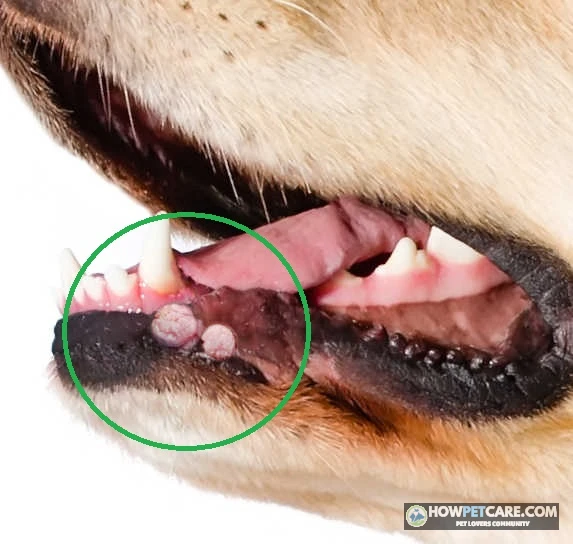

No, humans cannot catch warts from dogs. Dog warts are caused by canine papillomavirus, which is species-specific and does not infect people. Other dogs can catch them, especially puppies and immunocompromised dogs. Most young-dog viral papillomas resolve in 6–8 weeks; monitor for red flags.
If you’ve found a strange lump on your dog and worried about whether your family can catch it, here’s the short answer: no, humans cannot get warts from dogs. Dog warts are caused by canine papillomavirus, a species-specific virus that does not infect people. Your dog’s wart is a concern for your dog, not for you or your children. That said, dog warts are contagious to other dogs, they can look like more serious growths, and they deserve a clear monitoring plan rather than guesswork. This guide walks you through identification, contagion boundaries, home monitoring with dates, and realistic removal costs so you can decide your next step with confidence.
Can Humans Get Warts from Dogs? The Zoonotic Answer First
Why dogs cannot give humans warts
Dog warts — also called canine papillomas — are benign tumors caused by canine papillomavirus (CPV), which is species-specific. The virus hijacks skin-cell division in dogs only; it cannot replicate in human tissue, and dog warts are not caused by human HPV nor do they become human warts. Canine papillomavirus is not zoonotic, meaning it does not transmit from animals to humans. Even if you touch, pet, or groom a dog with active warts, you will not develop warts. HPV, the virus behind human warts, is a separate virus that infects only humans.

What to tell family members and caregivers
Reassure children and caregivers that petting or hugging the dog is safe. Basic hygiene still matters for other reasons — washing hands after handling any animal is good practice — but there is no wart-transmission risk to people. If a family member develops a wart, it came from another human, not the dog. Do not let fear of human infection delay a needed vet visit; the real risk audience for canine papillomavirus is other dogs, especially young or immunocompromised ones.
Dog warts are species-specific. Humans cannot catch warts from dogs, period. Other dogs can catch them, especially puppies and immunocompromised dogs.
What a Dog Wart Looks Like and Where It Appears
Typical appearance
Viral papillomas classically look like small cauliflower or feathery sea-anemone growths — pale pink, grayish, or flesh-toned, with a rough, bumpy surface. They may appear singly or in clusters. Inverted papillomas and dark scaly plaques also occur, so not every presentation is textbook. Most true warts in young dogs show up around the mouth, muzzle, genitals, eyelids, ears, and between the toes.
Common locations
Common sites include the lips, inside the mouth, eyelids, paws, and other friction-prone areas. Oral papillomas often cluster on the lips and tongue. Foot warts can appear between toes and cause limping. Growth location is a strong diagnostic clue: mouth and paw growths in a young dog point toward viral papilloma.

Run through these five questions with the growth in front of you. Each answer points you toward — or away from — a viral papilloma:
- Age: Is the dog under 2 years old? (Young = more likely papilloma; over 7 = more likely sebaceous growth or tumor)
- Location: Is it on the lips, inside the mouth, on an eyelid, or between the toes? (These are papilloma hotspots)
- Texture: Does it look rough, bumpy, or cauliflower-like rather than smooth? (Cauliflower texture = classic papilloma)
- Color: Is it pale pink, grayish, or flesh-toned rather than dark black or oily yellow? (Dark/oily suggests other growths)
- Pattern: Are several growths appearing in a cluster or in quick succession? (Clusters = strong papilloma signal)
Scoring: 4–5 yes answers → likely viral papilloma, start the monitoring calendar below. 2–3 yes → photograph and book a routine vet visit within 1–2 weeks. 0–1 yes, or any red flag (bleeding, rapid growth, ulceration) → book a vet visit this week.
Dog Warts vs Skin Tags, Sebaceous Growths, and Mast Cell Tumors
Age and location clues
Young dogs with oral or paw growths point more toward viral papillomas. Older dogs more often develop non-viral growths such as sebaceous hyperplasia — the most common wart-like growth in older dogs, typically benign, pea-sized, hairless, and firm, sometimes oozing waxy debris or bleeding. Nodular sebaceous hyperplasia is predisposed in Cocker Spaniels, Miniature Poodles, Miniature Schnauzers, and Beagles. Sebaceous tumors include epithelioma, adenoma, and carcinoma; sebaceous carcinoma is rare at roughly 2% of sebaceous tumors and is malignant.
Skin tags are usually soft, narrow-stalked, and slow-growing. Mast cell tumors may be itchy, changing, red, ulcerated, or rapidly growing and need prompt veterinary evaluation. Solitary skin papillomas can be confused with mast cell tumors, sebaceous adenomas, carcinomas, melanomas, and follicular cysts, so veterinary diagnosis is recommended.
Red flags that require biopsy or removal
Urgent red flags include bleeding, ulceration, rapid growth, pain, infection, or difficulty eating. Any growth that changes character, persists beyond the expected window, or appears in an older dog without a clear viral cause should be assessed by a veterinarian, potentially with cytology or biopsy.
| Growth type | Typical age and location | Appearance and texture | Urgency |
|---|---|---|---|
| Viral papilloma (dog wart) | Young dogs; mouth, muzzle, eyelids, paws, genitals | Cauliflower-like, rough, pale pink/gray/flesh-toned, often clustered | Low if uncomplicated; monitor 6–8 weeks to ~3 months |
| Sebaceous hyperplasia | Older dogs; trunk, eyelids, legs | Pea-sized, hairless, firm, sometimes oozing waxy debris or bleeding | Low; remove if irritated or cosmetically bothersome |
| Skin tag | Any age; neck, armpits, groin | Soft, narrow-stalked, slow-growing | Low; remove if traumatized |
| Mast cell tumor | Any age; variable location | Itchy, changing, red, ulcerated, or rapidly growing | High — prompt veterinary evaluation |
| Melanoma / other malignancy | Older dogs; variable | Dark, irregular, rapidly changing | High — prompt veterinary evaluation |

Are Dog Warts Contagious to Other Dogs and How to Contain Them
Home containment checklist
Canine papillomavirus spreads through direct contact and shared surfaces, and the virus can survive in the environment for weeks. If one dog has active papillomas and you live with other dogs, work through this list the same day you notice the growths.
Separate now:
- ☐ Assign each dog its own food and water bowls; wash the affected dog’s bowls in hot, soapy water daily
- ☐ No shared toys, chews, or bones — papillomavirus transfers via saliva
- ☐ Separate bedding; wash the affected dog’s bedding on a hot cycle (60°C / 140°F)
- ☐ No shared grooming tools, brushes, or toothbrushes
- ☐ Wipe down hard surfaces the affected dog licks or rubs against (crate bars, door frames, floors) with a diluted bleach solution — roughly 1 part household bleach to 30 parts water, left wet for 10 minutes, then rinsed

Separate socially:
- ☐ Skip dog parks, daycare, training classes, and boarding until lesions fully resolve
- ☐ Avoid nose-to-nose greetings and shared water bowls on walks
- ☐ Tell your daycare, groomer, or boarding facility about the diagnosis so they can disinfect
Duration: Keep these measures in place until the growths are fully gone — typically 4–12 weeks — or until your veterinarian clears contact.
Park, daycare, and boarding precautions
It is prudent to avoid dog parks, daycare, and close contact with unfamiliar dogs until active lesions resolve or your veterinarian says otherwise. This reduces spread to other dogs. Inform any facility your dog visits so they can disinfect shared surfaces and equipment.
Do Dog Warts Go Away on Their Own? Timeline and Home Monitoring
Expected regression timeline
Many viral papillomas regress over weeks to a few months as immunity develops. Warts generally resolve on their own in about six to eight weeks as immunity develops, but warts persisting three to five months should be treated due to rare cancer risk. Dogs develop immunity only to the CPV type they were infected with, so a dog can catch a different papillomavirus type later.
Weekly monitoring schedule
Photograph the growth weekly with a size reference and note changes in color, texture, or number. Copy this schedule and fill in the dates. The escalation trigger is built in: any wart still present at the 3–5 month mark, or any red flag at any point, goes to the vet.
DAY 0 — [date: ____]
□ Photograph the growth next to a coin or ruler for scale
□ Note location, approximate size (mm), color, texture
□ Book a vet exam if identification is uncertain

WEEK 2 — [date: ____]
□ Photograph from the same angle and distance
□ Compare: bigger, smaller, same? More growths?
□ Any bleeding, odor, or licking/pawing at the site?

WEEK 4 — [date: ____]
□ Repeat photo and comparison
□ If growing or multiplying → vet visit within 1 week
□ If unchanged → continue

WEEK 6–8 — [date: ____]
□ Repeat photo and comparison
□ Shrinking or darkening/drying = typical regression, keep going

MONTH 3 — [date: ____]
□ Still present and unchanged? → vet reassessment (do not wait longer)

ESCALATE IMMEDIATELY (any week) if:
• Bleeding, ulceration, or foul odor
• Rapid growth (noticeably bigger within 1–2 weeks)
• Pain, or the growth interferes with eating, blinking, or walking
• New growths appearing in the mouth or on the paws
Urgent red-flag list
Urgent red flags include bleeding, ulceration, rapid growth, pain, infection, or difficulty eating. Any wart lasting beyond the expected window or changing character needs veterinary reassessment.

When Veterinary Removal Is Necessary and What It Costs
Removal triggers
Removal is considered for pain, bleeding, infection, obstruction, cosmetic or functional impact, or diagnostic uncertainty. Warts persisting three to five months should be treated due to rare cancer risk. Removal without diagnosis can delay identification of a tumor, so uncertain growths warrant veterinary evaluation first.
Options, cost ranges, and recovery
Options include surgical removal, cryotherapy, laser removal, and electrosurgery depending on size and location. Costs vary by region, anesthesia needs, pathology, and number of lesions; ask for an itemized estimate.
| Option | Best for | Typical cost range (US) | Recovery |
|---|---|---|---|
| Surgical excision | Large, single, or suspicious growths needing biopsy | $150–$500+ (anesthesia and lab fees can add $100–$300) | 10–14 days; e-collar and restricted activity |
| Cryotherapy (freezing) | Small external papillomas on accessible skin | $50–$150 per lesion or session | A few days; scab falls off in 1–2 weeks |
| Laser removal | Multiple growths, or growths in sensitive spots like eyelids and mouth | $250–$600 depending on number of lesions | 5–10 days; less bleeding than surgery |
| Electrosurgery | Small clustered papillomas, often combined with sedation | $150–$400 | 7–10 days; keep the site clean and dry |
| Wait-and-see monitoring | Young-dog papillomas with no pain or interference | $0 (plus exam fee of $50–$100 if you want a baseline diagnosis) | No recovery needed; most regress in 1–3 months |

Ask your clinic for an itemized estimate covering anesthesia, pathology (if the growth is sent to a lab), pain medication, and follow-up visits — these four items are where bills vary most. Recovery commonly ranges from a few days to two weeks, with activity restriction and incision care.
Other treatments mentioned in veterinary literature include interferon, imiquimod, cimetidine, and autogenous vaccines, though availability and evidence vary; discuss these with your veterinarian.
Age- and Breed-Specific Risk: Which Dogs Are Most Susceptible
Young-dog viral papillomas
Puppies and young dogs are most prone to contagious oral papillomas. Puppies, seniors, immunosuppressed dogs, and dogs frequently around other dogs are most at risk. Immunosuppression, stress, and crowded environments can increase susceptibility. Pugs, Shar Peis, and Cocker Spaniels are flagged as prone breeds, though breed mentions in competitor content are incomplete; risk is better judged by age, immune status, and growth behavior.

Older-dog growth differentials
Older dogs more often develop sebaceous and other non-viral growths rather than true viral papillomas. Most "warts" on older dogs are not true warts but wart-like sebaceous gland growths, typically benign. A single smooth growth in an older dog is less likely to be a viral papilloma.
Home and Natural Remedies: What Is and Is Not Supported
Remedies with limited evidence
Popular natural remedies lack strong veterinary evidence and may irritate or infect the skin. Topical or immune-support approaches should only be used under veterinary guidance. There is no routine, widely available vaccine that owners can request for canine papillomavirus; prevention relies more on avoiding contact with active lesions and maintaining good hygiene in multi-dog settings.
Unsafe DIY actions to avoid
Do not cut, burn, tie off, or chemically destroy a dog wart at home. Removal without diagnosis can delay identification of a tumor. A veterinarian may diagnose a classic viral papilloma by appearance and history, but uncertain, atypical, or persistent growths often need cytology or biopsy — testing is the safest way to rule out other tumors.
Next Steps: A 30-Day Monitoring and Vet-Visit Plan
30-day checklist
- Day 0: Photograph the growth, note location and size, and schedule a vet exam if uncertain.
- Days 1–14: Check weekly, isolate from other dogs if contagious type is suspected, and disinfect shared items.
- Days 15–30: Compare photos and escalate for bleeding, rapid growth, pain, or persistence.
- Use the red-flag list to decide between routine monitoring and urgent care.
When to book a routine versus urgent visit
Use this list to decide how fast to act. Urgent means same day or next available emergency appointment.
Go urgently if you see:
- ☐ Bleeding that does not stop within a few minutes of gentle pressure
- ☐ The growth is ulcerated, oozing, or has a foul smell (signs of infection or breakdown)
- ☐ Noticeable size increase within 1–2 weeks
- ☐ The dog is in pain — whimpering when the area is touched, refusing food (oral growths), or limping (paw growths)
- ☐ A growth near the eye affecting blinking, or in the mouth blocking chewing or swallowing
- ☐ Redness, swelling, or heat spreading into the surrounding skin
Book a routine visit (within 1–2 weeks) if:
- ☐ The growth is unchanged but you are unsure what it is
- ☐ A wart has persisted past 3 months without shrinking
- ☐ New small growths are appearing in a young dog (confirm the papilloma diagnosis and get containment advice)
- ☐ You want a baseline diagnosis before starting home monitoring
Not a red flag: slow, unchanged growth with no pain in a young dog — this is exactly the scenario the monitoring calendar is for.

Growth Type Typical Age and Location Appearance and Texture Urgency Level Common Management or Removal Options Viral papilloma (dog wart) Young dogs; mouth, muzzle, eyelids, paws, genitals Cauliflower-like, rough, pale pink/gray/flesh-toned, often clustered Low if uncomplicated; monitor 6–8 weeks to ~3 months Wait-and-see monitoring (most regress in 1–3 months), cryotherapy (freezing), surgical excision, laser removal, or electrosurgery if persistent/complicated Sebaceous hyperplasia Older dogs; trunk, eyelids, legs Pea-sized, hairless, firm, sometimes oozing waxy debris or bleeding Low; remove if irritated or cosmetically bothersome Monitoring; remove if irritated or cosmetically bothersome Skin tag Any age; neck, armpits, groin Soft, narrow-stalked, slow-growing Low; remove if traumatized Monitoring; remove if traumatized Mast cell tumor Any age; variable location Itchy, changing, red, ulcerated, or rapidly growing High — prompt veterinary evaluation Prompt veterinary evaluation, biopsy, surgical excision Melanoma / other malignancy Older dogs; variable Dark, irregular, rapidly changing High — prompt veterinary evaluation Prompt veterinary evaluation, biopsy
FAQ
Can canine papillomavirus be prevented with a vaccine?
There is no routine, widely available vaccine that owners can request for canine papillomavirus. Prevention relies more on avoiding contact with active lesions and maintaining good hygiene in multi-dog settings.
What disinfectant is useful for surfaces exposed to dog warts?
A properly diluted bleach solution is commonly used on hard, non-porous surfaces, while bedding and fabrics should be washed hot and dried thoroughly. Always follow product label directions and keep pets away until surfaces are dry.
Should my dog stay home from the dog park while warts are present?
Yes, it is prudent to avoid dog parks, daycare, and close contact with unfamiliar dogs until active lesions resolve or your veterinarian says otherwise. This reduces spread to other dogs.
Can a dog wart be diagnosed without a biopsy?
A veterinarian may diagnose a classic viral papilloma by appearance and history, but uncertain, atypical, or persistent growths often need cytology or biopsy. Testing is the safest way to rule out other tumors.