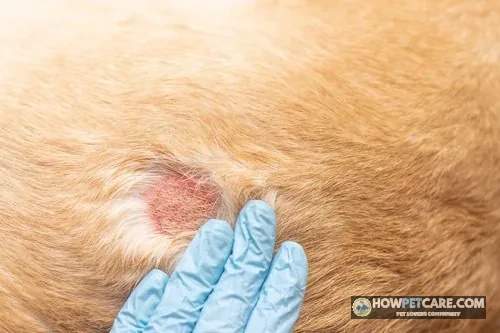

A dog skin infection is an overgrowth of bacteria, yeast, fungi, or mites—usually triggered by allergies, moisture, or parasites. Signs include redness, odor, greasy or scaly patches, pustules, hair loss, and itching. Most cases need vet-directed treatment; seek care promptly if lesions spread, ooze, or your dog seems unwell.
Your dog has a red, itchy, perhaps oozing patch of skin. You want to know what it is, whether you can care for it at home, and when to call the vet. This guide helps you match symptoms to possible causes, decide how quickly to seek care, and follow a medicated bath protocol. You’ll also find US cost ranges and a plan for dealing with recurring infections.
Match the skin changes you see to a likely cause
What a dog skin infection can look and smell like
Skin infections in dogs follow several recognizable patterns. Circular, scaly patches with hair loss in the center often point to ringworm, which is a fungus, not a worm. Greasy, red, thickened skin that feels like elephant hide and has a musty "corn chip" odor is characteristic of yeast dermatitis (Malassezia), especially in the folds, ears, paws, and groin. Small pus-filled bumps (pustules), crusts, and raw, moist "hot spots" that spread quickly suggest bacterial pyoderma, most often driven by Staphylococcus pseudintermedius. Intense, frantic scratching at the ear edges, elbows, and belly, along with crusting, can mean sarcoptic mange. Patchy hair loss on the face and paws with little itch often signals demodectic mange.

Several of these conditions look alike, and overlapping infections, such as yeast and bacteria together, are common. Use the descriptions and comparison table below to narrow the possibilities, then check with your veterinarian.
Clues that change how quickly to act
Odor, itch intensity, location, speed of spread, and whether your dog feels sick all affect urgency. A single coin-sized scab on a bright dog who’s eating and playing can often wait 48–72 hours with gentle cleaning and a cone. Heavy oozing, bleeding, rapid spread, marked swelling, fever signs (warm ears/belly plus shivering or lethargy), or a dog who seems genuinely unwell means same-day veterinary care. Lesions near the eyes, lips, ears, or genitals warrant a prompt routine appointment because of the risk to sensitive structures. If anyone in the household is immunocompromised, pregnant, elderly, or under five and you suspect ringworm (round scaly patches with broken hairs), limit contact with the lesions, wash your hands after handling the dog, and seek veterinary guidance today.
Compare bacterial, yeast, ringworm, and parasite-related skin disease
Bacterial versus yeast infection clues
Bacterial pyoderma typically produces pustules, crusts, and circular areas of hair loss that can mimic ringworm. The smell ranges from mild to foul and is sometimes sweet-sour. Itching is moderate, and dogs often lick or chew one spot. Standard Staphylococcus pseudintermedius poses a low contagion risk to healthy people and pets, though multidrug-resistant strains (MRSP) require hygiene precautions. Treatment usually starts with topical antiseptics or medicated shampoo; deeper infections need oral antibiotics selected by cytology or culture.
Yeast dermatitis (Malassezia) causes greasy, red, thickened skin with a distinct musty, rancid, or "corn chip" odor. It tends to concentrate in moist areas: skin folds, ears, paws, armpits, and groin. The itch is intense and persistent, especially at the paws and ears. It isn’t contagious; it’s an overgrowth of normal skin yeast triggered by allergies, moisture, or immune changes. Treatment relies on antifungal shampoo, wipes, or oral antifungals, along with addressing the underlying trigger.

When ringworm or mange may be more likely
Ringworm (dermatophytosis) produces round scaly patches with broken hairs, often on the face, ears, and legs. Itching is often mild or absent, and there’s usually no odor. Contagion risk is HIGH: spores spread to people, cats, and other dogs. Treatment involves antifungal shampoo or lime sulfur dips, sometimes oral antifungals, and thorough household cleaning.
Mange comes in two forms. Sarcoptic mange causes intense, frantic itching with crusted ear edges, elbows, and belly; it can spread to pets and briefly to people. Demodectic mange causes patchy hair loss with little itch, often on the face and paws, and doesn’t spread between animals. Both are confirmed by skin scraping and treated with prescription mite therapy (isoxazoline-class medications or dips).
Symptom-to-Cause Matcher: What You’re Seeing vs. What It Might Be
| Likely cause | Typical appearance | Odor | Itch pattern | Contagion risk | Common veterinary treatment |
|---|---|---|---|---|---|
| Bacterial (pyoderma) | Small pus-filled bumps, crusts, circular patches of hair loss that can look like ringworm, raw moist "hot spots" | Mild to foul, sometimes sweet-sour | Moderate; dogs often lick or chew one spot | Low to people and other pets; resistant strains (MRSP) need hygiene care | Topical antiseptics/medicated shampoo; oral antibiotics for deeper infections |
| Yeast (Malassezia) | Greasy, red, thickened or elephant-skin texture, often in ears, paws, armpits, groin, and skin folds | Musty, "corn chip" or rancid smell | Intense and persistent, especially paws and ears | Not contagious — it’s an overgrowth of normal skin yeast | Antifungal shampoo, wipes, or oral antifungals; address the underlying trigger |
| Ringworm (a fungus, not a worm) | Round scaly patches with broken hairs, often on face, ears, and legs; may have little itch | Usually none | Mild or none | HIGH — spreads to people, cats, and other dogs via spores | Antifungal shampoo/lime sulfur dips, sometimes oral antifungals; household cleaning |
| Mange (mites) | Sarcoptic: intense itch, crusted ear edges, elbows, belly. Demodectic: patchy hair loss with little itch, often face and paws | Usually none unless secondarily infected | Sarcoptic: severe, frantic scratching. Demodectic: mild | Sarcoptic mange can spread to pets and briefly to people; demodectic does not spread | Prescription mite treatment (isoxazoline-class or dips); skin scraping confirms |
Rule of thumb: round patch + scaling + a cat or new pet in the house → consider ringworm and limit contact. Greasy folds + musty smell → consider yeast. Pus bumps or hot spots → consider bacteria. Frantic scratching at ear edges and elbows → consider mites.


Use a same-day versus routine vet triage check
Seek care today
Go to a veterinarian or urgent-care clinic today if lesions are spreading noticeably hour to hour or covering a large area; the skin is oozing heavily or bleeding, or your dog cries out when touched; there’s marked swelling of the face, muzzle, or a limb; you see fever signs (warm ears/belly plus shivering, lethargy, or refusing food); or your dog seems genuinely unwell, withdrawn, unable to settle, or is panting at rest.
Book an appointment soon
Schedule a routine visit this week if a patch has persisted more than 3–5 days or is slowly growing; there’s significant scratching, licking, or odor you can smell across the room; hair loss is spreading beyond one small spot; lesions are near the eyes, lips, ears, or genitals; or the same spot keeps coming back after it seems to heal.
What to do while you wait
If your dog is in the brief monitoring window (one small, superficial area on an otherwise bright dog who’s eating and playing, with no odor, oozing, or spread), keep the area dry and fit a properly sized cone or recovery collar to stop licking. Photograph the spot daily in good light so you can compare it. Don’t shave, squeeze, or pick at lesions. Don’t apply human antibiotic creams, peroxide, essential oils, or apple cider vinegar: these can irritate skin, are unsafe if licked, and may delay appropriate treatment.
Three-Tier Triage Checklist: Monitor, Book, or Go Today
Check the highest tier your dog matches. When in doubt between two tiers, choose the more urgent one.
GO TODAY (same-day vet or urgent care)
- ☐ Lesions are spreading noticeably hour to hour or covering a large area
- ☐ Skin is oozing heavily, bleeding, or the dog cries out when it’s touched
- ☐ Marked swelling of the face, muzzle, or a limb
- ☐ Fever signs: warm ears/belly plus shivering, lethargy, or refusing food
- ☐ Dog seems genuinely unwell — withdrawn, won’t settle, panting at rest

BOOK THIS WEEK (routine appointment)
- ☐ Patch has persisted more than 3–5 days or is slowly growing
- ☐ Significant scratching, licking, or odor you can smell across the room
- ☐ Hair loss spreading beyond one small spot
- ☐ Lesions near the eyes, lips, ears, or genitals
- ☐ Same spot keeps coming back after seeming to heal
SAFE TO MONITOR FOR 48–72 HOURS
- ☐ One small, superficial area (coin-sized or smaller)
- ☐ Dog is otherwise bright, eating, and playing normally
- ☐ No odor, no oozing, no spreading
- ☐ While monitoring: keep the area dry, fit a cone or recovery collar to stop licking, and photograph the spot daily to compare
Any tier → escalate immediately if a household member is immunocompromised, pregnant, elderly, or under 5 and you suspect ringworm (round scaly patches with broken hairs). Limit contact with the lesions and wash your hands after handling the dog.
Know what home care can—and cannot—treat
Safe steps you can take today
Home care can reduce contamination and self-trauma, but it can’t reliably cure bacterial pyoderma, yeast dermatitis, ringworm, or mange without treatment for the specific cause. For support, gently keep the area clean and dry with a veterinarian-recommended antiseptic wipe or dilute chlorhexidine solution. Prevent licking with a properly fitted cone or recovery collar, keep bedding clean, and continue any prescribed parasite prevention. Don’t shave the area yourself; clipper burn worsens inflammation. Don’t squeeze, pick, or scrub lesions.

Home remedies and human creams to skip
Avoid apple cider vinegar, essential oils, hydrogen peroxide, and human antibiotic creams (neomycin, bacitracin, polymyxin). These may irritate already damaged skin, cause problems if licked, or be ineffective against the actual cause. Don’t use leftover antibiotics or antifungals from a previous pet or human prescription. Dosing is weight-based, the drug may be wrong for the organism, and incomplete courses drive resistance. Based on an examination and tests, a veterinarian may recommend a specific topical treatment, medicated shampoo, oral antibiotics, or antifungal therapy.
Standard Staphylococcus pseudintermedius generally doesn’t infect healthy people, but methicillin-resistant strains (MRSP) can colonize or infect immunocompromised individuals. If your dog has a known resistant infection or a household member is immunocompromised, follow your vet’s hygiene instructions: wear gloves for lesion care, wash hands, launder bedding in hot water, and limit contact until cleared.
Follow a medicated-bath protocol and set realistic recovery expectations
Medicated bath checklist
Print or screenshot this checklist and keep it near the tub. Always follow your vet’s product and schedule instructions first. The steps below describe the standard method most protocols follow.

-
Choose the right shampoo
For bacterial infections, vets commonly recommend chlorhexidine (2–4%, often combined with miconazole). For yeast, look for miconazole or ketoconazole. No single shampoo treats everything; matching the active ingredient to the cause matters more than the brand.
-
Brush first
Remove loose hair and mats so the shampoo reaches the skin, not just the coat.
-
Wet thoroughly
Use lukewarm (not hot) water and wet the coat down to the skin.
-
Lather and wait
Massage in the shampoo and set a timer. Most medicated shampoos need about 10 minutes of skin contact to work. Rinsing early is the most common reason baths "don’t help."
-
Rinse completely
Leftover residue irritates skin. Rinse until the water runs clean, then rinse once more.
-
Dry fully
Towel dry, then finish with a cool or low-heat dryer if your dog tolerates it. Pay special attention to skin folds, armpits, groin, and between the toes; yeast thrives in trapped moisture.
-
Stick to the schedule
Vet-directed bathing is often 2–3 times per week during active infection, tapering as the skin improves. Don’t stop early just because the skin looks better.
-
Protect and monitor
Keep shampoo out of the eyes and ears unless the product is labeled for them. If redness or irritation worsens after a bath, stop and call your vet.
What improvement should look like

With the right treatment, superficial bacterial pyoderma typically shows visible improvement in 10–14 days. A full course often runs 3–4 weeks (maintaining antibiotics one week past clinical resolution). Yeast dermatitis usually takes 2–4 weeks, sometimes longer for thick, chronic skin. Ringworm requires a minimum of 4–8 weeks and is considered cleared only after negative follow-up testing. Mange mites die quickly with modern isoxazoline treatments, but skin healing takes 4–6 weeks. If your dog isn’t improving as expected, contact your vet. The diagnosis or treatment may need adjustment.
Prepare for diagnosis, treatment costs, and a useful vet conversation
Typical vet costs and what changes the estimate
Prices vary widely by region, clinic type, and case complexity. Use these ranges to budget and assess estimates, not as quotes.
| Cost item | What it may include | Typical price range | Factors that change the cost |
|---|---|---|---|
| Office exam | Physical exam and history | $50–$100 | Emergency/urgent-care clinics run higher |
| Skin cytology | Tape or swab sample checked under microscope for bacteria/yeast | $30–$75 | Often done same-visit; the single most common test |
| Skin scraping | Sample checked for mites | $25–$60 | May need multiple sites |
| Fungal testing (ringworm) | Wood’s lamp screen, hair pluck, or lab culture | $20–$120 | Lab culture costs more but confirms the diagnosis |
| Bacterial culture & sensitivity | Grows the bacteria to pick an effective antibiotic | $100–$250 | Reserved for deep, recurrent, or resistant infections |
| Medications | Oral antibiotics/antifungals or parasite treatment | $40–$200 per course | Drug, duration, and dog’s weight |
| Medicated shampoo | Vet-dispensed bottle | $15–$40 | Active ingredients; larger bottles for big dogs |
| Recheck visit | Follow-up exam + repeat cytology | $50–$120 | Needed to confirm the infection is actually cleared |

Realistic total for a straightforward first-time infection: roughly $150–$350. Recurrent or deep infections that need cultures and longer medication courses can reach $500–$800+.
Tests and questions to ask
Skin cytology (microscopic exam of a tape or swab sample) is the fastest, lowest-cost test and identifies bacteria and yeast on the spot. Skin scraping checks for mites, while fungal culture confirms ringworm. Bacterial culture and sensitivity is reserved for deep, recurrent, or resistant infections to guide antibiotic selection and avoid resistance escalation. Fluoroquinolones aren’t first-line for pyoderma; they’re reserved for cases where culture and sensitivity results support their use.

Bring these questions to the appointment:
- What do the test results show — bacteria, yeast, both, or something else?
- How long should we treat, and when exactly should we recheck to confirm it’s cleared?
- What improvement should I see by the recheck, and what if I don’t see it?
- Does the estimate include the recheck and repeat cytology?
- Is there a maintenance plan (medicated baths, fold cleaning, ear care) to prevent the next one?
Break the cycle when skin infections keep coming back
A recurrence workup to discuss
Pyoderma in dogs almost always occurs secondary to an underlying cause such as allergies, parasites, or hypothyroidism. A single first-time infection usually needs proper treatment and completion of the full course. When infections keep returning, the goal shifts from fixing this flare-up to finding the trigger.
Decision path:
- 1st infection ever → treat it and finish the full course. No workup is needed yet.
- 2nd infection within 12 months → at the appointment, ask for repeat cytology before treatment to find out if it’s the same organism, and ask whether your dog’s parasite prevention covers mites.
- 3rd or more infections within 12 months → this is a pattern, not bad luck. The most common underlying causes are allergies (environmental or food), skin-fold moisture, keratoseborrhea and other scaling disorders, and less often thyroid or immune issues.
Copy-paste questions to bring to your vet:
- "This is my dog’s ___ infection in the past year. What do you think is driving the repeat infections?"
- "Can you do cytology today — and should we consider a culture since this keeps coming back?"
- "Do you suspect an underlying allergy? If so, what’s the workup — diet trial, allergy testing, or trying allergy medication first?"
- "Given my dog’s age and symptoms, is thyroid testing or other bloodwork justified, or should we rule out allergies and parasites first?"
- "Should this course of treatment be longer than last time, and when exactly should we recheck to confirm it’s cleared?"
- "Is there a maintenance plan — medicated baths, fold cleaning, or ear care — that could prevent the next one?"
Tip: Bring photos of past flare-ups and a dated list of every shampoo and medication already tried. A timeline gives your vet more to work with than memory alone.
Breed-specific, seasonal, and household prevention
Fold-heavy breeds (Bulldogs, Pugs, Shar-Pei, French Bulldogs) have higher infection rates because moisture gets trapped in their skin folds. Gentle fold cleaning and thorough drying, as advised by your veterinarian, is the single most effective prevention. Do this daily during humid months, after swimming or bathing, and after meals for lip folds. Adapt bathing frequency, drying thoroughness, and parasite prevention to humid, wet, or high-allergen seasons. Year-round flea and mite prevention (isoxazoline-class products cover sarcoptic mange) eliminates a major trigger. For suspected ringworm or MRSP, follow veterinary hygiene instructions: wash hands after handling lesions, launder bedding in hot water, vacuum thoroughly, and protect vulnerable household members. For a broader symptom-to-cause overview beyond infections, see our guide to canine skin problems and vet care.

Omega-3 fatty acid supplements (EPA/DHA from fish oil) support skin barrier function and may reduce flare frequency over time, but they don’t treat an active infection. Use them as part of a long-term maintenance plan, not as a replacement for medicated therapy.
Choose your next step with a simple skin-check plan
- Photograph the area in good, natural light, both close-up and in wider context. Note when it began, whether it’s spreading, itch or pain level (0–10), any odor, and recent bathing or medication.
- Run the triage checklist above. Choose same-day care, a routine appointment this week, or brief supportive care with a cone and daily photos.
- If going to the vet: bring the medication and shampoo names (or bottles), prevent licking en route, and ask for a treatment plan linked to the diagnosis, with recheck timing and recurrence prevention.
- If monitoring at home: set a 48-hour calendar reminder. If the spot hasn’t visibly improved or has worsened, arrange a vet visit. Don’t extend the watch-and-wait period beyond 72 hours.
Use what you see to choose the right triage tier, then follow through with treatment and the recheck. If infections return, bring your photos and treatment history to the vet to help identify a trigger.
FAQ
Are dog skin infections contagious to people or other pets?
Some causes, especially ringworm and certain mites, can spread between animals and sometimes to people; many bacterial or yeast flare-ups are not spread by ordinary contact. Until the cause is known, wash hands after handling lesions, avoid sharing grooming tools, and follow your veterinarian’s hygiene advice.
Can allergies cause skin infections in dogs?
Yes. Allergies can damage the skin barrier and lead to licking, scratching, and secondary bacterial or yeast overgrowth. Treating the infection alone may not prevent recurrence if the underlying allergy remains uncontrolled.
What antibiotics are used for bacterial skin infections in dogs?
Veterinarians choose an antibiotic based on the dog’s exam and, when appropriate, cytology or culture results; the right choice depends on the infection and resistance risk. Do not give leftover or human antibiotics, and follow the prescribed course and recheck instructions.
Can I use human antibiotic cream on my dog’s infected skin?
Avoid using it unless your veterinarian specifically recommends it: ingredients may irritate the skin or cause problems if licked, and a cream may be unsuitable for the infection. Prevent licking and ask your veterinarian what topical treatment is safe for the location.