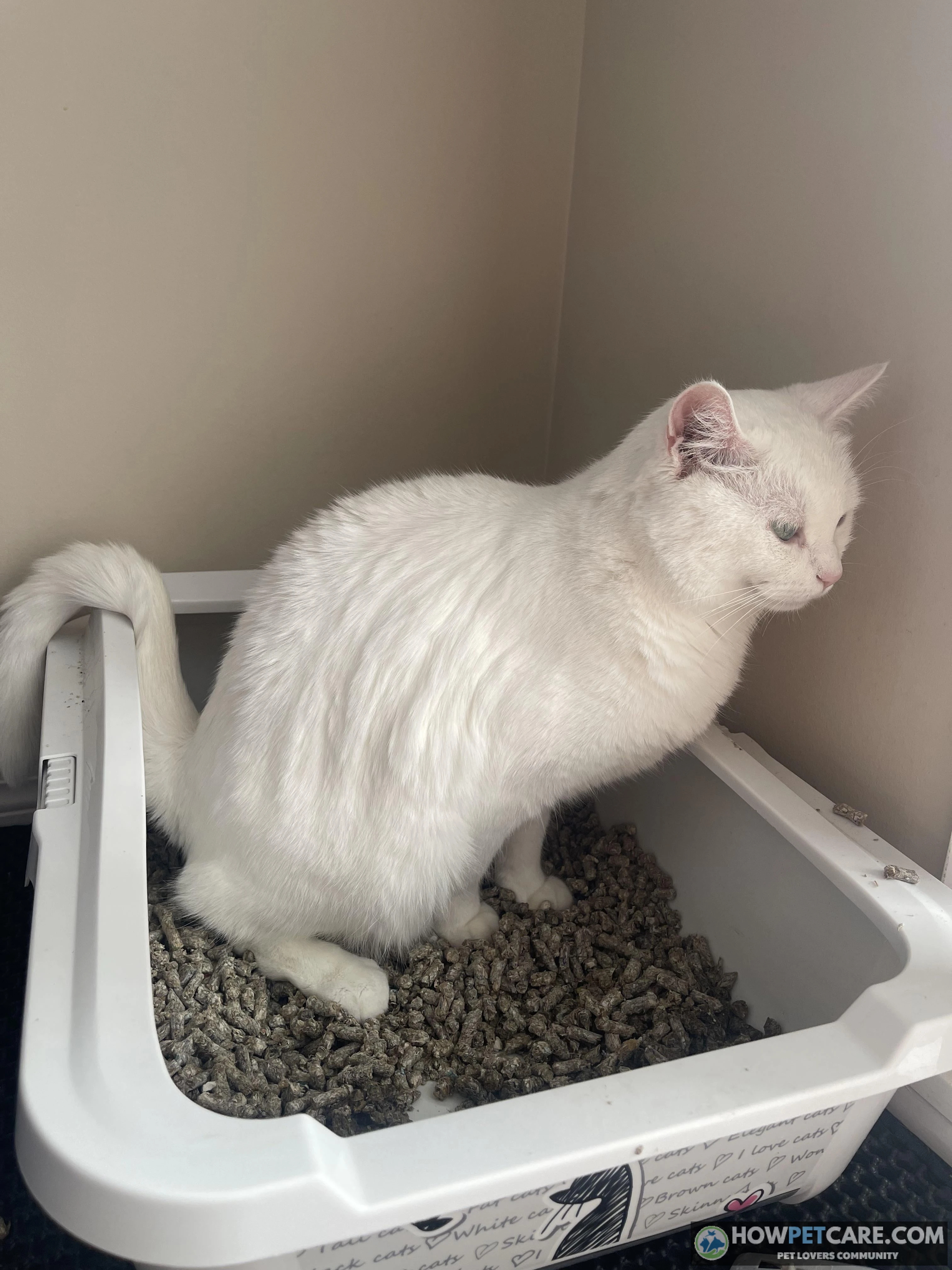

A cat defecating outside the litter box may have constipation, colitis, joint pain, or a learned box aversion. Repeated straining without urine—especially in a male cat—is an emergency. Seek veterinary care before changing litter or trying remedies if there is pain, vomiting, lethargy, blood, or absent output.
A cat defecating outside the litter box while continuing to urinate inside it is rarely acting out of spite. The pattern usually points to painful defecation, colonic urgency, reduced joint mobility, or a learned aversion to the litter box. Regular urination confirms that the urethra is at least partially open, but it doesn’t rule out an underlying medical problem. Prompt evaluation matters because cats often show severe gastrointestinal and urinary distress through similar postures and behaviors.
Repeated, unproductive straining is a critical clinical sign. Owners often mistake stranguria—painful, blocked attempts to urinate—for constipation, especially in male cats. A urethral obstruction can cause fatal metabolic derangements, hyperkalemia, and bladder rupture within 24 to 48 hours. Before changing litter substrates or assuming the problem is behavioral, rule out an emergency urethral blockage.
Cat Defecating Abnormally? Use This 60-Second Triage
If your cat is straining, vocalizing, or repeatedly crouching without producing normal stool, don’t try home remedies. Immediately assess the cat’s posture, abdominal rigidity, and output.
Stranguria vs Dyschezia vs Tenesmus
Accurate triage starts with distinguishing among three clinical presentations:
- Stranguria (Urinary Straining): The cat crouches low and may return to the box every few minutes. It produces zero urine or only a few drops, often tinged with blood. You may also notice genital licking, vocalizing, and severe distress. This is a life-threatening veterinary emergency.
- Dyschezia (Painful or Difficult Defecation): The cat strains with an arched back and raised tail, sometimes groaning or grunting. Any stool passed is typically hard, dry, and pelletized. These signs point toward lower bowel obstruction, feline constipation, or rectal pathology.
- Tenesmus (Colonic Spasms / Ineffectual Straining): The cat has a persistent, distressing urge to empty the bowels and repeatedly strains in and out of the box. Tenesmus is usually caused by large-bowel inflammation (colitis). Rather than dry, hard masses, the cat passes small squirts of liquid stool, jelly-like mucus, or streaks of bright red blood.

Do not squeeze or press deeply into a straining cat’s lower belly. If the cat has a completely obstructed urinary tract, the bladder wall becomes severely distended and tissue-thin; manual palpation can rupture the bladder and release urine into the peritoneal cavity. Never administer over-the-counter human enemas, mineral oil, or stimulant laxatives. Phosphate-based human enemas cause fatal electrolyte toxicity in cats, and mineral oil carries a high risk of fatal aspiration pneumonia.
| Observed Sign | Possible Urinary Blockage | Possible Constipation / Obstipation | Possible Colitis / Large-Bowel Diarrhea | Required Action |
|---|---|---|---|---|
| Primary Straining Posture | Hunched tightly, repeated squats every 2–5 min, often outside box | Prolonged, unproductive hunched straining; tail raised high, trembling | Frequent frantic squats, intense straining, sudden sprint out of box | Differentiate output: zero liquid vs dry stool vs liquid squirts |
| Physical Output Produced | Zero drops, or 1–2 drops bloody urine | Dry rock-hard nuggets, or complete absence of stool for 48h+ | Small squirts of liquid stool, jelly-like mucus, or fresh blood streaks | Absence of urine is life-threatening within 24–48 hours |
| Vocalization & Pain Level | Loud yowling, groaning, severe pain when touching lower belly | Grunting, low growl, arched back, abdominal guarding | Restless meowing, sudden distress immediately before defecating | Palpate nothing at home; abdominal pressure risks ruptured bladder |
| Abdominal Profile | Firm, turgid, baseball-sized mass in lower belly (turgid bladder) | Doughy, rope-like fecal masses palpable along descending colon | Soft, non-distended belly; localized colon cramping | If the abdomen feels hard like a baseball, treat as urinary ER |
| Secondary Systemic Signs | Acute vomiting, hypothermic collapse, sudden severe lethargy | Decreased appetite over days, dry coat, occasional vomiting | Normal energy between episodes, variable appetite, flatulence | Immediate ER if vomiting accompanies unproductive straining |
| Triage Designation | CRITICAL EMERGENCY (0–2 Hours) | URGENT VET (Within 12–24 Hours) | PROMPT VET (Within 24–48 Hours) | Go to ER hospital immediately if male cat passes zero urine |
When Straining Requires an Emergency Vet
Go immediately to the nearest veterinary emergency hospital if you observe any of these clinical red flags:
- Suspected Inability to Urinate: Any male cat straining repeatedly without producing a distinct puddle of urine.
- Systemic Collapse or Extreme Lethargy: The cat is weak, unresponsive, hiding in recumbency, or cold to the touch.
- Intractable Pain: Continuous vocalizing, crying, panting, or aggressive abdominal guarding.
- Repeated Vomiting: Straining accompanied by multiple episodes of vomiting or retching, which indicates secondary uremic poisoning or complete intestinal obstruction.
- Foreign Body or Toxin Exposure: Known ingestion of string, thread, linear toys, toxic plants, or human medication.


Feline Fecal Score: What Abnormal Cat Stool Looks Like
The physical characteristics of your cat’s feces provide useful diagnostic information about hydration, gastrointestinal transit time, and inflammatory disease. When speaking with your veterinarian, avoid vague descriptions such as "soft" or "loose." Use standardized fecal scoring metrics instead.
Published veterinary scales, including the Purina and WALTHAM fecal scoring systems, place stool on a spectrum from extremely hard to unformed liquid. Although both systems are widely recognized in clinical veterinary medicine, their numerical ratings run in opposite directions. The matrix below describes each stool type, from dry desiccation to unformed water.
Consistency Scores From Hard Pellets to Watery Stool
| Score & Shape | Physical Consistency | Moisture & Residue Profile | Color & Inclusions | Clinical Interpretation & Action Plan |
|---|---|---|---|---|
| Score 1: Dry Pellets | Bullet-hard, individual round segments | Zero residue left on floor; shatters under pressure | Dark brown to blackish; dull surface | Dehydration / Dyschezia: High obstipation risk. Vet consult within 48h. |
| Score 2: Segmented Hard | Firm log, visible external segmentation | Pliable but leaves no visible smear when picked up | Standard deep brown | Borderline Constipation: Increase wet food/hydration. Monitor 3 days. |
| Score 3: Optimal Formed | Smooth cylinder, distinct log shape | Moist surface; leaves tiny moist film when lifted | Rich brown; no blood or visible mucus | Healthy Baseline: No intervention required. Normal gastrointestinal transit. |
| Score 4: Soft / Formless | Mushy log with loss of defined structure | Leaves heavy residue and smears on litter box scoop | Light brown to tan; may contain clear mucus | Mild Colitis / Dietary Indiscretion: Check diet. Monitor for 24–48 hours. |
| Score 5: Viscous Pile | Pudding-like texture, distinct moist pile | Cannot be scooped cleanly; sinks into litter | Yellowish to green; possible flecks of frank red blood | Active Large-Bowel Inflammation: Vet exam needed; collect fresh sample. |
| Score 6: Liquid Slurry | Mostly liquid with soft particulate chunks | Rapidly absorbed into litter; splashes on impact | Dark red (hematochezia) or greasy grayish (steatorrhea) | Infectious / Parasitic / IBD Flare: Vet exam within 24 hours. |
| Score 7: Watery Gush | Pure liquid, zero formed particles | Splatters widely; complete lack of solid matter | Red streaks, pitch-black tarry (melena), or pale clay | CRITICAL: High risk of rapid dehydration or GI bleed. Seek prompt veterinary care. |

A single instance of Score 4 stool in an otherwise energetic cat can be monitored for 24 hours. Persistent Score 1 pellets or Scores 5 through 7, however, require veterinary evaluation. Also note the stool’s shape: flattened or ribbon-shaped logs may indicate a physical mass, stricture, or enlarged sublumbar lymph node compressing the pelvic canal.
Blood, Mucus, and Color Changes That Raise Urgency
Stool color and surface coatings can help identify the location and severity of disease along the gastrointestinal tract:
- Hematochezia (Fresh Red Blood): Frank, bright red droplets or streaks indicate bleeding in the colon, rectum, or anal sacs. Although alarming, small streaks often result from localized mucosal irritation caused by severe tenesmus, colitis, or abrasion from hard feces. Large volumes of frank blood require urgent intervention.
- Melena (Digested Black Blood): Tarry, pitch-black stool with a sticky consistency signals digested blood from the stomach or upper small intestines. This urgent finding calls for immediate clinical investigation of ulcerations, foreign-body perforations, or severe coagulopathies.
- Mucus Coatings: Clear, white, or pink-tinged jelly-like slime around the stool reflects hypersecretion by goblet cells in the large intestine. It is a classic sign of acute or chronic colitis.
- Acholism (Pale, Gray, or Clay-Colored Stool): Pale, clay-like stool indicates a complete or partial lack of bile salts and may point to biliary tract obstruction, pancreatic exocrine insufficiency, or advanced liver disease.
- Yellow or Green Stool: Rapid transit through the small bowel prevents digestive enzymes from breaking down bile, turning the feces bright yellow or green. This often occurs with severe enteritis or protozoal infections such as giardiasis.
To document the problem for your veterinarian, take a clear, well-lit photograph of the stool beside a standard size reference, such as a coin. Record the precise time, fecal score, apparent volume, and whether the cat vocalized during the movement.

Medical Causes of Cat Straining and Painful Defecation
An evaluation of feline defecation problems must separate environmental difficulties from physical disease. Cats may avoid their boxes when a medical condition makes defecation painfully difficult or impossible to control.
Constipation, Obstipation, and Megacolon
Feline constipation occurs along an escalating clinical spectrum:
- Constipation: Infrequent, incomplete, or difficult evacuation of dry, hard feces. At this early stage, the condition remains medically reversible with hydration, dietary changes, and medical therapy.
- Obstipation: Severe, intractable constipation in which the colon is packed with dense, desiccated fecal matter that the cat cannot pass spontaneously. Permanent structural narrowing or functional blockage is present.
- Megacolon: The end-stage consequence of recurrent, unmanaged obstipation. Prolonged colonic distention causes irreversible neuro-muscular failure in the smooth muscle lining the colon wall. The bowel permanently loses its ability to contract and becomes a dilated, flaccid reservoir for impacted feces.

Systemic dehydration—often secondary to chronic kidney disease (CKD) or diabetes mellitus—is the most common cause of feline constipation. In a dehydrated cat, the kidneys fail to conserve enough water. The colon compensates by drawing as much moisture as possible from the fecal sludge passing through it, leaving rock-hard, immovable fecal stones behind.
Colitis and Diarrhea-Related Tenesmus
Inflammatory bowel disease (IBD), food-responsive enteropathies, intestinal neoplasia such as lymphoma, and parasitic infestations—including Tritrichomonas blagburni, Giardia, and roundworms—can inflame the colonic mucosa.
Once the descending colon and rectum become inflamed, the feline enteric nervous system repeatedly sends false signals that the rectal vault is full. Intense, involuntary tenesmus follows. The cat squats frantically, passes drops of mucus or liquid, and bolts from the box in distress. Owners who see these frantic, seemingly unproductive squats may reach for fiber or constipation remedies, which can worsen active colitis. Diarrheal tenesmus requires targeted veterinary anti-inflammatories, novel or hydrolyzed protein diets, and parasite treatments.
How Veterinarians Investigate Feline Defecation Issues
A comprehensive clinical workup for abnormal feline bowel movements follows a systematic process:
- Hydration and Orthopedic Examination: The veterinarian assesses skin turgor and mucous membrane tackiness, then palpates the spine, hips, and lower abdominal quadrants.
- Digital Rectal Examination: Performed under sedation if needed, this exam helps rule out anal sac abscesses, rectal polyps, foreign bodies, or pelvic canal collapse caused by healed fractures.
- Fecal Diagnostics: Flotation, direct smears, and comprehensive PCR panels can identify infectious, protozoal, or parasitic agents.
- Abdominal Radiography (X-rays): Images show the precise diameter of the colon, the density of retained feces, the integrity of the pelvic inlet, and signs of lumbosacral spondylosis.
- Abdominal Ultrasound and Lab Panels: These tests check for intestinal wall thickening, mesenteric lymphadenopathy, systemic kidney function, electrolyte abnormalities, and endocrine disease.

Fiber supplements like psyllium husk can soften stool by drawing water into the bowel lumen, but only if the cat is fully hydrated. If you add bulk-forming fiber to a dehydrated cat or one suffering from colonic obstipation, the fiber expands against the unyielding blockage, worsening fecal impaction and risking colonic perforation. Never add fiber without veterinary oversight.
Why a Cat Poops Outside the Litter Box but Still Pees Inside
Few situations are more frustrating than a cat that urinates in the box normally but consistently leaves stool on the floor beside it, on carpets, or in hidden corners. The behavior isn’t arbitrary.
Medical vs Behavioral Clues
Urination and defecation require different postures, muscular effort, and internal sensory input. Urination is a brief, mostly passive release that demands little physical strain. Defecation requires a prolonged squat, sustained isometric contraction of the abdominal wall and pelvic diaphragm, and wide elevation of the tail base. An older cat with subclinical hip dysplasia or spinal disc disease may step into a box and urinate for 10 seconds without difficulty, yet find it unbearable to hold a rigid defecation squat on a slippery, unstable litter surface.
| Observation Factor | Strongly Indicates a Medical Cause | Strongly Indicates a Behavioral / Environmental Cause |
|---|---|---|
| Onset Speed | Sudden, acute appearance within 24–48 hours | Slow escalation coinciding with household changes |
| Stool Physical Quality | Fecal score 1, 2, 5, 6, 7; presence of blood/mucus | Perfectly formed, ideal Fecal Score 3 logs |
| Deposit Proximity | Defecating within 1 to 12 inches of the litter box | Selecting specific alternative textures (rugs, beds, tiles) |
| Post-Defecation Behavior | Crying, wild sprinting, frantic licking of rear | Calm departures, deliberate scratching of nearby walls |
| Systemic Health | Weight loss, reduced appetite, vomiting, stiff gait | Robust appetite, normal play behaviors, normal hydration |
Why Cats Defecate Beside the Box
A cat that deposits feces directly beside the litter pan, within 6 to 18 inches, is showing a clear intention to comply with the litter box routine. It recognizes the designated latrine but encounters a physical or psychological barrier when trying to use it:
- Cramped Box Dimensions: The cat steps inside and turns around, only to find that its rear end extends over the low outer lip.
- Hygiene Rejection: Old urine or fecal matter remains in the box. The cat may tolerate a brief visit to urinate but refuse to stand on soiled litter long enough to defecate.
- Ambush Anxiety: Hooded or covered boxes create blind corners in multi-cat households. A defecating cat is in a vulnerable posture, and a rival can block the box’s single exit. Open floor space nearby offers 360-degree sightlines and may feel safer.

Negative Associations After Constipation
Classical conditioning accounts for many sudden litter box rejections. After an episode of agonizing constipation, dyschezia, or severe colitis, a cat’s brain may associate the searing pain with the immediate environment—the litter box and the granular substrate under its paws—rather than with its own bowel.
From the cat’s perspective, the box caused the pain. It then seeks soft, cool, forgiving surfaces such as smooth tile, low-pile bath rugs, or deep plush carpet, hoping that a different substrate will prevent the discomfort from returning.
Arthritis and the Biomechanics of Defecation in Senior Cats
Osteoarthritis is widely underdiagnosed in senior cats. Clinical radiographic surveys show that over 90% of cats over the age of 12 have degenerative joint disease in the spine, hips, or hocks. A litter box designed for an agile young cat can become a physical barrier for an older pet with arthritis.
How Joint Pain Changes the Defecation Posture
Defecation requires coordinated joint movement. A cat must climb over the box threshold, balance on an unstable gravel-like substrate, flex its stifle (knee) and coxofemoral (hip) joints into a deep squat, and hold the lumbosacral spine in gentle flexion.
Cats with spinal spondylosis or lumbosacral stenosis can experience sharp neuropathic pain during spinal flexion. Deep litter shifts beneath their paws and quickly fatigues the pelvic stabilizer muscles. A cat may abandon the squat midway, drop feces on the floor while walking away, or refuse to enter the box at all.

| Cat Profile | Minimum Box Size | Entry Height | Starting Litter Depth | Placement and Accessibility Notes |
|---|---|---|---|---|
| Agile Adult (No Pain) | 1.5x body length (nose to tail-base) | Standard (5.0–7.0 inches) | 2.0–3.0 inches | Core territory; low traffic; multiple exits |
| Senior / Early Arthritis | 1.5x body length; wide turning radius | Low step-in (3.0–3.5 inches) | 1.5–2.0 inches | Main living level; avoid placing down basement stairs |
| Severe Arthritis / Spondylosis | Large flat pan (minimum 32×19 inches) | Micro-threshold (2.0–2.5 inches) | 1.0–1.5 inches firm pack | Zero elevation; non-slip mat perimeter; well-lit |
| Post-Surgical / Neurologic | Open flat tray with zero lip (custom ramp) | Flush to floor (0.0–1.0 inches) | Puppy pad or single litter layer | Enclosed quiet zone; direct line of sight from bed |
Exact Box Dimensions and Senior-Friendly Entry Heights
Commercial litter pans are often too small. The minimum medically acceptable box length is 1.5 times the cat’s length, measured from the tip of the nose to the base of the tail. For a typical 10-pound domestic cat measuring 18 inches from nose to tail base, the box must be at least 27 inches long and 18 to 20 inches wide. Most pet store pans measure barely 18 by 14 inches.
For senior cats, the entry threshold should be no higher than 2.5 to 3.0 inches above the floor. A standard 6- to 9-inch lip forces a cat with arthritis to make a painful, high-impact hurdle leap simply to reach the toilet.

Safe DIY Low-Entry Box Modifications
Standard high-sided commercial boxes require a 6- to 9-inch step-over, placing strain on arthritic coxofemoral (hip) joints and lumbosacral spines. You can build a zero-barrier latrine from a 30-gallon clear storage container (minimum footprint: 32 inches long by 19 inches wide).

-
Mark the Custom Threshold
Measure 2.5 inches up from the exterior floor along one of the narrow 19-inch ends. Use a permanent marker and straightedge to outline an entry cutout that is 10 inches wide, centering it along that wall.
-
Score and Cut the Plastic
Heat a utility knife blade with a heat gun (or use heavy-duty aviation snips) to slice down the traced lines. Heating prevents brittle tote plastic from splintering or cracking jaggedly.
-
De-burr and Chamfer the Cut
Run 120-grit sandpaper over all cut edges until no sharp ridges or plastic burrs remain.
-
Apply Protective Edge Guard
Slit a 12-inch length of 1/4-inch flexible rubber fuel line or silicone tubing down its axis. Press this channel firmly over the 2.5-inch sill. Anchor it permanently using veterinary-safe adhesive or heavy-duty cloth-backed duct tape wrapped completely around the lip to prevent paw abrasions.
-
Bedding Depth Calibration
Add no more than 1.0 to 1.5 inches of fine-grained, unscented clumping clay litter. Arthritic cats lose footing on deep litter (>2 inches), which mimics unstable sand and triggers pelvic muscle guarding.
Litter Box Reset: Number, Size, Litter, and Cleaning Metrics
Treating inappropriate elimination means adjusting the home environment to suit normal feline behavior. Small sensory details can determine whether a cat uses the box consistently or continues having accidents.
The N+1 Rule Without Box Clustering
The basic standard for feline housing is the N+1 Rule: provide at least one litter box for each cat in the household, plus one additional box. A three-cat household therefore needs a minimum of four functional boxes.
Distribution matters as much as quantity. Three pans placed side-by-side in a basement laundry room function behaviorally as only one mega-box. An assertive cat stationed at the top of the basement stairs can block access to all three boxes at once. Place litter stations in separate rooms and on different vertical levels of the home to reduce territory guarding.

Use equally specific hygiene standards:
- Scooping Frequency: Remove all solid feces and urine clumps at least once daily, and preferably twice daily during active behavioral retraining.
- Litter Depth: Keep the litter at an even depth of 1.0 to 2.0 inches. Deep litter (>3 inches) shifts excessively underfoot and destabilizes the cat during elimination.
- Box Longevity and Washing: Empty and scrub plastic litter boxes once monthly with warm water and unscented dish detergent. Don’t use bleach, citrus-scented cleaners, or ammonia-based formulas. Plastic is porous, and fine claw scratches trap bacteria and embedded odors that can repel cats. Replace plastic litter boxes entirely every 12 to 24 months.
A One-Variable-at-a-Time Litter Preference Test
Cats have sensitive paw pads and distinct scent preferences. Scented litters, which use synthetic perfumes to appeal to people, are a common cause of litter box aversion.
If substrate aversion seems likely, run a controlled preference test over 3 to 5 days. Set two or three identical, uncovered boxes side-by-side, keeping every variable except the substrate the same:
- Box A: Fine-grained, unscented clumping clay litter.
- Box B: Unscented, plant-based alternative (e.g., finely milled corn, walnut, or paper pellets).
- Box C: Bare plastic lined only with a flat puppy pad, or ultra-fine silica micro-crystals.
Record which pan the cat chooses for defecation. After a clear preference emerges, transition the other boxes in the home to the selected substrate over a 7-day period by mixing progressively larger ratios of the new litter into the old.

Finding the Responsible Cat in a Multi-Cat Home
When stool appears on the carpet in a multi-cat home, identifying the responsible cat quickly can prevent delays in medical care.
Use this diagnostic framework to identify the cat without relying on guesswork:
- Deploy Non-Toxic Biomarkers (Sequential Ingestion Test):
- Days 1–2: Mix 1/8 teaspoon of non-toxic, pet-safe fluorescent crayon shavings (shaved Crayola) or food-grade edible glitter (gold) into Cat A’s wet food ration only.
- Days 3–4: If uncolored stool appears outside the box, switch to Cat B using a distinct marker (silver glitter or blue food-grade wax).
- Inspect rogue deposits with an ultraviolet blacklight (365–395 nm) or white penlight to detect marker disbursement.

A camera can help identify which cat is having accidents and reveal blocked access. - Audit Entry-Cam Foot Traffic:
- Mount an inexpensive motion-activated pet camera facing the targeted accident spot and the primary litter station at floor height.
- Log timestamps for: post-squat bolting (indicates tenesmus/colitis urgency), perimeter ambushes by housemates, and box-ledge balancing.
- Execute the 48-Hour Room Rotation:
- Confine suspected Cat A to a quiet sanctuary room containing an identical litter setup, dedicated water, and resting zone.
- Evaluate whether the target floor space in the main home remains clean while monitoring Cat A’s stool output in isolation.

Enzymatic Cleaning and a 14-Day Litter Box Retraining Protocol
Removing feline waste odors requires biological degradation rather than chemical masking. Cats can detect scent markers at parts-per-million concentrations beyond human olfactory ability. Traces of metabolic material left in carpet fibers or subflooring can act as an olfactory beacon, drawing the cat back to eliminate in the same place.
Deep Enzymatic Cleaning for Carpet, Padding, and Subfloor
Household detergents, vinegar solutions, and carpet shampoos may remove surface discoloration, but they leave uric acid crystals and fecal proteins behind. Ammonia-based cleaners are particularly counterproductive. Because ammonia is a byproduct of urine degradation, applying it can encourage the cat to eliminate in that spot again.
- Extract Solids Gently: Carefully lift fresh stool with cardboard or paper towels. Don’t scrub or press it into the carpet pile, as this drives fecal bacteria and bile pigments deeper into the backing.
- Saturate Beyond the Stain: Pour a dedicated enzymatic cleaner, such as a formula containing live bacterial enzymes, directly onto the soiled area. Use enough to equal the original volume of waste. The cleaner must penetrate the primary carpet backing, dense polyurethane padding, and concrete or plywood subfloor.
- Respect the Chemical Dwell Time: Don’t wipe up the solution immediately. Live enzymes need sustained moisture to break down organic proteins. Cover the saturated area with a damp towel or an inverted plastic laundry basket for a minimum of 4 to 8 hours (or the manufacturer’s specified dwell time).
- Air-Dry Slowly: Remove the cover and let the area air-dry completely over 24 to 48 hours. Don’t apply high heat from hair dryers or steam cleaners until the enzymatic reaction has finished. Heat denatures bacterial enzymes and can permanently bake organic proteins into structural subflooring.

Days 1–3: Remove Pain and Rebuild Safety
Start the behavioral reset only after your veterinarian has cleared the cat of active impactions, megacolon, or colitis. The aim is to remove negative associations with the litter box.
Place a large, uncovered, low-entry box or modified storage tote directly over the spot where the cat has repeatedly defecated. If the cat uses a particular rug, put the pan directly on top of it. Cover the surrounding floor with heavy-gauge aluminum foil, double-sided carpet tape, or plastic carpet runners positioned nub-side up. The uncomfortable perimeter directs the cat toward the more comfortable latrine pan.
For these initial three days, scoop waste immediately after each elimination. Never punish or scold the cat, and don’t carry it to the box while showing anger. Such responses trigger acute cortisol spikes and reinforce litter box aversion.
Days 4–7: Test Substrate Preferences
The following protocol helps extinguish a learned box aversion after a painful constipation episode, gradually moving the cat from smooth medical pads back to litter.
-
Phase 1: Zero-Friction Latrine (Days 1–4)
Deploy an uncovered, ultra-low-profile tray (or modified tote with a 2.5-inch opening) directly over the floor location where the cat has been defecating. Line the bottom exclusively with two layers of unscented puppy training pads, absorbent side up. Do not add litter. Cats recovering from dyschezia frequently avoid any particulate substrate that previously clung to painful anal tissues.
-
Phase 2: Tactile Introduction (Days 5–8)
Keep the puppy pad base. Scatter exactly two tablespoons (approx. 30 ml) of fine-grained, unscented clay litter directly in the center of the pad. Daily maintenance: Discard soiled pads twice daily. Replace with fresh pads and re-apply two tablespoons of litter. The goal is sensory contact without digging resistance.
-
Phase 3: The Ratio Shift (Days 9–11)
Remove the top pad. Place a half-inch layer of litter across the entire bottom of the plastic box, then set a single unfolded puppy pad over half the box surface. Observe which half the cat deposits stool on. Once the cat defecates on the exposed litter side for two consecutive days, remove the puppy pad completely.
-
Phase 4: Establishing Functional Depth (Days 12–14)
Increase litter depth by precisely 0.25 inches every 24 hours until reaching a stable depth of 1.5 inches. If the cat squats outside the box or scratches the rim nervously, drop back to the previous day’s depth for an additional 48 hours before progressing.
Days 8–14: Relocate the Box Without Triggering Relapse
After your cat has defecated in the pan for seven consecutive days, begin moving the box toward its permanent location:
- The 6-Inch Rule: Move the litter box no more than 6 to 12 inches per day. Shifting it across the room or down a hallway in one move may prompt the cat to defecate on the bare carpet where the box stood the previous day.
- Anchor Retraining: If the box must move to a different room or floor, keep an identical second box at the original problem site. Gradually encourage use of the new location by placing high-value treats and synthetic pheromone diffusers such as Feliway along the route. Confirm that the cat uses the new box consistently before removing the temporary one.
- Managing Relapses: If an accident happens during relocation, stop moving the box. Return it to the last successfully used position for three full days before trying again.

Your Cat Defecation Action Plan: ER, Vet Visit, or Home Reset
Abnormal defecation calls for a clear response. Use this clinical framework to choose the appropriate next step for your cat.
Go to the ER Now
Take your cat to an emergency hospital immediately if you observe any of these signs:
- Straining with zero urine output, especially in male cats.
- Abdominal distention with rigid guarding, crying, or groaning.
- Repeated retching or vomiting accompanied by an inability to defecate.
- Prostration, extreme lethargy, hypothermia, or sudden collapse.
- Suspected foreign body ingestion (string, yarn, plastics, toxic plants).
Call Your Veterinarian Today
Arrange a same-day or next-day clinical appointment if you observe:
- No stool production for more than 48 hours.
- Stool containing significant volumes of frank blood or black tarry melena.
- Persistent Fecal Score 1 or 2 pellets accompanied by vocalization and weight loss.
- Watery, uncontrolled diarrhea (Fecal Score 6 or 7) persisting beyond 24 hours.
- Defecation accidents accompanied by a stiff, stilted gait, joint crepitus, or poor grooming.
Start the Home Environmental Reset
Begin the home litter box protocol only if your cat meets all of these criteria:
- Active, alert, eating well, and showing no signs of pain.
- Urinating normal volumes cleanly inside the box.
- Producing ideal (Fecal Score 3) or slightly firm stool outside the box.
- The defecation accidents coincide with a known environmental stressor (new pet, move, construction, or sudden litter substrate change).
At the veterinary visit, bring clear photographs of the stool found outside the box, a log of your cat’s elimination frequency, and a list of all foods, supplements, and household cleaners in use. Address abnormal defecation in a deliberate order: rule out life-threatening blockages first, treat gastrointestinal inflammation, and then adapt the toileting environment to your cat’s biomechanical needs.
| Score & Shape | Physical Consistency | Moisture & Residue Profile | Color & Inclusions | Clinical Interpretation & Action Plan |
|---|---|---|---|---|
| Score 1: Dry Pellets - Bullet-hard, individual round segments | Shatters under pressure | Zero residue left on floor | Dark brown to blackish; dull surface | Dehydration / Dyschezia: High obstipation risk. Vet consult within 48h. |
| Score 2: Segmented Hard - Firm log, visible external segmentation | Pliable | Leaves no visible smear when picked up | Standard deep brown | Borderline Constipation: Increase wet food/hydration. Monitor 3 days. |
| Score 3: Optimal Formed - Smooth cylinder, distinct log shape | Moist surface | Leaves tiny moist film when lifted | Rich brown; no blood or visible mucus | Healthy Baseline: No intervention required. Normal gastrointestinal transit. |
| Score 4: Soft / Formless - Mushy log with loss of defined structure | Not in source | Leaves heavy residue and smears on litter box scoop | Light brown to tan; may contain clear mucus | Mild Colitis / Dietary Indiscretion: Check diet. Monitor for 24–48 hours. |
| Score 5: Viscous Pile - Pudding-like texture, distinct moist pile | Sinks into litter | Cannot be scooped cleanly | Yellowish to green; possible flecks of frank red blood | Active Large-Bowel Inflammation: Vet exam needed; collect fresh sample. |
| Score 6: Liquid Slurry - Mostly liquid with soft particulate chunks | Rapidly absorbed into litter; splashes on impact | Not in source | Dark red (hematochezia) or greasy grayish (steatorrhea) | Infectious / Parasitic / IBD Flare: Vet exam within 24 hours. |
| Score 7: Watery Gush - Pure liquid, zero formed particles | Splatters widely; complete lack of solid matter | Not in source | Red streaks, pitch-black tarry (melena), or pale clay | CRITICAL: High risk of rapid dehydration or GI bleed. Seek prompt veterinary care. |
FAQ
How often should a healthy cat defecate?
Many healthy adult cats defecate about once daily, but normal frequency varies with diet, hydration, age, and the individual. A meaningful change from that cat’s usual pattern matters more than a single missed day, especially if pain, vomiting, or appetite loss develops.
Can I give my constipated cat pumpkin or a fiber supplement?
Only after consulting a veterinarian. Fiber helps some cats, but the wrong type or amount can worsen dehydration, retained stool, or certain cases of megacolon and does not treat an obstruction.
Should I bring a stool sample to the veterinarian?
If the clinic requests one, collect a fresh sample in a clean, sealed container, keep it refrigerated rather than frozen, and label it with the collection time. Photographs and a fecal-score log are also useful when no sample is available.
Can stress alone make a cat defecate on the floor?
Stress can contribute to urgency, resource avoidance, or litter box aversion, but sudden inappropriate defecation should not be assumed to be behavioral. Pain, gastrointestinal disease, constipation, and mobility problems should be assessed first.
Is it safe to use a human enema or laxative for a cat?
No. Some human enemas, especially phosphate products, can be fatal to cats, and laxatives may be dangerous when dehydration or obstruction is present. Use only treatments specifically prescribed by a veterinarian.