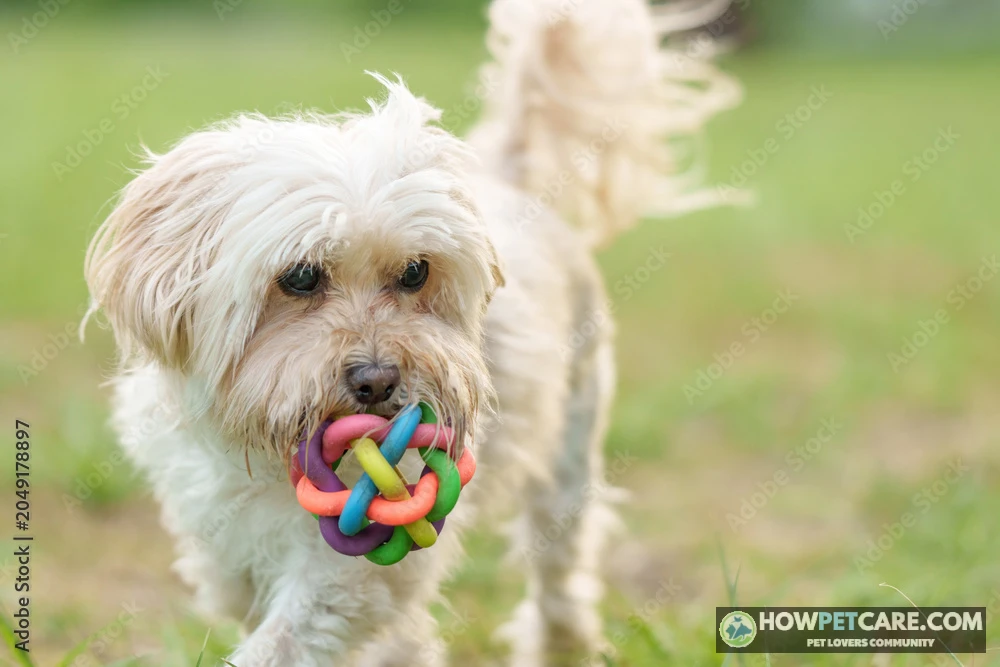

Dogs see the world primarily through a blue-and-yellow color spectrum. Canines possess dichromatic vision with two cone types, functioning similarly to red-green color blindness in humans. They cannot distinguish red, green, or orange as distinct hues; these colors appear as muted yellowish, brownish, or gray tones instead.
Canine Vision Overview
Dogs see the world primarily through a blue-and-yellow color spectrum. Rather than seeing only in black and white, canines possess dichromatic vision. They cannot distinguish red and green normally; instead, red, orange, and green hues appear as muted yellowish, grayish, or brownish tones.
Color perception is not uniform across every environment. A dog’s visual experience shifts with ambient lighting, surface contrast, viewing distance, and underlying eye health. Because their eyes process light differently than human eyes, understanding what colors can dogs see helps owners choose effective training tools and toys that stand out in real-world settings.
Are dogs completely color blind?
Dogs are not completely color blind. The myth that dogs view the world like an old black-and-white television screen took hold in the early 20th century, but veterinary ophthalmology disproved it decades ago. Dogs have functioning color receptors; their palette is simply narrower than that of a person with typical vision.
Canine color vision mirrors red-green color blindness in humans—specifically deuteranopia—rather than total color blindness (achromatopsia). Dogs see a colorful world, built mostly from shades of blue, yellow, gray, and brown. Where people rely on red or green cues to tell objects apart, dogs depend much more on shifts in brightness and texture.
What colors do dogs see best?
Dogs see blue and yellow best. These two primary hues stimulate the canine retina cleanly without washing out into neutral grays. Rich blues, deep violets, and sky-blue tones appear distinct and saturated to a dog. Warm yellows, light ambers, and bright golden hues also register with crisp clarity.
Place a blue or yellow object against a neutral background, and a dog can pick it out by color almost instantly. Hues outside this range lose their punch. Blue-greens flatten into soft blues, while pale pastels fade into off-white or light gray.

How Dog Color Vision Works: Cones, Rods, and the Canine Retina
The canine retina houses two primary types of photoreceptor cells: cones and rods. Cones function in daylight, handling color perception and fine spatial detail. Rods take over in dim light, tracking motion and registering shapes. The balance between these photoreceptors explains why dogs trade human-level color diversity for superior motion detection and twilight vision.
Humans have trichromatic vision, using three cone classes tuned to short (blue), medium (green), and long (red) wavelengths of light. Dogs have dichromatic vision, relying on only two cone populations.
| Visual feature | Typical human vision | Typical dog vision | Practical survival effect |
|---|---|---|---|
| Cone photoreceptor classes | 3 types (trichromatic: S, M, L cones) | 2 types (dichromatic: S and M/L cones) | Humans distinguish ~10 million hues; dogs distinguish ~10,000 hues focused across a blue-yellow spectrum. |
| Peak spectral absorption | ~420 nm (blue), ~530 nm (green), ~560 nm (red) | ~429 nm (violet-blue), ~555 nm (yellow-green) | Dogs cannot differentiate red from green based on hue alone; wavelengths above 555 nm collapse toward yellow-gray. |
| Rod-to-cone ratio | ~20:1 (~95% rods, concentrated mostly in periphery) | ~99:1 (~97–99% rods across the retina) | Sacrifices color richness to maximize low-light hunting and immediate detection of peripheral motion. |
| Reflective retroreflector | Absent (absorptive pigment epithelium) | Present (tapetum lucidum behind the retina) | Bounces unabsorbed photons back through photoreceptors for 3–5x better sensitivity in twilight, causing eye shine. |
| Visual acuity (Snellen scale) | 20/20 standard baseline | 20/75 standard baseline | A dog must be 20 feet away from an object to see detail a human with normal vision resolves at 75 feet. |
| Critical flicker fusion (CFF) | ~50–60 Hz | ~70–80 Hz | Dogs detect rapid motion shifts instantly; standard older TV screens at 60 Hz look like flickering slide shows. |
All color translations and visual models represent scientific approximations based on photoreceptor absorption curves and behavioral tests, rather than absolute canine experiential proof.
The blue-and-yellow spectrum
Canine color vision relies on two cone absorption peaks: roughly 429 nanometers (violet-blue) and 555 nanometers (yellow-green). Light near 429 nm stimulates short-wavelength cones, sending signals to the brain that register as blue. Light near 555 nm stimulates long-wavelength cones, producing yellow.
A neutral perceptual zone sits between these peaks around 480 nanometers. Wavelengths in this transition zone fail to stimulate either cone type strongly, so blue-greens appear as desaturated shades of white or gray. Above 555 nm, the canine visual system cannot separate longer wavelengths; the entire red-orange range flattens into yellow-brown tones.

Why dogs cannot see red normally
People see red because long-wavelength light (roughly 560 to 700 nm) activates specialized L-cones. Dogs lack this third cone class entirely. Without photoreceptors tuned to long wavelengths, their eyes cannot generate a distinct neural signal for red.
Red light entering a dog’s eye stimulates only the 555 nm cone, and it does so weakly. The brain interprets this faint signal as a low-intensity yellow or a dark neutral shade. Crimson, scarlet, and ruby do not appear as visual blind spots; instead, they show up as dark brownish-gray, muted olive, or dull black.
Human Vision vs. Dog Vision: Everyday Color Translation Matrix
Understanding canine vision requires translating the standard human color wheel into a dog’s two-cone spectrum. While humans perceive millions of subtle shades, dogs read their environment through shifts in blue, yellow, brightness, and saturation.
| Human color | Likely canine appearance | Why it matters for toys | Grass visibility rating (1–5 scale) |
|---|---|---|---|
| True Red | Dark brownish-gray or dull black | Absorbs light similarly to lawn grass; vanishes into dark shadows. | 1/5 (Very Poor) — Almost invisible when stationary. |
| Bright Orange | Muted golden-tan or dirty yellow | Offers slight brightness contrast, but lacks hue contrast against green. | 2/5 (Poor) — Relies entirely on light-dark value difference. |
| Vivid Yellow | Bright, saturated yellow | Stimulates the 555 nm cone cleanly; stands out brightly against darker turf. | 4.5/5 (Excellent) — Strong luminance and hue separation. |
| Kelly / Lawn Green | Dull yellowish-gray or muted tan | Matches background lawn hue and luminance almost identically. | 1/5 (Very Poor) — Blends directly into natural terrain. |
| Royal / Deep Blue | Saturated, rich blue | Stimulates the 429 nm cone directly; maximizes chromatic separation from grass. | 5/5 (Optimal) — Highest color pop on natural grass. |
| Violet / Purple | Pale to medium dusty blue | The blue component is visible, while the red component flattens to gray. | 3.5/5 (Good) — Readable, though less bright than pure royal blue. |
| Hot Pink / Magenta | Desaturated grayish-blue or off-white | Pink contains red wavelengths; loses punch and appears as a pale neutral. | 2.5/5 (Fair) — Functional only if significantly lighter than turf. |
| Crisp White | Brilliant light gray or off-white | Provides maximum brightness contrast against grass, even without hue. | 4/5 (Very Good) — High contrast on green, but loses out in snow. |
What colors are dogs unable to see?
Dogs cannot see red, green, and orange as distinct hues. Instead of showing up as bright, separate colors, these wavelengths merge into an overlapping family of muted tan, muddy yellow, and neutral gray.
That does not mean a bright orange cone or a red training dummy turns invisible. A dog still sees the object’s outline, its brightness relative to the grass, and any shadow it casts. What the dog cannot use is color to distinguish that object from its surroundings. If the toy’s brightness matches the lawn beneath it, the item easily disappears into the background.
How dogs see red, green, orange, purple, and pink
Secondary and blended colors yield distinct results under dichromatic vision:

- Purple and Violet: Purple mixes red and blue wavelengths. Dogs process the blue normally, but because they cannot process red, that component flattens into neutral gray. As a result, purple looks like a dusty, subdued blue.
- Orange: Orange blends red and yellow. The yellow portion triggers the 555 nm photoreceptor, while the red portion flattens. The resulting shade looks like a dirty, desaturated yellow or tan.
- Green: What color does green grass look like to a dog? Green does not appear emerald or lush. Sitting between blue and yellow wavelengths, green looks to a dog like a muted yellowish-white, pale gray, or light tan.
- Pink: Pink blends red and white. Because the red loses its warmth, pink objects look pale off-white, light gray, or faint dusty blue, depending on whether the base hue leans cool or warm.
Why Red-on-Green Fails: Contrast, Grass, and Toy Visibility
Pet product manufacturers make bright red, neon orange, and hot pink toys primarily to attract human shoppers. To a person, a bright red rubber ball stands out immediately against green turf. To a dog, that combination creates an optical blur.
Human Perception:   [Vivid Red Ball]  <-- Extreme Contrast -->  [Bright Green Grass]
Canine Perception:  [Dark Brown Disc] <--- Minimal Contrast ---> [Dull Tan Turf]
Lawn grass appears to a dog as a dull yellowish-tan or olive-gray surface rather than vibrant green. A red ball registers as a dark brownish-gray sphere. Because both the ball and the lawn stimulate the long-wavelength cone with similar, low efficiency, chromatic contrast is negligible. The ball lacks sharp edge separation and sinks into the grass blades.
Canine visual acuity averages around 20/75. A dog must be 20 feet away to resolve edge details that a human with normal vision sees clearly from 75 feet. Pair low visual acuity with minimal color contrast, and a stationary red ball 30 yards away disappears into the grass. When tracking it, the dog usually stops looking and starts sniffing.
A royal blue ball, on the other hand, stimulates the 429 nm cone directly, creating sharp color contrast against yellowish grass. A vivid yellow ball stimulates the 555 nm cone with high intensity, providing strong brightness contrast. Both colors give a dog clean, immediate edge definition at distance.

The background contrast principle
An object’s functional visibility to a dog depends on its brightness and chromatic contrast against the ground plane, not its shelf appeal in a pet store.
Always evaluate the playing surface first, then pick the gear. A toy that works well on manicured green grass might disappear completely against autumn leaves, bare dirt, or snow. Maximizing visibility means pairing colors that stimulate your dog’s cones (blue or yellow) against surfaces that do not, or relying on strong light-dark value differences when color contrast is limited.
Why do dogs struggle to find a red ball on green grass?
-
Step 1: Chromatic Collapse
The red toy and green grass both register in the canine brain as muted brownish-yellow, stripping away chromatic separation.
-
Step 2: Acuity Drop at Distance
Because dogs have 20/75 visual acuity, object borders blur beyond 15–20 yards unless supported by strong value contrast.
-
Step 3: Loss of Motion Advantage
The moment the red ball stops rolling, the dog’s motion-sensitive rods lose tracking, causing the toy to blend into the turf.
-
Step 4: Shift to Olfactory Search
Failing to resolve the ball visually, the dog drops its head, using scent and hearing rather than sight to locate the item.
Before buying new fetch toys or training markers, run this quick contrast check in your yard:
- Assess the Ground Surface: Check the playing surface under real conditions (lush turf, dry brown lawn, bare dirt, or dark mulch). Wet or cut grass lowers surface reflectance, making dark objects blend in even faster.
- Try the 20-Yard Drop Test: Place your dog’s favorite toy flat on the ground and step back 20 yards (60 feet). Because dogs average 20/75 visual acuity, small color differences vanish at this distance without an intense light-versus-dark edge.
- Simulate Canine Vision: Take a photo of the toy on the lawn. Use your phone’s accessibility filter set to deuteranopia, or pull down the saturation and shift the tint away from red and green. If the toy blends into the grass on screen, your dog cannot pick it out by color alone.
- Watch for Motion Reliance: Toss the toy into tall grass. If your dog chases it cleanly while it moves, but starts circling and sniffing the second it stops, the toy failed the visual contrast check. Swap it for one that provides distinct brightness separation against the grass.

How Motion, Night Vision, and Smell Compensate for Limited Color
A dog’s sensory system is not defective; it is an evolutionary trade-off built for crepuscular hunting. While primates developed trichromatic vision to spot ripe fruit and tender leaves against dense forest foliage, ancestral canines hunted active prey at dawn and dusk. For a predator, spotting a fleeing rabbit in low light matters far more than identifying a stationary red berry.
To support that hunting style, the canine retina devotes roughly 97% to 99% of its photoreceptor cells to rods, leaving only 1% to 3% as cones. How does canine visual acuity and motion sensitivity compensate for limited color vision? This high rod density gives dogs rapid visual processing and exceptional sensitivity to movement, allowing them to instantly register moving targets even when color contrast is absent.
Color versus brightness and movement
Dogs possess a critical flicker fusion (CFF) rate of roughly 70 to 80 hertz, compared to roughly 50 to 60 hertz in humans. This allows canines to detect micro-movements, subtle twitches, and trajectory shifts far quicker than human eyes can register.
That higher flicker threshold explains why a dog tracks a red ball easily while it bounces: motion cues compensate for weak color definition. Once the ball stops, the motion-detecting rods stop firing. Without color contrast to help, the ball effectively vanishes until the dog gets close enough to catch its scent.
Dogs also rely heavily on luminance—the relative brightness of an object. If a white ball and a dark red ball sit on the grass, the white ball reflects considerably more light. The dog spots the white ball not because white is a distinct hue, but because the strong brightness difference separates it from the darker lawn.
What dogs see at night
Dogs see in the dark roughly three to five times better than humans do. This advantage comes down to three main anatomical features:
- A Large Pupil and Cornea: A wide visual aperture gathers as much ambient light as possible in dim settings.
- Rod Dominance: Densely packed rod photoreceptors respond efficiently to faint light.
- The Tapetum Lucidum: Positioned behind the retina, the tapetum lucidum acts like a tiny mirror. Photons that pass through the retina without hitting a rod bounce off this reflective layer for a second pass, doubling the eye’s chance to catch the light. This structure produces the familiar greenish-gold eye shine visible when headlights or flashlights hit a dog’s eyes at night.
Under low-light conditions, color vision drops out almost completely for both dogs and humans. In twilight or darkness, dogs navigate by silhouettes, rod sensitivity, acute hearing, and an olfactory system packed with hundreds of millions of scent receptors.

When exercising your dog at dawn, dusk, or under dim field lights, avoid dark toys entirely. Switch to white or optic-yellow gear that leverages your dog’s tapetum lucidum and rod sensitivity.
Bluey, Screens, and Why Blue-and-Yellow Visuals Engage Dogs
The Australian animated series Bluey has developed a notable following among pet owners who observe their dogs actively watching the screen. While many television programs fail to capture canine attention, Bluey frequently elicits genuine visual interest. Why is the animated show Bluey visually engaging to dogs? This engagement stems directly from the intersection of canine optical biology and modern display technology.
Traditional Cartoons:   Heavy use of reds, greens, and complex mid-tones (flattens for dogs)
Bluey Visual Palette:   Dominated by saturated blues, bright yellows, creams, and clean lines
Why Bluey may stand out to dogs
The central characters—Bluey, a Blue Heeler, and Bingo, a Red Heeler—are drawn in saturated blues, tans, creams, and warm yellows. The show’s backgrounds feature high-contrast outdoor palettes dominated by bright blue skies, golden sands, and clean color blocks.
Many traditional cartoons rely on soft greens, crimsons, and mixed earth tones that flatten into gray for dogs. Bluey, by contrast, mirrors the wavelengths dogs see most clearly: 429 nm and 555 nm. The characters stand out with clear edge definition on modern screens.
What dogs actually notice on a screen
Color palette alone does not guarantee television engagement. A dog’s ability to perceive video content depends on three key technical factors:

- Display Refresh Rates: Older cathode-ray tube (CRT) and early 60 Hz LCD televisions refresh images slower than a dog’s critical flicker fusion rate of 70–80 Hz. To a dog, older television screens look like a rapidly flickering strobe light or slide show. Modern 120 Hz and 240 Hz displays refresh faster than the canine flicker threshold, creating a continuous motion picture that matches real-world vision.
- Sound Cues: High-frequency canine audio cues—whistles, sudden barks, panting, and trotting sound effects—often pull a dog’s attention toward the screen initially. Once looking, strong visual contrast keeps them engaged.
- High-Contrast Silhouette Movement: Dogs do not understand narrative storylines. They respond to distinct shapes shifting quickly across high-contrast backgrounds. When a bright blue animated dog bounds across a light golden living room floor on screen, the movement cleanly activates the dog’s retinal rods.
Senior and Breed-Specific Factors That Change Color and Contrast
Canine color vision changes over time, and skull shape influences how different breeds view their surroundings. Normal aging and ocular anatomy both affect how light enters the eye and reaches the retina.
Age-related changes in canine vision
As dogs grow older, changes inside the eye can dull color perception and reduce contrast sensitivity:
- Nuclear Sclerosis: This normal, age-related hardening of the lens nucleus typically appears in dogs over seven years old. While it still lets light through, it casts a bluish-gray haze over the pupil. Over time, the denser lens scatters incoming light, muting color saturation and lowering contrast in dim lighting.
- Cataracts: Unlike nuclear sclerosis, a cataract is a true opacity within the lens that blocks light from reaching the retina. Cataracts scatter incoming photons, obscuring both color and silhouette contrast, and can cause blindness if left untreated.
- Glaucoma and Retinal Degeneration: Conditions such as glaucoma (high intraocular pressure) or Progressive Retinal Atrophy (PRA) destroy optic nerve fibers and retinal cells. With PRA, rods deteriorate first, leading to night blindness, before cone loss strips away the dog’s remaining color vision.
If your dog suddenly starts bumping into furniture, hesitates at door thresholds, refuses to go down stairs in dim light, or shows cloudiness, redness, or tearing in the eyes, consult a veterinary ophthalmologist. These signs indicate potential medical conditions rather than normal color limitations.
Does breed shape change color perception?
Breed anatomy does not change a dog’s cones; a Pug and a Greyhound share the same two-cone retinal biology. However, skull conformation dramatically alters visual field, binocular overlap, and retinal ganglion cell distribution.

- Dolichocephalic Breeds (Long-Snouted Dogs): Breeds such as Greyhounds, Whippets, and Collies possess an elongated "visual streak" across the retina. This high-density concentration of ganglion cells spreads horizontally, providing a wide, panoramic field of view (up to 270 degrees) optimized for scanning open horizons for moving prey.
- Brachycephalic Breeds (Flat-Faced Dogs): Breeds such as French Bulldogs, Pugs, and Boston Terriers possess a retinal structure more similar to the human area centralis, where ganglion cells cluster in a central focal point. Their shorter snouts provide an expanded forward binocular field (up to 80–90 degrees), giving them better depth perception at close range, though they sacrifice panoramic peripheral awareness.
Choose Dog Toys and Training Gear by Terrain, Not Retail Color
Applying canine vision science to daily life means choosing dog gear based on terrain contrast rather than human aesthetic preferences. Matching your toy and training equipment to your playing surface improves engagement, reduces search frustration, and speeds up visual processing during agility or fetch training.
| Playing surface | Preferred toy colors | Colors to avoid relying on alone | Useful extra contrast cue |
|---|---|---|---|
| Lawn / Green Grass | Royal blue, vivid yellow, bright white | True red, forest green, hunter orange | Two-tone pattern (e.g., blue-and-yellow or black-and-white) to create flashing edge outlines during rotation. |
| Dirt, Sand, or Dry Mud | Royal blue, cyan, deep violet | Pale yellow, tan, orange, brown | Matte finishes that do not pick up muddy glare; high-saturation blues cut through earth tones best. |
| Packed Snow / Ice | Deep royal blue, dark violet, charcoal black | White, pale yellow, light gray | Heavy, dark-value silhouettes; avoid pastel blues that blend with ice reflections under open sky. |
| Indoor Hardwood / Tile | Saturated yellow, sky blue, high-visibility white | Dark brown, red, terracotta | High-friction textured surfaces; audible bounces help compensate for indoor glare on slick flooring. |
| Shaded Woods / Dense Leaf Litter | High-luminance yellow, optic white, bright cyan | Red, brown, mottled green, dark purple | Ribbed or multi-faceted shapes that catch broken canopy light when rolling through debris. |
| Human Color | Likely Canine Appearance | Grass Visibility Rating | Visibility Description and Toy Suitability |
|---|---|---|---|
| Royal / Deep Blue | Saturated, rich blue | 5/5 (Optimal) | Stimulates the 429 nm cone directly; maximizes chromatic separation from grass. Highest color pop on natural grass. |
| Vivid Yellow | Bright, saturated yellow | 4.5/5 (Excellent) | Stimulates the 555 nm cone cleanly; stands out brightly against darker turf. Strong luminance and hue separation. |
| Crisp White | Brilliant light gray or off-white | 4/5 (Very Good) | Provides maximum brightness contrast against grass, even without hue. High contrast on green, but loses out in snow. |
| Violet / Purple | Pale to medium dusty blue | 3.5/5 (Good) | The blue component is visible, while the red component flattens to gray. Readable, though less bright than pure royal blue. |
| Hot Pink / Magenta | Desaturated grayish-blue or off-white | 2.5/5 (Fair) | Pink contains red wavelengths; loses punch and appears as a pale neutral. Functional only if significantly lighter than turf. |
| Bright Orange | Muted golden-tan or dirty yellow | 2/5 (Poor) | Offers slight brightness contrast, but lacks hue contrast against green. Relies entirely on light-dark value difference. |
| True Red | Dark brownish-gray or dull black | 1/5 (Very Poor) | Absorbs light similarly to lawn grass; vanishes into dark shadows. Almost invisible when stationary. |
| Kelly / Lawn Green | Dull yellowish-gray or muted tan | 1/5 (Very Poor) | Matches background lawn hue and luminance almost identically. Blends directly into natural terrain. |
A terrain-based toy checklist
When choosing gear for your dog, keep these surface guidelines in mind:
- For Grassy Parks: Pick items combining royal blue and optic yellow. As the toy spins through the air and bounces on the lawn, the alternating colors flash contrasting light and dark signals, keeping edges visible at a distance.
- For Winter Snow: Skip white and pale yellow balls. Choose navy blue, dark violet, or solid black bumpers that throw a sharp silhouette against reflective snow.
- For Sandy Beaches or Dirt Parks: Avoid tan, orange, or light yellow items that disappear against dry ground. Deep blues contrast most reliably with brown sand and dry dirt.
- For Senior Dogs: Switch to larger, high-luminance toys (such as optic white or bright yellow) with textured surfaces that hold scent. Older dogs with cloudy lenses rely heavily on size, scent, and brightness to make up for declining contrast sensitivity.
Training markers and agility equipment
In dog sports like agility, flyball, and obedience, clear markers reduce confusion and keep dogs on course:
- Weave Poles and Target Mats: Use contrasting blue-and-yellow bands on agility weave poles. Dogs spot alternating bands faster than solid white, red, or green poles, helping them adjust their stride quickly.
- Distance Markers: Set boundary lines or distance cues on grass with white or bright blue cones. Avoid red or orange agility cones, which easily blur into the lawn at a distance.
- Target Plates: For pause tables and directional work, choose dark blue or bright yellow mats to maintain clear contrast against artificial turf or dirt rings.
Matching gear to your dog’s dichromatic vision turns optical science into practical care, making play sessions and training drills clearer, faster, and far more rewarding.


FAQ
How do scientists know what colors dogs can see?
Researchers combine retinal anatomy, cone-sensitivity electroretinography, and behavioral discrimination tests to observe how dogs respond to different wavelengths. These studies confirm canines possess two functional cone photoreceptor classes tuned to blue and yellow-green.
Can lighting change how a color appears to a dog?
Yes. Bright sunlight stimulates cones for maximum hue discrimination, whereas dim light shifts processing almost entirely to motion-sensitive rod cells. In twilight or shade, dogs lose color discernment and rely heavily on luminance, outlines, and movement.
When should difficulty finding a toy suggest an eye problem?
If a dog suddenly starts bumping into obstacles, hesitates at doorways, shows cloudy lenses, or struggles to track moving objects in daylight, seek a veterinary examination. These issues indicate potential ocular conditions like cataracts or retinal disease rather than normal color limitations.
Do all dogs have exactly the same color vision?
While all healthy dogs share the same basic two-cone dichromatic biology, functional visual perception varies. Eye aging, cataracts, retinal health, visual acuity, and skull conformation all influence how clearly an individual dog perceives colors and contrast.