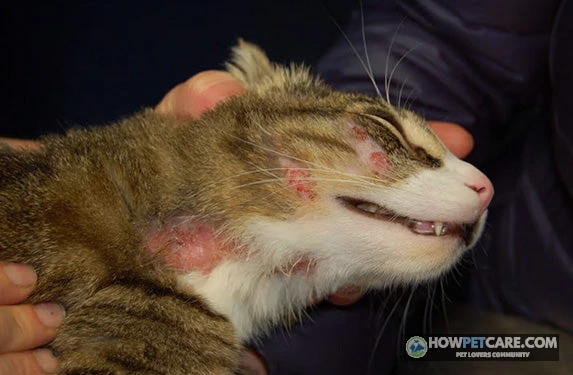

A cat hot spot is a red, moist, inflamed patch of skin—medically called acute moist dermatitis—caused or worsened by repeated licking, scratching, or biting. Seek prompt veterinary care if it spreads quickly, oozes pus, smells, or sits near an eye; small, stable patches on a bright, eating cat may allow cautious home care while you call your vet.
A red, wet patch that appears suddenly and keeps drawing your cat’s attention may be a hot spot. These sores can spread and become painful, but abscesses, ringworm, and other conditions can look similar. Get veterinary care promptly if the area is spreading quickly, swollen, foul-smelling, near an eye, or accompanied by illness or significant pain. If the patch is small, superficial, and stable, and your cat otherwise seems well, you may be able to provide cautious interim care while asking your veterinarian what to do.
Is That Red, Wet Patch a Cat Hot Spot? Identify It Fast
A cat hot spot is an inflamed, moist skin lesion caused or worsened by repeated licking, scratching, or biting. Its medical names are acute moist dermatitis and pyotraumatic dermatitis. The sore is only part of the problem: whatever made the skin itchy or uncomfortable can keep the cycle going.
Hot spots can show up on a cat’s face, chin, belly, or the base of the tail, though they can develop elsewhere, too. The skin may first look red and moist, then become painful, crusted, or matted with fur.
Hot spot symptom checklist
Look for several signs together:
- A red, raw-looking patch that feels or looks damp.
- Repeated licking, chewing, or scratching in one spot.
- Thinning hair, a bald patch, or fur stuck together over the area.
- Tenderness, or your cat pulling away when you approach.
- An oozing lesion that seems to be getting larger.

Part the fur gently only if your cat tolerates it. Cats often hide discomfort, so hiding, grooming more than usual, or avoiding touch can be telling even if your cat doesn’t cry out. The sore may also extend farther beneath the coat than it appears at first.
Why location can offer clues, but not a diagnosis
A sore near the tail base or along the back may prompt a flea check. A patch on the neck or face can be linked to scratching around irritated ears or skin. Sores on the belly and inner thighs may occur with allergies or overgrooming. Location alone can’t identify the cause. Your veterinarian will consider the full picture, including flea prevention, other symptoms, and examination findings.

Use This Triage Guide: Home Monitoring, Vet Appointment, or Urgent Care
Use the table to choose a next step. It isn’t a diagnosis or a substitute for veterinary advice; call a clinic if you’re unsure how serious the lesion is.
| Signs | Recommended action | Why it matters |
|---|---|---|
| Rapidly spreading patch; significant pain; marked swelling; pus or foul odor; or a lesion near the eye | Contact a veterinarian for urgent care today | Infection, an abscess, eye injury, or another painful problem may need prompt treatment. |
| Skin changes plus lethargy, not eating or drinking, or facial swelling affecting eating or breathing | Seek urgent care; go to an emergency veterinary clinic immediately for breathing difficulty | Your cat may be ill beyond the skin lesion. Call ahead if possible. |
| Worsening or recurrent sore, multiple patches, persistent itching or head shaking, or a cat that cannot be handled safely | Arrange a prompt veterinary appointment | The visible sore and its underlying trigger both need assessment. |
| Small, superficial, stable patch; cat is bright and eating normally; area can be protected and checked | Contact your vet for advice and provide cautious interim care | A mild irritation may settle, but licking or an untreated cause can make it worse. |

Red flags that should not wait
A swollen lump, draining puncture, pus, or strong odor may point to an abscess in cats rather than a simple surface sore. Don’t squeeze it or wait for it to burst. A sore close to the eye or inside the ear also isn’t suitable for home cleaning.
If your cat is hiding, unusually quiet, or eating poorly, pain or illness may be involved. Hot ears alone don’t reliably indicate a fever. Tell the clinic what you’ve noticed instead of relying on touch to check your cat’s temperature.
When cautious home care may be reasonable
Consider short-term monitoring only if all of these apply:
- The patch is small, superficial, and not obviously enlarging.
- Your cat is behaving and eating normally and doesn’t seem significantly painful.
- You can prevent licking and scratching without a struggle.
- You can check the area daily and arrange care if it worsens.
A small irritation may improve on its own, but continued self-trauma or an untreated trigger can delay healing or cause the sore to return. If the lesion is wet, painful, or hard to assess, call your veterinarian rather than assuming it will resolve.
Hot Spot, Ringworm, Abscess, or Another Skin Condition?
What the main look-alikes tend to look like
Appearance can offer clues, but it can’t confirm a diagnosis. Lesions don’t always match textbook descriptions, and more than one problem may be present.
| Condition | Typical appearance | Common clues | Contagious or urgent concerns |
|---|---|---|---|
| Hot spot | Red, moist, raw patch, sometimes with missing or matted fur | Repeated licking or scratching; may be tender and expand | The hot spot itself is not generally contagious, but its cause may affect other animals. |
| Ringworm | Often a dry, scaly or crusted patch of hair loss; not always circular | Broken hairs or lesions on the face, ears, or paws; itching varies | A fungal infection that can spread to people and other animals. Arrange testing if suspected. |
| Cat-fight abscess | Painful swelling, sometimes with a puncture or draining wound | Outdoor access, a recent fight, hiding, or reduced appetite | Swelling, pus, or illness calls for prompt veterinary care. |
| Mange | Itchy, crusted or thickened skin; some mites affect the ears and face | Intense scratching; other pets may also itch | Some mites can spread between animals. A vet can identify the parasite and appropriate treatment. |
| Eosinophilic plaque | Raised, red, raw-looking patch, often on the belly or inner thighs | May recur and can be associated with allergies | Not contagious itself, but usually needs veterinary evaluation. |

When a veterinarian needs to confirm the cause
A wet patch doesn’t rule out ringworm, and circular hair loss doesn’t confirm it. Until a contagious cause has been ruled out, limit direct contact with the lesion, wash your hands after handling your cat, and ask the clinic how to protect other pets and household members.
Your veterinarian may examine a skin sample under a microscope, check for parasites such as scabies in cats, or recommend fungal testing. A Wood’s lamp can help investigate some ringworm infections, but a negative result alone doesn’t rule it out. Testing helps distinguish an abscess, fungal infection, or allergic skin disease from other problems that need different care.
What Causes Hot Spots on Cats—and Why They Keep Coming Back
Common triggers and the self-trauma cycle
Cat hot spots form when irritated skin becomes the target of repeated grooming, biting, or scratching. That self-trauma damages the skin and can invite or worsen infection, making the area even more uncomfortable. If the underlying problem isn’t addressed, the moist, inflamed lesion may keep spreading.
Possible triggers include:
- Fleas and flea allergy dermatitis: A cat can react strongly to flea bites even if you don’t see fleas right away.
- Other allergies: Food allergies or environmental sensitivities can cause itching and recurring skin inflammation.
- Local irritation or pain: Ear problems, a wound, or another uncomfortable spot may lead a cat to scratch or groom nearby skin.
- Stress-related overgrooming: Stress can contribute to excessive grooming, but investigate medical causes before assuming a sore is behavioral.

More than one trigger may be involved. Preventing licking can help a sore settle, for example, but won’t resolve an untreated flea problem on its own.
Why recurring hot spots need a cause-focused plan
Tell your veterinarian where the patches appear, how often they return, whether other pets are itchy, and which flea-prevention products your cat uses. Depending on the findings, the clinic may recommend parasite control, an allergy investigation, or other tests. Use only flea products made for cats and chosen with veterinary guidance; some dog products are dangerous to cats.
How to Treat a Cat Hot Spot at Home Without Making It Worse
At home, focus on first aid: prevent further damage, gently rinse an accessible superficial patch, and get veterinary guidance. This isn’t a substitute for an examination when the cause is unclear, the lesion is painful, or your cat seems unwell.
A cautious step-by-step cleaning routine
- Prevent licking and scratching. If your cat tolerates it, fit an Elizabethan collar, also called an e-collar. It should be secure without constricting the neck, and long enough to keep your cat from reaching the sore. Check that your cat can eat, drink, and move safely while wearing it. Ask the clinic for help with fitting if needed.
- Inspect without forcing restraint. Look at the patch in good light. Stop and arrange veterinary care if your cat struggles, the area seems painful, or you can’t see its edges. A recovery garment won’t work if it rubs the lesion, traps moisture, or prevents you from checking it.
- Leave close clipping to the clinic. Matted fur and fragile skin can be hard to separate. If your cat is calm and you can clearly avoid the skin, you may carefully trim loose fur around the area with a pet clipper; don’t shave the sore. Never use scissors near a cat’s skin or pull at a mat. If you’re unsure, skip trimming and let the veterinarian handle it.
- Rinse gently. Use sterile saline or clean lukewarm water on an accessible, superficial area. Don’t scrub, pick off crusts, or flush a deep puncture. Keep liquid out of the eyes and ears.
- Pat dry and protect. Gently blot with clean gauze or a soft cloth. Don’t apply a tight bandage or cover the area with a product unless your veterinarian tells you to. Keep the e-collar on as directed, including when you can’t supervise your cat.
- Check the patch daily. Take a photograph and compare its size, moisture, and redness. Contact the clinic sooner if it spreads, smells, produces discharge, or becomes more painful—or if your cat stops eating or seems unwell.

A struggling cat can be injured during clipping or restraint. Stop and call your veterinary clinic if you cannot examine or protect the area safely.
Topicals and household products: check before applying
Your cat may swallow anything left on its coat or skin while grooming. A product labeled for pets isn’t automatically right for an open lesion, the face, or your particular cat.
| Product or ingredient | Use on a cat that may lick? | Key caution | Safer next step |
|---|---|---|---|
| Hydrocortisone cream or spray | Only if a veterinarian directs you to use that specific product | Formulations and lesion locations differ; a steroid may be inappropriate for infected or open skin, and licking creates additional exposure. | Protect the area and ask the vet whether an anti-inflammatory treatment is appropriate. |
| Neosporin or other triple-antibiotic ointment | Do not use without veterinary direction | Cats can react to ingredients, and a human ointment is not necessarily suitable for the lesion or for ingestion during grooming. | Use a gentle water or saline rinse and ask the clinic whether treatment is needed. |
| Betadine or povidone-iodine | Only with veterinary direction | Concentration, formulation, location, and potential licking matter; an unsuitable preparation can irritate tissue. | Ask the clinic whether to use it and follow its exact instructions. |
| Chlorhexidine | Only with veterinary direction | Products vary in strength and formulation; some can irritate tissue or be hazardous near the eyes or ears. | Confirm the exact product, dilution, and application with the clinic. |
| Essential oils, including tea tree oil | No | Cats can be poisoned by exposure to concentrated essential oils, including through grooming. | Skip the remedy and contact a vet if exposure has occurred. |
| Hydrogen peroxide or rubbing alcohol | No | These can irritate or damage healing tissue. | Rinse gently with saline or clean lukewarm water instead. |
| Topical spray or medicated shampoo | Only if your veterinarian recommends the specific product | Ingredients, contact time, and whether the cat can lick the area all matter. | Ask for a cat-appropriate plan for this particular lesion. |
Don’t give human antihistamines such as Benadryl or leftover medication without veterinary instructions. If your cat has licked a potentially harmful product, contact your veterinarian or an animal poison-control service promptly, and have the packaging ready.

What the Vet May Prescribe—and What Treatment May Cost
What happens during a hot spot appointment
Your veterinarian will examine the lesion and ask when it started, how your cat is grooming, what flea prevention they receive, and whether their behavior has changed. The vet may clip fur to see and clean the affected area. If your cat is in pain or frightened, medication may make handling safer and less stressful.
Depending on the findings, the vet may recommend skin cytology—a microscopic examination of material from the skin—or tests for parasites or ringworm. The appearance and test results guide treatment. A superficial hot spot and a deep abscess may need different care.

Treatment options can include:
- Corticosteroids, when appropriate, to reduce inflammation and itching.
- Antibiotics, such as amoxicillin-clavulanate, if the vet determines a bacterial infection warrants them. Not every irritated patch needs antibiotics.
- Cat-appropriate flea treatment and prevention if fleas are suspected or need to be controlled.
- A prescribed or recommended topical spray, cleanser, or medicated shampoo in selected cases, with instructions tailored to the lesion and your cat’s grooming habits.
- An e-collar and follow-up plan to limit self-trauma while the skin heals.
Ask what each treatment is for, how to prevent licking after application, and when the clinic wants an update. Don’t substitute a human cream or another pet’s prescription.
Typical cost components and why estimates vary
Your bill may include an examination, clipping and cleaning, diagnostic tests, medications, and an e-collar. Sedation, emergency care, extensive wounds, or tests for a recurring problem can add to the cost. Fees vary by location and clinic, and the available evidence doesn’t establish a reliable national price range for a cat hot spot visit.
For a useful estimate, describe the patch and ask the clinic about its examination fee and likely charges for cleaning, basic skin testing, and medication. If your budget is limited, say so before the appointment. The veterinarian can prioritize the most important steps and discuss alternatives. The quote may change after your cat is examined.
Cat Hot Spot Healing Timeline: What to Watch for Each Week
Healing depends on the lesion’s size and cause, whether there’s an infection, the treatment chosen, and whether your cat can reach the area. Available evidence doesn’t establish a reliable average number of days for complete healing in cats. Follow your veterinarian’s recheck instructions rather than relying on a fixed deadline.
Early improvement versus full coat regrowth
- At the start of care: Stop further licking and address pain or infection if present. Record what the patch looks like before treatment.
- Over the next few days: With an appropriate plan, look for less licking and moisture, followed by gradually reduced redness and tenderness. Progress may be uneven, but the patch shouldn’t keep expanding.
- Over the following week or two: The surface should continue to close if the cause is controlled and treatment is working. Your vet can tell you whether the pace is right for the lesion.
- After the skin heals: A bald or thin-haired patch may remain while the coat grows back. Hair can take longer to regrow than the skin takes to heal.

These are checkpoints, not a promise that every sore will heal on the same schedule. Use protective equipment and give medications for as long as your veterinarian recommends, even if the area starts to look better.
Signs healing has stalled or the diagnosis needs review
Contact your veterinarian if the patch gets larger, stays wet or painful, develops an odor or discharge, or shows no clear improvement within a few days of the prescribed plan. Call sooner if it worsens rapidly or your cat’s appetite or behavior changes. The clinic may need to review the diagnosis, adjust treatment, or investigate an ongoing trigger.
Before You Leave the Lesion Alone: A Practical Next-Step Checklist
- Photograph the patch and note its location, approximate size, and when you first noticed it.
- Record whether your cat is licking, scratching, hiding, eating normally, or acting differently.
- Prevent further self-trauma with a properly fitted e-collar if your cat tolerates it; avoid unapproved creams and cleaners.
- Use the triage guide to decide whether to seek urgent care, book a prompt appointment, or provide cautious interim care while contacting your vet.
- Check the area daily and contact the clinic promptly if it worsens or your cat seems unwell.
- Ask your veterinarian about the likely trigger, suitable flea prevention, follow-up timing, and which changes should prompt a return visit.

| Condition | Typical Appearance | Common Clues | Contagious or Urgent Concerns |
|---|---|---|---|
| Hot spot | Red, moist, raw patch, sometimes with missing or matted fur | Repeated licking or scratching; may be tender and expand | The hot spot itself is not generally contagious, but its cause may affect other animals. |
| Ringworm | Often a dry, scaly or crusted patch of hair loss; not always circular | Broken hairs or lesions on the face, ears, or paws; itching varies | A fungal infection that can spread to people and other animals. Arrange testing if suspected. |
| Cat-fight abscess | Painful swelling, sometimes with a puncture or draining wound | Outdoor access, a recent fight, hiding, or reduced appetite | Swelling, pus, or illness calls for prompt veterinary care. |
| Mange | Itchy, crusted or thickened skin; some mites affect the ears and face | Intense scratching; other pets may also itch | Some mites can spread between animals. A vet can identify the parasite and appropriate treatment. |
| Eosinophilic plaque | Raised, red, raw-looking patch, often on the belly or inner thighs | May recur and can be associated with allergies | Not contagious itself, but usually needs veterinary evaluation. |
FAQ
Can cat hot spots heal on their own?
A small irritation may improve, but ongoing licking or an untreated trigger can make it worse or cause it to return. Seek veterinary advice if it spreads, becomes painful or wet, or does not clearly improve within a few days.
Are hot spots on cats contagious?
The hot spot itself is generally not contagious, but some causes or look-alikes, especially ringworm, can spread to people or other animals. Keep the lesion covered from contact where practical and ask a veterinarian if the cause is uncertain.
Can stress cause a cat to overgroom and develop sores?
Stress can contribute to overgrooming, but itching from fleas, allergies, or another medical problem should be considered first. A veterinarian can help distinguish behavioral grooming from skin disease.
Can indoor cats get hot spots?
Yes. Indoor cats can develop hot spots from food or environmental allergies, ear problems, localized pain, or stress-related overgrooming, even without flea exposure. Recurring patches still warrant a veterinary visit to identify the underlying trigger.