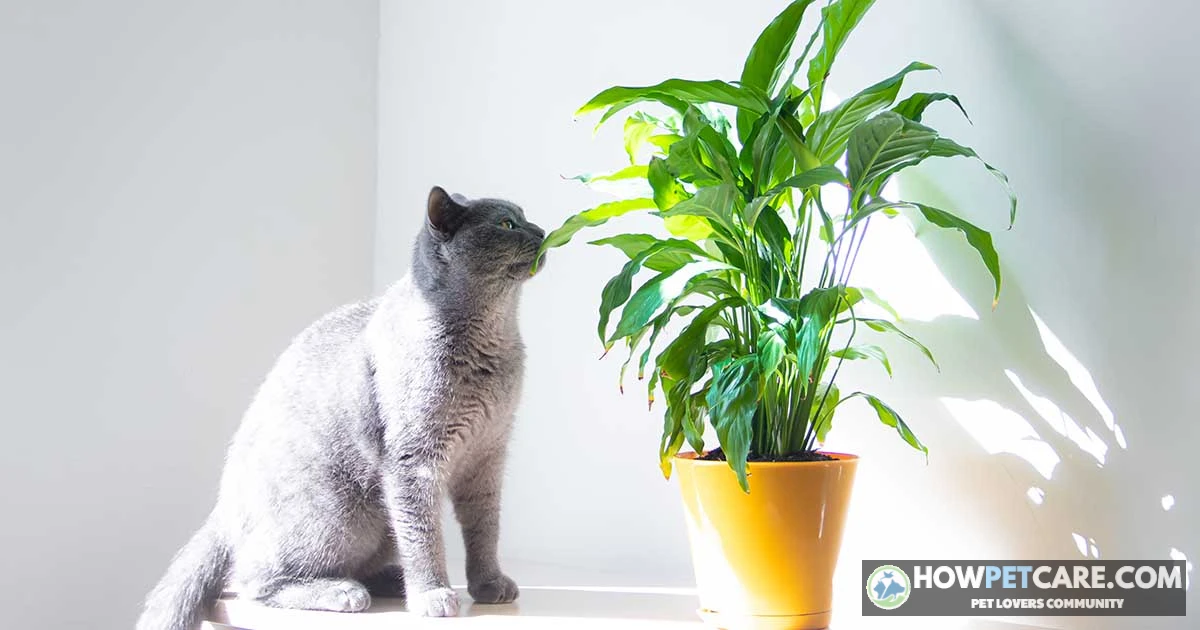

Yes — peace lilies are toxic to cats, but they cause mouth and digestive irritation, not the kidney failure true lilies trigger. Chewing releases insoluble calcium oxalate crystals that cause drooling, pawing at the mouth, and vomiting. Difficulty breathing or swallowing, or an uncertain plant ID, is an emergency.
Are peace lilies toxic to cats? The immediate verdict
Yes. Peace lilies (Spathiphyllum) are toxic to cats, but they usually cause painful irritation of the mouth and digestive tract, not the kidney failure associated with true lilies. When chewed, the plant releases insoluble calcium oxalate crystals that irritate tissue. If your cat is struggling to breathe or swallow, seek emergency veterinary care now. If you cannot confirm that the plant is a peace lily rather than a true lily, treat the exposure as an emergency.
Most cats exposed to a peace lily show signs such as drooling and pawing at the mouth, and some vomit. Severity can vary with the amount chewed and the cat’s health and sensitivity. A veterinarian or animal poison-control service can help you decide whether your cat needs an examination.
Cat ate a peace lily: first aid and when to seek help
What to do immediately
- Move your cat away from the plant. Remove loose pieces from the mouth only if you can do so safely.
- If your cat allows it, gently wipe the mouth or rinse it with a little cool water. Do not force water into the mouth; offer fresh water instead.
- Do not induce vomiting or give medication, milk, or other home remedies unless a veterinarian specifically directs you to. A cat with mouth pain may resist handling, so stop if rinsing risks a bite or makes the distress worse.
- Take a photo of the plant or keep a sample. Note when your cat chewed it, how much may be missing, your cat’s weight, and any symptoms.
- Call your veterinarian or an animal poison-control service for advice, especially if you do not know how much was eaten or the signs are more than mild.

Monitor, call, or go to an emergency vet
Use this three-tier checklist to help you decide what to do, not to diagnose your cat. When in doubt, call a veterinarian. Severe symptoms need veterinary care, not a wait-and-see approach.
Tier 1 — Monitor at home only after professional advice. Home monitoring may be reasonable if the plant is confirmed as Spathiphyllum, your cat chewed a small amount, symptoms are mild and improving, and your cat can breathe, swallow, and drink normally. Keep your cat where you can observe them, and ask the clinician how long to monitor.
Tier 2 — Call a veterinarian or poison hotline promptly. Call if your cat has repeated vomiting, ongoing drooling or mouth pain that is not improving, or refuses food or water. Also call if you are unsure how much was eaten or what the plant is. Get advice promptly for a kitten, senior cat, or cat with an existing health problem. Do not wait for an arbitrary time limit if your cat is getting worse.
Tier 3 — Emergency vet now. Go immediately if your cat has difficulty breathing or noisy breathing, marked swelling of the mouth or tongue, an inability to swallow, collapse, or unresponsiveness. Suspected exposure to a true lily (Lilium or Hemerocallis) is also an emergency, even if your cat seems well. Do not wait for symptoms.
Peace lily versus true lily: why identification matters
"Peace lily" is a common name; it does not mean the plant is a true lily. Spathiphyllum is an aroid that causes local irritation from insoluble oxalate crystals. True lilies in the Lilium and Hemerocallis genera, by contrast, can cause fatal kidney failure in cats. The distinction matters: a possible true lily exposure calls for urgent veterinary care, not home observation.
| Plant | Primary risk | Relevant exposures | Immediate action |
|---|---|---|---|
| Peace lily (Spathiphyllum) | Mouth and digestive-tract irritation from insoluble calcium oxalate crystals | Chewing leaves, stems, or flowers | Remove access; call a vet or poison-control service for advice based on symptoms and amount |
| True lily (Lilium) or daylily (Hemerocallis) | Potentially fatal kidney failure in cats | Plant material; pollen groomed from fur can also be dangerous | Seek emergency veterinary care immediately, even if there are no symptoms |

If you cannot identify a plant in a bouquet or among fallen plant material, do not assume it is a peace lily. Save a photo or sample and get veterinary help identifying it. The ASPCA toxic plant list and veterinary poison-control resources distinguish peace lilies from true lilies. If identification remains uncertain, act on the more urgent possibility.
Peace lily poisoning symptoms in cats: onset and recovery
Signs can start soon after a cat chews the plant, as the crystals irritate the mouth on contact. Common signs include drooling, excessive licking, pawing at the mouth, vomiting, and painful or difficult swallowing. The timing below is a practical guide, not a guaranteed schedule. Signs and their duration vary, and a vet should assess worsening or persistent symptoms.
| Symptom or stage | Typical onset | Expected duration | Action |
|---|---|---|---|
| Pawing at the mouth, lip licking, or drooling | Soon after chewing; oral irritation can be immediate | Mild irritation may begin to ease over several hours, but timing varies | Remove access and offer water. Call a vet if discomfort is significant, worsening, or not easing |
| Vomiting or continued drooling | May occur in the first few hours | Can continue while the mouth or digestive tract is irritated; there is no fixed recovery time | Call a vet for repeated vomiting or ongoing signs; seek urgent care if swallowing is difficult |
| Poor appetite or reluctance to drink | May accompany mouth pain | Should improve as irritation settles; monitor whether your cat can drink | Contact a vet promptly if your cat cannot or will not drink, or seems weak or dehydrated |
| Difficulty swallowing or marked swelling | Can develop during the acute reaction | Not safe to monitor without veterinary advice | Emergency vet immediately, especially if breathing is affected |
| Labored or noisy breathing, collapse, or unresponsiveness | Any time | Not applicable | Emergency veterinary care now |

How long does recovery take?
Many confirmed peace lily exposures are mild to moderate and self-limiting, and uncomplicated cases generally have a favorable outlook. Still, do not rely on a promised recovery window: the available evidence does not establish a precise duration for every cat. Ask the veterinarian how long to watch your cat based on the exposure and symptoms.
The amount eaten and your cat’s size, age, health, and individual sensitivity can all affect the outcome. There is no reliable dose threshold here that makes a particular amount safe. A small exposure does not guarantee your cat will have no symptoms, and a larger or uncertain exposure deserves professional advice. Severe swelling can threaten swallowing or breathing, while vomiting and refusal to drink can create additional concerns. Seek further care if symptoms worsen rather than waiting for them to pass.
Are peace lilies dangerous without chewing? Pollen, water, and placement
Pollen and grooming
Do not automatically apply the true-lily pollen emergency to a confirmed peace lily: the well-established kidney-failure risk is associated with true lilies, not peace lilies. Even so, avoid letting your cat lick plant material or residue from its fur. If you see pollen or sap on your cat, prevent grooming if you can do so safely and ask a veterinarian how to clean it. If the plant’s identity is uncertain, seek urgent advice because true lily pollen groomed off fur can be dangerous.
Vase water and saucer water
Do not let your cat drink water from a vase, pot saucer, or plant container. The evidence here does not establish that peace lily water alone causes the same specific toxicity as chewing the plant. Water may contain plant debris, fertilizer, pesticides, or stagnant material, though, so the exposure deserves case-specific advice. Tell a veterinarian or poison hotline what was in the water and whether your cat has symptoms. If the plant could be a true lily, treat the exposure as an emergency. For bouquet-specific hazards, our cat-safe bouquet guide covers vase water and lily mix-ups.
Hanging plants and fallen leaves
A hanging or elevated peace lily is not reliably safe. Cats can climb, and leaves or flowers can fall within reach. Keep the plant in a room your cat cannot access, or replace it with a plant listed as non-toxic to cats. Even pet-safe plants should not be treated as food, and plant-care products can create separate hazards.
Veterinary treatment, costs, and poison-control calls
What the vet may do
A veterinarian will assess your cat’s symptoms, breathing, swallowing, hydration, and likely exposure. Depending on the case, care may include rinsing the mouth, medication for nausea or pain, fluids, and observation. The aim is to relieve irritation and support your cat while the signs settle. Severe swelling or breathing problems require urgent attention; the treatment plan depends on the examination.

Expected costs and US poison-control contacts
There is no reliable universal cost for a peace lily visit. Fees vary by location, clinic, time of day, and the care needed. Ask the clinic for an estimate before treatment when doing so will not delay urgent care. A straightforward examination may cost less than an emergency visit involving medication, fluids, or observation. Overnight or intensive treatment can cost substantially more. These are general cost factors, not a quoted or verified price range.
For exposure-specific advice in the United States, contact:
- ASPCA Animal Poison Control Center: (888) 426-4435. A per-incident consultation fee may apply.
- Pet Poison Helpline: (855) 764-7661. A per-incident consultation fee may apply.
Both hotlines offer 24/7 assistance, but confirm current availability, numbers, and fees with ASPCA or Pet Poison Helpline before relying on them; fees and service details can change. Have your cat’s age and weight, a plant photo or sample, the time and estimated amount of exposure, and current symptoms ready.
A hotline can help assess a non-emergency exposure and coordinate advice for your veterinarian. Do not call first if doing so would delay emergency care for breathing difficulty, severe swelling, collapse, or possible true lily exposure.
Choose a cat-safe replacement and prevent another exposure
If you would rather remove the risk, consider a replacement identified as non-toxic to cats by the ASPCA. These plants offer different looks and have different care needs:
| Plant | Light needs | Care difficulty | Why it works |
|---|---|---|---|
| Cast iron plant (Aspidistra elatior) | Low to medium light | Easy | Broad, dark-green leaves and a tolerant nature |
| Parlor palm (Chamaedorea elegans) | Low to bright indirect light | Easy | Upright, lush foliage for a leafy corner |
| Calathea or prayer plant (Calathea spp.) | Medium indirect light | Moderate | Patterned leaves for visual interest |
| Christmas cactus (Schlumbergera spp.) | Bright indirect light | Easy | Seasonal flowers in place of the peace lily’s blooms |
| Bromeliad (Guzmania or Neoregelia) | Bright indirect light | Easy to moderate | Colorful central flower and a bold shape |
| African violet (Saintpaulia) | Bright indirect light | Moderate | Compact flowering plant for a windowsill |
| Spider plant (Chlorophytum comosum) | Bright indirect light | Easy | A familiar hanging-plant option |

Check the ASPCA’s current plant listings before buying, since plant labels and common names can be confusing. If the spider plant is on your shortlist, our spider plant safety review explains the usual non-toxic classification and possible stomach upset. "Non-toxic" does not mean unlimited chewing is harmless, and fertilizer or pesticide residue can pose separate risks.
Before bringing home another plant, remove the peace lily and check the floor, nearby furniture, and pot saucer for fallen material or water. Save your veterinarian and poison-control numbers, and choose a replacement suited to your light and care routine. If your cat has already chewed the plant, follow the monitor, call, or emergency-vet guidance above rather than waiting for a plant swap.

| Plant | Light needs | Care difficulty | Why it works |
|---|---|---|---|
| Cast iron plant (Aspidistra elatior) | Low to medium light | Easy | Broad, dark-green leaves and a tolerant nature |
| Parlor palm (Chamaedorea elegans) | Low to bright indirect light | Easy | Upright, lush foliage for a leafy corner |
| Calathea or prayer plant (Calathea spp.) | Medium indirect light | Moderate | Patterned leaves for visual interest |
| Christmas cactus (Schlumbergera spp.) | Bright indirect light | Easy | Seasonal flowers in place of the peace lily's blooms |
| Bromeliad (Guzmania or Neoregelia) | Bright indirect light | Easy to moderate | Colorful central flower and a bold shape |
| African violet (Saintpaulia) | Bright indirect light | Moderate | Compact flowering plant for a windowsill |
| Spider plant (Chlorophytum comosum) | Bright indirect light | Easy | A familiar hanging-plant option |
FAQ
Are peace lilies toxic to dogs too?
Yes. Peace lilies contain insoluble calcium oxalate crystals that can irritate a dog’s mouth and cause drooling or vomiting. Contact a veterinarian for exposure-specific advice, and seek emergency care for breathing or swallowing difficulty.
Are all parts of a peace lily toxic to cats?
The leaves, stems, and flowers can cause irritation when chewed because the plant contains insoluble calcium oxalate crystals. Keep the entire plant out of your cat’s reach.
Can a cat develop symptoms from touching a peace lily?
Brief contact with an intact plant is less concerning than chewing it, which releases irritating crystals. If sap gets on your cat or the cat appears uncomfortable, prevent grooming and ask a veterinarian how to clean the area safely.
How much peace lily is dangerous for a cat?
There is no reliable safe dose — even a small amount can cause painful mouth irritation, and sensitivity varies by cat. Treat any chewing as worth a call to a veterinarian or poison hotline, and watch for drooling, vomiting, or trouble swallowing.