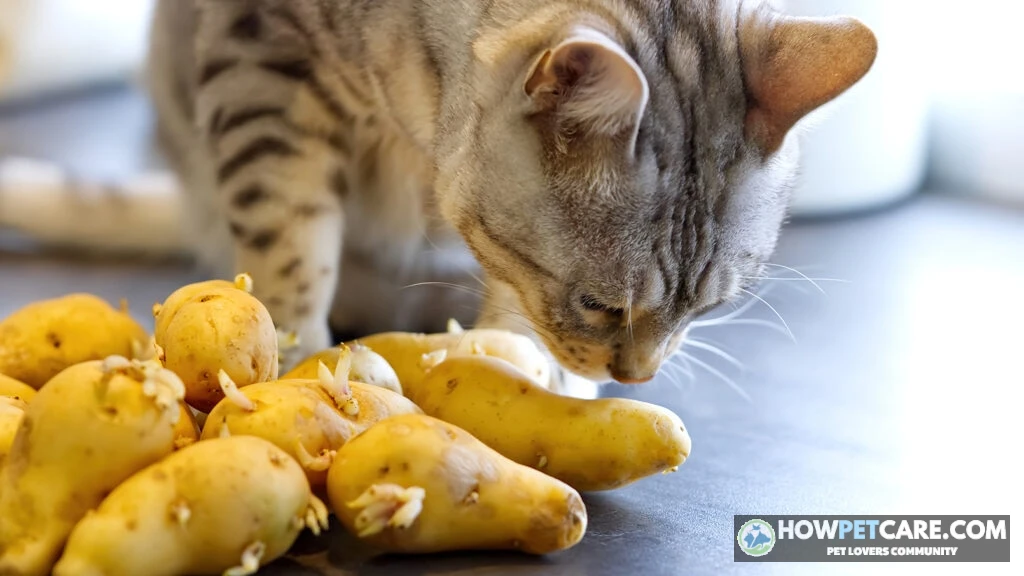

Yes — cats can eat a tiny taste of plain cooked potato safely. Boiled or baked potato, peeled and unseasoned, is fine as an occasional few-cube treat. Raw, green, or sprouted potatoes are unsafe because of solanine, and fried, salted, or buttered preparations (fries, chips, mashed) should never be offered.
Can cats eat potatoes? The fast safety verdict
A tiny taste of plain cooked potato is safe for most healthy cats. Raw, green, or sprouted white potatoes are unsafe: they can be toxic because of solanine, which builds up in damaged or green parts and is only partially destroyed by cooking. In short, yes to a few cubes of unseasoned boiled or baked potato; no to raw, green, or sprouted potatoes. Cats are obligate carnivores, so they have no dietary requirement for carbohydrates or potatoes. Keep potatoes away from kittens and cats with health issues such as diabetes, obesity, or kidney disease. The guidance below covers forms to avoid, portion limits, and what to do if your cat has already eaten a risky potato.
Potato safety by form: raw, cooked, mashed, fried, chips, skins, and sweet potato
| Potato form | Verdict | Main concern | What to do |
|---|---|---|---|
| Raw white potato | Unsafe | Solanine and hard‑to‑digest raw starch | Treat as a possible poisoning exposure; call a vet or poison line |
| Green, sprouted, or damaged potato | Unsafe | Solanine concentrates in green skin and sprouts; cooking does not reliably remove it | Discard the potato; if eaten, contact a vet promptly |
| Plain boiled or baked potato | Tiny taste only | Safe in this form, but offers cats no useful nutrition | Peel, cook fully, and serve a few small cooled cubes without seasoning |
| Mashed potato | Usually unsafe as served | Most recipes contain butter, milk, cream, salt, garlic, or onion | Skip it; dairy and alliums are the concern, not the potato |
| French fries | Unsafe | Fried in oil, heavily salted, and often seasoned | Don’t offer; the fat and salt far outweigh any benefit |
| Potato chips / crisps | Unsafe | Salt, oil, and flavorings (onion/garlic powder are common) | Don’t offer; if a chip was eaten, check the ingredient list |
| Potato skins | Avoid | Tough texture; may carry seasoning, oil, or green spots | Peel before cooking; skins add nothing a cat needs |
| Cooked sweet potato | Tiny taste only | No solanine risk like green white potato, but still a carb‑dense optional treat | Follow the same rules: plain, cooked, peeled, and a few cubes at most |
White vs. sweet potato in one line: the green‑potato solanine risk applies to white potatoes, not sweet potatoes — but cats need neither food, so the portion rules are identical for both.
White potato versus sweet potato
White potatoes are starchy and higher glycemic, and they carry a solanine danger when green or sprouted. Sweet potatoes are low in solanine but still offer little nutritional value to an obligate carnivore. Offer either one only as an occasional, plain, tiny taste, never as a dietary staple.

Raw or green potato: solanine risk, symptoms, and dose uncertainty
Solanine is a natural toxin that accumulates in raw, green, or sprouted white potatoes. Even a small bite can contain enough to cause gastrointestinal upset and neurological signs, but the exact minimum toxic dose per kilogram of body weight is not well‑established for cats. Cooking breaks down most solanine, making plain boiled or baked potato safe for a tiny taste.
Typical signs of solanine poisoning (appear within a few hours to a day):
- Vomiting, diarrhea, drooling
- Lethargy, weakness, tremors, wobbliness
- Abnormal coordination or seizures in severe cases
These signs can appear within a few hours to a day and include vomiting, diarrhea, drooling, lethargy, weakness, tremors, and abnormal coordination. Appearance alone can’t predict solanine levels. A “small bite” isn’t automatically safe, and a “large bite” isn’t automatically an emergency.

Monitor at home vs. call the vet now
Monitor at home (watch for 24 hours, offer water, skip further treats):
- ☐ A single lick or one small bite of plain cooked potato
- ☐ One plain chip or fry with no symptoms afterward
- ☐ Small amount of buttery mashed potato in an otherwise healthy adult cat
Call a vet or pet poison line now — don’t wait for symptoms:
- ☐ Any amount of raw, green, or sprouted white potato
- ☐ Potato cooked or prepared with garlic, onion, or chives
- ☐ Vomiting or diarrhea plus lethargy after eating any potato
- ☐ Tremors, weakness, wobbliness, or trouble walking
- ☐ Repeated vomiting, collapse, or breathing changes — go straight to emergency care
- ☐ A kitten, senior, or cat with diabetes, kidney disease, or obesity ate anything beyond a lick of cooked potato
How much plain cooked potato is reasonable, and how often?
Treats should make up less than roughly 10 % of your cat’s daily calorie needs, and potato should take up only a small part of that allowance. The table gives conservative portions based on weight, keeping the carbohydrate load minimal while letting a curious cat have a taste.
| Cat size | Example maximum taste | Frequency | Important limits |
|---|---|---|---|
| Small cat (under ~8 lb / 3.5 kg) | One pea‑sized cube of plain cooked potato | Once a week at most | Skip entirely for kittens and cats on prescription diets |
| Average cat (~10 lb / 4.5 kg) | Up to about ½ tablespoon (2‑3 small cubes) | Once or twice a week at most | Count it inside the total treat budget, not on top of it |
| Large cat (over ~12 lb / 5.5 kg) | Up to about 1 teaspoon | Once or twice a week at most | Reduce if the cat is overweight or less active |
Worked example: a healthy 10 lb cat eating about 200 kcal per day has a treat budget of roughly 20 kcal. A tablespoon of plain boiled potato contains only around 10‑13 kcal, but that would use most of the day’s treat allowance on a food with no nutritional value for cats. A few small cubes (~5 g, roughly 4‑5 kcal) is a sensible ceiling, leaving room for species‑appropriate treats like cooked egg.

Why potato is a poor fit for some cats
Plain cooked potato gets a cautious pass for healthy cats, but three groups should skip it entirely:
- Diabetic cats: potato is a fast‑digesting starch that can spike blood glucose and complicate insulin management.
- Overweight or obese cats: every calorie needs to count; a carb‑heavy filler treat works against a weight plan.
- Cats with kidney disease or on any prescription diet: these diets are precisely formulated, and even small extras can unbalance phosphorus, protein, or calorie targets.
If your cat belongs to any of these groups, don’t assume "a tiny bite won’t hurt." Ask your vet first, or choose a protein‑based treat instead.
Potato’s carbohydrate load provides no essential nutrition for an obligate carnivore. Feeding it regularly can also displace higher‑quality protein sources. Keep it to an occasional curiosity taste.
If your cat already ate potato: what to do now
If your cat snatches a potato, the first minutes matter. Use this 5‑step triage card to assess what happened and act promptly.

-
1. Remove access and assess.
Take the potato away, then note its form (raw, green, sprouted, peel), roughly how much is missing, and when your cat ate it. Keep the potato, peel, or a photo to help the vet judge the exposure.
-
2. Check for green or sprouts.
Look at what remains. Green patches, sprout eyes, or shriveled/damaged skin mean a higher solanine risk. Solanine levels vary widely between potatoes, so a "small bite" isn’t automatically safe and a "large bite" isn’t automatically an emergency. Appearance alone can’t tell you the dose.
-
3. Call before symptoms, not after.
If your cat ate any raw, green, or sprouted white potato, call your vet or a pet poison line (such as ASPCA Animal Poison Control or Pet Poison Helpline) right away for case‑specific advice.
-
4. Watch closely if advised to monitor.
Over the following hours, watch for vomiting, diarrhea, drooling, lethargy, weakness, tremors, or unsteady walking. Timing varies, so don’t assume a quiet first hour means your cat is clear.
-
5. Never induce vomiting yourself.
Don’t give hydrogen peroxide, salt, or home remedies. Go to emergency care immediately if you see repeated vomiting, tremors, trouble walking, collapse, or breathing changes.
Follow the advice you receive and seek emergency care if those serious signs appear.
How to prepare a tiny taste of potato more safely
If you decide to offer a curiosity bite, follow these home‑preparation steps:
- Choose a fresh, firm white potato with no green areas or sprouts.
- Peel it to remove the fibrous skin and any potential pesticide residue.
- Cook thoroughly by boiling or baking until soft. Steaming works too.
- Cool completely to avoid burns; cats prefer a slightly warm but not hot piece.
- Serve plain, with no butter, milk, oil, salt, garlic, onion, or other seasoning — and keep in mind whether cats can have milk safely at all. Cut a tiny cube (pea‑sized for small cats, up to a few small cubes for larger cats).
- Watch the response for signs of stomach upset. If vomiting, diarrhea, or loss of appetite occurs, stop offering potato and consider more species‑appropriate treats.
Cats don’t need potatoes in their diet, and even a carefully prepared bite offers little nutritional benefit. Treat it as an occasional novelty, not a regular snack.


| Potato Form | Verdict | Main Concern | What to Do |
|---|---|---|---|
| Raw white potato | Unsafe | Solanine toxicity and hard-to-digest raw starch | Treat as a possible poisoning exposure; call a vet or poison line immediately |
| Green, sprouted, or damaged potato | Unsafe | High solanine concentration in green skin and sprouts; cooking does not reliably remove it | Discard the potato; if eaten, contact a vet promptly |
| Mashed potato | Unsafe | Most recipes contain harmful added ingredients like butter, milk, cream, salt, garlic, or onion | Skip serving; dairy and alliums are the primary concerns |
| French fries | Unsafe | High in fried oil, heavily salted, and often seasoned | Do not offer; the high fat and salt content far outweigh any benefit |
| Potato chips / crisps | Unsafe | High in salt, oil, and harmful flavorings e.g., onion or garlic powder | Do not offer; if eaten, check the ingredient list for toxic seasonings |
| Potato skins | Avoid | Tough texture; may carry harmful seasoning, oil, or solanine from green spots | Peel before cooking; skins offer no nutritional value to cats |
| Plain boiled or baked potato | Safe tiny taste only | Offers no useful nutrition for cats, despite being safe in this cooked form | Peel, cook fully, and serve a few small cooled cubes without seasoning |
| Cooked sweet potato | Safe tiny taste only | High in carbohydrates; offers no solanine risk but remains an optional treat | Plain, fully cooked, peeled, and served as a few small cubes at most |
FAQ
Can kittens eat potatoes?
It is best not to offer kittens potato: they need a complete growth-formulated diet, and even plain cooked potato adds little nutrition. Keep raw, green, and sprouted potato out of reach and contact a veterinarian if a kitten eats any.
Can a cat eat potato chips labeled plain or low-salt?
Potato chips are not a suitable cat treat, even when plain or low-salt, because they are fatty, processed, and may still contain salt or other ingredients. A tiny accidental crumb is generally different from eating a serving, but check ingredients and seek veterinary advice if the amount was more than a taste or your cat becomes unwell.
Are potatoes safe for cats with diabetes?
Do not offer potato to a diabetic cat without the treating veterinarian’s approval. Its carbohydrate load can complicate a carefully managed diet and glucose control.
Can cats eat potatoes every day?
No. Potato is not nutritionally necessary for cats and should not become a daily food or displace a complete, balanced diet.