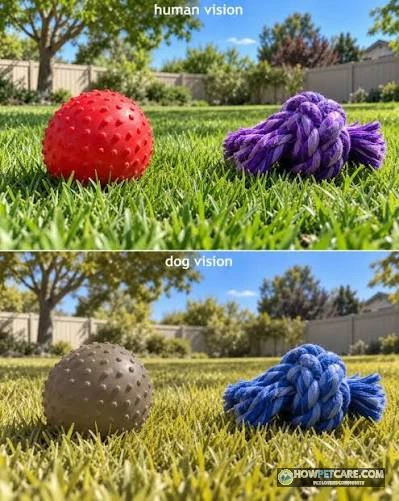

Dogs can see exceptionally well in low-light environments, requiring roughly five times less ambient light than humans to navigate. However, dogs cannot see in complete darkness (0 lux), as their photoreceptors require photons to function. In dim conditions, their vision relies on a retroreflective tapetum lucidum and a rod-dominated retina.
The short answer to “can dogs see in the dark?” is yes—but only when some light is available. Dogs move through low-light environments remarkably well and see much more clearly at dusk and dawn than humans do. However, they cannot see in complete darkness. At absolute zero lux, as in a sealed, windowless basement, a canine’s optical system is completely blind because photoreceptors need ambient photons to activate.
In practical terms, dogs need roughly five times less ambient light than humans to make out visual shapes. A person begins losing the ability to distinguish targets below 0.01 to 0.02 lux, which is about the illumination of an open field under starlight. A dog, by comparison, can reliably detect human-sized silhouettes and large obstacles at approximately 0.001 to 0.005 lux. At night, canine vision works like a high-sensitivity display that prioritizes motion. Where you might see a dark, featureless blur, your dog can pick out spatial edges, changes in surface planes, and distant movement.
Can Dogs See in Complete Darkness?

No mammalian eye works without ambient photons. The persistent belief that dogs can see in total darkness often comes from watching them cross seemingly pitch-black rooms without difficulty. In reality, dogs support their low-light vision with several non-visual senses: spatial memory, tactile feedback from facial vibrissae (whiskers), and an olfactory system thousands of times more sensitive than a human’s. At absolute darkness (0.0 lux), photoreceptor cells in the canine retina receive zero light stimulation. Under true zero-lux conditions, a dog must rely on hearing, touch, and scent memory.
Dogs vs. Humans: The Minimum Light Level (Lux) Needed to See
Ambient illumination is measured in lux, or lumens per square meter. Full daylight measures roughly 10,000 to 25,000 lux, a brightly lit residential living room operates around 50 lux, and deep outdoor twilight sits near 1 lux. Thanks to adaptations in their eyes, dogs can recognize objects at light levels that leave humans unable to see clearly.

| Target Size | Distance | Dog Detection Threshold | Human Detection Threshold | Ambient Reference Benchmark |
|---|---|---|---|---|
| 1 ft (Small obstacle / Toy) | 5 ft | 0.05 lux | 0.25 lux | Deep twilight / Clear quarter-moon |
| 1 ft (Small obstacle / Toy) | 10 ft | 0.15 lux | 0.80 lux | 10 minutes post-sunset outdoors |
| 1 ft (Small obstacle / Toy) | 20 ft | 0.50 lux | 2.50 lux | Distant streetlamp entering window |
| 2 ft (Cushion / Small furniture) | 5 ft | 0.01 lux | 0.06 lux | Clear starlight with no moon |
| 2 ft (Cushion / Small furniture) | 10 ft | 0.08 lux | 0.40 lux | Full moon under open sky (0.1 lux) |
| 2 ft (Cushion / Small furniture) | 20 ft | 0.20 lux | 1.10 lux | Typical hallway nightlight (1–3 lux) |
| 3 ft (Human silhouette / Door frame) | 10 ft | 0.02 lux | 0.10 lux | Clear moonlit night sky |
| 3 ft (Human silhouette / Door frame) | 20 ft | 0.05 lux | 0.25 lux | Standard residential dim yard lighting |
At 1:00 AM in a dim living room, the human eye sees low-contrast grey outlines and loses depth perception. A dog’s eyes, however, can process broad environmental shapes with well-defined edges. That advantage comes with trade-offs: dogs have lower visual acuity, with roughly 20/75 vision compared with human 20/20, and less color discrimination. Rather than a sharp, full-color landscape, they see a brighter, high-contrast, motion-sensitive view with pale blue-yellow tones.
Canine Eye Anatomy: How Dogs Maximize Available Night Light

Several specialized anatomical structures help dogs capture and process small amounts of available light. Compared with the human eye, the canine eyeball has a substantially larger cornea and pupillary aperture. Its wide pupil functions much like a wide-aperture camera lens, drawing in as much environmental light as possible before focusing those photons onto the retina.
Incoming Ambient Light (Photons)
           │
           ▼
[ Wide Cornea & Dilated Pupil ]  ──► Collects maximum ambient photons
           │
           ▼
[ Large Lens ]                   ──► Focuses light broadly across retina
           │
           ▼
[ Rod-Dominated Retina ]         ──► 20:1 rod-to-cone ratio captures motion/contrast
           │
           ▼
[ Tapetum Lucidum ]              ──► Retroreflector bounces unabsorbed light back
           │                         through the rods a second time
           ▼
Retinal Signal to Optic Nerve
The Tapetum Lucidum: Nature’s Built-In Light Reflector

Directly beneath the retina is the tapetum lucidum, a specialized layer of retroreflective tissue. It acts as an internal biological mirror. When ambient light enters a dog’s eye, it passes through the retina’s photoreceptor cells—the rods and cones. Some photons are absorbed immediately, while many pass through without being captured.
Rather than disappearing into dark underlying tissue, as they do in the human eye, these stray photons strike the tapetum lucidum and reflect across the photoreceptor layer for a second pass. That reflection gives the photoreceptor cells another opportunity to capture them, doubling the eye’s visual sensitivity in low light. It also produces the characteristic green, yellow, or turquoise "eye shine" seen when a flashlight or car headlight catches a dog’s eyes at night. In blue-eyed dogs, the tapetum may lack reflective pigment, causing a reddish reflection from the choroidal blood vessels instead. In young puppies, this reflective layer continues to mature, and the characteristic adult eye-shine color stabilizes during their first 3 months of life.
Rod-to-Cone Ratios: Why Dogs Spot Nighttime Motion Instantly

The mammalian retina contains two main types of photoreceptors. Cones handle daytime color vision and fine detail, while rods detect dim light, shapes, and motion.
A dog’s retina is heavily dominated by rods. Humans concentrate cone photoreceptors in a central fovea for sharp daytime focus, but dogs maintain an approximate rod-to-cone ratio of 20:1 across the retina. Cats take this specialization further, with an approximate 25:1 rod-to-cone ratio and vertical slit pupils suited to nocturnal predation. This cellular balance makes dogs highly sensitive to movement. An object may be poorly defined in dim light, yet a sudden movement of a single inch can trigger immediate photoreceptor activity across the canine retina.
| Visual Metric | Dogs | Humans | Cats |
|---|---|---|---|
| Minimum Light Sensitivity | ~5x more sensitive than humans | Baseline standard (1.0x) | ~6x to 8x more sensitive than humans |
| Rod-to-Cone Ratio | ~20:1 (Rod-dominated) | ~20:1 (Foveal cone concentration) | ~25:1 (Ultra rod-dominated) |
| Pupil Morphology | Large, circular dilation | Circular, moderate dilation | Vertical slit with extreme contraction/expansion |
| Tapetum Lucidum | Present (cellular type) | Absent | Present (cellular type, highly reflective) |
| Flicker Fusion Rate (Motion) | 70–80 Hz (High motion tracking) | 55–60 Hz | 70–85 Hz |
| Visual Acuity (Sharpness) | ~20/75 (Coarse detail) | 20/20 (Fine detail) | ~20/100 to 20/200 (Near-sighted) |
| Field of View | ~240–250 degrees (Breed-dependent) | ~180 degrees | ~200 degrees |
Worked Calculation: Spotting a 6-Foot Hallway Obstacle at 2 Lux
Consider a 30-pound medium dog turning into an unlit hallway at midnight. An ambient light meter at floor level reads 2.0 lux, supplied entirely by light spilling in from an adjacent room. In the center of the hallway, 6 feet ahead, sits a dark shoe that is 4 inches tall and offers little contrast against the dark floor.
- Available Ambient Illumination: 2.0 lux.
- Dog’s Static Low-Contrast Threshold (at 6 ft): ~0.10 to 0.15 lux.
- Human Low-Contrast Threshold (at 6 ft): ~0.60 to 0.85 lux.
- Canine Static Acuity: ~20/75 (equivalent to a human viewing the shoe from roughly 22 feet away).
At 2.0 lux, the available illumination is more than 13 times the dog’s minimum visual threshold. Its tapetum lucidum reflects unabsorbed photons across the retina’s rod cells again, doubling functional signal capture. The dog can’t resolve fine details such as eyelets or shoelaces because of its 20/75 acuity, but the high density of rods picks out the shoe’s dark edge contrast in under 0.2 seconds. If the shoe shifts or an owner’s foot moves by an inch, the dog’s 70–80 Hz flicker fusion rate reduces detection latency to below 50 milliseconds. It can spot the obstacle without breaking stride.
Because dogs process visual frames at 70 to 80 frames per second (compared to 55 to 60 in humans), they detect micro-movements in low light almost instantaneously, even when the object itself lacks color or sharp detail.
Breed Variations: Do Some Dogs See Better at Night Than Others?

Night-vision performance varies among dogs. Skull shape, also called cephalic conformation, combines with eye placement and a breed’s original working purpose to affect retinal structure, field of view, and pupil response.
| Breed & Type | Skull Conformation & Eye Placement | Retinal Structure | Night-Vision Rating (1–10) | Functional Night Performance |
|---|---|---|---|---|
| Greyhound (Sighthound) | Dolichocephalic; lateral placement (~250° visual field) | Dense horizontal "visual streak" packed with rods | 9.5 / 10 | Unrivaled wide-angle perimeter tracking; spots moving prey in starlight (0.005 lux) across vast horizontal fields. |
| German Shepherd (Working) | Mesocephalic; forward-angled (~220° visual field) | High rod-to-cone ratio with fast pupillary light reflex | 9.0 / 10 | Rapid dark-to-light adaptation; reliably navigates broken, patchy terrain under dense forest canopy. |
| Siberian Husky (Spitz / Arctic) | Mesocephalic; forward-facing (~220° visual field) | Dense rod arrays; specialized tapetum tuned to short-wavelength blue light | 8.5 / 10 | High contrast differentiation on snow and ice during arctic polar twilight and deep dawn. |
| Labrador Retriever (Gundog) | Mesocephalic; broad orbit spacing (~220° visual field) | Balanced central and peripheral rod density; large pupil dilation aperture | 8.5 / 10 | High contrast discrimination against water and low reeds during dusk and pre-dawn retrieval. |
| Pug (Brachycephalic) | Brachycephalic; shallow, protruding orbits (~180–200° visual field) | Centralized "area centralis" with limited peripheral rod distribution | 5.5 / 10 | Poor peripheral low-light detection; struggles with floor transitions, hallway shadows, and depth perception. |
Sighthounds—dolichocephalic breeds with long, narrow muzzles—have laterally positioned eyes that create a wide visual arc of up to 250 degrees. Their retinas contain a horizontal band of densely packed rod cells known as a "visual streak". With this structure, a Greyhound or Whippet can scan a broad horizon and notice subtle movement in deep dusk without turning its head.
Brachycephalic dogs, including flat-faced breeds such as Pugs, French Bulldogs, and Boston Terriers, have forward-facing eyes in shallower sockets. Instead of an elongated streak, their visual cells are arranged around a circular hub called the area centralis. This configuration limits peripheral photon capture, making flat-faced dogs more likely to bump into low objects or hesitate in dark hallways.
Working and pastoral breeds, including German Shepherds and Border Collies, show rapid pupillary dilation and contraction. Their quick pupillary light reflex allows them to adjust smoothly while running between open moonlit areas and dense, dark treelines, reducing the risk of disorientation.
Recognizing Night Blindness: When Bumping into Walls Signals Trouble

Dogs generally move through dim spaces with ease, so new hesitation or clumsiness in low light can be an early sign of an eye problem. Knowing the difference between normal low-light behavior and possible ocular disease can help owners recognize vision changes early.
Common Warning Signs of Night Blindness (Nyctalopia):
┌─────────────────────────────────────────────────────────────┐
│ • Refusal to step off porch steps or patios after dark     │
│ • Freezing or hesitating when entering unlit interior rooms │
│ • Walking with a cautious, high-stepping gait at dusk       │
│ • Clinging closely to an owner's legs during evening walks  │
│ • Startle-reactions or defensive snapping when approached   │
│ • Cloudiness, haziness, or unusual asymmetric eye shine     │
└─────────────────────────────────────────────────────────────┘
Progressive Retinal Atrophy (PRA) and Nyctalopia Symptoms
Night blindness, clinically known as nyctalopia, is the main hallmark of Progressive Retinal Atrophy (PRA). PRA refers to an inherited group of genetic diseases that cause bilateral degeneration of retinal photoreceptor cells. Rod photoreceptors, which control low-light vision, are the first to deteriorate. As the rods break down, a dog’s ability to see in dim conditions gradually declines, often well before daytime cone function changes.
During the early stages of PRA, a dog may behave normally in bright daylight yet freeze, bump into doorways, or refuse to enter a dimly lit backyard at night. Over months or years, the disease progresses from the rods to the cone photoreceptors and can eventually cause complete blindness. If your dog begins hesitating after dusk, a veterinary ophthalmologist can use an electroretinogram (ERG) to assess retinal rod function.
Age-Related Vision Loss: Nuclear Sclerosis vs. Cataracts

As companion dogs reach their senior years, changes in the ocular lens can directly affect photon transmission and night vision.
Not all cloudy eyes are cataracts. Nuclear sclerosis causes a harmless bluish-gray haze that mildly scatters low light, whereas cataracts create dense, milky-white crystalline blockages that prevent photons from reaching the retina entirely.
- Nuclear Sclerosis (Lenticular Sclerosis): This normal, non-blinding age-related change usually appears after 7 years of age. New lens fibers gradually compress the older central fibers, producing a translucent bluish-grey haze deep inside both lenses. Nuclear sclerosis scatters incoming light and raises the dog’s minimum lux detection threshold, but it does not cause blindness. Senior dogs with the condition may simply need slightly brighter ambient lighting to move around rooms comfortably.
- Cataracts: Cataracts are a true ocular pathology in which proteins inside the lens clump together and form opaque, milky-white obstructions. These obstructions physically prevent light from reaching the tapetum lucidum and retina. Night-time navigation becomes significantly harder, and untreated cataracts can lead to functional blindness.
- Glaucoma and Systemic Hypertension: Persistently elevated intraocular pressure from glaucoma or chronic high blood pressure can directly damage the optic nerve and peripheral retinal cells, permanently reducing low-light perception.
The 5-Step At-Home Night Vision Assessment Checklist
If your dog starts hesitating at dusk or bumping into furniture, this home assessment can help you screen its low-light vision. Carry out each test calmly in an environment with few distractions.

-
Set Up the 0.5-Lux Dim-Room Obstacle Course
Arrange three soft, quiet household items—such as a couch cushion, a plastic laundry basket, and a folded blanket—in a staggered pattern along a hallway. Close the window curtains during deep dusk until the ambient light measures approximately 0.5 lux, dim enough that you can just make out the silhouettes. Encourage your dog to move forward with a gentle hand gesture, without using clickers, toys, or voice prompts. A dog with healthy night vision should move cleanly around the obstacles, pausing for under 2 seconds. Freezing, pawing at the air, hesitating, or running its snout into the items may indicate reduced low-light visual acuity.
-
Execute the Silent Cotton Ball Drop
Keep the room lighting at approximately 1 lux, then switch off ceiling fans or vents to remove air currents. Hold a dry, unscented cotton ball at shoulder height, roughly 2 feet to one side of your dog’s head. Drop it silently through the dog’s peripheral field of view. An immediate head turn or eye movement that tracks the falling white object is a passing response. If the dog doesn’t follow it until the cotton ball physically reaches the floor, a peripheral rod deficiency may be present.
-
Measure Light-to-Dark Transition Latency
Guide your dog from a brightly lit area, such as a 300-lux kitchen, directly into an unlit, dim room measuring 1 to 2 lux. Note how long it pauses at the flooring threshold before stepping across. A healthy eye should dilate and adapt within 1 to 3 seconds. Pausing for more than 5 to 10 seconds, vocalizing, or refusing to cross the boundary may signal an impaired dark-adaptation reflex.
-
Check the Silent Low-Light Menace Reflex
In a room lit only by a distant nightlight, move your flat hand smoothly toward your dog’s eye and stop 2 inches short. Keep your hand perpendicular to the face so it doesn’t push air toward the cornea. A quick blink or withdrawal of the head shows that the low-light visual pathway is intact. A fixed, unblinking stare that continues until physical contact may point to low-light visual impairment.
-
Inspect Tapetal Retroreflection Symmetry
Stand 6 to 8 feet from your dog in a dimly lit room and set your smartphone camera flash to "On." Take a level photograph while facing the pupils directly so the image captures the tapetal reflection. A healthy result shows a clear, symmetrical reflection with equal intensity in both pupils. If one eye reflects brightly while the other appears dull, dark, or cloudy red-brown, arrange an evaluation with your veterinarian to rule out cataracts, lens luxation, or retinal thinning.

How to Make Your Home Safe for a Dog with Low Night Vision

When age or a clinical condition reduces a dog’s night vision, a few practical changes at home can support safer movement, ease anxiety, and help prevent injury.
- Install Dedicated 2700K Warm LED Nightlights: Put low-wattage plug-in nightlights that emit 1 to 5 lux along hallways, near water bowls, and beside pet beds. Warm-spectrum lighting (2700K) limits harsh glare and disorientation while providing enough photons for aging tapetal layers to capture.
- Establish Tactile Sensory Paths: Dogs depend heavily on paw-pad mechanoreceptors as their vision declines. Place textured runner rugs over slick hardwood or tile to form clear tactile routes between sleeping areas, water stations, and exterior doors.
- Maintain Fixed Furniture Layouts: Blind and visually impaired dogs move around by using internal spatial maps. Keep living room furniture in familiar positions, remove stray objects from floor-level pathways, and install plastic baby gates to prevent access to open staircases.
- Introduce Scent and Audio Anchors: Add a distinct, pet-safe scent marker, such as a drop of diluted chamomile or vanilla extract, near door frames to mark transition zones. In dim light, speak softly before touching your dog so it isn’t startled into a defensive reaction.
- Equip Evening Walks for Visibility: For nighttime walks, choose a wide-beam, downward-facing LED chest light instead of a narrow flashlight. The broad pool of light makes hazards on the path easier to see and helps your dog walk more confidently.
| Breed & Type | Skull Conformation & Eye Placement | Retinal Structure | Night-Vision Rating (1–10) | Functional Night Performance |
|---|---|---|---|---|
| Greyhound (Sighthound) | Dolichocephalic; lateral placement (~250° visual field) | Dense horizontal "visual streak" packed with rods | 9.5 / 10 | Unrivaled wide-angle perimeter tracking; spots moving prey in starlight (0.005 lux) across vast horizontal fields. |
| German Shepherd (Working) | Mesocephalic; forward-angled (~220° visual field) | High rod-to-cone ratio with fast pupillary light reflex | 9.0 / 10 | Rapid dark-to-light adaptation; reliably navigates broken, patchy terrain under dense forest canopy. |
| Siberian Husky (Spitz / Arctic) | Mesocephalic; forward-facing (~220° visual field) | Dense rod arrays; specialized tapetum tuned to short-wavelength blue light | 8.5 / 10 | High contrast differentiation on snow and ice during arctic polar twilight and deep dawn. |
| Labrador Retriever (Gundog) | Mesocephalic; broad orbit spacing (~220° visual field) | Balanced central and peripheral rod density; large pupil dilation aperture | 8.5 / 10 | High contrast discrimination against water and low reeds during dusk and pre-dawn retrieval. |
| Pug (Brachycephalic) | Brachycephalic; shallow, protruding orbits (~180–200° visual field) | Centralized "area centralis" with limited peripheral rod distribution | 5.5 / 10 | Poor peripheral low-light detection; struggles with floor transitions, hallway shadows, and depth perception. |
FAQ
Do dogs need a light left on at night?
Most healthy adult dogs do not need a light left on, as their eyes utilize ambient light from windows or clocks easily. However, senior dogs or those with cataracts benefit greatly from a soft 1–5 lux nightlight to navigate safely without disorientation.
Can puppies see in the dark as well as adult dogs?
Puppies under eight weeks old have immature night vision because their tapetum lucidum, pupils, and rod photoreceptors are still developing. Their low-light navigation matures fully alongside adult visual acuity around 12 to 16 weeks of age.
What colors do dogs see in dim light?
In low light, dogs lose virtually all color perception because cone cells shut down, leaving rod cells in control. Under nighttime conditions, canine vision shifts into shades of grey and muted blue-yellow tones with a heavy emphasis on brightness contrast.
Why do my dog’s eyes glow green or yellow in the dark?
Your dog’s eyes glow due to the tapetum lucidum, a mirror-like layer of cells behind the retina that reflects unabsorbed light back out through the pupil. The resulting glow is usually green, yellow, or blue depending on your dog’s breed, coat pigment, and age.