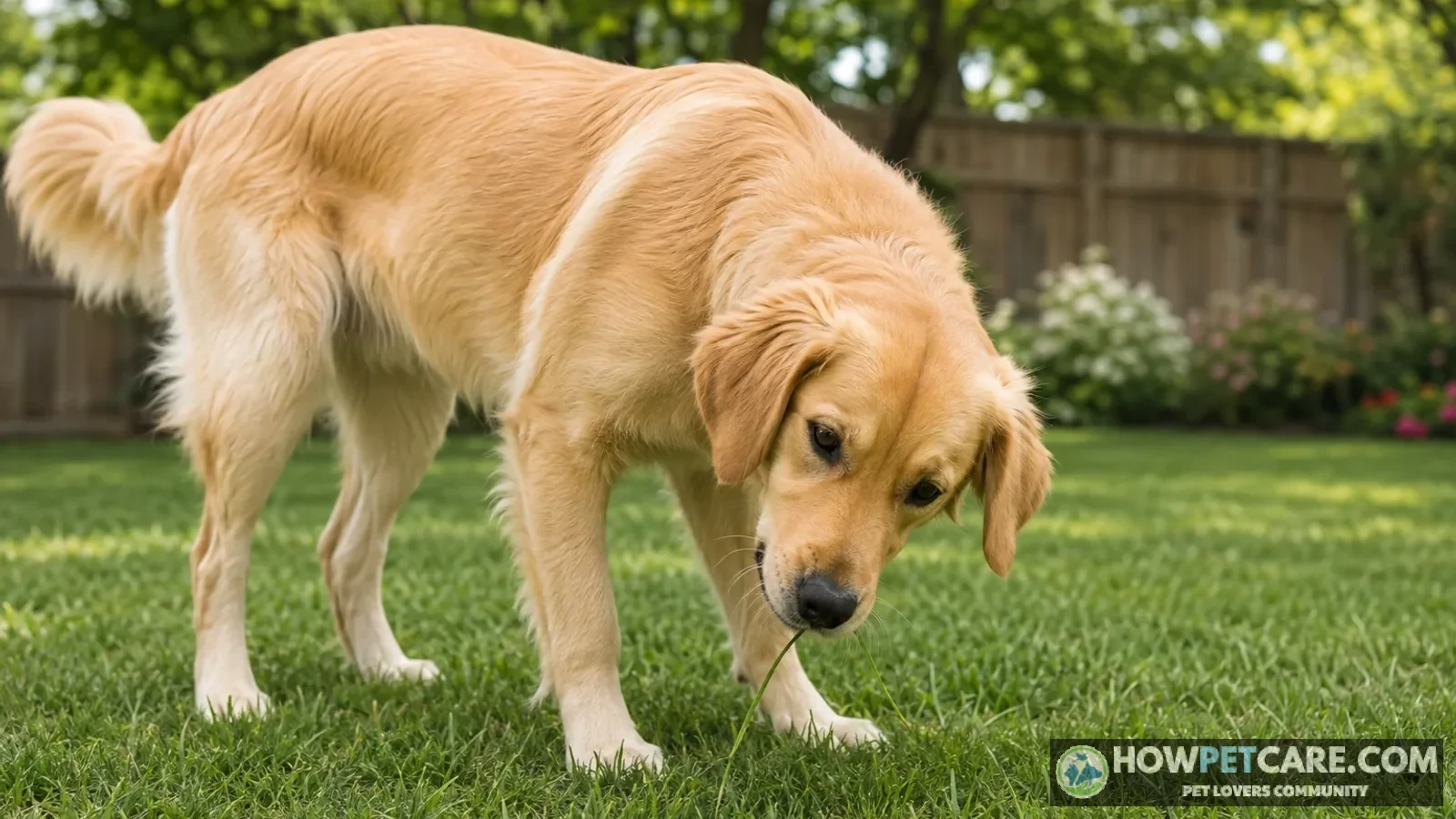

Dogs eat grass mainly out of instinct inherited from wild canids, because they like the taste and texture, or from boredom — only rarely because of illness. Occasional calm grazing in a healthy dog is normal; call your vet if grazing becomes frantic or comes with vomiting, diarrhea, or lethargy.
Why Dogs Eat Grass: It’s Usually Normal, and Here’s the Short Answer
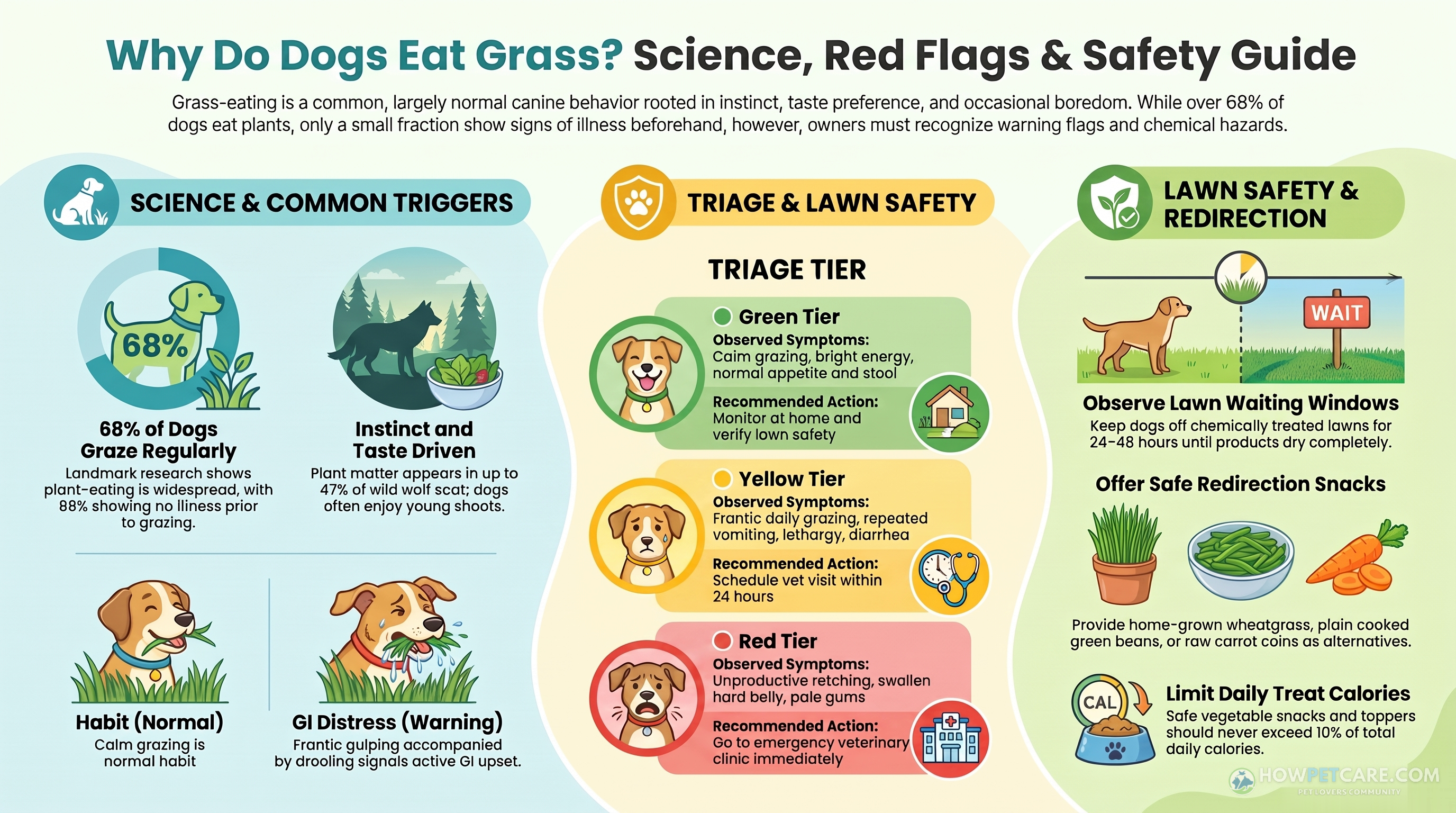
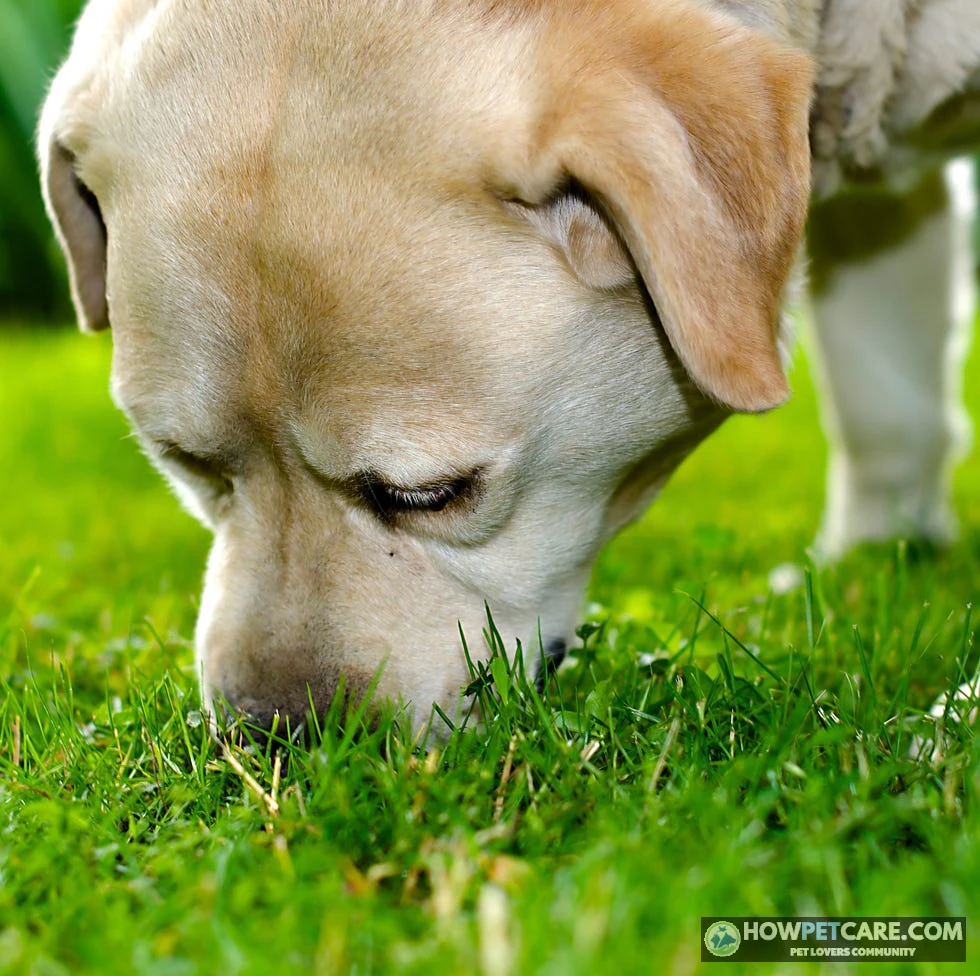
Grass-eating is common, and in most healthy dogs it’s not a sign of illness. A landmark UC Davis owner survey (Sueda et al., 2008) found that 68% of dogs eat plants daily or weekly. The likely causes include instinct passed down from wild canids, a simple liking for the taste and texture of fresh grass, boredom, and sometimes an upset stomach. It’s rarely proof of worms or a dietary shortfall.
Rule of thumb: calm, occasional grazing in a dog that’s bright, eating, and pooping normally means monitor at home. Below is a triage checklist, a lawn-safety table, and a practical redirection plan to help you decide what — if anything — to do next.
Two common follow-ups, answered up front: how much grass is too much? There is no fixed dangerous amount — repeated vomiting, straining to defecate with no stool, and belly pain are the warning signs, not a gram count. Treated lawn? Keep your dog off until the product has dried or the label’s re-entry time — often 24–48 hours — has passed.
What the Research Says: The Sueda et al. 2008 Survey and Newer Science
Most of the numbers you’ll see trace back to one UC Davis owner survey published in Applied Animal Behaviour Science (Sueda, Hart & Cliff, 2008). It’s still the most-cited study on this topic, but it has limits: owner-reported data, a single snapshot, and association rather than causation.
How to read the 68%, 9% and 22% figures
Source: Sueda, Hart & Cliff, "Characterisation of plant eating in dogs," Applied Animal Behaviour Science (2008) — a UC Davis survey of dog owners, still the most-cited study on this topic.
The three numbers everyone quotes:
- 68% of dogs in the survey were reported to eat plants on a daily or weekly basis — grass-eating is the norm, not the exception.
- 9% of grass-eating dogs appeared ill before eating plants — meaning roughly 9 in 10 showed no sign of sickness beforehand.
- ~22% vomited after eating plants — so most grass-eaters don’t throw up at all.
What this does NOT prove: The data comes from owner reports in a single survey. It shows an association, not a cause — it can’t tell us whether grass caused the vomiting, or whether already-nauseous dogs went looking for grass. What it does clearly undermine is the popular claim that "dogs eat grass mainly to make themselves vomit": if that were true, you’d expect far more than 9% to look ill first and far more than ~22% to vomit afterward.
What’s been studied since 2008 (and what hasn’t)
A 2019 follow-up owner survey confirmed how common plant-eating is, but added little about causation. Emerging research on the canine gut microbiome suggests diet and fiber intake shape microbial diversity, yet no controlled study has directly tied grass-eating to microbiome changes. The term pica — eating non-food items — sometimes comes up, but occasional grass nibbling on its own doesn’t meet the clinical definition. Until controlled trials catch up, the 2008 survey remains the baseline evidence.
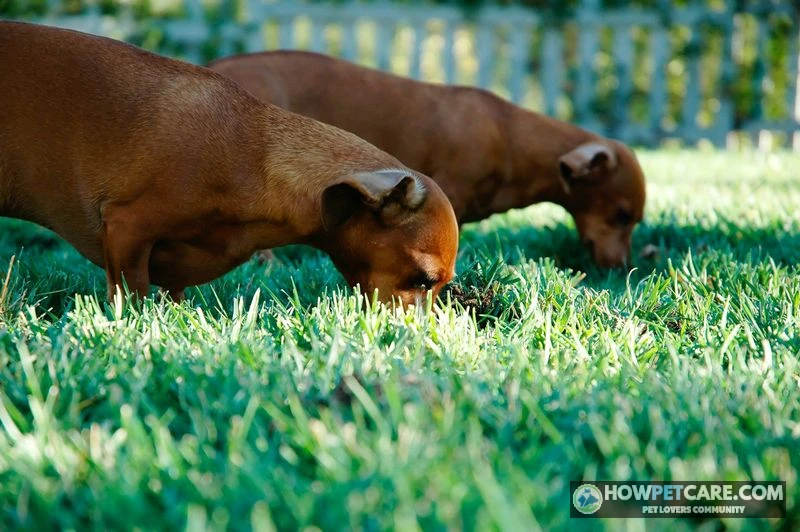
The Real Reasons Your Dog Is Eating Grass
Instinct and taste
Wild canids and wolves also eat plant matter; grass appears in 11–47% of wolf scats. Dogs have about 1,700 taste buds (humans have ~9,000), but they may simply like the sweet, crisp feel of young spring shoots. That kind of grazing is instinctive and normal — not a distress signal.
Fiber and digestion theories
Fiber can help move stool in some dogs, and a plausible—but unproven—theory holds that dogs eat grass to supplement dietary fiber. One case report described a Poodle that ate grass and vomited daily for 7 years until switched to a high-fiber diet. Most dogs on complete, AAFCO-balanced diets already get enough fiber, though.
Boredom and anxiety
Grazing can turn into a habit or coping mechanism when a dog is under-stimulated, anxious, or looking for attention. If your dog grazes mostly when left alone or during quiet periods, added enrichment might reduce the behavior.
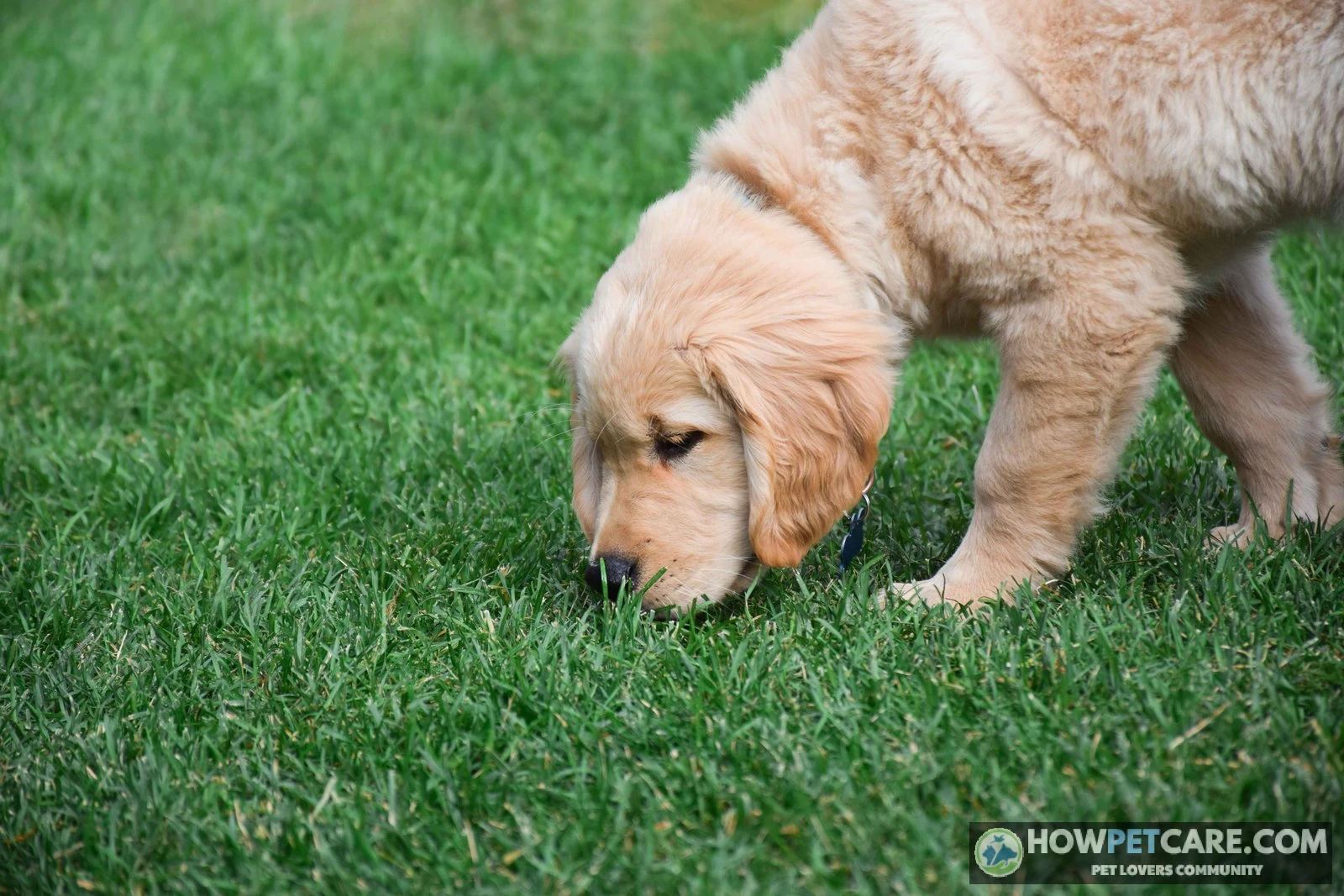
Worms and nutritional deficiency: myth or signal?
Evidence doesn’t support grass-eating as a reliable sign of intestinal parasites or nutritional deficiency. A fecal test and diet review are the right diagnostic steps. On an AAFCO-balanced diet, deficiency is unlikely — but not impossible — so check with your vet before adding supplements.
Grass and Vomiting: Why Some Dogs Eat Grass and Throw Up
Most grass-eaters don’t throw up afterward. When it happens, it may be incidental — grass blades tickling the stomach — or the dog may already feel nauseated. The survey showed only ~22% vomited after eating plants.
Yellow bile and early-morning grazing
An empty stomach overnight lets bile build up. Some dogs eat grass in the morning, which can trigger vomiting of yellow bile (bilious vomiting syndrome). The grass isn’t "curing" the dog; it’s a mechanical trigger. If this happens regularly, ask your vet about splitting meals or offering a late-night snack.
Comparison:
- Habit grazing: calm, selective, no vomiting, normal appetite and energy.
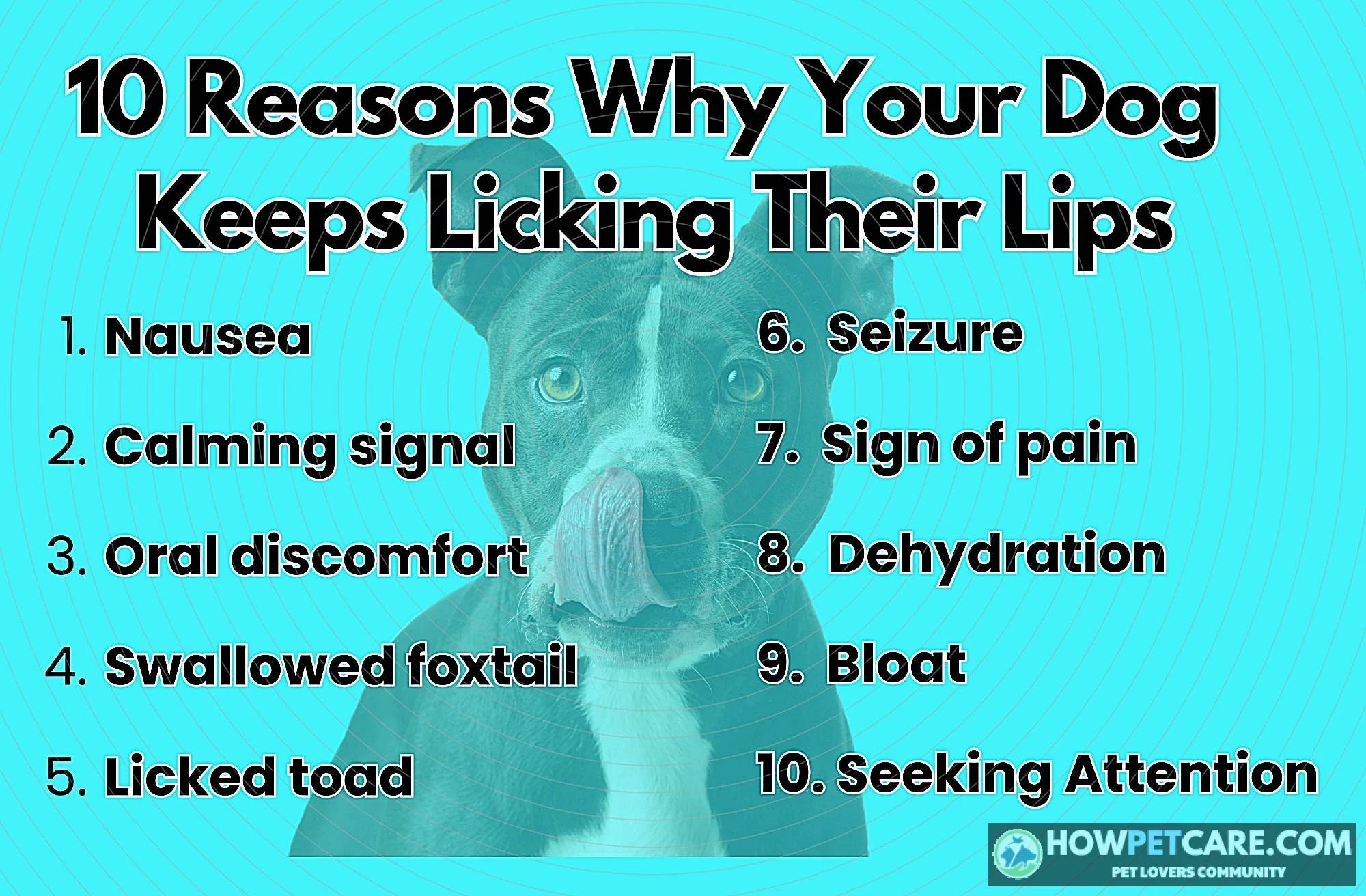
- GI-related grazing: frantic, repeated, often with drooling, lip-licking, repeated vomiting, diarrhea, or appetite loss.
Monitor at Home or Call the Vet? A Triage Checklist for Grass-Eating
This tool separates monitor-at-home situations from vet visits and emergencies. Use it each time you notice grazing.
Green, yellow, and red tiers
| Tier | What you’re seeing | What it may mean | What to do |
|---|---|---|---|
| 🟢 Monitor at home | Occasional, calm grazing; normal appetite, energy, and stool; no vomiting or a single vomit with a quick return to normal | Normal instinctive grazing, taste preference, boredom | Keep an eye on it for a few days; note when and how often it happens; check the lawn for recent chemical treatments |
| 🟡 Call your vet within 24 hours | Sudden new or frantic grazing; grazing several times a day for days on end; repeated vomiting; diarrhea; lethargy; appetite loss; weight loss; visible worms or suspected parasites | Possible GI upset, nausea, dietary issue, parasites, or an underlying condition | Book a vet visit; bring notes on frequency, timing, vomit/stool appearance, recent diet changes, and any lawn products used; ask about a fecal test |
| 🔴 Emergency vet now | Repeated or unproductive retching; swollen, hard, or painful belly; blood in vomit or stool; collapse; tremors or seizures; heavy drooling; pale gums; inability to pass stool; suspected toxin or chemical exposure | Possible bloat/GDV, obstruction, poisoning, or severe illness | Go to an emergency vet immediately; do not wait or induce vomiting unless a vet or poison control tells you to; call ASPCA Animal Poison Control (888-426-4435) or Pet Poison Helpline (855-764-7661) if a toxin is suspected |
Why dogs suddenly start eating grass: a new stressor, diet change, GI disease, pain, nausea, or plain boredom can all trigger it. Sudden onset alone isn’t an emergency — but sudden onset plus any yellow- or red-tier sign changes the picture.
Sudden or frantic grazing: when it changes the picture
Frantic, compulsive grazing — gulping large mouthfuls, ignoring distractions — often signals nausea or abdominal pain. If you’re wondering why your dog keeps eating grass so frantically, note the timing, duration, and any accompanying signs (drooling, restlessness, posture changes), and share them with your vet.
Is Grass Itself Dangerous? Lawn Chemicals, Parasites, Toxic Look-Alikes and How Much Is Too Much
Plain grass is generally low-risk. The main hazards are what’s on it or in it.
Lawn grass and look-alike plants: a quick safety table
| Grass or plant | Generally considered toxic? | Main concern | Notes for owners |
|---|---|---|---|
| Bermuda grass | No | Fertilizer/herbicide residue on blades; treated lawns | Common turf grass; the grass itself is low-risk, but keep dogs off freshly treated areas |
| Zoysia grass | No | Chemical treatments; fungus/mold in wet seasons | Dense turf that holds moisture — watch for moldy patches |
| St. Augustine grass | No | Chemical treatments; chinch-bug pesticides commonly used on it | Popular in warm climates; check what pest-control products have been applied |
| Kentucky bluegrass | No | Chemical treatments; ergot-type fungi on seed heads in rare cases | Let dogs graze only on untreated, well-maintained turf |
| Ornamental grasses (e.g., pampas, fountain grass) | Varies — check the ASPCA list | Sharp awns and seed heads that can lodge in skin, ears, or the digestive tract | "Grass-like" doesn’t mean safe; ornamental awns are a real hazard |
| Sedge and rush look-alikes (e.g., nutsedge) | Generally not toxic, but verify | Often confused with grass; may be treated with targeted herbicides | Identify what’s actually growing before assuming it’s lawn grass |
| Common toxic garden plants near lawns (e.g., sago palm, azalea, lily species, oleander, foxglove) | Yes | Vomiting, organ damage, cardiac effects depending on the plant | These are the real danger — cross-check your yard against the ASPCA Toxic and Non-Toxic Plants list and remove or fence off confirmed toxic plants |
Bottom line: Plain, untreated lawn grass is generally low-risk. The hazards are almost always what’s on the grass (chemicals, fecal contamination) or what looks like grass (toxic ornamentals). When in doubt about a specific plant, look it up on the ASPCA’s plant list or call ASPCA Animal Poison Control (888-426-4435).
How long to wait after lawn treatment
Rules of thumb — but always defer to the product label’s stated re-entry time, which legally overrides general advice. If the label is unclear, call the manufacturer or ask your vet.
- ☐ Granular fertilizer (watered in): Keep your dog off until the product is fully watered in and the lawn has dried — typically 24–48 hours. Granules can stick to paws and be licked off later.
- ☐ Liquid fertilizer / weed-and-feed spray: Wait until completely dry — usually a few hours — but many labels recommend 24–48 hours. Dry ≠ harmless if granules remain.
- ☐ Herbicides (e.g., common broadleaf weed killers): Keep pets off until dry at minimum; many labels specify 24–48 hours. Check the label — re-entry times vary widely by active ingredient.
- ☐ Pesticides / insecticides: These carry the longest restrictions — often 24–72 hours on the label. Treat this as the strictest category.
- ☐ Unknown lawn or unknown date: Assume it was recently treated. Walk your dog on a leash past it and redirect grazing elsewhere.
- ☐ After any exposure: Rinse paws and belly with water before your dog can groom itself, and watch for drooling, vomiting, diarrhea, or tremors — any of these = call the vet or poison control.
Neighbor’s lawn counts too. If you can’t verify a lawn’s treatment status, treat it as treated.
How much grass is too much?
There’s no validated "safe grams of grass" threshold. Blockage risk is more about long, tough blades, fibrous clumps, or swallowing foreign material along with grass. Red flags include repeated vomiting, straining to defecate with no stool, and abdominal pain. If you see these, seek emergency care.
Why Puppies Eat Grass, and Why Your Dog Goes for One Specific Patch
Puppies vs. adult dogs
Puppies explore with their mouths, so grazing is often curiosity and teething — usually normal. But puppies are more vulnerable to parasites and chemicals, so keep them off treated lawns and stay current on deworming. Call your vet if puppy grazing turns into persistent eating of non-food items, vomiting, diarrhea, poor growth, or swallowing sticks and dirt.

Older dogs that start grazing newly may have GI disease, dental pain, or cognitive or behavior changes. A vet check is warranted.
The sniff-and-pick behavior
Dogs may seek out particular blades or patches by smell and texture, favoring young shoots, dewy grass, or spots with urine and scent marks. Time-of-day patterns — morning dew, an empty stomach, routine — also play a role. Evidence on selectivity is limited and mostly observational, but it suggests grass-eating isn’t purely random.
How to Stop or Redirect Grass-Eating: A Practical Toolkit
Should you stop it? Not necessarily. Manage it on safe lawns; prevent it on treated or unknown ones.
Safe grass and vegetable alternatives
| Option | Why it helps | How to offer it | Cautions |
|---|---|---|---|
| Home-grown wheatgrass or oat grass tray | Satisfies the grazing urge on grass you know is untreated and clean | Grow indoors or on a balcony in a shallow tray; let the dog graze or snip a small handful into the yard | Replace the tray when trampled or moldy; supervise so the dog doesn’t eat the soil |
| Plain cooked green beans | Crunchy, fibrous, low-calorie chew | A few cut pieces as a treat or mixed into a meal | No salt, butter, garlic, or seasoning; canned should be low-sodium and rinsed |
| Raw or lightly steamed carrot pieces | Firm texture that occupies a chewer | Baby carrots or cut coins; a few at a time | A choking risk for gulpers — size the pieces to your dog; supervise small dogs |
| Cucumber slices | Hydrating, mild crunch | A few slices as a snack | Mild flavor — some dogs ignore it; that’s fine |
| Commercial "dog grass" kits (wheat/oat/barley) | Same as home-grown, but convenient | Follow kit instructions; place where the dog can reach it | Verify it’s a pet-marketed kit, not treated ornamental seed |
Portion guardrail: Treats and toppers — including vegetables — should stay around 10% or less of your dog’s daily calories. Rough guide per serving: a few green-bean pieces or carrot coins for a small dog, a small handful for a large dog. If you’re adjusting diet or adding fiber because of a gut issue, do it with your vet — not on a hunch. Avoid supplements marketed for grass-eating unless your vet recommends them.
Training and management steps
- Rule out medical issues with your vet, particularly if sudden, frequent, or with symptoms.
- Review diet — ensure a fiber-appropriate, complete diet and consistent meal timing; ask your vet before adding fiber.
- Provide safe alternatives (see table above).
- Enrich and exercise: puzzle feeders, sniff walks, training sessions.
- Train "leave it" and "come" with rewards; use a leash or long line on walks; avoid punishment.
- Supervised access to a pesticide-free area; maintain parasite prevention.
Your Next Steps: A Quick Action Plan for Today and This Week
Today:
- Check your dog’s appetite, energy, stool, and vomiting.
- Look at the lawn for recent treatments; if unsure, keep your dog off it.
This week:
- Log how often and when grazing occurs (time of day, duration, behavior).
- Schedule a vet visit or fecal test if any yellow-tier signs appeared.
- Start redirection: offer a safe grass tray or vegetable snack, add a puzzle feeder.
Ongoing:
- Keep up parasite prevention.
- Provide daily mental enrichment.
- Use safe lawn practices (follow label re-entry times, rinse paws after walks).
Remember: occasional grazing in an otherwise healthy dog is normal. Escalate based on the triage tiers above. This article is general information and does not replace veterinary advice.
1A dog owner notices their dog eating grass and immediately assumes the dog must be feeling sick and trying to make itself vomit. Based on scientific research regarding plant-eating in dogs, why is this assumption likely flawed?
Data from the Sueda et al. study shows that the vast majority of grass-eating dogs do not appear sick beforehand, and most do not vomit after eating plants.
2A dog owner is observing their dog's behavior in the yard. Which of the following observations would suggest that the dog is experiencing gastrointestinal (GI) upset rather than simply engaging in routine habit grazing?
Frantic, compulsive eating of grass often reflects an attempt to soothe abdominal discomfort or nausea.
3A dog that is fed a complete, AAFCO-balanced diet continues to nibble on grass occasionally. What does this reveal about nutritional deficiency theories regarding grass-eating?
Because balanced commercial feeds fulfill standard nutrient and fiber requirements, nutritional deficits rarely explain routine grazing in healthy dogs.
4A homeowner applies a granular fertilizer product to their lawn and waters it in. According to standard safety guidelines, when is it safe to allow a dog back onto the lawn?
Granules can stick to paws and be ingested during grooming if pets enter before the product is thoroughly watered in and dried.
5When evaluating potential hazards in a yard where a dog grazes, which of the following items represent real safety risks?
Chemical residues on treated grass can cause toxic reactions if ingested or licked off paws.
6An adult dog with no prior history of plant-eating suddenly begins compulsively grazing multiple times a day. How does this compare to typical grass-eating observed in puppies?
While young puppies routinely mouth objects out of curiosity, sudden behavioral shifts in older animals frequently signal underlying medical issues.
7According to gastrointestinal triage guidelines for dog owners, which scenario falls into the emergency tier requiring immediate veterinary attention?
Unproductive retching combined with abdominal distension and pale gums are classic signs of life-threatening conditions like bloat (GDV).
FAQ
Is it okay to let my dog eat grass?
Occasional grazing on grass that hasn’t been treated with chemicals is generally fine for a healthy dog. Keep your dog off lawns with recent fertilizer, herbicide or pesticide, and watch for vomiting, diarrhea or lethargy.
Why do dogs eat grass sometimes but not always?
Grazing often depends on mood, boredom, hunger, grass freshness and smell, or mild stomach upset on a particular day. Because there’s likely no single cause, it can come and go.
Can I give my dog supplements to stop grass-eating?
There’s no proven supplement that stops grass-eating. Talk to your veterinarian before adding fiber or other supplements, since they can upset the stomach if the dose or timing is wrong.
Do certain breeds eat more grass?
There’s no strong evidence that grass-eating is tied to specific breeds. It’s seen in dogs of all breeds, ages and sizes.
What should I do if my dog eats grass and has diarrhea?
A single mild episode in an otherwise bright dog can be monitored with fresh water and a bland meal as your vet advises. Call your vet if it lasts more than a day, includes blood, or comes with vomiting or lethargy.