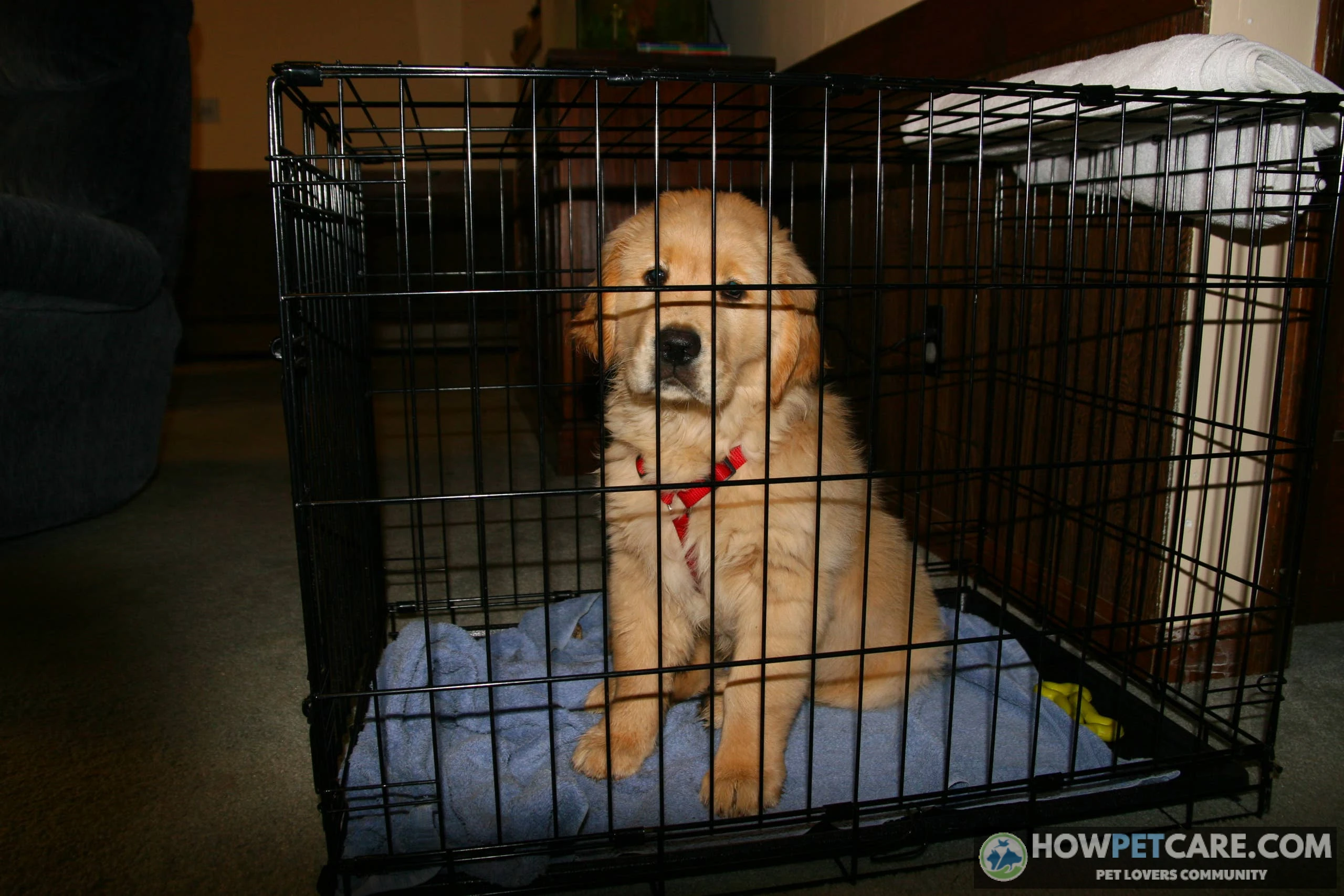

How to crate train a puppy in five steps:
- Buy a crate sized for your puppy’s expected adult weight and use a divider to shrink the space for now.
- Feed every meal inside and toss treats in at random so your puppy chooses to enter.
- Add a cue word, close the door for a few seconds, and reward calm.
- Build duration first, then distance, then short out-of-sight departures.
- Open the door only when your puppy is quiet — never mid-whine — and never use the crate as punishment.
You can start crate training tonight with one crate, one bag of treats, and one rule: open the door when your puppy is quiet, not when your puppy is loud.
This guide explains how to crate train a puppy in the order you’ll use each part: choosing and sizing a crate, introducing it through five positive-reinforcement steps, and following a day-by-day schedule for puppies aged 8 to 16 weeks. You’ll also find a nighttime crying decision tree, a plan for owners away eight hours a day, an accident protocol, and a safety checklist. The schedules are designed to be printed and followed.
Two rules apply throughout: never push, shove, or force a puppy into a crate, and never use the crate as punishment. Dogs naturally avoid soiling where they sleep. That instinct makes a correctly sized crate one of the most efficient potty training tools available to owners.
Open the door when your puppy is quiet, never when the puppy is loud. Open it mid-whine even once, and you’ve taught your puppy that whining is the release cue.
What Crate Training Is and What It Is Not
Crate training teaches a puppy that a small enclosed space is a comfortable, safe place to rest. It isn’t confinement for your convenience or a punishment tool, and it isn’t a treatment for separation anxiety. A puppy with severe separation anxiety can panic, chew, and injure itself inside a crate. That’s a welfare problem for a veterinary or behavior professional, not a stricter crate routine.
Crate training isn’t the same as potty training, though the two overlap. Potty training depends on timing and supervision; the crate is a tool that helps make that timing consistent.
How Long Crate Training Takes Until a Puppy Is Reliable
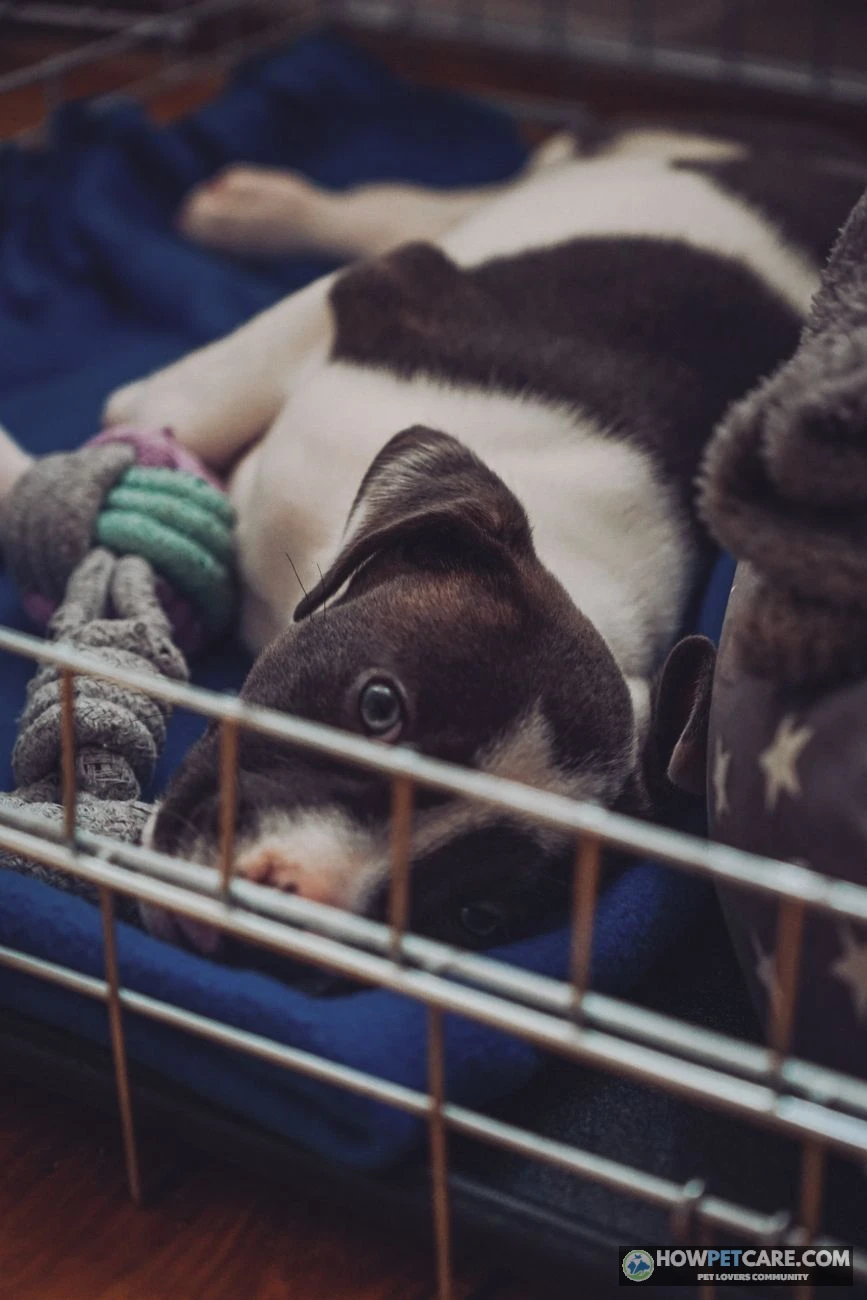
The honest answer is that it depends. A page promising a fixed number of days is guessing. With a gradual introduction, most puppies will enter a crate voluntarily and settle within the first week or two. Real reliability means your puppy chooses the crate for rest, sleeps through the night, and stays clean inside. That typically develops over several weeks, and a complete crate training program can take up to about six months of consistency.
Age, temperament, breed, and history matter more than a calendar. A rescue puppy with an unknown or negative crate history will move more slowly than a puppy straight from a breeder. Plan in weeks and celebrate the days.
Choosing the Right Crate: Size Chart, Divider, and Wire vs. Plastic
Start with size. Buy a crate for your puppy’s expected adult size, then use a divider to reduce the usable space for now. If the crate is too roomy, your puppy can urinate in one corner and sleep comfortably in the other, losing the housebreaking advantage.
Measure length from nose to the base of the tail and add 2 to 4 inches. Measure height from the floor to the top of the head or ear tips and add 2 to 4 inches. Your puppy must be able to stand without crouching, turn around fully, and lie flat with legs extended inside.
Crate size by breed and expected adult weight
| Adult weight | Example breeds | Typical crate length | Divider needed for puppy? | Notes for small bladders or growth |
|---|---|---|---|---|
| Under 12 lb | Chihuahua, Yorkie, Maltese, Pomeranian | 18–22 in | Optional — many owners buy the final size because it’s already small | Toy breeds have smaller-than-average bladder capacity: subtract roughly 30–60 minutes from standard crate-time limits, and keep the space snug to avoid corner accidents |
| 13–25 lb | French Bulldog, Beagle, Cavalier, Mini Poodle | 24 in | Yes | Check the divider position every 2–3 weeks |
| 26–40 lb | Border Collie, Cocker Spaniel, Bulldog | 30 in | Yes | Stocky breeds such as Bulldogs may need the taller end of this range |
| 41–70 lb | Labrador, Golden Retriever, Boxer, Standard Poodle | 36–42 in | Yes — expect to move it 3–4 times before 6 months | Labs and Goldens grow fast; re-measure monthly |
| 71–90 lb | German Shepherd, Rottweiler, large Husky | 42–48 in | Yes | Deep-chested breeds often need 42 in minimum |
| 90+ lb | Great Dane, Mastiff, Bernese Mountain Dog | 48–54 in | Yes | Giant puppies outgrow divider settings quickly — measure every 3–4 weeks |

For a mixed-breed puppy, size to the bigger parent or ask your vet for an adult-weight estimate. If you’re torn between two sizes, choose the larger crate and use the divider. You’ll need it for months anyway.
Wire crate vs. plastic crate
A wire crate provides airflow and visibility in both directions, and it usually comes with a divider panel. You can see whether your puppy is settled or escalating, which helps during training. Wire crates also suit apartments where the crate sits in a living space. Some puppies feel exposed behind bars, though a light cover over three sides helps most of them.
A plastic or airline-style kennel is more enclosed, slightly warmer and quieter, and easier to move into a car or a relative’s house. It has less ventilation, your puppy is harder to monitor, and dividers are uncommon. For a growing puppy, it’s often a better travel crate than a first training crate.
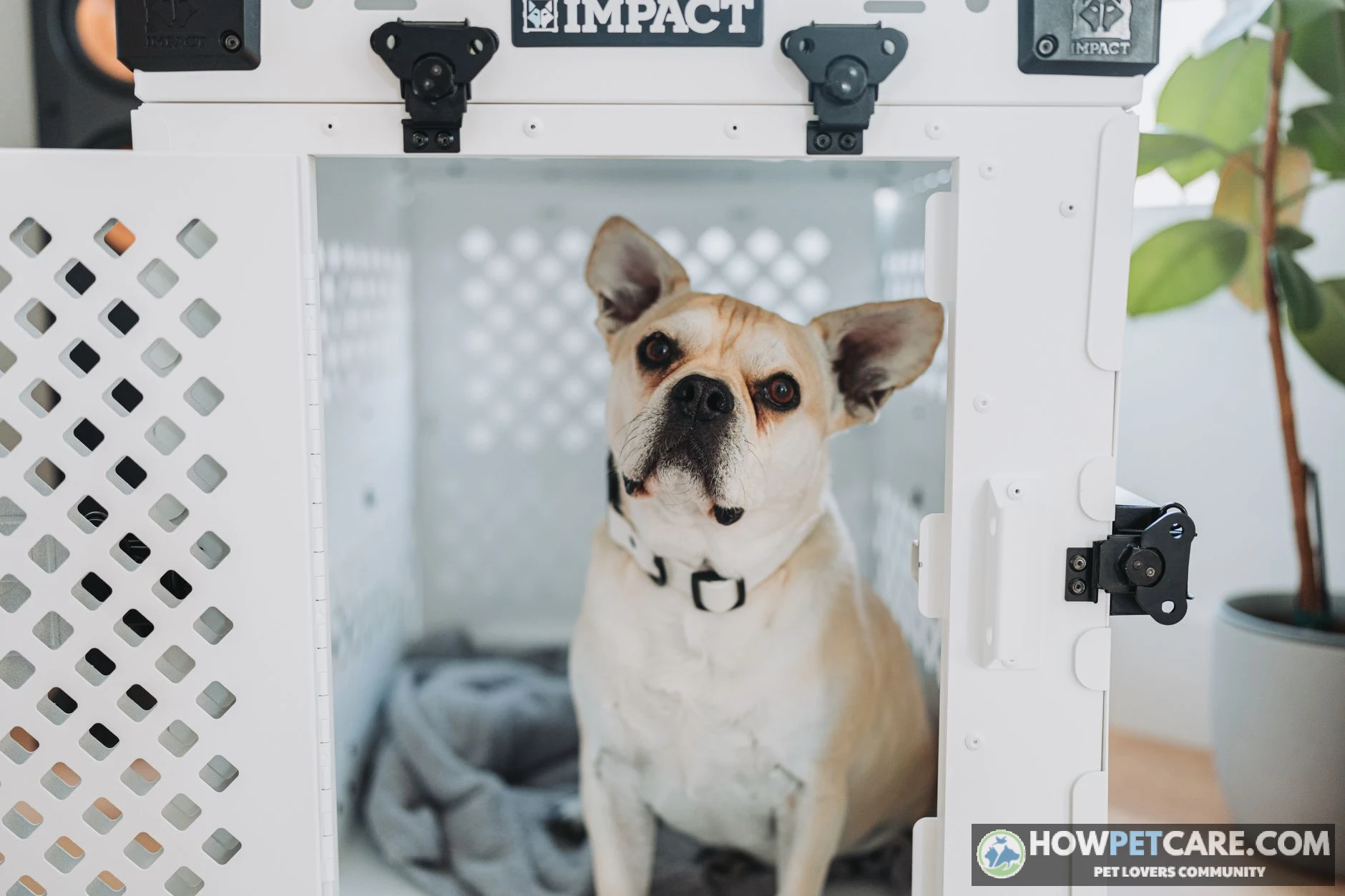
A sheet or purpose-made cover over three sides cuts light and household noise and helps many puppies settle. Leave at least one side fully open for airflow, keep the cover off in warm rooms, and remove it entirely if your puppy chews fabric.
Where to put the crate
During the day, put the crate where the family spends time, such as a kitchen or living room corner, rather than a back bedroom. Keep it out of direct sun, away from heating vents and drafts, and clear of rattling appliances.
At night, place it beside your bed for the first weeks. Puppies settle better when they can sense you nearby, and you’ll hear a genuine potty need instead of discovering it in the morning. Once nighttime trips are down to zero, you can move the crate to its permanent spot.
For setup, add a washable crate mat and one or two safe chew toys. Skip loose blankets in the crate and foam bedding if your puppy shreds or swallows fabric; an unsupervised chewer can ingest scraps of soft bedding.
Step-by-Step Crate Introduction With Positive Reinforcement
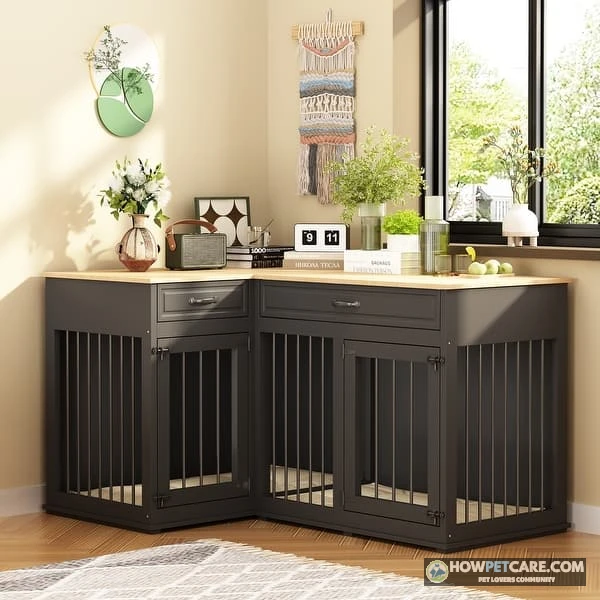
Each of these five steps has a criterion to meet before you move on. Keep formal training sessions short. Roughly five minutes at a time is a sensible ceiling for crate work, especially with a young puppy.
-
Build the association before the door
Toss treats near the crate, then just inside it, then all the way in. Praise any voluntary entry and never block the exit.
-
Move meals inside
Serve every meal in the crate, door open at first, then latched and opened the moment the bowl is empty.
-
Add a cue and close the door briefly
Pair a word such as ‘crate’ or ‘bed’ with entry, then close the door for a few seconds and reward calm.
-
Stretch duration, then distance
Add seconds and minutes first, then step across the room, then out of sight for short intervals.
-
Leave the house
Start with 5–10 minute departures and build from there, always returning during quiet.
Step 1 is easy to rush. Toss in a treat and let your puppy dash out with it. Repeat ten times over a few minutes. You want a puppy that chooses the crate because it pays off, not one that’s lured inside and then trapped.
Step 2 does a lot of the work: feeding all main meals in the crate is the fastest way to build a positive association with it. If your puppy is too anxious to eat inside at first, put the bowl just outside the doorway and move it six inches closer each meal.
Step 3 introduces the release cue. Say the cue, close the door, count to three, and open it while your puppy is calm. If your puppy whines, wait for a two-second pause before opening. Don’t open the door while the noise continues.
Step 4 builds duration before distance. Puppies tolerate longer stretches better when you’re visibly in the room than when you vanish. Work up to a calm five minutes beside the crate, then start leaving the room for 30 seconds.
Step 5 introduces real departures. Jingle your keys, open the front door, step out, and come back. Vary the length so your puppy can’t predict when you’ll return.
Crate games that make the crate fun
- Treat toss: scatter three or four small treats inside and let your puppy hunt them out.
- Stuffed chew: give your puppy a food-stuffed rubber toy or a long-lasting chew only in the crate, making it a place worth waiting in.
- Peekaboo door: close the door for one second, treat through the bars, and open it. Twenty repetitions take under two minutes.
- Mat settle: reward your puppy for lying on the crate mat with the door open, before you add the closed door.
- Find-it under a towel: hide a treat under a folded towel inside the crate so your puppy learns to work and settle there.
Criteria for moving to the next step
Look for three calm repetitions in a row, relaxed body language (loose posture, no pacing, no panting when the room is cool), settling within about five minutes of the door closing, and no whining through the current session length. If your puppy can’t meet any of those criteria, repeat the previous step for another day or two rather than pushing forward.
Crate Training Schedule for an 8–16 Week Old Puppy
This plan assumes an 8 to 10 week old puppy arriving home on day 1. Most puppies start crate training around 8 weeks of age. Older puppies can often begin at the day 3 or 4 pace. For rescue puppies with an unknown history, run each phase at roughly half speed.
Week 1 day-by-day
| Day or week | Daily goal | Crate session length | Key activities | Move-on criteria |
|---|---|---|---|---|
| Day 1 | Puppy enters the crate voluntarily | Door open only; 3–5 treat-toss sessions | Scatter treats inside, feed dinner just inside the doorway, let naps happen in the open crate | Puppy walks in without coaxing 2–3 times |
| Day 2 | Eat a full meal inside | Door closed only during meals, opened the moment the puppy finishes | All meals in the crate; 2–3 rounds of ‘settle on the mat’ with a stuffed chew | Eats calmly with the door latched |
| Day 3–4 | First closed-door calm | 1–5 minutes with you seated beside the crate | Drop treats through the bars, release only during quiet, crate every nap | No crying through a 5-minute session |
| Day 5–7 | Short absences | 10–30 minutes while you are in another room | Leave the room, return during calm; keep the crate beside your bed overnight | Settles within about 5 minutes of the door closing |
| Week 2 | Real departures | 30–60 minutes; first out-of-sight exits | Brief front-door departures, a midday crated nap, potty break every 2–3 hours | 3 calm 30-minute sessions in a row |
| Week 3 | Build to bladder-safe maximums | 1–2 hours, capped by the age table below | Alternate crate and exercise-pen time; stretch overnight intervals | An accident-free week and settling in under 5 minutes |
| Week 4+ | Reliability, not perfection | Up to the age-based maximum — about 2 hours at 13–16 weeks | Vary crate times of day; begin ‘open crate in a puppy-proofed room’ trials | 2 consecutive weeks accident-free, then start phasing in freedom |
If your puppy cries through sessions or has a crate accident, repeat that row for one or two more days before advancing. Potty breaks run at the age-table frequency throughout — after every wake-up, meal, play session, and drink. The same ceilings apply at night: if crying starts before the overnight stretch in the age table has elapsed, wait for a quiet pause before opening the door; if the stretch has passed, treat it as a real potty need and take your puppy straight out without fuss. Treat the schedule as a template, not a deadline. Most puppies land somewhere inside this range, and a slower pace is fine.
Sample daily routine at 8 weeks
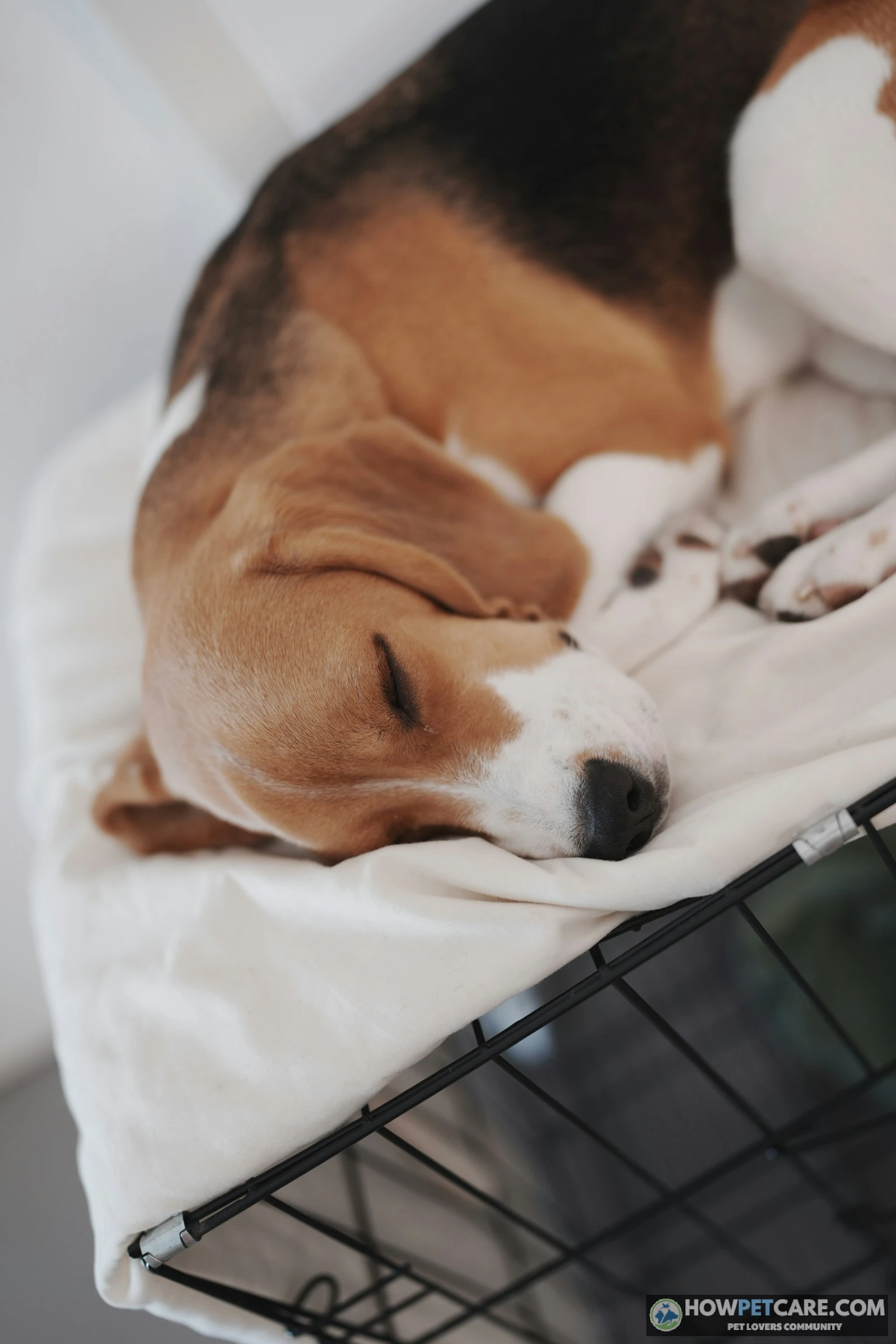
An 8-week-old puppy is awake for roughly 45 to 60 minutes, then sleeps for one to two hours. Build the day around that rhythm rather than the clock.
- 6:30 am — Wake and go straight outside to potty, before food or anything else.
- 6:45 am — Serve breakfast in the crate; latch the door and open it when the bowl is empty.
- 7:00 am — Have 15 minutes of play or a short training session.
- 7:20 am — Go outside for a potty trip, since play reliably triggers urination.
- 7:30 am — Crate nap for one hour, the daytime crate limit for a puppy under 3 months.
- 8:30 am — Potty as soon as the door opens.
- 9:00 am — Play, chew time, or easy training; potty before the next nap.
- 9:45 am — Crate nap.
- 12:00 pm — Lunch in the crate, then potty, then a nap split into two blocks with a potty break between them.
- 5:00 pm — Dinner in the crate, potty, and family time.
- 8:30 pm — Wind down with dimmer lights and calm chews; no wild play.
- 10:00 pm — Pick up water unless your vet has advised otherwise.
- 10:30 pm — Final potty trip, then into the crate beside your bed.
Every wake-up, meal, play session, and drink of water is a potty trigger. Make the potty trip come before the fun.
The familiar age-in-months-plus-one-hour guide describes the maximum a puppy can physically hold. It’s an outer limit, not a schedule to fill. Plan every stretch shorter than the ceiling, and shorter still for toy breeds.
How long a puppy can stay in a crate by age
| Puppy age | Max daytime crate duration | Max overnight stretch (ceiling) | Potty break frequency | Toy-breed adjustment |
|---|---|---|---|---|
| 8–10 weeks | 1 hour | About 3 hours | Every 1–1.5 hours while awake; after every wake-up, meal, play, and drink | Subtract 30–60 minutes |
| 11–12 weeks | 1–1.5 hours | About 4 hours | Every 2 hours | Subtract 30–60 minutes |
| 13–16 weeks (3–4 months) | 2 hours | 4–5 hours | Every 2–3 hours | Subtract 30–60 minutes |
| 4–6 months | 2 hours | About 5 hours | Every 3 hours | Subtract 30 minutes |
| Over 6 months | Up to 4 hours | Through the night in most cases | Every 4 hours | Monitor closely |
| Adult | 6 hours maximum | Through the night | As needed | Not applicable |
The daytime column is stricter than the overnight column because a sleeping puppy can hold it longer than a bored, awake one. Daytime crate limits for puppies under three months are commonly set around one hour, and two hours for the three-to-six-month range. General bladder control figures for a two-month-old top out around three hours, four hours at three months, and five hours at four months. Treat each figure as a maximum, not a daily habit.
Puppy Crate Training at Night: Setup, Water, and the Crying Decision Tree
The first night can make new owners consider giving up. A good setup makes it more manageable.
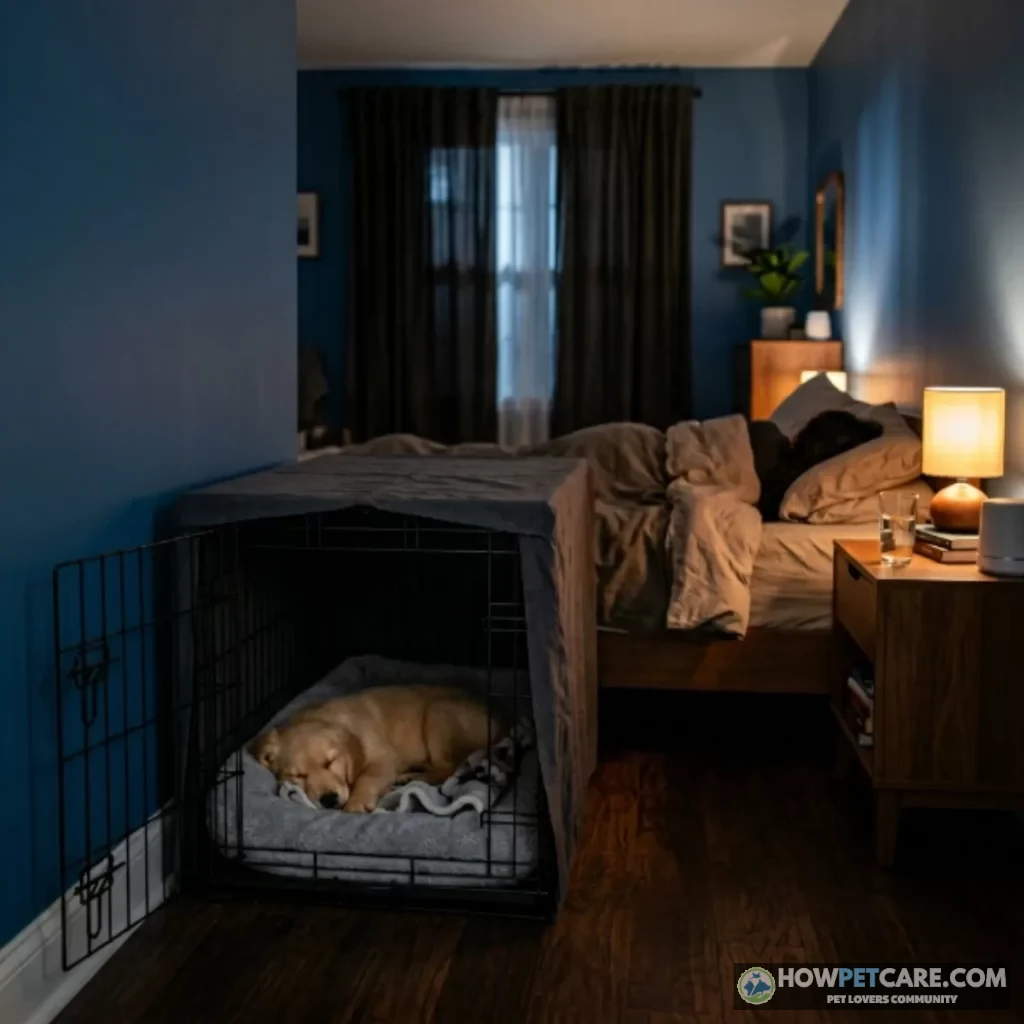
Place the crate beside your bed. Take your puppy out for a final potty trip immediately before crating. Keep the routine boring and consistent each night: potty, a quiet word, into the crate, lights low, and no long goodbye. Expect one or two wake-ups at 8 weeks, and treat each as a scheduled potty trip rather than an emergency.
Crying decision tree: potty need or attention?
Work through this sequence when your puppy cries at night. It takes under a minute to think through and gives you a calm response.
- Check the clock. How long has it been since the last potty trip? The overnight ceiling is roughly your puppy’s age in months plus one hour — about three hours at 8–10 weeks, four hours at 11–12 weeks, about four to five hours at 13–16 weeks. For toy breeds, subtract 30–60 minutes. If you’re under the limit, the cry probably isn’t a full bladder, and you can wait for a pause. At or past the limit, assume a real need and head outside.
- Listen to the pattern. A genuine need usually sounds like escalating, rhythmic whining with restlessness or circling. Attention-seeking tends to be intermittent barking with pauses, and it either stops or spikes when your puppy hears you move.
- Wait for a pause. Give it a few minutes. When your puppy goes quiet for three to five seconds, offer soft reassurance or a finger through the bars. Don’t open the door mid-cry, or crying becomes the key that opens it.
- Make the potty trip boring. Put the leash on and go straight outside, with no talking, eye contact, or play. Allow three to five minutes maximum, say a quiet ‘good’ when your puppy goes, then return straight to the crate with lights low. Meet the need without making 2 a.m. fun.
- Separate distress from protest. Frantic screaming, nonstop scratching, drooling, or biting at the bars is panic, not fussing. Intervene calmly and drop back one full stage of the schedule the next day.
- Log and stretch. Write down each wake-up time. Once your puppy sleeps through a given wake window for three nights, push the next one 30 minutes later.
This resolves the apparent contradiction between ‘ignore it’ and ‘never let a puppy cry it out.’ Respond to needs rather than demands: take your puppy out immediately and quietly for a real potty need, wait calmly for quiet when the behavior is attention-seeking, and intervene and slow down for genuine panic. Blanket crying-it-out is never the default for a young puppy.
Minutes of escalating screaming, drooling, or attempts to bite through the bars mean your puppy is in distress. Don’t extend the session. Return to a shorter, easier step the next day and consider professional help if it repeats.
Water before bed and in the crate
Offer water freely through the evening and pick the bowl up roughly one to two hours before bedtime. For a young puppy, skip the water bowl inside the crate overnight unless your veterinarian has advised otherwise. Overnight drinking is one of the most common causes of a 3 a.m. accident.
In hot weather, or if your puppy has a health condition that requires free access to water, follow your vet’s guidance instead. Never restrict water during the day. Dehydration is a real risk, and daytime water restriction doesn’t help housebreaking.
Quiet setups for apartments
Keep the crate in your bedroom rather than a distant room. You’re more likely to notice distress early, before it escalates into noise your neighbors can hear. A light cover on three sides and a white-noise machine mask household sound and help many puppies settle. Choose a compact wire crate rather than a large one, and get ahead of crying with a final potty trip and a stuffed chew at bedtime instead of relying on endurance.
Crate Training a Puppy While You Work Full-Time
A puppy under about 16 weeks cannot safely hold it in a closed crate for a full eight-hour workday. Leaving a young puppy crated from 8 a.m. to 5 p.m. is both a housebreaking setback and a welfare problem. Instead, split the day across more than one containment option.
Crate plus playpen setup
Use the crate for sleep and short, closely timed stretches. For longer unsupervised blocks, use an exercise pen. Put the open crate inside as a bed, along with a water bowl, two or three safe chews, and a potty pad zone at the far end for puppies under about 12 weeks who can’t yet stretch to a midday break. The pen gives your puppy room to move, play, and eliminate away from the sleeping area, protecting the housebreaking instinct rather than undermining it.
As your puppy’s bladder capacity grows, shrink the pen and lengthen the crated naps. By five or six months, the crate can carry most of the day with a single midday break.
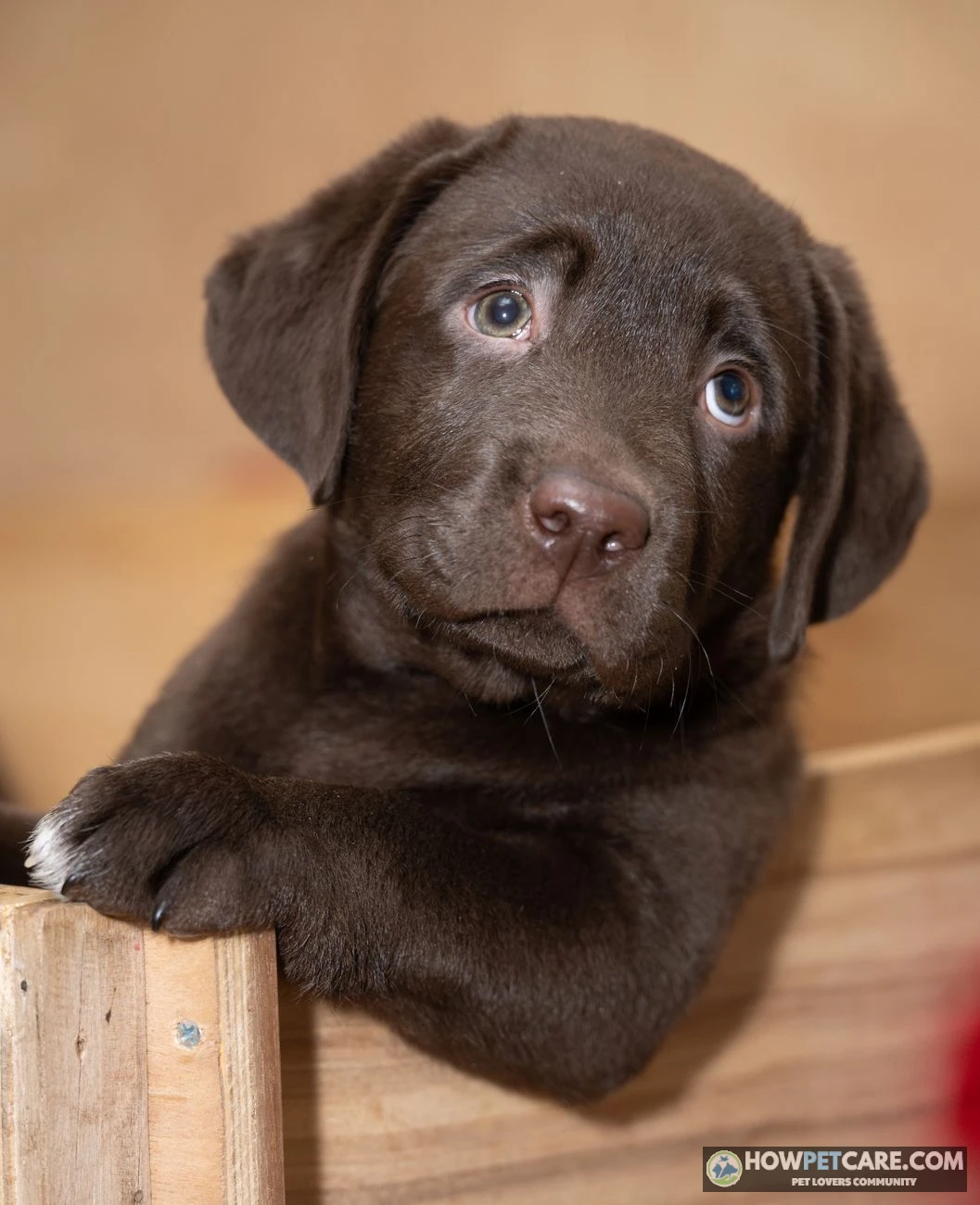
Sample 8-hour workday plan
6:30 am  Wake → straight outside to potty (before anything else)
6:45 am  Breakfast served inside the crate, door open
7:15 am  20–30 min walk or vigorous play — a tired puppy naps on cue
7:45 am  Second potty trip (post-play trigger)
8:00 am  Settle puppy in the pen: open crate inside, water, safe chews,
         potty pad zone at the far end (for pups under ~12 weeks)
         — or the crate alone if the stretch fits the age limit
12:00 pm MIDDAY BREAK (non-optional): you, a walker, a neighbor, or a
         sitter. Potty outside, 15–20 min play, fresh water, back in
         the pen or crate by ~12:45
5:00 pm  Home → immediate potty → dinner in the crate
6:00 pm  10–15 min training session plus free family time
8:30 pm  Last big play session
10:00 pm Water pickup (unless your vet says otherwise)
10:30 pm Final potty trip → crate beside your bed
If you can’t come home at noon, coverage options in roughly increasing order of cost include a neighbor or retired friend, a dog walker making a 30-minute visit, a pet sitter, and half-day doggy daycare once vaccinations allow. For a puppy aged 12 to 16 weeks, a single well-timed midday break can be enough if the afternoon stretch stays inside the age limit. Under 12 weeks, aim for two breaks or keep the pen-with-pad setup.
Before your first full workday, rehearse the routine on Saturday and Sunday: the same 8 a.m. settle, midday break, and evening sequence. That way, Monday isn’t the first time you’ve tried the plan.

Twenty to thirty minutes of real exercise and a short mental workout before crating can help your puppy sleep rather than protest. A tired puppy settles; a bored puppy barks.
Troubleshooting: Crying, Refusal, Regression, and Accidents in the Crate
What to do after an accident in the crate
One accident is a data point, not a failure. Two or more in a week means something in the setup is wrong. Work through this list in order.
- ☐ Stay calm and take your puppy outside to finish if you caught the accident in progress. Don’t scold or rub the puppy’s nose in it; that only teaches the puppy to hide the behavior.
- ☐ Clean the tray and any bedding with an enzymatic cleaner, and wash bedding hot. Skip ammonia-based cleaners, which smell like urine to a dog and invite a repeat.
- ☐ Re-check crate size. If your puppy soiled one corner and slept in the other, the crate is too large. Move the divider in or switch to a smaller crate.
- ☐ Audit the bedding. Thick absorbent towels can hide a puddle so your puppy never feels wet; switch temporarily to a thin flat mat or nothing.
- ☐ Check water timing. Avoid large drinks within one to two hours of crating unless your vet has advised free water.
- ☐ Check the schedule against the bladder limit. If the stretch was longer than the age table allows, the schedule caused the accident, not your puppy.
- ☐ Roll training back one full stage, hold for two or three days, then build again in small steps.
- ☐ Rule out a medical cause. Two-plus accidents in a week despite a correct setup, diarrhea, straining, or unusually frequent small piddles warrant a call to your vet to check for a urinary tract infection or parasites.
- ☐ Log the time and what happened beforehand. Three entries usually reveal a pattern faster than guesswork.
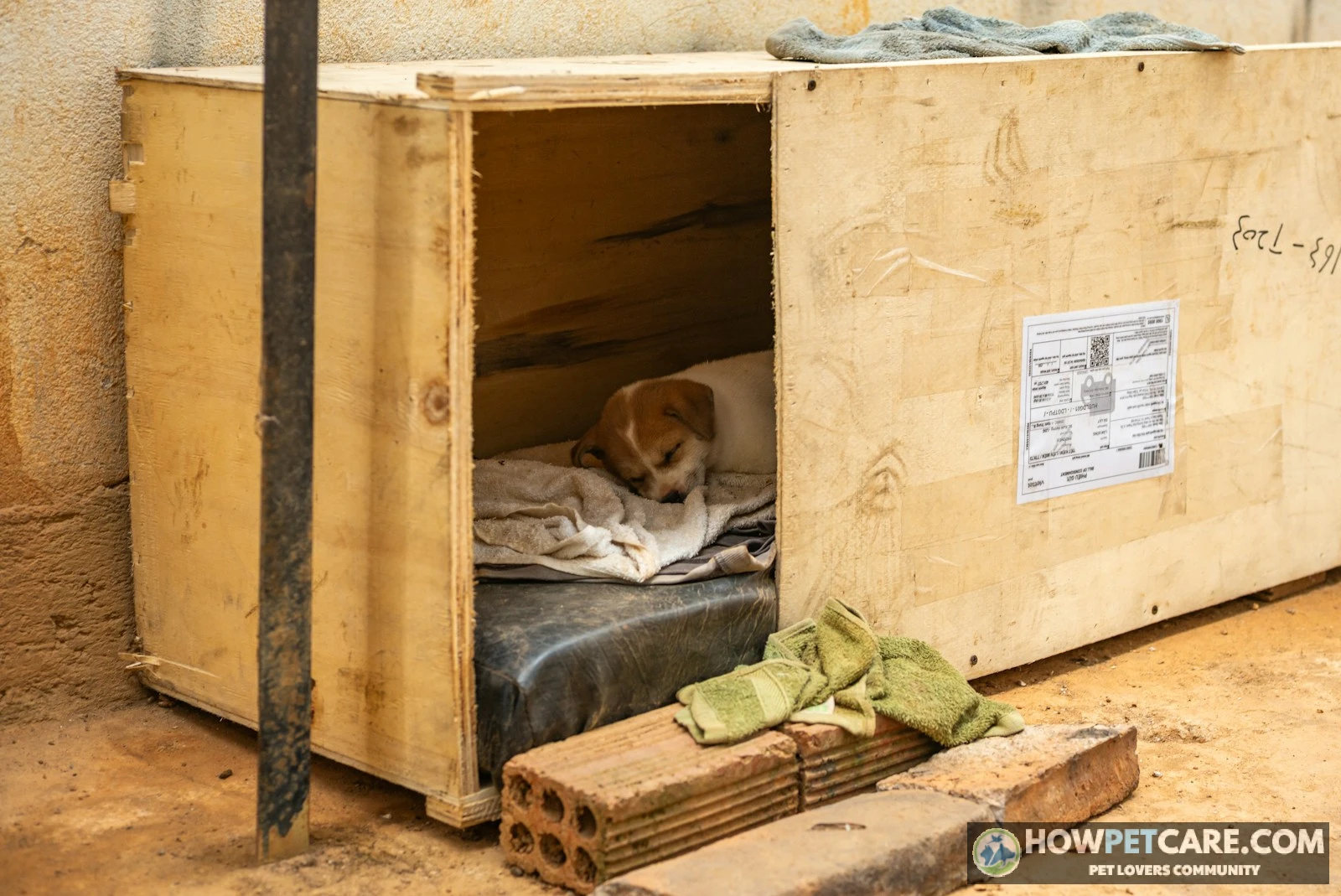
Puppy won’t go in or panics
A puppy that refuses to enter is usually telling you the pressure got too high. Ease off: stop luring, toss treats past the doorway, and feed meals a foot outside the crate, inching closer over several days. Let your puppy choose to enter without a hand hovering behind. If entry is fine but the closed door triggers panic, shorten sessions to seconds and stay visible.
A puppy with a prior negative crate experience — a long confinement, a scary ride, or a shelter stay — needs the same protocol at half speed, with more choice and less duration. Regression after several good days is common during teething, growth spurts, and schedule changes. Return to the last easy step and rebuild rather than concluding that training has failed.
When to call a vet or behaviorist
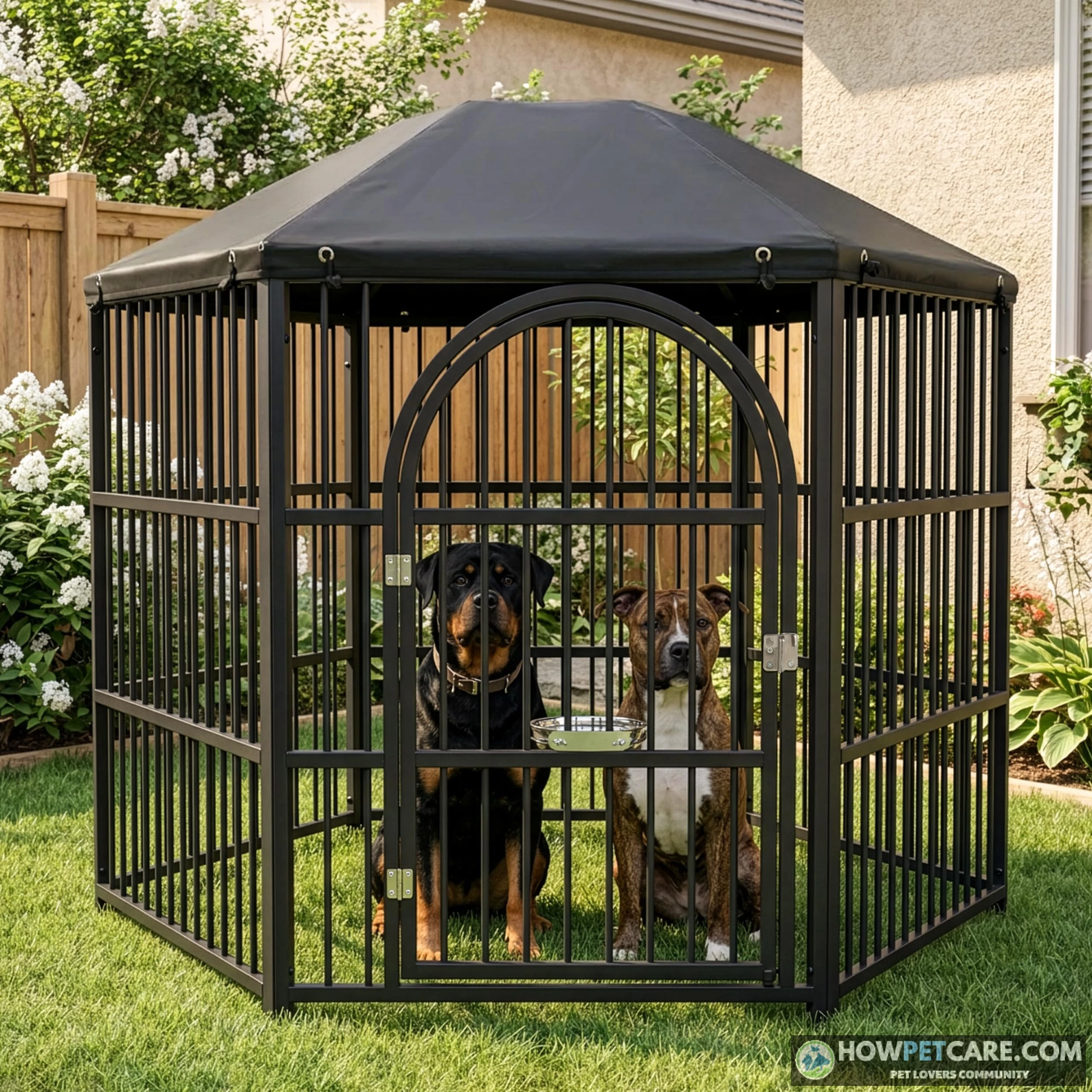
Call your veterinarian first if crate issues come with diarrhea, straining, excessive drinking, or sudden changes in urination. Seek a veterinary behaviorist or certified behavior consultant if you see true panic in the crate: nonstop screaming, self-injury, drooling, destructive escape attempts, or injuries to the mouth and paws from biting bars. Separation anxiety at that level is a medical-behavioral condition; more crate time won’t fix it.
Crate Safety Checklist and How to Phase Out the Crate
Puppy crate safety checklist
- Remove the collar and tags before every crated session. A collar can catch on the bars or a divider and create a strangulation risk.
- Skip soft blankets, pillows, and foam bedding for any puppy that shreds or swallows fabric.
- Provide one or two chew toys sized for your puppy, with no small parts that can be swallowed.
- Check airflow: keep bars clear on all sides, with nothing pressed against the door.
- Keep the crate out of direct sun and away from heaters, and check that your puppy isn’t panting or restless from heat.
- If the crate is covered, keep one side open and re-check the temperature inside.
- Never leave a puppy crated with a leash, harness attachment, or dangling tag.
- Match every session to the age-based limit in the table above. Never use the crate to manage behavior problems or as a substitute for exercise or attention.
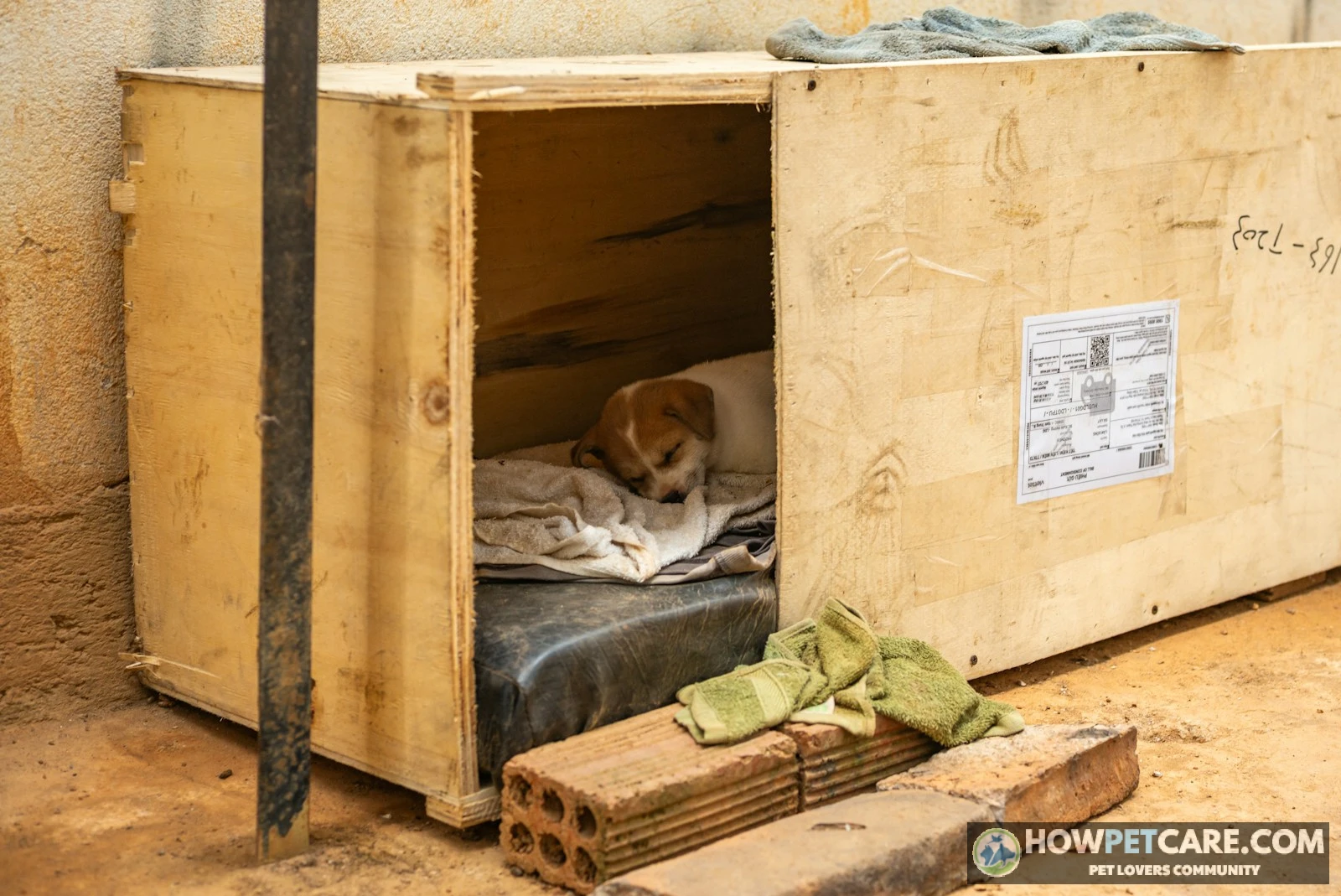
Crating is meant for naps, nights, and short supervised absences. A puppy that spends most of its waking hours behind a door isn’t crate trained; it’s confined. Exercise, play, training, and social time are part of the same plan.
Moving to free roaming in the house
Look for these signs of readiness: no crate accidents for two consecutive weeks, no destructive chewing for several weeks, your puppy choosing the crate for rest, and settling within a few minutes of the door closing.
Expand freedom in small steps. First, leave the crate door open inside a puppy-proofed room and shut the room door instead. Next, try 15 to 30 minute unsupervised periods while you’re home and can hear what happens. Then try short real errands, longer ones, and eventually a night outside the crate. Keep the crate set up and available permanently; most dogs return to it for naps and during thunderstorms or travel for years.
One outdated idea worth dropping is that dogs are strict den animals that instinctively crave enclosure. Modern behavioral framing describes the crate as a cozy retreat a dog learns to like through positive association. That’s why the introduction matters more than the cage itself.
1A puppy owner notices their 9-week-old puppy whining and scratching at the crate door 10 minutes after being crated for a daytime nap. What is the appropriate response according to crate training guidelines?
Releasing a puppy only during a quiet pause prevents the puppy from learning that whining acts as the release cue.
2An owner is setting up a wire crate for their 10-week-old puppy before leaving for a short daytime errand. Which of the following actions align with safe crating practices? (Select all that apply.)
Collars and dangling tags present a severe strangulation risk if they catch on crate bars or divider wire.
3During a nighttime crate session, a puppy begins making frantic screaming sounds, drooling heavily, and biting frantically at the metal bars. How should this situation be evaluated and managed?
Severe distress, self-injury attempts, and drooling signify genuine panic rather than minor protest, requiring a calm intervention and a step back in duration.
4An owner who works away from home for eight hours daily brings home an 8-week-old puppy. Why is keeping the puppy inside a closed crate for the entire 8-hour workday unfeasible?
Young puppies have limited bladder capacity, and forced long confinement breaks their natural instinct to keep their sleeping area clean.
5Which of the following behavioral signs indicate that a puppy meets the criteria to advance to the next step of crate introduction? (Select all that apply.)
Relaxed physical indicators show that the puppy feels comfortable and emotionally calm in the space.
6According to age-based crate duration limits, why is the maximum recommended overnight crate stretch for an 8-to-10-week-old puppy (about 3 hours) longer than its daytime limit (1 hour)?
Inactivity during sleep slows urine production, allowing longer bladder retention than during active daytime periods.
7To reduce the risk of 3 a.m. crate accidents for a young puppy, what is the recommended protocol regarding evening water access?
Removing water one to two hours before bedtime allows the puppy to empty its bladder during the final potty break while preventing dehydration earlier.
Your Crate Training Action Plan and Printable Checklist
Before your puppy comes home, buy a crate sized for the adult weight plus a divider, a washable mat, a bag of pea-sized treats, an enzymatic cleaner, an exercise pen if anyone in the house works away from home, and two safe chews.
Use these milestones and move-on criteria to track progress:
- First 24 hours — puppy enters the crate voluntarily two or three times. Criterion: no coaxing needed.
- First week — puppy eats every meal inside and stays calm with the door closed for five minutes. Criterion: no crying through a five-minute session.
- First month — puppy naps in the crate on cue, sleeps through the night with at most one trip, and is clean in the crate. Criterion: two consecutive accident-free weeks.
- Beyond — build toward the age-based maximum, alternate crate and pen time if you work away from home, and begin puppy-proofed-room trials once the readiness signs appear.
For a quick reference on the fridge: reward calm, release on quiet, potty after every wake-up and every meal, shorten the session before you lengthen it, and never use the crate as punishment.
What to do tonight
-
Set up the crate
Assemble it beside your bed with the divider in, add a washable mat and one chew, and remove the puppy’s collar before bedtime.
-
Run one short session before the first nap
Toss five treats in, let the puppy come and go freely, then close the door for three seconds and open it while the puppy is quiet.
-
Plan the first night
Final potty trip, water bowl up an hour before bed, boring bedtime routine, and one scheduled potty trip at the age-based interval rather than a response to the first whine.
The first week won’t be perfect, and it doesn’t need to be. Follow the sequence, keep sessions within the age limits, and respond to needs rather than demands. With practice, the crate can become a place where your puppy rests undisturbed and you can leave the room without worrying.
| Adult Weight Category | Example Breeds | Typical Crate Length | Divider Needed for Puppy | Bladder and Growth Notes |
|---|---|---|---|---|
| Under 12 lb | Chihuahua, Yorkie, Maltese, Pomeranian | 18–22 in | Optional — many owners buy the final size because it's already small | Toy breeds have smaller-than-average bladder capacity: subtract roughly 30–60 minutes from standard crate-time limits, and keep the space snug to avoid corner accidents |
| 13–25 lb | French Bulldog, Beagle, Cavalier, Mini Poodle | 24 in | Yes | Check the divider position every 2–3 weeks |
| 26–40 lb | Border Collie, Cocker Spaniel, Bulldog | 30 in | Yes | Stocky breeds such as Bulldogs may need the taller end of this range |
| 41–70 lb | Labrador, Golden Retriever, Boxer, Standard Poodle | 36–42 in | Yes — expect to move it 3–4 times before 6 months | Labs and Goldens grow fast; re-measure monthly |
| 71–90 lb | German Shepherd, Rottweiler, large Husky | 42–48 in | Yes | Deep-chested breeds often need 42 in minimum |
| 90+ lb | Great Dane, Mastiff, Bernese Mountain Dog | 48–54 in | Yes | Giant puppies outgrow divider settings quickly — measure every 3–4 weeks |
FAQ
Is crate training cruel for puppies?
No, not when it is done gradually, with positive reinforcement, and within age-appropriate time limits. A crate becomes a comfortable safe space when it is never used as punishment and the puppy also gets plenty of exercise, attention, and potty breaks.
Should I crate train my puppy or let it roam freely?
Young puppies are best managed with limited space, because free roaming leads to accidents, chewing, and safety risks. A crate or pen supports housebreaking and safety, and you can expand freedom as the puppy proves reliable.
Can I crate train a puppy fast?
You can make steady progress in the first week with a consistent routine, but rushing the process often causes crying and setbacks. Move ahead only when the puppy is relaxed at each step.
Should I cover my puppy’s crate?
A light cover on three sides can make the crate feel cozier for some puppies, provided there is good airflow and no overheating. Avoid covering it if the puppy chews the fabric or gets hot.
What should I put inside a puppy crate?
A washable crate mat and one or two safe chew toys are usually enough. Skip thick blankets if your puppy chews or swallows fabric.